
REVIEW · CAMBODIA
1-Day private Angkor Temple Tour by Tuk Tuk from Siem Reap
One day, a lot of stone. I like how this private tuk tuk day stays flexible, and how the English speaking guide helps you actually understand what you are seeing, not just where to stand for a photo. I also appreciated the simple comforts, bottled water and even cold towels in a clean ride, which matters when the sun is doing the most. One consideration: Angkor Wat entrance fees are not included, so you will want to plan for the e-ticket.
If you want Angkor in one solid, well-paced run, this fits the bill. You get picked up from your hotel, hit the big sights in a logical order, and the schedule includes a local lunch with cold drinks at a temple area restaurant. The day is about avoiding the worst heat and crowds where possible, while still giving you time to look closely.
In This Review
- Key things that make this tour worth your time
- How this 8-hour private Angkor day actually plays out
- Angkor Wat in the morning: eastern entry and carvings you can read
- Angkor Thom South Gate: the 54 stone figures and the city scale shock
- Bayon Temple: those 200+ faces, and the bas-reliefs that connect scenes
- Baphuon and Phimeanakas: the royal palace zone, Hindu temple form, and “Tower of Bronze”
- Terraces of Elephants and Leper King: ceremonies, cremation theories, and the Yama connection
- Terrace of the Elephants
- Terrace of the Leper King
- Two short Angkor Thom insert stops: brief breaks, better angles
- Ta Prohm in the afternoon: the trees, the ruins, and why it feels different
- Price and value: $30 per person plus the Angkor Wat ticket
- What to wear and bring so you enjoy the walking
- Who this private tour is best for
- Should you book this 1-day private Angkor tuk tuk tour?
- FAQ
- Is this a private tour?
- How long is the Angkor Temple tour?
- What is included in the tour price?
- Do I need to pay entrance fees?
- What should I wear to visit the temples?
- Can I cancel for a full refund?
Key things that make this tour worth your time
- Private ride, hotel pickup, and a driver-guide team so you spend less time coordinating and more time looking
- A full circuit through major Khmer landmarks, from Angkor Wat to Ta Prohm
- Guide-led explanations that turn stone carvings and towers into stories you can follow
- Comfort touches like bottled water and cold towels during temple breaks
- Most stops have no extra entrance fee, with Angkor Wat being the one to budget for
- A couple short detours meant to reduce crowd crush and give you better angles for photos
How this 8-hour private Angkor day actually plays out
This is a private tour for your group only, run on a tuk tuk with hotel pickup and drop-off. That matters because Angkor is massive, and buses and shared vans can turn your day into a waiting game. With a private vehicle, you can keep moving, pause when you need shade, and make small adjustments based on your pace.
The tour clock is about 8 hours. In practice, you will spend a lot of that time doing two things well: walking temples and using your guide to make sense of what you are looking at. There are also built-in breaks at key stops, including free temple entries for most sites, plus bottled water throughout.
One small practical bonus: you are not stuck with just a viewpoint. At Angkor Wat you get to enter from a less busy side and walk on foot through a jungle path. Later, Ta Prohm gives you time for the classic “trees growing through ruins” photos without feeling rushed.
Angkor Wat in the morning: eastern entry and carvings you can read
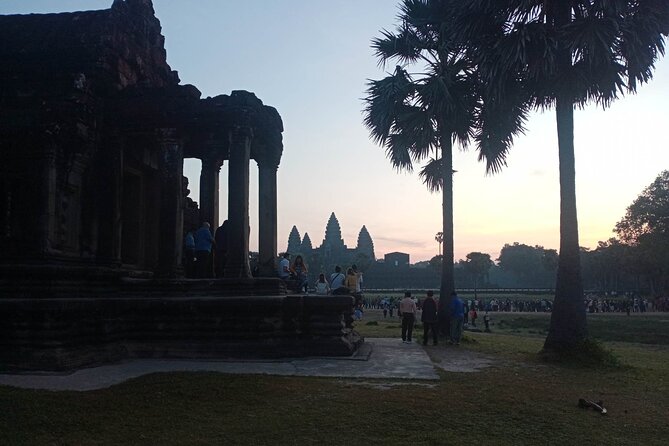
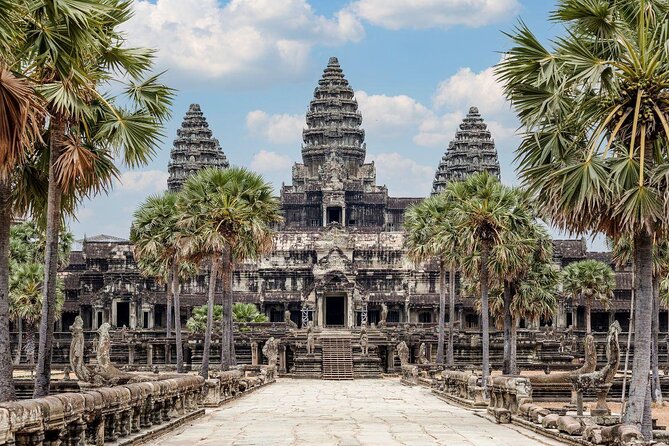
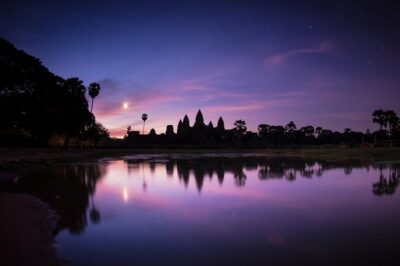
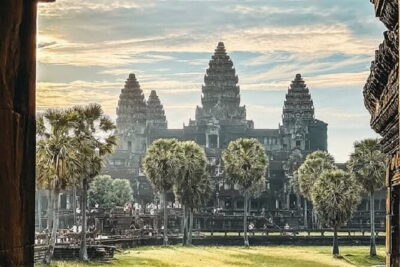
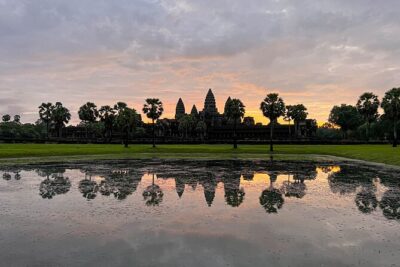
Angkor Wat is the headline for a reason. It is the world’s largest religious complex and the best-preserved temple at the site, still functioning as a significant religious center since its foundation. On this tour, you start with a smart move: you enter from the eastern side, described as the less visited approach.
From there, you walk on foot into a jungle path toward the North ancient library pool. You are not doing this just for scenery. When you are in the right mindset, those paths help you see the layout as the builders intended, instead of treating the temple like one long photo line.
Your guide then takes you into the central chambers and points out the stone bas-reliefs. One detail worth paying attention to is that the bas-relief carving stretch is described as the longest in the world. That is the kind of fact that is easy to ignore if you are just walking. With explanations, it becomes something you can actually spot and understand as you go.
What to expect: 2 hours at Angkor Wat, a lot of walking, and time inside major areas.
Potential drawback: you still need to handle the logistics of the Angkor Wat entrance ticket separately, since it is not included in the tour price.
Other private bookings in Siem Reap
- Full-Day Angkor Wat Sunrise Private Tour with Guide from Siem Reap★ 5.0 · 2,920 reviews
- Siem Reap: Angkor Wat Private Tuk-Tuk Tour★ 4.9 · 2,222 reviews
- Angkor Wat Private Day Tour from Siem Reap★ 5.0 · 834 reviews
- Angkor Wat Private Tuk-Tuk Tour (sunrise Option) & more★ 5.0 · 439 reviews
Angkor Thom South Gate: the 54 stone figures and the city scale shock
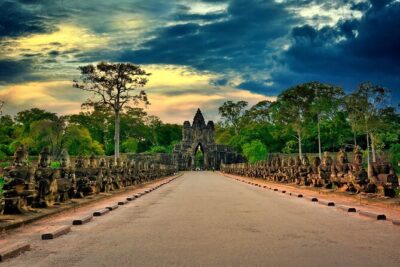
Next comes Angkor Thom’s South Gate, one of five gates that once controlled access to the fortified capital city. The South Gate is framed by rows of 54 stone figures on each side, so even before you reach the main temple zone, you get a strong visual of power and planning.
This stop also comes with a useful reminder. At Angkor Thom’s peak, the population was described as over one million people, and the city area was larger than London at the time. That sounds like trivia until you stand in the space and realize this was not a small royal retreat. It was a whole system.
Your time here is about 20 minutes. That is long enough to appreciate the gate and short enough to avoid losing your morning to crowd turbulence.
What I like about this stop: it gives context fast. It is harder to appreciate Bayon and the terraces if you skip the gate and never understand you are entering an enormous ancient city.
Bayon Temple: those 200+ faces, and the bas-reliefs that connect scenes
Bayon is where Angkor turns from architecture into emotion. Built in the 13th century as the state temple of King Jayavarman VII, it is famous for the many towers covered in serene, smiling faces. The description here is clear: you will see more than 200 enormous faces clustered around the central peak.
Your time is about 50 minutes, which is helpful because Bayon is visually busy. The trick is to slow down enough to notice that it is not just faces. There are also bas-reliefs: two sets on the temple, combining mythological, historical, and everyday scenes.
If you like temples for storytelling, this is a highlight. With an English speaking guide, you can connect what you are seeing to what it meant, instead of guessing which scene is which.
What to watch for: this is a popular area, so hot feet and bright sun can sneak up. Wear comfortable shoes and plan to take a few shade breaks.
Baphuon and Phimeanakas: the royal palace zone, Hindu temple form, and “Tower of Bronze”
Baphuon sits northwest of Bayon, and it is tied to the royal palace enclosure. It is described as a three-tiered temple mountain built in the mid-11th century as a state temple. You will also hear scale numbers, like it measuring 120 meters east-west and 100 meters north-south at the base, and standing about 34 meters tall without its tower.
But the most memorable part here is how it connects to legends about other temples. An envoy, Chou Ta-kuan, is quoted as being impressed during his visit from 1296 to 1297. In that account, Bayon was described as the Tower of Gold, and Baphuon as the Tower of Bronze. That kind of comparison makes it easier to remember which temple is which.
Then you move on to Phimeanakas, also spelled as Phimeanakas or Vimeanakas. This one adds a different flavor because it is shaped like Hindu temple pyramids. Built at the end of the 10th century, it was completed by Suryavarman I, and it features three tiers with a tower on top. Galleries line the edge of the top platform. It is located inside the walled enclosure of the Royal Palace of Angkor Thom.
Why these two stops matter on a single day: they help you see Angkor as a court system, not just a list of monuments. You are moving through the spaces tied to the Khmer elite, and the change in temple style gives your brain a break from face towers.
Terraces of Elephants and Leper King: ceremonies, cremation theories, and the Yama connection
After the main temple blocks, the terraces get more “human.” They are less about towering faces and more about what kings did, how crowds gathered, and how ritual spaces worked.
Also on our Siem Reap list, if none of these land
Terrace of the Elephants
This is a long, serious structure: a 350 meter reviewing stand used for public ceremonies and as a base for the king’s grand audience. You might even hear locals call it the Ancient Khmer Stadium. It was built in the 13th century under King Jayavarman VII.
You get about 30 minutes here. I like this stop because it is easy to visualize. Even if you are not a history nerd, you can imagine a crowd line stretching and a big event happening.
Terrace of the Leper King
Then comes the U-shaped terrace tied to the 13th century reign of Jayavarman VII. Some theories say it may have been used as a royal cremation site. The name comes from a 15th century sculpture found there, depicting Yama, the Hindu god of death.
It is another 30 minutes, so you can look around without feeling like you are speed-running. With a guide, these stops connect. The terraces are part of the same royal world as Bayon and Baphuon, just expressed through public ritual and sacred symbolism.
Two short Angkor Thom insert stops: brief breaks, better angles
The day also includes two short Angkor Thom moments, each listed as an extra stop with language like hidden or secret. Since the exact locations are not specified, the practical takeaway is what you should expect from the timing: both are brief, about 10 minutes each.
That is not time for deep exploration. It is time for a quick visual reset, often aimed at giving you a calmer angle away from the worst crush. If you have done Angkor before and felt like you were always surrounded by the same photo spots, this kind of detour is a real benefit.
Ta Prohm in the afternoon: the trees, the ruins, and why it feels different
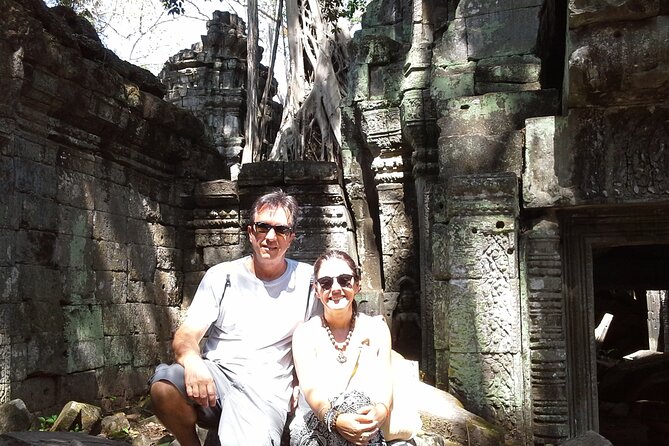
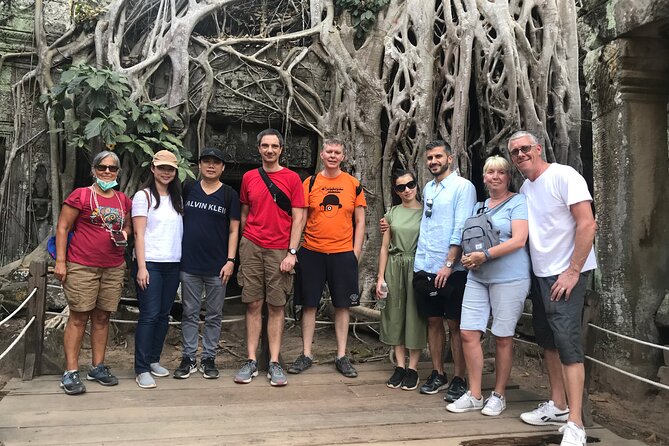
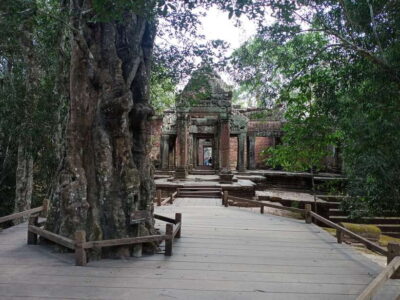
Ta Prohm is the classic “Tomb Raider temple,” and the reason is right in the description: it is jungle enveloped and one of the most atmospheric Angkor sites. It was built in the 13th century, and unlike many other temples, it is in much the same condition it was found. The combination you are looking for is specific: trees growing out of the ruins plus jungle surroundings.
This is where Angkor stops feeling purely formal. The ruins look lived-in by nature, and you can get a strong sense of time passing without everything feeling restored and polished.
You also get about 1 hour here, which is useful because Ta Prohm is popular. One trick: instead of chasing only the big iconic frame, use the hour to walk the edges and notice how the roots and beams affect what you see.
A fact you can keep in mind: Ta Prohm was a religious temple at the center of the Ancient Khmer University during the 12th and 13th centuries. That detail helps you make sense of why the site feels like an active learning space rather than a simple backlot.
Price and value: $30 per person plus the Angkor Wat ticket
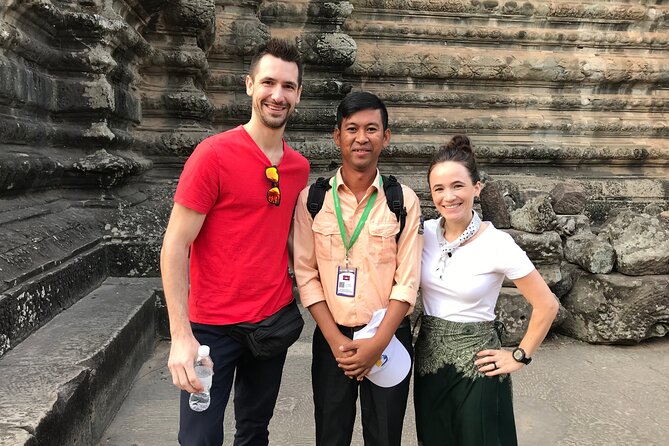
The tour price is $30 per person for a private day, about 8 hours. That price includes an English speaking guide, a private vehicle in a tuk tuk, hotel pickup and drop-off, and bottled water.
Entrance fees are not included for Angkor Wat, while the rest of the listed stops show free admission. You will also be offered a link to purchase an e-ticket for the Angkor Wat temple entrance days in advance.
Here is how I think about value: you are paying for (1) a guide who can translate stonework into meaning, and (2) a vehicle that keeps you moving without the stress of arranging transport between far-flung areas. For many people, that is worth more than the difference between a shared group tour and a private one.
Also, a nice comfort detail from a top review: the tuk tuk ride was described as clean and comfortable, with cold towels and water. Those touches can make the difference between a day you remember fondly and a day you only remember as exhausting.
What to wear and bring so you enjoy the walking
Angkor temples require practical clothing. You will need to cover your knees and shoulders to enter some temples. Casual clothes are fine, as long as they meet that rule.
For footwear, wear flat shoes that are comfortable for walking. You will cover a mix of temple paths and outdoor movement, including the jungle path segment near Angkor Wat.
For photos, pack smart rather than heavy. Bring sunglasses, and consider a light layer even in warm weather because some temple areas can get humid and still.
Who this private tour is best for
This day works especially well if you want a focused “Angkor greatest hits” run without sacrificing explanations. It is a good match for couples, small groups, and families who prefer a private vehicle and a day plan that you can adjust to your pace.
It also fits people who want less stress. You do not have to figure out route timing between sites, and you get a guide to handle the story side. One more bonus: you are specifically set up to avoid the crowds and escape heat where possible, which is a real need at Angkor.
If you are the type who wants to spend half the day lingering on one carving, you might feel a bit time-pressured by the pace. But the stops are long enough to see, breathe, and take photos.
Should you book this 1-day private Angkor tuk tuk tour?
Yes, if you want a private, guided Angkor day that feels organized, comfortable, and easier to manage than doing it solo. The mix of Angkor Wat plus Bayon plus Ta Prohm is the strongest combo for many first-time visitors, and the guide explanations make the carvings and terraces mean something.
I would only hesitate if you hate walking or if you strongly prefer a fully self-directed itinerary with zero ticket planning. Since Angkor Wat entrance fees are not included, you will need to budget for that e-ticket and make sure your clothes fit the coverage rules.
FAQ
Is this a private tour?
Yes. It is a private tour and only your group participates, with a private vehicle in a tuk tuk.
How long is the Angkor Temple tour?
The tour runs for about 8 hours.
What is included in the tour price?
The tour includes an English speaking guide, a private tuk tuk vehicle, hotel pickup and drop-off, and bottled water.
Do I need to pay entrance fees?
Angkor Wat entrance fees are not included, but the other listed stops are free based on the tour details provided. You will be sent a link to purchase the Angkor Wat e-ticket days in advance.
What should I wear to visit the temples?
You should plan to cover your knees and shoulders for some temples. Casual clothing is fine. Wear flat shoes that are comfortable for walking.
Can I cancel for a full refund?
Yes. You can cancel up to 24 hours in advance for a full refund.
Other Bookings Kept Private
- Full-Day Angkor Wat Sunrise Private Tour with Guide from Siem Reap★ 5.0 · 2,920 reviews
- Siem Reap: Angkor Wat Private Tuk-Tuk Tour★ 4.9 · 2,222 reviews
- Angkor Wat Private Day Tour from Siem Reap★ 5.0 · 834 reviews
- Angkor Wat Private Tuk-Tuk Tour (sunrise Option) & more★ 5.0 · 439 reviews
More Tours in Siem Reap
- Angkor Wat Sunrise or Sunset Tour with Guide from Siem Reap★ 5.0 · 12,109 reviews
- Siem Reap: Angkor Wat: Small-Group Sunrise or Sunset Tour★ 5.0 · 9,444 reviews
- From Siem Reap: Kampong Phluk Floating Village Tour by Boat★ 4.9 · 6,979 reviews
- Siem Reap: Angkor Wat 2-Day Tour with Sunrise and Sunset★ 4.9 · 4,429 reviews
More Tour Reviews in Siem Reap
- Angkor Wat Sunrise or Sunset Tour with Guide from Siem Reap★ 5.0 · 12,109 reviews
- Siem Reap: Angkor Wat: Small-Group Sunrise or Sunset Tour★ 5.0 · 9,444 reviews
- From Siem Reap: Kampong Phluk Floating Village Tour by Boat★ 4.9 · 6,979 reviews
- Siem Reap: Angkor Wat 2-Day Tour with Sunrise and Sunset★ 4.9 · 4,429 reviews
Newly written up around Siem Reap
- Waterfall & River of 1000 Siva Linga- Kulen Mountain Private Tour
★ 5.0 · 3 reviews - Private Transfer from Siem Reap to Sihanoukville
★ 4.5 · 3 reviews - Private Tour to Koh Ker and Beng Mealea
★ 5.0 · 3 reviews - Private Transfer: Siem Reap Angkor Internation Airport to Hotel
★ 5.0 · 3 reviews - Kulen National Park Ticket -Waterfall & 1000 Lingas
★ 5.0 · 3 reviews - Kulen Waterfall & Kbal Spean Tour
★ 5.0 · 3 reviews
Tuk-Tuks, side by side.
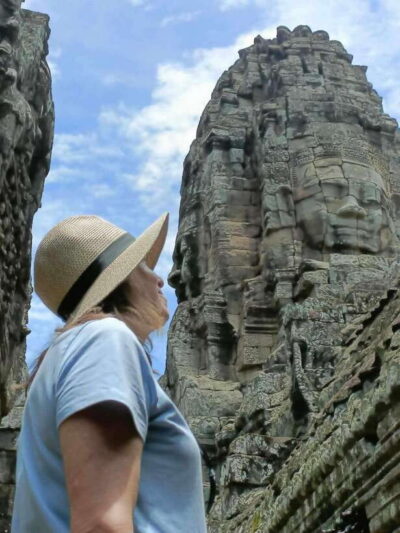 ★ 4.9Angkor Wat Private Tuk-Tuk TourFrom $202,222 reviews
 ★ 4.9Tuk-Tuk, Bamboo Train, Killing/Bat Caves, SunsetFrom $91,436 reviews
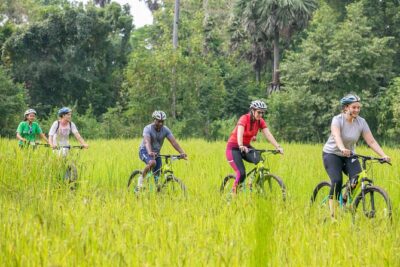 ★ 5.0Siem Reap Countryside Bike Tour / E-Bike or Tuk TukFrom $35935 reviews
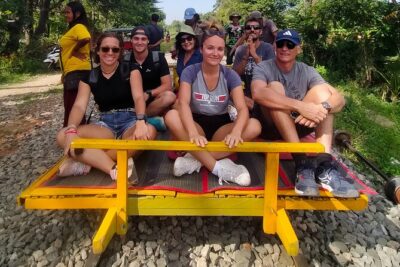 ★ 5.0Battambang Tuk Tuk tour: Bambootrain, Killing & Bat Caves,SunsetFrom $15799 reviews
 ★ 5.0Angkor Sunrise Bike Tour / E-Bike or Tuk TukFrom $60615 reviews
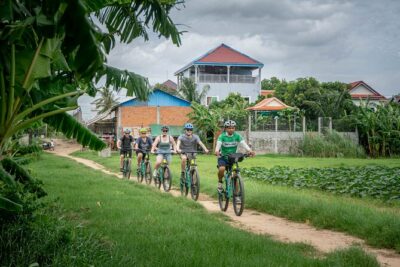 ★ 5.0Phnom Penh Silk Island Bike Tour/ E-Bike or Tuk TukFrom $35495 reviews
 ★ 5.0Angkor Wat Private Tuk-Tuk Tour (sunrise Option) & moreFrom $25439 reviews
 ★ 5.0Ultimate Phnom Penh Food Tour by Tuk Tuk: 20 Tastings and DrinksFrom $69409 reviews
Also appears in