
REVIEW · CAMBODIA
1day private tour to all majestic Temples in Angkor and Sunset
Some places feel bigger than the map. Angkor is one of them, and this private circuit hits the headline temples in a single long day. You get certified guiding for the big meanings, and the pacing is meant to dodge the worst crowd crush.
I especially like the comfort built into the day, air-conditioned transport plus cold water and cold towels between stops. I also like that the plan tries to keep you moving at a human pace, with stops that balance jaw-dropping views (Angkor Wat) and slower, moodier ruins (Ta Prohm).
One consideration: you’ll pay your own temple admission on site, and the sunset stop involves a walk up the hill. If you do not love heat, dust, and steps, plan your energy carefully.
In This Review
- Key points at a glance
- Private Angkor Day, Not a Temple Marathon for Strangers
- Price and Tickets: What You Pay, What You Still Need to Budget
- A Comfort-First Plan That Still Lets You See Everything
- Stop by Stop: What Each Temple Adds to Your Day
- Angkor Wat, Start Strong With the Main Axis
- Angkor Thom’s Victory Gate, Then Bayon’s Buddha Faces
- Baphuon and the Royal Layout, Where Meanings Layer on Meanings
- Terrace of the Elephants and Prasat Suor Prat, Royal Power in Stone
- Terrace of the Leper King, Darker Mythology Under Bayon-Style Design
- Ta Prohm Jungle Temple, the Slower Pace You Needed
- Phnom Bakheng for Sunset, the Walk and the Payoff
- Guide and Driver Quality: The Difference Between Seeing and Understanding
- Who This Tour Fits Best
- Should You Book This Angkor All-Temples and Sunset Tour?
- FAQ
- How much does the private Angkor temples and sunset tour cost?
- What is included in the tour price?
- Are temple admission fees included?
- How long is the tour?
- Which temples are included in the day?
- Do I need to pay for lunch during the tour?
- Is this a private tour?
- What time does the tour start?
- Is there any walking involved for sunset?
- Notes for your Angkor day comfort
Key points at a glance
- Private group up to 6, so you can set your own pace and avoid the big-group shuffle
- Certified guide plus experienced driver, with an emphasis on clear explanations and smooth timing
- Air-conditioned vehicle plus cold water and cold towels to keep you comfortable
- Angkor Thom core included, including Bayon with its many Buddha faces and the Terrace of the Elephants
- Ta Prohm jungle temple with the famous tree roots and shady walking paths
- Sunset at Phnom Bakheng, timed for the view, plus a walk that takes around 20 minutes
Private Angkor Day, Not a Temple Marathon for Strangers
Angkor Wat to Ta Prohm to sunset at Phnom Bakheng is the kind of day that can feel like a checklist. The good news is this tour tries to make that list actually make sense, by threading together the temples that tell a coherent story of changing Khmer power and beliefs.
What works for you is the private setup. You are not waiting on other people’s bathroom breaks or arguing over whether to stand or sit at a viewpoint. Your guide can steer the pace, add context where you care, and skip the fluff when you do not.
Another plus is the behind-the-scenes comfort. Angkor days can get dusty and sticky fast. Here, the car or minivan is air-conditioned, and you get cold water and cold towels along the way, which makes a huge difference once you get into the midday heat.
Price and Tickets: What You Pay, What You Still Need to Budget
The tour price is $92 per group, up to 6 people. That means if you are traveling with family or friends, the per-person cost becomes very reasonable compared to piecing together separate tuk-tuk or guide arrangements.
But the admission fees are not included. You should plan on $37 per person for temple entry. Your guide helps you with tickets before you start at Angkor Wat, which saves time and keeps you from hunting for lines right as the day begins.
Food is also on you. Lunch and drinks you order start from $6, so you can keep it simple with local options. If you have dietary needs, I suggest you eat earlier in your day or bring a snack, because one-day temple plans can get tight.
Tips are not included either. You will want to factor in gratuity for the guide and driver so the day feels smooth from start to finish.
Other private bookings in Siem Reap
- Full-Day Angkor Wat Sunrise Private Tour with Guide from Siem Reap★ 5.0 · 2,920 reviews
- Siem Reap: Angkor Wat Private Tuk-Tuk Tour★ 4.9 · 2,222 reviews
- Angkor Wat Private Day Tour from Siem Reap★ 5.0 · 834 reviews
- Angkor Wat Private Tuk-Tuk Tour (sunrise Option) & more★ 5.0 · 439 reviews
A Comfort-First Plan That Still Lets You See Everything
This is a 9 to 11 hour private outing, built around one big goal: see the main Angkor sights without spending the day feeling rushed or surrounded by strangers.
You start with pickup from your hotel. Then you head first to Angkor Wat, with your guide helping with tickets before you go in. The remaining stops are spaced so you can absorb details instead of just snapping photos and sprinting onward.
There is also an important promise in the way the day is scheduled: the route is planned to avoid major tour groups where possible. No schedule is perfect, but that kind of planning usually means shorter bottlenecks, more time near viewpoints, and less stress overall.
One small detail to watch: the tour listing shows a start time of 6:00 pm, but the Angkor Wat portion describes an 8:00 am hotel meeting time. When you book, confirm your exact pickup time so your day lines up properly, especially because sunset at Phnom Bakheng depends on timing.
Stop by Stop: What Each Temple Adds to Your Day
Angkor Wat, Start Strong With the Main Axis
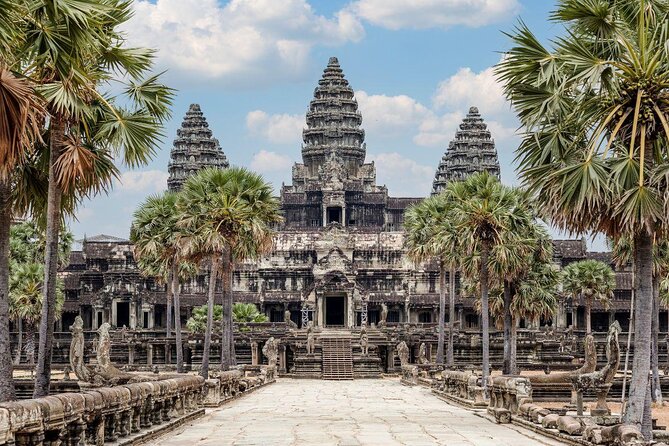
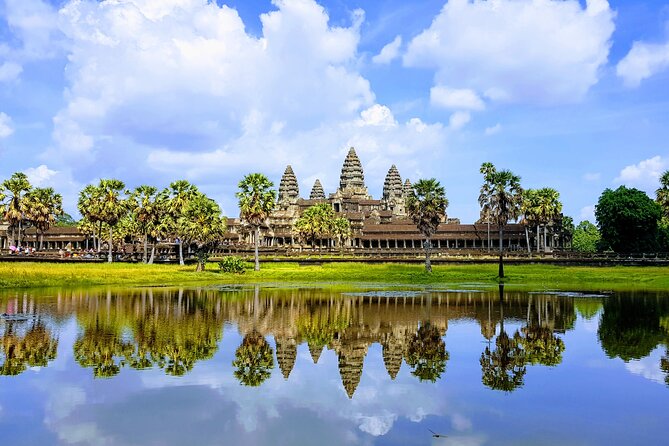
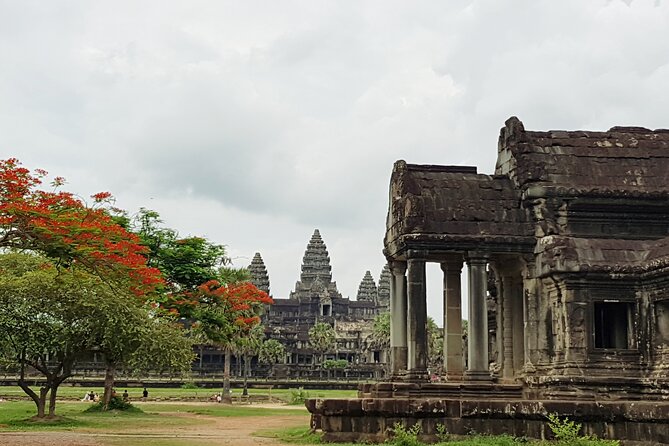
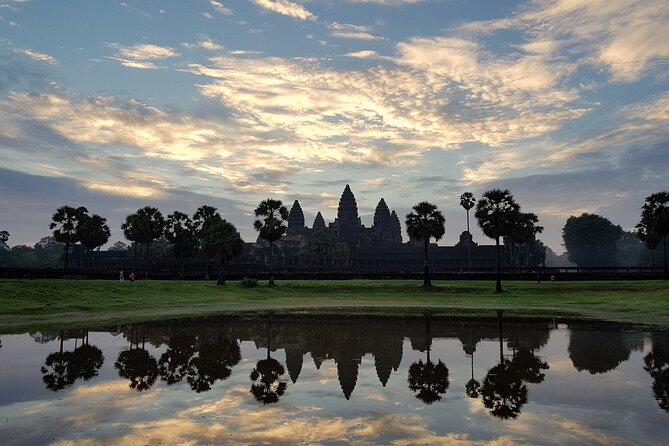
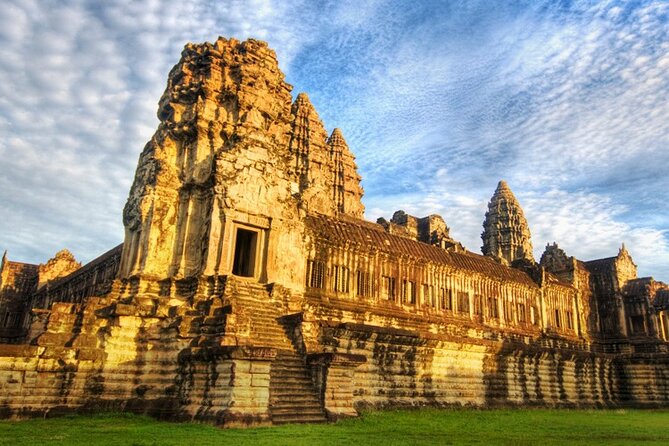
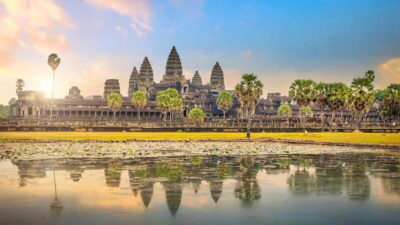
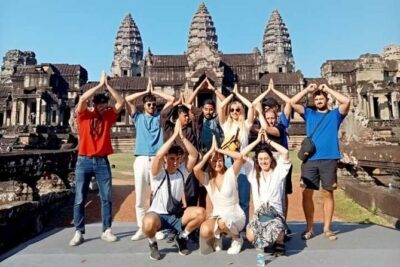
Angkor Wat is the obvious first stop, and for a reason. It is the best place to get oriented. When you see the grand symmetry and scale up close, you instantly understand why Angkor became such a powerful cultural magnet.
You get about 3 hours at Angkor Wat. That is enough time to take in the key structures and still step back to notice the patterns, corridors, and perspective tricks that make the whole complex feel engineered for awe.
Practical note: this is a big site, so wear shoes you trust on uneven ground. If you hate heat, go in with a plan to take small breaks, not long pauses. Your guide’s job is to keep your visit comfortable and logical, including ticket handling before entry.
Angkor Thom’s Victory Gate, Then Bayon’s Buddha Faces
After Angkor Wat, the day shifts into Angkor Thom, the walled city. The first major landmark here is the Victory Gate, a carved gateway tied to conquest themes. This is one of those places where you can get lost in the stone details if you slow down, and a guide helps you see what you are actually looking at.
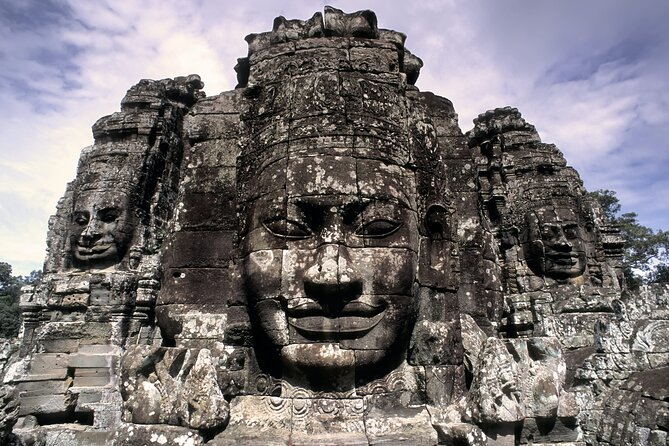
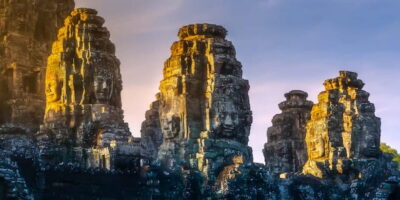
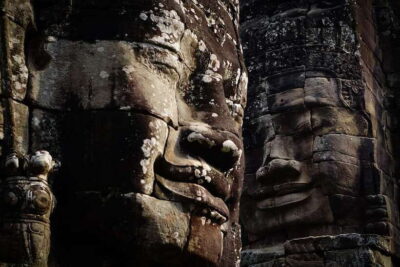
Next comes Bayon Temple. This is where the temple becomes famous for a reason: it is a Buddhist temple with enormous Buddha faces carved across the stone. You get about 1 hour, which is a good window to walk through the levels and view the faces from different angles instead of treating it as a quick photo stop.
The drawback of Bayon is also its strength: because it is recognizable and central, it can feel crowded. The private pacing and route planning help, but you may still want to aim for calmer corners when you can.
More of Siem Reap after dark
Baphuon and the Royal Layout, Where Meanings Layer on Meanings
Right after Bayon, you move to Baphuon Temple, which was built earlier than Bayon. The guide frames it as a Hindu temple built 121 years earlier, which matters because it shows the transition of Khmer religious priorities over time.
You have about 1 hour here. Baphuon is not always the first thing people obsess over, but it is valuable because it adds contrast. If Bayon is all about faces and Buddhist symbolism, Baphuon helps you see the earlier architectural language underneath.
Then you head to Phimeanakas, located in the middle of the former royal palace compound. You get about 30 minutes. This stop is shorter, but it is a useful hinge point: it connects the temple ruins to the royal world that shaped them.
Terrace of the Elephants and Prasat Suor Prat, Royal Power in Stone
The Terrace of the Elephants is tied to a specific image from Khmer history: Jayavarman VII viewing his victorious returning army from a platform. You spend about 30 minutes, and while you are there, the terrace works like a stage. You can imagine ceremonies, crowds, and announcements happening in a way that never quite lands when you only see temples from postcards.
Near that area is Prasat Suor Prat, described as a series of twelve towers aligned north to south along the eastern side of a royal square. It is a quick stop, only 5 minutes, but it gives structure to what you are seeing. Short stops can still matter a lot if your guide explains how the layout is meant to read.
Terrace of the Leper King, Darker Mythology Under Bayon-Style Design
Next is the Terrace of the Leper King, built in the Bayon style under Jayavarman VII. The modern name comes from a 15th-century sculpture found at the site, depicting the Hindu god Yama, the god of death.
You get about 30 minutes. This is not just an extra photo stop. It adds depth by reminding you that Khmer sacred spaces included vivid, sometimes heavy mythological ideas, not just pretty stone ornament.
If you like explanations, this is a great moment to slow down and ask questions. The setting is quieter than some of the flashier highlights, so it is easier to actually take in what the terrace is communicating.
Ta Prohm Jungle Temple, the Slower Pace You Needed
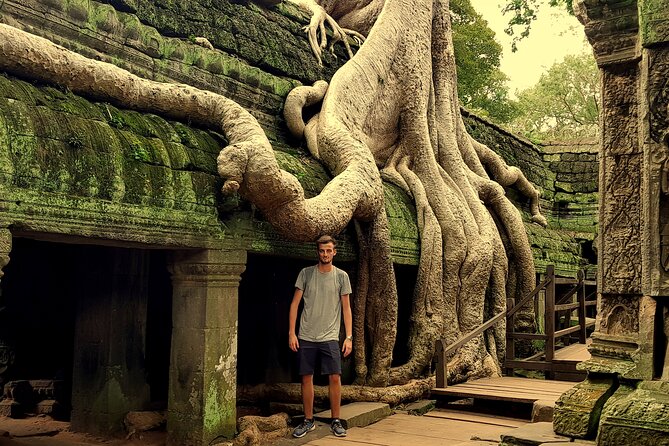
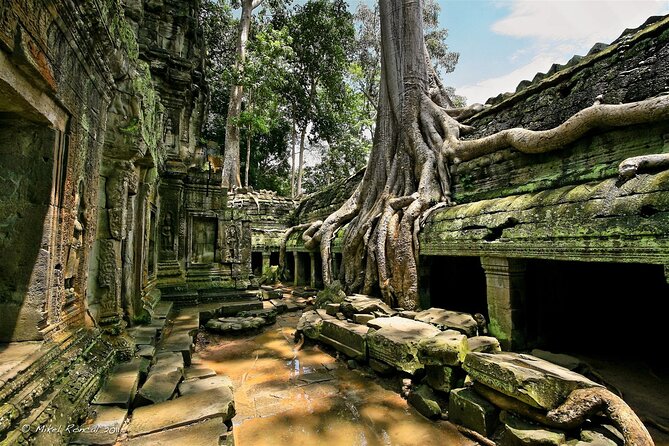
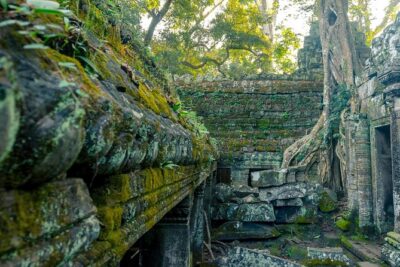
Then comes Ta Prohm, the famous jungle temple. You get about 1 hour, and this is where your day changes mood. The shady paths and the famous feeling of ruins swallowed by trees make Ta Prohm feel less like a monument and more like a living scene.
The best part here is the visuals you already know from movies and stories: giant roots of trees growing on the temple structure. Your guide can help you understand why this is one of Angkor’s most photographed places, and it is also one of the most grounding. It is beautiful, but it is also a reminder that nature keeps time whether people do or not.
A small consideration: walking on uneven stones and dirt paths matters here. Wear solid shoes and accept that this stop is a little rougher underfoot than the flatter major courtyards.
Phnom Bakheng for Sunset, the Walk and the Payoff
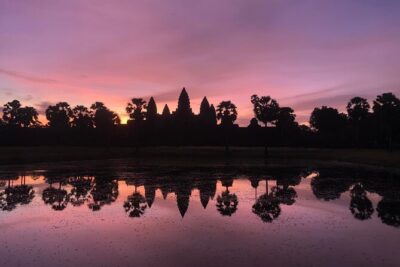
The day ends at Phnom Bakheng for sunset. The tour includes time to do it properly, not just show up at the last second.
Plan for a walk up to the top of the mountain. It takes about 20 minutes, and then you wait to see the sunset. The stop is listed as 2 hours, which is helpful because sunset plans are all about timing, light, and staying patient while other people scramble for spots.
This is where moderate physical fitness matters. The climb is manageable for many visitors, but it is not a sit-and-stroll moment. If you know you get winded easily, pace yourself and bring water. The cold water and towels earlier in the day help, but you should still expect some exertion.
Guide and Driver Quality: The Difference Between Seeing and Understanding
The biggest factor in a private Angkor day is whether your guide can translate what you see into something you actually remember. This tour emphasizes certified tour guides, and the feel is that your guide will personalize the experience to your interests and preferred pace.
In particular, the tour experience is described as having a guide with strong English and real command of temple context, plus a driver who takes care with timing and comfort. You also get cold water and cold towels delivered when you need them most, which helps you stay present instead of just surviving the day.
For you, that means less guessing. You do not have to interpret every carved figure on your own. You can focus on the big moments, then let your guide fill in the why.
Who This Tour Fits Best
I think this is a strong match if you want:
- All the main sights in one day without juggling multiple tickets or transfers
- A private pace for your group, especially with kids, elders, or anyone who gets overwhelmed by crowds
- A mix of temples that covers different vibes, grand ceremonial Angkor Wat, Buddhist Bayon, and jungle Ta Prohm
- A sunset finale with real time to watch the light change
It may be less ideal if you:
- Hate walking uneven ground (Ta Prohm and Phnom Bakheng are both more active)
- Want a short day with minimal physical effort
- Have very strict dietary needs and do not want lunch timing to be flexible
Should You Book This Angkor All-Temples and Sunset Tour?
Book it if you want one efficient, thoughtful day that hits the headline temples while keeping you comfortable and informed. The private setup plus A/C, cold water, and cold towels makes a difference in how you experience Angkor, not just what you see.
Think twice if you are very sensitive to heat and steps, or if you dislike paying separate temple admission fees. If you are okay with that, this tour is a practical way to get a full Angkor picture without turning your day into a rushed stamp-collecting exercise.
FAQ
How much does the private Angkor temples and sunset tour cost?
The price is $92.00 per group, up to 6 people.
What is included in the tour price?
You get a tour guide, transportation in an A/C car or mini van, and cold water and cold towels.
Are temple admission fees included?
No. Temple entrance fees are not included. The admission fee listed is $37.00 per person.
How long is the tour?
The duration is about 9 to 11 hours.
Which temples are included in the day?
The tour includes Angkor Wat, The Victory Gate, Bayon Temple, Baphuon Temple, Phimeanakas, Terrace of the Elephants, Prasat Suor Prat, Terrace of the Leper King, Ta Prohm, and sunset at Phnom Bakheng.
Do I need to pay for lunch during the tour?
Yes. Lunch food or drinks you order are not included, starting from $6.
Is this a private tour?
Yes. It is private, and only your group participates.
What time does the tour start?
You will meet your tour guide in your hotel lobby at 8:00 AM for the Angkor Wat visit. The tour also shows a start time of 6:00 pm, so it is best to confirm your exact pickup time when booking.
Is there any walking involved for sunset?
Yes. You need to walk up to the top of Phnom Bakheng, about 20 minutes, and then wait to see the sunset.
Notes for your Angkor day comfort
If you book, pack for a long warm day: comfortable shoes, a hat, and a plan to hydrate. Your guide and driver will handle a lot of the timing, but you will enjoy it more if you show up ready to move and ready to wait for sunset light.
Other Bookings Kept Private
- Full-Day Angkor Wat Sunrise Private Tour with Guide from Siem Reap★ 5.0 · 2,920 reviews
- Siem Reap: Angkor Wat Private Tuk-Tuk Tour★ 4.9 · 2,222 reviews
- Angkor Wat Private Day Tour from Siem Reap★ 5.0 · 834 reviews
- Angkor Wat Private Tuk-Tuk Tour (sunrise Option) & more★ 5.0 · 439 reviews
More Tours in Siem Reap
- Angkor Wat Sunrise or Sunset Tour with Guide from Siem Reap★ 5.0 · 12,109 reviews
- Siem Reap: Angkor Wat: Small-Group Sunrise or Sunset Tour★ 5.0 · 9,444 reviews
- From Siem Reap: Kampong Phluk Floating Village Tour by Boat★ 4.9 · 6,979 reviews
- Siem Reap: Angkor Wat 2-Day Tour with Sunrise and Sunset★ 4.9 · 4,429 reviews
More Tour Reviews in Siem Reap
- Angkor Wat Sunrise or Sunset Tour with Guide from Siem Reap★ 5.0 · 12,109 reviews
- Siem Reap: Angkor Wat: Small-Group Sunrise or Sunset Tour★ 5.0 · 9,444 reviews
- From Siem Reap: Kampong Phluk Floating Village Tour by Boat★ 4.9 · 6,979 reviews
- Siem Reap: Angkor Wat 2-Day Tour with Sunrise and Sunset★ 4.9 · 4,429 reviews
Newly written up around Siem Reap
- Waterfall & River of 1000 Siva Linga- Kulen Mountain Private Tour
★ 5.0 · 3 reviews - Private Transfer from Siem Reap to Sihanoukville
★ 4.5 · 3 reviews - Private Tour to Koh Ker and Beng Mealea
★ 5.0 · 3 reviews - Private Transfer: Siem Reap Angkor Internation Airport to Hotel
★ 5.0 · 3 reviews - Kulen National Park Ticket -Waterfall & 1000 Lingas
★ 5.0 · 3 reviews - Kulen Waterfall & Kbal Spean Tour
★ 5.0 · 3 reviews
Evening Experiences, side by side.
 ★ 5.0Angkor Wat Sunrise or Sunset Tour with Guide from Siem ReapFrom $1812,109 reviews
 ★ 5.0Angkor Wat: Small-Group Sunrise or Sunset TourFrom $159,444 reviews
 ★ 4.9Angkor Wat 2-Day Tour with Sunrise and SunsetFrom $344,429 reviews
 ★ 4.9Full-Day Angkor Wat Guided Tour with SunsetFrom $153,803 reviews
 ★ 5.0Angkor Wat Sunset Small Group Tour with Lunch IncludedFrom $203,059 reviews
 ★ 5.0Angkor 2-Day Sunset & Sunrise Small-Group TourFrom $492,567 reviews
 ★ 4.9Angkor Wat Sunrise or Sunset Guided TourFrom $132,123 reviews
 ★ 5.0Siem Reap Floating Village Kampong Phluk Sunset with BoatFrom $181,962 reviews