
REVIEW · TONLÉ SAP
2-Day Angkor Wat & Tonle Sap Tour
Sunrise temples hit different with a plan. I like the private pacing (you are not stuck in a giant crowd shuffle) and the combo of Phnom Bakheng sunset plus Angkor Wat sunrise. One caution: temple passes are not included, so you need to budget for entry separately.
On day 1, the route strings together the big names and the good supporting cast inside Angkor Thom, then ends at Phnom Bakheng when the light is best. On day 2, you start before dawn, then keep moving through quieter temple stops and end with Tonle Sap lake by boat.
If you want a tight 2 days that still feels organized, this is a strong fit. Just be ready for early mornings and some walking, since the tour lists a moderate physical fitness level.
In This Review
- Key things to know before you go
- Why this 2-day Angkor Wat and Tonle Sap plan feels smarter than a checklist
- Day 1 in Angkor Thom: Bayon faces, Baphuon, and the Terrace stops
- Ta Prohm and Angkor Wat in one day: where the light and the trees matter
- Phnom Bakheng sunset: an early start and a summit with limits
- Day 2 sunrise at Angkor Wat: the 5:00am move that pays off
- Prep Rup, Banteay Samre, and a side stop for palm sugar or museums
- Tonle Sap Lake by boat: stilted villages and a floating cafe moment
- What you pay for at $250.26 per group, and what to budget separately
- The guide quality: clear explanations and flexible pacing with Mr Seng
- Temple-pass reality and smart logistics for Angkor crowds
- Best fit: who this tour suits (and who might want something different)
- Should you book this 2-day Angkor Wat and Tonle Sap tour?
- FAQ
- What is the duration of the tour?
- Where does the tour take place?
- How much does the tour cost?
- What time does the tour start on the first day?
- Is hotel pickup included?
- Is Angkor entry included in the price?
- Does the tour include the boat trip on Tonle Sap?
- What does the tour include for comfort during the day?
- Is this a shared group tour?
- How active is the tour?
- What is the earliest start time for the sunrise visit?
- Can I cancel for a full refund?
Key things to know before you go
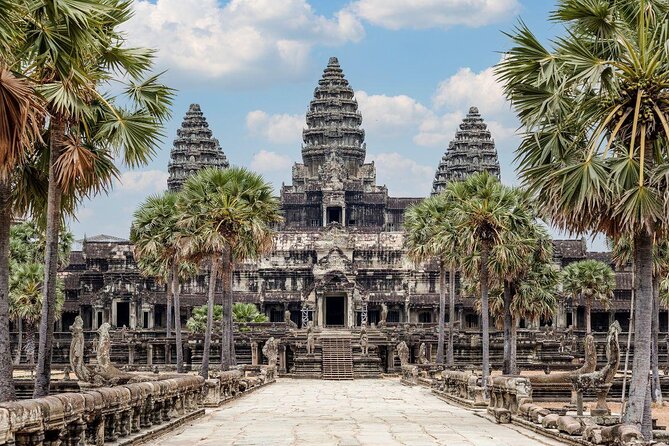
- Sunset and sunrise temple timing: Phnom Bakheng after the crowds, Angkor Wat at dawn.
- Private transportation with hotel pickup: air-conditioned vehicle, direct route planning.
- Angkor Thom highlights in one flow: Bayon faces, Baphuon, and the Terrace areas without backtracking.
- Ta Prohm’s famous roots moment: plan time to slow down for photos and texture.
- Tonle Sap by motorized boat: stilted homes and a floating cafe stop around the Kompong Pluk area.
- Mr Seng stands out: praised for clear explanations and flexibility at your pace.
Why this 2-day Angkor Wat and Tonle Sap plan feels smarter than a checklist
Angkor is one of those places where you can easily waste time. If your schedule is sloppy, you end up waiting in lines, riding in circles, or missing the best light. This tour is built to avoid that, with a clear order of temples and lake time, plus private transport so you can move on when it makes sense.
I also like that you are not just seeing the headline temples. You get a real sampling of the Angkor complex, plus Tonle Sap lake life, which is a very different side of Cambodia. The Tonle Sap portion is where many first-timers get genuinely surprised.
The one trade-off is simple: you still have to buy temple entry passes on your own, and meals are also on you. That is not a deal-breaker, but it affects value.
Day 1 in Angkor Thom: Bayon faces, Baphuon, and the Terrace stops
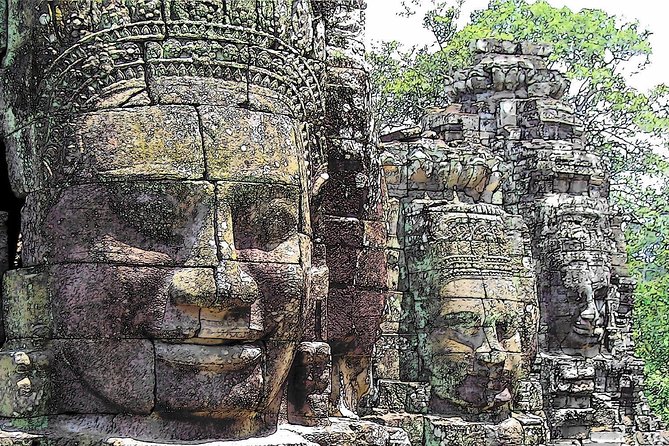
Day 1 is where the tour sets the tone, starting inside Angkor Thom. You begin with Bayon Temple, famous for its many stone faces. This is the kind of place where guide talk really helps, because the carvings and layout start to make more sense when someone points out what to look for.
Next comes Baphuon Temple, a nearby stop that keeps momentum. It is short, but it works because you are still in the Angkor Thom zone, so you are not losing time commuting across the complex.
Then you hit the Terrace of the Leper King area, along with the Terrace of the Elephants. Even if you only give these terraces a modest amount of time, they feel different from the typical single-building temple stop. Terraces also reward slow walking, because details show up as you change angles.
Two small practical notes for this day:
- You will be stepping around and climbing enough to get your heart rate up, even though the stops are not all long.
- You will want to bring patience, because Angkor’s best-known locations tend to draw the most people.
More time on the lake, other boats
- From Siem Reap: Kampong Phluk Floating Village Tour by Boat★ 4.9 · 6,979 reviews
- Kompong Phluk Floating Village Half-Day Tour ( Morning / Sunset )★ 5.0 · 1,494 reviews
- Siem Reap: Kulen Mountain, Beng Mealea and Tonle Sap Tour★ 5.0 · 1,483 reviews
- Tonle Sap Lake & Kampong Phluk Village Half-Day Tour★ 5.0 · 1,045 reviews
Ta Prohm and Angkor Wat in one day: where the light and the trees matter
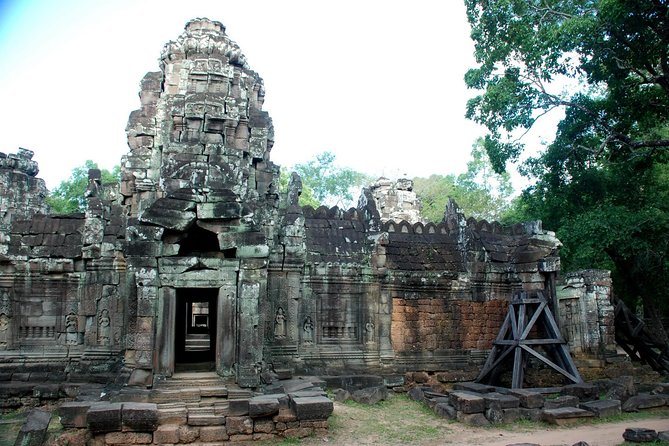
From Angkor Thom you move east to Ta Prohm, the temple made famous by movie styling, especially the way large tree roots grow around and through the stones. The vibe here is different from Bayon. Bayon is about symmetrical face power. Ta Prohm is about texture, cracks, and that slightly wild feeling of nature taking over old masonry.
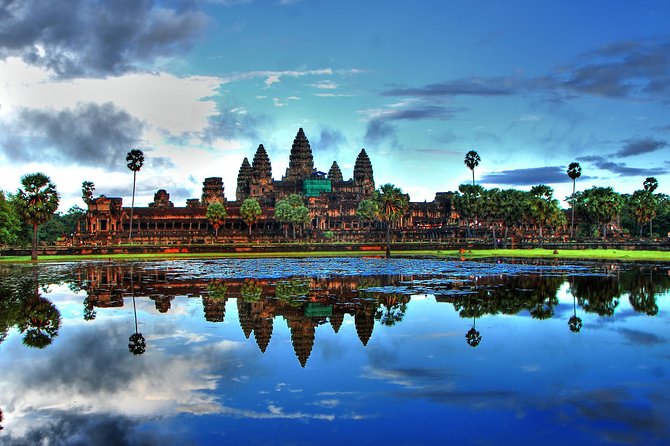
After that, you get a break for lunch at a nearby restaurant, then roll into Angkor Wat. This is a huge temple, and the tour gives it time to breathe, not just a quick walk-through. You are not just aiming for a single photo. You are going through the space and letting the architecture land.
A good trick here: do not rush your first viewpoints. Angkor Wat has a way of looking different as you shift position. If you treat it like a single landmark, you miss the “layered” feeling that makes it memorable.
Phnom Bakheng sunset: an early start and a summit with limits
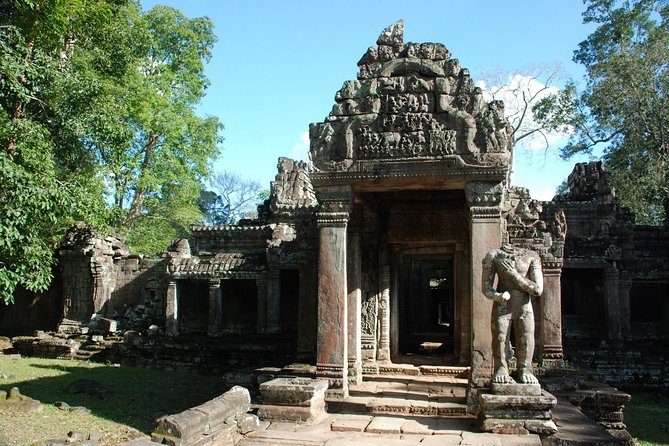
The day ends at Phnom Bakheng, and this is where you get your sunset temple moment. Here the timing matters. The tour notes that numbers at the top are restricted, so you need to go early and wait, and that wait can mean sharing the summit area with a large crowd.
This is also where a guide makes a real difference. A good guide helps you manage the rhythm: where to stand for the best angles, when to shift, and how to keep the experience enjoyable while you wait for the sky to change.
What you should expect:
- More standing than walking on this last segment.
- A crowd scene at the viewpoint.
- A payoff if the weather cooperates and you catch Phnom Bakheng in warm evening light.
Day 2 sunrise at Angkor Wat: the 5:00am move that pays off
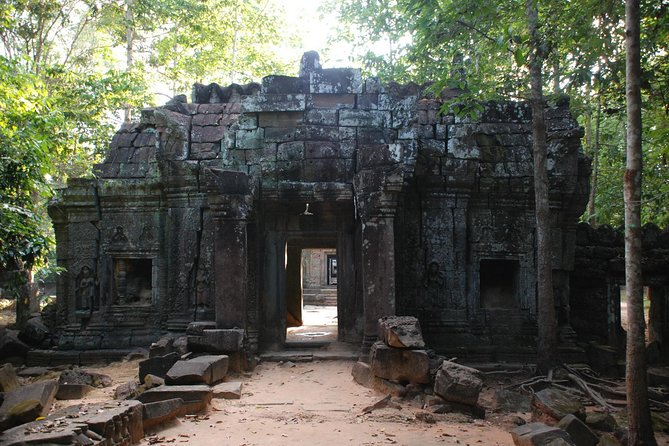
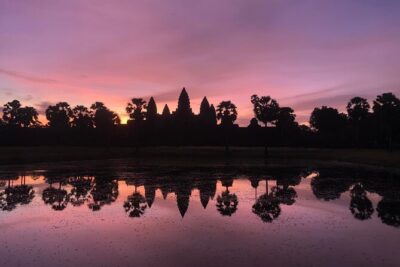
Day 2 starts very early. The plan is to leave your hotel around 5:00am or earlier for sunrise at Angkor Wat. This is one of the big reasons people choose a tour like this instead of trying to wing it. Dawn at Angkor Wat is not just a nice bonus. It changes how the whole site feels.
The sunrise portion is about seeing the temple as the light arrives, not while the sun is already high and harsh. If you have ever seen temples in bright midday glare, you know how different it feels when shadows are long and everything looks more sculpted.
After sunrise, you return to your hotel for breakfast, assuming breakfast is included in your room rate. If it is not, the tour notes you can stop at a restaurant instead. Either way, you are getting real recovery time, which matters because the rest of the day still involves multiple stops.
Prep Rup, Banteay Samre, and a side stop for palm sugar or museums
Once you are fueled, day 2 keeps moving with more temples that are not always as crowded as the headline ones. The route includes a stop at Prep Rup, and then continues to Banteay Samre, often called the pink ladies temple because of its color tone.
The day also includes a short optional-style detour. The itinerary lists time for either palm sugar manufacture or a stop connected to the Landmine Museum. The exact choice can depend on timing, but the goal is the same: you get a taste of life and legacy beyond the stones.
This is a good balance move. After Angkor’s scale, it is refreshing when the day includes something that feels grounded in Cambodian daily life or in a serious historical context. Even a short stop can help you connect the temples to the country around them.
Also on our Siem Reap list, if none of these land
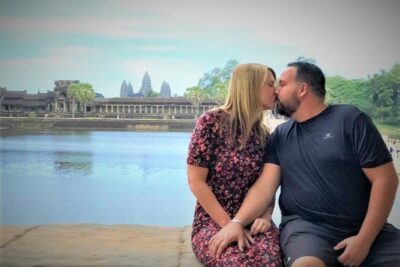
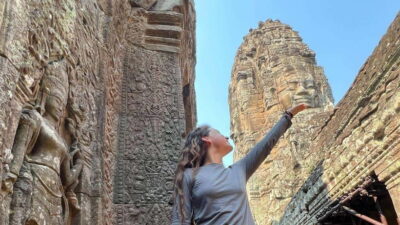
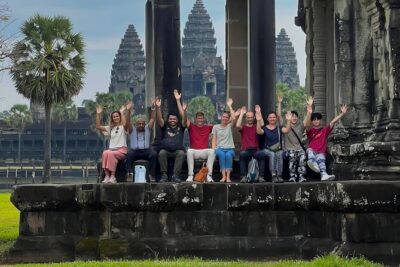
Tonle Sap Lake by boat: stilted villages and a floating cafe moment
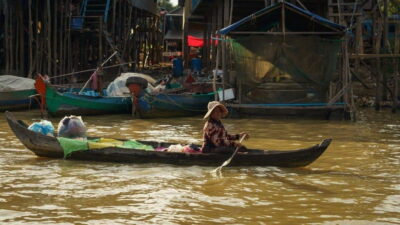
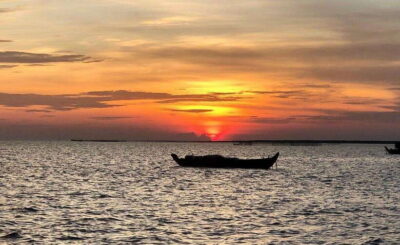
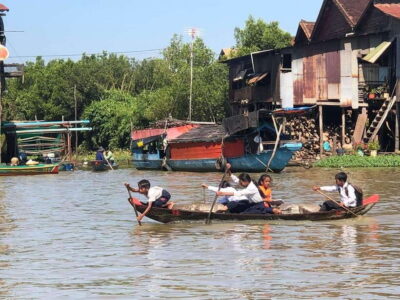
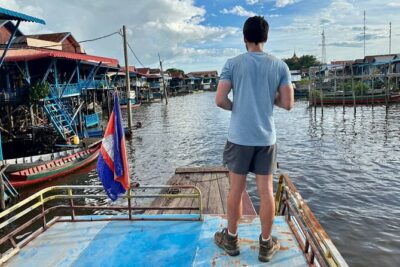
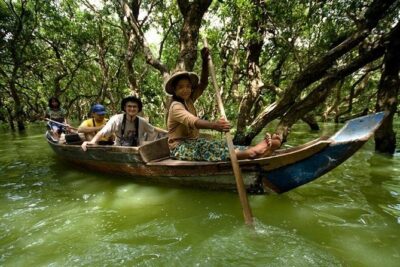
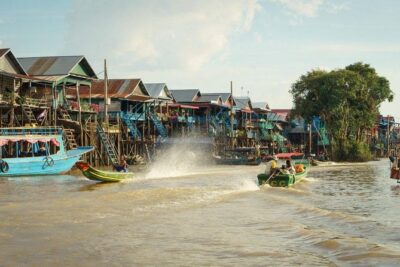
After lunch, the tour heads to Tonle Sap Lake, specifically the Kompong Pluk area. You cruise around by motorized boat, and the big draw is seeing houses and village life on stilts.
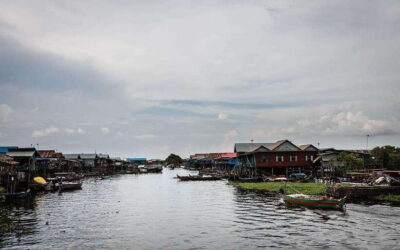
Tonle Sap is not a background element. It is a whole living environment shaped by water levels and community routines. From the boat, the stilted homes make immediate sense because you see how everything is built to work with the water, not against it.
You also have a stop at a floating cafe. That part is often short, but it is memorable because it is a functional slice of daily life. It is not just a photo stop. It helps you understand that this area is a system, not a museum exhibit.
Boat time can also mean sun and spray. Bring something that helps you stay comfortable, like sunglasses and a light layer. The tour includes cold bottled water and cold towels, which is a real quality-of-life detail on hot lake days.
What you pay for at $250.26 per group, and what to budget separately
The price is $250.26 per group, up to 3 people. That group pricing is important, because you are paying for a private plan, not a seat on a shared bus.
What you get included:
- Private transportation in an air-conditioned vehicle
- Hotel pickup and drop-off
- A guide
- Boat trip fee
- Cold bottled water and cold towels
- Mobile ticket
What you should budget for separately:
- Temple passes (2-day)
- Meals, soft drinks, alcohol
For value, the key question is how much you hate friction. This tour is designed to reduce it. Private transport and planned timing matter a lot at Angkor, where the biggest costs can be time and lost opportunities, not just money.
If you are traveling solo or as a couple, the per-person value improves if you are comfortable sharing a group. If you have a family, the private format can also help you move at your preferred pace, though the tour itself only prices up to 3.
The guide quality: clear explanations and flexible pacing with Mr Seng
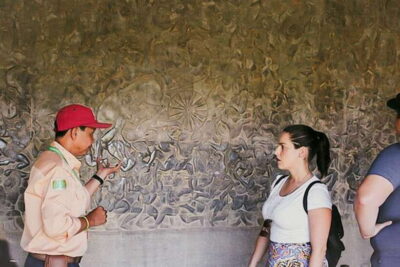
One of the strongest themes in the feedback is the guide. In particular, Mr Seng is praised for interesting information and for explaining historical and mythological background clearly. That matters, because Angkor is not just pretty. It is layered, and a guide helps you connect carvings, layout, and symbols to stories.
Another praised trait is flexibility. The tour still follows an itinerary, but it sounds like the guide is willing to adjust your flow so you can linger at a spot that grabs you. That is a big deal for couples and first-timers, because it prevents the experience from turning into a rushed photo sprint.
There is also at least one real-life example of them extending time when circumstances disrupted the first day. That kind of adaptability is comforting if your travel plans are not perfectly smooth.
Temple-pass reality and smart logistics for Angkor crowds
The tour includes help with organizing tickets for Angkor Park, but temple passes are not included in the price. So you need to plan for entry costs before you arrive.
Also, Angkor has crowd dynamics, and Phnom Bakheng summit rules can limit access. That is why going early matters here. If you tend to hate waiting, you might feel that part more than others. On the flip side, the sunset payoff is often worth it.
Finally, keep in mind this tour lists moderate physical fitness. That usually means expect standing, walking, and some steps. You do not need to be an athlete, but you should not plan to treat it as a stroll.
Best fit: who this tour suits (and who might want something different)
This tour is ideal if you want:
- Both sunrise and sunset temple experiences
- A private, air-conditioned ride between sites
- Angkor highlights plus Tonle Sap floating village life
- A guide who explains meaning, not just locations
It may be less ideal if:
- You hate very early mornings, because day 2 starts around 5:00am or earlier
- You are on a tight budget and want everything included, since meals and temple passes are extra
- You want lots of free time to wander independently inside temples, because the structure keeps you moving
Should you book this 2-day Angkor Wat and Tonle Sap tour?
I would book it if your priority is getting the key Angkor moments right, without the stress of planning every transfer and timing your temple visits yourself. The combination of Phnom Bakheng sunset, Angkor Wat sunrise, and Tonle Sap lake by boat is a strong use of only two days.
Book it with your eyes open about temple passes and meal costs. Also accept that Phnom Bakheng means crowds and waiting at the top.
If that matches how you travel, this tour is a solid value way to do Angkor plus the Tonle Sap experience, without turning your trip into a logistics puzzle.
FAQ
What is the duration of the tour?
The tour runs for 2 days (approx.).
Where does the tour take place?
The tour is based in Siem Reap, Cambodia.
How much does the tour cost?
It costs $250.26 per group (up to 3).
What time does the tour start on the first day?
The meeting point start time is 8:30am.
Is hotel pickup included?
Yes, hotel pickup and drop-offs are included.
Is Angkor entry included in the price?
No. Temple passes (2-day) are not included.
Does the tour include the boat trip on Tonle Sap?
Yes, the fee for the motorized boat is included.
What does the tour include for comfort during the day?
It includes cold bottled water and cold towels, plus private transportation in an air-conditioned vehicle.
Is this a shared group tour?
No. It is private, so only your group participates.
How active is the tour?
It’s listed for travelers with a moderate physical fitness level.
What is the earliest start time for the sunrise visit?
The tour leaves your hotel at 5:00am or earlier on day 2.
Can I cancel for a full refund?
Yes. You can cancel up to 24 hours in advance for a full refund.
More Tours in Siem Reap
- Angkor Wat Sunrise or Sunset Tour with Guide from Siem Reap★ 5.0 · 12,109 reviews
- Siem Reap: Angkor Wat: Small-Group Sunrise or Sunset Tour★ 5.0 · 9,444 reviews
- From Siem Reap: Kampong Phluk Floating Village Tour by Boat★ 4.9 · 6,979 reviews
- Siem Reap: Angkor Wat 2-Day Tour with Sunrise and Sunset★ 4.9 · 4,429 reviews
More Tour Reviews in Siem Reap
- Angkor Wat Sunrise or Sunset Tour with Guide from Siem Reap★ 5.0 · 12,109 reviews
- Siem Reap: Angkor Wat: Small-Group Sunrise or Sunset Tour★ 5.0 · 9,444 reviews
- From Siem Reap: Kampong Phluk Floating Village Tour by Boat★ 4.9 · 6,979 reviews
- Siem Reap: Angkor Wat 2-Day Tour with Sunrise and Sunset★ 4.9 · 4,429 reviews
More Hours Out on the Tonle Sap
- From Siem Reap: Kampong Phluk Floating Village Tour by Boat★ 4.9 · 6,979 reviews
- Kompong Phluk Floating Village Half-Day Tour ( Morning / Sunset )★ 5.0 · 1,494 reviews
- Siem Reap: Kulen Mountain, Beng Mealea and Tonle Sap Tour★ 5.0 · 1,483 reviews
- Tonle Sap Lake & Kampong Phluk Village Half-Day Tour★ 5.0 · 1,045 reviews
Newly written up around Siem Reap
- Waterfall & River of 1000 Siva Linga- Kulen Mountain Private Tour
★ 5.0 · 3 reviews - Private Transfer from Siem Reap to Sihanoukville
★ 4.5 · 3 reviews - Private Tour to Koh Ker and Beng Mealea
★ 5.0 · 3 reviews - Private Transfer: Siem Reap Angkor Internation Airport to Hotel
★ 5.0 · 3 reviews - Kulen National Park Ticket -Waterfall & 1000 Lingas
★ 5.0 · 3 reviews - Kulen Waterfall & Kbal Spean Tour
★ 5.0 · 3 reviews
Tonlé Sap & Floating Village Tours, side by side.
 ★ 4.9Kampong Phluk Floating Village Tour by BoatFrom $206,979 reviews
 ★ 4.9Kampong Phluk Floating Village Tour with BoatFrom $193,843 reviews
 ★ 5.0Siem Reap Floating Village Kampong Phluk Sunset with BoatFrom $181,962 reviews
 ★ 5.0Kompong Phluk Floating Village Half-Day Tour ( Morning / Sunset )From $241,494 reviews
 ★ 5.0Kulen Mountain, Beng Mealea and Tonle Sap TourFrom $481,483 reviews
 ★ 5.0Tonle Sap Lake & Kampong Phluk Village Half-Day TourFrom $491,045 reviews
 ★ 5.0Kampong Phluk Floating Village Tour by BoatFrom $201,020 reviews
 ★ 4.8Kompong Phluk Floating Village Half-Day TourFrom $24966 reviews
Also appears in