
REVIEW · ANGKOR
2-Day Eight Temple Tour with Optional Sunrise
Sunrise or not, Angkor feels personal. This 2-day eight-temple circuit in Siem Reap mixes the big-ticket icons with lesser-visited Khmer sites, so you get variety without the usual scramble across the countryside. You’ll move from Pre Rup’s temple hilltop views to Ta Prohm’s jungle embrace, then finish with the faces and towers that made Angkor world-famous.
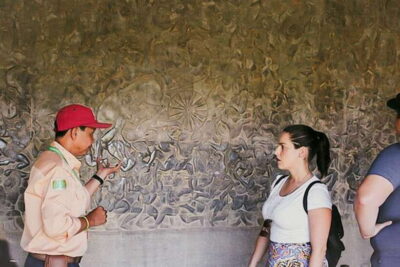
What I like most is the pace you can control. On a private tour, you explore at your own speed, and your guide keeps the story straight while you’re walking and looking, not stuck waiting your turn. I also love the practical touches, like hotel pickup and cold water along the way.
One thing to plan for: the tour price does not include the 3-day temple pass (listed at $62 per person), and food is also not included. Factor those costs into your budget before you book.
In This Review
- Key highlights worth planning around
- Why this two-day eight-temple mix works in Siem Reap
- Private pickup and transport, so you spend time at the temples
- Day 1: Pre Rup climb, Banteay Srei carvings, and Ta Prohm’s jungle maze
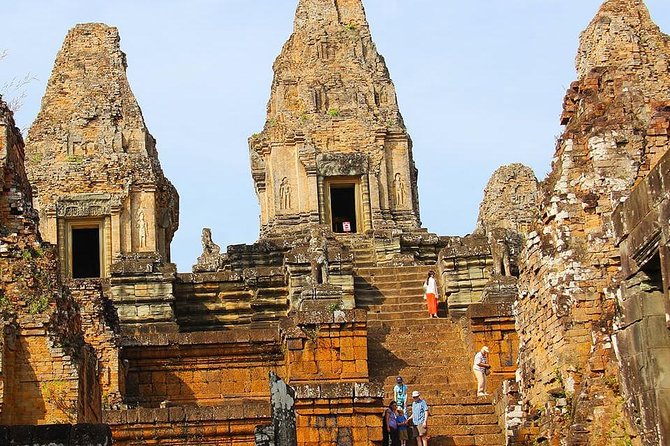
- Pre Rup, the mountain temple viewpoint
- Banteay Samre, Khmer Wat-style symmetry
- Banteay Srei, pink sandstone and the legend of who carved it
- Ta Prohm, the Tomb Raider temple where jungle takes over
- Banteay Kdei, chambers and Buddhist influence
- Day 2: Angkor Wat’s centerpiece, Preah Khan ruins, and Bayon faces
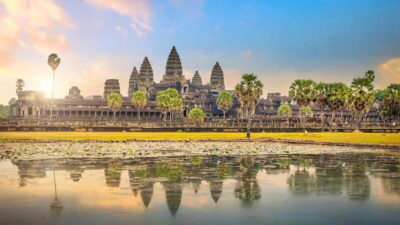
- Angkor Wat, the reason most people come
- Preah Khan, a 12th-century site with fewer restorations
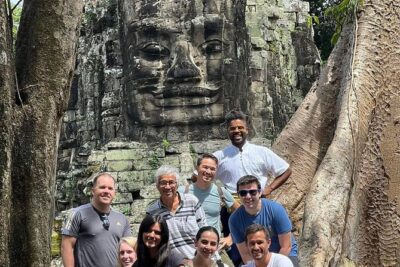
- Bayon, inscriptions and the mix of traditions
- Price and value: is $98 worth it for eight temples?
- What to wear, how to plan your day, and how to make it easier
- Dress code: shoulders and knees
- Bring what you’ll need at a temple pace
- Use private pacing to focus your photos
- Plan your meals
- Who this tour suits best
- Should you book this eight-temple private tour?
- FAQ
- What is included in the tour price?
- Is hotel pickup included?
- Do I need a temple pass, and is it included?
- Is food included?
- What temples are covered in the two days?
- What is the dress code?
- Is the tour private?
- What is the cancellation policy?
Key highlights worth planning around
- Eight temples in two days for a fast, satisfying Angkor hit
- Private pacing so you’re not held up by crowd bottlenecks
- Hotel pickup plus suitable group transport to keep logistics simple
- Banteay Srei’s pink sandstone and fine carvings as a standout stop
- Ta Prohm’s jungle-through-the-stones mood, including the Tomb Raider connection
- Angkor Wat to Bayon for the full range of Khmer temple styles
Why this two-day eight-temple mix works in Siem Reap
Siem Reap is packed with temple options, but getting to them all takes time, and time is the one thing you cannot buy back. This tour is built for people who want a strong cross-section of Angkor without spending every day on buses, tuk-tuks, and ticket-counter lines.
The schedule is also smart in how it balances types of temples. Day 1 leans into variety: a mountain-style climb at Pre Rup, pink sandstone carvings at Banteay Srei, and the film-famous, nature-overgrown walls of Ta Prohm. Day 2 then focuses on the centerpiece sites inside the Angkor Archaeological Park, including Angkor Wat and the layered religious blend you see at Bayon.
And because it’s private, you don’t have to “rush to match the group.” You can slow down for carvings, pause for photos, or wait a few minutes when the light changes.
Private pickup and transport, so you spend time at the temples
This is where value shows up fast. You get pickup from your Siem Reap hotel, plus transport suited to your group size, and cold water included. That means less hassle and fewer moving pieces in your day.
It also helps with temple timing. Angkor sites can be busy, and lines and crowd flow can wreck your mood. The tour’s private format aims to keep you moving efficiently, with a key promise that no crowds hold you up while you explore. Practically, that translates to more time doing what you came for: walking the grounds and noticing details.
One more small but meaningful point: you receive a mobile ticket. That can make check-in smoother, especially when you’re managing heat, sun, and changing plans.
Other ways to be at the temples before the light comes up
- Angkor Wat Sunrise or Sunset Tour with Guide from Siem Reap★ 5.0 · 12,109 reviews
- Siem Reap: Angkor Wat: Small-Group Sunrise or Sunset Tour★ 5.0 · 9,444 reviews
- Siem Reap: Angkor Wat 2-Day Tour with Sunrise and Sunset★ 4.9 · 4,429 reviews
- Angkor Wat Sunrise tour with Small – Group and Guide tours★ 5.0 · 3,655 reviews
Day 1: Pre Rup climb, Banteay Srei carvings, and Ta Prohm’s jungle maze
Day 1 has a strong arc. You start with a temple that rewards effort, then shift into architecture and craftsmanship, then end in a place where nature has taken the lead.
Pre Rup, the mountain temple viewpoint
Pre Rup earns its reputation as a “mountain temple” because reaching the top towers means a steep climb. The effort matters. Up top, you get views over the surrounding countryside that feel wider and more open than the dense temple clusters.
It’s also described as one of the earlier temples built by Khmer kings, which means your guide can help you connect what you see today with the way Khmer styles evolved. If you’re sensitive to heat or stairs, go slow on the ascent. It’s the kind of climb where steady pacing beats racing.
Banteay Samre, Khmer Wat-style symmetry
Next is Banteay Samre, known for Khmer architectural design in a style compared to Angkor Wat. The vibe here is different from Pre Rup. Instead of chasing a viewpoint, you’re studying how the temple’s layout and structures create a composed, balanced feel.
This is also a temple where carvings and tower details can reward an unhurried look. It’s popular in the complex, so you might see more visitors than in some quieter corners, but the time you spend here is still about quality looking, not just ticking a box.
Banteay Srei, pink sandstone and the legend of who carved it
Then comes one of the most memorable stops on the whole schedule, Banteay Srei. This temple is made from pink sandstone from quarries in the Kulen Mountain range, so even before you focus on carvings, the color sets the mood.
What makes it special is the fine detailing. The carvings are described as intricate, and there’s a legend that they were carved by women. Whether you take the legend literally or enjoy it as folklore, the bigger point is that Banteay Srei is built for close attention, not just quick glances.
If you like photographing textures, edges, and patterns, this is a great day segment to slow down. Keep in mind that temples can be uneven, and sandstone surfaces can get slippery when you’re dealing with humidity.
Other early starts around Siem Reap
Ta Prohm, the Tomb Raider temple where jungle takes over
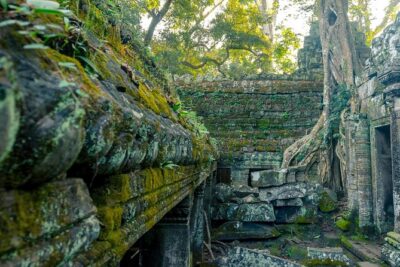
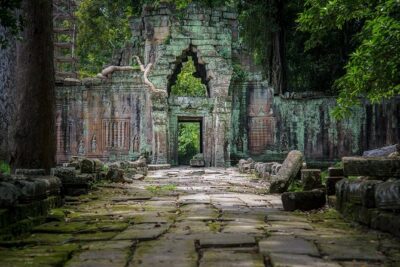
After Banteay Srei’s craftsmanship, you get a huge tonal shift at Ta Prohm, famously called the Tomb Raider temple due to its use as a movie set. The real draw is how it feels like a time capsule: much of the temple is left to the elements, and the jungle grows through the structures.
This stop is less about symmetry and more about atmosphere. You’re walking through doorways where roots and branches have turned the stone into something living. It’s a place where your guide’s storytelling can really help, because the visual drama pairs well with explanations of how the site has been treated over time.
A practical tip: bring patience. This kind of temple makes you want to stop every few steps. Private pacing helps here, because you can spend extra time in the areas that grab your attention.
Banteay Kdei, chambers and Buddhist influence
Finally on Day 1, you reach Banteay Kdei, also known as the Citadel of Chambers or the Citadel of Monks’ Cells. It’s located nearby Ta Prohm, which makes the transition feel logical: from one “jungle temple story” to another that’s tied to monastic space and Buddhist tradition.
Compared with the film-famous fame of Ta Prohm, Banteay Kdei can feel quieter, but that can be a good thing. You have time to focus on how the temple’s layout works and what the name hints at: the feel of multiple small spaces rather than a single grand focal point.
Day 2: Angkor Wat’s centerpiece, Preah Khan ruins, and Bayon faces
Day 2 is the “big ones” day, built around the Angkor Archaeological Park and its famous temple core.
Angkor Wat, the reason most people come
You start at Angkor Wat, the most iconic temple in the complex and the reason many people make the trip at all. It attracts over 2 million visitors per year and is described as the largest temple built during the Khmer empire.
That kind of scale can be overwhelming if you treat it like a checklist. The best approach is to let your guide help you pick out structures and details, then give yourself time to step back and see how the temple’s geometry works as a whole. You’ll also want to watch the light as you move. Morning and late-day shadows shift the feel of the carvings and towers.
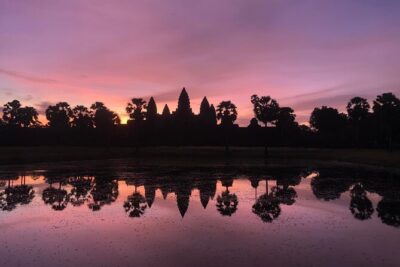
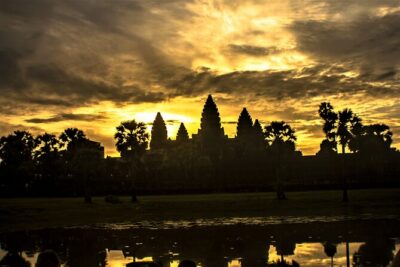
If your booking includes the tour’s optional sunrise, that’s your chance to trade sleep for softer lighting and a calmer start. Just confirm with your provider when sunrise timing is applied and which stop it affects.
Preah Khan, a 12th-century site with fewer restorations
Next is Preah Khan, a 12th-century temple built by King Jayavarman VII. What sets it apart is how it has been left to the elements. Visitors can explore safely, but very little restoration has taken place.
That means you might see more “raw” texture than at the more polished showpieces. If you like the feeling of old stones staying honest, this can be the most emotionally satisfying stop of the day, because it doesn’t try too hard to recreate a perfect ideal. Instead, it lets you see layers of time.
Bayon, inscriptions and the mix of traditions
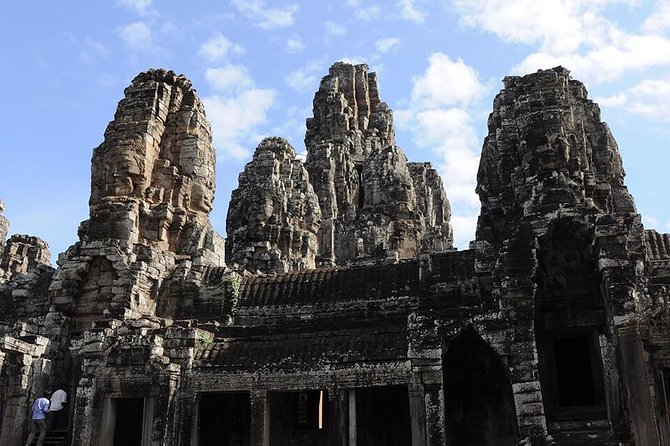
Finally, you visit Bayon, described as majestic and usually a favorite. Bayon has remnants of Hindu inscriptions and both Mahayana and Theravada Buddhist inscriptions. That mix gives you a clear sense that Angkor temple life wasn’t one single storyline.
Bayon’s “nooks and crannies” are where your time disappears in the best way. This is a temple where you can get lost in details. With private pacing, you can take breaks from the busiest viewing points and move into quieter passages where the stone work and inscriptions feel closer.
It’s also one of the best places to end the tour, because it ties together religious and artistic shifts you saw earlier across different temple styles.
Price and value: is $98 worth it for eight temples?
At $98 for roughly two days, you’re paying for the combo of guide, transport, and a plan that links distant sites without wasting half your trip in transit. The tour includes a tour guide, cold water, and suitable transport for group size, plus pickup from your Siem Reap hotel.
So where is the value? It’s in reducing decision fatigue. Angkor is not hard to visit, but it is hard to organize well. Having a private guide means you spend less time figuring out routes and more time understanding what you’re looking at.
Also, the tour includes an mobile ticket and mentions group discounts, which can help if you’re traveling with others and want to cut down per-person costs.
The one budget item that can surprise you is that the 3-day temple pass is not included and is listed at $62 per person. Food and drinks are also not included. Once you add those, you’re paying more overall than the base price, but it’s still often a good deal for a structured two-day run across multiple temple sites.
What to wear, how to plan your day, and how to make it easier
This tour is built around temple walking. That means comfort choices matter.
Dress code: shoulders and knees
You must cover shoulders and knees to enter temples. Plan ahead with lightweight clothing that still meets the rules. If you forget, you may have to improvise in the heat, and nobody enjoys that.
Bring what you’ll need at a temple pace
Cold water is included, but you should still expect a lot of time outdoors. Comfortable shoes help for uneven paths and stair climbs, especially for a temple like Pre Rup. Sun protection also matters because Angkor’s stone can reflect heat, and shade can be limited depending on the stop.
Use private pacing to focus your photos
If you love photos, this is where having a strong guide matters. The guide experience highlighted by past guests includes Sam, described as a master storyteller with impressive photography skills. Even without a camera, that kind of eye helps you find angles and understand where details hide.
Plan your meals
Food and drinks are not included, so plan to grab meals near your schedule breaks. If you skip meals or wait too long because you’re focused on temples, the day can feel harder.
Who this tour suits best
This private eight-temple format is a great fit if you want:
- Two days that cover major temple styles without random planning
- A private guide who explains history and stories as you walk
- Time to explore at your pace, not a rushed conveyor-belt schedule
- A day that includes both the iconic crowd magnets and the more textured, atmospheric temples
It might be less ideal if you:
- Are trying to minimize extra costs beyond the base price, since the temple pass and meals are separate
- Hate stairs or steep climbs, because Pre Rup involves a notable ascent
Should you book this eight-temple private tour?
I’d book it if you want an organized Angkor experience that still leaves room for human-scale exploring. The biggest reasons are straightforward: eight temples across both days, private pacing that keeps you from getting stuck in crowd rhythms, and a guide experience centered on storytelling and practical temple time.
If you do book, I’d treat it like a two-day temple bootcamp for your eyes. Do the math on your real total budget once you add the 3-day temple pass and meals, then show up ready to walk, climb, and notice details. That’s when this tour pays off.
One last thought: if sunrise is your thing, choose it only if you’re willing to trade comfort for light and timing. Otherwise, you can still have a great day without it.
FAQ
What is included in the tour price?
The tour includes a tour guide, cold water, and suitable transport for the group size.
Is hotel pickup included?
Yes. Private transport includes convenient pick-up from your Siem Reap hotel.
Do I need a temple pass, and is it included?
A 3-day temple pass is not included. The listed price for the pass is $62 per person.
Is food included?
No. Food and drinks are not included.
What temples are covered in the two days?
The tour includes Pre Rup, Banteay Samre, Banteay Srei, Ta Prohm, Banteay Kdei, Angkor Wat, Preah Khan, and Bayon.
What is the dress code?
You must cover your shoulders and knees to enter the temples.
Is the tour private?
Yes. It’s a private tour or activity, so only your group participates.
What is the cancellation policy?
Free cancellation is available. You can cancel up to 24 hours in advance for a full refund, based on local experience time.
More Tours in Siem Reap
- Angkor Wat Sunrise or Sunset Tour with Guide from Siem Reap★ 5.0 · 12,109 reviews
- Siem Reap: Angkor Wat: Small-Group Sunrise or Sunset Tour★ 5.0 · 9,444 reviews
- From Siem Reap: Kampong Phluk Floating Village Tour by Boat★ 4.9 · 6,979 reviews
- Siem Reap: Angkor Wat 2-Day Tour with Sunrise and Sunset★ 4.9 · 4,429 reviews
More Tour Reviews in Siem Reap
- Angkor Wat Sunrise or Sunset Tour with Guide from Siem Reap★ 5.0 · 12,109 reviews
- Siem Reap: Angkor Wat: Small-Group Sunrise or Sunset Tour★ 5.0 · 9,444 reviews
- From Siem Reap: Kampong Phluk Floating Village Tour by Boat★ 4.9 · 6,979 reviews
- Siem Reap: Angkor Wat 2-Day Tour with Sunrise and Sunset★ 4.9 · 4,429 reviews
Sunrise at Angkor, Three More Ways
- Angkor Wat Sunrise or Sunset Tour with Guide from Siem Reap★ 5.0 · 12,109 reviews
- Siem Reap: Angkor Wat: Small-Group Sunrise or Sunset Tour★ 5.0 · 9,444 reviews
- Siem Reap: Angkor Wat 2-Day Tour with Sunrise and Sunset★ 4.9 · 4,429 reviews
- Angkor Wat Sunrise tour with Small – Group and Guide tours★ 5.0 · 3,655 reviews
Newly written up around Siem Reap
- Waterfall & River of 1000 Siva Linga- Kulen Mountain Private Tour
★ 5.0 · 3 reviews - Private Transfer from Siem Reap to Sihanoukville
★ 4.5 · 3 reviews - Private Tour to Koh Ker and Beng Mealea
★ 5.0 · 3 reviews - Private Transfer: Siem Reap Angkor Internation Airport to Hotel
★ 5.0 · 3 reviews - Kulen National Park Ticket -Waterfall & 1000 Lingas
★ 5.0 · 3 reviews - Kulen Waterfall & Kbal Spean Tour
★ 5.0 · 3 reviews
Angkor Wat Sunrise Tours, side by side.
 ★ 5.0Angkor Wat Sunrise or Sunset Tour with Guide from Siem ReapFrom $1812,109 reviews
 ★ 5.0Angkor Wat: Small-Group Sunrise or Sunset TourFrom $159,444 reviews
 ★ 4.9Angkor Wat 2-Day Tour with Sunrise and SunsetFrom $344,429 reviews
 ★ 5.0Angkor Wat Sunrise tour with Small – Group and Guide toursFrom $143,655 reviews
 ★ 5.0Angkor Wat Highlights and Sunrise Guided Tour from Siem ReapFrom $233,213 reviews
 ★ 5.0Full-Day Angkor Wat Sunrise Private Tour with Guide from Siem ReapFrom $602,920 reviews
 ★ 5.0Angkor Wat Sunrise & 3 Main Temples with Breakfast – Small GroupFrom $152,857 reviews
 ★ 4.9Angkor Wat Sunrise and Full-Day Sightseeing TourFrom $142,828 reviews
Also appears in