
REVIEW · ANGKOR
2 Days Angkor temples with Sunrise & Sunset
Early mornings, big temple energy.
This 2-day Angkor temples route is built around the two magic light shows, sunrise at Angkor Wat and sunset at the South Gate area or Phnom Bakheng. I like that you cover major highlights and also slide in quieter spots like Ta Som and Neak Pean, so the day feels full without feeling like a blur. The other thing I really like is the private-group setup with an English-speaking guide, plus cold water during the drive.
The main drawback is simple: the Angkor Pass is not included in the $115 tour price. You’ll also want to plan for the strict temple dress code, since missing the rules can mean you get turned away at the gates.
In This Review
- Key things that make this Angkor tour work
- Price and logistics you should understand before you go
- Day 1: Kravan to Phnom Bakheng, with Ta Prohm in the middle
- Prasat Kravan: five red-tower views for the early warm-up
- Banteay Kdei: Jayavarman VII’s “citadel of chambers”
- Ta Prohm: the monastery roots people come for
- Ta Keo: the unfinished state temple feeling
- Angkor Thom: the capital where the details pile up
- Phnom Bakheng: temple mountain and sunset-friendly timing
- Day 2: sunrise at Angkor Wat, then a calmer set of temples
- Angkor Wat sunrise: why an early start is worth it
- Pre Rup and East Mebon: early Khmer architecture stops
- Banteay Srei: the Citadel of the Women for fine carving lovers
- Banteay Samre: a smaller Angkor Wat replica feel
- Ta Som and Neak Pean: Buddhist sites with distinct layouts
- Preah Khan: Royal Sword and a fitting late-day closer
- What you actually get from an English guide like Bunpheng
- Temple rules and comfort tips that keep your day smooth
- Who should book this 2-day sunrise and sunset Angkor tour
- Should you book it? My honest take
- FAQ
- What is included in the $115 per person price?
- Is the Angkor Pass included?
- What time does the tour start?
- Does the tour include pickup from hotels?
- Which places do you visit over the 2 days?
- Where is sunset viewed?
- What is the dress code for entering temples?
- What is the cancellation policy?
Key things that make this Angkor tour work
- Sunrise timing at Angkor Wat: the start shifts by season, usually around 4:30am or 5am.
- Sunset options: South Gate of Angkor Thom or Phnom Bakheng, depending on the flow of the day.
- A temple mix that avoids only the same-famous names: Ta Prohm, Ta Keo, Neak Pean, Ta Som, Preah Khan, and more.
- Private tour feel: only your group, not a mixed crowd wandering at random.
- Guide and driver teamwork: in the feedback I saw, Bunpheng stood out for punctual, professional guidance and adapting to your pace.
- Water and AC transport: small comfort wins help when the temples turn hot and crowded.
Price and logistics you should understand before you go
This tour costs $115 per person for about 2 days. What you get is the value part: an English-speaking tour guide, AC transportation (car, minivan, or minibus depending on the group), and bottled cold water during the day. Pickup is offered, and it’s set up as a private activity, meaning you travel as your own group.
Now the budget reality check. The 3-Day Angkor Pass costs $62 per person and is not included. Since the tour is 2 days, you still need that pass for each visitor, and you’ll use it during your temple visits. So your rough total should be about $177 per person once you add the pass, before food and any hotel costs.
Also note the listed meeting time is 9:00am, but sunrise days run far earlier. The sunrise start time is given as 4:30am or 5am depending on the season. Translation: plan for an early pickup and set your body clock accordingly, or you’ll spend sunrise grumpy.
If you care about getting into temples smoothly, this is where tours can help. You’re not left to figure out routes and timing in the dark. You’re also not negotiating every little decision on your own.
Day 1: Kravan to Phnom Bakheng, with Ta Prohm in the middle
Day 1 is a classic Angkor “big variety” day. You start with smaller temple stops, then ramp up to the famous scenery, and end on a hilltop temple that’s perfect for late light and sunset vibes.
Other ways to be at the temples before the light comes up
- Angkor Wat Sunrise or Sunset Tour with Guide from Siem Reap★ 5.0 · 12,109 reviews
- Siem Reap: Angkor Wat: Small-Group Sunrise or Sunset Tour★ 5.0 · 9,444 reviews
- Siem Reap: Angkor Wat 2-Day Tour with Sunrise and Sunset★ 4.9 · 4,429 reviews
- Angkor Wat Sunrise tour with Small – Group and Guide tours★ 5.0 · 3,655 reviews
Prasat Kravan: five red-tower views for the early warm-up
You begin at Prasat Kravan, a small 10th-century site with five reddish brick towers on an elevated terrace. This is the kind of stop that helps you get your bearings fast. The temple isn’t trying to be the loudest thing in the park, so you can actually study the shapes and details without shoulder-to-shoulder pressure.
Banteay Kdei: Jayavarman VII’s “citadel of chambers”
Next is Banteay Kdei, meaning citadel of chambers. It was built in the late 12th and early 13th centuries by King Jayavarman VII. The word “chambers” is useful here because the site has a layout that rewards slow walking. You get that feeling of stepping into a stone maze built for a different pace of life.
Ta Prohm: the monastery roots people come for
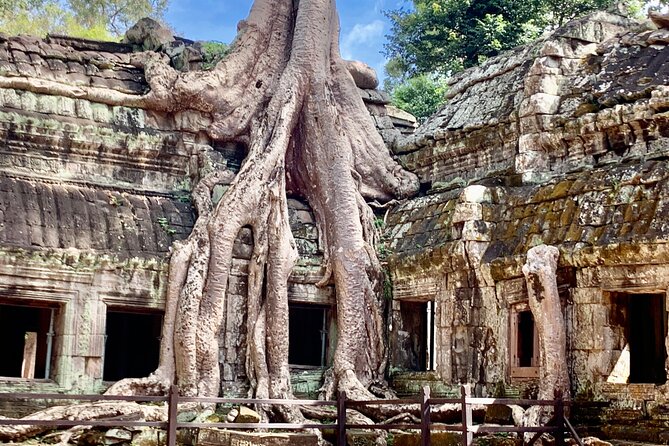
Then comes Ta Prohm. This temple was built in the late 12th and early 13th century in the Bayon style, and it originally functioned as a Buddhist monastery and university. The headline is the famous one: the trees and roots that mingle with the ruins. If you’ve seen photos before, the real thing still hits harder because the scale is awkward in person, in a good way.
Ta Keo: the unfinished state temple feeling
After Ta Prohm, you head to Ta Keo, the state temple for Jayavarman V, started in 975 AD. One of the most interesting points here is that it was never finished. That incompletion changes the vibe. Instead of a perfectly wrapped-up monument, you feel like you’re looking at a project frozen mid-sentence. It’s a reminder that Angkor history is not just about finished masterpieces.
More of Siem Reap after dark
Angkor Thom: the capital where the details pile up
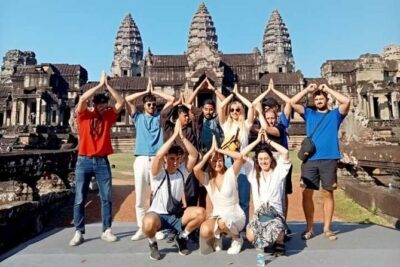
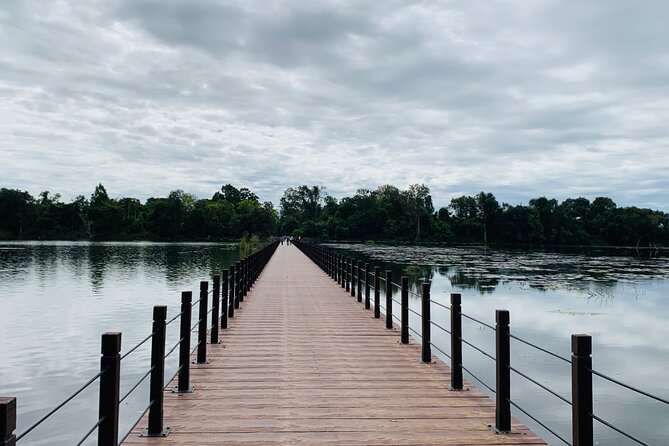
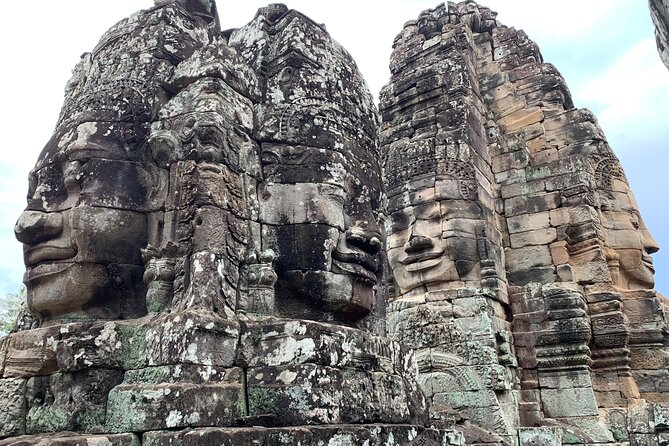
Your next stop is Angkor Thom, the ancient capital of the Khmer Empire. This is where a guide matters. With so many named landmarks in one area, it’s easy to miss the connections between them. You’ll see major components such as the Royal Palace, the Terrace of the Elephants, the Terrace of the Leper King, and the Bayon temple. You also get access to the South Gate and its approach features like the bridge setting.
Phnom Bakheng: temple mountain and sunset-friendly timing
You finish Day 1 at Phnom Bakheng, a temple mountain dedicated to Shiva, built at the end of the 9th century by King Yasovarman. Since Phnom means hill or mountain, the whole layout is built for a climb and a wide view. If your timing lines up, this is one of the best places on a two-day route for sunset energy.
Day 2: sunrise at Angkor Wat, then a calmer set of temples
Day 2 starts with the biggest photo magnet and then moves toward temples that feel more textured, less about one famous view and more about walking through space and time.
Angkor Wat sunrise: why an early start is worth it
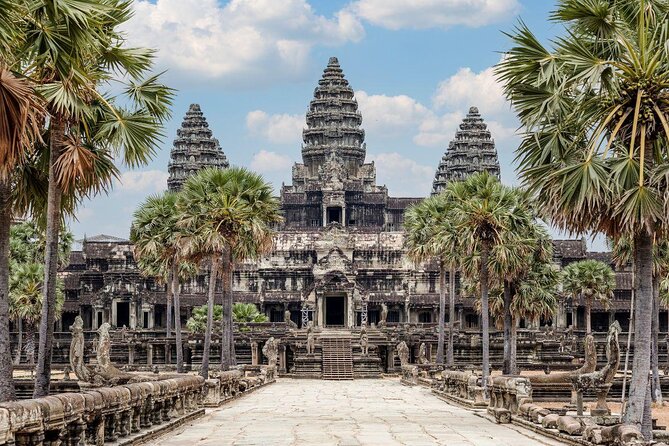
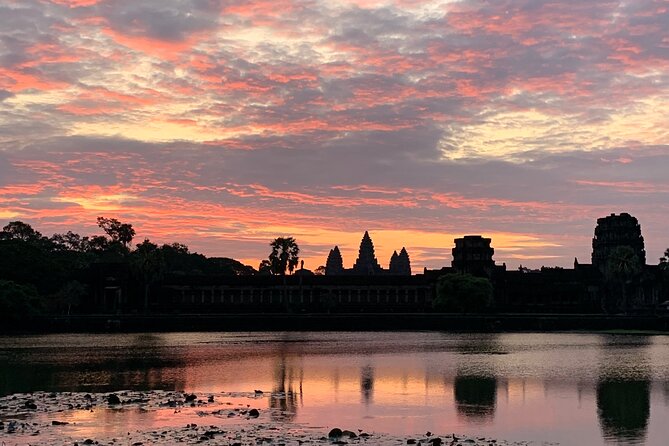
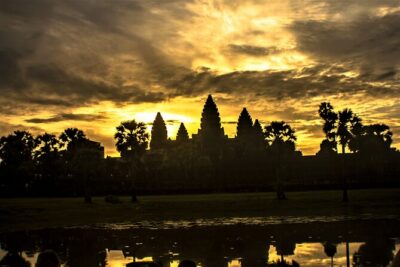
You’ll start very early to watch sunrise at Angkor Wat, with start times around 4:30am or 5am depending on the season. Angkor Wat is the largest religious site in the complex, so being there while the sky is still shifting makes the architecture feel enormous instead of just impressive.
After sunrise, you continue to the main temple area. This is also the moment when your guide’s pacing matters. You want enough time to see what’s in front of you, without getting so rushed that you only glance and move on.
Pre Rup and East Mebon: early Khmer architecture stops
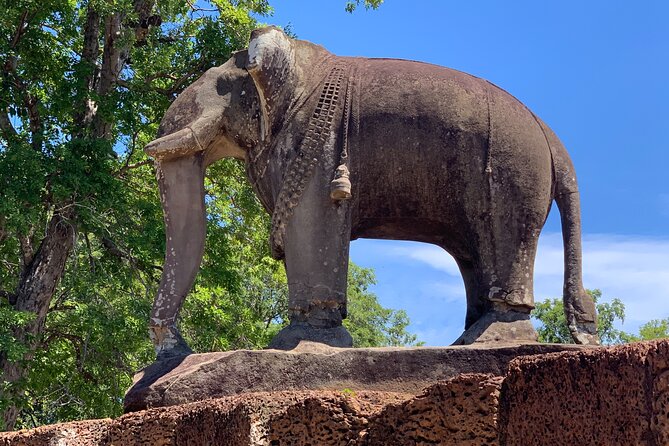
Then you head to Pre Rup and also include East Mebon in the schedule (both noted as early Khmer architecture examples from the 10th century). These stops are great for a different reason than Ta Prohm. They’re less about spectacle, more about structure and proportion.
If you like learning the “why” of temple building, these are good points in the day to slow down. They help you understand how Angkor design matured over centuries.
Banteay Srei: the Citadel of the Women for fine carving lovers
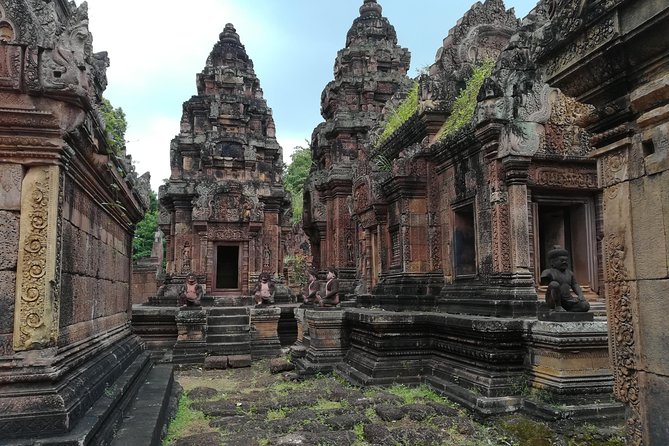
Next is Banteay Srei, known as the Citadel of the Women. The big draw is the carving work and the reputation for delicate detail. The schedule notes that it’s famous for fine carvings, said to be carved by a woman due to the delicate workmanship. Even if you don’t go deep into legends, the main takeaway is that the temple rewards up-close attention, not just scenic views.
The itinerary lists Banteay Srei as free for admission, though you’ll still need your Angkor Pass for the overall circuit as required for each visitor.
Banteay Samre: a smaller Angkor Wat replica feel
You’ll also visit Banteay Samre, a Hindu temple built in the early 12th century by Suryavarman II and Yasovarman II, dedicated to Vishnu. It’s described as like a smaller replica of Angkor Wat. That comparison helps your brain place it, especially if you’re already anchored by Angkor Wat sunrise that morning.
Ta Som and Neak Pean: Buddhist sites with distinct layouts
After Samre, the route turns to Ta Som, built in the late 12th century by Jayavarman VII and dedicated to Lokesvara Buddha. Ta Som is shorter on time, but it’s one of those “you stop and realize you’re not at the main tourist machine anymore” moments.
Then comes Neak Pean, the “Entwined Serpents” temple, built in the 12th century by Jayavarman VII. It sits on a man-made island in the middle of a man-made lake. This is one of the more peaceful-feeling settings on the list, and it’s a nice mental reset between bigger compass-like temple areas.
Preah Khan: Royal Sword and a fitting late-day closer
You end with Preah Khan, which translates as Royal Sword. It was built by Jayavarman VII and dedicated to his late father. It’s located about 1km north of Angkor Thom. With a longer time slot than some of the smaller temples, Preah Khan gives you space to absorb multiple structures and yard areas without feeling like you’re being herded.
What you actually get from an English guide like Bunpheng
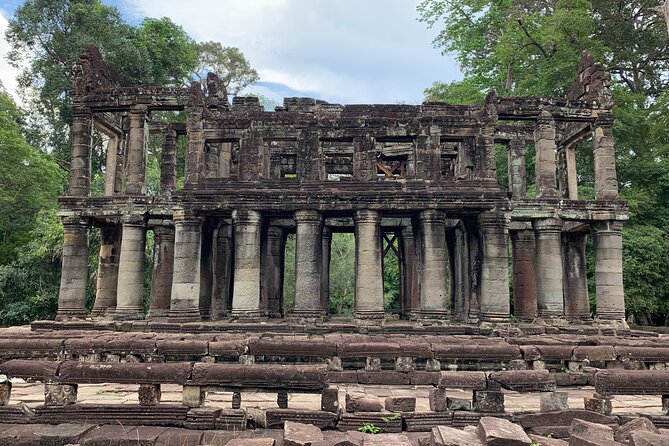
A tour can be only transportation plus a checklist. This one leans more toward interpretation.
In the feedback linked to this tour, Bunpheng comes up repeatedly. The praise is specific: punctuality, professional guiding, and a personal approach that helps when you’re visiting Cambodia for the first time. There’s also mention that he can adapt the plan to your needs, which matters because Angkor is physical. Even if you’re not climbing huge steps, you’re walking, standing, and moving in sun and humidity.
Another practical plus: one review highlighted that he’s a great photographer. Even if you don’t care about photos, that kind of skill often means he understands where the light falls and how to frame the temple without ruining the moment for you.
The bottom line: when the itinerary includes temples with similar-looking brick and carved styles, having someone who can point out what to watch for makes the difference between seeing ruins and understanding ruins.
Temple rules and comfort tips that keep your day smooth
This is one of those tours where small rules can become big problems if you ignore them. The dress code is strict: you must cover your thighs and shoulders when entering temple complexes. If your clothing doesn’t match, you may be refused entrance. That’s the kind of thing that can wreck your schedule, especially on a sunrise or late-day visit.
Also, plan for heat and early hours. The tour provides cold drinking water, but you’ll still want to dress for sun, because the itinerary packs multiple sites across both days. AC transportation helps a lot between stops, but the moments when you’re outside are still real.
One more practical consideration: you’ll be moving through several temple zones, including large complexes like Angkor Thom. That’s why the private-group format is useful. You’re not stuck waiting on a big mixed group to wander at its own pace.
Who should book this 2-day sunrise and sunset Angkor tour
This tour fits you best if:
- You want sunrise at Angkor Wat without trying to solve timing and logistics alone.
- You like the idea of seeing the big-name temples like Ta Prohm and Angkor Thom, but you also want stops like Neak Pean and Ta Som.
- You prefer a private group with an English-speaking guide, and you appreciate punctual, professional service.
You might choose something else if:
- You already know Angkor well and you’re comfortable building your own route from scratch.
- You’re on a super tight budget that cannot handle the extra $62 Angkor Pass cost.
Should you book it? My honest take
Yes, I’d book it if you want a well-paced two-day Angkor temples experience with the two best light sessions built in. The value is strongest when you count what’s included: guide, AC transport, and water, plus a structured route that covers major highlights and adds variety. You’re not just checking boxes, you’re getting a route that helps you understand what you’re seeing.
The only reasons to pause are the extra Angkor Pass cost and the dress code. If you budget for the pass and show up with the right clothing, this tour is a smart way to make your time in Siem Reap count.
FAQ
What is included in the $115 per person price?
The price includes an English-speaking tour guide, AC transportation (car, minivan, or minibus), and bottled cold drinking water.
Is the Angkor Pass included?
No. Entrance fee is not included. You need a 3-Day Angkor Pass, listed at $62 per person.
What time does the tour start?
The meeting point start time is 9:00am. Sunrise visits are earlier, and the tour notes sunrise starts around 4:30am or 5am depending on the season.
Does the tour include pickup from hotels?
Pickup is offered.
Which places do you visit over the 2 days?
You visit multiple temples including Prasat Kravan, Banteay Kdei, Ta Prohm, Ta Keo, Angkor Thom, Phnom Bakheng, plus Angkor Wat for sunrise. Day 2 also includes Pre Rup, Banteay Srei, Banteay Samre, Ta Som, Neak Pean, and Preah Khan.
Where is sunset viewed?
The tour summary says you watch sunset at the South Gate of Angkor Thom or at Phnom Bakheng.
What is the dress code for entering temples?
You must cover your thighs and shoulders when entering temple complexes. If you are not wearing the correct clothing, you may be refused entrance.
What is the cancellation policy?
Free cancellation is available. You can cancel up to 24 hours in advance for a full refund, and changes made less than 24 hours before the start time are not accepted.
Siem Reap After Dark
- Angkor Wat Sunrise or Sunset Tour with Guide from Siem Reap★ 5.0 · 12,109 reviews
- Siem Reap: Angkor Wat: Small-Group Sunrise or Sunset Tour★ 5.0 · 9,444 reviews
- Siem Reap: Angkor Wat 2-Day Tour with Sunrise and Sunset★ 4.9 · 4,429 reviews
- Siem Reap: Full-Day Angkor Wat Guided Tour with Sunset★ 4.9 · 3,803 reviews
More Tour Reviews in Siem Reap
- Angkor Wat Sunrise or Sunset Tour with Guide from Siem Reap★ 5.0 · 12,109 reviews
- Siem Reap: Angkor Wat: Small-Group Sunrise or Sunset Tour★ 5.0 · 9,444 reviews
- From Siem Reap: Kampong Phluk Floating Village Tour by Boat★ 4.9 · 6,979 reviews
- Siem Reap: Angkor Wat 2-Day Tour with Sunrise and Sunset★ 4.9 · 4,429 reviews
Sunrise at Angkor, Three More Ways
- Angkor Wat Sunrise or Sunset Tour with Guide from Siem Reap★ 5.0 · 12,109 reviews
- Siem Reap: Angkor Wat: Small-Group Sunrise or Sunset Tour★ 5.0 · 9,444 reviews
- Siem Reap: Angkor Wat 2-Day Tour with Sunrise and Sunset★ 4.9 · 4,429 reviews
- Angkor Wat Sunrise tour with Small – Group and Guide tours★ 5.0 · 3,655 reviews
Newly written up around Siem Reap
- Waterfall & River of 1000 Siva Linga- Kulen Mountain Private Tour
★ 5.0 · 3 reviews - Private Transfer from Siem Reap to Sihanoukville
★ 4.5 · 3 reviews - Private Tour to Koh Ker and Beng Mealea
★ 5.0 · 3 reviews - Private Transfer: Siem Reap Angkor Internation Airport to Hotel
★ 5.0 · 3 reviews - Kulen National Park Ticket -Waterfall & 1000 Lingas
★ 5.0 · 3 reviews - Kulen Waterfall & Kbal Spean Tour
★ 5.0 · 3 reviews
Angkor Wat Sunrise Tours, side by side.
 ★ 5.0Angkor Wat Sunrise or Sunset Tour with Guide from Siem ReapFrom $1812,109 reviews
 ★ 5.0Angkor Wat: Small-Group Sunrise or Sunset TourFrom $159,444 reviews
 ★ 4.9Angkor Wat 2-Day Tour with Sunrise and SunsetFrom $344,429 reviews
 ★ 5.0Angkor Wat Sunrise tour with Small – Group and Guide toursFrom $143,655 reviews
 ★ 5.0Angkor Wat Highlights and Sunrise Guided Tour from Siem ReapFrom $233,213 reviews
 ★ 5.0Full-Day Angkor Wat Sunrise Private Tour with Guide from Siem ReapFrom $602,920 reviews
 ★ 5.0Angkor Wat Sunrise & 3 Main Temples with Breakfast – Small GroupFrom $152,857 reviews
 ★ 4.9Angkor Wat Sunrise and Full-Day Sightseeing TourFrom $142,828 reviews
Also appears in