
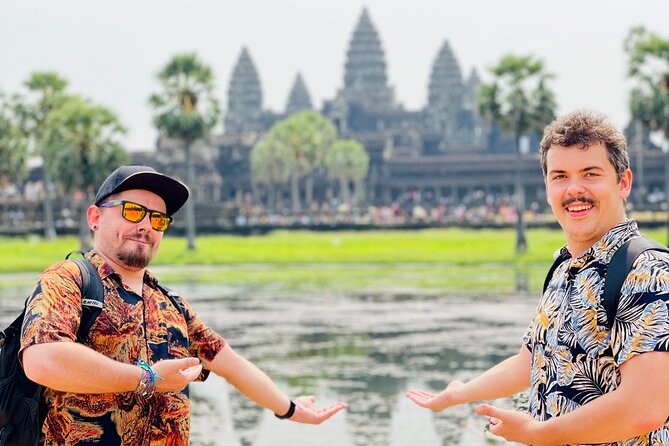
REVIEW · ANGKOR
2 Days Angkor Wat Sunrise and Sunset Private Tour
Few places hit like Angkor at first light.
This 2 days Angkor Wat sunrise and sunset private tour is built around the temple moments that most people dream about: clean morning views at Angkor Wat, then a classic sunset viewpoint from Bakheng. I really like how the day-by-day plan covers the major hits plus the “smaller circuit” stops, so you do not feel like you are skipping half of Angkor. And I also love the private guide experience, because it means the route stays efficient and Tann, the guide name I heard praised, can keep you on track with solid timing and calm explanations. One possible drawback to keep in mind: entrance fees (the 3-day Angkor Pass) and meals are not included, so your real daily budget is a bit higher once you add those basics.
The best part is how the itinerary blends big icons with quick, worthwhile side temples. You get the “wow” of the large complexes, plus smaller structures that feel less crowded and give you more variety in carving styles and layout. The only real consideration is logistics at dawn and dusk: you will need to handle early starts, respect the dress code (shoulders and knees covered), and accept that you will be on the move most of both days.
In This Review
- Key points to know before you go
- Why this sunrise and sunset format works at Angkor
- Day 1: Angkor Wat plus the core Angkor Thom stops
- Angkor Wat at golden light
- Angkor Thom South Gate (quick but important)
- Bayon Temple: the faces in context
- Ta Prohm: the one you stop for longer
- Ta Nei and Neak Pean level details
- How long you spend feeling oriented
- Day 2: Banteay Srei and the small circuit, then Bakheng at sunset
- Banteay Srei for carving lovers
- Preah Khan, Neak Pean, and Ta Som: smaller stops, better variety
- Eastern Mebon: the island-in-waiting feeling
- Phnom Bakheng at sunset: the payoff view
- Tickets, dress code, and early mornings: what you really need to plan
- Dress code: shoulders and knees covered
- Breakfast strategy
- Drones are a no
- The private guide experience, and why it matters with a two-day plan
- Price and value: what $134 per person really buys
- Who this tour suits best
- Should you book this tour?
- FAQ
- Is this a private tour or a shared group?
- How long is the tour?
- What is included in the price?
- What is not included?
- What entrance fee do I need to plan for?
- Can I buy the temple pass on the day of the tour?
- What should I wear for temple visits?
- Is breakfast included?
- Are drones allowed at the temples?
- What is the cancellation policy?
Key points to know before you go
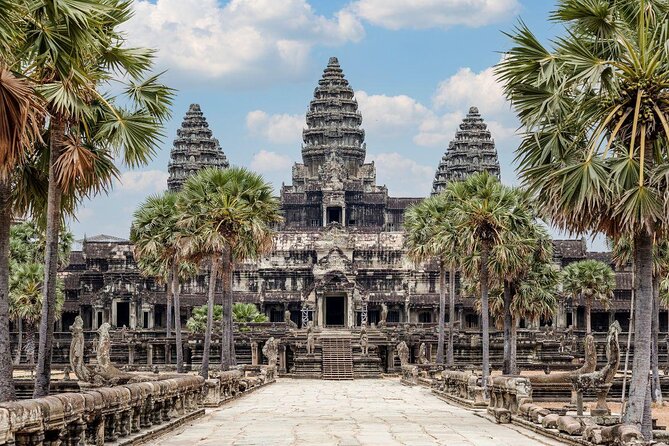
- Golden hours done right: sunrise at Angkor Wat, sunset viewpoint from Phnom Bakheng, timed for the light.
- Big and small circuit coverage: you hit major anchors like Angkor Wat and Ta Prohm, plus lesser stops like Ta Nei and Neak Pean.
- Private, not a cattle herd: you tour with your own group, so the pace and photo stops are easier to manage.
- Guide quality matters: Tann is specifically praised for preparation and service, which helps a lot on a tight schedule.
- Tickets and meals are on you: the Angkor Pass (3 days) and your meals are not included, so plan your total cost early.
Why this sunrise and sunset format works at Angkor
Angkor is not just “a temple site.” It is a whole system of sacred ground, water features, and carefully aligned architecture. What you see in harsh midday sun is very different from what you catch in early morning haze or late-day gold. This tour leans into that, with Angkor Wat in the morning and Phnom Bakheng for the evening.
I like that you are not trying to do sunrise and sunset as separate day trips with random timing. Here, the route is designed to make sense across two full days, so you get more temples than the typical one-day sprint. It also means you can spend real time looking, not only walking. When the light is right, details like door lintels, stair carvings, and the way towers frame the horizon become easier to notice.
That said, Angkor morning and evening require a practical mindset. You will want a respectful outfit, and you should be ready for early hours. If you are expecting a leisurely “sleep in and wander” style, this is not that kind of plan. It is more like a focused sightseeing ride where the timing is the product.
Day 1: Angkor Wat plus the core Angkor Thom stops
Day 1 is centered on the big names. It starts at Angkor Wat, then moves into Angkor Thom highlights, and finishes with a few tight, high-value add-ons. This is a smart sequence because you build from the grand centerpiece into the city-temple complex, which helps everything make more visual sense.
Other ways to be at the temples before the light comes up
- Angkor Wat Sunrise or Sunset Tour with Guide from Siem Reap★ 5.0 · 12,109 reviews
- Siem Reap: Angkor Wat: Small-Group Sunrise or Sunset Tour★ 5.0 · 9,444 reviews
- Siem Reap: Angkor Wat 2-Day Tour with Sunrise and Sunset★ 4.9 · 4,429 reviews
- Angkor Wat Sunrise tour with Small – Group and Guide tours★ 5.0 · 3,655 reviews
Angkor Wat at golden light
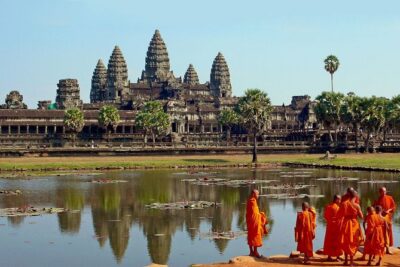
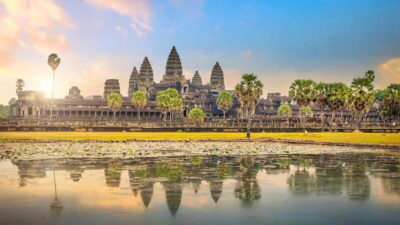
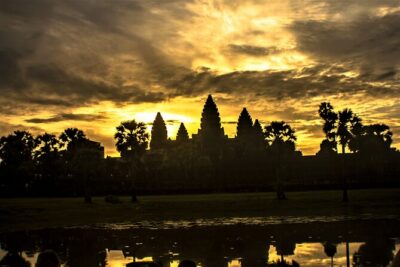
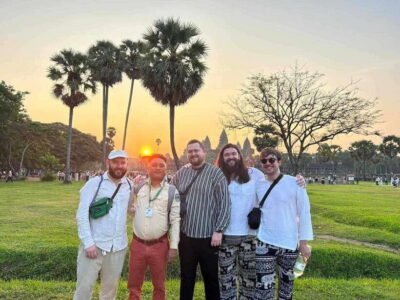
You begin at Angkor Wat, the massive Hindu temple complex and the world’s largest religious monument by site size. It is famous for a reason. Even if you have seen photos, the scale lands differently when you are standing inside the stone geometry. Sunrise here is about more than photos. The early light flattens glare and gives the carvings a cleaner look, especially on columns, bas-reliefs, and the way the causeways guide your eye.
Practical tip: the tour notes that if your hotel includes breakfast, you can request a breakfast pack. That is a real time-saver because you can eat after sunrise without breaking the flow of the morning.
Angkor Thom South Gate (quick but important)
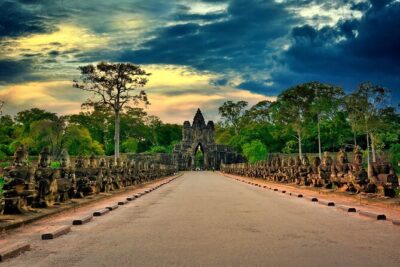
After Angkor Wat, you stop at Angkor Thom South Gate. This is brief, but it matters. It is one of the “entry statements” of the Khmer capital, and it gives you a sense of where the city begins and how the big temple complex sits in the wider plan.
Bayon Temple: the faces in context
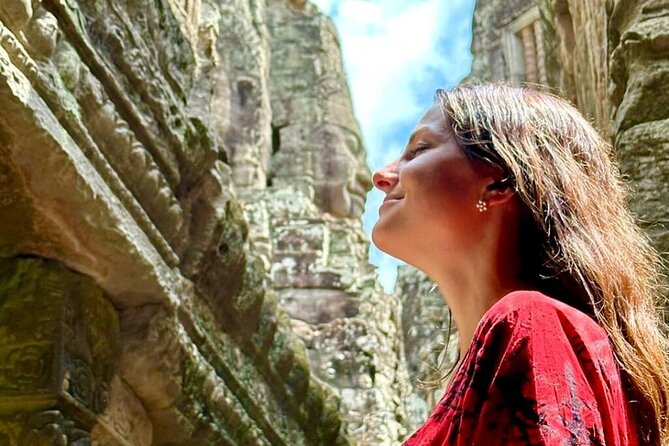
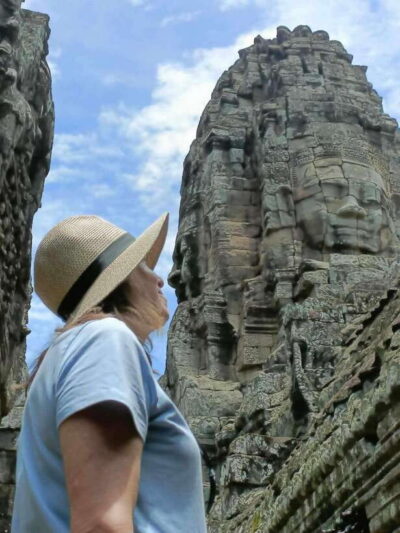
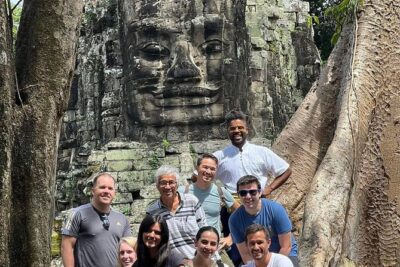
Next is Bayon Temple, with its richly decorated Khmer styling and its association with King Jayavarman VII. The famous face towers are the headline, but I like Bayon most for the way it forces you to look upward and then back down at the stonework in layers. If you take a little time here, you start seeing consistent details in style across the day.
Ta Prohm: the one you stop for longer
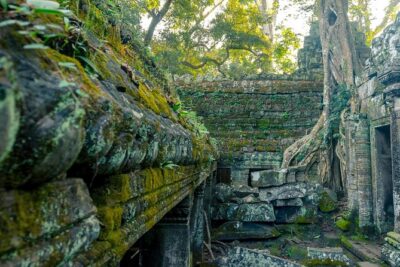
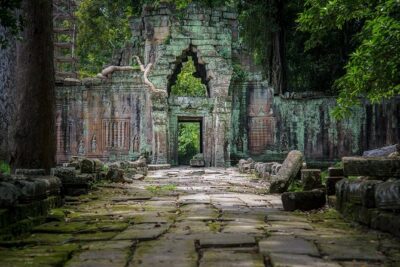
Ta Prohm is where the tour gives you time to linger, and that is a good call. This temple is known for its “tree and stone” look and its identity in the Bayon style period. If you rush, you miss what makes it atmospheric. If you slow down, you notice how the roots and masonry create a natural frame for doors and corridors.
Other private bookings in Siem Reap
Ta Nei and Neak Pean level details
Day 1 includes Ta Nei, a late 12th-century stone temple near the East Baray, with dedication to the Buddha. This stop is shorter, but it is exactly the kind of structure that makes the two-day plan feel worth it. It gives you a change of pace after the most famous sites.
Then you also visit Terrace of the Elephants in Angkor Thom. The stop is short, but it helps you understand the ceremonial space of the city. Think of it as a “read the plan” moment before you move on.
How long you spend feeling oriented
Across Day 1, you move through several distinct zones: Angkor Wat, then the city gates and core temples, then back toward smaller add-on temples. The time distribution is what keeps you from feeling overwhelmed. You get the headline scenes, but you also get enough stops that Angkor starts to click as a connected place rather than a pile of monuments.
Day 2: Banteay Srei and the small circuit, then Bakheng at sunset
Day 2 leans into variety. You start with Banteay Srei, then go through several “small circuit” temples, and finish at the classic evening viewpoint: Phnom Bakheng.
Banteay Srei for carving lovers
You head to Banteay Srei in the morning. This 10th-century temple is dedicated to Shiva and is known for its more delicate, intricate feel compared with the largest complexes. It is not just another temple stop. It is a chance to see how the craft changes when you are working with different structures, proportions, and decorative emphasis.
This is also where you feel the value of having two full days. If Angkor Wat is the big spectacle, Banteay Srei is the finer brushwork. Together, they create a fuller picture.
Preah Khan, Neak Pean, and Ta Som: smaller stops, better variety
Day 2 continues with Preah Khan, built in the 12th century during King Jayavarman VII’s era to honor his father. The temple sits in a thoughtful relationship with nearby water features.
Then you visit Neak Pean, an artificial island with a Buddhist temple on a circular island in Jayatataka Baray. This stop is shorter, but it is memorable because the setting feels more unusual than the typical rectangular temple. You get a different kind of sacred “space” to observe.
After that comes Ta Som, another small temple built at the end of the 12th century. It is near Neak Pean, and it helps keep your route flowing without feeling repetitive. If you like comparing how each temple frames movement and worship areas, this is where you notice differences faster.
Eastern Mebon: the island-in-waiting feeling
You also stop at Eastern Mebon, a 10th-century temple built during King Rajendravarman’s reign on what was once an artificial island, now dry. That detail changes the way you read the temple. In a dry landscape, you are more aware of the former water plan and how the builders used geography as part of the ritual design.
Phnom Bakheng at sunset: the payoff view
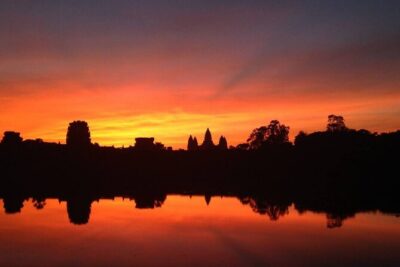
Finally, you reach Phnom Bakheng. This temple-mountain is both Hindu and Buddhist, dedicated to Shiva, built at the end of the 9th century. The tour is explicitly designed for sunset here, in the evening golden hour.
This is the reason to choose a sunrise-and-sunset style itinerary instead of a simple “temples only” day. The light shifts make you slow down and look across rooftops, towers, and stair paths. If you want that classic Angkor atmosphere, this ending is the moment.
Tickets, dress code, and early mornings: what you really need to plan
The tour includes pickup and drop-off and bottled water, but it does not include meals or the temple entrance fees. You will need to plan for the 3-day Angkor Pass, listed at $62 per person. That pass is how you get access to the temple sites during your visit.
A helpful note: temple entrance fees accept visa cards and can be purchased on the day of the tour just before sunrise. That matters if you arrive in Siem Reap and want to keep things simple.
Dress code: shoulders and knees covered
You must dress respectfully with shoulders and knees covered. The tour notes that a real dress scarf is required, and that you cannot rely on a simple workaround. Pack something light that you can pull on quickly, especially for the early morning when you might still be figuring out weather and timing.
Breakfast strategy
Breakfast is not included. If your hotel provides breakfast, request a breakfast pack so you can eat after sunrise at Angkor Wat. That is the practical way to keep the day moving without searching for food at the wrong time.
Drones are a no
Drones are not allowed at the temples. The tour info says you can only ask permission from APSARA. If you bring a drone, keep your expectations realistic and plan on using your phone camera instead.
The private guide experience, and why it matters with a two-day plan
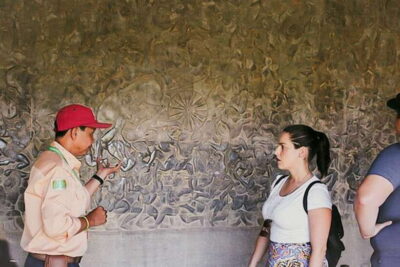
This is a private tour, so it is only your group. That changes the feel immediately. Instead of waiting around, you can keep a steady rhythm. Your guide can also point out what to look for at each stop, which is what turns a list of temples into an actual experience.
One detail that stood out from the feedback I saw: a guide named Tann is described as well prepared and consistently delivering excellent service. Even if every guide is great in their own way, preparation is what makes or breaks a tight sunrise and sunset plan. Good preparation can mean the difference between a smooth start and a stressed scramble.
Also, you are traveling in an air-conditioned vehicle with bottled water. In Siem Reap, that comfort is not a luxury. It is a morale booster when you are walking in heat and then waiting for light to change.
The itinerary also stays structured with sensible time blocks, like a short but meaningful stop at the Terrace of the Elephants and a longer focus at bigger anchors like Angkor Wat and Ta Prohm. That structure helps you enjoy each site rather than feeling like you are sprinting from one photo spot to the next.
Price and value: what $134 per person really buys
At $134 per person, this tour is not the cheapest way to do Angkor. But it is also not priced like a luxury, multi-hour driver plus private museum-only experience. You are paying for two full days, private guiding, air-conditioned transport, pickup and drop-off, and bottled water, plus a schedule that hits sunrise at Angkor Wat and sunset from Phnom Bakheng.
Your extra costs are clear:
- Angkor Pass for 3 days: $62 per person
- Meals: breakfast and lunch are not included
- Tipping: the tour recommends tipping the guide and driver
When you add that up, you are still getting value if you want the light-focused itinerary and the efficient route across both big and small circuit temples. If you only care about a single “greatest hits” day and you are happy to handle dawn logistics on your own, a cheaper option could make sense. But if you want the golden hours to happen without you guessing timing, this price is pretty reasonable for the structure you get.
One more practical point: the tour is often booked about 53 days in advance on average. If you are traveling during peak season or around major holidays, booking earlier helps you get the time slots you want.
Who this tour suits best
This works especially well if you:
- Want a focused two-day Angkor itinerary with both sunrise and sunset included
- Prefer a private guide over crowded shared tours
- Like seeing both “big icons” and smaller temples that add variety
- Want help handling timing, dress expectations, and the flow between sites
It might not be the best fit if you want to spend long unstructured hours wandering with no schedule, or if you strongly prefer doing everything at your own pace with no sunrise or sunset commitments.
Should you book this tour?
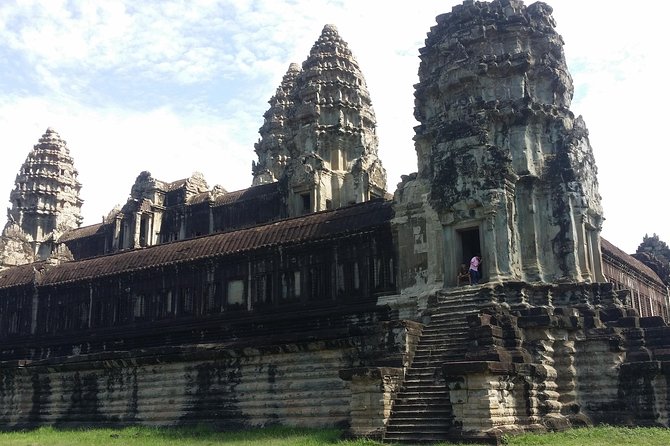
I think you should book this if sunrise and sunset are central to your Angkor plan, and you want a route that covers major temples plus the small circuit within a tight two days. The golden hour focus is the whole point here, and the private setup plus air-conditioned transport make those early and late hours feel manageable.
Book with confidence if you are okay paying for the Angkor Pass and your meals, and if you can follow the dress code. Skip it if you are mainly looking for a low-cost temple day or if you do not want to rise early and finish late when the light changes.
If you do decide to go, pack a proper scarf for the dress code, plan a breakfast backup (breakfast pack if available), and keep your expectations clear. This is a well-run “two-day temple circuit with light at the center” experience, and it is designed to help you see Angkor in the way most people dream about.
FAQ
Is this a private tour or a shared group?
It is a private tour/activity, so only your group participates.
How long is the tour?
The duration is listed as approximately 2 days.
What is included in the price?
Included items are a professional English-speaking tour guide, transportation by air-conditioned vehicle, sightseeing as specified, free pickup and drop-off at city hotels, and bottled water.
What is not included?
Not included are breakfast, lunch, drinks, guide and driver tipping (recommended), travel insurance, and entrance fees for the Angkor Pass.
What entrance fee do I need to plan for?
You will need the 3-day Angkor Pass, listed at $62 per person. Entrance fees are not included in the tour price.
Can I buy the temple pass on the day of the tour?
Yes. The tour notes that temple entrance fees can be purchased on the day of the tour just before sunrise, and visa cards are accepted.
What should I wear for temple visits?
You need respectful dress with shoulders and knees covered. A dress scarf is required, and simple alternatives are not allowed.
Is breakfast included?
No. Breakfast is not included, but the tour suggests requesting a breakfast pack if your hotel includes breakfast, so you can eat after sunrise.
Are drones allowed at the temples?
Drones are not allowed at the temple sites. Permission must be requested from APSARA.
What is the cancellation policy?
Free cancellation is available. You can cancel up to 24 hours in advance of the experience for a full refund. If you cancel less than 24 hours before the start time, the amount paid is not refunded.
More Tours in Siem Reap
- Angkor Wat Sunrise or Sunset Tour with Guide from Siem Reap★ 5.0 · 12,109 reviews
- Siem Reap: Angkor Wat: Small-Group Sunrise or Sunset Tour★ 5.0 · 9,444 reviews
- From Siem Reap: Kampong Phluk Floating Village Tour by Boat★ 4.9 · 6,979 reviews
- Siem Reap: Angkor Wat 2-Day Tour with Sunrise and Sunset★ 4.9 · 4,429 reviews
More Tour Reviews in Siem Reap
- Angkor Wat Sunrise or Sunset Tour with Guide from Siem Reap★ 5.0 · 12,109 reviews
- Siem Reap: Angkor Wat: Small-Group Sunrise or Sunset Tour★ 5.0 · 9,444 reviews
- From Siem Reap: Kampong Phluk Floating Village Tour by Boat★ 4.9 · 6,979 reviews
- Siem Reap: Angkor Wat 2-Day Tour with Sunrise and Sunset★ 4.9 · 4,429 reviews
Sunrise at Angkor, Three More Ways
- Angkor Wat Sunrise or Sunset Tour with Guide from Siem Reap★ 5.0 · 12,109 reviews
- Siem Reap: Angkor Wat: Small-Group Sunrise or Sunset Tour★ 5.0 · 9,444 reviews
- Siem Reap: Angkor Wat 2-Day Tour with Sunrise and Sunset★ 4.9 · 4,429 reviews
- Angkor Wat Sunrise tour with Small – Group and Guide tours★ 5.0 · 3,655 reviews
Newly written up around Siem Reap
- Waterfall & River of 1000 Siva Linga- Kulen Mountain Private Tour
★ 5.0 · 3 reviews - Private Transfer from Siem Reap to Sihanoukville
★ 4.5 · 3 reviews - Private Tour to Koh Ker and Beng Mealea
★ 5.0 · 3 reviews - Private Transfer: Siem Reap Angkor Internation Airport to Hotel
★ 5.0 · 3 reviews - Kulen National Park Ticket -Waterfall & 1000 Lingas
★ 5.0 · 3 reviews - Kulen Waterfall & Kbal Spean Tour
★ 5.0 · 3 reviews
Angkor Wat Sunrise Tours, side by side.
 ★ 5.0Angkor Wat Sunrise or Sunset Tour with Guide from Siem ReapFrom $1812,109 reviews
 ★ 5.0Angkor Wat: Small-Group Sunrise or Sunset TourFrom $159,444 reviews
 ★ 4.9Angkor Wat 2-Day Tour with Sunrise and SunsetFrom $344,429 reviews
 ★ 5.0Angkor Wat Sunrise tour with Small – Group and Guide toursFrom $143,655 reviews
 ★ 5.0Angkor Wat Highlights and Sunrise Guided Tour from Siem ReapFrom $233,213 reviews
 ★ 5.0Full-Day Angkor Wat Sunrise Private Tour with Guide from Siem ReapFrom $602,920 reviews
 ★ 5.0Angkor Wat Sunrise & 3 Main Temples with Breakfast – Small GroupFrom $152,857 reviews
 ★ 4.9Angkor Wat Sunrise and Full-Day Sightseeing TourFrom $142,828 reviews
Also appears in