
REVIEW · ANGKOR
2 Days Temples with Sunrise-Small Group
A sunrise temple day in Cambodia, planned down to the details. This small-group tour helps you hit major Angkor sites in two days, with sunrise timing at Angkor Wat and a local, English-speaking guide to keep the stories clear and the route efficient. I especially liked the compact pace that still feels organized, and the way the day 1 route focuses on impressive temples beyond Angkor Thom instead of just repeating the most obvious stops.
The main thing to plan around is the extra temple pass cost (USD 62 for a 2 to 3 day pass), plus the early morning wake-up for sunrise and the required temple clothing rules.
In This Review
- Key Things I’d Highlight Before You Go
- Two Days, One Mission: See More Angkor Without the Chaos
- Day 1: Outside Angkor Thom, From Pre Rup to Neak Pean
- Pre Rup: A Hindu State Temple With End-of-Day Energy
- Banteay Srei: Small Temple, Big Craftsmanship
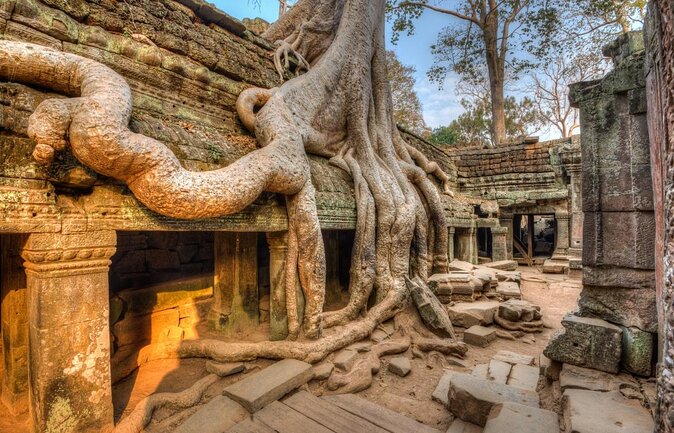
- Preah Khan: Ruins, Trees, and Root-Clutch Atmosphere
- Neak Pean: A Buddhist Temple on an Island in Jayatataka Baray
- Day 2: Sunrise at Angkor Wat, Then Ta Prohm, Bayon, and More
- Angkor Wat at Dawn: Pre-Dawn Entry, Torch Needed
- Srah Srang: Breakfast Moment, Then a Breather
- Ta Prohm: Jungle-Style Atmosphere and the Monks Detail
- Terrace of the Elephants (and the Leper King Terrace Passing By)
- Bayon Temple: The Faces That Do the Talking
- Getting Your Money’s Worth: Price, Pass, and What’s Included
- Comfort and Timing: The Included Details That Matter Day-to-Day
- Temple Rules You Should Not Ignore
- Guides and Pace: Why the Experience Feels Smooth
- Who Should Book This Tour (and Who Might Want Another Option)
- Should You Book This 2 Days Temples With Sunrise Tour?
- FAQ
- What is included in the tour price?
- Do I need to buy a temple pass?
- Is sunrise at Angkor Wat included?
- Do I need to bring anything?
- Are meals included?
- What is the dress code for temples?
- How big is the group?
- What if the weather is bad?
- What is the start time and how do I avoid missing sunrise?
Key Things I’d Highlight Before You Go
- Small group size (max 15): you get more guide time and less time lost to logistics
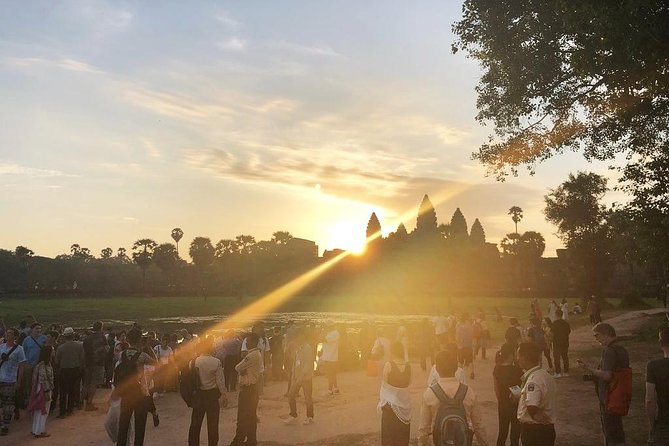
- Sunrise at Angkor Wat: pre-dawn entry from the eastern side, with a practical torch tip
- Day 1 temples outside Angkor Thom: Pre Rup, Banteay Srei, Preah Khan, and Neak Pean in one flowing route
- Atmospheric temple variety: carved sandstone, root-covered ruins, and water landscape all in the same trip
- Focused English guiding: the experience stays understandable, not just a drive-by photo stop
Two Days, One Mission: See More Angkor Without the Chaos
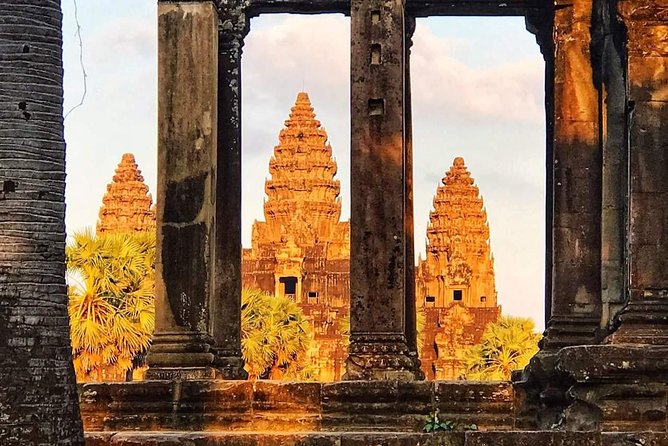
Angkor can eat up days fast, mainly because travel time and crowds turn your sightseeing into a waiting game. What I like here is that this tour is built for a tight window. You cover a lot of ground in two days, with a route that mixes big-name temples and standout lesser-seen stops.
On the people side, the tour is led by a licensed English-speaking guide, and the group stays limited to 15 travelers. That matters because questions come up naturally when you’re standing in front of carving, layout, and symbolism. It also helps you move as a unit when sites are busy, especially around sunrise and the classic Angkor anchors.
There’s also a “done-with-the-stress” feeling to the whole structure. You get hotel pickup and drop-off, an air-conditioned vehicle, and mineral water. It’s not just sightseeing. It’s sightseeing with fewer moving parts for you.
Day 1: Outside Angkor Thom, From Pre Rup to Neak Pean
Day 1 leans into temples many people skip when they only chase the biggest Angkor names. I like this because it gives you variety without feeling scattered. The route is built around different temple styles, different materials, and different atmospheres.
Other ways to be at the temples before the light comes up
- Angkor Wat Sunrise or Sunset Tour with Guide from Siem Reap★ 5.0 · 12,109 reviews
- Siem Reap: Angkor Wat: Small-Group Sunrise or Sunset Tour★ 5.0 · 9,444 reviews
- Siem Reap: Angkor Wat 2-Day Tour with Sunrise and Sunset★ 4.9 · 4,429 reviews
- Angkor Wat Sunrise tour with Small – Group and Guide tours★ 5.0 · 3,655 reviews
Pre Rup: A Hindu State Temple With End-of-Day Energy
You start at Pre Rup (about 30 minutes, ticket not included). This Hindu temple was built as the state temple for Khmer king Rajendravarman. Even if you know nothing about Khmer royal history, you can still read the place as a statement. The layout and stepped forms are meant to feel like power made stone.
Because this is one of the earlier stops, it’s also a good reset point for your first day. You’re still fresh enough to enjoy the details rather than just collect stamps.
Tip: wear shoes that handle uneven stone. Even quick stops have uneven ground and lots of steps.
Banteay Srei: Small Temple, Big Craftsmanship
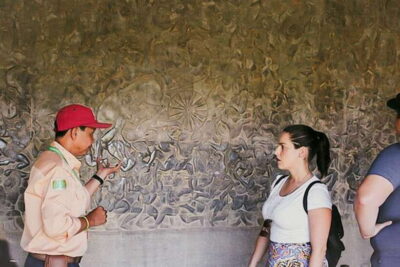
Next comes Banteay Srei (about 1 hour, listed as admission ticket free). This is a small sandstone structure with detailed reliefs, and it’s widely regarded for skillful carving. It’s one of those places where you’ll look longer than you planned, because the work holds up close.
The contrast is fun: after the first temple’s stately vibe, Banteay Srei feels precise and delicate, like someone cared deeply about finishing.
Preah Khan: Ruins, Trees, and Root-Clutch Atmosphere
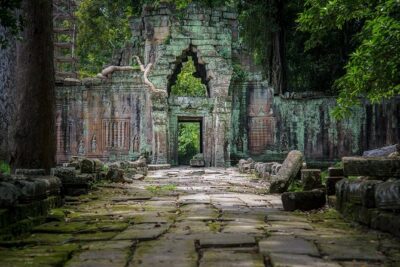
In the afternoon you move to Preah Khan (about 2 hours, ticket not included). This site is ruined and atmospheric, with tree roots and crumbling stone structures. You don’t come here for symmetry perfection. You come because the mix of collapse and growth makes the temple feel alive.
This stop also helps you understand how Angkor temples can change over time. The stone still tells the story, but nature is now part of the narrative.
Neak Pean: A Buddhist Temple on an Island in Jayatataka Baray
Day 1 ends with Neak Pean (about 50 minutes, ticket not included). The idea is simple but cool: you’re looking at an artificial island with a Buddhist temple on it, in the context of Jayatataka Baray.
Even if you’re not a water-reservoir nerd, this temple is worth it because it shifts your perspective from carvings to landscape design. It feels different from the dense stone blocks of other sites.
Other early starts around Siem Reap
Day 2: Sunrise at Angkor Wat, Then Ta Prohm, Bayon, and More
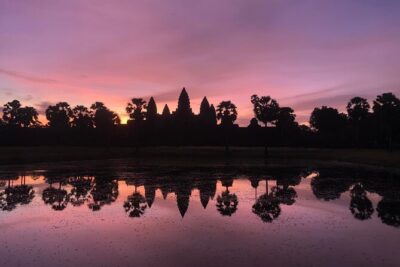
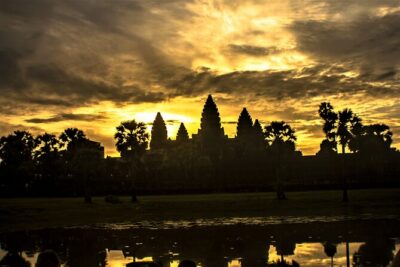
Day 2 is the big one. It starts with pre-dawn departure for sunrise at Angkor Wat. This is where the tour earns its keep. Sunrise is not just pretty. It changes the whole experience, with cooler air and fewer people around you at the start.
Angkor Wat at Dawn: Pre-Dawn Entry, Torch Needed
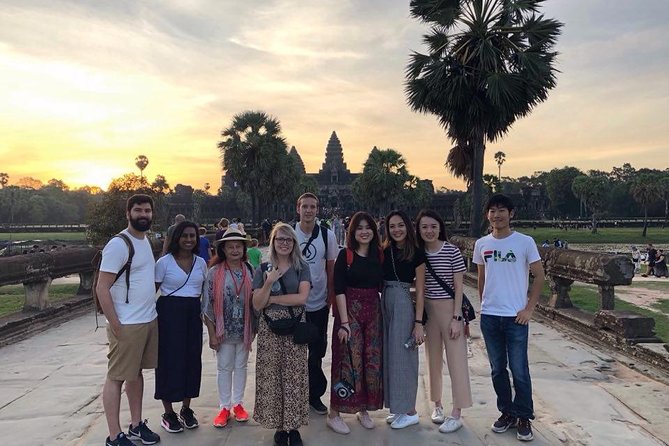
You’re guided into Angkor Wat in darkness, from a less busy eastern side. The tour instruction is clear: bring a torch so you can see what you’re stepping onto in the early hours.
I love this part because the temple wakes up with you. Early light brings out form first, then detail. If you show up late, you miss that slow shift.
Practical note: plan for real walking. Early morning often means your body is stiff, so go easy at first and let your feet warm up.
Srah Srang: Breakfast Moment, Then a Breather
After sunrise, the tour wraps the Angkor day with Srah Srang (about 50 minutes, admission ticket free) and ends with breakfast at a Khmer local restaurant. If you’d rather not move far, the instructions mention you can do a takeaway approach connected to your hotel.
This is a smart stop because it gives your day a rhythm. You go from early morning vision into food and recovery, so you don’t feel like you’re dragging yourself through the next temples on pure caffeine and willpower.
Ta Prohm: Jungle-Style Atmosphere and the Monks Detail
Next is Ta Prohm (about 1 hour, ticket not included). This is one of the most atmospheric temples in Angkor because it’s surrounded by jungle-like setting. It’s also famous because it once housed 2,740 monks, and that number gives you a helpful mental picture of how important this place was as a living religious center, not just stone scenery.
When you’re there, focus on what’s holding and what’s breaking. The goal is to see the temple as a collaboration between architecture and vegetation.
Terrace of the Elephants (and the Leper King Terrace Passing By)
After a rest break you pass Terrace of the Leper King and Terrace of the Elephants (about 20 minutes, both listed as admission ticket free). Even as a quick stop, it’s worth paying attention because these terraces are more than photo backdrops. The name alone gets attention, but the carved surfaces and battle between time and weather are the point.
If you only glance, you’ll miss the way the terraces act like a storytelling wall.
Bayon Temple: The Faces That Do the Talking
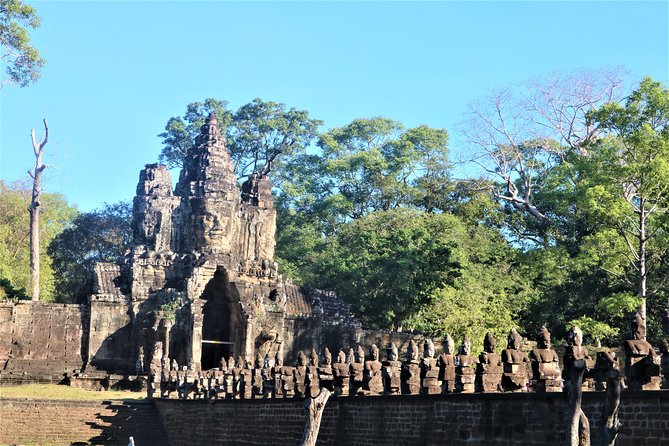
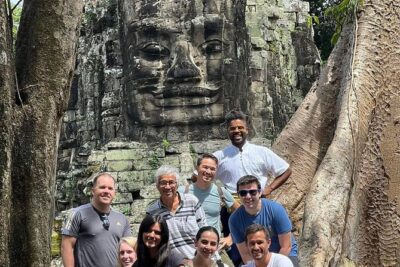
Finally, you reach Bayon Temple (about 1 hour, ticket not included). The key feature here is the central towers with more than 200 enormous faces. This is where Angkor’s visual storytelling hits hard. You don’t just look at a building. You feel watched by it, which is exactly what makes Bayon different from many other temples.
If you’re tired by the end of the day, don’t rush this final stop. Slow down and let the faces line up in your mind with the space around you.
Getting Your Money’s Worth: Price, Pass, and What’s Included
The tour price is USD 43 per person, and then you have one big extra line item: the USD 62 temple pass for 2 to 3 days payable on the day of your activity. Meals are not included.
So in rough math, you should plan around USD 105 total before meals. That might sound like a lot until you consider what you’re getting for that day-to-day cost: a licensed English guide, two days of transport in an air-conditioned vehicle, hotel pickup and drop-off, and mineral water during the trip.
Where this tour feels like value is the sunrise logistics alone. Sunrise at Angkor Wat is time-critical. You don’t want to gamble on timing. You want someone else to manage the schedule and the route so you can focus on the experience.
Also, the small group size helps you feel like the guide is working for you, not just moving a crowd along.
Comfort and Timing: The Included Details That Matter Day-to-Day
A lot of temple tours promise big names. This one tries to reduce the annoying parts.
You’ll have:
- Hotel pickup and drop-off, which cuts down on hassle in Siem Reap
- An air-conditioned vehicle, useful in the Cambodian heat
- Mineral water on hand during stops
- A licensed English-speaking guide focused on interpretation, not just pointing
- Mobile ticket mentioned as part of the experience setup
One more useful detail: the tour asks you to request a wake-up call at your hotel so you do not miss the sunrise timing. That’s not glamorous, but it’s the difference between seeing Angkor at dawn and staring at it later with regrets.
Temple Rules You Should Not Ignore
This tour is casual in clothing, but not in temple attire. The dress code says shoulders and knees must be covered inside temples. So bring a light layer that covers up, even if it feels warm outside.
It also recommends comfortable walking shoes. I agree. You’re moving on stone surfaces, steps, and uneven ground across multiple sites. A quick stop becomes a slow test of foot comfort if your footwear is wrong.
And for sunrise, the instruction to bring a torch at Angkor Wat is practical. You’ll thank yourself when you’re trying not to stumble on the route in low light.
Guides and Pace: Why the Experience Feels Smooth
The best part of this tour is how it runs like a plan. In real feedback, the guide experience stands out, and specific staff were mentioned with genuine warmth. I’m taking cues like guide Sok being highlighted as great, with strong temple knowledge and a friendly, helpful style. There was also mention of Richard as the driver, plus added comfort between stops such as water and flannel.
That kind of small care is not about luxury. It’s about keeping you comfortable enough to actually enjoy what you came to see.
The pace also seems thoughtfully set. You cover the main sights without feeling like you’re being rushed through every stone wall. You get enough time in each place to look, read the guide’s explanations, and then move on with your feet still working.
Who Should Book This Tour (and Who Might Want Another Option)
This tour is a great match if:
- You want two days of temples without spending all your time figuring out logistics
- You value English guiding so carvings and layouts make sense
- You like sunrise experiences and want a pre-dawn setup instead of DIY guessing
- You prefer a group that stays under 15
You might consider another option if:
- You dislike early starts. Sunrise means a wake-up call and a torch
- You’re planning to arrive extremely late or leave early from Siem Reap, because the tour structure depends on timing
- You want meals included. The schedule says meals are not included, though breakfast is part of the day 2 structure
Should You Book This 2 Days Temples With Sunrise Tour?
If you want a smart, time-efficient Angkor plan, I’d say book it. The combination is hard to beat: sunrise at Angkor Wat, strong coverage of major temples, and a day 1 route that includes Banteay Srei and Preah Khan style stops that add texture beyond the most famous checklist.
Just go in with your eyes open about the two key tradeoffs. First, you need the temple pass budget. Second, you must treat sunrise as real early commitment, not a casual option. If that fits your travel style, this is a solid way to see a lot of Angkor without turning your trip into a stressful puzzle.
FAQ
What is included in the tour price?
The tour includes sunrise at Angkor Wat and other major temples, a licensed English-speaking tour guide, hotel pickup and drop-off, an air-conditioned vehicle, mineral water, and local tax.
Do I need to buy a temple pass?
Yes. The tour states you must pay a temple pass directly to the site, with an additional surcharge of USD 62 for a 2 to 3 day pass payable on the day of the activity.
Is sunrise at Angkor Wat included?
Yes. The itinerary includes a pre-dawn departure for sunrise at Angkor Wat, and you will enter the temple in darkness.
Do I need to bring anything?
The tour specifically recommends you bring a torch for Angkor Wat sunrise since entry starts in darkness. Comfortable walking shoes are also recommended.
Are meals included?
Meals are not included in the tour price. The itinerary does mention breakfast as part of day 2 after Srah Srang.
What is the dress code for temples?
Casual clothing is fine, but shoulders and knees must be covered inside temples.
How big is the group?
The tour has a maximum group size of 15 travelers.
What if the weather is bad?
The experience requires good weather. If it is canceled due to poor weather, you will be offered a different date or a full refund.
What is the start time and how do I avoid missing sunrise?
The start time listed is 8:00 am. For the sunrise day, the tour asks you to request a wake-up call at your hotel so you do not miss the sunrise departure.
Other Pre-Dawn Departures
- Angkor Wat Sunrise or Sunset Tour with Guide from Siem Reap★ 5.0 · 12,109 reviews
- Siem Reap: Angkor Wat: Small-Group Sunrise or Sunset Tour★ 5.0 · 9,444 reviews
- Siem Reap: Angkor Wat 2-Day Tour with Sunrise and Sunset★ 4.9 · 4,429 reviews
- Angkor Wat Sunrise tour with Small – Group and Guide tours★ 5.0 · 3,655 reviews
More Tour Reviews in Siem Reap
- Angkor Wat Sunrise or Sunset Tour with Guide from Siem Reap★ 5.0 · 12,109 reviews
- Siem Reap: Angkor Wat: Small-Group Sunrise or Sunset Tour★ 5.0 · 9,444 reviews
- From Siem Reap: Kampong Phluk Floating Village Tour by Boat★ 4.9 · 6,979 reviews
- Siem Reap: Angkor Wat 2-Day Tour with Sunrise and Sunset★ 4.9 · 4,429 reviews
Sunrise at Angkor, Three More Ways
- Angkor Wat Sunrise or Sunset Tour with Guide from Siem Reap★ 5.0 · 12,109 reviews
- Siem Reap: Angkor Wat: Small-Group Sunrise or Sunset Tour★ 5.0 · 9,444 reviews
- Siem Reap: Angkor Wat 2-Day Tour with Sunrise and Sunset★ 4.9 · 4,429 reviews
- Angkor Wat Sunrise tour with Small – Group and Guide tours★ 5.0 · 3,655 reviews
Newly written up around Siem Reap
- Waterfall & River of 1000 Siva Linga- Kulen Mountain Private Tour
★ 5.0 · 3 reviews - Private Transfer from Siem Reap to Sihanoukville
★ 4.5 · 3 reviews - Private Tour to Koh Ker and Beng Mealea
★ 5.0 · 3 reviews - Private Transfer: Siem Reap Angkor Internation Airport to Hotel
★ 5.0 · 3 reviews - Kulen National Park Ticket -Waterfall & 1000 Lingas
★ 5.0 · 3 reviews - Kulen Waterfall & Kbal Spean Tour
★ 5.0 · 3 reviews
Angkor Wat Sunrise Tours, side by side.
 ★ 5.0Angkor Wat Sunrise or Sunset Tour with Guide from Siem ReapFrom $1812,109 reviews
 ★ 5.0Angkor Wat: Small-Group Sunrise or Sunset TourFrom $159,444 reviews
 ★ 4.9Angkor Wat 2-Day Tour with Sunrise and SunsetFrom $344,429 reviews
 ★ 5.0Angkor Wat Sunrise tour with Small – Group and Guide toursFrom $143,655 reviews
 ★ 5.0Angkor Wat Highlights and Sunrise Guided Tour from Siem ReapFrom $233,213 reviews
 ★ 5.0Full-Day Angkor Wat Sunrise Private Tour with Guide from Siem ReapFrom $602,920 reviews
 ★ 5.0Angkor Wat Sunrise & 3 Main Temples with Breakfast – Small GroupFrom $152,857 reviews
 ★ 4.9Angkor Wat Sunrise and Full-Day Sightseeing TourFrom $142,828 reviews
Also appears in