
REVIEW · ANGKOR
Angkor Wat 1 Day with Sunrise Combined tour with (Tuk Tuk)
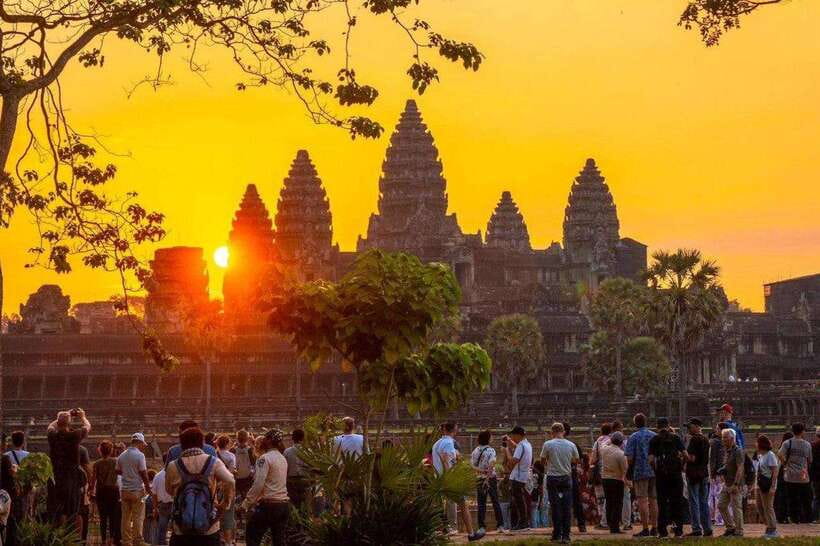
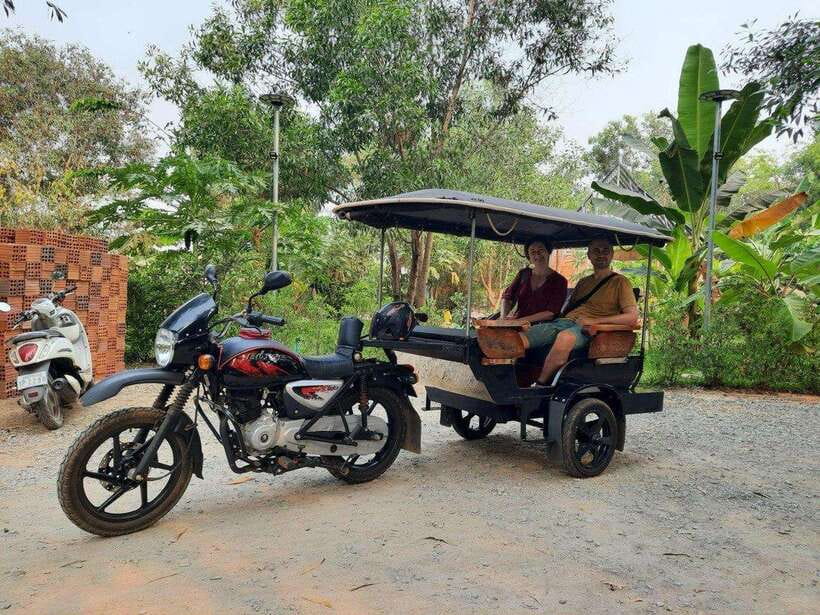
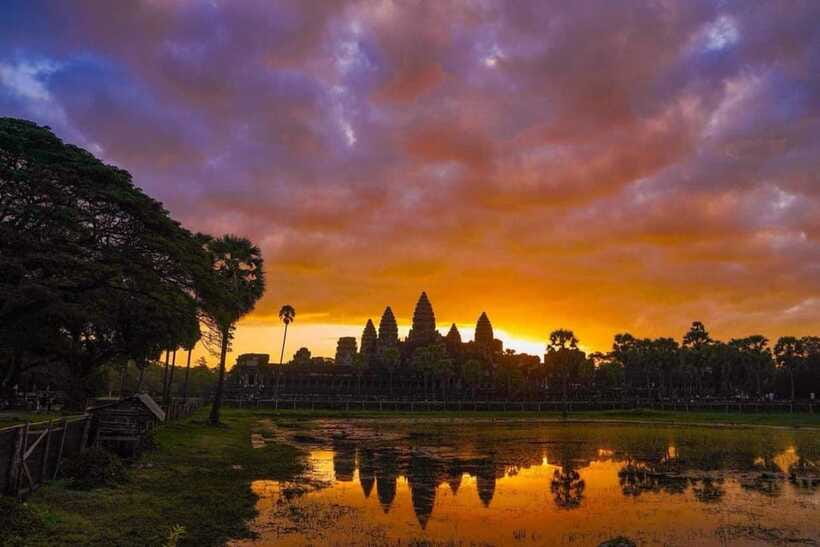
Waking up before dawn changes everything at Angkor. This sunrise tuk tuk day trip is interesting because you get Angkor Wat at first light, then you keep exploring after the crowds thin. I also love the way your driver builds in breaks and arrives with cold water after temple stops. One drawback to plan for: it is an early start and a long walking day, and temple tickets plus meals cost extra.
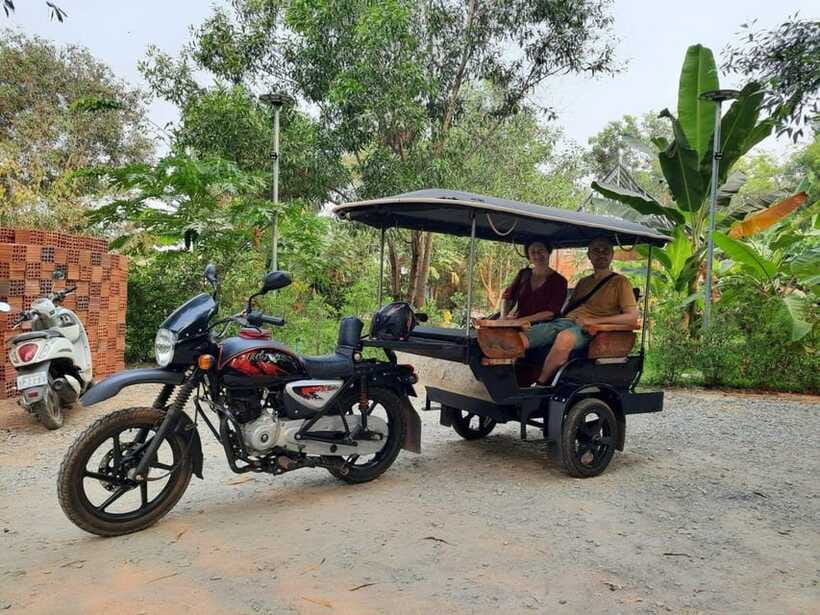
I especially like the human touch. Drivers such as Indra take time with English-speaking explanations at each stop, and they often help with practical photo ideas so you are not just guessing where to stand. You end the day with a clear route back, around 02:30 to 03:00 pm, either to your hotel or wherever you ask to be dropped in town.
If you want Angkor in one day without getting stressed, this format works because it mixes sunrise magic with an organized temple flow. You still move at your own pace at key ruins, which is the difference between rushing through and actually seeing details.
In This Review
- Key highlights you will care about
- Sunrise at Angkor Wat, why the timing matters
- Your money at $12, what value looks like here
- Pickup at 04:45, buying the pass, then moving fast
- Angkor Wat at sunrise, what you are actually seeing
- Angkor Thom South Gate and Tonle Om Gate, the first big switch
- Bayon, Baphuon, Phimeanakas, and the elephant and leper terraces
- Bayon
- Baphuon
- Phimeanakas
- Terrace of the Elephants
- Terrace of the Leper King
- Thommanon, Chau Say Tevoda, and Ta Keo, the middle-day rhythm
- Thommanon
- Chau Say Tevoda
- Ta Keo
- Ta Prohm, Banteay Kdei, and a finish that feels more human
- Ta Prohm
- Banteay Kdei
- Breakfast and lunch, how to keep the budget from slipping
- Comfort tips for the heat, the steps, and your feet
- Who should book this sunrise tuk tuk day, and who should not
- Should you book this Angkor Wat 1 Day Sunrise with Tuk Tuk?
- FAQ
- FAQ
- What time is pickup for the Angkor Wat sunrise?
- Is the Angkor temple pass included?
- Do I get a tour guide as part of the tour?
- Are meals included, and what do they typically cost?
- What temples are included in the itinerary?
- What should I bring, and what is not allowed?
- Is the tour wheelchair accessible, and is it suitable for back problems?
Key highlights you will care about
- 04:45 am pickup for the sunrise so you are at Angkor Wat when the light turns magical
- An English-speaking tuk tuk driver who explains temples as you go, not just drives you
- Cold water at stops and real patience while you explore and take photos
- A full day routing through Angkor Wat, Angkor Thom, and major outlying temples like Ta Prohm
- Simple inclusions, clear extras: tickets and meals are not included, so budget accordingly
Sunrise at Angkor Wat, why the timing matters
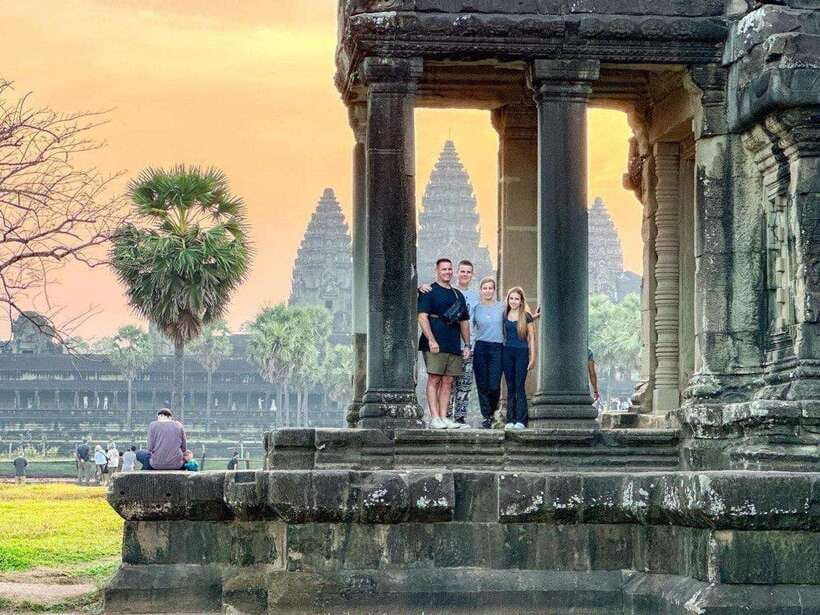
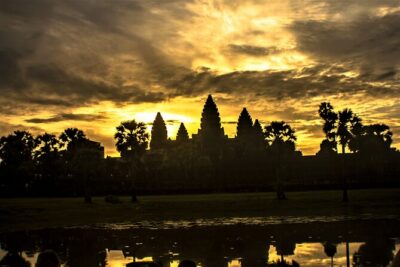
Angkor is not one moment. It is a whole series of moods, and the sunrise slot is the big one. You start early, around 04:45 am, and the drive gets you to the temple before most people fully arrive. That means you see the towers with softer light, fewer crowds, and more time to compose photos without feeling packed in.
Once you finish sunrise viewing, the plan is to let the crowd flow move on, then keep exploring at a slower pace. This is where the tour format pays off. Instead of making you sprint through every main scene, you get time after the busiest moment. You may be finished around 08:00 am, then you head back toward the parking area.
One practical note: the temple day gets hot fast. If you only come for sunrise and then leave, you miss the cooler morning energy that helps you enjoy the rest of the circuit. If you stay through the morning and then pace yourself, you can see a lot without feeling totally cooked.
Your money at $12, what value looks like here
At $12 per person, the headline price is tempting. The key is to understand what that $12 covers and what it does not. Your package includes hotel pickup and drop-off, a personal English-speaking tuk tuk driver, parking, and cold pure drinking water.
What is not included is also important: temple ticket fees and meals are extra. That means your real day cost depends on the Angkor pass you buy and what you choose to eat.
Still, the value is strong because you are getting a private vehicle experience with ongoing help. Many people try to do Angkor solo, but then you still need a pass, transportation, route planning, and someone to explain what you are looking at. Here, the driver helps with all of that while you ride comfortably in a tuk tuk.
Also, the driver’s role is not only driving. In real examples, drivers like Indra helped adjust the day based on what people needed, and they waited at each stop so you did not lose time. That alone makes the day smoother than trying to coordinate everything yourself.
Other ways to be at the temples before the light comes up
- Angkor Wat Sunrise or Sunset Tour with Guide from Siem Reap★ 5.0 · 12,109 reviews
- Siem Reap: Angkor Wat: Small-Group Sunrise or Sunset Tour★ 5.0 · 9,444 reviews
- Siem Reap: Angkor Wat 2-Day Tour with Sunrise and Sunset★ 4.9 · 4,429 reviews
- Angkor Wat Sunrise tour with Small – Group and Guide tours★ 5.0 · 3,655 reviews
Pickup at 04:45, buying the pass, then moving fast
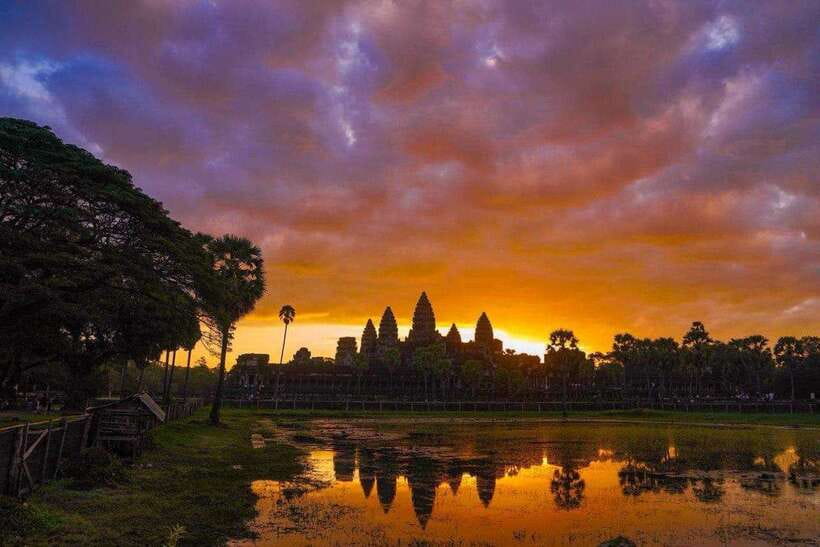
Your morning starts with pickup from your hotel early. The schedule timing is built for sunrise, so you want to be ready the night before. Look for the driver in the hotel lobby on time, and expect him to confirm your name.
Next comes the Angkor temple pass process. The driver takes you to purchase it, so you are not stuck figuring out where to go at dawn. Temple tickets are not included in the tour price, but having the driver handle the route and timing saves stress.
Then it is straight to Angkor Wat for sunrise. After sunrise, you follow the plan to return toward parking and get breakfast. Many hotels provide breakfast boxes, and the best move is to ask your hotel ahead of time if they offer them. If you have a breakfast box, you can enjoy it during the sunrise visit, which helps you keep energy without hunting for food too early.
Angkor Wat at sunrise, what you are actually seeing
Angkor Wat is famous for a reason, but sunrise adds something you cannot fake. First light changes the way stone looks, and the towers start to feel less like a photo and more like a place with scale.
You are there early enough to enjoy the experience without feeling like you are constantly fighting the crowd. That is the sweet spot. You can walk, look around, and take photos in a calmer rhythm.
Then, after the crowd moves, the tour plan supports more exploring. Instead of rushing you out, it gives you a chance to keep wandering Angkor Wat at your own pace. That matters because Angkor Wat rewards curiosity. You will notice details better when you are not being pushed every few minutes.
If you care about photography, this tour type tends to help because the driver often points out good spots. In multiple real cases, people said the driver coached them where to stand for pictures, and he stayed close so you did not backtrack.
Angkor Thom South Gate and Tonle Om Gate, the first big switch
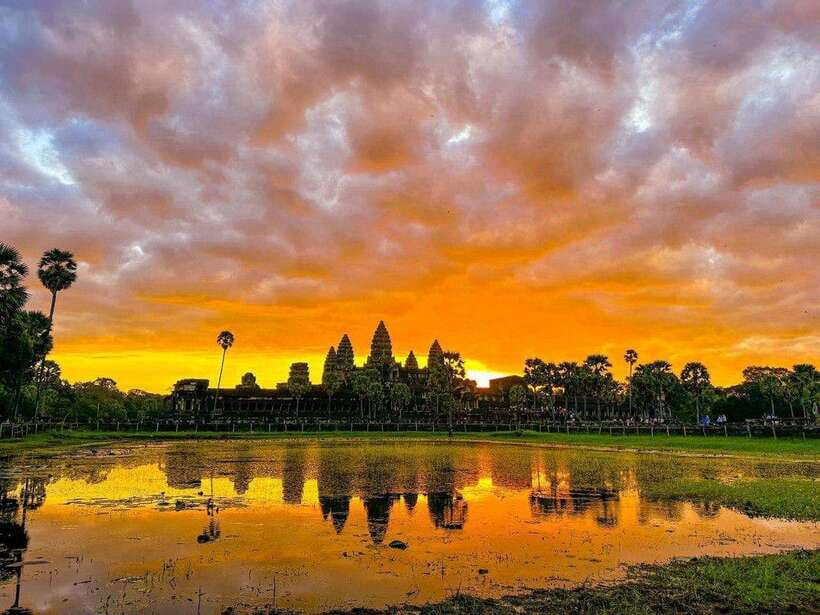
After breakfast, you head to South Gate of Angkor Thom, also called Tonle Om Gate. This gate is a strong transition point in the day. Angkor Wat is all about that iconic temple centerpiece. Angkor Thom feels like a city, full of structures and layers.
The visit here is usually short, around 15 to 20 minutes, but it sets the tone. You are now in a different zone with different architectural energy, so it helps mentally to shift gears.
From there, you move into the central Angkor Thom temple cluster. This is where the tour becomes more than “see temples.” It becomes “see how Khmer kings used architecture.”
Bayon, Baphuon, Phimeanakas, and the elephant and leper terraces
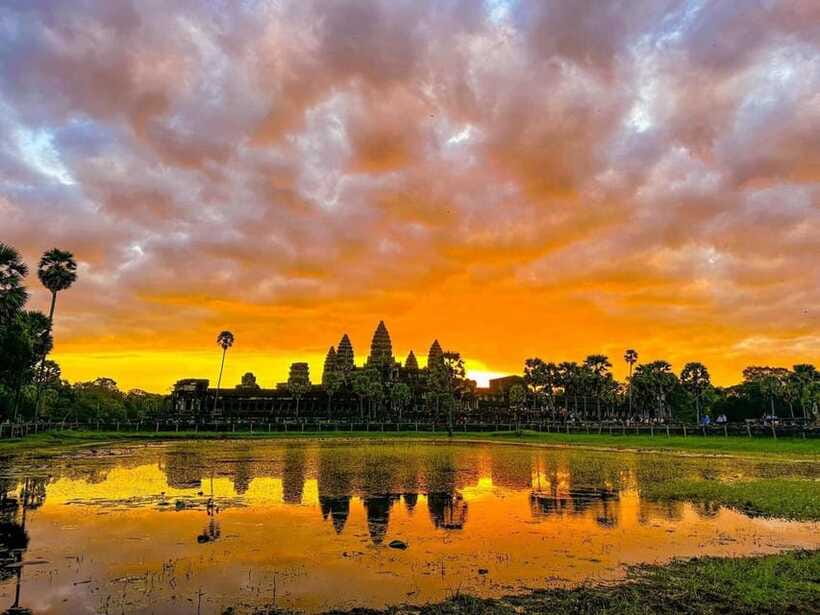
You will typically spend about 1.5 to 2 hours covering the main Angkor Thom stops. These are not all the same, and that is the point. Each one shows a different angle on what Khmer rulers were doing.
Other early starts around Siem Reap
Bayon
Bayon is the last state temple built at Angkor. It is also described as the Angkorian state temple built primarily to worship Buddhist deities by King Jayavarman VII in the late 12th or early 13th century. If you like symbolism, this is one of the places where it becomes obvious that rulers were making spiritual statements in stone.
Baphuon
Baphuon goes the Hindu route. It was built in the mid-11th century under King Udayadityavarman II, dedicated to Shiva. This helps you understand that Angkor was not stuck in one religious direction. It evolved.
Phimeanakas
Phimeanakas is from the end of the 10th century during Rajendravarman’s reign, also connected with Shiva worship. It is a good stop if you want to compare how sacred spaces change over time.
Terrace of the Elephants
This terrace was used by Jayavarman VII as a platform to view a victorious returning army. That detail turns what looks like “just a terrace” into something political and dramatic. You can almost imagine the moment.
Terrace of the Leper King
This terrace was built in the Bayon style under Jayavarman VII. The naming comes from a famous carving tradition, and it makes the stop memorable even if you are not a specialist.
Across these stops, the driver’s job is to explain what you are looking at before you enter or walk around. In practice, that changes your experience. Instead of seeing random stones, you start seeing why they were built.
Thommanon, Chau Say Tevoda, and Ta Keo, the middle-day rhythm
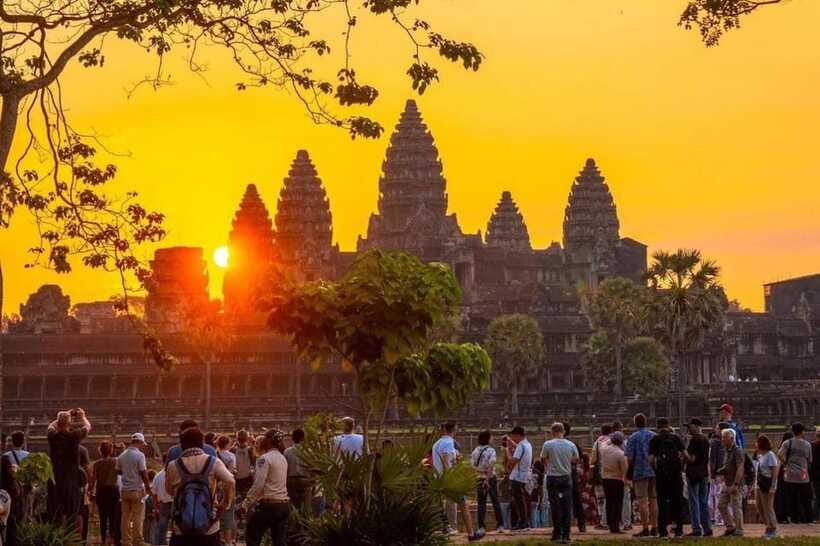
After finishing the Angkor Thom center, you keep moving. The next set includes temples that help balance the day.
Thommanon
Thommanon is described as Hindu temples built during Suryavarman II’s reign. It works well after Bayon-style areas because it shifts the religious flavor and the timing of the architecture.
Chau Say Tevoda
Chau Say Tevoda is literally described as prolific grandchildren of a deity directly south of Thommanon across the Victory Way, and it dates to the mid-12th century. Even if you do not remember the text, the placement in the grid-like layout helps it feel intentional.
Ta Keo
Ta Keo is a temple-mountain, and it is singled out as possibly the first temple built entirely of sandstone by the Khmer Empire. It was the state temple of Jayavarman V in the 10th century, associated with Hinduism and Shiva.
The reason Ta Keo matters in a one-day plan is simple: it is a different building type and a different visual texture. Your eyes need that variety mid-day.
Ta Prohm, Banteay Kdei, and a finish that feels more human
Lunch usually comes after these middle stops. Then the itinerary takes a more atmospheric turn with the final two big temple visits.
Ta Prohm
Ta Prohm is known as the Tomb Raider Temple or Angelina Jolie Temple because it became linked with film imagery. But even without the movie connection, it is famous for how it feels alive with roots and overgrowth. This is one of the temples where you slow down naturally, because the scene begs for wandering.
It is also a Mahayana Buddhist monastery linked to King Jayavarman VII in the late 12th century. So yes, it is a film-famous ruin, but it still holds real historical weight.
Banteay Kdei
Banteay Kdei is described as a citadel of chambers built in the mid-12th to early 13th centuries AD under Jayavarman VII. If Ta Prohm feels like a dramatic stage set, Banteay Kdei feels more like a place built for careful movement through multiple spaces.
After this, the day ends. The plan is to return around 02:30 pm to 03:00 pm, either back to your hotel or dropped somewhere in the city if you ask.
Breakfast and lunch, how to keep the budget from slipping
You are not on your own for food logistics, but you should budget for it. Breakfast can be handled with the hotel’s breakfast boxes, and that is a smart way to keep the morning smooth. If your hotel provides boxes, request them in advance and ask if you can take them out early.
Lunch is at a local restaurant near the temples. The cost guidance here is usually $6 to $8 per plate. That is reasonable, but it means you should not assume food is included in the tour price.
A small practical tip: if you have a sensitive stomach or you are low on water, tell your driver early. In real experiences, drivers were flexible, including adjusting when someone was hungry or not feeling well. That kind of flexibility can make the difference between a day you enjoy and a day you endure.
Comfort tips for the heat, the steps, and your feet
Angkor ruins are not gentle on your body. Even if the tuk tuk helps, you will still walk and climb.
Bring:
- Comfortable shoes with good grip
- Sunscreen and a long-sleeved shirt for strong sun
- Cash for anything you choose to buy
- A charged smartphone and a camera
- Biodegradable insect repellent
And consider this: the tour is not suitable for people with back problems. If your mobility is limited, you might also find the temple steps and uneven surfaces challenging, even if your vehicle is easy.
Good news: the driver is there to keep the day efficient. Many people appreciated that the driver waited at each stop and made toilet breaks part of the schedule. Still, it is a long day, so pack a realistic mindset.
Who should book this sunrise tuk tuk day, and who should not
This tour is a strong fit if you want:
- Sunrise at Angkor Wat but with real time to explore afterward
- An English-speaking driver who explains what you see
- A smooth day plan with pickup and drop-off
- A vehicle that keeps you relaxed between temple zones
You should think twice if you:
- Have back problems, since it is not recommended
- Want a full-time, third-party tour guide service, because a tour guide is not included
- Have a tight budget and hate extra costs, since tickets and meals are on you
If you are the type who gets annoyed when tours feel rushed, this format can feel better. People often mention that the driver gives time to explore at your own pace and does not yank you away the second a photo ends.
Should you book this Angkor Wat 1 Day Sunrise with Tuk Tuk?
If you want one day that hits the highlights, this is a smart choice. The sunrise timing at Angkor Wat plus the Angkor Thom circuit is exactly what you would plan if you were building your own itinerary, and you get that structure without doing the logistics alone.
I would book it if:
- You want English explanations while you walk
- You like the idea of cold water and waiting at each stop
- You want to see a lot without feeling like you are always sprinting
I would skip or adjust if:
- You do not want an early start and heavy walking
- You already have a guide and only need transportation
- You do not want extra costs beyond the low listed price
FAQ
FAQ
What time is pickup for the Angkor Wat sunrise?
You are picked up very early, suggested around 04:45 am, to make it in time for the sunrise.
Is the Angkor temple pass included?
No. The temple ticket fee is not included, but the driver helps you with purchasing the day pass.
Do I get a tour guide as part of the tour?
No. A tour guide is not included. The included English-speaking driver provides information during the visits.
Are meals included, and what do they typically cost?
Meals are not included. Breakfast is often handled with hotel breakfast boxes, and lunch is at a local restaurant near the temples. The food is described as reasonable, around $6 to $8 per plate.
What temples are included in the itinerary?
The plan covers Angkor Wat for sunrise, then South Gate of Angkor Thom (Tonle Om Gate), Bayon, Baphuon, Phimeanakas, Terrace of the Elephants, Terrace of the Leper King, Thommanon, Chau Say Tevoda, Ta Keo, Ta Prohm, and Banteay Kdei.
What should I bring, and what is not allowed?
Bring comfortable shoes, a camera, sunscreen, a long-sleeved shirt, cash, a charged smartphone, and biodegradable insect repellent. Drones are not allowed.
Is the tour wheelchair accessible, and is it suitable for back problems?
Wheelchair accessibility is listed as available. However, it is not suitable for people with back problems.
More Tours in Siem Reap
- Angkor Wat Sunrise or Sunset Tour with Guide from Siem Reap★ 5.0 · 12,109 reviews
- Siem Reap: Angkor Wat: Small-Group Sunrise or Sunset Tour★ 5.0 · 9,444 reviews
- From Siem Reap: Kampong Phluk Floating Village Tour by Boat★ 4.9 · 6,979 reviews
- Siem Reap: Angkor Wat 2-Day Tour with Sunrise and Sunset★ 4.9 · 4,429 reviews
More Tour Reviews in Siem Reap
- Angkor Wat Sunrise or Sunset Tour with Guide from Siem Reap★ 5.0 · 12,109 reviews
- Siem Reap: Angkor Wat: Small-Group Sunrise or Sunset Tour★ 5.0 · 9,444 reviews
- From Siem Reap: Kampong Phluk Floating Village Tour by Boat★ 4.9 · 6,979 reviews
- Siem Reap: Angkor Wat 2-Day Tour with Sunrise and Sunset★ 4.9 · 4,429 reviews
Sunrise at Angkor, Three More Ways
- Angkor Wat Sunrise or Sunset Tour with Guide from Siem Reap★ 5.0 · 12,109 reviews
- Siem Reap: Angkor Wat: Small-Group Sunrise or Sunset Tour★ 5.0 · 9,444 reviews
- Siem Reap: Angkor Wat 2-Day Tour with Sunrise and Sunset★ 4.9 · 4,429 reviews
- Angkor Wat Sunrise tour with Small – Group and Guide tours★ 5.0 · 3,655 reviews
Newly written up around Siem Reap
- Waterfall & River of 1000 Siva Linga- Kulen Mountain Private Tour
★ 5.0 · 3 reviews - Private Transfer from Siem Reap to Sihanoukville
★ 4.5 · 3 reviews - Private Tour to Koh Ker and Beng Mealea
★ 5.0 · 3 reviews - Private Transfer: Siem Reap Angkor Internation Airport to Hotel
★ 5.0 · 3 reviews - Kulen National Park Ticket -Waterfall & 1000 Lingas
★ 5.0 · 3 reviews - Kulen Waterfall & Kbal Spean Tour
★ 5.0 · 3 reviews
Angkor Wat Sunrise Tours, side by side.
 ★ 5.0Angkor Wat Sunrise or Sunset Tour with Guide from Siem ReapFrom $1812,109 reviews
 ★ 5.0Angkor Wat: Small-Group Sunrise or Sunset TourFrom $159,444 reviews
 ★ 4.9Angkor Wat 2-Day Tour with Sunrise and SunsetFrom $344,429 reviews
 ★ 5.0Angkor Wat Sunrise tour with Small – Group and Guide toursFrom $143,655 reviews
 ★ 5.0Angkor Wat Highlights and Sunrise Guided Tour from Siem ReapFrom $233,213 reviews
 ★ 5.0Full-Day Angkor Wat Sunrise Private Tour with Guide from Siem ReapFrom $602,920 reviews
 ★ 5.0Angkor Wat Sunrise & 3 Main Temples with Breakfast – Small GroupFrom $152,857 reviews
 ★ 4.9Angkor Wat Sunrise and Full-Day Sightseeing TourFrom $142,828 reviews
Also appears in