
REVIEW · CAMBODIA
Angkor Wat Bike Tour with Lunch Included
A bike day through Angkor feels like getting a secret route. I like the small-group pace that keeps the morning moving and the chance to see the temples from side streets, not just from big crowds. The English-speaking guide also turns what you see into something you can actually picture, without drowning you in lectures. One thing to watch: the temple pass is not included, so you’ll need to budget for that on top of the $40 price.
This is a full day, roughly 8 hours, built around four temple stops plus riding time between them. You’ll get hotel pickup, a modern giant bike, bottle water, and lunch, which makes it much easier to commit to the ride. And yes, your legs will notice you did this, even if you start out feeling confident.
If you want a purely “walk slow and admire” day, biking might not be your style. But if you like movement and want to cover a lot of ground while staying practical, this format works.
In This Review
- Key points before you pedal Angkor Wat
- Angkor Wat by bike, what changes (and what doesn’t)
- Pickup, timing, and how to start the day ready
- Your bike setup and riding reality in Siem Reap
- Stop 1: Angkor Wat in the morning light and temple scale
- Stop 2: Bayon Temple and the south gate feel of Angkor Thom
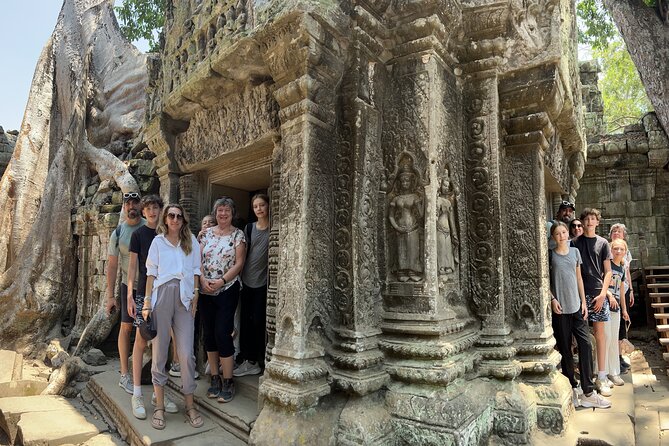
- Stop 3: Ta Nei Temple, the jungle ruin and fruit break
- Stop 4: Ta Prohm and those roots that do not care about rules
- Lunch during the temple circuit, why it’s better than you think
- Price and value: $40 is the base, not the whole bill
- Weather, comfort, and what to pack for 8 hours outside
- Who should book this Angkor Wat bike tour
- Should you book this Angkor Wat Bike Tour with Lunch Included?
- FAQ
- What is included in the Angkor Wat bike tour?
- Is the temple pass included?
- How long is the tour?
- What time does the tour start and how does pickup work?
- How big are the groups?
- What is the cancellation policy?
Key points before you pedal Angkor Wat
- Hotel pickup starts your day early, with pickup around 7:30 am and the tour getting going around 8:30 am.
- Modern Giant bikes make a big difference when you’re bouncing along uneven paths and temple roads.
- A truly small group, capped at 10 and sometimes even smaller, usually means fewer delays and more guide attention.
- Temple pass is separate, so factor that cost into your total budget from the start.
- You’ll hit Angkor Wat plus Angkor Thom highlights, including Bayon and two smaller ruins in the same circuit.
- Lunch is included at a local place, which keeps you from hunting for food between temples.
Angkor Wat by bike, what changes (and what doesn’t)
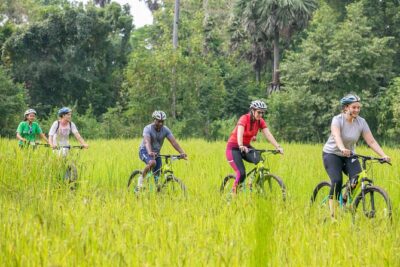
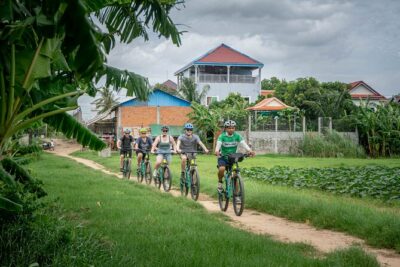
Angkor is the kind of place where you either get lost in awe or you get lost in lines. A bike tour is a smart middle path. You still get the big moments, especially at Angkor Wat and Bayon, but you also get those “wait, that’s the view from here” turns.
Here’s what I think works best for you: the guide’s route helps you time the day so you’re not stuck only at the most famous corners. And riding lets you cover distance without draining your energy before you reach the temples. On a walking-only plan, it’s easy to spend your best daylight time just getting between ruins.
What doesn’t change is the need for a real temple day mindset. Angkor is hot, the paths can be rough, and you’ll be outside for hours. A bike helps, but it does not make the weather disappear.
Pickup, timing, and how to start the day ready
The plan runs for about 8 hours, and it starts with hotel pickup. Expect pickup around 7:30 am, then you’ll roll toward the ticket booth area early so you can get ready for Angkor Wat.
Because the temple pass is not included, you should treat the morning as a “get your documents and pass handled fast” moment. If you arrive underprepared, you lose time right when the day is most valuable. Also, since confirmation is received at booking time, you’ll want to have that detail handy.
Small groups matter here. When you’re with a handful of riders rather than a huge pack, you usually get through the start points with less chaos. That means more time on temples, less time parked.
Other Siem Reap rides at pedal speed
- Siem Reap Countryside Bike Tour / E-Bike or Tuk Tuk★ 5.0 · 935 reviews
- Angkor Sunrise Bike Tour / E-Bike or Tuk Tuk★ 5.0 · 615 reviews
- Siem Reap: Bike the Angkor Temples – Full-Day 30km Tour★ 5.0 · 463 reviews
- Siem Reap: Angkor Wat Sunrise Bike Tour & Jungle Breakfast★ 5.0 · 415 reviews
Your bike setup and riding reality in Siem Reap
This tour provides a modern Giant bike, plus bottle water. That combination sounds simple, but it changes the experience. Good equipment matters because the grounds around Angkor are not smooth like a city street. You’ll feel it in the ride if the bike is clunky or uncomfortable.
You don’t need to be an expert cyclist. Most people can participate, and the route is designed for sightseeing pace. Still, be honest with yourself. If your knees hate stairs or you hate uneven ground, the biking portion may be more tiring than a casual walk.
A practical tip: wear something you can cycle in comfortably. Closed-toe shoes help because temple areas can be dusty and uneven. Bring sun protection, because even with stops and shade pockets, you’ll still be exposed for stretches.
Stop 1: Angkor Wat in the morning light and temple scale
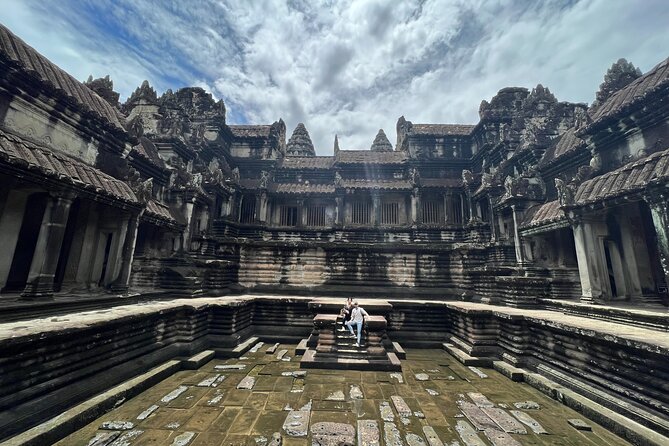
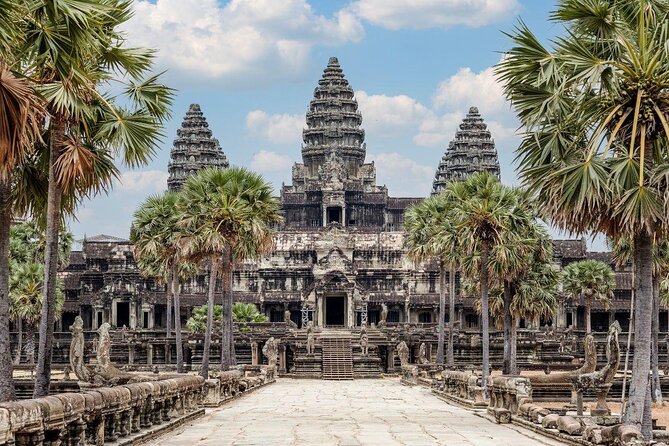
Angkor Wat is why you’re here. The day’s first real temple stop gives you about 2 hours at the site.
The best part of going early is not magic sunrise claims. It’s the practical advantage of time. Angkor Wat is huge and details reward patience. When you have a longer, calmer window, you can actually look up, compare angles, and notice what you would otherwise miss when you’re rushed.
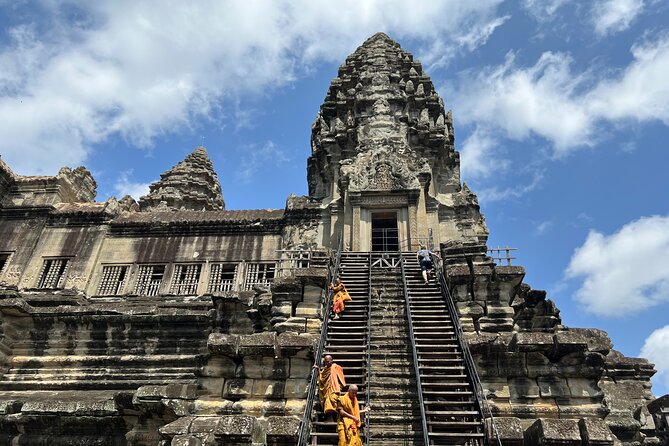
Angkor Wat is also a good warm-up for the rest of the day. You see the main temple first, then you move into Angkor Thom and the smaller ruins. That order helps your brain connect the dots between the royal center and the religious symbolism the Khmer Empire built in the 12th century.
One consideration: the temple pass is not included. That means you should plan for that early, so your Angkor Wat time stays focused on seeing, not sorting.
Stop 2: Bayon Temple and the south gate feel of Angkor Thom
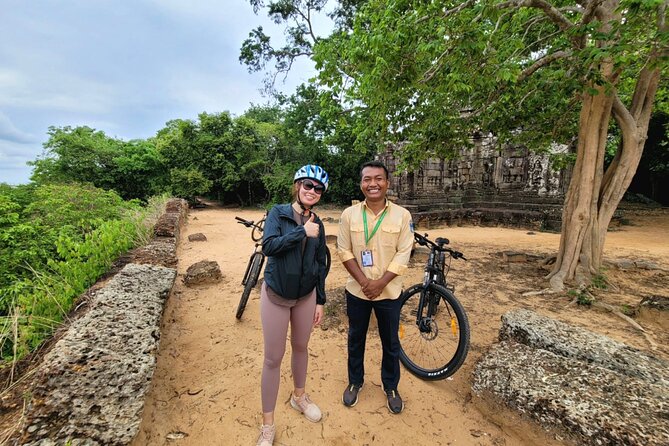
Next up is Bayon Temple, reached via the south gate of Angkor Thom. This stop runs about 1 hour 30 minutes.
Bayon is famous for its stone faces, representing Avalokiteshvara, and for its role as a state temple connected with King Jayavarman VII. Even if you’re not a Khmer Empire scholar, you can feel what the guide is pointing out: the temple is designed to be seen, not just walked through.
What you’ll like most is how the “royal capital” feeling builds. Angkor Wat can feel monumental and distant. Bayon feels more immediate. The faces and layered structure give you a sense of presence, like the city is watching back.
A small caution: this is one of the stops where you may want to manage how long you stand in one spot. It’s easy to get photo-stuck. If you want to get the full view, keep moving between viewpoints and let the guide steer you to the spots that make sense.
Stop 3: Ta Nei Temple, the jungle ruin and fruit break
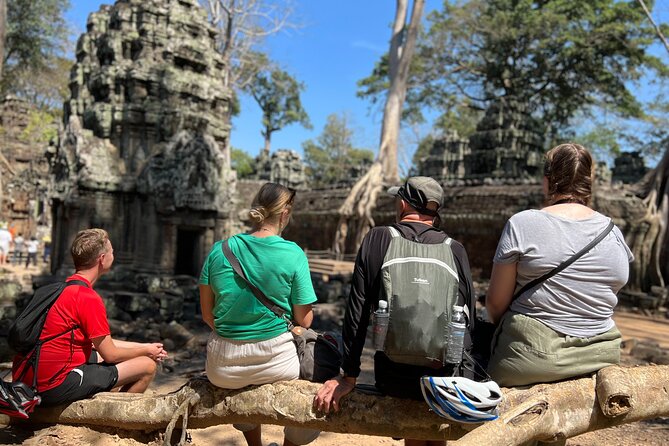
Then comes Ta Nei Temple, about 1 hour. This stop is described as a ruined temple visible along the trail in the jungle, something many tourists miss.
That difference is the point of including this kind of stop. Angkor is packed with famous icons, but Ta Nei-type ruins help you understand how these sacred sites were embedded in daily landscape and how nature gradually took space back. Even if you only catch parts of the structure, you get a different mood than at the grand main temples.
You also get a break element here. The plan includes time to relax and enjoy local fresh fruits. That matters because it resets you. Between heat, riding, and walking, having a simple pause keeps the day from turning into one long grind.
Since this is a smaller stop, you’ll get more value from paying attention to what your guide points out. When details are less obvious, interpretation helps you feel like you’re not just passing by stone.
Other midday stops around Siem Reap

Stop 4: Ta Prohm and those roots that do not care about rules
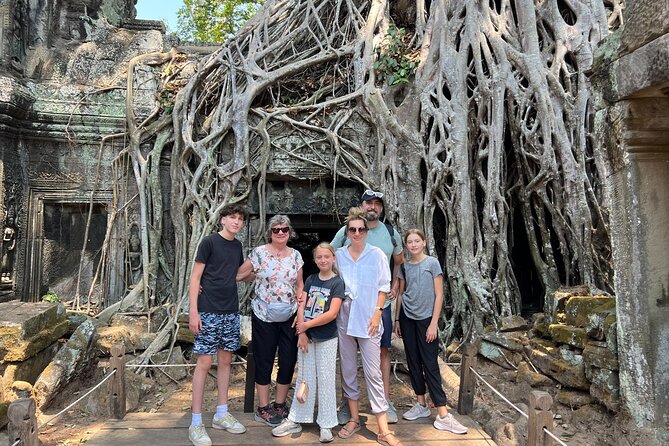
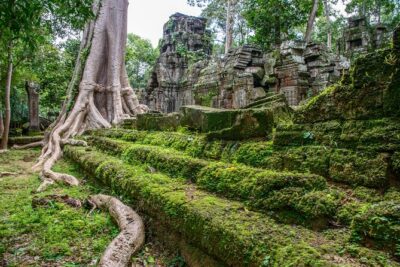
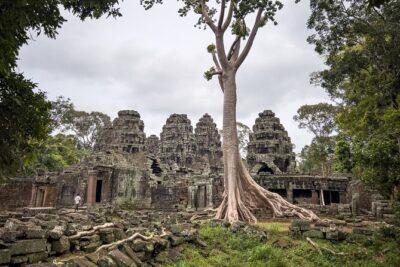
Finally, you reach Ta Prohm, with about 1 hour for the visit. This is the famous “left as discovered” temple, where kapok trees clasp the sanctuaries with their roots.
This is where the bike tour pays off in a different way. Ta Prohm can feel chaotic if you arrive exhausted. The ride helps you spend less time in transit and more time exactly where the drama is. The trees and stone relationship is visual and immediate. You do not need heavy background to appreciate it.
What to keep in mind: this is one of the places where shade can be inconsistent. Plan for sun and heat. Take breaks when you can, and use your time to walk around rather than just photographing from one spot.
If you like ruins that show time at work, you’ll probably leave Ta Prohm feeling satisfied rather than overwhelmed. It’s a strong closing stop.
Lunch during the temple circuit, why it’s better than you think

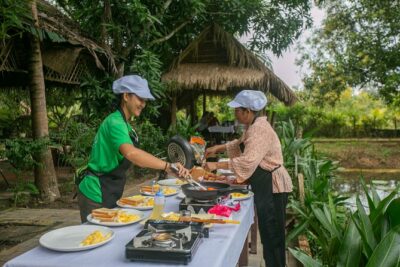
Lunch is included, and it’s described as coming from local restaurants. You also get bottle water with the tour.
This sounds like basic convenience, but in practice it’s a big value add. Temple days punish decision fatigue. If you have to pick food while hungry and sweaty, you lose time and sometimes end up with a meal that doesn’t fit your day.
With lunch handled for you, you can focus on two things:
- Keep energy up so the last temples still feel enjoyable
- Avoid wasting time when you’d rather be moving
Because breakfast is not included, you’ll want to eat before pickup. Even a simple breakfast helps your energy last through morning riding and the first temple.
Price and value: $40 is the base, not the whole bill
At $40 per person, this bike tour is priced to feel accessible. What makes it good value is what you get for that money: an English-speaking guide, hotel pickup and drop-off, transportation, a modern Giant bike, bottled water, and lunch.
But you need to separate what’s included from what isn’t. The temple pass is not included. That means your final cost depends on the pass price at the time you buy it.
Still, even with the pass added, the tour tends to make sense if you value:
- Guide-led routing that connects Angkor Wat and Angkor Thom in one day
- Hotel convenience, so you’re not coordinating tuk-tuks all day
- Lunch included, so you don’t negotiate food mid-ride
Also notice the small group angle. A group that stays small, especially at a max of 10, usually means better timing and less “wait while everyone deals with something” energy. That’s the kind of value you feel more than you calculate.
Weather, comfort, and what to pack for 8 hours outside
This experience requires good weather, and you can be offered a different date or a full refund if it’s canceled due to poor weather. That’s not just policy language. It reflects how much the day depends on riding between sites.
For your comfort, treat this like a hot outdoor day with dusty areas:
- Wear breathable clothes and bring sun protection
- Use closed-toe shoes you trust on uneven ground
- Bring layers for morning shade and later heat, if you run cold early
- Stay hydrated, even though bottled water is provided
If you’re prone to getting sunburned, take it seriously. Temple visits often end with sore skin, not just sore legs.
Who should book this Angkor Wat bike tour
This is a strong fit if you:
- Want to see major Angkor sites in one day without spending the whole day trapped in transit
- Prefer an active sightseeing style, bike riding plus short temple visits
- Like learning from an English-speaking guide, especially about the Khmer Empire connections
- Appreciate small group pacing and a lunch that’s already handled
It may be less ideal if you:
- Really want a slow, walking-only day with lots of unstructured time
- Hate the idea of riding any distance on uneven surfaces
- Are not prepared for early morning pickup
Should you book this Angkor Wat Bike Tour with Lunch Included?
I’d book it if you want a practical, efficient way to see Angkor Wat and key Angkor Thom highlights, while keeping your energy intact with included lunch and water. The combination of a small group, modern bikes, and a guide who helps you make sense of what you’re seeing is the real value.
I would pause only if the temple pass cost would stretch your budget, or if you know you dislike biking on rough ground. If that’s you, you might be happier with a walking or private car plan.
FAQ
What is included in the Angkor Wat bike tour?
The tour includes an English speaking tour guide, bottle water, a modern Giant bike, hotel pickup and drop off, transportation, and lunch.
Is the temple pass included?
No. Temple pass tickets are not included, so you will need to purchase them separately.
How long is the tour?
The tour duration is about 8 hours (approx.), with time spent at Angkor Wat, Bayon Temple, Ta Nei Temple, and Ta Prohm.
What time does the tour start and how does pickup work?
Pickup is offered from your hotel around 7:30 am, and the start time is listed as 8:30 am. Timing can vary slightly day to day.
How big are the groups?
The tour is described as a small group, with a minimum of 2 and a maximum of 7 in one section of the details, and the activity also states a maximum of 10 travelers.
What is the cancellation policy?
You can cancel for a full refund up to 24 hours in advance of the experience start time. If it’s canceled due to poor weather, you’ll be offered a different date or a full refund.
Longer in the Saddle Around Siem Reap
- Siem Reap Countryside Bike Tour / E-Bike or Tuk Tuk★ 5.0 · 935 reviews
- Angkor Sunrise Bike Tour / E-Bike or Tuk Tuk★ 5.0 · 615 reviews
- Siem Reap: Bike the Angkor Temples – Full-Day 30km Tour★ 5.0 · 463 reviews
- Siem Reap: Angkor Wat Sunrise Bike Tour & Jungle Breakfast★ 5.0 · 415 reviews
More Tours in Siem Reap
- Angkor Wat Sunrise or Sunset Tour with Guide from Siem Reap★ 5.0 · 12,109 reviews
- Siem Reap: Angkor Wat: Small-Group Sunrise or Sunset Tour★ 5.0 · 9,444 reviews
- From Siem Reap: Kampong Phluk Floating Village Tour by Boat★ 4.9 · 6,979 reviews
- Siem Reap: Angkor Wat 2-Day Tour with Sunrise and Sunset★ 4.9 · 4,429 reviews
More Tour Reviews in Siem Reap
- Angkor Wat Sunrise or Sunset Tour with Guide from Siem Reap★ 5.0 · 12,109 reviews
- Siem Reap: Angkor Wat: Small-Group Sunrise or Sunset Tour★ 5.0 · 9,444 reviews
- From Siem Reap: Kampong Phluk Floating Village Tour by Boat★ 4.9 · 6,979 reviews
- Siem Reap: Angkor Wat 2-Day Tour with Sunrise and Sunset★ 4.9 · 4,429 reviews
Newly written up around Siem Reap
- Waterfall & River of 1000 Siva Linga- Kulen Mountain Private Tour
★ 5.0 · 3 reviews - Private Transfer from Siem Reap to Sihanoukville
★ 4.5 · 3 reviews - Private Tour to Koh Ker and Beng Mealea
★ 5.0 · 3 reviews - Private Transfer: Siem Reap Angkor Internation Airport to Hotel
★ 5.0 · 3 reviews - Kulen National Park Ticket -Waterfall & 1000 Lingas
★ 5.0 · 3 reviews - Kulen Waterfall & Kbal Spean Tour
★ 5.0 · 3 reviews
Cycling Tours, side by side.
 ★ 5.0Siem Reap Countryside Bike Tour / E-Bike or Tuk TukFrom $35935 reviews
 ★ 5.0Angkor Sunrise Bike Tour / E-Bike or Tuk TukFrom $60615 reviews
 ★ 5.0Phnom Penh Silk Island Bike Tour/ E-Bike or Tuk TukFrom $35495 reviews
 ★ 5.0Bike the Angkor Temples – Full-Day 30km TourFrom $35463 reviews
 ★ 5.0Angkor Wat Sunrise Bike Tour & Jungle BreakfastFrom $75415 reviews
 ★ 5.0Siem Reap Countryside Quad Biking TourFrom $45322 reviews
 ★ 4.9Guided Countryside Bike TourFrom $35294 reviews
 ★ 5.0Local Livelihood Half Day Bike Tour in BattambangFrom $30287 reviews
Also appears in