
REVIEW · CAMBODIA
Angkor Wat Cycling Tour
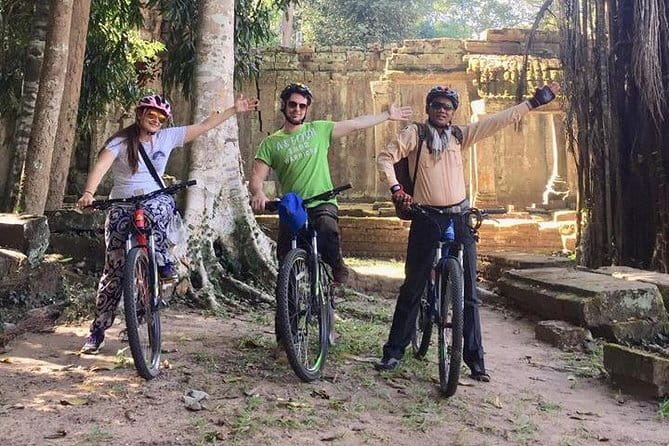
Angkor Wat looks one way from the road, then totally different on a bike. This tour takes you through the Angkor temple complex by dedicated cycling paths and quieter routes, so you get closer to trees, backroads, and temple edges without feeling like you are being rushed by a big bus crowd. I like that the pace is leisurely and flexible, and I also love the way high quality bikes make the whole day feel easy to handle, even when the route gets a bit adventurous. The main drawback to plan for is simple: you will be out most of the morning to early afternoon, and you still need to budget for the Angkor Temple Pass since Angkor Wat is listed as admission ticket not included.
You start from your hotel at 7:30 am with pickup and drop off, plus cold drinking water and helmets included. This is a private tour for your group, led by an English speaking guide, and you will have a chance to see both the famous faces of Angkor and the more tucked-away temple corners that are easier to miss when you are just walking in a straight line.
In This Review
- Key highlights at a glance
- Angkor Wat by bike: why this feels different
- 7:30 am hotel pickup, mountain bikes, and a 6 to 8 hour day that works
- Entering Angkor Wat: the first 2 hours and what to watch for
- Bayon Temple in Angkor Thom: 54 towers, big symbolism, calmer momentum
- Chau Say Tevoda: a short stop that keeps the day interesting
- Ta Prohm: where roots take over and the pace feels perfect
- Ta Nei and the East Baray area: a calmer temple hour
- Bayon East Gate: the short landing that ties the circuit together
- Price and value: $45 plus the Angkor Temple Pass
- Who should book this Angkor Wat cycling tour?
- Practical tips for a smoother ride through the temples
- Should you book this cycling tour?
- FAQ
- How long is the Angkor Wat cycling tour?
- What time do we leave and where do we start?
- Is hotel pickup and drop off included?
- Are bikes and helmets provided?
- Is the Angkor Temple Pass included in the tour price?
- Which temples are included, and are they free?
- Is there an English speaking guide?
- Is this tour private?
- What is the cancellation policy window for a full refund?
Key highlights at a glance
- Hotel pickup and drop off makes the day feel low hassle from minute one
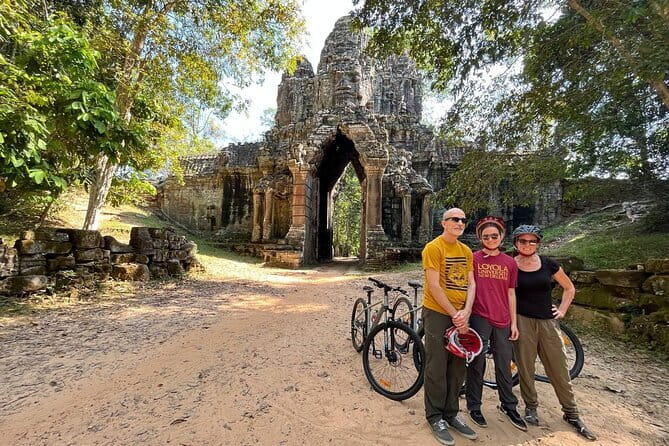
- Quality mountain bikes and helmets help you feel steady and confident
- Mr K style guidance is described as organized, friendly, and able to match your cycling level
- A temple mix that includes big names and lesser-seen spots (not just the postcard circuit)
- Free entry for most stops on this route, with Angkor Wat tied to the Angkor Temple Pass
Angkor Wat by bike: why this feels different
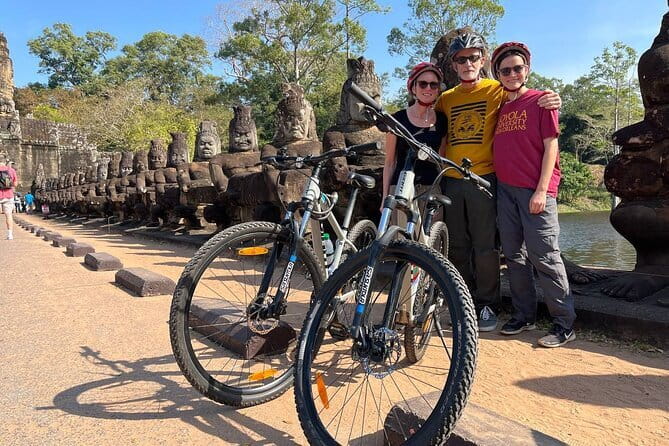
If your only plan for Angkor is walking the same beaten paths with everyone else, you will miss the quieter edges of the park. Cycling changes the rhythm. You move fast enough to cover ground without feeling tired, but slow enough that you notice details, like how temple walls sit in the trees, how backroads open up views, and how the whole area shifts from temple stone to jungle paths.
This is also an eco-friendly style of touring, and you will feel the benefit immediately. When you are on a bike, you can weave through routes that do not always fit a vehicle, and you get that more personal feel for the area. One of the best parts is that you can avoid that stampede energy, especially while you are cruising between temple zones and then stopping to look closely.
I also appreciate that this tour is built around a leisurely tempo. You are not stuck sprinting to keep up. The guide can accommodate how much cycling you want to do, which matters a lot in Cambodia heat and humidity.
7:30 am hotel pickup, mountain bikes, and a 6 to 8 hour day that works
The day starts early: you leave from your hotel at 7:30 am. That timing is smart for two reasons. First, mornings tend to be cooler, so you can enjoy the ride rather than just surviving it. Second, it gives you a smoother start before the most intense daytime crush builds around the famous sites.
What is included is practical and directly helpful:
- English speaking tour guide
- pickup and drop off
- cold drinking water
- mountain bike and helmet
You are looking at 6 to 8 hours total, and the tour is structured with multiple temple stops, including a couple of longer visits. Because you have both riding time and temple time, you get natural breaks built into the route. It is a real advantage if you are trying to balance temple sightseeing with not turning your day into sore feet.
This tour is private, meaning only your group participates. That matters because it makes it easier for the guide to manage your pace, keep everyone feeling safe, and adjust when the group wants to slow down or speed up. If you are a couple, family, or small group that wants flexibility, this setup fits.
Other Siem Reap rides at pedal speed
- Siem Reap Countryside Bike Tour / E-Bike or Tuk Tuk★ 5.0 · 935 reviews
- Angkor Sunrise Bike Tour / E-Bike or Tuk Tuk★ 5.0 · 615 reviews
- Siem Reap: Bike the Angkor Temples – Full-Day 30km Tour★ 5.0 · 463 reviews
- Siem Reap: Angkor Wat Sunrise Bike Tour & Jungle Breakfast★ 5.0 · 415 reviews
Entering Angkor Wat: the first 2 hours and what to watch for
Angkor Wat is the headline stop for a reason. It is the largest and most famous Khmer temple, built in the 12th century during the reign of Suryavarman II, and it rises about 65 meters high. Your time here is listed as 2 hours, and admission is not included in the tour price.
On a bike, your arrival has a different feel than walking from the gate. You get to take in the approach and context before you start counting towers and angles. The key thing to remember is that the bike component helps you arrive feeling less fatigued. You are not doing a long temple day entirely on foot from the beginning.
Practical consideration: Angkor Wat is the one spot on this route that is explicitly tied to admission ticket not included. So if you plan to do the full circuit, budget the Angkor Temple Pass ($37 per person) as part of your overall cost.
Once you are inside, your guide will help you make sense of what you are seeing, especially the architectural layout and the sense of scale. If you love photography, this early segment is also often when you can capture cleaner views before the later rush.
Bayon Temple in Angkor Thom: 54 towers, big symbolism, calmer momentum
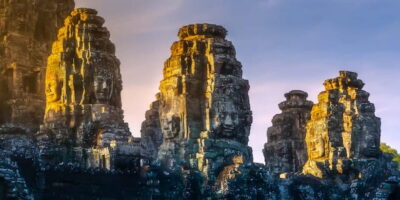
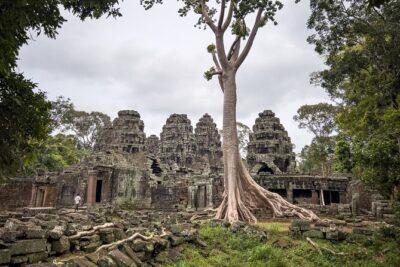
Next comes Bayon Temple, also known as Angkor Thom (the stop is listed that way). This is a Buddhist style temple built in the late 12th or early 13th century by Jayavarnam VII. The highlight people remember is the 54 towers, each linked to the 54 provinces of the Khmer empire.
The visit time is about 2 hours, and this stop is listed as admission free on the itinerary. That is a nice balance on the day, because it lets you spend time looking without constantly thinking about tickets.
How the bike changes your experience here: Bayon can feel intense because it is busy and visually packed. Cycling between zones helps you arrive with fresh energy and gives you a way to control the pace while you move from overview spots to closer temple details. You also get a more natural flow to your day, instead of being trapped in a single long walking corridor with everyone at once.
If you want to understand the temple quickly, do this: start by taking in the faces and the tower layout, then go back for the finer details once you are oriented. With a guide, you will often find that explanation helps you read the symbolism without getting lost.
Chau Say Tevoda: a short stop that keeps the day interesting
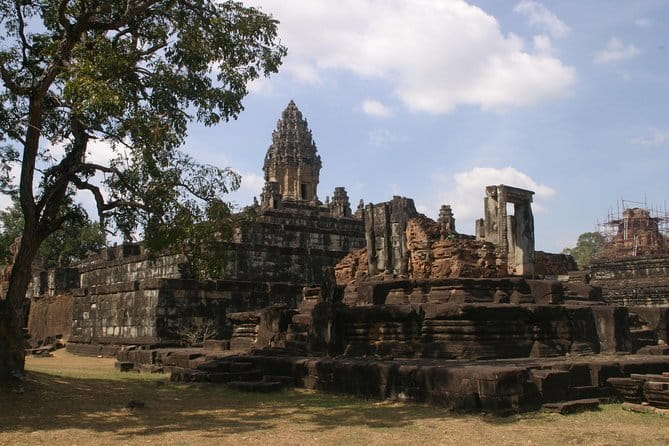
Chau Say Tevoda is quick on the schedule, listed at 30 minutes. It sits just east of Angkor Thom, south of Thommanon across Victory Way. It is from the mid-12th century, and it is described as a Hindu temple in the Angkor Wat period.
Even though it is short, I like that it acts as a tempo reset. The day goes from the bigger, heavier temple complexes to something a bit more tucked away. That breathing space matters when you have been cycling and walking all morning. You also get variety in what you see, so the experience does not feel like the same scene repeated.
Because it is listed as free, you can treat this stop like a bonus. Enjoy it, look around, and then move on without worrying that you are losing “paid value.”
Ta Prohm: where roots take over and the pace feels perfect
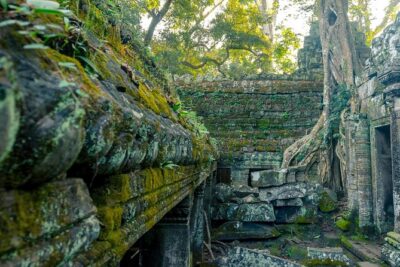
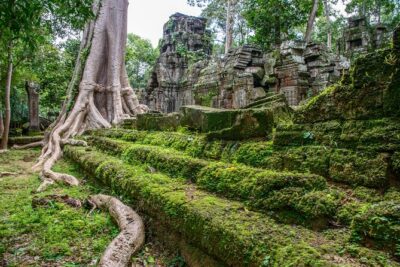
Ta Prohm is one of the most iconic stops on the Angkor circuit, and it fits the biking style well. It is built in the late 12th century by Jayavarman VII, dedicated in 1186 to his mother. The temple later shifted from Buddhist background to Hindu, and some Buddhist galleries remain part of what you will notice.
Your time here is about 2 hours, and this stop is listed as free on the itinerary.
If you like seeing how nature and stone interact, this is your moment. The biking component adds something practical too. You arrive not already worn out, which means you can spend more time looking at the details you would otherwise miss when you are trying to rush for the next photo.
Possible drawback to plan for: Ta Prohm is the kind of place where people want to stop constantly. Because it is a highlight, you might still see other visitors at the temple. The difference is that you are not trapped with them the whole ride, only while you are within each stop area.
Ta Nei and the East Baray area: a calmer temple hour
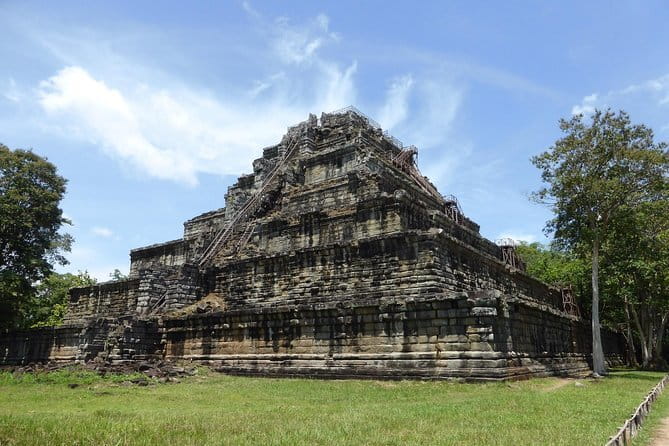
After the bigger wow stops, Ta Nei gives you a quieter, more reflective hour. Ta Nei is a late 12th century stone temple during King Jayavarman VII’s reign, dedicated to the Buddha. It is near the northwest corner of the East Baray, a large holy reservoir.
This stop is listed at about 1 hour, and it is free on the itinerary.
Why this works in the overall routing: the schedule mixes major temples with smaller ones, and Ta Nei is exactly the kind of stop that helps you feel like you are exploring, not just ticking boxes. On a bike, you can also better appreciate how the temple sits in its surroundings. You are not walking uphill all day or doing long, repetitive paths.
If you enjoy the “less famous” feeling, this is one of the best places to slow down and let the details land.
Bayon East Gate: the short landing that ties the circuit together
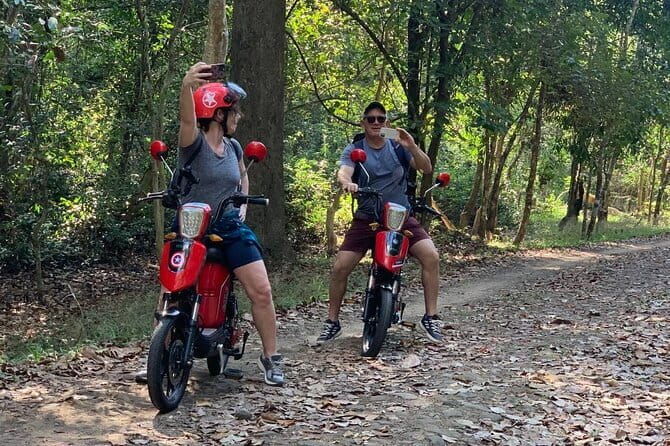
The last temple-related stop is the Bayon East (Death) Gate, listed at 30 minutes. It is one of five gates guarding Angkor Thom, built by King Jayavarman VII in the late 12th century as part of the reconstruction following the victory.
This is a quick stop and it is listed as free on the itinerary. But it is a good closer. You end your circuit with a gate viewpoint that reminds you this complex is not random buildings, it is a planned city layout. Coming in by bike also means you get that “arrival and departure” feeling that walking tours often skip.
If you are getting tired, this timing is ideal. You have more total energy than you would if the day ended with a long, heavy walking segment.
Price and value: $45 plus the Angkor Temple Pass
The tour price is $45 per person, and it is not the whole cost of the day. The Angkor Temple Pass is listed separately as $37 per person. In the itinerary, Angkor Wat is specifically marked as admission ticket not included, while the other stops are listed as free.
Here is the value math that matters: you are paying for more than just a guide. You are paying for pickup and drop off, a helmet and mountain bike, cold water, and the time savings of being able to connect multiple temple areas efficiently. If you were to rent a bike yourself, organize transport, and then figure out a route, the cost would likely creep up fast. The guide also changes the experience, especially when you want help reading temples and not just snapping photos.
So what you should do is plan the budget as:
- $45 for the cycling tour services
- $37 for the Angkor Temple Pass, since Angkor Wat is the ticketed part on this route
If you are already buying the pass anyway for Angkor Wat, this tour becomes a better deal, because your money is going toward biking support and a well-managed circuit, not just entry.
Who should book this Angkor Wat cycling tour?
This is a great fit if you:
- like biking and want a break from temple walking
- want a more intimate feel than big bus groups
- enjoy seeing both famous temples and less obvious areas
- want a guide who can adjust the amount of cycling to match your comfort
One of the most praised parts of the experience is the guiding style. You will likely hear about Mr K and his organization, friendliness, and ability to handle different cycling levels. There is also strong mention that the bikes feel high quality, and that the group felt safe with helmets.
Who might choose differently: if you hate being on a bike, or if you can only handle very short walking, this might feel like too much mixed effort. The day is listed as 6 to 8 hours, so you need some stamina for a full morning.
Best match: couples, friends, and small families who want a full temple day but also want to keep their legs from feeling wrecked.
Practical tips for a smoother ride through the temples
Here are a few things I recommend based on how this tour is set up and what you will do during it:
- Start hydrating before pickup. You are cycling and walking in Cambodia heat, and you will be glad you started early.
- Wear comfortable footwear you can walk in for temple viewing. Cycling helps you cover distance, but temple time still involves standing and exploring.
- Bring a light layer or cap for sun and tree shade changes. The route goes from open views to jungle edges.
- If you want a more relaxed day, tell your guide early. The tour is designed to accommodate how much cycling you want to do.
- Plan for one paid entry moment. Angkor Wat is listed as admission ticket not included, so budget the Temple Pass ($37) and avoid last-minute stress.
Should you book this cycling tour?
Book it if you want Angkor without the stiff, exhausting rhythm of only walking. This tour gives you the best of both worlds: major sights like Angkor Wat and Bayon, plus side temple stops that feel like real exploration. The included pickup and drop off, quality mountain bike and helmet, and cold water make the day easy to manage, and the private group setup keeps the pace human.
Skip it only if you do not like riding, or if you are looking for a short, half-day “hit the highlights then leave” plan. This is a full temple circuit day.
If you are planning your Siem Reap schedule, I’d treat this cycling tour as a smart anchor: it lets you see the temples and still feel like you had time to enjoy the area around them.
FAQ
How long is the Angkor Wat cycling tour?
The tour runs about 6 to 8 hours.
What time do we leave and where do we start?
You leave from your hotel at 7:30 am.
Is hotel pickup and drop off included?
Yes, pickup and drop off are included.
Are bikes and helmets provided?
Yes. A mountain bike and helmet are included.
Is the Angkor Temple Pass included in the tour price?
No. The Angkor Temple Pass is listed separately at $37 per person.
Which temples are included, and are they free?
Angkor Wat is listed as admission ticket not included. The other listed stops (Bayon Temple, Chau Say Tevoda, Ta Prohm, Ta Nei, and Bayon East Gate) are listed as free on this itinerary.
Is there an English speaking guide?
Yes, an English speaking tour guide is included.
Is this tour private?
Yes. Only your group will participate.
What is the cancellation policy window for a full refund?
Free cancellation is available up to 24 hours in advance for a full refund. If you cancel less than 24 hours before the experience starts, it is not refunded.
Longer in the Saddle Around Siem Reap
- Siem Reap Countryside Bike Tour / E-Bike or Tuk Tuk★ 5.0 · 935 reviews
- Angkor Sunrise Bike Tour / E-Bike or Tuk Tuk★ 5.0 · 615 reviews
- Siem Reap: Bike the Angkor Temples – Full-Day 30km Tour★ 5.0 · 463 reviews
- Siem Reap: Angkor Wat Sunrise Bike Tour & Jungle Breakfast★ 5.0 · 415 reviews
More Tours in Siem Reap
- Angkor Wat Sunrise or Sunset Tour with Guide from Siem Reap★ 5.0 · 12,109 reviews
- Siem Reap: Angkor Wat: Small-Group Sunrise or Sunset Tour★ 5.0 · 9,444 reviews
- From Siem Reap: Kampong Phluk Floating Village Tour by Boat★ 4.9 · 6,979 reviews
- Siem Reap: Angkor Wat 2-Day Tour with Sunrise and Sunset★ 4.9 · 4,429 reviews
More Tour Reviews in Siem Reap
- Angkor Wat Sunrise or Sunset Tour with Guide from Siem Reap★ 5.0 · 12,109 reviews
- Siem Reap: Angkor Wat: Small-Group Sunrise or Sunset Tour★ 5.0 · 9,444 reviews
- From Siem Reap: Kampong Phluk Floating Village Tour by Boat★ 4.9 · 6,979 reviews
- Siem Reap: Angkor Wat 2-Day Tour with Sunrise and Sunset★ 4.9 · 4,429 reviews
Newly written up around Siem Reap
- Waterfall & River of 1000 Siva Linga- Kulen Mountain Private Tour
★ 5.0 · 3 reviews - Private Transfer from Siem Reap to Sihanoukville
★ 4.5 · 3 reviews - Private Tour to Koh Ker and Beng Mealea
★ 5.0 · 3 reviews - Private Transfer: Siem Reap Angkor Internation Airport to Hotel
★ 5.0 · 3 reviews - Kulen National Park Ticket -Waterfall & 1000 Lingas
★ 5.0 · 3 reviews - Kulen Waterfall & Kbal Spean Tour
★ 5.0 · 3 reviews
Cycling Tours, side by side.
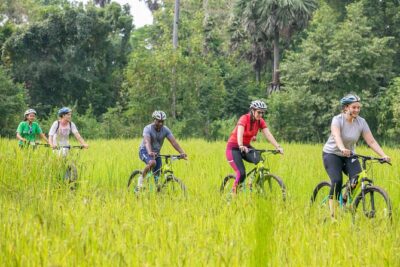 ★ 5.0Siem Reap Countryside Bike Tour / E-Bike or Tuk TukFrom $35935 reviews
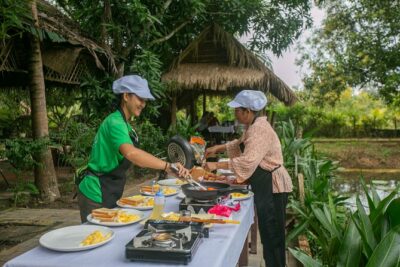 ★ 5.0Angkor Sunrise Bike Tour / E-Bike or Tuk TukFrom $60615 reviews
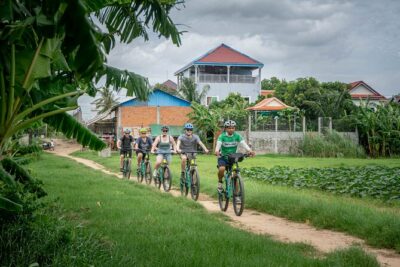 ★ 5.0Phnom Penh Silk Island Bike Tour/ E-Bike or Tuk TukFrom $35495 reviews
 ★ 5.0Bike the Angkor Temples – Full-Day 30km TourFrom $35463 reviews
 ★ 5.0Angkor Wat Sunrise Bike Tour & Jungle BreakfastFrom $75415 reviews
 ★ 5.0Siem Reap Countryside Quad Biking TourFrom $45322 reviews
 ★ 4.9Guided Countryside Bike TourFrom $35294 reviews
 ★ 5.0Local Livelihood Half Day Bike Tour in BattambangFrom $30287 reviews
Also appears in