
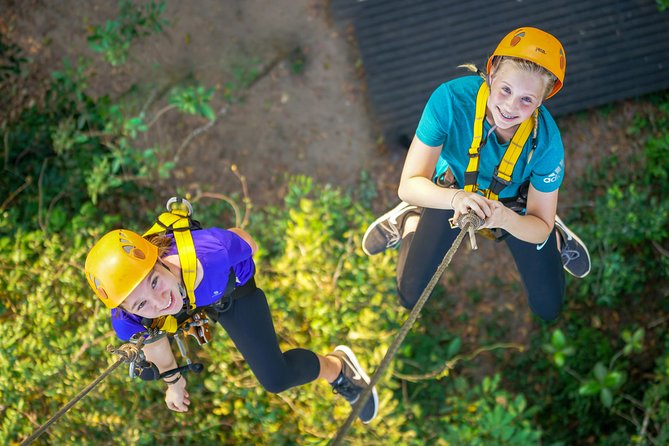
REVIEW · CAMBODIA
Angkor Wat Park Zip Line Adventure in Siem Reap
Fly over Angkor without leaving the jungle. This Angkor Wat Park Zip Line Adventure runs inside the Angkor Archaeological Park, so you get rainforest canopy flying plus rare chances to look down on UNESCO-listed Angkor from above, while still feeling human-sized thanks to small-group attention and safety-focused staff. The big win for me is how seriously they take control, like mandatory helmets and close guidance during the course, not just a quick hand-off. One thing to watch: you might not see the temples directly while you zip, since there are local rules about what can be above the Angkor Wat area.
This is also a smart add-on to a temple day. With multiple departure times, you can often schedule it so you are not juggling everything at once. And if you like eco-tour side moments, several people have spotted wildlife on or near the route, including families of gibbons, plus smaller park critters like bunnies and chickens.
In This Review
- Key highlights at a glance
- Angkor Zipline by the rules, and that is a good thing
- Gold vs Silver: picking the right course
- What happens at the Angkor Archaeological Park stop
- Inside the course: ziplines, sky bridges, and fast descents
- Safety gear and clothing rules that matter in real life
- Your instructor matters more than you think
- Small-group format, multiple departures, and fitting it into Angkor day
- Price and what you really get for $53.90
- Temple views: the one caveat you should plan around
- Who should book this (and who might think twice)
- Should you book Angkor Wat Park Zip Line Adventure?
- FAQ
- Where does the Angkor Wat Park Zip Line Adventure take place?
- How long is the zipline adventure?
- How much does it cost?
- What is included in the tour price?
- What is not included?
- Do I need to buy an Angkor Park pass?
- What should I wear or bring?
- Do I have to wear a helmet?
- Is the tour suitable for kids and older adults?
- Is there a cancellation option if plans change?
Key highlights at a glance
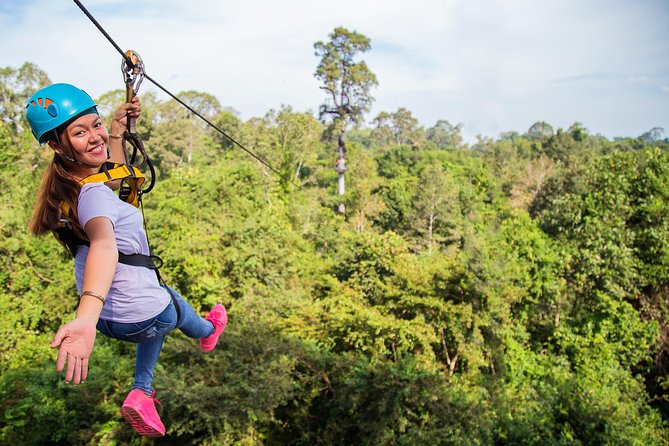
- Only zipline course inside Angkor Wat Park, giving you canopy views on your schedule.
- Gold and Silver course options, so you can match your energy level to the length of the ride.
- Small group size (up to 9 travelers), which usually means quicker help when you need it.
- Safety-first gear and coaching, including a helmet for every guest and staff walking you through technique.
- Rainforest flying with real structure: ziplines, sky bridges, and abseil-style elements, plus platforms and trees.
- Wildlife sightings show up, including gibbons reported after the ride.
Angkor Zipline by the rules, and that is a good thing
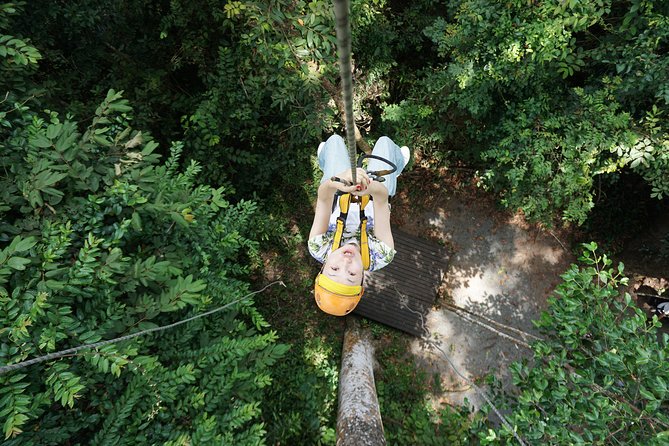
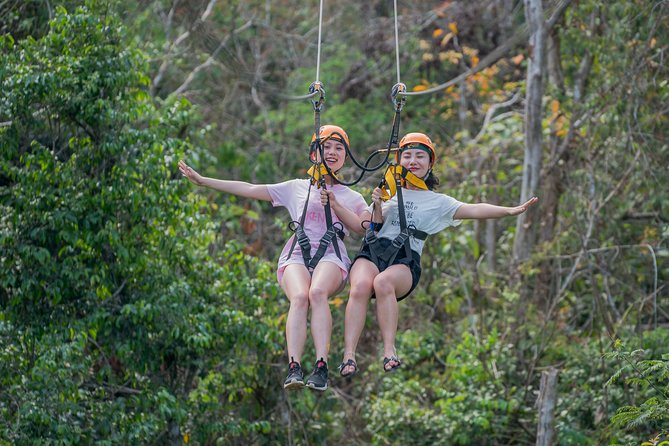
If you think ziplining is mostly about adrenaline, this one still delivers, but it also feels like a controlled adventure. You’re flying deep inside the park, using a course built for stability and repeatable lines: up to 14 trees and 21 platforms, with a mix of single and double ziplines, sky bridges, and controlled descents.
Why I like that for you: you spend less time worrying and more time looking around. When you’re hovering above Angkor’s rainforest canopy, small details matter. You start noticing how the course threads through the trees, where you can pause on platforms, and how the sky-bridge sections keep your momentum while still slowing you down enough to take in the view.
Gold vs Silver: picking the right course
You choose between two routes, typically described as a Gold Course and a Silver Course. The Gold option is designed to be the longer, more involved run, while Silver is a shorter track through the same kind of forest-flying experience.
Here is how I’d think about it:
- If it is your first time ziplining, I’d lean Gold. You get more time in the air, more sky-bridge moments, and more chances to settle into the rhythm.
- If you have limited time and just want a taste of canopy flying, Silver can still be a great way to check the box without taking over your whole day.
- If you already zip in other countries, consider the length carefully. A shorter route can feel like you finished before you got into a groove.
Either way, you are not just riding one straight line. The course includes multiple segments, so the experience feels like a full circuit rather than a single thrill.
Still weighing up options? These Siem Reap trips came up well in our reviews too.
- Angkor Wat Sunrise or Sunset Tour with Guide from Siem Reap★ 5.0 · 12,109 reviews
- Siem Reap: Angkor Wat: Small-Group Sunrise or Sunset Tour★ 5.0 · 9,444 reviews
- From Siem Reap: Kampong Phluk Floating Village Tour by Boat★ 4.9 · 6,979 reviews
- Siem Reap: Angkor Wat 2-Day Tour with Sunrise and Sunset★ 4.9 · 4,429 reviews
What happens at the Angkor Archaeological Park stop
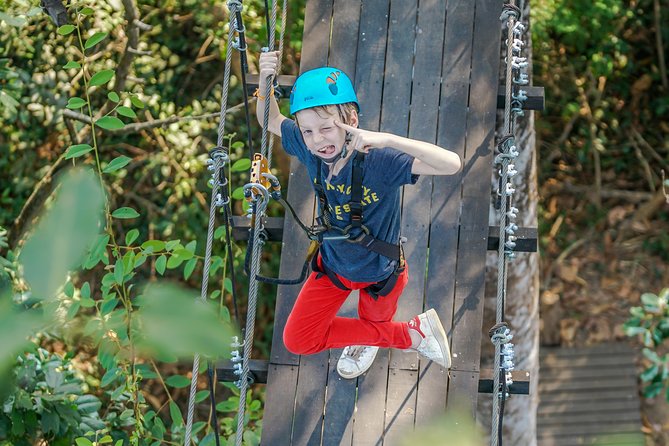
Your tour begins in the Angkor Archaeological Park area. Before you start flying, plan on a short orientation and a nature trail education trek. This part is not just filler. It helps you understand what you are stepping into, and it gives the staff a chance to check that everyone is set up safely.
You can also expect stories about the park. People commonly mention learning about the wildlife within the area, and that adds context to what you might see once you’re up in the trees. One of the charming surprises in the wildlife category is that some groups report spotting gibbons at the end of the experience, which makes the whole outing feel like more than a ride.
Inside the course: ziplines, sky bridges, and fast descents
Once you are suited up, you move through the course in stages. The experience is built around a steady flow of:
- Ziplines across the canopy (including single and double rides)
- Sky bridges, where you are still high but not in constant motion
- Abseils and descents as the course transitions between platforms
Some people describe the ending as a fast-rope type descent. What you should take from that is simple: you will finish with a more active final step, not just a slow stroll back down.
And yes, you’ll be looking around a lot. Even if you are not a birdwatcher, the height turns everything into a moving panorama. You can see how the treetops connect and how the course uses the terrain, not just a flat line set.
Safety gear and clothing rules that matter in real life

This operation is built around safety procedures you can feel, not just “trust us” language. The big items you should plan for before you even arrive:
- Helmets are required for every guest.
- Flip-flops and loose-fitting shoes are not permitted while ziplining.
- Avoid excessive or dangling jewelry, because straps and equipment need clean movement.
- Comfortable outdoor clothing is recommended, since you’ll be outdoors and moving around.
- Sunscreen and insect repellent are strongly recommended.
For rain, timing matters. From June to October, bring a raincoat because you may be ziplining in wet conditions. That is one of those practical details that keeps the trip from feeling miserable.
If you are tempted to show up wearing whatever sandals are in your hotel room, don’t. Get proper shoes you can stand and walk in on uneven ground.
Your instructor matters more than you think
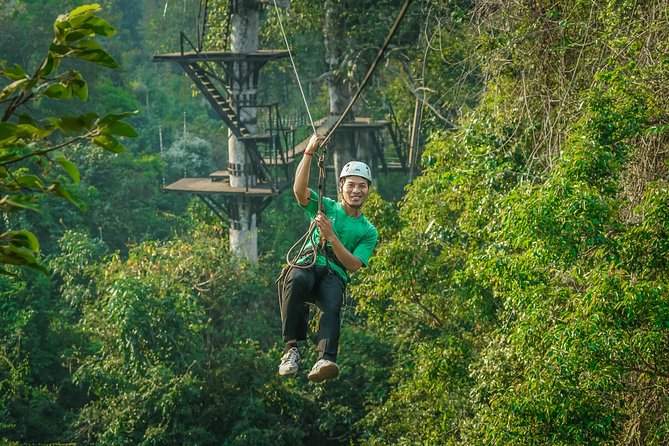
One of the most praised parts of this experience is the staff. People repeatedly mention friendly, engaged guidance and the feeling of being safe from start to finish.
Names that show up in the feedback include guides and Safety Rangers like Chay, Nuy, Jut, Noise, Yot, Noi, Pheak, Sokun, Tola, and Charlie Brown. You might not get the same exact team, but the pattern is clear: they explain things, they joke with you, and they keep an eye on everyone.
Why that matters for your day: ziplining is exciting, but it is also physical. If you feel lost during the setup or unsure about a technique, your brain burns energy that should be spent on flying. A strong guide makes the whole thing feel like a group activity you can relax into.



Small-group format, multiple departures, and fitting it into Angkor day
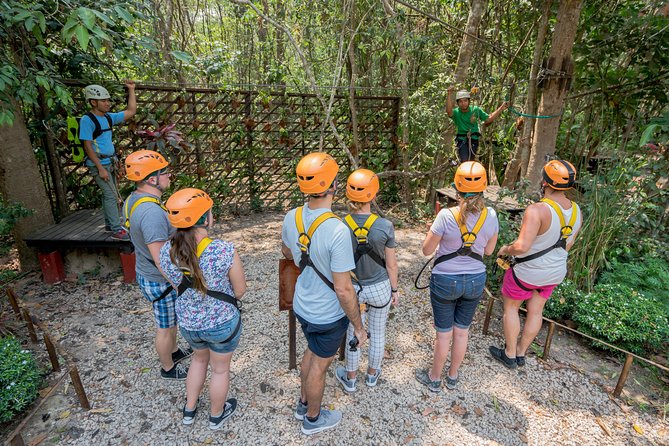
This is designed for small groups, with a maximum of 9 travelers. That tends to reduce the “waiting around” feeling common in bigger tours. It also supports the personal attention people mention in their ratings.
It also has multiple departure times, which is ideal if you are trying to combine it with a temple tour. Many people come to Siem Reap with a plan that already includes Angkor Wat or nearby temples. A timed slot for ziplining helps you avoid the classic problem of one attraction derailing the rest.
One practical note: transportation to the zipline operation site is not included. So you’ll want to sort out a tuk-tuk or ride plan in advance, especially if you schedule this early.
Price and what you really get for $53.90
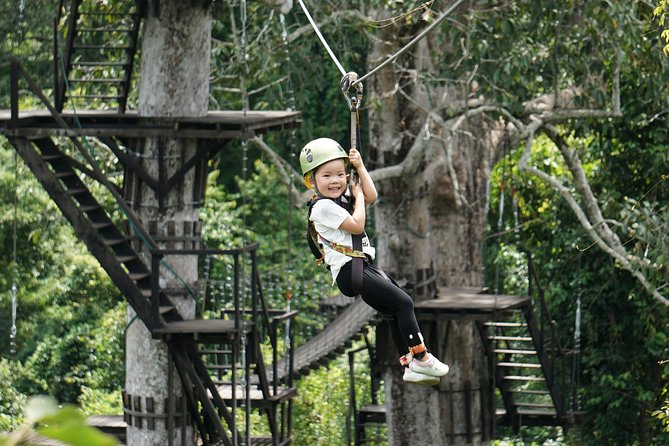
At $53.90 per person, this is not a bargain activity, but it also is not priced like a luxury day spa. It sits in the “value if you use the full experience” category.
What you’re paying for is not just the wires and platforms. Your included package covers:
- Zipline eco-adventure tour
- Nature trail education trek
- Insurance
Then there are the parts you still must cover separately, which affect the real cost:
- Your Angkor Park pass is required to enter the Angkor Park area, and it is not included.
- Extras like a private photographer hire or GoPro rental are not included.
My advice: calculate the total trip cost with the Angkor Park pass in mind. Once you do, the $53.90 fee looks more reasonable because the experience includes guided flying plus the educational nature trek, with insurance folded in.
Temple views: the one caveat you should plan around
Here is the honest heads-up. Even though the course is inside the Angkor region and you can look down on UNESCO-listed temples from above in theory, you may not see the temple structures clearly while you are riding. Local rules around what can be above the Angkor Wat area can limit sightlines.
This does not make the zipline less fun. It just means you should not schedule this expecting a birds-eye Angkor Wat photo moment from every platform. If you want temples as your main visual goal, treat ziplining as the rainforest and wildlife counterpoint, then plan your temple viewing separately on the ground.
Who should book this (and who might think twice)
This zipline adventure is a strong pick for:
- Families with kids, since it is built to be fun for both kids and adults.
- First-timers who want guidance and a safety-first setup.
- Older adults who want a thrilling experience without feeling rushed, which is supported by feedback from people in their 70s describing they felt safe throughout.
You might think twice if:
- You need constant temple viewing from the air.
- You have very limited mobility or balance comfort, since you still need to move through platforms and follow safety instructions (the tour notes that most travelers can participate, but it does not claim universal suitability).
If you’re the type who likes nature breaks between big sightseeing days, you’ll likely enjoy the extra layer of rainforest flying and wildlife potential.
Should you book Angkor Wat Park Zip Line Adventure?
I’d book it if you want your Angkor trip to include more than temples on stone. The best version of this day feels like a mix: a short nature trek on the ground, then a structured canopy course with small-group energy and safety that people consistently rate highly.
I would not overthink it, but I would decide on Gold versus Silver with intention. If you have the time and you want the day to feel full, choose Gold. If you have a tight schedule, Silver can still be a fun hit of rainforest flight.
If your main goal is photos of Angkor Wat from above, also plan to do temple viewing separately. The zipline is about the trees, the air, the course, and the wildlife moments, not just the view of stone.
FAQ
Where does the Angkor Wat Park Zip Line Adventure take place?
It’s in Siem Reap, Cambodia, inside the Angkor Archaeological Park area. The tour starts at Angkor Zipline, 0222, Phoum Mondol 3, Khom, Krong Siem Reap 17252, Cambodia, and ends back at the meeting point.
How long is the zipline adventure?
The duration is approximately 3 hours.
How much does it cost?
The price is $53.90 per person.
What is included in the tour price?
Included are the zipline eco-adventure tour, a nature trail education trek, and insurance.
What is not included?
Not included are transportation to the zipline operation site, private photographer hire, GoPro rental, and the Angkor Wat ticket (an Angkor Park pass is required to enter the park area).
Do I need to buy an Angkor Park pass?
Yes. An Angkor Park pass is required to enter the Angkor Park area, and it is not included in the tour.
What should I wear or bring?
Wear comfortable outdoor clothing. Flip-flops and loose-fitting shoes are not permitted while ziplining. Sunscreen and insect repellent are recommended. From June to October, bring a raincoat since it might be raining.
Do I have to wear a helmet?
Yes. A helmet must be worn by every guest while on zipline tours.
Is the tour suitable for kids and older adults?
The tour says most travelers can participate. Reviews include families and also people in their 70s describing they felt safe.
Is there a cancellation option if plans change?
Yes, free cancellation is available. You can cancel up to 24 hours in advance for a full refund, with cut-off times based on the experience’s local time.
More Tour Reviews in Siem Reap
- Angkor Wat Sunrise or Sunset Tour with Guide from Siem Reap★ 5.0 · 12,109 reviews
- Siem Reap: Angkor Wat: Small-Group Sunrise or Sunset Tour★ 5.0 · 9,444 reviews
- From Siem Reap: Kampong Phluk Floating Village Tour by Boat★ 4.9 · 6,979 reviews
- Siem Reap: Angkor Wat 2-Day Tour with Sunrise and Sunset★ 4.9 · 4,429 reviews
Newly written up around Siem Reap
- Waterfall & River of 1000 Siva Linga- Kulen Mountain Private Tour
★ 5.0 · 3 reviews - Private Transfer from Siem Reap to Sihanoukville
★ 4.5 · 3 reviews - Private Tour to Koh Ker and Beng Mealea
★ 5.0 · 3 reviews - Private Transfer: Siem Reap Angkor Internation Airport to Hotel
★ 5.0 · 3 reviews - Kulen National Park Ticket -Waterfall & 1000 Lingas
★ 5.0 · 3 reviews - Kulen Waterfall & Kbal Spean Tour
★ 5.0 · 3 reviews