
REVIEW · ANGKOR
Angkor Wat Sunrise Small Group Tour With Breakfast
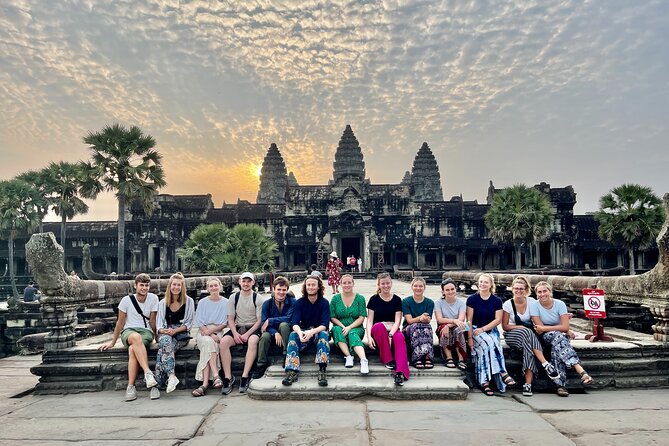
Sunrise at Angkor Wat is worth the alarm. This small-group tour gets you there early for less crowding and big views, then carries you through the main temple highlights at a steady pace.
What I love most is the way this format keeps the day readable. You get hotel pickup before sunrise, and once you’re on-site your guide helps you spot what matters, from layout to meaning. I also like the practical comfort, especially the air-conditioned ride and the repeated cold water and cool towels when the heat ramps up.
One thing to plan for is the long, hot walking day. Breakfast is included, but it’s more basic than fancy, and the major Angkor Wat admission is an extra cost you must handle before sunrise.
In This Review
- Key highlights worth waking up for
- Why the pre-dawn pickup shapes your whole Angkor day
- Sunrise at Angkor Wat: timing, the pass, and what to expect
- From Angkor Wat to Srah Srang: breakfast with a local flavor break
- Ta Prohm: the jungle temple stop that people remember
- Bayon, then Baphuon: the faces, the symbolism, and the pacing
- Terrace of the Elephants and Terrace of the Leper King: what these stops add
- Angkor Thom South Gate: the finish that ties the complex together
- What you actually get with the small-group format
- Price and value check: $23 vs the Angkor Wat pass
- Comfort in Siem Reap heat: dress code, supplies, and walking strategy
- Who this sunrise tour suits best (and who should think twice)
- Should you book this Angkor Wat Sunrise Small-Group Tour with Breakfast?
- FAQ
- What time does hotel pickup start for the sunrise?
- Is breakfast included, and is there a vegetarian option?
- Do I need to buy the Angkor Wat admission pass?
- What temples and stops are included during the day?
- What’s included in the price besides the guide and transport?
- What should I wear for the temples?
- How large is the group?
Key highlights worth waking up for
- Small-group access (max 14): easier questions, less waiting around.
- Arrive for sunrise early: you’re positioned before the worst midday crush.
- Hotel pickup and drop-off: you avoid the stressful early-morning scramble.
- Cold water and cool towels all day: comfort matters in Siem Reap heat.
- A real breakfast stop at Srah Srang: you break up temple time with local food.
- A full Angkor Thom circuit: Bayon, terraces, and the south gate in one sweep.
Why the pre-dawn pickup shapes your whole Angkor day
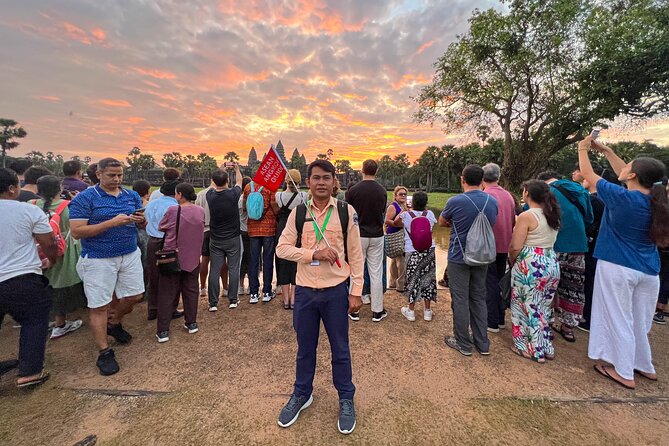
Angkor Wat at sunrise feels cinematic because you’re not fighting the crowds. With pickup starting between 4:30 am and 5:00 am, you trade “sleepy and late” for “early and calm.” The tour’s structure also means you’re not stuck outside with everybody else, trying to interpret where to go next.
I like that the tour gives you a clear flow: sunrise first, then temples while your guide can still explain what you’re seeing in the morning light. That’s a big deal at Angkor, where walking through stone without context can feel like a blur.
This is also one of those tours where your guide matters. People repeatedly mentioned guides like Mr. Raman, Mr. Dan, Mr. Ho, Mr. August, and Mr. David for keeping the day organized and making the details click. Even when you’re tired, that kind of leadership helps you get more out of the visit.
Sunrise at Angkor Wat: timing, the pass, and what to expect
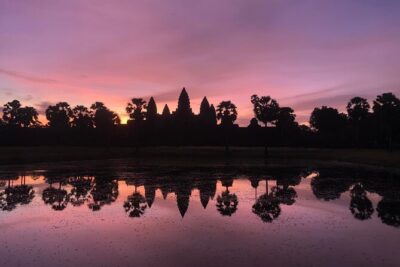
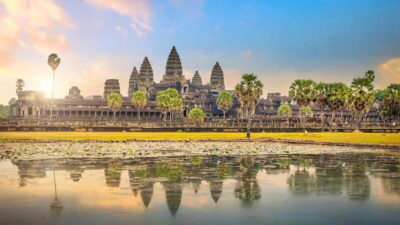
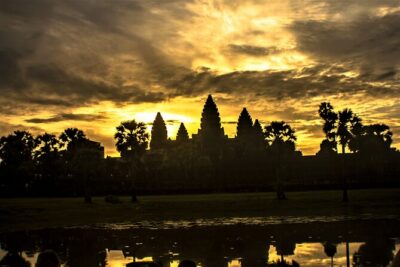
Angkor Wat sunrise is the headline, but the real “win” is access and preparation. You’re picked up from your hotel lobby before dawn and brought to the temple for sunrise. The tour is built around you arriving in the dark, then watching the sky change over the main views.
There’s one practical rule you can’t ignore: you need the Angkor temple pass (Angkor Wat admission) before the start of the tour. The tour notes that they require all participants to have the pass beforehand so you do not miss the sunrise moment. If you’re relying on last-minute purchases, you’re gambling with time.
What about the sunrise itself? Conditions can vary. In one account, the sun was hidden behind clouds and only peeked through in a few moments, which still made the view memorable because the temple silhouette held its drama. So even if sunrise is softer than the photos, the experience can still land.
Dress code matters too. No shorts, and your knees and shoulders need to be covered for temple entry. This is not the day to wear “temple-friendly” clothes that actually leave your shoulders exposed. If you pack a light shirt and long pants or an appropriate sarong-style option, you’ll move through checkpoints without stress.
Other ways to be at the temples before the light comes up
- Angkor Wat Sunrise or Sunset Tour with Guide from Siem Reap★ 5.0 · 12,109 reviews
- Siem Reap: Angkor Wat: Small-Group Sunrise or Sunset Tour★ 5.0 · 9,444 reviews
- Siem Reap: Angkor Wat 2-Day Tour with Sunrise and Sunset★ 4.9 · 4,429 reviews
- Angkor Wat Sunrise tour with Small – Group and Guide tours★ 5.0 · 3,655 reviews
From Angkor Wat to Srah Srang: breakfast with a local flavor break
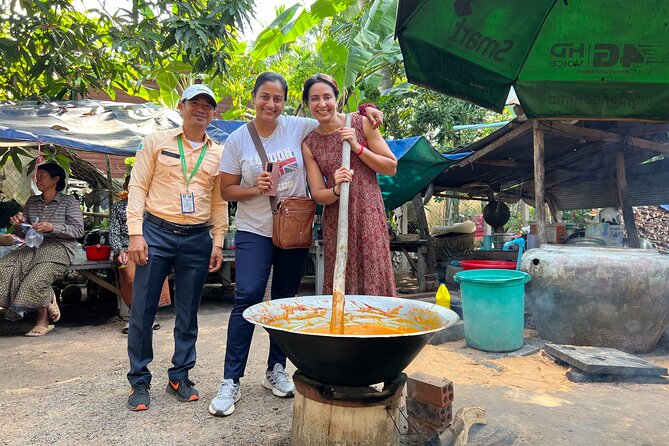
After the sunrise segment, the day shifts gears with a breakfast stop at Srah Srang. This is a nice change of rhythm. Temples can be mentally heavy, and breakfast helps you reset before the next round of walking.
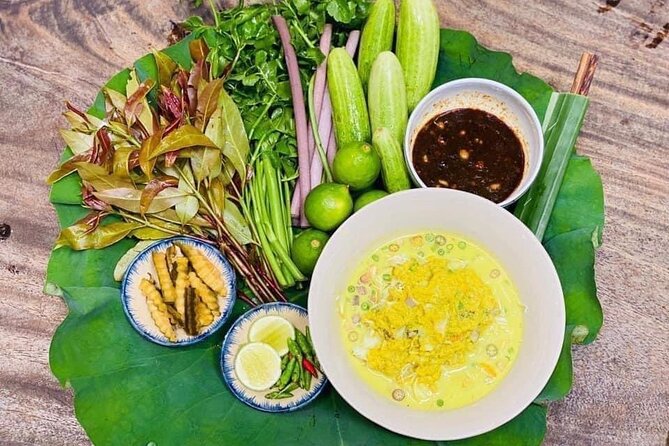
You’ll enjoy breakfast and support at a local family restaurant in Siem Reap. The setting is described as rural life near the Angkor countryside community of Preah Dak village. In practice, that’s the difference between eating “near the tourist sights” versus eating as part of the area’s daily routine.
Food notes from accounts include simple traditional dishes, with at least one person noting a vegetarian option. One guest even described their meal as a green curry style breakfast, and another said breakfast preparation was interesting to watch. That said, not every breakfast landed the same way. One 4 out of 5 comment called it a simple soup without much flavor, and another wished coffee or tea had been included.
My take: treat breakfast as a fuel stop and a cultural pause, not a brunch destination. If you’re a coffee person, consider bringing a plan for afterward, since lunch is not included and drinks like coffee or tea aren’t guaranteed with breakfast.
Ta Prohm: the jungle temple stop that people remember
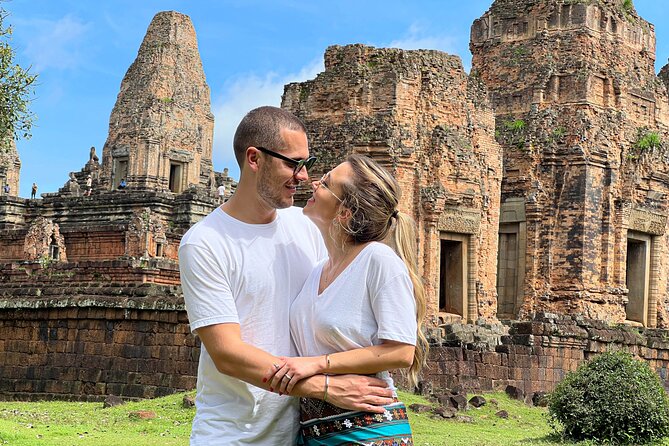
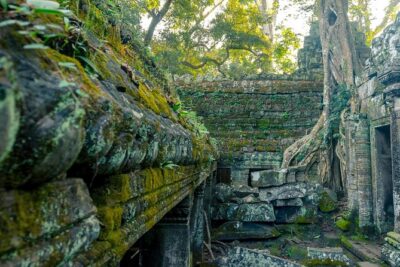
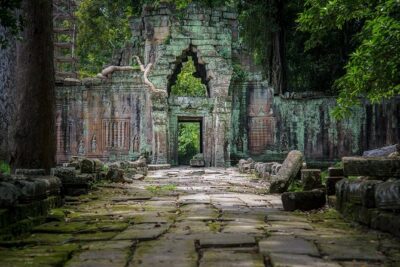
Next comes Ta Prohm, the famed jungle temple left in a more natural state, with large roots and overgrowth shaping the scene. This is usually where people’s eyes brighten, because it looks like time stopped mid-chaos.
From a touring standpoint, Ta Prohm works well after breakfast. You’re awake, your brain is still in “story mode,” and you can appreciate how restoration choices affect what you see. Even better, your guide’s explanations help you connect the temple’s layout and features with what you’re seeing in the roots and stone.
The main downside is physical. Ta Prohm requires walking, and the day can already feel warm by the time you’re moving through sections. Bring your patience and water, and use the cool towel moments when they happen, not only at the end.
Bayon, then Baphuon: the faces, the symbolism, and the pacing
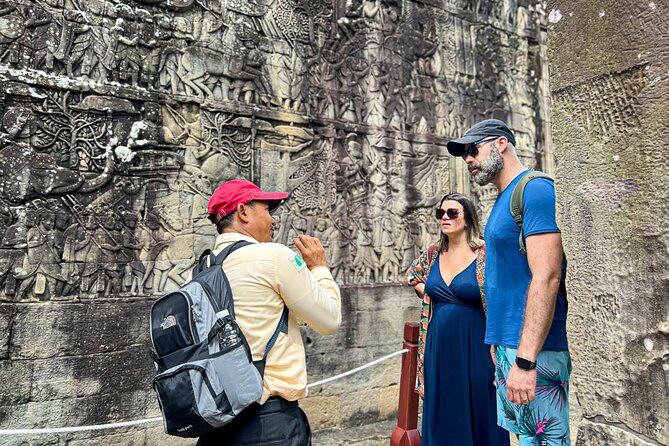
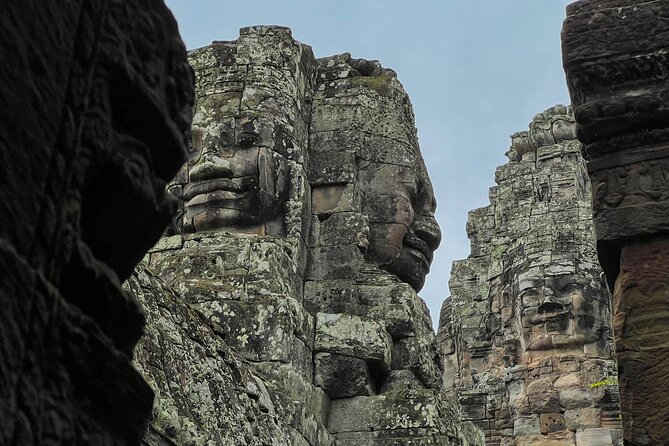
From Ta Prohm, you head into Angkor Thom territory, where Bayon is the next big stop. Bayon is known for its iconic face towers and is described here as a monastery that survived and served worship, education, and administration. That description matters because it frames Bayon as more than a photo backdrop.
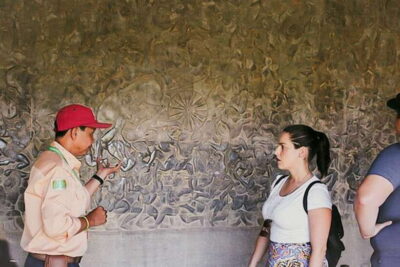
This stop is about interpretation. A good guide helps you understand how the carved faces relate to the structure, how to read the different areas, and why the site’s layout matters. Several accounts praised guides for clear English and for giving information that made the visual design feel less random.
After Bayon comes Baphuon, sometimes nicknamed the golden mountain. It sits on an artificial hill in Angkor Thom, northwest of Bayon. That hill placement is a key visual point: you’re not just looking at a single temple building, you’re noticing elevation changes and how builders used the terrain as part of the design.
Time-wise, Baphuon is shorter in the plan than Bayon, so it’s a good “breather temple,” especially if the heat is pressing. Use that brief window to look for perspective changes around the mound.
Terrace of the Elephants and Terrace of the Leper King: what these stops add
Two terraces round out the Angkor Thom highlights: the Terrace of the Elephants and the Terrace of the Leper King.
- The Terrace of the Elephants is fronting the Royal Palace area and is also known in some records as the Terrace of Honor. Even if you only get a brief look, it helps you understand how the palace complex relates to ceremonial and public space.
- The Terrace of the Leper King was used for ceremonial cremations, and the plan mentions a statue of the God of Death fitting the bill. This is darker subject matter, but it adds real meaning when you compare it with the more decorative face imagery elsewhere.
One practical note: one account said the Terrace of the Elephants stop was closed, so you might not always get every terrace view. The plan gives those stops time slots, but closures can happen.
If you care about these specific terraces, I’d treat them as “first in, best effort.” Come prepared to adapt, and keep an eye on what your guide suggests you prioritize if something is inaccessible.
Other early starts around Siem Reap
Angkor Thom South Gate: the finish that ties the complex together
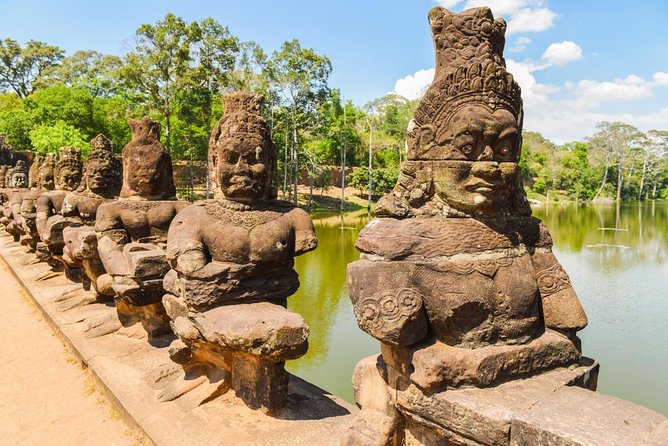
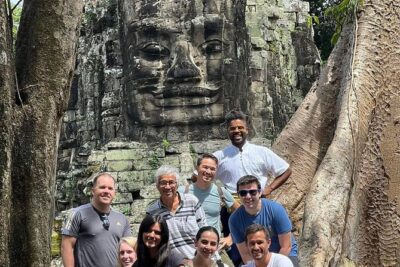
You wrap with the Angkor Thom South Gate. This is a 12th-century city gate with carved faces, plus stone figures lining the causeway. The reason this stop feels satisfying is that it connects earlier pieces of the day into one mental map.
By the time you reach the gate, you’ve seen Angkor Wat, then multiple major parts of the Angkor Thom center. A gate stop works like a reset button. You get a wider view of how movement and entry routes shaped the complex.
It’s also a good place to slow down for photos, since the gate design offers strong geometry for framing. If you’re traveling with camera gear, this is the kind of stop where an extra 10 minutes matters.
What you actually get with the small-group format
This tour runs up to 14 travelers. That cap is the difference between feeling herded and feeling guided. In a bigger group, you often spend your time watching feet and trying to follow. Here, your guide has more room to answer questions and adjust to how your group moves.
In accounts, guides were repeatedly praised for English, humor, and timing. Names that came up often included Mr. Raman, Mr. Dan, Mr. Ho, Mr. August, Mr. David, and Mr. Jan, with drivers like Mr. Sothea and Mr. T also highlighted for keeping the day comfortable.
The ride setup is part of the value, too. You’re in air-conditioned transport, and there are cool towels and bottled water. One person noted that their driver kept handing out water and towels during stops. Another mentioned a small pineapple treat as a welcoming touch. Those details sound minor until you’re the one sweating.
If you’re sensitive to heat or you want a smoother rhythm between temples, this comfort package makes a real difference.
Price and value check: $23 vs the Angkor Wat pass
The tour price is $23 per person, but the Angkor Wat admission is not included. The pass is listed at $37 per person, so your likely total for the experience is around $60 before tips and any extras.
Is that fair? In my view, yes, because you’re not just buying tickets and a bus ride. You’re paying for:
- an early pickup and a sunrise arrival plan built around timing
- a professional English-speaking guide
- air-conditioned transport plus water and towels
- breakfast at a local family restaurant
- a structured day through multiple major sites
The “watch-outs” are also clear. Lunch is not included. Breakfast is included but may be simpler than you want, with at least one comment wishing coffee or tea was part of it. And the Angkor pass is a separate payment you must organize in advance to keep the sunrise on track.
Comfort in Siem Reap heat: dress code, supplies, and walking strategy
Temple days in Cambodia can feel intense fast, especially when you start before dawn and then hit full daylight temperatures later. The tour includes cool bottles of water and towels, but you still need to show up prepared.
The tour’s guidance says:
- cover knees and shoulders (no shorts)
- bring sunscreen, sunglasses, insect repellent, and a hat
- consider bringing your own water habits mindset, since you’ll be outdoors for long stretches
My practical tip: wear breathable layers and shoes you can walk in for hours. You’ll do plenty of moving between stops. Even if the tour keeps a steady pace, it’s still a temple circuit, not a sit-and-look day.
If you get motion sensitivity or want a plan for fatigue, you’ll appreciate that the AC ride segments provide recovery between sites. In accounts, drivers were quick to offer comfort at the right times, not only at the end.
Who this sunrise tour suits best (and who should think twice)
This is a great match if:
- you’re visiting Angkor for the first time and want the major highlights
- you want sunrise without joining the most chaotic line day experiences
- you prefer small-group movement so the guide can answer questions
- you like structured days when maps and timing can get confusing
It may be less ideal if:
- you hate early mornings. Pickup runs between 4:30 and 5:00 am.
- you want a relaxed, slow temple stroll with minimal walking.
- you expect breakfast to be a full meal with drinks like coffee and tea.
If you’re traveling as a couple, with friends, or solo, the small-group size can feel like a sweet spot. For families, the structure helps, but you still need to be realistic about heat and walking.
Should you book this Angkor Wat Sunrise Small-Group Tour with Breakfast?
I’d book it if sunrise is your priority and you want a smooth day built around the big names: Angkor Wat, Ta Prohm, Bayon, and the terraces and gates of Angkor Thom. The small-group size, hotel pickup, AC transport, and repeated comfort touches are the kind of “boring logistics” that make a temple day actually enjoyable.
Book it especially if you’re the type who appreciates explanations and wants context while you’re standing in front of the stone. Accounts repeatedly highlighted guides like Mr. Raman, Mr. Dan, and Mr. August for turning design details into something you can understand on the spot.
Skip or rethink if early mornings will ruin your trip mood, or if you’re very picky about breakfast quality. Also, make sure your Angkor pass is sorted before pickup, because that is the key to not losing the sunrise moment.
FAQ
What time does hotel pickup start for the sunrise?
Pickup is included and happens between 4:30 AM and 5:00 AM. You should wait in your hotel lobby about 10 minutes before the scheduled pickup time.
Is breakfast included, and is there a vegetarian option?
Yes. Breakfast is included at the Srah Srang stop, and a vegetarian option is available.
Do I need to buy the Angkor Wat admission pass?
Yes. The Angkor temple pass is not included, and you are required to have it before the tour starts so you do not miss the sunrise. The listed Angkor Wat admission fee is $37 per person.
What temples and stops are included during the day?
The tour includes Angkor Wat at sunrise, then Srah Srang for breakfast, Ta Prohm, Bayon, Baphuon, Terrace of the Elephants, Terrace of the Leper King, and Angkor Thom South Gate, before returning to Siem Reap.
What’s included in the price besides the guide and transport?
Included items are a professional English speaking tour guide, air-conditioned transport, free cool bottled water and towels, breakfast, and hotel pick-up and drop-off.
What should I wear for the temples?
The dress code requires covered knees and shoulders. Shorts are not allowed.
How large is the group?
This experience has a maximum of 14 travelers. That smaller group size is part of why you can ask questions during the visit.
More Tours in Siem Reap
- Angkor Wat Sunrise or Sunset Tour with Guide from Siem Reap★ 5.0 · 12,109 reviews
- Siem Reap: Angkor Wat: Small-Group Sunrise or Sunset Tour★ 5.0 · 9,444 reviews
- From Siem Reap: Kampong Phluk Floating Village Tour by Boat★ 4.9 · 6,979 reviews
- Siem Reap: Angkor Wat 2-Day Tour with Sunrise and Sunset★ 4.9 · 4,429 reviews
More Tour Reviews in Siem Reap
- Angkor Wat Sunrise or Sunset Tour with Guide from Siem Reap★ 5.0 · 12,109 reviews
- Siem Reap: Angkor Wat: Small-Group Sunrise or Sunset Tour★ 5.0 · 9,444 reviews
- From Siem Reap: Kampong Phluk Floating Village Tour by Boat★ 4.9 · 6,979 reviews
- Siem Reap: Angkor Wat 2-Day Tour with Sunrise and Sunset★ 4.9 · 4,429 reviews
Sunrise at Angkor, Three More Ways
- Angkor Wat Sunrise or Sunset Tour with Guide from Siem Reap★ 5.0 · 12,109 reviews
- Siem Reap: Angkor Wat: Small-Group Sunrise or Sunset Tour★ 5.0 · 9,444 reviews
- Siem Reap: Angkor Wat 2-Day Tour with Sunrise and Sunset★ 4.9 · 4,429 reviews
- Angkor Wat Sunrise tour with Small – Group and Guide tours★ 5.0 · 3,655 reviews
Newly written up around Siem Reap
- Waterfall & River of 1000 Siva Linga- Kulen Mountain Private Tour
★ 5.0 · 3 reviews - Private Transfer from Siem Reap to Sihanoukville
★ 4.5 · 3 reviews - Private Tour to Koh Ker and Beng Mealea
★ 5.0 · 3 reviews - Private Transfer: Siem Reap Angkor Internation Airport to Hotel
★ 5.0 · 3 reviews - Kulen National Park Ticket -Waterfall & 1000 Lingas
★ 5.0 · 3 reviews - Kulen Waterfall & Kbal Spean Tour
★ 5.0 · 3 reviews
Angkor Wat Sunrise Tours, side by side.
 ★ 5.0Angkor Wat Sunrise or Sunset Tour with Guide from Siem ReapFrom $1812,109 reviews
 ★ 5.0Angkor Wat: Small-Group Sunrise or Sunset TourFrom $159,444 reviews
 ★ 4.9Angkor Wat 2-Day Tour with Sunrise and SunsetFrom $344,429 reviews
 ★ 5.0Angkor Wat Sunrise tour with Small – Group and Guide toursFrom $143,655 reviews
 ★ 5.0Angkor Wat Highlights and Sunrise Guided Tour from Siem ReapFrom $233,213 reviews
 ★ 5.0Full-Day Angkor Wat Sunrise Private Tour with Guide from Siem ReapFrom $602,920 reviews
 ★ 5.0Angkor Wat Sunrise & 3 Main Temples with Breakfast – Small GroupFrom $152,857 reviews
 ★ 4.9Angkor Wat Sunrise and Full-Day Sightseeing TourFrom $142,828 reviews
Also appears in