
REVIEW · PHNOM PENH
Full Day-Tour: Handicraft, Bamboo train, Killing cave. Bat cave
Bats at dusk are only half the story. I love the hands-on village workshops in Battambang, where you see everyday Cambodian products made, and I also love the bat caves at dusk moment when the hillside turns into motion. The route stitches together temples, countryside villages, and Khmer Rouge history in a way that feels practical, not just checkbox sightseeing.
One thing to consider is that this is a long 10 to 12 hour day, and the Phnom Sampeau killing caves are emotionally heavy. If you want a gentler outing, you’ll need to pace yourself with breaks and bring a sensible mindset for the history portion.
In This Review
- Key things that make this tour worth your time
- A full-day Battambang route with tuk-tuk comfort and village time
- Price and what you truly get for $18, plus the bamboo train add-on
- How the private pickup and long day feels in real life
- Stop 1: Rice paper, spring roll flavors, and fish paste market reality
- Stop 2: Wat Samrong Knong and the Well of Shadows memorial
- Stop 3: Wat Ek Phnom, a landmark pause on the north side
- Stop 4: Battambang provincial hall and the Ta Dambong Kro Aung statue
- Stop 5: Kampong Pil Pagoda, villages, and suspension bridges on the Sangke River
- Stop 6: Osrolao bamboo train ride, the classic option with a $5 fee
- Stop 7: Killing Caves of Phnom Sampeau, a history stop with emotional weight
- Stop 8: Battambang Bat Caves at dusk, the Bat Army moment
- Guide quality and the names you might hear during your day
- Who this tour suits best, and who might want to adjust expectations
- Should you book this Battambang private tuk-tuk tour?
- FAQ
- What is the duration of the Battambang full-day tour?
- Does the price include the bamboo train ride?
- Are hotel pickup and drop-off included?
- Is the tour private?
- What’s included in the tour besides guiding and transport?
- What age limits apply?
Key things that make this tour worth your time
- Private tuk-tuk flexibility with hotel pickup and drop-off, so the day runs on your schedule rather than the other way around
- Real product workshops focused on rice paper, sticky rice, and fish paste, plus village markets for dried fruit and local snacks
- Wat Samrong Knong, the Well of Shadows, and the Khmer Rouge memorial context you won’t get from a quick stop
- Osrolao bamboo train using the classic setup, with a short add-on fee for the ride
- Phnom Sampeau killing caves followed by a calmer landing at Battambang Bat Caves before sunset
A full-day Battambang route with tuk-tuk comfort and village time
This is the kind of Battambang day tour that makes the countryside feel close. You start in food and craft country, then move through temple landmarks, go out to village pagodas and riverside views, and end with one of Cambodia’s most dramatic sunset shows, the Battambang Bat Caves.
What I like about the format is that it is not just sitting in a vehicle looking out the window. You actually stop where locals work and live. You also get a guide who keeps the day readable, with smooth timing between sites so you spend your energy on what matters: seeing, learning, and tasting.
The private setup matters too. When it is just your group, you can ask questions, linger a bit when you care about a topic, and avoid the awkward rush that comes with larger mixed tours.
Price and what you truly get for $18, plus the bamboo train add-on
At $18, this tour is priced like a value outing for a full day. You are not just paying for transportation. You’re paying for guided access to multiple named sights plus included admission at several stops.
Here is the practical breakdown:
- Some stops include admission tickets (for example Stop 1 rice paper and spring roll area, Stop 3 Wat Ek Phnom, Stop 7 Killing Caves of Phnom Sampeau, and Stop 8 Battambang Bat Caves).
- You also get included perks like cool minimal waters, and a friendly English-speaking local guide.
- The big extra cost you should plan for is the bamboo train ride at $5 per person.
If you are the type who hates paying surprise add-ons, note the bamboo train fee upfront and treat it like part of the experience. That ride is the one activity that is explicitly not included in the $18.
For many visitors, the bamboo train plus a full set of cultural stops plus the bat cave payoff is exactly where the value sits. You get more than a single highlight day.
Other guided visits to Cambodia's genocide memorial sites
- Afternoon tour by tuk tuk to bamboo train,bat cave,killing cave,countryside.★ 5.0 · 344 reviews
- Battambang: Bamboo Train, Bat Cave, Killing Cave by Tuk Tuk★ 5.0 · 182 reviews
- Afternoon Tour: Bamboo Train, Killing Cave &Bat Cave★ 5.0 · 73 reviews
- AfternoonTour.Bamboo train.killing cave with Secret bat cave★ 5.0 · 41 reviews
How the private pickup and long day feels in real life

Expect about 10 to 12 hours in total. That is a full day, not a quick circuit. With that in mind, I suggest you plan for it like a proper outing: wear comfortable shoes, bring a hat or light layer for daytime heat, and keep snacks in your day bag if you have a sensitive stomach around new foods.
The tour includes hotel pickup and drop-off, which saves you time and hassle in Battambang. It also reduces stress for the heavier parts of the itinerary, because you are not trying to coordinate transport while you’re processing the history at Phnom Sampeau.
One more practical note: you’ll be in a tuk-tuk most of the day, then you’ll move around at each stop. The guide also provides cold water during the day, which helps when you add countryside walking and temple stair steps to a long schedule.
Stop 1: Rice paper, spring roll flavors, and fish paste market reality
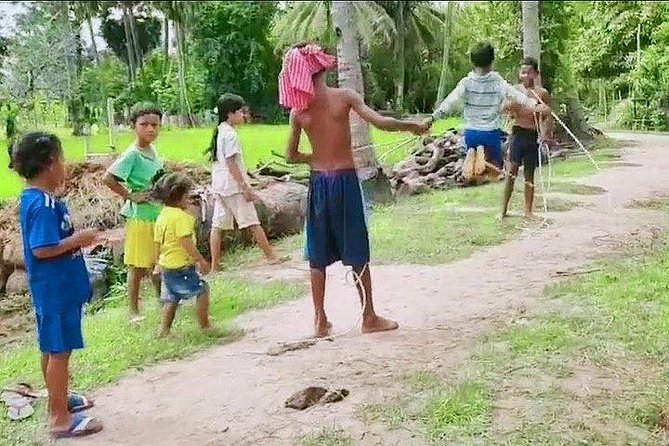
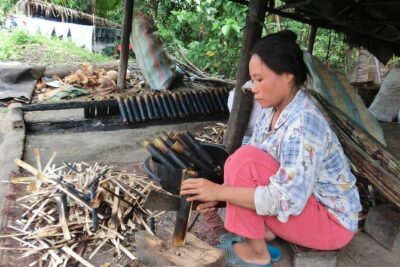
This opening stop is where the tour earns its keep, because it starts with how Cambodian pantry staples actually come to life. You go out to the villages and see local production connected to foods and market life, including sticky rice, bamboo-related items, rice paper, dried banana, and local rice wine.
You’ll also meet the people behind fish paste making. This is one of those moments that feels small, but it changes how you understand what you taste later in Cambodia. Rice paper and fish paste can seem like just items on a menu, but you learn the labor behind them, the timing, and why they matter in daily cooking.
A useful tip from the day’s experience: if you are sensitive to strong smells, bring a peg for your nose when you’re at the fish cheese or fish paste market area. It sounds funny until you’re standing there and realizing you can make it easier on yourself.
How long you’ll spend: about 3 hours, with admission included. That is long enough to watch, ask questions, and not feel like you’re being herded through.
Possible drawback: this stop can be intense if you hate food smells or you are not interested in production processes. If that’s you, lean into the parts that interest you most, like rice paper and bamboo-related goods, and let the rest pass without forcing it.
Stop 2: Wat Samrong Knong and the Well of Shadows memorial
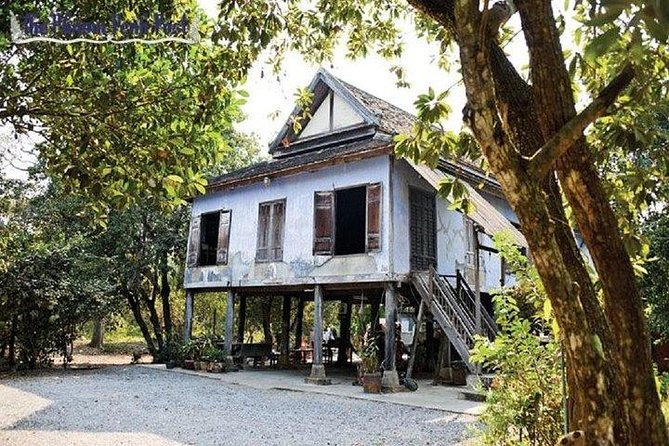
After the village production area, the day shifts into a temple setting with serious context. At Wat Samrong Knong, you’ll visit the Well of Shadows and learn about the Khmer Rouge connection associated with this pagoda. The stop is designed as a memorial to the people killed during the war.
This is not a “fun photo” moment. It’s a remembrance stop. With a good guide, you’ll leave understanding that Cambodia’s history is not just dates. It lived in places like this, where daily life was interrupted and people were lost.
Time on site is about 40 minutes, and admission is free at this stop. Because the stop is short, you can absorb the information without feeling trapped in one place too long.
Practical advice for this part: keep your phone put away during the most solemn sections. Give yourself time to listen, then take photos only where it feels respectful.
Stop 3: Wat Ek Phnom, a landmark pause on the north side
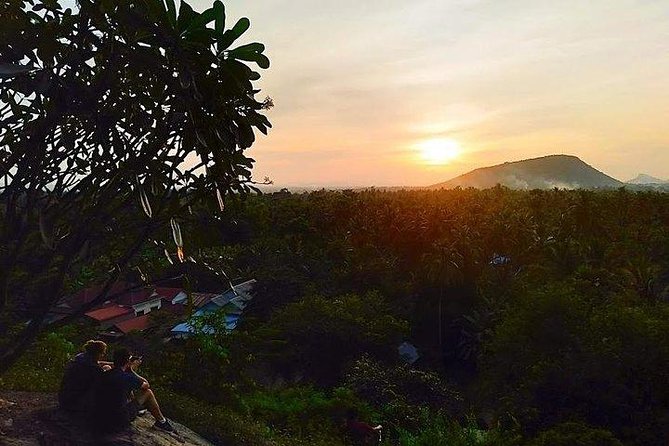
Next you head to Wat Ek Phnom, described as the final landmark on the north side before returning toward the city for sightseeing.
This stop works well as a palate cleanser. After the emotional intensity of Khmer Rouge related memorial context at Wat Samrong Knong, Wat Ek Phnom gives you a more classic temple sightseeing rhythm. It is not that the history disappears. It just changes tone from tragedy-focused remembrance to landscape, architecture, and viewpoints.
You’ll spend about 1 hour, and admission is included. That hour is usually enough time to see the key features, get your bearings, and enjoy the slower pace without turning it into a marathon.
If you are the type who always wants a view, this is the kind of stop that can satisfy. Even when you keep it simple, you can appreciate how temples function as landmarks people navigate by.
Other Battambang days by tuk tuk
Stop 4: Battambang provincial hall and the Ta Dambong Kro Aung statue
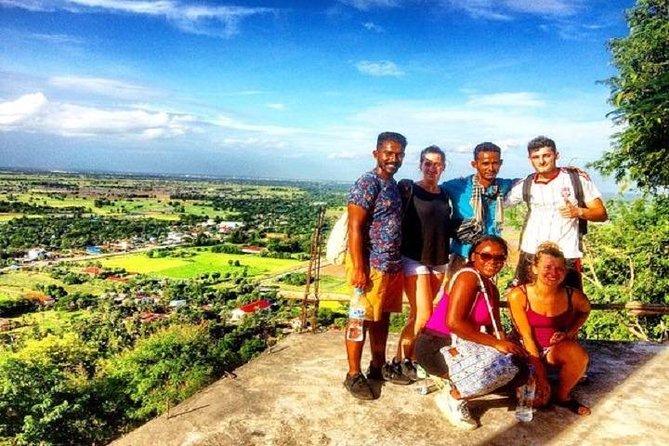
Back near the city, the tour adds a dose of civic and colonial-era framing. You’ll see colonial structures of the Battambang provincial hall, then visit the Ta Dambong Kro Aung statue.
Why I think this stop matters: it helps connect the rural production world from earlier in the day to Battambang as a city. When you only focus on temples and villages, the city can feel like an overnight stop. Adding these landmarks makes Battambang feel like it has layers, not just one story.
Admission at this stop is free, and time on site is about 1 hour. Because it is not a long crawl through multiple buildings, this is a good section if you want variety without losing the day’s momentum.
Stop 5: Kampong Pil Pagoda, villages, and suspension bridges on the Sangke River
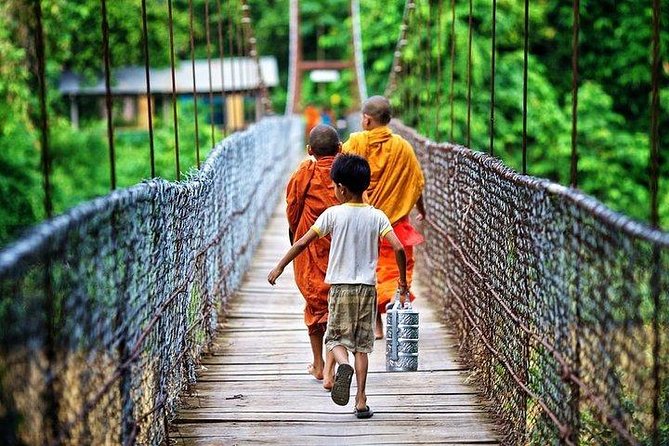
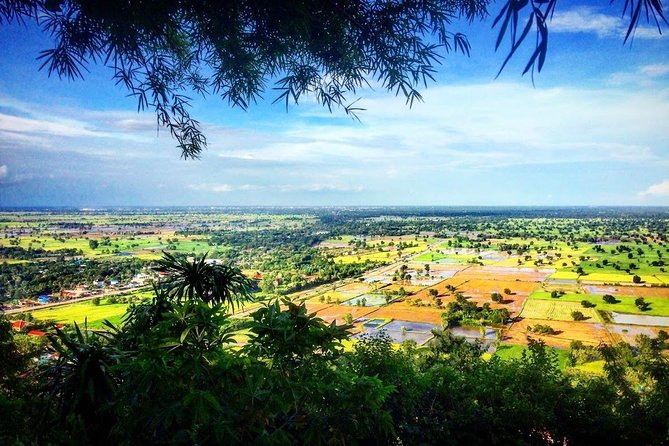
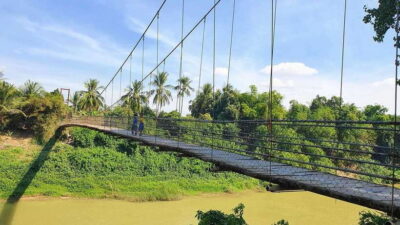
This stop turns into a scenic village detour. You head toward Kampong Pil Pagoda, with an adventure-style segment that includes villages and suspension bridges on the Sangke River.
The big value here is the human scale. The tour is designed to let you talk with farmers and spend time with them. Even if you don’t understand every word, you can learn a lot through observation and simple questions.
Time on site is about 1 hour, and admission is free. That makes it an efficient nature-and-culture mix that doesn’t steal too much of your daylight.
One consideration: suspension bridges and village paths can be uneven. You might find it helpful to wear shoes that grip well and avoid anything too slippery.
Stop 6: Osrolao bamboo train ride, the classic option with a $5 fee
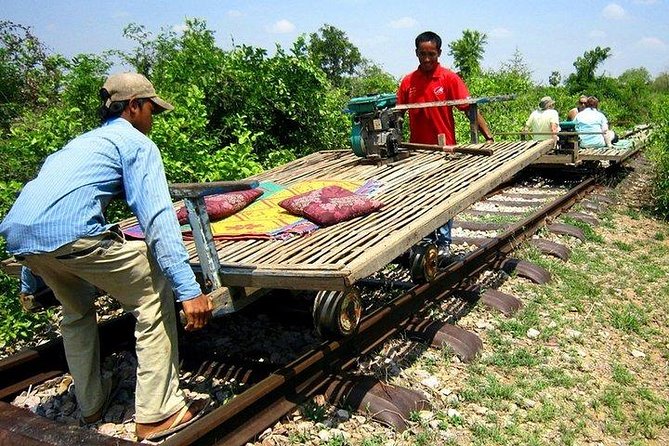
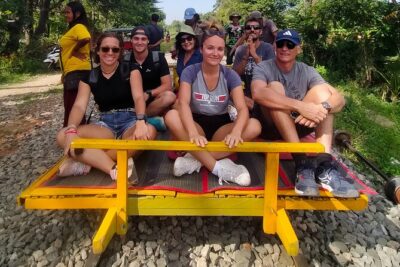
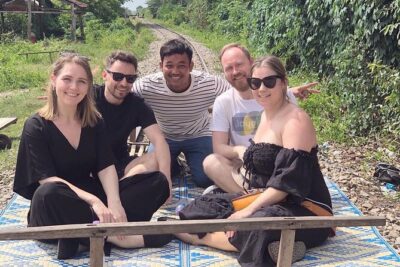
Now the fun button. The tour takes you to ride the original bamboo train at Osrolao village (also listed as Bamboo Train Ou Srauo Laou). The village is described as about 7 km away for riders, so you’ll travel to reach it.
Time for this stop is about 1 hour 30 minutes, and the bamboo train ticket is not included, costing $5.00 per person.
Why the bamboo train can be worth paying for: it is a direct slice of how people in the region used bamboo in practical ways for transport or daily activity, transformed into a visitor experience. It’s also one of those things where your enjoyment depends on your willingness to take it as a light, quirky Cambodian moment.
What to expect: you should expect scenery and a ride that feels like a throwback rather than a theme park attraction. That is part of the charm.
Practical tip: bring something simple to keep you comfortable if it’s warm. You’ll be outside, and the point is to enjoy the ride, not sweat through it.
Stop 7: Killing Caves of Phnom Sampeau, a history stop with emotional weight
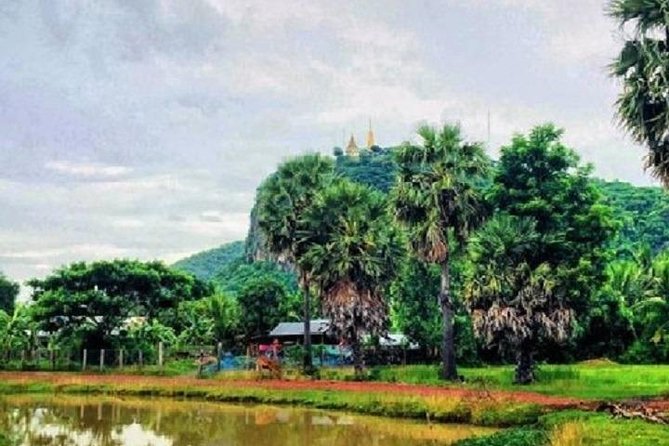
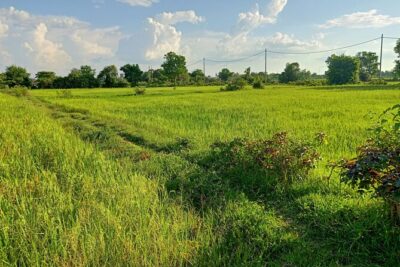
In the afternoon, you move into the Phnom Sampeau area for the Killing Caves. Along the way, you’ll pass through smaller villages, orchards, and vegetable farms, plus rice fields, before arriving at the mountain.
This mountain is home to shrines, and it holds caves used during the Khmer Rouge period. The name and purpose here are grim, and it is important to treat this part of the day with care.
Time at this stop is about 2 hours, and admission is included.
How to handle it as a visitor:
- Go in ready to slow down mentally. Don’t rush your listening.
- Keep your expectations grounded. This is not meant to feel like a normal attraction.
- If you’re traveling with kids, the tour has a minimum age of 5, with children 12 years old needing an adult. Still, I’d consider how your child handles heavy history before committing.
A possible drawback is simply the emotional load. If your day already feels full, this is the moment you may need to breathe and regroup during breaks.
Stop 8: Battambang Bat Caves at dusk, the Bat Army moment
The tour ends with one of the most famous Phnom Sampeau area natural spectacles: Battambang Bat Caves. This is your sunset timing goal.
You’ll enjoy the scenery and head for the caves before sunset so you can see the evening flight. At dusk, thousands of bats fly out from the mountainside caves in what’s described as the Bat Army moment.
Time here is about 1 hour 30 minutes, and admission is included.
Why this ending hits: the morning and early afternoon include workshops, temples, bridges, and heavy history. Ending with a raw wildlife spectacle gives your brain a different kind of memory to carry. It’s also a moment you share quietly with your group, not a long conversation stop.
Practical notes:
- Wear a layer if you get cool near evening.
- Keep your eyes on the guide for timing, because you want to be in the right spot at dusk.
Guide quality and the names you might hear during your day
In the reviews and descriptions tied to this operator, guide names come up often, especially Mr Lychee. You may also be paired with other English-speaking guides such as Sambol or receive support from Mr Polo (sent by Mr Lychee).
That matters because the whole route depends on translation and context. The countryside stops are interesting, but the temple and Phnom Sampeau portions require careful explanations to make the stops meaningful and respectful.
I like how the guide setup is described as friendly and English-speaking, and the reviews you provided reflect a pattern: drivers are smooth, schedules are planned, and the guides don’t rush you.
Who this tour suits best, and who might want to adjust expectations
This tour is a strong match if you want a single day in Battambang that covers:
- food and craft production you can actually see (rice paper and fish paste)
- temple landmarks like Wat Ek Phnom and Wat Samrong Knong
- the Khmer Rouge memorial context at the Well of Shadows and Phnom Sampeau caves
- a fun, classic cultural activity with the bamboo train
- the bat flight spectacle at dusk
It might be less ideal if you want only light, carefree sightseeing. You’ll hit heavy history at least twice in a single day. The tour is also long, so if you prefer shorter outings, you may find the schedule a bit intense.
If you’re traveling as a couple, it also makes sense. The private format helps keep things calm and conversation-friendly, especially when you’re going from workshop to workshop.
Should you book this Battambang private tuk-tuk tour?
I’d book it if you want value and a real-feeling day. For around $18, plus the $5 bamboo train add-on, you get a full lineup of named Battambang stops, multiple included admissions, pickup and drop-off, and time in villages where you see how products like rice paper and fish paste are made.
I would think twice if you hate long days or you know you struggle with emotionally intense history. If that’s you, consider whether you’d rather spend part of the day outdoors with temples only, and save Phnom Sampeau for a separate visit when you can go at your own pace.
If you do book, do yourself a favor: come hungry for learning, bring comfy shoes, and mentally prepare for the caves. Then end the day with the bats, and let that image reset your whole trip.
FAQ
What is the duration of the Battambang full-day tour?
The tour runs for about 10 to 12 hours.
Does the price include the bamboo train ride?
No. The bamboo train ride costs $5.00 per person and is not included in the $18 tour price.
Are hotel pickup and drop-off included?
Yes. Pickup and drop-off from your hotel are included.
Is the tour private?
Yes. It is private, meaning only your group participates.
What’s included in the tour besides guiding and transport?
Included items are cool minimal waters, local snacks (option), a friendly English-speaking local guide, private transportation, and hotel pickup and drop-off.
What age limits apply?
The minimum age is 5 years. Children under 12 must be accompanied by an adult, and children 12 years old must also be accompanied by an adult.
More Tour Reviews in Battambang
- Battambang: Tuk-Tuk, Bamboo Train, Killing/Bat Caves, Sunset★ 4.9 · 1,436 reviews
- Battambang Tuk Tuk tour: Bambootrain, Killing & Bat Caves,Sunset★ 5.0 · 799 reviews
- Afternoon tour by tuk tuk to bamboo train,bat cave,killing cave,countryside.★ 5.0 · 344 reviews
- Local Livelihood Half Day Bike Tour in Battambang★ 5.0 · 287 reviews
More Battambang by Tuk Tuk
- Battambang: Tuk-Tuk, Bamboo Train, Killing/Bat Caves, Sunset★ 4.9 · 1,436 reviews
- Battambang Tuk Tuk tour: Bambootrain, Killing & Bat Caves,Sunset★ 5.0 · 799 reviews
- Afternoon tour by tuk tuk to bamboo train,bat cave,killing cave,countryside.★ 5.0 · 344 reviews
- Local Livelihood Half Day Bike Tour in Battambang★ 5.0 · 287 reviews
Other Guided Visits to the Memorial Sites
- Afternoon tour by tuk tuk to bamboo train,bat cave,killing cave,countryside.★ 5.0 · 344 reviews
- Battambang: Bamboo Train, Bat Cave, Killing Cave by Tuk Tuk★ 5.0 · 182 reviews
- Afternoon Tour: Bamboo Train, Killing Cave &Bat Cave★ 5.0 · 73 reviews
- Battambang: Bamboo Train, Bat Cave and Killing Cave Tour★ 4.9 · 58 reviews
Newly written up around Battambang
- Battambang Private afternoon tour bamboo train bat cave & village
★ 5.0 · 3 reviews - Battambang Private Full-Day Tour
★ 5.0 · 3 reviews - Private Taxi Transfer From Battambang – Siem Reap City
★ 5.0 · 4 reviews - Battambang City and Country side Full day Tour
★ 5.0 · 4 reviews - Full-day: Handicraft, Bamboo train, Killing cave, Bat Cave
★ 5.0 · 5 reviews - Secret Countryside Rice fields-Bamboo Train/Bat Cave
★ 5.0 · 6 reviews
Killing Fields & Genocide Memorial Tours, side by side.
 ★ 5.0The Killing Field and Toul Sleng Genocide Museum (S21) TourFrom $191,977 reviews
 ★ 5.0Killing field and Toul Sleng genocide museum TourFrom $19610 reviews
 ★ 5.0Visit 11 Places in One Day including S21 & Killing FieldFrom $30361 reviews
 ★ 5.0Afternoon tour by tuk tuk to bamboo train,bat cave,killing cave,countryside.From $15344 reviews
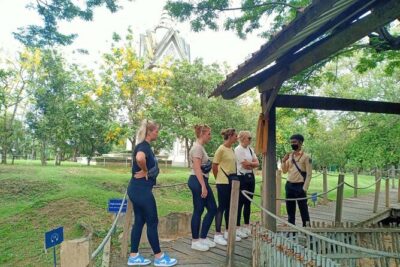 ★ 5.0Half Day Tuol Sleng S21 and Choeung Ek Killing Field TourFrom $35228 reviews
 ★ 4.0Killing Fields and Prison S21 Bus TourFrom $15206 reviews
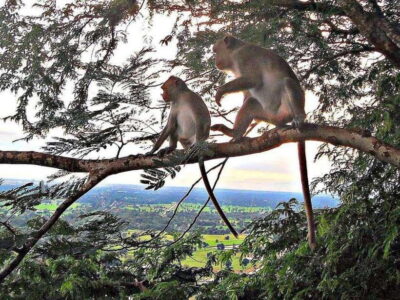 ★ 5.0Bamboo Train, Bat Cave, Killing Cave by Tuk Tuk182 reviews
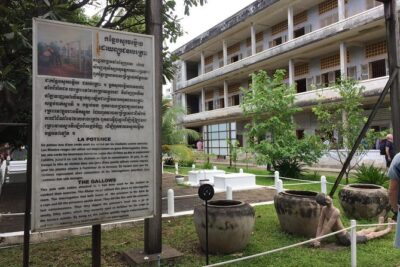 ★ 5.0Private Half Day To Killing Field & S21 Genocidal Museum in Phnom PenhFrom $130137 reviews