
REVIEW · PHNOM PENH
Half Day Trip to Killing Field and Genocidal Museum
Cambodia’s darkest chapter has a map and a lesson. I like how this private half-day pairs Tuol Sleng (S-21) with Choeung Ek, so you understand both the prison system and what happened afterward. You’ll also see the memorial stupa with thousands of skulls, and learn how an orchard and a Chinese cemetery were transformed into a killing field. One drawback to plan for: this content is intensely harrowing, so budget your energy and emotions.
What makes the experience easier to handle is the practical setup. You get hotel pickup and drop-off, a private A/C vehicle, plus pure drinking water, and a guide who can translate the history into something you can actually follow. In my reading and understanding of the guide style on this tour, people often highlight how a strong interpreter, like Ms Sreyneang, helps you connect the dots without getting lost in dates and details.
In This Review
- Key points before you go
- Why Tuol Sleng and Choeung Ek belong together
- Getting picked up in Phnom Penh and staying comfortable
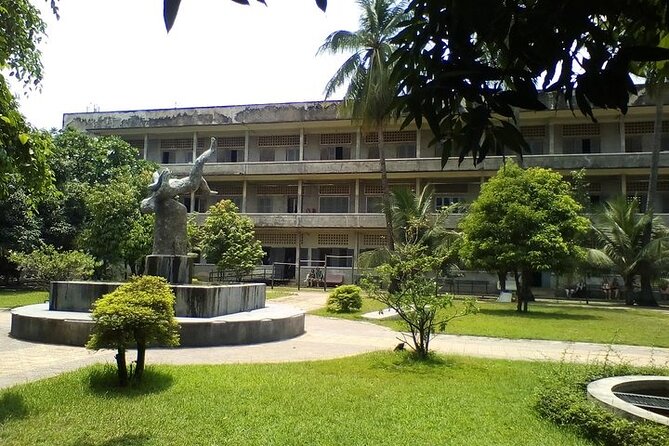
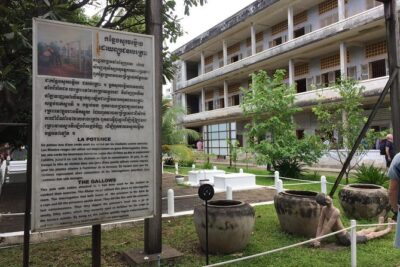
- Tuol Sleng Genocide Museum: Security Office 21 up close
- Choeung Ek Genocidal Center: from orchard to mass graves
- Guide power: what a strong interpreter adds
- Price and logistics: what you actually pay for
- How the timing works in a 3 to 4 hour day
- Who this tour fits best
- Should you book this half-day genocide museum tour?
- FAQ
- How long is the half-day trip?
- What are the main stops on the tour?
- Is hotel pickup and drop-off included?
- Are tickets to Tuol Sleng and Choeung Ek included?
- What does the tour include?
- Do you get a private guide and private transportation?
- How far is Choeung Ek from Phnom Penh?
- What is the duration of each museum stop?
- Is the tour near public transportation?
- What is the cancellation policy?
Key points before you go
- Private English guide helps you make sense of what you see at S-21 and the killing fields.
- Hotel pickup and A/C transport keeps the half-day tight and low-stress.
- Two sites, one story links interrogation and detention to mass executions outside Phnom Penh.
- Admission tickets are extra (USD 8 per person), so plan your budget.
- Both stops run about two hours each, so you will move at a steady, not rushed pace.
- You’ll walk memorial grounds where the scale of loss is impossible to ignore, so go prepared.
Why Tuol Sleng and Choeung Ek belong together
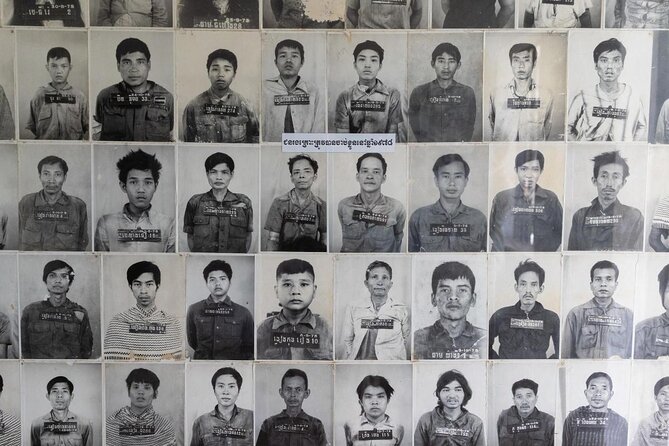
If you only see one place, your brain fills in the blanks. That’s why pairing Tuol Sleng with Choeung Ek works so well. Tuol Sleng was the Khmer Rouge Security Office 21, a central hub used for detention, interrogation, torture, and extermination of people labeled political enemies. Choeung Ek is where the story continues, after prison, after suffering, after the regime’s executions.
Together, they give you a clearer view of how a system can be built to process people, then erase them. The contrast also matters. Tuol Sleng is an interior setting tied to the prison network, while Choeung Ek is outdoors, shaped by the landscape, mass graves, and the memorial stupa.
And yes, it’s heavy. But it is also one of the most important cultural and historical visits you can make in Phnom Penh, because it explains the mechanism of terror, not just the headlines.
Getting picked up in Phnom Penh and staying comfortable
This is a true half-day setup, not a long haul. You start with pickup from your hotel lobby, then transfer into the city and out to the southwest for the second site. The total time is listed as about 3 to 4 hours, and the visit blocks are around two hours at each stop.
That duration matters because it helps you pace your attention. You’re not cramming an emotional museum sprint, then a second site sprint. You get enough time to look closely, read carefully, and still have your guide translate key parts of the history.
Comfort details are practical here. Your vehicle has air conditioning, and the tour includes pure drinking water. Meals and drinks are not included, so if you are sensitive to drop in energy after a stressful visit, plan a light snack before you start, or budget for something afterward on your own.
Also, it’s a private tour, so it is only your group. That matters in settings like this, where you often want space to absorb what you’re seeing without competing with a crowd’s noise level.
Other guided visits to Cambodia's genocide memorial sites
- The Killing Field and Toul Sleng Genocide Museum (S21) Tour★ 5.0 · 1,977 reviews
- Killing field and Toul Sleng genocide museum Tour★ 5.0 · 610 reviews
- Visit 11 Places in One Day including S21 & Killing Field★ 5.0 · 361 reviews
- Half Day Tuol Sleng S21 and Choeung Ek Killing Field Tour★ 5.0 · 228 reviews
Tuol Sleng Genocide Museum: Security Office 21 up close
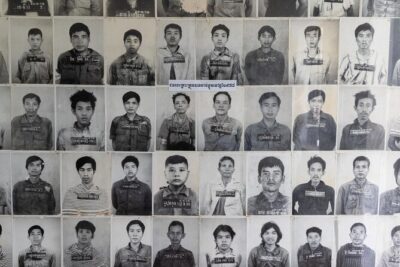
Tuol Sleng Genocide Museum preserves the S-21 interrogation and detention center. The location itself carries a chilling layer of meaning: it was set in what was then the abandoned city of Phnom Penh, after citizens were evacuated on 17 April 1975.
When you arrive, focus first on the purpose of the place. S-21 was not just a prison. It was a secret facility used for detention, interrogation, torture, and extermination. In other words, it was part of a nationwide machine, a central hub for a vast prison system.
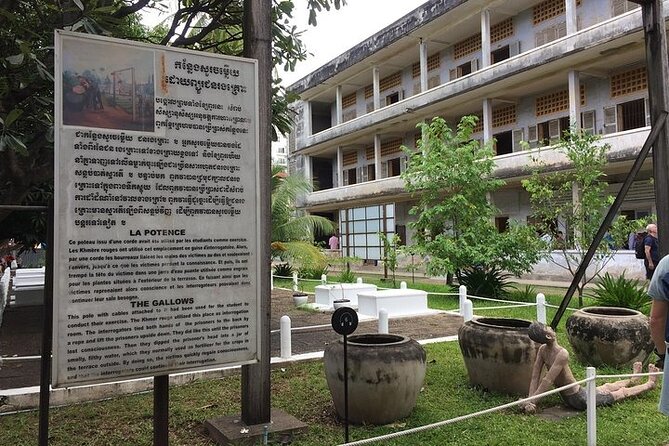
What you’ll do here is a guided visit with a private English-speaking guide. The guide’s job is not just to tell you what happened, but to help you understand how the facility worked and why the Khmer Rouge used it as a tool against people they labeled enemies. This is where a strong interpreter makes a big difference, because it is easy to feel overwhelmed by the sheer scale and the emotional weight.
In my experience of how tours like this should work, the best guides help you read the site like a map:
- You look for signs of interrogation and confinement.
- You connect the facility to the wider prison system.
- You understand why this site has been preserved as a memorial.
One consideration: admission to the museum is not included. You’ll pay an extra USD 8 per person for the admission linked to both sites. Plan that so the day stays smooth.
Also, be ready for a very serious atmosphere. This is a memorial meant to encourage visitors to be messengers of peace, not a casual museum break. Dress respectfully, and give yourself permission to move slower than you think you need.
Choeung Ek Genocidal Center: from orchard to mass graves
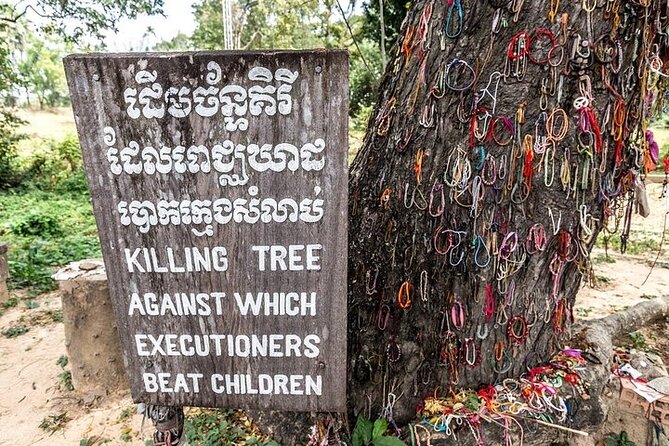
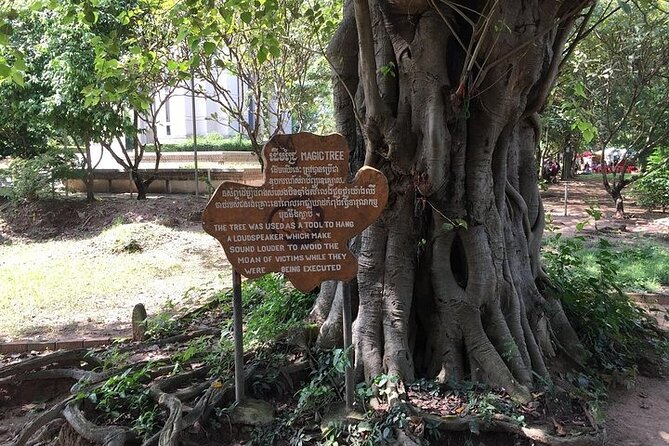
About 15 km southwest of Phnom Penh, you’ll reach Choeung Ek. The site’s past is one of the strangest and most unsettling facts to hold in your head. Before 1975, this area was described as an orchard and also a Chinese cemetery. During the Khmer Rouge regime, it became one of the killing fields where more than 17,000 people were executed.
Most of those individuals first suffered through torture and deprivation at Tuol Sleng Prison, then were taken here. So by the time you arrive, your understanding from the first stop should make the second stop hit harder, not lighter. The story is connected, even if the setting is different.
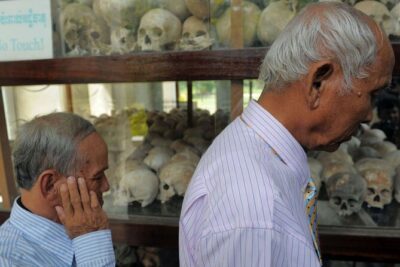
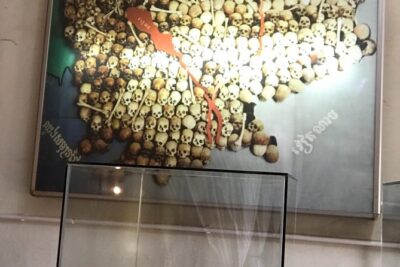
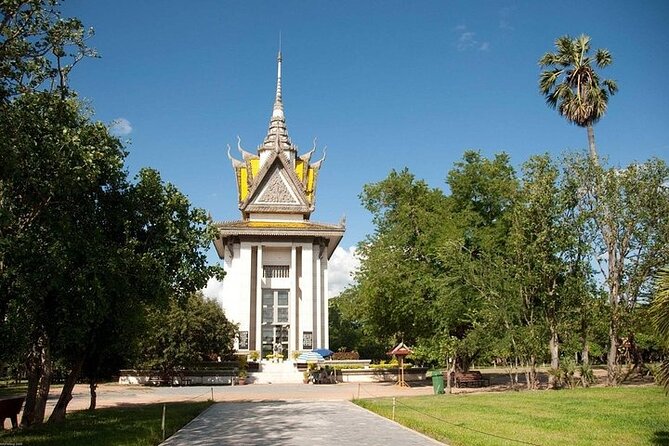
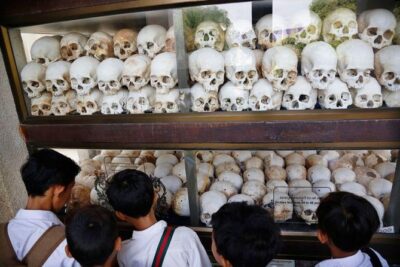
What you’ll experience is the transformation made visible. Choeung Ek is now a memorial with mass graves and a stupa containing thousands of skulls. That memorial design forces you to confront scale and loss rather than treat the visit like sightseeing.
The outdoor setting can be helpful in one way. Museums indoors can make your mind feel stuck in one emotional channel. Outdoors, with a guide’s pacing, you can better absorb the timeline and the geography. The orchard detail in particular can make you think in a grounded way about how quickly ordinary land can be repurposed for atrocity.
Again, this part is intensely difficult to process. If you are visiting with anyone who needs to emotionally step away, tell your guide in advance. A good guide will help you find a respectful rhythm, without rushing anyone out the door.
Guide power: what a strong interpreter adds
A private tour lives or dies on the guide. Here, you’re getting a private English-speaking guide, and that language piece matters in a place like this. Cambodian history here is complex, and the Khmer Rouge years are not something most people can decode instantly from signs alone.
One review highlight you should take seriously is how guides can make the history clear and understandable. In the feedback I’ve seen, people praised Ms Sreyneang specifically for connecting the history behind the conflict in a way that made the visit feel guided instead of just observed.
Here’s what you want your guide to do in this type of memorial:
- Explain the role of S-21 as the Security Office 21, not just as a scary prison name.
- Clarify the transfer from Tuol Sleng to the killing field context.
- Translate why the stupa and preserved structures exist, so you understand the memorial’s purpose.
If your guide does that well, the tour becomes more than a checklist. You leave with a framework for what you saw, and you know which parts matter most.
And since this is private, you also have more flexibility to ask questions if something feels confusing. When you do ask, keep it respectful and focused on clarity, not for shock value.
Price and logistics: what you actually pay for
The tour price is $130, and it includes a lot of value for a half-day: hotel pickup and drop-off, private transportation with A/C, pure drinking water, and traveler insurance. You also get a private English-speaking guide.
The big “cost surprise” to plan for is admission. Tickets are not included, and you’ll pay USD 8 per person for entry related to Tuol Sleng and the Killing Field. Since admission is separate, it’s smart to confirm how many people are in your booking so your total budget is accurate.
If you compare this to DIY travel, the savings are not obvious. DIY can be cheaper, but you will lose the guide time and interpretation, which is exactly what you want in places where the meaning depends on context. Here, the $130 pays for the guided experience and the comfortable, private logistics so you can focus on learning and observing rather than navigating.
One small practical note: meals and drinks are not included. That can be fine if you eat before pickup, but it matters if you want time to decompress after two intense visits.
Other Phnom Penh museum halls worth an hour
How the timing works in a 3 to 4 hour day
Even though the overall duration is listed as about 3 to 4 hours, the visit time is structured around two hours at each stop. In real terms, that means:
- You spend enough time inside Tuol Sleng to read and process, rather than sprinting.
- You then head to Choeung Ek and have time to understand the memorial layout and the meaning of the stupa and mass graves.
The order is also important. Starting with the prison site makes the second site more comprehensible, because you understand where people came from and what they likely endured before execution.
If you are sensitive to long museum hours, you might feel the pace as “busy,” not “leisurely.” But it also prevents the day from turning into a foggy blur where you remember a name and forget what it means.
Your best move is to show up mentally ready. Bring a water bottle is unnecessary since pure drinking water is included, but bring patience. This is not a day for trying to do multiple “light” attractions right afterward.
Who this tour fits best
This half-day works best if you want a guided, respectful understanding of Cambodia’s Khmer Rouge-era terror sites. It’s also suited to people who appreciate private transport and a clear plan, because you avoid the stress of figuring out timing and routing yourself.
The tour is also described as suitable for most travelers, which makes sense given that it is a short, structured day. That said, it is still emotionally intense, and it can be hard for some visitors to handle.
I’d recommend it if:
- You like historical context, not just photos.
- You want an English-speaking guide to explain what you’re seeing.
- You want a tight Phnom Penh outing that still includes two major sites.
I’d think twice if:
- You are likely to struggle with very heavy memorial content.
- You need a more upbeat day trip, because this is built around atrocity and remembrance.
If you do go, treat it like a serious commitment. Dress respectfully, keep your pace calm, and let the guide do the explaining.
Should you book this half-day genocide museum tour?
If you’re deciding between doing this yourself versus going with a guide, I think this is one of the cases where guided value is real. The combo of private English interpretation, hotel pickup and drop-off, and air-conditioned transport turns a logistically simple trip into an intellectually and emotionally manageable one.
I’d especially recommend booking if you want both Tuol Sleng (S-21) and Choeung Ek in one clean, half-day plan. The extra admission cost is clear and reasonable, and it’s a small price to pay for context and pacing in two of Phnom Penh’s most important memorial sites.
Skip this only if you know you cannot handle the subject matter, or you need a light itinerary today. Otherwise, book it, show up with respect, and let the guide help you understand what you’re seeing.
FAQ
How long is the half-day trip?
It runs about 3 to 4 hours total.
What are the main stops on the tour?
You visit Tuol Sleng Genocide Museum and Choeung Ek Genocidal Center.
Is hotel pickup and drop-off included?
Yes, the tour includes hotel pick-up and drop-off.
Are tickets to Tuol Sleng and Choeung Ek included?
No. Admission tickets are not included, and you pay an additional USD 8 per person.
What does the tour include?
It includes a private English-speaking tour guide, private transportation with A/C, pure drinking water, hotel pickup and drop-off, and traveler insurance.
Do you get a private guide and private transportation?
Yes, it is a private tour, and only your group participates.
How far is Choeung Ek from Phnom Penh?
Choeung Ek is about 15 km southwest of Phnom Penh.
What is the duration of each museum stop?
Each stop is listed as about 2 hours.
Is the tour near public transportation?
Yes, it is described as near public transportation.
What is the cancellation policy?
You can cancel for a full refund up to 24 hours in advance of the experience start time.
More Museum Stops
- The Killing Field and Toul Sleng Genocide Museum (S21) Tour★ 5.0 · 1,977 reviews
- Killing field and Toul Sleng genocide museum Tour★ 5.0 · 610 reviews
- Private Half Day To Killing Field & S21 Genocidal Museum in Phnom Penh★ 5.0 · 137 reviews
- Tuol Sleng Genocide Museum (S-21) and Choeung Ek Killing Fields Tour★ 5.0 · 123 reviews
More Tour Reviews in Phnom Penh
- The Killing Field and Toul Sleng Genocide Museum (S21) Tour★ 5.0 · 1,977 reviews
- Phnom Penh: Sunset Cruise with Unlimited Beers & BBQ Buffet★ 4.5 · 727 reviews
- Aroma Therapy Massage, Relaxation therapeutic aromatherapy oil massages.★ 5.0 · 645 reviews
- Killing field and Toul Sleng genocide museum Tour★ 5.0 · 610 reviews
Other Guided Visits to the Memorial Sites
- The Killing Field and Toul Sleng Genocide Museum (S21) Tour★ 5.0 · 1,977 reviews
- Killing field and Toul Sleng genocide museum Tour★ 5.0 · 610 reviews
- Visit 11 Places in One Day including S21 & Killing Field★ 5.0 · 361 reviews
- Half Day Tuol Sleng S21 and Choeung Ek Killing Field Tour★ 5.0 · 228 reviews
Newly written up around Phnom Penh
- Private Transfer From or to Phnom Penh <=> Sihanoukville
★ 5.0 · 3 reviews - Prasith and Reap Temples Private Day Trip from Phnom Penh
★ 4.5 · 3 reviews - Phnom Penh Full Day Private Tour By Tuk Tuk or Taxi Car
★ 5.0 · 3 reviews - Private Transfer From Phnom Penh To Sihanoukville
★ 5.0 · 3 reviews - Phnom Penh Private Pick-Up: Techo International Airport ( KTI )
★ 5.0 · 3 reviews - Island Community Life in Phnom Penh
★ 4.5 · 3 reviews
Killing Fields & Genocide Memorial Tours, side by side.
 ★ 5.0The Killing Field and Toul Sleng Genocide Museum (S21) TourFrom $191,977 reviews
 ★ 5.0Killing field and Toul Sleng genocide museum TourFrom $19610 reviews
 ★ 5.0Visit 11 Places in One Day including S21 & Killing FieldFrom $30361 reviews
 ★ 5.0Afternoon tour by tuk tuk to bamboo train,bat cave,killing cave,countryside.From $15344 reviews
 ★ 5.0Half Day Tuol Sleng S21 and Choeung Ek Killing Field TourFrom $35228 reviews
 ★ 4.0Killing Fields and Prison S21 Bus TourFrom $15206 reviews
 ★ 5.0Bamboo Train, Bat Cave, Killing Cave by Tuk Tuk182 reviews
 ★ 5.0Private Half Day To Killing Field & S21 Genocidal Museum in Phnom PenhFrom $130137 reviews