
REVIEW · TONLÉ SAP
Kompong Phluk Floating village & Mangrove forest cruise
A floating village is a living calendar. This half-day trip links Tonlé Sap to Kompong Phluk, then explains how stilt houses and daily routines shift with the seasons. I love how the lake views are paired with real local context, not just sightseeing.
I also like the practical side, the air-conditioned vehicle plus bottled water, so the early ride from Siem Reap stays comfortable. And I really value the guided boat and village time, because someone local helps you understand what you’re seeing.
One thing to consider is seasonality. The mangrove small-boat option is not available from Feb 15 to July, so your water route may differ compared to other times of year.
In This Review
- Key things to know before you go
- Tonlé Sap and Kompong Phluk, why this is more than a boat ride
- The comfortable transfer: air-con, pickup, and timing that actually works
- Stop 1: Tonlé Sap Lake, the freshwater giant behind the stilt life
- Stop 2: Kampong Phluk floating village, how daily life changes with the water
- What the mangrove part actually does for the experience
- Mangrove forest canoe and the Feb 15 to July limitation
- Stop 3: Psar Chaa and the local market flavor on the way back
- Price and value: is $105 a fair deal?
- Group size, guide style, and how to get the most from your time
- Who should book this Kompong Phluk and mangrove cruise
- Should you book this tour?
- FAQ
- How long is the Kompong Phluk floating village and mangrove forest cruise?
- Do you get pickup in Siem Reap?
- What language is the guide?
- What is included in the $105 price?
- Is lunch included?
- Is the mangrove small-boat cruise available year-round?
- What is the cancellation policy?
Key things to know before you go
- Max 15 people keeps this from feeling like cattle herding.
- Air-con transfer and bottled water make the day feel easy.
- Tonlé Sap Lake by boat gets you right onto the freshwater giant that shapes life here.
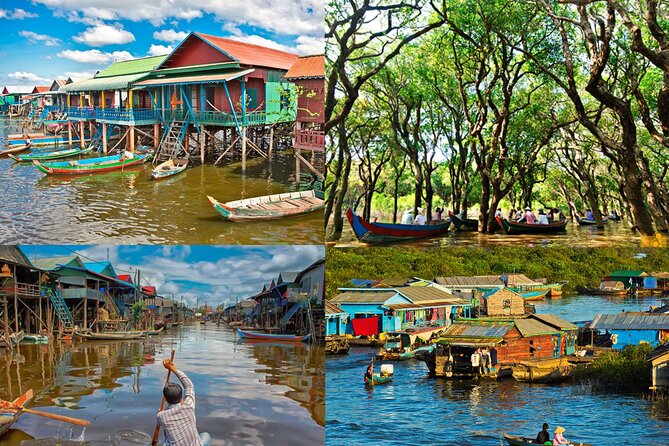
- Kompong Phluk guided exploration explains stilt-house living and seasonal change.
- Mangrove water travel depends on dates (small-boat option not available Feb 15 to July).
- Optional small-boat alternative: if you skip the mangrove small boat, you can wait at the big boat area (shop).
Tonlé Sap and Kompong Phluk, why this is more than a boat ride
Siem Reap already has temples that steal the show. This is the opposite kind of wow. Instead of stone ruins, you get a working ecosystem and a community that literally rises and adapts with the water.
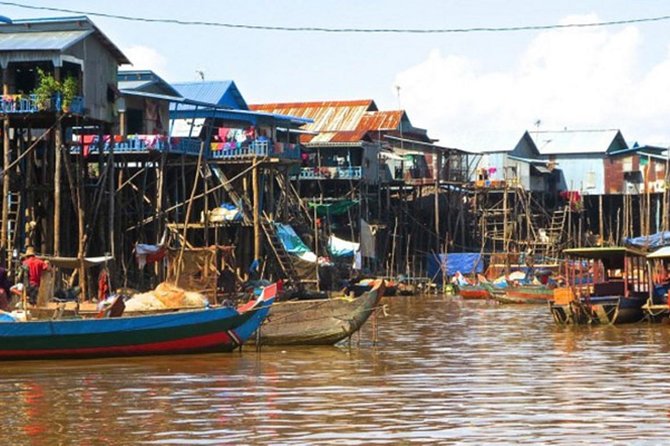
The tour is built around two connected ideas. First, you spend real time on Tonlé Sap Lake, the freshwater lake that feeds this whole way of life. Second, you visit Kompong Phluk, the floating settlement where houses sit on stilts and daily routines change depending on whether the water is high or low. A licensed guide (English or Japanese) keeps the story grounded in everyday life, so it feels human, not just scenic.
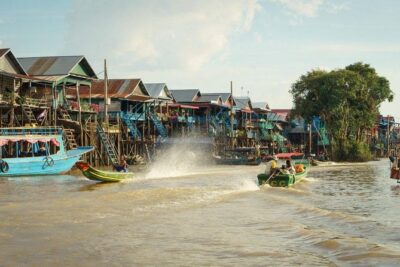
And yes, it is visual. Silted areas, water edges, and long stretches of stilt homes can look like the village grew out of the lake itself. But the value is what your guide helps you notice, how people cope with seasonal shifts, not just how they live in one moment.
The comfortable transfer: air-con, pickup, and timing that actually works
From Siem Reap, you’ll get pickup offered, and the ride uses an air-conditioned vehicle with cool water. That matters on a hot Cambodian day. A lot of half-day tours fall apart on the road, but here the comfort is part of the package.
The whole outing runs about 3 to 4 hours. That’s long enough to feel like you did something meaningful after Angkor, without stealing an entire day from your schedule. I like that the tour is structured around a morning or afternoon window, not a full-day grind.
You’ll also get a mobile ticket and confirmation at booking time. In plain terms, you show up, you’re sorted, you move.
A small practical note from how this kind of tour typically runs: depending on the day and conditions, the return to your hotel can feel a bit earlier or later. One guide-led half-day can finish quickly, and another can run long if water travel takes longer. Build a little buffer into your plans if you have dinner reservations right after.
More time on the lake, other boats
- From Siem Reap: Kampong Phluk Floating Village Tour by Boat★ 4.9 · 6,979 reviews
- Kompong Phluk Floating Village Half-Day Tour ( Morning / Sunset )★ 5.0 · 1,494 reviews
- Siem Reap: Kulen Mountain, Beng Mealea and Tonle Sap Tour★ 5.0 · 1,483 reviews
- Tonle Sap Lake & Kampong Phluk Village Half-Day Tour★ 5.0 · 1,045 reviews
Stop 1: Tonlé Sap Lake, the freshwater giant behind the stilt life
You start with Tonlé Sap Lake, linked to the Mekong River by the 120-kilometer Tonlé Sap River. It’s framed as Southeast Asia’s largest natural freshwater lake, and once you’re on the water, the scale becomes obvious.
This part is more than a scenic warm-up. Tonlé Sap is the reason Kompong Phluk works the way it does. When the lake swells, villages at the edges feel it directly. When the water pulls back, travel routes and how things look on the ground change fast.
You’ll have about 1 hour at this stage, with an admission ticket included. The boat time helps you see what the guide will later connect to village life. If you’re the type who likes to understand the logic behind what you’re photographing, this stop gives you context before you step into the village.
What I like here is the balance. You’re not stuck staring at a single pier. You’re moving, getting lake views, and building the picture in your head so Kompong Phluk makes immediate sense.
Stop 2: Kampong Phluk floating village, how daily life changes with the water
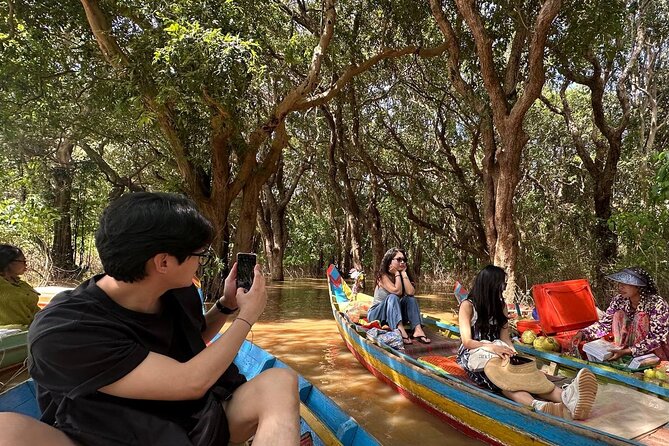
Then you reach Kampong Phluk Floating Village. This is the heart of the tour, and you’ll spend about 1 hour here, with entrance included.
Kompong Phluk is known for houses built on stilts, and for the way the community adapts through changing seasons. That’s exactly what your licensed guide is there to explain. Instead of simply pointing at buildings, they connect the physical setting to practical choices, like how people move, how daily routines shift, and what the community pays attention to when water levels change.
During this stop you’ll get a guided walk and access to key viewpoints that are difficult to do on your own. It also helps that a guide can answer the questions you naturally have while you’re there: Where do goods go when water rises? What does school or worship look like when paths change? What does daily work look like during the wet season?
A detail worth mentioning because it can genuinely affect your impressions: some guides may include a visit or pass by a mosque area and connect it to seasonal changes in the surrounding paths. If that kind of cultural, place-specific detail matters to you, this stop can feel much richer.
Guide names you may hear in this company’s tours include Phy, Nak, Pen, and Tommy. From the tone of their visits, the standout trait is energy and engagement. You’re not just watching a slideshow, you’re getting a live explanation that keeps you moving and looking.
What the mangrove part actually does for the experience
Kompong Phluk alone is interesting. The tour’s extra value is that it links the village to the nearby environment where the water goes next. That’s where the mangrove cruise comes in.
Mangrove forest canoe and the Feb 15 to July limitation
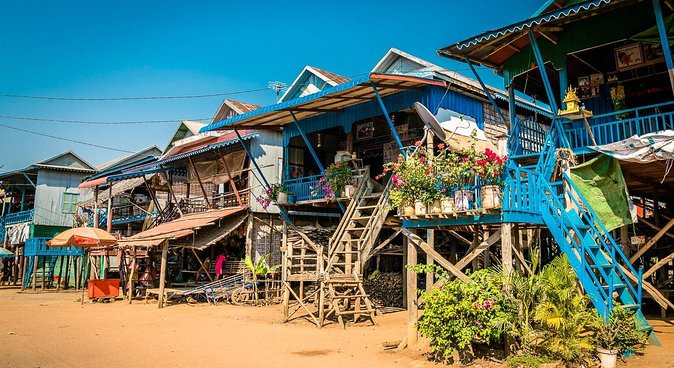
The big seasonal difference is what happens in the mangroves.
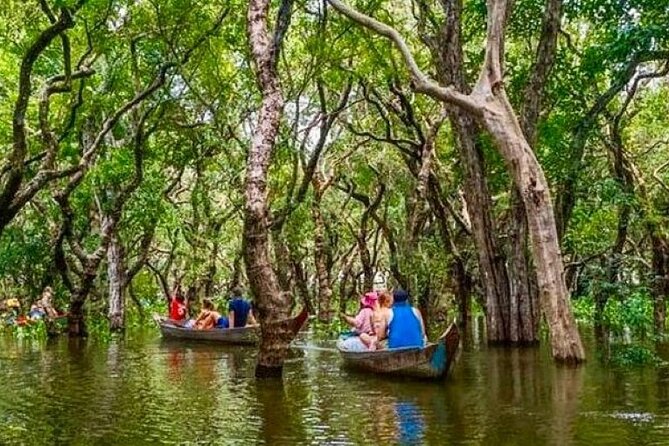
In the overview, the tour specifically says that during the wet season you travel by canoe through a flooded mangrove forest. That’s the “wow” factor for many people, because you’re not just on an open lake. You’re moving through a tighter, greener water corridor, where the ecosystem shapes the route.
Here’s the practical catch in the provided details: the mangrove forest small boat is not available from Feb 15 to July. That means your water portion may be altered during those months, even though you still go to the village and still take the lake-related boat segments.
Also, there’s an option built in for comfort and preference. If you do not want to take the mangrove forest small boat, the itinerary states you can wait at the big boat area, at a shop, while others go ahead. That’s useful if you’re nervous about smaller craft, or if you simply want a less physical ride.
One more thing to plan around: water level can also affect what you see. In dry-season timing, you might notice more visible ground edges and the ways the village looks when it is not surrounded by maximum floodwater. In wet-season timing, the setting feels more like a network of waterways than a neighborhood on land.
If you hate uncertainty, you might prefer to travel outside that Feb 15 to July window so the mangrove small-boat option is available. But if you’re okay with seasonal variation and you’re there for a guided understanding of the ecosystem, the date-based change becomes part of the story.
Other boats worth boarding around Siem Reap
Stop 3: Psar Chaa and the local market flavor on the way back
On the way back, the tour stops at Psar Chaa (Old Market) for about 30 minutes. Admission here is free.
This is a good add-on if you want something small but real, not a souvenir stop designed to separate you from money. You get a quick local snapshot and a chance to see how people shop in everyday life.
Because it’s only 30 minutes, don’t expect to eat a full meal here unless you plan for it. Think of it as a palate cleanser between the village experience and getting back to town.
Price and value: is $105 a fair deal?
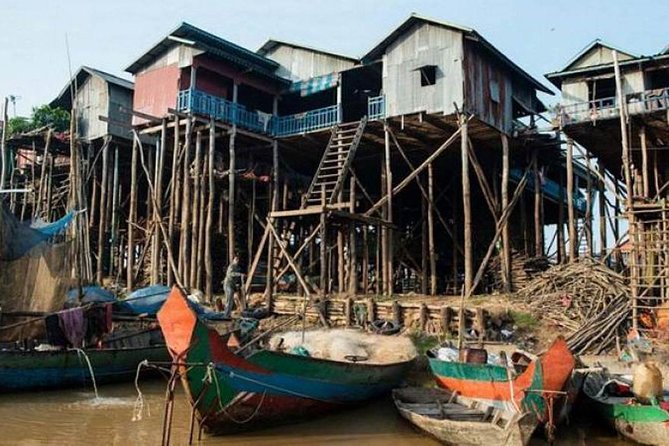
At $105, this tour sits in the mid-range for Siem Reap excursions. For that price, you get several items that add up quickly when you price them separately:
- Air-conditioned transport and cool water
- English or Japanese speaking licensed guide
- Entrance fee
- Boat fee for the mangrove and boat from the port
- Tonlé Sap Lake ticket
- Bottled water during the tour
So you’re not paying just for a ride, you’re paying for a guided explanation plus the different water segments that make this trip make sense. The mangrove portion in particular is the part that can be hard to replicate on your own, especially if you want someone who can interpret what you’re seeing.
The value sweet spot for me is this: if you’re the kind of visitor who likes context, a licensed guide can turn the same views into a better understanding. If you only want photos and you’re comfortable figuring out details on your own, you might feel this is pricier than it looks. But the route and included fees are set up so you do not have to negotiate anything at the water’s edge.
Group size, guide style, and how to get the most from your time
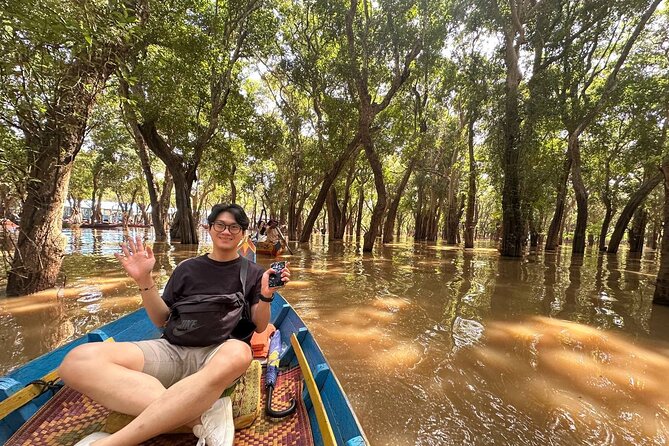
The tour caps at 15 travelers, which is a big deal on a half-day. It usually means you’re not stuck waiting while the group behind you catches up, and the guide has a better chance to keep everyone engaged.
Guide style seems to be a strong point. Names that come up, like Phy and Nak, are described as enthusiastic and informative, with good pacing and caring attention. Pen is also mentioned as especially good, and Tommy as very knowledgeable and upbeat. Even if your guide is different, this is a tour where interaction is part of the experience, not an optional extra.
To get the most out of it, ask one or two simple questions during the village portion. For example:
- How do people’s routines shift as seasons change?
- What does the water level mean for daily movement?
- What should I look for that outsiders often miss?
A good guide will answer in a way that makes your photos more meaningful. And it helps you feel connected to the place, instead of just passing through.
Who should book this Kompong Phluk and mangrove cruise
This tour is a great fit if you want:
- A half-day option that pairs lake scenery with real village life
- A guided explanation of how seasonal change affects daily living
- A comfortable pickup with air-conditioned transport
You might reconsider if:
- You strongly prefer the mangrove small-boat experience and you’re traveling during Feb 15 to July
- You hate any kind of small-boat uncertainty and do not want the option to wait at the big boat shop area
- You want a long, slow itinerary with lots of free time in each spot
If you are traveling with kids, it can work well as a shorter outing, but keep expectations realistic. You’ll be on boats and moving through changing water settings, so it’s best for families who can handle short periods of transport and mild unpredictability.
Should you book this tour?
Yes, if you want a guided, easy half-day that shows the Tonlé Sap ecosystem from the water and then explains what it means for the stilt-house village at Kompong Phluk. The $105 price feels more reasonable when you factor in the included boat fees, entrance, and the guide who helps you connect the scenery to the seasonal rhythm.
If you’re visiting between Feb 15 and July and mangrove small-boat access matters to you, check the date impact before you commit. Otherwise, book with confidence. This is one of those trips where the practical logistics, the guide-led context, and the seasonal setting all work together.
FAQ
How long is the Kompong Phluk floating village and mangrove forest cruise?
The tour runs about 3 to 4 hours.
Do you get pickup in Siem Reap?
Pickup is offered.
What language is the guide?
The tour includes an English and Japanese speaking guide, with a license.
What is included in the $105 price?
Included are entrance fees and boat fees (including the mangrove forest boat and boat from the port), plus air-conditioned vehicle transfer, bottled water, and the admission ticket for Tonlé Sap Lake.
Is lunch included?
No meal is included. If you want, the provider can escort you to a restaurant.
Is the mangrove small-boat cruise available year-round?
No. The mangrove forest small boat is not available from Feb 15 to July.
What is the cancellation policy?
Free cancellation is available up to 24 hours in advance for a full refund. If you cancel less than 24 hours before the start time, you do not get a refund.
Other Siem Reap boats we boarded
- From Siem Reap: Kampong Phluk Floating Village Tour by Boat★ 4.9 · 6,979 reviews
- Kampong Phluk Floating Village Tour by Boat★ 5.0 · 1,020 reviews
- Sunset Dinner and drinks includes a Floating Village cruise tour.★ 4.0 · 152 reviews
- Floating Village Sunset Boat & Jeep Tour – Inclusive Drinks★ 5.0 · 115 reviews
More Tour Reviews in Siem Reap
- Angkor Wat Sunrise or Sunset Tour with Guide from Siem Reap★ 5.0 · 12,109 reviews
- Siem Reap: Angkor Wat: Small-Group Sunrise or Sunset Tour★ 5.0 · 9,444 reviews
- From Siem Reap: Kampong Phluk Floating Village Tour by Boat★ 4.9 · 6,979 reviews
- Siem Reap: Angkor Wat 2-Day Tour with Sunrise and Sunset★ 4.9 · 4,429 reviews
More Hours Out on the Tonle Sap
- From Siem Reap: Kampong Phluk Floating Village Tour by Boat★ 4.9 · 6,979 reviews
- Kompong Phluk Floating Village Half-Day Tour ( Morning / Sunset )★ 5.0 · 1,494 reviews
- Siem Reap: Kulen Mountain, Beng Mealea and Tonle Sap Tour★ 5.0 · 1,483 reviews
- Tonle Sap Lake & Kampong Phluk Village Half-Day Tour★ 5.0 · 1,045 reviews
Newly written up around Siem Reap
- Waterfall & River of 1000 Siva Linga- Kulen Mountain Private Tour
★ 5.0 · 3 reviews - Private Transfer from Siem Reap to Sihanoukville
★ 4.5 · 3 reviews - Private Tour to Koh Ker and Beng Mealea
★ 5.0 · 3 reviews - Private Transfer: Siem Reap Angkor Internation Airport to Hotel
★ 5.0 · 3 reviews - Kulen National Park Ticket -Waterfall & 1000 Lingas
★ 5.0 · 3 reviews - Kulen Waterfall & Kbal Spean Tour
★ 5.0 · 3 reviews
Tonlé Sap & Floating Village Tours, side by side.
 ★ 4.9Kampong Phluk Floating Village Tour by BoatFrom $206,979 reviews
 ★ 4.9Kampong Phluk Floating Village Tour with BoatFrom $193,843 reviews
 ★ 5.0Siem Reap Floating Village Kampong Phluk Sunset with BoatFrom $181,962 reviews
 ★ 5.0Kompong Phluk Floating Village Half-Day Tour ( Morning / Sunset )From $241,494 reviews
 ★ 5.0Kulen Mountain, Beng Mealea and Tonle Sap TourFrom $481,483 reviews
 ★ 5.0Tonle Sap Lake & Kampong Phluk Village Half-Day TourFrom $491,045 reviews
 ★ 5.0Kampong Phluk Floating Village Tour by BoatFrom $201,020 reviews
 ★ 4.8Kompong Phluk Floating Village Half-Day TourFrom $24966 reviews
Also appears in