
REVIEW · ANGKOR
Private Angkor Wat Exploring Tour (Sunset or Sunrise)
Angkor looks different when you go early. This private sunrise or sunset style day lets you see Angkor Wat before it turns into a sweaty crowd, with a licensed English guide. I like the focus on the iconic temples, and I especially like having Sarak, plus his excellent English and photo know-how. The one thing to plan for is that the Angkor ticket is extra and the walking includes some stairs and uneven ground.
You start in Siem Reap with an air-conditioned vehicle and drinking water, which matters when your day begins early or runs late. This tour is also truly private, so you and your group can move at a pace that feels comfortable.
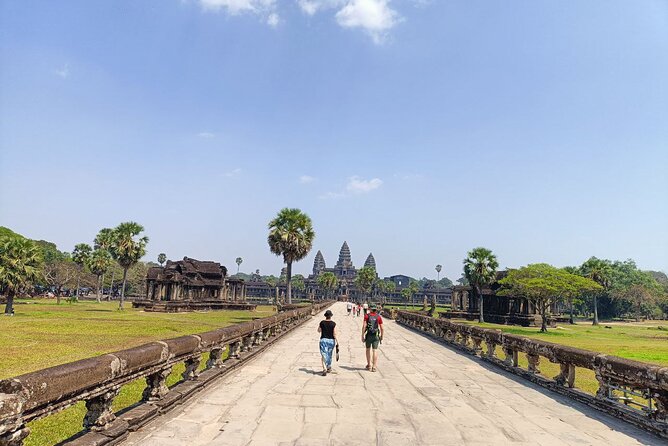
The route is smart and not just checkbox tourism: Angkor Wat first, then Ta Prohm, and finally Angkor Thom through the South Gate for Bayon and the Elephant Terrace. You will spend long enough at each stop to understand what you are looking at, not just hurry past it.
In This Review
- Key things to know before you go
- Sunrise and sunset: why timing is the whole Angkor game
- Meeting in Siem Reap, then going temple-heavy for hours
- Angkor Wat first: galleries, carvings, and the climb to the towers
- Ta Prohm: the tree-root maze you want time for
- Angkor Thom: South Gate figures, Bayon faces, and the Elephant Terrace
- The guide matters, and Sarak is the reason many people book twice
- Price breakdown: what $49 really covers
- What your day feels like, hour by hour
- Practical tips to make this day easier
- Who should book this private Angkor day, and who might not
- Should you book this sunrise or sunset Angkor tour?
- FAQ
- Is this tour private?
- How long is the private Angkor Wat exploring tour?
- What is included in the price?
- Do I need an Angkor ticket?
- Is pickup included, and where does the tour start?
- Is the guide language English?
- What parts of the temples are included in the visit?
- What fitness level do I need?
- Is tipping included?
- Can I cancel for free?
Key things to know before you go
- Sarak runs the show, with English that is easy to follow and history explained in a way that clicks.
- Sunrise or sunset timing helps you get better light and fewer people around the main sights.
- Angkor Wat first, so you get the best chance at the quiet galleries and central towers before the day swells.
- Ta Prohm’s tree roots are treated like a destination, with time for shaded courtyards and narrow passages.
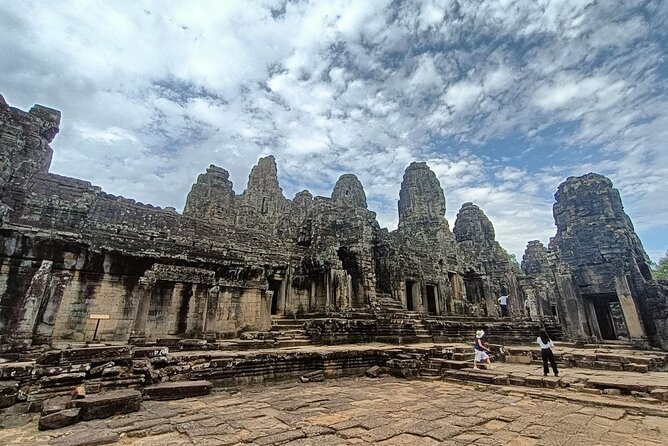
- Angkor Thom highlights include the South Gate stone figures, Bayon’s many smiling faces, and the Elephant Terrace.
- It is private, so your guide can adjust the flow to your interests, including where you want photos.
Sunrise and sunset: why timing is the whole Angkor game
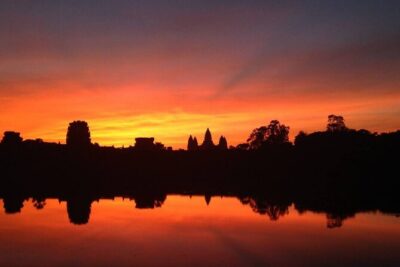
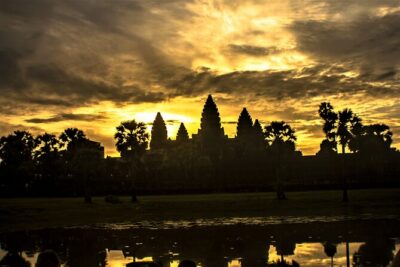
If you only do Angkor once, the question is not whether you should see it, it is when. A sunrise or sunset start is a big deal because light changes everything. At first light, stone looks cooler and more dimensional, and you have a calmer rhythm as you walk through long galleries. At sunset, you get softer color and a gentler feel across the courtyards.
This tour is designed around that idea. You begin your day at Angkor Wat early enough to enjoy the place before the heat and crowds stack up. That means you can actually look at the carvings and linework, not just squint at them while your brain is trying to survive the sun.
The other timing benefit is energy. If you go early, your day is done with the most intense walking while your body is still fresh. If you go later for sunset, you get a more relaxed pace through the final sites. Either way, the format helps you avoid the worst of midday exhaustion.
Meeting in Siem Reap, then going temple-heavy for hours
Your day starts at a clear, easy-to-find meeting point: 7-Eleven, 212 Sivutha Blvd, Krong Siem. The tour ends back at the same place, which keeps things simple on a day when you already have a lot going on.
Because this is private, you do not feel like a spare seat in someone else’s schedule. You are in an air-conditioned vehicle, with drinking water included. That is not a small perk. Angkor days can be long, and you will appreciate the breaks between sites even if you love walking.
Plan for a full stretch of time. Expect roughly 8 to 9 hours from start to finish. That is long enough that you should take your photos seriously but also take your time. This is not a quick stop and go sprint.
Other ways to be at the temples before the light comes up
- Angkor Wat Sunrise or Sunset Tour with Guide from Siem Reap★ 5.0 · 12,109 reviews
- Siem Reap: Angkor Wat: Small-Group Sunrise or Sunset Tour★ 5.0 · 9,444 reviews
- Siem Reap: Angkor Wat 2-Day Tour with Sunrise and Sunset★ 4.9 · 4,429 reviews
- Angkor Wat Sunrise tour with Small – Group and Guide tours★ 5.0 · 3,655 reviews
Angkor Wat first: galleries, carvings, and the climb to the towers
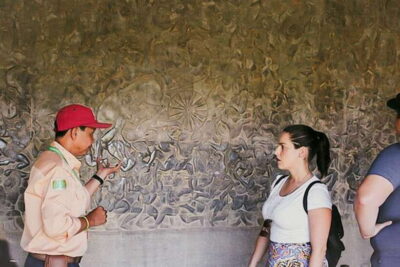
Angkor Wat is the big name for a reason. On this tour, it gets the early slot, which lets you experience its scale without the crush. You begin by walking through the long galleries, where the stonework and carvings are the star. This is the best moment to really look, because the light is friendly and you are not yet moving through a sea of people.
Then comes the central tower area. The tour includes climbing up to view the central towers, which is one of the main reasons your physical comfort matters. If you have moderate fitness, you should be fine, but be ready for stairs and uneven surfaces. Nothing feels impossible, it just is not a sit-down museum visit.
What I like about doing Angkor Wat first is that it sets your brain up for the rest of the day. Once you understand the layout and the visual language at Angkor Wat, Bayon and Ta Prohm are easier to read. You do not just see temples, you start recognizing how and why they were built.
One more practical note: admission is not included. You will need to buy the 1-day Angkor ticket separately, listed at $37 per person. So the sooner you plan that, the less stressful your morning becomes.
Ta Prohm: the tree-root maze you want time for
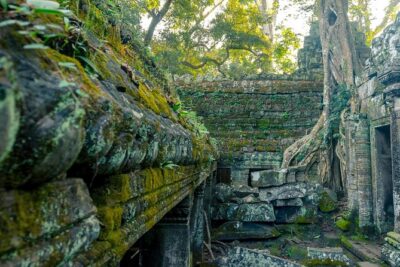
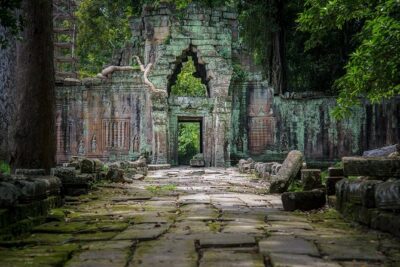
After Angkor Wat, you head to Ta Prohm, famous for giant tree roots grabbing the temple stones like the jungle is trying to reclaim it. This is not just a photo stop. Ta Prohm works when you take it slowly enough to notice how the roots and ruins interact.
You get time to walk through shaded courtyards and narrow passages. That shading is a real relief, especially during the hottest part of the day. It also helps the experience feel different from Angkor Wat. At Angkor Wat, your eyes track the symmetry. At Ta Prohm, you follow the chaos, the way roots weave through doorways and walls.
This stop lasts about 1 hour 30 minutes, which is usually the sweet spot for a place like Ta Prohm. You can see the most striking sections without feeling rushed, and you have enough time to adjust your pace based on where you want more photos or where you want more quiet.
Then you move on to Angkor Thom. The transition matters because Ta Prohm gives you emotional energy, and Angkor Thom gives you the political and ceremonial context.
Angkor Thom: South Gate figures, Bayon faces, and the Elephant Terrace
Angkor Thom is where Angkor starts to feel like a living city. You enter through the South Gate, famous for stone figures that greet you as you pass into the complex. This gate is a powerful warm-up because it signals that you are moving into something more ceremonial and structured than just a collection of ruins.
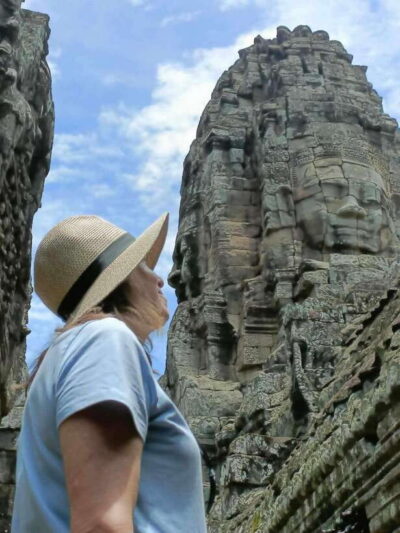
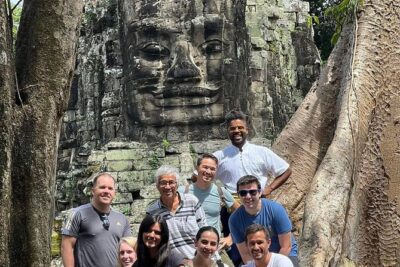
Next up is Bayon Temple, built around its many smiling stone faces. Bayon is one of those places where the viewpoint changes your impression. From one angle, faces feel calm. From another, they look more watchful. Even if you have seen pictures before, seeing it in person has a stronger effect because you are moving through the temple instead of looking at a static image.
The tour also includes the Elephant Terrace, once used for royal ceremonies. Walking along it helps you picture the kind of public moments that happened here, even if you do not go deep into every detail. It gives your photos a story, not just a pretty background.
This final block is listed at about 1 hour 30 minutes. That is enough time to take the main routes, enjoy the gates and faces, and get your bearings. You will likely leave feeling like you finally understand the emotional shift between Angkor Wat’s spiritual order and Angkor Thom’s ceremonial presence.
The guide matters, and Sarak is the reason many people book twice
This tour is led by Angkor Guide Sarak, an English-speaking guide with strong command of Khmer culture and temple context. The most repeated praise is not just that Sarak knows facts, it is how he communicates them. His English is described as excellent and easy to understand, and he is the kind of guide who answers questions without making you feel silly for asking.
Another standout: Sarak is praised for tailoring the program. Even though this is a one-day experience, the private format means your guide can adjust to your interests and your pace. If you want more time for carvings, you can ask. If you want more photos, you can ask. If you want to understand day-to-day Cambodian life alongside the ruins, you can ask.
Photos are also a real part of the value here. Multiple reviews point out that Sarak takes fantastic pictures and knows the best spots. One review even mentions photographic and AI skills, which suggests he is not just pointing you to the usual angles, he is helping you get shots that look better than the quick tourist snap.
There is also a human side. Reviews describe Sarak as kind, attentive, enthusiastic, and flexible, with a calm temperament that makes the day feel smooth. On an 8 to 9 hour temple day, that matters as much as timing.
Other private bookings in Siem Reap


Price breakdown: what $49 really covers
The tour price is $49.00 per person and it includes several important comforts and services:
- licensed English-speaking guide
- air-conditioned vehicle
- drinking water
What is not included is the major line item: the Angkor ticket. The listing shows a 1-day Angkor ticket at $37 per person. That means your realistic day budget is about $86 per person before tips.
Is that good value? For a private day that covers multiple major temples, includes guiding and transport, and targets sunrise or sunset timing, the total can be a fair deal, especially if you would otherwise hire separate guides or waste time figuring things out on your own. The key is to treat it like an all-in guided day, not a cheap temple shuttle.
Also note: tipping is not included. Plan to tip your guide and driver at the end. It is a standard part of how this kind of private service works.
What your day feels like, hour by hour
Here is how the pacing generally works based on the visit structure:
- Angkor Wat (about 3 hours): galleries, carvings, and climb to the central towers
- Ta Prohm (about 1.5 hours): shaded courtyards and narrow passages among tree roots
- Bayon and Angkor Thom (about 1.5 hours): South Gate entry, Bayon faces, and Elephant Terrace
That totals roughly the 8 to 9 hour window once you factor in driving time and short breaks. The benefit of this structure is that the most iconic temple gets the most time. You are not doing rapid-fire stops where you remember the names but not the feeling.
The challenge is simple: you are walking. Even with air-conditioned transport, you will spend time on foot, and some areas include uneven stone and stairs. If you have moderate physical fitness, you should be fine, but if you know you struggle with steps, consider whether you want a slower pace.
Practical tips to make this day easier
This is a long temple day, so small choices help.
- Wear comfortable shoes you trust on stone and steps. You will climb and walk on irregular surfaces.
- Bring something to protect yourself from sun exposure, even if you start at sunrise or end at sunset. Angkor days can still feel intense.
- Keep your water plan simple. Drinking water is included, but do not treat it like a full hydration strategy for 9 hours in heat.
- If photos matter, tell Sarak early. The tour is private, and his skill at finding strong photo locations is a big part of the experience.
One more smart idea: ask your guide a question while you walk, not only when you stop. Sarak is praised for being attentive and responsive, so you can turn the day into a conversation instead of a lecture.
Who should book this private Angkor day, and who might not
This tour is a great match if you want:
- a private guide who can explain what you are seeing in clear English
- sunrise or sunset timing to reduce heat and crowd stress
- a full day that hits Angkor Wat, Ta Prohm, and Bayon without running around endlessly
It is also ideal if you care about photography and want more than random angles. Sarak’s strengths with photo spots and getting you memorable images show up again and again in feedback.
You might consider a different format if:
- you have very limited mobility, since the day includes climbing and walking across temple sites
- you want only a short visit, because this is an all-day experience
Should you book this sunrise or sunset Angkor tour?
If you want an organized, private Angkor day with a real guide and smart pacing, I think this one makes sense. The combination of early timing, a licensed English-speaking guide named Sarak, and a route that actually gives you time at each major temple is the heart of the value.
Book it if you will appreciate context. The temples are beautiful, but the day becomes better when you understand what you are looking at and why it mattered. Book it if you like photos and want help getting the best angles.
If you are trying to squeeze Angkor into a strict budget, do the math first: the $49 tour price plus the $37 1-day ticket is what you should expect to pay per person, plus tips. Once you accept that, you are paying for transport, air-conditioned comfort, and the guide who helps the ruins feel personal.
FAQ
Is this tour private?
Yes. It is a private tour/activity, and only your group participates.
How long is the private Angkor Wat exploring tour?
It runs about 8 to 9 hours.
What is included in the price?
The tour includes a licensed English speaking guide, an air-conditioned vehicle, and drinking water.
Do I need an Angkor ticket?
Yes. The Angkor ticket (1-day) is not included and is listed at $37 per person.
Is pickup included, and where does the tour start?
Pickup is offered, and the meeting point is 7-Eleven, 212 Sivutha Blvd, Krong Siem Reap. The tour ends back at the meeting point.
Is the guide language English?
Yes. The guide is English speaking.
What parts of the temples are included in the visit?
The stops include Angkor Wat, Ta Prohm, and Angkor Thom, including the South Gate, Bayon Temple, and the Elephant Terrace.
What fitness level do I need?
The tour recommends a moderate physical fitness level due to walking and climbing, including climbing up to see the central towers.
Is tipping included?
No. Tipping for the guide and driver is not included.
Can I cancel for free?
Yes, there is free cancellation. You can cancel up to 24 hours in advance for a full refund.
More Tours in Siem Reap
- Angkor Wat Sunrise or Sunset Tour with Guide from Siem Reap★ 5.0 · 12,109 reviews
- Siem Reap: Angkor Wat: Small-Group Sunrise or Sunset Tour★ 5.0 · 9,444 reviews
- From Siem Reap: Kampong Phluk Floating Village Tour by Boat★ 4.9 · 6,979 reviews
- Siem Reap: Angkor Wat 2-Day Tour with Sunrise and Sunset★ 4.9 · 4,429 reviews
More Tour Reviews in Siem Reap
- Angkor Wat Sunrise or Sunset Tour with Guide from Siem Reap★ 5.0 · 12,109 reviews
- Siem Reap: Angkor Wat: Small-Group Sunrise or Sunset Tour★ 5.0 · 9,444 reviews
- From Siem Reap: Kampong Phluk Floating Village Tour by Boat★ 4.9 · 6,979 reviews
- Siem Reap: Angkor Wat 2-Day Tour with Sunrise and Sunset★ 4.9 · 4,429 reviews
Sunrise at Angkor, Three More Ways
- Angkor Wat Sunrise or Sunset Tour with Guide from Siem Reap★ 5.0 · 12,109 reviews
- Siem Reap: Angkor Wat: Small-Group Sunrise or Sunset Tour★ 5.0 · 9,444 reviews
- Siem Reap: Angkor Wat 2-Day Tour with Sunrise and Sunset★ 4.9 · 4,429 reviews
- Angkor Wat Sunrise tour with Small – Group and Guide tours★ 5.0 · 3,655 reviews
Newly written up around Siem Reap
- Waterfall & River of 1000 Siva Linga- Kulen Mountain Private Tour
★ 5.0 · 3 reviews - Private Transfer from Siem Reap to Sihanoukville
★ 4.5 · 3 reviews - Private Tour to Koh Ker and Beng Mealea
★ 5.0 · 3 reviews - Private Transfer: Siem Reap Angkor Internation Airport to Hotel
★ 5.0 · 3 reviews - Kulen National Park Ticket -Waterfall & 1000 Lingas
★ 5.0 · 3 reviews - Kulen Waterfall & Kbal Spean Tour
★ 5.0 · 3 reviews
Angkor Wat Sunrise Tours, side by side.
 ★ 5.0Angkor Wat Sunrise or Sunset Tour with Guide from Siem ReapFrom $1812,109 reviews
 ★ 5.0Angkor Wat: Small-Group Sunrise or Sunset TourFrom $159,444 reviews
 ★ 4.9Angkor Wat 2-Day Tour with Sunrise and SunsetFrom $344,429 reviews
 ★ 5.0Angkor Wat Sunrise tour with Small – Group and Guide toursFrom $143,655 reviews
 ★ 5.0Angkor Wat Highlights and Sunrise Guided Tour from Siem ReapFrom $233,213 reviews
 ★ 5.0Full-Day Angkor Wat Sunrise Private Tour with Guide from Siem ReapFrom $602,920 reviews
 ★ 5.0Angkor Wat Sunrise & 3 Main Temples with Breakfast – Small GroupFrom $152,857 reviews
 ★ 4.9Angkor Wat Sunrise and Full-Day Sightseeing TourFrom $142,828 reviews
Also appears in