
REVIEW · CAMBODIA
Private: Angkor Wat Full Day Guided Visit
Start at 7:30, and Angkor feels calmer. This private day tour from Siem Reap is built for the early hours, with hotel pickup and private pacing so you can move through the big sights without feeling rushed. You also get lunch during the tour, which matters when your day is going to be long and hot.
I like two things most. First, you’re with a professional licensed guide who can turn stone carvings into real stories, and that makes Angkor Wat, Angkor Thom, and Ta Prohm easier to understand. Second, the comfort extras, like an air-conditioned private vehicle plus bottled water and snacks, keep the day from feeling like a suffering contest. The main drawback to plan for is the Angkor Archaeological Park entrance ticket, which is not included and costs $37 for a single-day pass.
In This Review
- Key things that make this Angkor day work
- Price and value: what your $113 actually buys
- Beating the heat and crowds with a 7:30 am launch
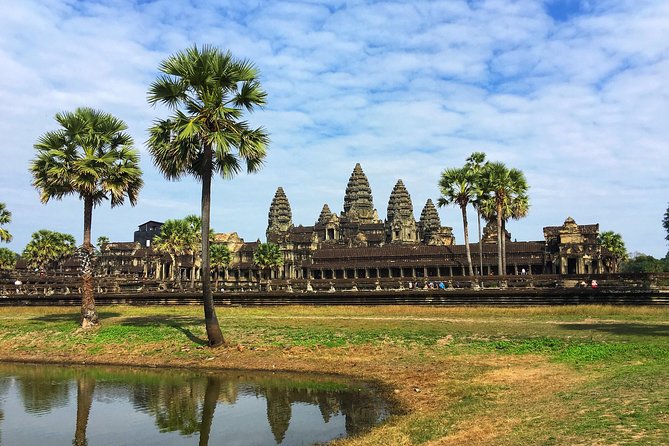
- Stop 1: Angkor Wat, bas-reliefs, and why two hours feels right
- Stop 2: Angkor Thom, a walled city with multiple temple moods
- Stop 3: Ta Prohm’s strangler figs, silk-cotton trees, and Tomb Raider magic
- Stop 4: Ta Nei Temple for a calmer, quieter reset
- Lunch, snacks, and bottled water: the unglamorous part that matters
- What the guides do that you feel immediately
- Getting the most from each stop without feeling rushed
- Where people may stumble: the entrance ticket and time expectations
- Should you book this private Angkor Wat full-day guided visit?
- FAQ
- What time does the tour start?
- How long is the Angkor Wat full-day guided visit?
- Is hotel pickup and drop-off included?
- What temples are included on the route?
- Do I need to buy the Angkor Archaeological Park entrance ticket separately?
- What’s included in the tour price besides the guide?
- What is the cancellation policy?
Key things that make this Angkor day work
- 7:30 am start to get ahead of the heat and heavy foot traffic
- Private tour only for your group, so you can set your own rhythm
- Air-conditioned private vehicle plus snacks, refreshments, and bottled water
- A strong temple lineup: Angkor Wat, Angkor Thom, Ta Prohm, and Ta Nei
- Ta Nei for quieter time, a Buddhist temple that helps you breathe between big stops
- Lunch included, so you can keep moving instead of hunting for food
Price and value: what your $113 actually buys
At $113 for a 6 to 8 hour private guided day, the price feels aimed at comfort and convenience, not just sightseeing. You’re paying for the big stuff that usually costs time and stress on your own: a pickup and drop-off, a private air-conditioned vehicle, a professional licensed guide, and the small-but-important needs covered like snacks, refreshments, and bottled water.
The one extra cost you must budget for is the Angkor entrance ticket, listed as $37 for a single-day pass. That means you should mentally plan around roughly $150 total per person, assuming that $37 is the rate you’ll be paying. It’s not a deal-breaker, just a reality of Angkor days: the guided day is only part of the equation, and the park ticket is the other half.
If you want the most value, think about how you’ll use the private format. When you’re paying for a guide, you’ll get more out of asking questions, adjusting your walking pace, and using stops strategically for photos and viewpoints. Done well, this kind of day tour helps you see several major temples without burning your energy on logistics.
Beating the heat and crowds with a 7:30 am launch
This tour starts at 7:30 am, and that start time is the whole strategy. Angkor is famous, so it’s popular, and the earlier you’re moving, the more pleasant the experience tends to be. The guide can also help you time the visit so you’re not stuck at the busiest angles when everyone else is arriving.
In the reviews, guides are praised for helping people avoid crowds and for staying efficient and punctual. That matters because “early” is only useful if you actually make it early and keep the day organized. With hotel pickup included, you’re not guessing your way to a meeting point while the sun is already doing its thing.
Practical mindset for this tour: arrive ready to walk and climb. Wear comfortable, supportive shoes, bring sun protection, and plan to drink water regularly. The tour includes bottled water and refreshments, but you’ll still feel better if you pace yourself and take short pauses when you need them.
Other guided options across Siem Reap
- Angkor Wat Sunrise or Sunset Tour with Guide from Siem Reap★ 5.0 · 12,109 reviews
- Siem Reap: Full-Day Angkor Wat Guided Tour with Sunset★ 4.9 · 3,803 reviews
- Angkor Wat Sunrise tour with Small – Group and Guide tours★ 5.0 · 3,655 reviews
- Angkor Wat Highlights and Sunrise Guided Tour from Siem Reap★ 5.0 · 3,213 reviews
Stop 1: Angkor Wat, bas-reliefs, and why two hours feels right
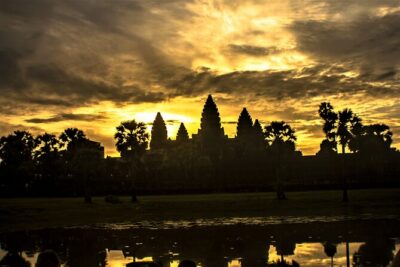
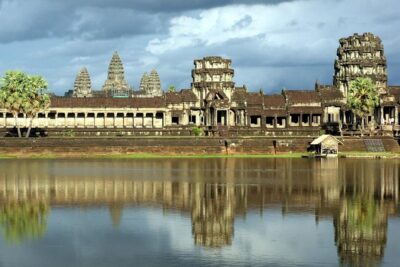
Angkor Wat is the headliner, and this schedule gives it about two hours. It’s described as the largest religious monument in the world, and the reason people fall for it is not just the scale. The storytelling bas-reliefs are a major draw, and a good guide can point out what you’re looking at and how the carvings connect to the site’s meaning.
On a self-guided visit, it’s easy to wander and get “big temple fatigue,” where everything feels like it blends together. With a guide, you can slow down and learn what makes Angkor Wat different from the others on the route. That’s where the time becomes worthwhile: you’re not just seeing stones, you’re understanding why those stones were shaped the way they were.
For your own planning, think about your photo goals before you arrive. Angkor rewards both wide views and close inspection. If you want photos that actually show details, allow time for standing still and looking up, not only taking quick shots while you walk.
Stop 2: Angkor Thom, a walled city with multiple temple moods
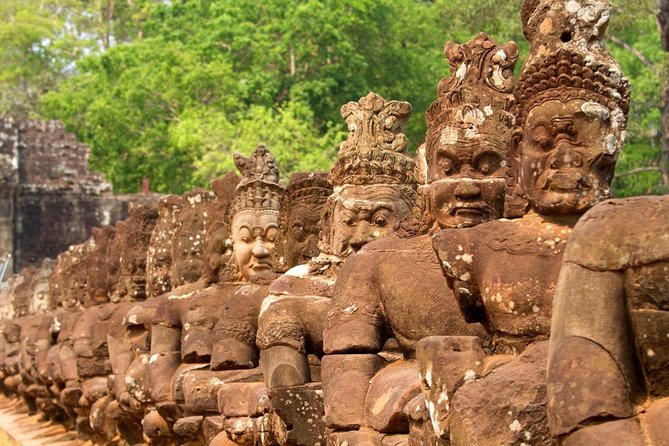
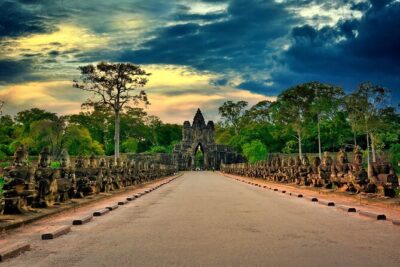
Angkor Thom is the second major stop, with around two hours. It’s framed as the capital city of the Khmer empire, and the key idea is that you’re moving through a city-like complex enclosed by walls, with temples inside. This is where the experience shifts from the singular grandeur of Angkor Wat to the layered feel of a larger urban sacred space.
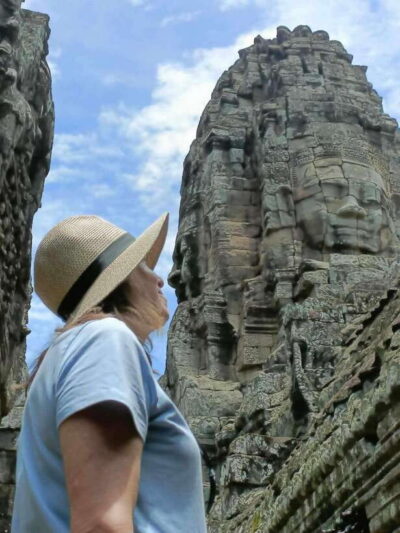
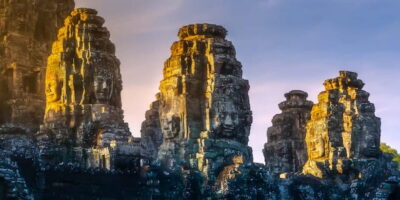
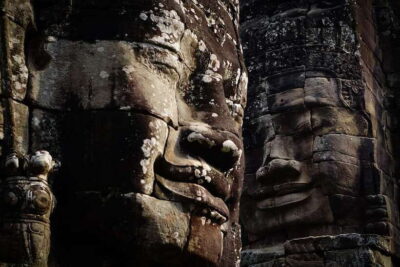
The tour info points to multiple sites within the Angkor Thom area, including Bayon and Baphuon, plus spots like Phimeanakas and the Terrace of the Elephants, and even the Terrace of the Leper King. You also get references to other areas such as Prah Palilay and Prah Palilay-related structures. Even if you do not see every single feature equally, the guide’s job is to help you make sense of the cluster so it doesn’t feel like a random checklist of ruins.
This is also a good stop to use the private pacing well. If you’re the type who likes to pause for explanations, this is your moment. If you want to keep moving, you still get the advantage of a guide steering you toward the most important views so you don’t waste energy wandering around the wrong paths.
Stop 3: Ta Prohm’s strangler figs, silk-cotton trees, and Tomb Raider magic
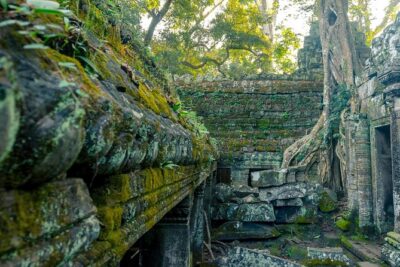
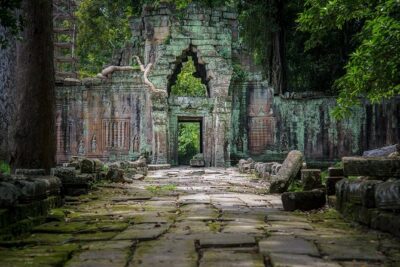
Ta Prohm is on the schedule for about one hour, and it’s famous for a very specific look: the strangler figs and silk-cotton trees tangled among the ruins. That mix of stone and living roots is why Ta Prohm feels atmospheric even before you learn anything about it.
The tour description also mentions it was used as a filming location for Tomb Raider, which is a fun way to orient yourself while you’re there. You may not want to think about movies the whole time, but it helps you imagine how different viewpoints show the same scene in multiple ways.
One-hour is enough if you treat it as a “slow looking” stop instead of a “see everything fast” stop. Prioritize: pick a couple of key angles, spend time noticing how the roots weave through the stone, and let the guide tell you what to watch for. That’s also where you’ll get better photos, because you’ll stop trying to capture everything and start capturing the details that actually define Ta Prohm’s character.
Stop 4: Ta Nei Temple for a calmer, quieter reset
Ta Nei Temple takes about 30 minutes, and it’s specifically presented as a Buddhist temple built in the reign of Jayavaman VII in the late 12th century. The practical reason this stop matters is the timing: after the big names, you get a chance to step out of the heaviest crowds and reset your brain.
The tour info highlights Ta Nei as a place to avoid crowds. In a day full of major landmarks, that kind of quiet slot is not a small detail. It helps you recover, take a breather, and keep your energy for the final stretch.
If you’re traveling with someone whose energy runs low early, this stop structure can help. The day has a mix of longer anchor visits and shorter refuel moments, so you’re not stuck feeling behind schedule if you slow down.
Other private bookings in Siem Reap

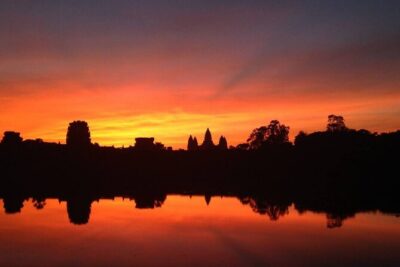
Lunch, snacks, and bottled water: the unglamorous part that matters
Lunch is included, and the tour also includes snacks and refreshments, plus bottled water. That might sound basic, but it’s the difference between a “great day” and a day that wears you out.
Angkor days are long, and you’re outdoors most of the time. Food becomes a logistics problem if it’s not handled for you. Here, lunch is built into the flow, which means you’re not spending precious minutes trying to find somewhere to eat, then paying for transport, then trying to regroup with the group.
This tour’s included comfort items also make sense for photography and exploration. You can keep moving when you want to, without waiting for a cold drink or getting distracted by hunger. If you do your part by pacing your walking and taking brief pauses, this schedule should feel manageable rather than chaotic.
What the guides do that you feel immediately
The tour is private with a professional licensed guide, and the reviews repeatedly praise guides for more than just facts. They’re described as warm, patient, and able to tailor the pace to the group.
Guide names mentioned include Sam, Tay, and Kim, and the overall company is Affinity Angkor, with the owner Pilu also called out for helpful, polite support. You may also see references to email communication through Montea before the trip. Those details point to something important: you’re not just buying a route, you’re buying a human who knows how to run the day.
Here’s how that shows up in real terms for you:
- If you want deeper explanations, guides tend to give them without making it feel like a lecture.
- If you have lower energy, the schedule can flex so you still get a meaningful day.
- If you care about photos, guides help you find the spots and timing that work.
If you’re the type who likes to ask questions, this is where a private guided format pays off. You’ll get more out of carvings and layouts when someone points out what to look for before you walk past it.
Getting the most from each stop without feeling rushed
A private tour sounds great on paper, but you’ll only feel the benefit if you use it. I’d treat this day like three things at once: a guided walkthrough, a photo mission, and a stamina plan.
At Angkor Wat, slow down for bas-reliefs and key views. At Angkor Thom, focus on understanding the walled-city layout and the temple cluster so it doesn’t blur together. At Ta Prohm, commit to the signature “roots in ruins” visuals, then let the time run out naturally instead of sprinting for one more viewpoint.
Finally, use Ta Nei as your reset. Thirty minutes is short, so decide in advance what you want from it: quiet time, a less crowded break, or a final set of calm temple photos before the day ends.
The overall duration is 6 to 8 hours, so your best approach is realistic: plan to walk, plan to rest, and accept that you cannot see every stone on the property in one day. This route is about the key temples, plus a smart quieter bonus.
Where people may stumble: the entrance ticket and time expectations
Two common considerations to plan for.
First, the Angkor Archaeological Park entrance ticket is not included in the tour price. It’s listed as $37 for a single day pass. If you show up without budgeting for that, you’ll hit a roadblock mid-day. Add it to your total before you commit.
Second, you are signing up for a long day, even if you’re moving at your own pace. Six to eight hours includes travel time, temple walking, and the guided stops. If you’re sensitive to heat or you hate early mornings, this schedule might feel like a lot.
The good news is that the tour is structured for an efficient rhythm: early start, two strong stops, one signature stop, then a shorter final temple. That structure helps you stay oriented even when you’re tired.
Should you book this private Angkor Wat full-day guided visit?
Book it if:
- You want a guided day that hits multiple top temples without dealing with navigation.
- You prefer a private format where your pace and interests matter.
- You like the idea of starting at 7:30 am to reduce heat and crowds.
- You appreciate comfort details like pickup, air-conditioned transport, lunch, snacks, and bottled water.
Consider a different option if:
- Your budget cannot handle the extra $37 entrance ticket.
- You know you struggle with long outdoor days and early starts.
- You want a more flexible schedule that’s not built around a set sequence of stops.
My bottom line: this is a strong choice for first-time Angkor visitors and for anyone who wants the most important temples with less stress. The early start, the guide-led storytelling, and the comfort extras add up to a day that feels organized, not exhausting, as long as you plan for that entrance ticket.
FAQ
What time does the tour start?
The tour starts at 7:30 am.
How long is the Angkor Wat full-day guided visit?
The duration is about 6 to 8 hours.
Is hotel pickup and drop-off included?
Yes, hotel pickup and drop-off are included.
What temples are included on the route?
The tour includes Angkor Wat, Angkor Thom, Ta Prohm, and Ta Nei Temple.
Do I need to buy the Angkor Archaeological Park entrance ticket separately?
Yes. The Angkor entrance ticket is not included, and it is listed as $37 for a single day pass.
What’s included in the tour price besides the guide?
Included are transport by air-conditioned private vehicle, snacks and refreshments, bottled water, and fuel surcharge, plus the private guide and private tour format.
What is the cancellation policy?
Free cancellation is available. You can cancel up to 24 hours in advance for a full refund. If you cancel less than 24 hours before the start time, the amount paid will not be refunded.
Other Bookings Kept Private
- Full-Day Angkor Wat Sunrise Private Tour with Guide from Siem Reap★ 5.0 · 2,920 reviews
- Siem Reap: Angkor Wat Private Tuk-Tuk Tour★ 4.9 · 2,222 reviews
- Angkor Wat Private Day Tour from Siem Reap★ 5.0 · 834 reviews
- Angkor Wat Private Tuk-Tuk Tour (sunrise Option) & more★ 5.0 · 439 reviews
Other Guides Working Siem Reap
- Angkor Wat Sunrise or Sunset Tour with Guide from Siem Reap★ 5.0 · 12,109 reviews
- Siem Reap: Full-Day Angkor Wat Guided Tour with Sunset★ 4.9 · 3,803 reviews
- Angkor Wat Sunrise tour with Small – Group and Guide tours★ 5.0 · 3,655 reviews
- Angkor Wat Highlights and Sunrise Guided Tour from Siem Reap★ 5.0 · 3,213 reviews
More Tour Reviews in Siem Reap
- Angkor Wat Sunrise or Sunset Tour with Guide from Siem Reap★ 5.0 · 12,109 reviews
- Siem Reap: Angkor Wat: Small-Group Sunrise or Sunset Tour★ 5.0 · 9,444 reviews
- From Siem Reap: Kampong Phluk Floating Village Tour by Boat★ 4.9 · 6,979 reviews
- Siem Reap: Angkor Wat 2-Day Tour with Sunrise and Sunset★ 4.9 · 4,429 reviews
Newly written up around Siem Reap
- Waterfall & River of 1000 Siva Linga- Kulen Mountain Private Tour
★ 5.0 · 3 reviews - Private Transfer from Siem Reap to Sihanoukville
★ 4.5 · 3 reviews - Private Tour to Koh Ker and Beng Mealea
★ 5.0 · 3 reviews - Private Transfer: Siem Reap Angkor Internation Airport to Hotel
★ 5.0 · 3 reviews - Kulen National Park Ticket -Waterfall & 1000 Lingas
★ 5.0 · 3 reviews - Kulen Waterfall & Kbal Spean Tour
★ 5.0 · 3 reviews
Guided, side by side.
 ★ 5.0Angkor Wat Sunrise or Sunset Tour with Guide from Siem ReapFrom $1812,109 reviews
 ★ 4.9Full-Day Angkor Wat Guided Tour with SunsetFrom $153,803 reviews
 ★ 5.0Angkor Wat Sunrise tour with Small – Group and Guide toursFrom $143,655 reviews
 ★ 5.0Angkor Wat Highlights and Sunrise Guided Tour from Siem ReapFrom $233,213 reviews
 ★ 5.0Full-Day Angkor Wat Sunrise Private Tour with Guide from Siem ReapFrom $602,920 reviews
 ★ 4.9Angkor Wat Sunrise or Sunset Guided TourFrom $132,123 reviews
 ★ 4.9Highlights and Sunrise Guided TourFrom $191,586 reviews
 ★ 5.0Angkor Wat Small-Group Exploration with Expert GuideFrom $181,544 reviews