
REVIEW · CAMBODIA
Remnants of a Khmer Rouge Era
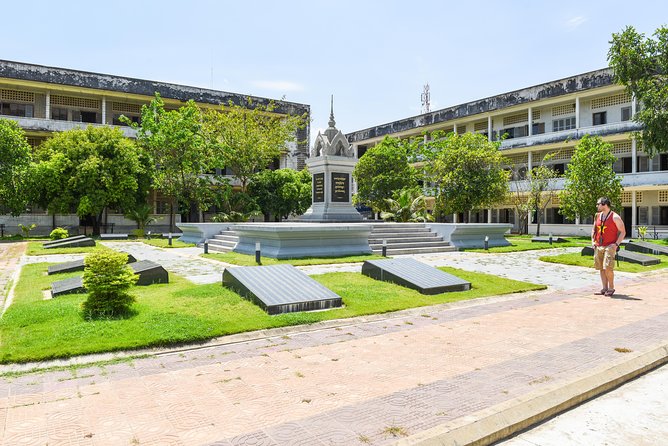
Tuol Sleng and Cheung Ek hit like history you can walk through. This 4-hour tour from Phnom Penh pairs the former Khmer Rouge prison, Tuol Sleng, with the Cheung Ek Killing Fields memorial, so you leave with a clearer picture of how the Pol Pot regime worked, and how many lives were destroyed.
I especially like the human-scale details you encounter at Tuol Sleng, from the classroom cells to the ways prisoners were processed before transfer. I also really value the two-stop structure here, because it moves from imprisonment to the killing fields without leaving you to guess the timeline.
One drawback to keep in mind: this is not a light sightseeing loop. You’ll be in intense, emotional places for about four hours, and the tour is not recommended for children under 12, plus you must follow the strict dress rules at S-21.
In This Review
- Key takeaways before you go
- Tuol Sleng S-21: walking through a former classroom turned prison
- Cheung Ek Killing Fields: the memorial stupa and the scale you can’t ignore
- Guide, pacing, and why the private format can be worth it
- Dress code and respectful planning at Tuol Sleng S-21
- What is included in the $80.77 value, and what you pay yourself
- Phnom Penh pickup zones: where the tour does and doesn’t go
- Practical on-site tips: camera care and getting through the day smoothly
- Who should book this, and who should think twice
- Should you book Remnants of a Khmer Rouge Era?
- FAQ
- How long is the tour and what stops are included?
- Is hotel pickup and round-trip transport included?
- What is included in the price?
- Is the tour private?
- What dress code do I need for Tuol Sleng?
- What if my hotel is outside central Phnom Penh?
- Is the tour suitable for children?
- Can I cancel and get a full refund?
Key takeaways before you go
- Private to your group, with an English-speaking guide who can connect the dots between S-21 and Cheung Ek
- Clear itinerary rhythm: about 2 hours at Tuol Sleng and 2 hours at Cheung Ek
- What you’re really paying for: hotel pickup in Phnom Penh, round-trip transport, and entrance and donation fees
- Strict S-21 dress code: shoulders covered and clothes below the knees
- Cheung Ek’s memorial stupa shows the scale of loss with over 5,000 skulls plus bones and clothing
- Time matters: it’s best to book ahead since this tour is commonly reserved about a month in advance
Tuol Sleng S-21: walking through a former classroom turned prison
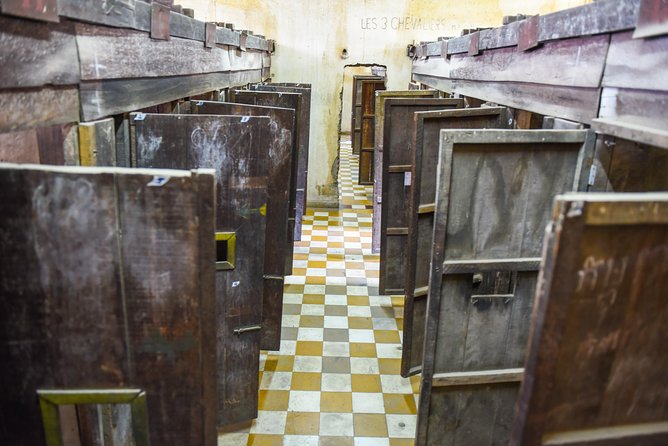
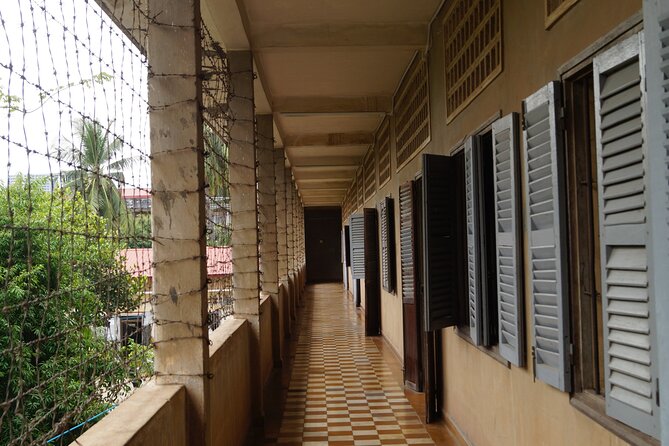
Tuol Sleng is one of those places where you feel your own pace slow down. The site is the former S-21 Prison, run during the Pol Pot era after a high school was converted into a detention center. Even if you know the broad facts, the building itself explains a lot. It is hard to separate the crime from the setting.
You will start with pickup from your Phnom Penh hotel by your guide and driver, then head to Tuol Sleng. Plan on roughly two hours here. That’s the amount of time you need to absorb the exhibits and see the details that shaped how the prison operated.
Inside, the museum covers what happened after prisoners were detained. The information highlights that, after interrogation and often torture, many people were transferred to the killing fields, where they faced another round of brutality. In other words, S-21 was not an end point. It was part of the system that turned ordinary people into victims on a mass scale.
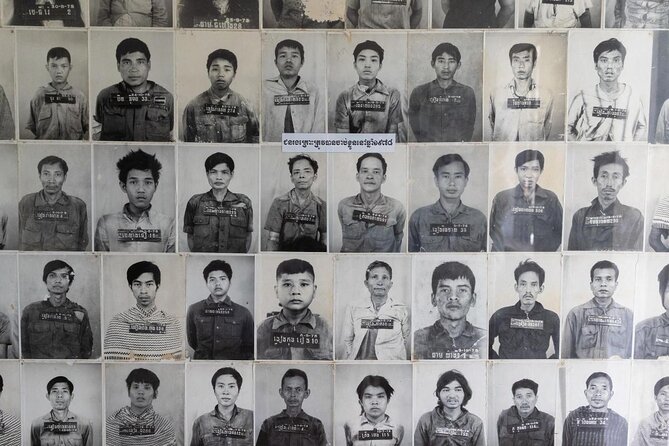
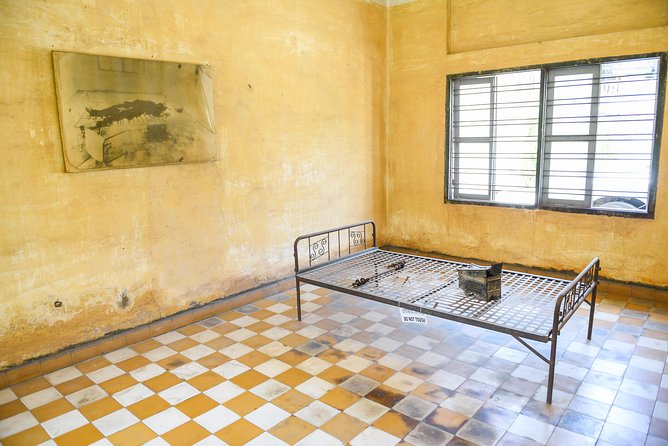
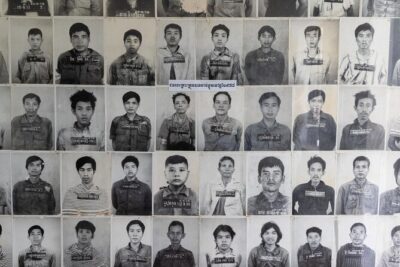
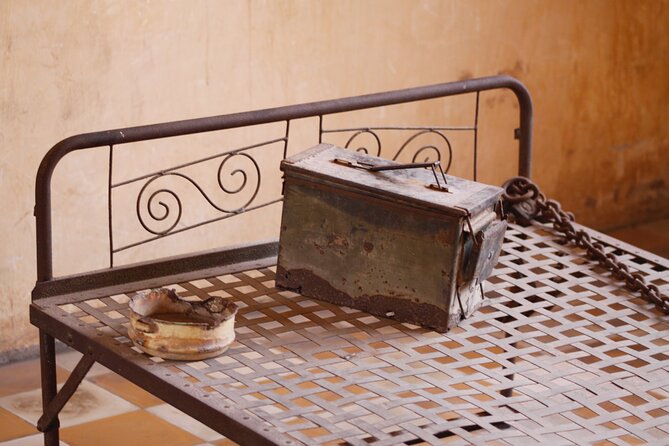
What I find most powerful is the way the exhibits focus on physical evidence. You’ll see the crude cells built in classroom spaces, plus the kinds of torture devices described as being used to extract confessions during the late 1970s purges. The museum also includes paintings and photographs of victims, so the story is not only numbers and dates. It is faces, documents, and the stark reality of confinement.
This is also one of those stops where the guide can make a real difference. If you come without context, you may still feel the heaviness, but you could miss why certain things were done the way they were. If you care about understanding the structure of the Khmer Rouge machine, you’ll likely appreciate someone who can explain what you’re looking at as you go.
Cheung Ek Killing Fields: the memorial stupa and the scale you can’t ignore
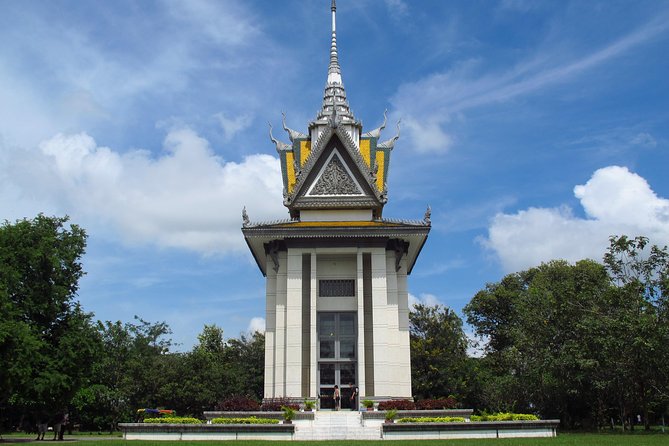
After Tuol Sleng, you shift from imprisonment to where victims were killed. The Cheung Ek Genocidal Center, known as the Killing Fields area, sits just outside Phnom Penh, and the mood changes fast. There is a reason this is often described as a separate experience from the prison museum. Here, the landscape is part of the message.
You’ll spend about another two hours at Cheung Ek. The site has a layered past. It started as a Chinese Cemetery before it became the Khmer Rouge’s best known killing field. That history matters, because it shows how existing places and communities were repurposed and violated.
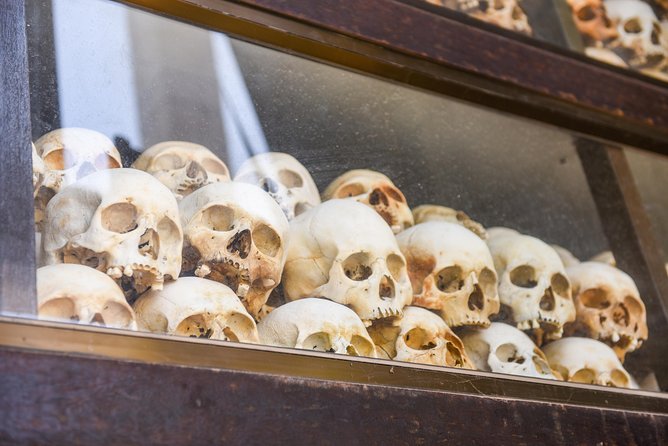
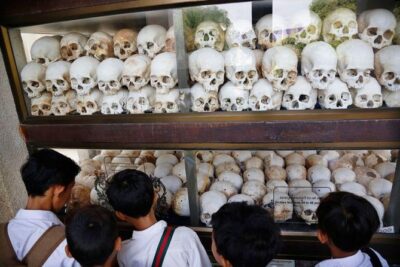
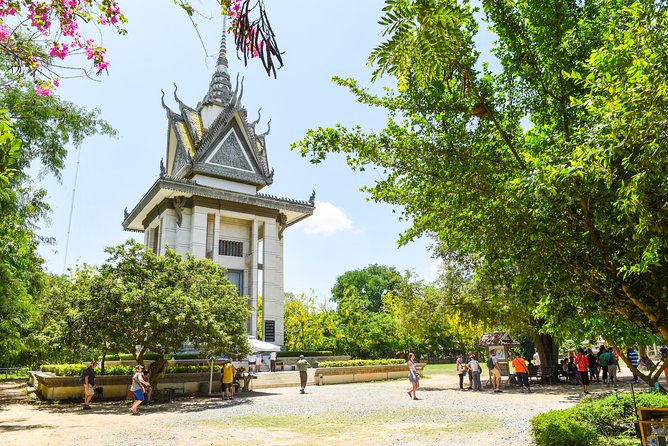
One of the most concrete details you’ll see is the number of remains excavated. Nearly 9,000 bodies have been recovered from mass graves in this area. Then there’s the memorial stupa, which displays over 5,000 human skulls, along with bones and clothing of victims. It’s not just symbolic. It’s the physical scale made visible.
What helps me process it is the combination of what’s displayed and what’s explained. The memorial is designed so you can connect the exhibits to the broader Khmer Rouge period. You’ll also learn that detention centers existed across the country, meaning this violence wasn’t confined to one location. Cheung Ek represents a specific site, but it also points to a wider network of terror.
If you’re the type who wants to take notes, bring a pen and give yourself permission to pause. There’s a lot to read and a lot to understand. And if you feel yourself getting overwhelmed, that’s normal here. The best way to handle it is to slow down, listen, and let the guide’s pacing help you stay present.
Still weighing up options? These Phnom Penh trips came up well in our reviews too.
- The Killing Field and Toul Sleng Genocide Museum (S21) Tour★ 5.0 · 1,977 reviews
- Phnom Penh: Sunset Cruise with Unlimited Beers & BBQ Buffet★ 4.5 · 727 reviews
- Aroma Therapy Massage, Relaxation therapeutic aromatherapy oil massages.★ 5.0 · 645 reviews
- Killing field and Toul Sleng genocide museum Tour★ 5.0 · 610 reviews
Guide, pacing, and why the private format can be worth it
This tour runs about four hours total, with two hours at each stop. That’s not a rushed sprint, but it also does not leave you wandering in the dark. It’s a tight half-day that keeps the story moving in a logical order.
The tour is arranged as a private experience for your group, using an English-speaking guide and a professional driver. The key word for your decision is context. At both Tuol Sleng and Cheung Ek, there are exhibits and descriptions, but the real value comes from understanding what those details mean in the Khmer Rouge system.
In the feedback I’ve seen reflected through guide reputation, a guide named Sony is singled out for being excellent at sharing information and staying considerate. That matters more than it sounds. When the subject is this heavy, you want a guide who can keep the tone respectful, explain clearly, and not bulldoze you past the hard parts.
That said, there’s a fair consideration to weigh. Some people do wonder whether the added cost of a dedicated guide is worth it compared to audio options at the sites. If you are very confident reading independently and you enjoy self-guided museums, you might feel the guide adds less value than you hoped. But if you prefer a human explanation that connects S-21 to Cheung Ek, the guide usually feels like part of the experience, not an extra.
My practical advice: treat the guide as your translator between what you see and what it means. Ask questions early if something feels confusing. Guides are best when you give them a chance to tailor the pacing to your group.
Dress code and respectful planning at Tuol Sleng S-21
Here is where logistics become part of your experience. Tuol Sleng enforces a strict dress code to respect the premises and the victims who lost their lives there. You need to dress modestly and appropriately by wearing clothes that cover your shoulders and fall below your knees.
Avoid shirts with obscene or disrespectful prints and avoid brightly colored clothing, since you may be refused entry if your outfit breaks the rules. It’s worth checking your clothes the night before and packing a backup option if you’re unsure.
This dress code can shape how comfortable you feel during the visit. Cambodia weather can be warm, so you might need light fabric that still covers shoulders and reaches below the knee. Plan for that. You don’t need special gear, but you do need the right kind of clothing.
Also think about the practical side of the day. The tour includes transportation and entry, but it does not list meals or drinks. If you’re sensitive to heat or spend time reading carefully, you may want to budget for water as a personal expense outside the included package.
What is included in the $80.77 value, and what you pay yourself
The price is $80.77 per person, and the tour is listed as running about four hours. For that amount, you typically get a lot of the friction removed.
Included:
- A half-day tour with a professional English-speaking guide
- Transportation by car, mini-van, or coach with a professional driver
- All entrance and donation fees for the visits described
- Applicable taxes and service charges
Not included:
- Meals and drinks and any personal expenses
- Travel insurance coverage (highly recommended)
So the question is not just what it costs. It’s whether you value a guide plus round-trip transport plus entrance fees handled for you. If you’d otherwise be figuring out public transport, paying entry separately, and working out timing, the included package starts looking like a fair deal.
Also note the tour can include pickup. That’s a real convenience in Phnom Penh, where you don’t want to spend mental energy on directions when the visit itself demands emotional attention.
One more point: the tour summary notes mobile ticket access and group discounts as possible features. Even though this is private for your group, pricing can vary based on how many people are booked. If you’re traveling with friends or family, it can help to compare options and ask what group discounts apply.
Phnom Penh pickup zones: where the tour does and doesn’t go
Pickup and drop-off are included only for customers staying in Phnom Penh, specifically inside the included areas. Transfers outside that area are excluded, and supplements may apply.
The exclusions listed are useful to know:
- Koh Dach
- Tonle Bati
- Oudong
- Any river and cruise ferry terminals
- Phnom Penh International Airport
If you’re staying outside central Phnom Penh, you’ll likely need to plan a meeting point or pay an additional supplement. It is smart to confirm your exact hotel name and location in your booking so the pickup can be arranged properly.
One more practical detail: pickup and drop-off services may not be confirmed for customers staying at private residences, apartment complexes, or other non-registered tourism accommodations. If that’s your situation, you might be asked to meet at a nearby hotel.


Practical on-site tips: camera care and getting through the day smoothly
Two things are worth keeping in mind.
First, the tour includes electronic device caution. Natural elements of any kind can damage electronic equipment, so wrap and protect your camera or phone. This is mostly about preventing rain or dust issues on the ground. It’s also a reminder to be deliberate about what you bring, since this is not the kind of place where you want to constantly deal with charging or gear problems.
Second, the pickup time may be confirmed efforts-wise, with the possibility of being communicated the day before if exact timing can’t be confirmed in advance. You’ll want to keep your email and phone notifications on during the day you booked for, especially if you have a tight schedule elsewhere in Phnom Penh.
Who should book this, and who should think twice
This is best for adults who want a direct, structured visit to both a prison museum and a killing field memorial. It’s also ideal if you prefer hearing a guided explanation that ties the sites together in one half-day block.
It is not recommended for families with children under 12. The subject matter is intense and the tour includes strict rules and time in places that can be emotionally challenging.
If you are easily distressed or you know you get overwhelmed in sites of mass violence, consider whether this is the right day to visit. You can still learn about Cambodia’s Khmer Rouge era through other formats, but if you do choose this tour, go in with realistic expectations. This is a sobering visit. Plan your rest of the day accordingly.
Also, if you’re someone who likes getting the most out of guide interpretation, this private format usually fits well. On the other hand, if you’re very comfortable reading exhibits on your own and you want maximum control over pacing, you might decide you don’t need a dedicated guide. Just remember that context makes a difference here.
Should you book Remnants of a Khmer Rouge Era?
If you want a guided, efficient, and respectful route through two of Cambodia’s most difficult history sites, this is a strong choice. The value comes from the full package: pickup, transport, entrance and donation fees, plus a guide to help you make sense of what you see at each stop.
Book it if you’re traveling with limited time in Phnom Penh and you want one clear half-day that covers the prison and the killing fields in order. Skip or reconsider it if you are going with young kids, or if you know you’re not ready for a heavy emotional experience that lasts close to four hours.
If you do book, dress for Tuol Sleng first. Then take your time. At places like this, rushing never helps.
FAQ
How long is the tour and what stops are included?
The tour is about 4 hours and includes two main stops: Tuol Sleng Genocide Museum (S21) for about 2 hours, and Cheung Ek Genocidal Center (Killing Fields) for about 2 hours.
Is hotel pickup and round-trip transport included?
Yes. The tour includes transportation and return transfers, but pickup and drop-off are included only for customers staying in and inside Phnom Penh within the included areas.
What is included in the price?
The tour includes a professional English-speaking guide, transportation, all entrance and donation fees for the mentioned visits, and applicable taxes and service charges.
Is the tour private?
Yes. The experience is operated on a full private basis, with only your group participating. It uses an English-speaking guide.
What dress code do I need for Tuol Sleng?
You must dress modestly: cover shoulders and wear clothing that falls below the knees. Obscene or disrespectful prints and brightly colored clothing may lead to refusal of entrance.
What if my hotel is outside central Phnom Penh?
Transfers outside the included Phnom Penh areas are excluded, including places like Koh Dach, Tonle Bati, Oudong, river and cruise ferry terminals, and Phnom Penh International Airport. Supplements may apply if you want to join from outside those regions.
Is the tour suitable for children?
It is not recommended for families with children under the age of 12 years old.
Can I cancel and get a full refund?
Yes. Free cancellation is available if you cancel at least 24 hours before the experience start time for a full refund. If you cancel less than 24 hours before, the amount paid is not refunded.
More Tour Reviews in Phnom Penh
- The Killing Field and Toul Sleng Genocide Museum (S21) Tour★ 5.0 · 1,977 reviews
- Phnom Penh: Sunset Cruise with Unlimited Beers & BBQ Buffet★ 4.5 · 727 reviews
- Aroma Therapy Massage, Relaxation therapeutic aromatherapy oil massages.★ 5.0 · 645 reviews
- Killing field and Toul Sleng genocide museum Tour★ 5.0 · 610 reviews
Newly written up around Phnom Penh
- Private Transfer From or to Phnom Penh <=> Sihanoukville
★ 5.0 · 3 reviews - Prasith and Reap Temples Private Day Trip from Phnom Penh
★ 4.5 · 3 reviews - Phnom Penh Full Day Private Tour By Tuk Tuk or Taxi Car
★ 5.0 · 3 reviews - Private Transfer From Phnom Penh To Sihanoukville
★ 5.0 · 3 reviews - Phnom Penh Private Pick-Up: Techo International Airport ( KTI )
★ 5.0 · 3 reviews - Island Community Life in Phnom Penh
★ 4.5 · 3 reviews