
REVIEW · CAMBODIA
Siem Reap: Angkor Full-Day Group Tour with Japanese Guide
Angkor looks different with a Japanese guide. I like how the Japanese guide turns the stones into understandable stories, and I also like the practical photo help, including better angles and calmer pacing between stops. If you value smooth timing and clear explanations, this format is a strong fit, especially with the small-group or private options that help you move at your speed.
One thing to plan for: the Angkor entrance ticket is not included in the $50 price, so your total cost is higher once you add the park pass. Also, you will be walking a lot on uneven temple ground, so comfortable shoes are not optional.
In This Review
- Key highlights you will feel on the ground
- How this Angkor tour works in real time
- Pickup timing, ride comfort, and the value of small groups
- Ta Prohm: jungle temple energy and how to enjoy it
- Angkor Thom entry and the Victory Gate photo stop
- Terrace of the Elephants and Baphuon: the “detail stops”
- Bayon: the faces that make Angkor feel personal
- Srah Srang break time and planning for lunch
- Angkor Wat in the afternoon: why the timing works
- Sunrise option: the early pickup that changes the mood
- The 2-day upgrade: Pre Rup, Banteay Srei, Beng Mealea, and Bakong
- Pre Rup
- Banteay Srei
- Lunch, then countryside feeling
- Beng Mealea
- Bakong
- Entrance ticket math, and why the $50 price still makes sense
- What you will actually wear and what is not allowed
- Who this tour is best for, and who should think twice
- Should you book this Japanese guided Angkor tour?
- FAQ
- Is the Angkor entrance ticket included?
- What time is pickup for the standard one-day tour?
- How does the sunrise option change the schedule?
- Is lunch included?
- What does the 2-day upgrade add?
- What language is the guide?
- Do children under 12 get free entry?
Key highlights you will feel on the ground
- Japanese guide explanations that make Bayon and Angkor Wat feel less mysterious and more meaningful
- Photo timing built into the route, including a short stop at Victory Gate
- Cold water and cold towels during temple visits, plus real breaks like Srah Srang
- Option to add a second day for Banteay Srei and Beng Mealea without rushing
- Sunrise upgrade with an early pickup and a finish around late morning
- Flexible pacing in the day plan, useful if your group includes older family members
How this Angkor tour works in real time
This is a full-day Angkor circuit with a Japanese-speaking guide, built around one main idea: you get more from the temples when someone helps you read what you are looking at. The route also avoids the most common problem with independent visits, which is spending time figuring out where to go next and missing the meaning of key spots.
Your day starts with hotel pickup in Krong Siem Reap, typically between 8:30 and 9:00 am. You meet in the hotel lobby, and you will want to be ready a bit early, because the tour is running on temple schedules and heat levels. You travel in a vehicle matched to group size, either a tuk-tuk for smaller groups or an air-conditioned van for larger ones.
The basic structure goes like this: you hit the big Angkor cluster temples, take in a real lunch break at Srah Srang time (lunch itself is not included), then finish with Angkor Wat. That order matters. You see the jungle temple mood and the Bayon-style face towers earlier, when you are fresher, then you arrive at Angkor Wat with enough energy to enjoy the longer visit.
Pickup timing, ride comfort, and the value of small groups
If you choose the small-group option, you are not just getting a guide, you are getting a different experience of crowd flow. Smaller groups can mean shorter “stand and wait” moments, and it is easier for the guide to adjust pacing if someone needs a slower walk.
Transportation is practical:
- For 1 to 2 people, you travel by tuk-tuk (or you can choose a car at checkout).
- For 3 to 6 people, you go by air-conditioned van.
You also get cold drinking water and cold towels during visits. That sounds like a small detail until you are walking in midday sun with temple steps underfoot. Those items make it easier to stay in the moment instead of thinking about hydration every 10 minutes.
One more practical note from the way this tour is described: they include hotel pickup and guided visits as per the day plan. That removes a lot of friction for your first day in Siem Reap, especially if you want Angkor to feel organized without hiring private logistics from scratch.
Other guided options across Siem Reap
- Angkor Wat Sunrise or Sunset Tour with Guide from Siem Reap★ 5.0 · 12,109 reviews
- Siem Reap: Full-Day Angkor Wat Guided Tour with Sunset★ 4.9 · 3,803 reviews
- Angkor Wat Sunrise tour with Small – Group and Guide tours★ 5.0 · 3,655 reviews
- Angkor Wat Highlights and Sunrise Guided Tour from Siem Reap★ 5.0 · 3,213 reviews
Ta Prohm: jungle temple energy and how to enjoy it
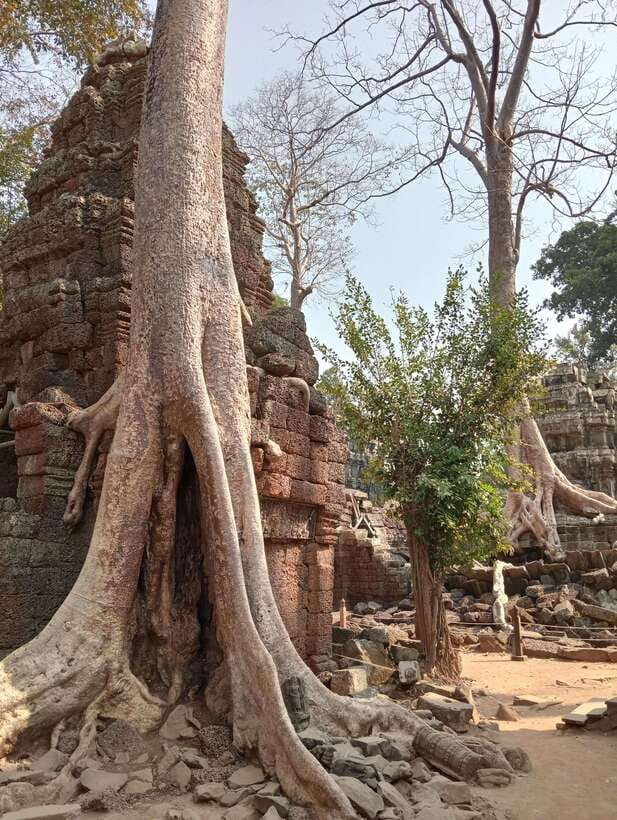
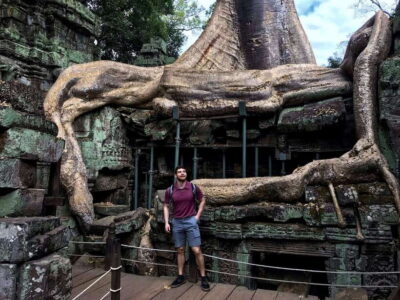
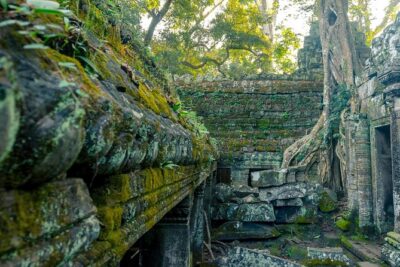
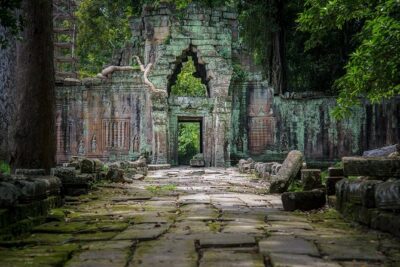
Your first major stop is Ta Prohm, about an hour of guided time. This is the temple people remember because nature is part of the architecture. Big tree roots twist through doorways and galleries, creating that cinematic, almost game-like atmosphere.
Here is what makes Ta Prohm work on a guided day plan:
- A guide can point out carvings and structural details you might miss while looking at the roots.
- You get time to walk slowly, not just rush past for photos.
- The tour builds in enough time for you to find good angles without the constant pressure of moving as fast as possible.
The possible drawback is simple: Ta Prohm can still feel busy, especially in peak season. The guide’s pacing helps, but if you are extremely sensitive to crowds, plan your expectations. Comfortable shoes help most here, because the ground can be irregular.
Angkor Thom entry and the Victory Gate photo stop
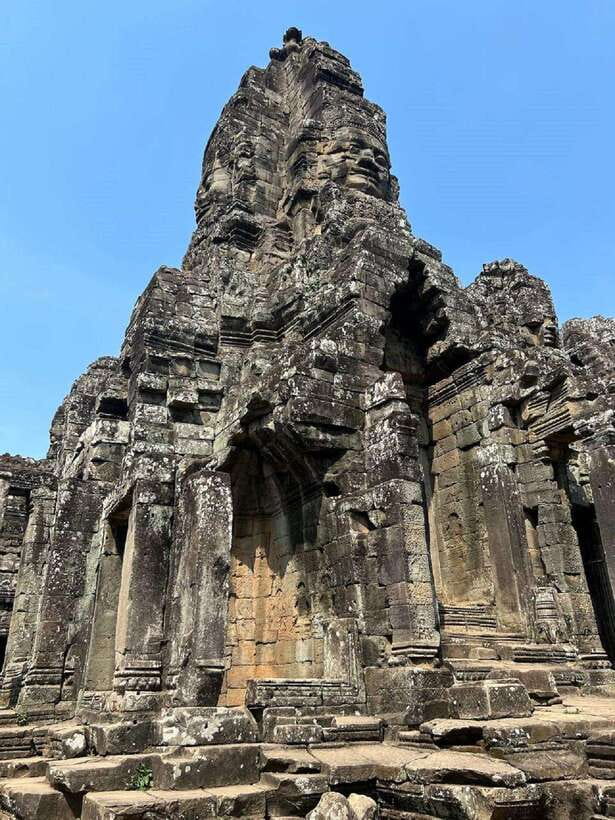
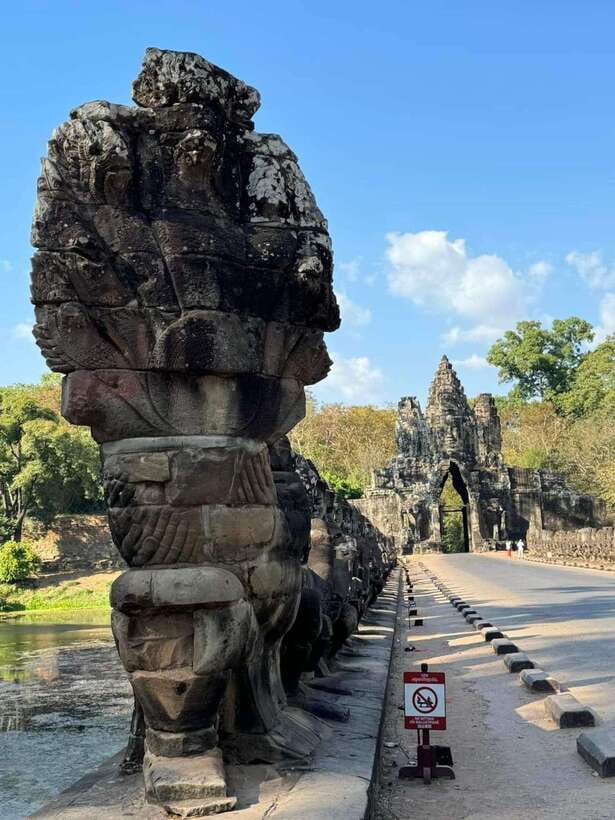
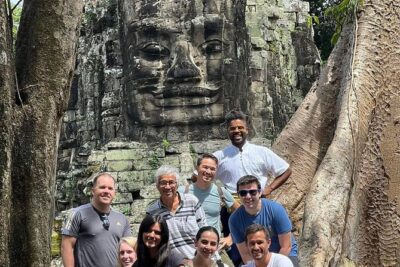
Next comes Angkor Thom, entering through the South Gate. Giant faces mark the entrance, and it sets the tone for the whole circuit. Then you get a quick photo stop at Victory Gate (about 10 minutes).
This is a good example of why having a guide helps. Without one, you might spend those moments wandering without purpose. With a guide, you can use the time to frame shots that show scale, not just close-ups. You also get a clearer sense of where you are in the larger city layout, which makes later stops feel connected instead of random.
Terrace of the Elephants and Baphuon: the “detail stops”
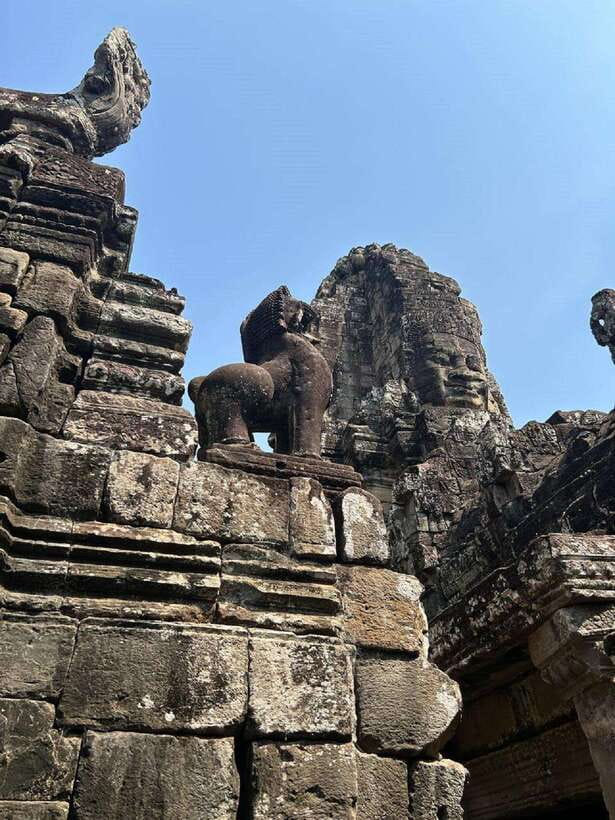
After Victory Gate, you visit the Terrace of the Elephants for about 30 minutes. This is a ceremonial platform, and it gives you a different kind of temple feeling. You are not just staring at a single iconic face. You are reading space, movement, and what the site was used for.
Then you move to Baphuon, also around 30 minutes. Baphuon is described as recently restored, and you will notice it as you look for structure and perspective. Even if you are not a restoration expert, the restored clarity helps you understand what you are seeing instead of getting lost in damage and guesswork.
In both stops, the guide’s job is not to list facts. It is to keep you oriented. When you know what a terrace is for or what kind of temple you are standing on, you start noticing the right details.
Bayon: the faces that make Angkor feel personal
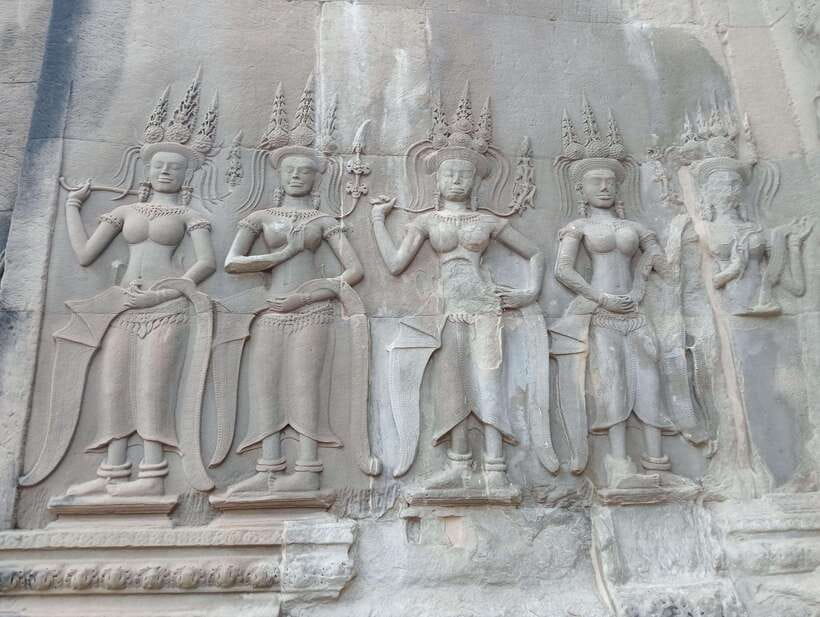
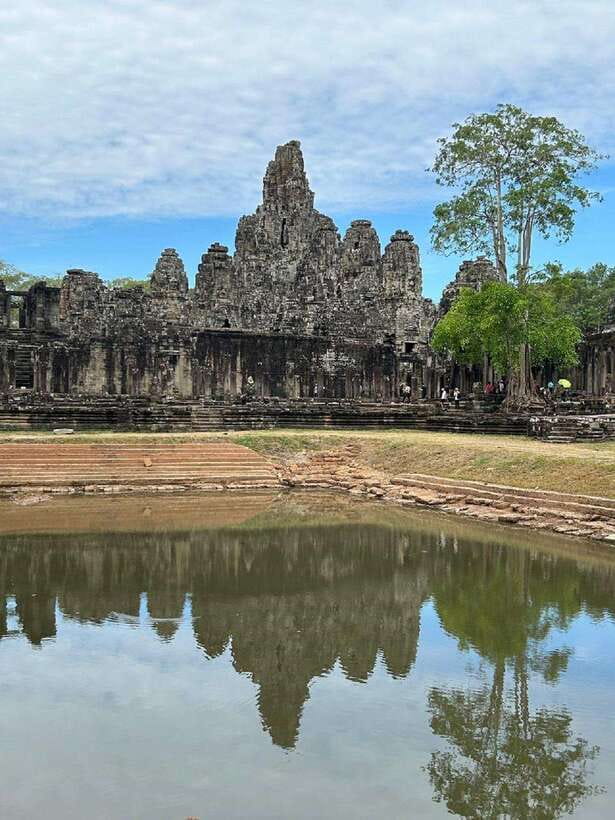
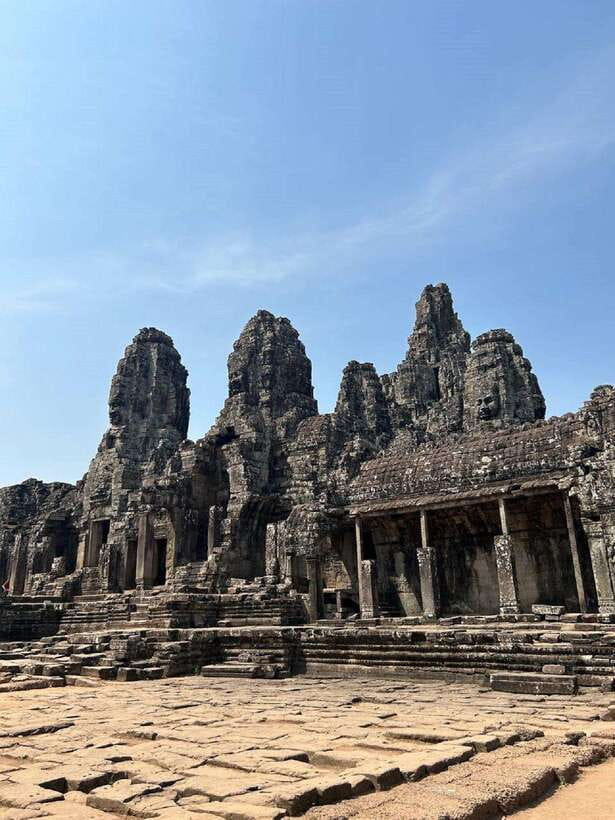
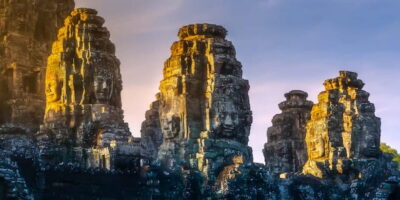
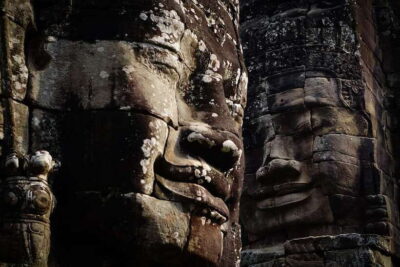
Bayon is usually the emotional center of Angkor Thom, and this tour schedules it for about 45 minutes. Bayon is known for its many towers decorated with serene smiling faces of Avalokitesvara.
The biggest win with a guided visit here is interpretation. You can look at the faces and enjoy the symbolism, but a guide helps you understand why they are there and how to see them in the context of the larger complex. If you like architecture and religious symbolism, Bayon is the moment you realize why Angkor is more than a pile of stone.
From the Japanese-guide style used on this tour, you are also likely to get helpful photo coaching. People who have done this format before often mention that the guide knows good angles and can help you get photos that look composed, not chaotic.
Also on our Siem Reap list, if none of these land
Srah Srang break time and planning for lunch
You will pause at Srah Srang for a break. The day includes about an hour here with lunch time, but lunch is not included.
This is an underrated part of a good temple tour. If you skip a real break, you start rushing later just to survive the day. By building in a pause, the plan helps you keep your attention for the final stop.
Practical advice: if you are choosing lunch, decide quickly once you arrive, because the tour keeps moving after this window. Also, bring a little cash, since you might want snacks or drinks, and lunch is on you.
Angkor Wat in the afternoon: why the timing works
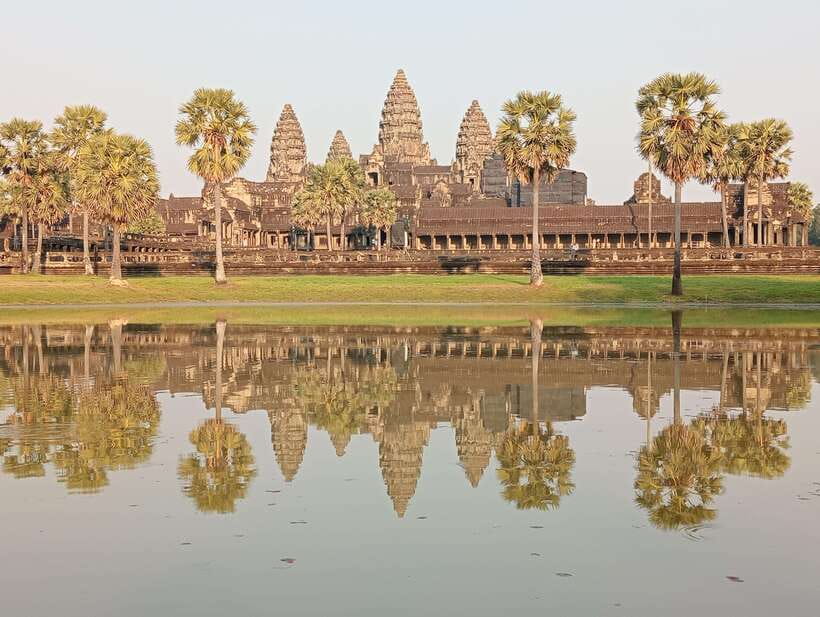
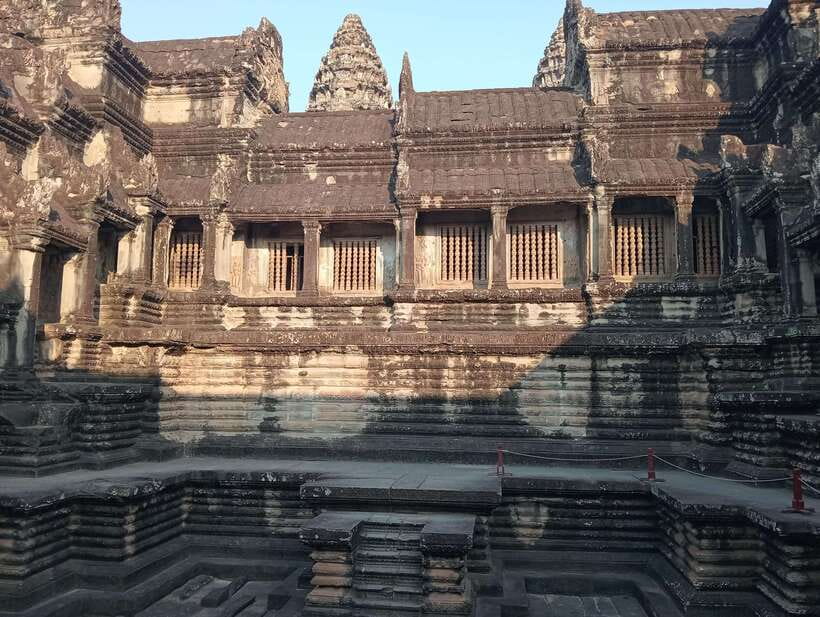
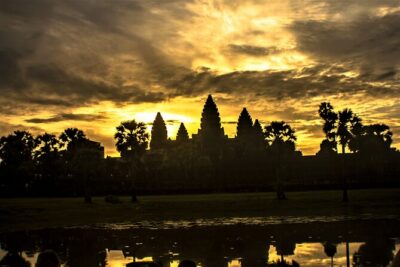
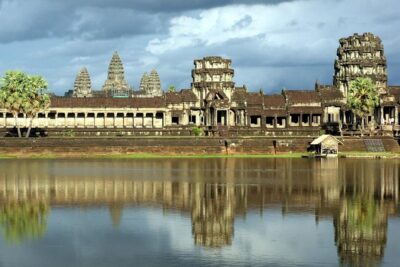
Your big finish is Angkor Wat with a guided visit of about two hours. It is the world’s largest religious monument, and the tour is structured to make that scale feel understandable.
You are not only walking a circuit here. You are learning the logic behind the art and symbolism, so the place feels like a coherent design instead of a highlight reel of random carvings. A guide can also help you understand where to look for the key visual themes.
The timing is another practical bonus. After Ta Prohm and Bayon areas, Angkor Wat arrives later in the day, which can be a good balance for many people who do not want to wake at the earliest sunrise time. You still get a full, guided experience, and you get back to your hotel roughly around 4:30 to 5:00 pm.
One more practical angle: Angkor Wat can also be strict with dress. So save your easiest clothing options for this day. If you are unsure, read the dress code section below before you pack.
Sunrise option: the early pickup that changes the mood
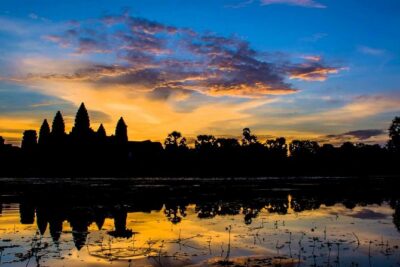
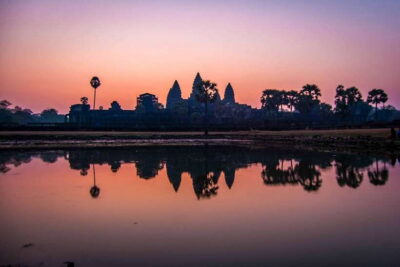
If you choose the sunrise option, pickup is around 4:30 to 5:00 am, and the tour finishes around 12:00 pm. You are also advised to bring breakfast from your hotel to enjoy after sunrise, which is smart. You want your energy stable before you start climbing and walking in the dark-to-daylight transition.
Why sunrise is worth considering:
- The light shifts make temple surfaces look different, with softer shadows.
- The overall mood feels less rushed and more atmospheric.
- You get Angkor Wat focused morning time, which is when many people most want to see it.
A real consideration: it is an early day. You will spend the rest of the morning in temple time, then potentially have a full afternoon free. If you prefer a relaxed vacation rhythm, you might not want to pair a sunrise start with a busy second plan.
Also, if you hate early mornings, sunrise is the part of the trip you should think about twice. The rest of the day plan becomes a long, single-session museum-like experience after you are already tired.
The 2-day upgrade: Pre Rup, Banteay Srei, Beng Mealea, and Bakong
If you want something more relaxed, the 2-day tour adds temples beyond the main circuit: Banteay Srei and Beng Mealea. It also includes an early day structure on the second day, with sunrise at Angkor Wat.
Day 2 begins with a sunrise pickup at 5:00 am. After sunrise, you have breakfast (bring from your hotel), then you continue into the next stops.
Pre Rup
You start with Pre Rup, a 10th-century pyramid temple built of warm brick and laterite. It has high terraces that offer views and a clear introduction to eastern temple architecture. This is a good “transition” temple because you get scenery while also learning structure.
Banteay Srei
Then you head to Banteay Srei, famous for pink sandstone and extremely detailed carvings. It is often called the Citadel of Women, and it is considered one of the finest Khmer craftsmanship sites.
This is where a guided visit matters most. The carvings reward slow looking, and a guide can direct your attention to what is easiest to misread or miss. If you like fine detail and not just big monuments, this stop is a major reason to choose the upgrade.
Lunch, then countryside feeling
Lunch is not included. After lunch time, you go deeper into the countryside.
Beng Mealea
Next is Beng Mealea, described as almost completely taken over by nature. Collapsed galleries, giant stone blocks, and tree roots make it adventurous and photogenic. If you enjoy exploring ruins that feel less “managed,” this is the stop that delivers that feeling.
Bakong
You end at Bakong, the first grand stone pyramid temple of the Khmer Empire. The tour notes a finishing window around 2:30 to 3:00 pm, followed by the relaxing drive back to your hotel.
A key benefit of the 2-day style: you are spreading the walking and attention across two days. Even if you love temples, doing every major stop in one day can blur together. This version helps keep each place distinct.
Entrance ticket math, and why the $50 price still makes sense
The headline price is $50 per person, but the Angkor entrance pass is separate. The Angkor Archaeological Park ticket costs $37 for 1 day and $62 for 2-3 days, and you must purchase it yourself.
So what are you paying for with the tour price?
- A Japanese-speaking guide who can explain the design and symbolism in a way you can actually follow
- Transport matched to group size
- Guided timing at specific temples, with breaks like Srah Srang included as part of the flow
- Cold water and towels
- Skip the ticket line, which saves time at entry points
If you plan to go to Angkor either way, you cannot avoid the ticket. The smart question is whether you are paying the tour price to buy understanding and convenience. If you are the type of person who wants to read the monuments instead of just “seeing them,” this setup often feels like good value.
For the 2-day option, your ticket becomes a 2-3 day pass, which pairs naturally with the extra countryside temples. If you only want the three main Angkor cluster temples and you are comfortable figuring things out on your own, the 1-day option can be enough. If you want Banteay Srei and Beng Mealea without stress, the upgrade is where you get your money’s worth.
What you will actually wear and what is not allowed
Temple dress codes can be strict, and this tour uses clear rules. Plan ahead, or you may end up borrowing fabric or struggling to buy a solution quickly.
You should bring:
- Comfortable shoes
- Hat
- Camera
- Comfortable clothes
- Insect repellent
- Cash
Clothing rules you must follow:
- No shorts
- No short skirts
- No sleeveless shirts
Most temples allow a scarf that covers your knees and shoulders. But except for Angkor Wat, you must wear trousers or skirts that cover the knees, and shirts covering the shoulders. Angkor Wat has its own rule set, so it is worth checking what you plan to wear before you show up.
This is one of those “small” things that can affect the whole day. I would rather pack a safe outfit and forget about it than risk being stopped at the wrong moment.
Who this tour is best for, and who should think twice
This tour fits best if you:
- Want a Japanese-speaking guide and you do not want to “wing it” through symbolism
- Prefer a managed route with specific stops, times, and real breaks
- Like photo help, including finding viewpoints and photo spots efficiently
- Want either a full-day plan or a less rushed 2-day option
It might not be ideal if you:
- Need wheelchair access. This option is not listed for wheelchair users.
- Have a lot of mobility constraints, since you will walk on uneven ground across multiple temples.
- Are very sensitive to early mornings, since sunrise pickups are around 4:30 to 5:00 am.
Also, if you are traveling with kids, note the rule: children under 12 join free on private tours only. That is useful if you are splitting costs with a private setup.
Should you book this Japanese guided Angkor tour?
I’d book it if you want Angkor to feel intelligible, not just impressive. The Japanese guide format, plus the built-in timing and transportation, helps you get the meaning behind the faces, towers, terraces, and carvings. If you can only do one day, you get the main circuit, and you still end with Angkor Wat properly. If you can spare two days, the upgrade adds Banteay Srei and Beng Mealea in a way that feels less like a sprint.
Skip this plan only if you already know Angkor deeply, you are fine navigating everything without a guide, and you are trying to keep costs ultra-low. Remember the ticket cost is separate either way. For most people, the tour price buys more understanding and less stress than you could replicate with a DIY day in Siem Reap.
FAQ
Is the Angkor entrance ticket included?
No. The Angkor Archaeological Park pass is not included. It costs $37 per person for 1 day and $62 per person for 2 to 3 days.
What time is pickup for the standard one-day tour?
You will be picked up from your hotel lobby between 8:30 and 9:00 AM.
How does the sunrise option change the schedule?
With the sunrise option, pickup is between 4:30 and 5:00 AM, and the tour finishes around 12:00 PM. The tour recommends bringing breakfast from your hotel for after sunrise.
Is lunch included?
Lunch is not included. A break for lunch is scheduled during the day, and you will need to arrange your own meal.
What does the 2-day upgrade add?
The 2-day option includes the main temples plus extra stops on Day 2, including Banteay Srei and Beng Mealea.
What language is the guide?
The guide speaks Japanese.
Do children under 12 get free entry?
Children under 12 can join for free on private tours only. A passport must be shown as proof for children under 12.
Other Guides Working Siem Reap
- Angkor Wat Sunrise or Sunset Tour with Guide from Siem Reap★ 5.0 · 12,109 reviews
- Siem Reap: Full-Day Angkor Wat Guided Tour with Sunset★ 4.9 · 3,803 reviews
- Angkor Wat Sunrise tour with Small – Group and Guide tours★ 5.0 · 3,655 reviews
- Angkor Wat Highlights and Sunrise Guided Tour from Siem Reap★ 5.0 · 3,213 reviews
More Tours in Siem Reap
- Angkor Wat Sunrise or Sunset Tour with Guide from Siem Reap★ 5.0 · 12,109 reviews
- Siem Reap: Angkor Wat: Small-Group Sunrise or Sunset Tour★ 5.0 · 9,444 reviews
- From Siem Reap: Kampong Phluk Floating Village Tour by Boat★ 4.9 · 6,979 reviews
- Siem Reap: Angkor Wat 2-Day Tour with Sunrise and Sunset★ 4.9 · 4,429 reviews
More Tour Reviews in Siem Reap
- Angkor Wat Sunrise or Sunset Tour with Guide from Siem Reap★ 5.0 · 12,109 reviews
- Siem Reap: Angkor Wat: Small-Group Sunrise or Sunset Tour★ 5.0 · 9,444 reviews
- From Siem Reap: Kampong Phluk Floating Village Tour by Boat★ 4.9 · 6,979 reviews
- Siem Reap: Angkor Wat 2-Day Tour with Sunrise and Sunset★ 4.9 · 4,429 reviews
Newly written up around Siem Reap
- Waterfall & River of 1000 Siva Linga- Kulen Mountain Private Tour
★ 5.0 · 3 reviews - Private Transfer from Siem Reap to Sihanoukville
★ 4.5 · 3 reviews - Private Tour to Koh Ker and Beng Mealea
★ 5.0 · 3 reviews - Private Transfer: Siem Reap Angkor Internation Airport to Hotel
★ 5.0 · 3 reviews - Kulen National Park Ticket -Waterfall & 1000 Lingas
★ 5.0 · 3 reviews - Kulen Waterfall & Kbal Spean Tour
★ 5.0 · 3 reviews
Guided, side by side.
 ★ 5.0Angkor Wat Sunrise or Sunset Tour with Guide from Siem ReapFrom $1812,109 reviews
 ★ 4.9Full-Day Angkor Wat Guided Tour with SunsetFrom $153,803 reviews
 ★ 5.0Angkor Wat Sunrise tour with Small – Group and Guide toursFrom $143,655 reviews
 ★ 5.0Angkor Wat Highlights and Sunrise Guided Tour from Siem ReapFrom $233,213 reviews
 ★ 5.0Full-Day Angkor Wat Sunrise Private Tour with Guide from Siem ReapFrom $602,920 reviews
 ★ 4.9Angkor Wat Sunrise or Sunset Guided TourFrom $132,123 reviews
 ★ 4.9Highlights and Sunrise Guided TourFrom $191,586 reviews
 ★ 5.0Angkor Wat Small-Group Exploration with Expert GuideFrom $181,544 reviews