
REVIEW · CAMBODIA
Siem Reap: Angkor Wat Tour Explore The Most Iconic Temples
Sunrise here changes the scale of everything. This Angkor Wat temple tour is interesting because it blends the biggest icons with calmer, more characterful sites, and it can start so early you catch Angkor Wat before the main crush. I also like the smart mix of stops, including the quieter Banteay Kdei and the dramatic jungle-temple vibe of Ta Prohm.
The main thing to plan for is the Angkor Temple Pass. It is not included, and you will also be walking over uneven temple ground, so build in time for footwear and slower moments.
In This Review
- Key things to know before you go
- A practical look at the 8-hour Angkor Wat and Angkor Thom day
- Hotel pickup, transport style, and why it matters more than you think
- Angkor Temple Pass logistics, plus what you should budget
- Sunrise at Angkor Wat: best light, smarter timing
- Inside Angkor Wat: what to notice beyond the famous silhouette
- Banteay Kdei: a quieter pause with real texture
- Ta Prohm: the jungle temple look you came for
- Ta Keo: the unfinished temple that changes the mood
- Bayon Temple in Angkor Thom: 200+ faces and daily life carvings
- Tonle Om Gate (South Gate of Angkor Thom): a strong photo finish
- Food, heat, and how to survive a long day well
- Price and value: what $24 per group up to 2 really buys
- Who this Angkor Wat tour is best for
- Final verdict: should you book this Angkor tour?
- FAQ
- Is the Angkor Wat pass included?
- How long is the tour?
- Do you pick up and drop off at my hotel?
- What does the tour include for comfort?
- What should I wear to visit the temples?
- Is the tour wheelchair accessible?
- Does the driver speak English?
Key things to know before you go
- Sunrise option at Angkor Wat with early pickup, timed for better light and fewer crowds
- A route that isn’t only the headline temples, adding Banteay Kdei and the unfinished Ta Keo
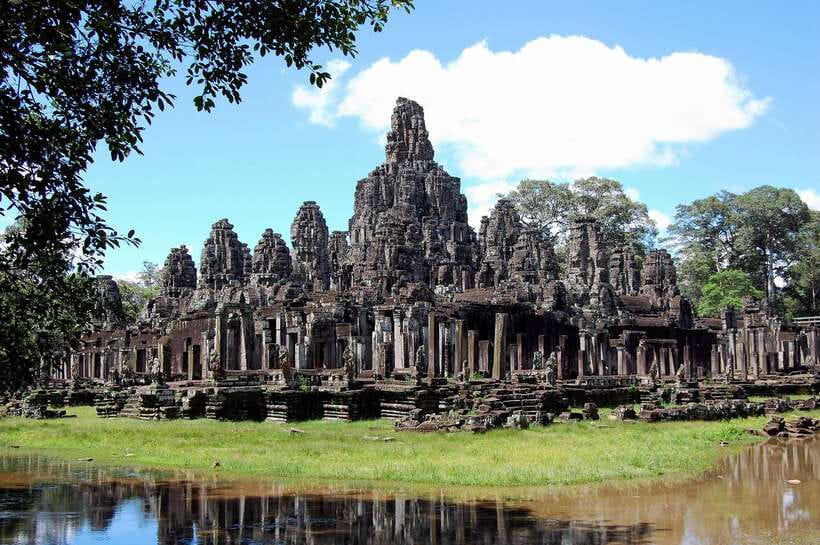
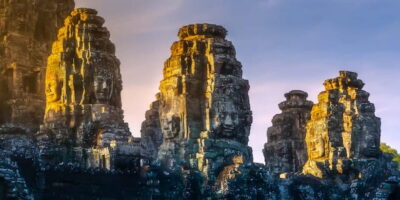
- Bayon Temple’s 54 towers and 200+ stone faces, a standout stop in Angkor Thom
- Ta Prohm’s famous tree roots for that instantly recognizable jungle-temple look
- Your English-speaking driver waits and keeps you moving, with lots of support for directions and timing
A practical look at the 8-hour Angkor Wat and Angkor Thom day
This is a classic Siem Reap half-day template expanded into an 8-hour temple route. You start in your hotel area, get picked up, then you head straight to the Angkor Archaeological Park area to handle entrance tickets. From there, the day becomes a sequence of major sites, with each stop giving you a different “feel,” not just a list of photos.
What I like about the pacing is that the route includes both statement temples and smaller, more atmospheric ones. The itinerary is built so you are not stuck only at the busiest spots for the entire time. You get moments where your brain can reset, like the calmer corridors at Banteay Kdei, before you jump back into the crowds and complexity around Angkor Thom.
Also, this is set up as a private group option. Even at the listed price, the vibe is less chaotic than group bus hopping, because you have a driver who takes responsibility for the ride between temples and keeps the flow going.
Hotel pickup, transport style, and why it matters more than you think
Pickup and drop-off are included. The driver comes to your accommodation, and pickup time is usually about 5 minutes before departure. You will get a message about pickup timing the day before.
Transport is private round-trip, and the tour includes unlimited bottled water plus a cool towel. On hot mornings and afternoons, that small comfort upgrade makes a real difference to how long you can enjoy the temples. In the feedback you provided, people consistently praise drivers for staying ready, waiting outside each site, and keeping everything running smoothly.
You’ll also be dealing with temple-area foot traffic and uneven paths. Having a driver who can get you to the right entrance points and help with on-the-ground timing makes the day feel easier. Several guide names show up in the feedback, including Ray, Lay, Paul, Danny, Daniel, Lai, Chamrong, and Soka, with consistent praise for being dependable, friendly, and helpful with directions.
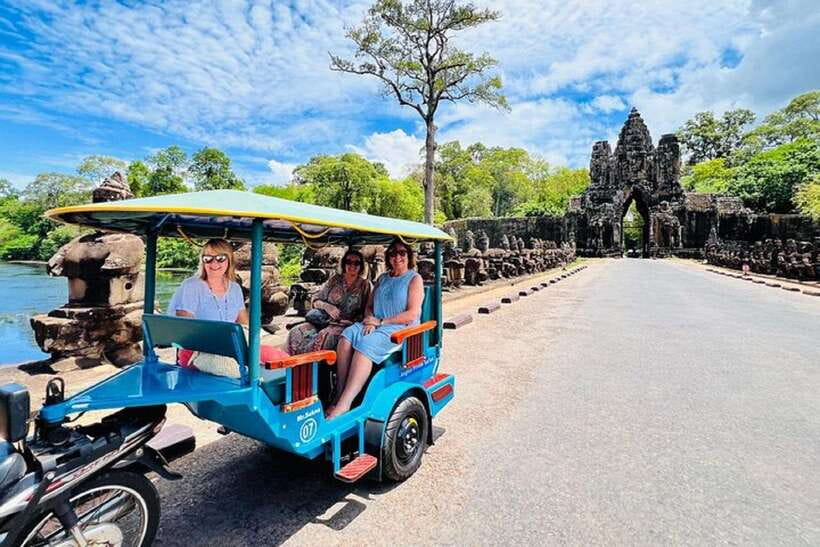
If you see that the day uses tuk-tuk transport, lean into it. The breeze can help on a hot day, and the ride can feel less stressful than sitting in traffic in a closed vehicle.
Still weighing up options? These Siem Reap trips came up well in our reviews too.
- Angkor Wat Sunrise or Sunset Tour with Guide from Siem Reap★ 5.0 · 12,109 reviews
- Siem Reap: Angkor Wat: Small-Group Sunrise or Sunset Tour★ 5.0 · 9,444 reviews
- From Siem Reap: Kampong Phluk Floating Village Tour by Boat★ 4.9 · 6,979 reviews
- Siem Reap: Angkor Wat 2-Day Tour with Sunrise and Sunset★ 4.9 · 4,429 reviews
Angkor Temple Pass logistics, plus what you should budget
Here’s the key planning point: the Angkor Wat Pass (temples tickets) is not included. The driver will help with buying the temple pass as part of your start, but you still pay separately.
Bring cash as recommended, and plan your total budget as:
- Your tour price, listed as $24 per group up to 2
- Plus the Angkor Temple Pass cost (paid separately)
- Meals are not included, so you’ll either eat on your own or plan a simple lunch stop around the tour pace
This matters for value. The $24 price makes sense because you are paying mainly for the day’s transportation, hotel pickup and drop-off, and the convenience of having someone guide the route. But your real cost picture still includes the temple pass. If you forget that, the final number surprises you fast.
Sunrise at Angkor Wat: best light, smarter timing
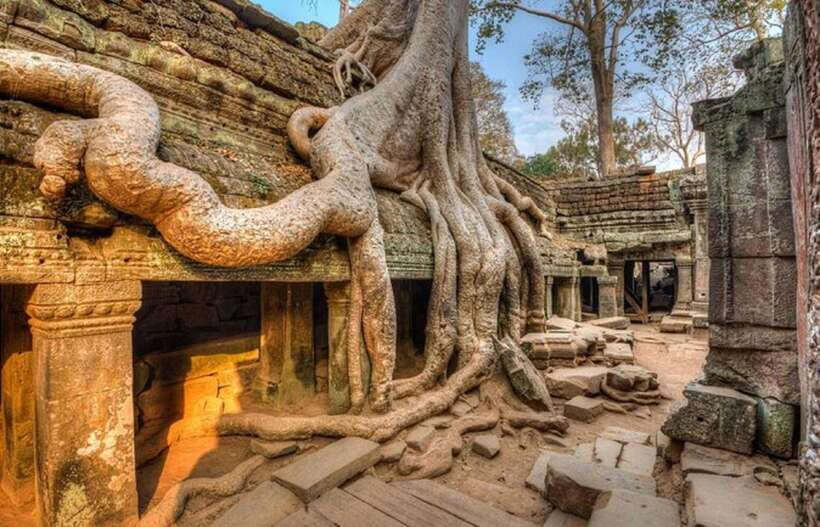
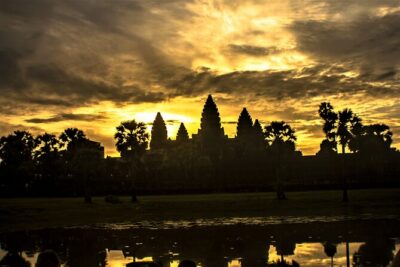
If you choose the sunrise option, your day starts early with pickup from your Siem Reap hotel and travel to the Angkor Archaeological Park. After you purchase your entrance tickets (own expense), the tour heads through the western entrance so you can experience Angkor Wat at sunrise.
Why this matters: sunrise is not just pretty, it also changes how you handle crowds and how you see the temple. You’re trying to be there before the main waves settle in. The tour also builds in time for photos before the busiest moments.
At Angkor Wat sunrise, you’re looking at reflections in the moat and the classic towers that people come for. This is the moment when the scale of Angkor really hits, because you can take your time before the day turns into a photo sprint.
Practical note: wear sunglasses and sunscreen even early. Light can be strong, and morning sun can still burn fast.
Inside Angkor Wat: what to notice beyond the famous silhouette
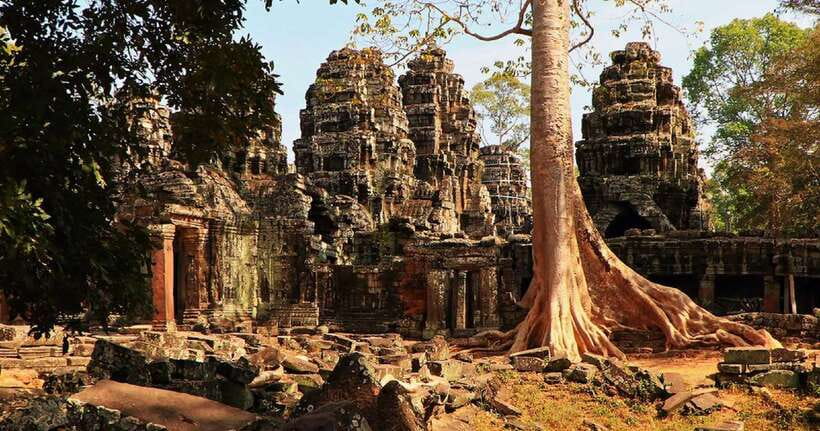
After sunrise, you move into exploring inside Angkor Wat. The temple’s story, as this tour frames it, is a useful guide to what you see. Angkor Wat was originally built as a Hindu temple for Vishnu, and later became a Buddhist site.
That transition is part of why the carvings and spaces can feel layered. You’ll focus on:
- Intricate bas-reliefs depicting Hindu mythology
- Grand galleries
- The central sanctuary area
A good way to enjoy this stop is to pick a couple of details and stick with them. Don’t try to read everything at once. Instead, look for how the temple’s layout leads your eye through the galleries and toward the center, then enjoy the mix of symbolism as you move.
If you like temples where art and architecture work together, Angkor Wat is the anchor stop of the whole day.
Banteay Kdei: a quieter pause with real texture
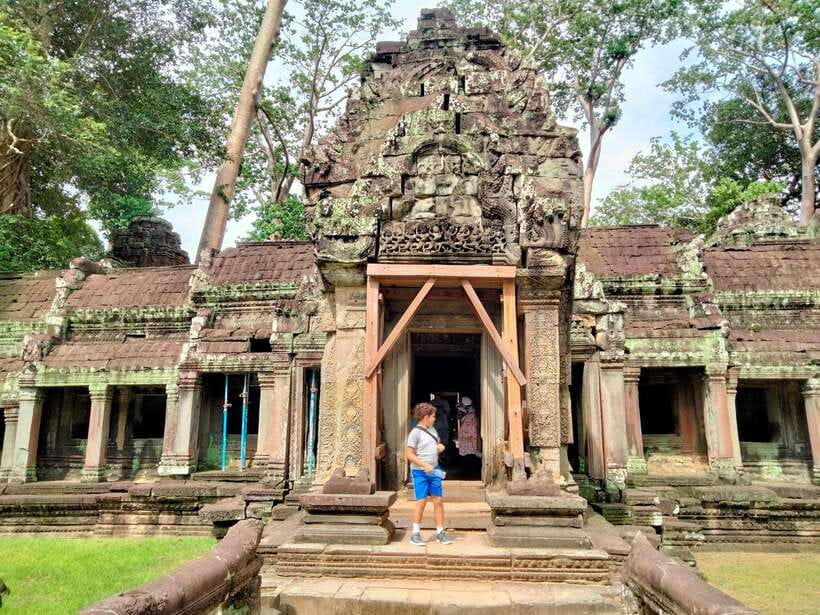
Then you shift to Banteay Kdei, described as “Citadel of Chambers.” This stop is a breather compared to the most famous names.
What makes Banteay Kdei special in this route is the contrast:
- Built in the late 12th century
- A Buddhist monastery
- Serene corridors and unique carvings
- It is partially in ruins, which gives it a peaceful, mysterious atmosphere
This is the kind of temple where I’d slow down a little. Ruins can feel messy elsewhere, but here the layout and corridors help you relax into the experience. If you want one stop that feels less like a checklist, Banteay Kdei is that moment.
Also, if you are interested in photographing without being swallowed by crowds, quieter sites like this can give you frames with more breathing room.
Ta Prohm: the jungle temple look you came for
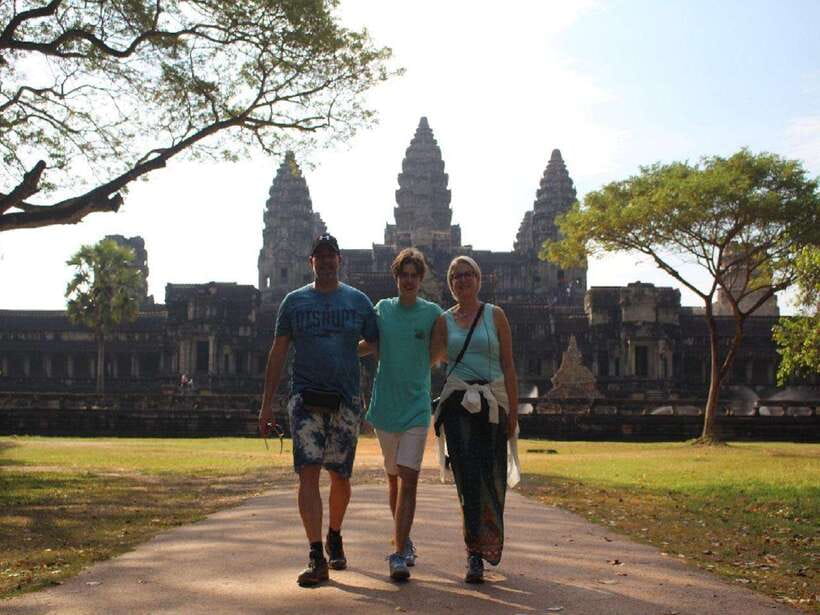
Next is Ta Prohm, the famous jungle temple where giant tree roots grow over the ruins. This is the “wow” stop for many first-time visitors, and it’s easy to see why. The visuals are instantly recognizable, and it’s also connected to popular culture, since this look was made world-famous by the movie Tomb Raider starring Angelina Jolie.
What you’ll get here is that slow, winding walk through spaces where nature is part of the structure. Even without trying to interpret every carving, the atmosphere does the work. You’ll feel like you’ve stepped into a living scene rather than a static monument.
Practical consideration: Ta Prohm can be a monkey spot in real life temple areas. Since your tour guide is English-speaking and is described as watching for practical risks, follow their lead on where to stand and when to move on.
Ta Keo: the unfinished temple that changes the mood
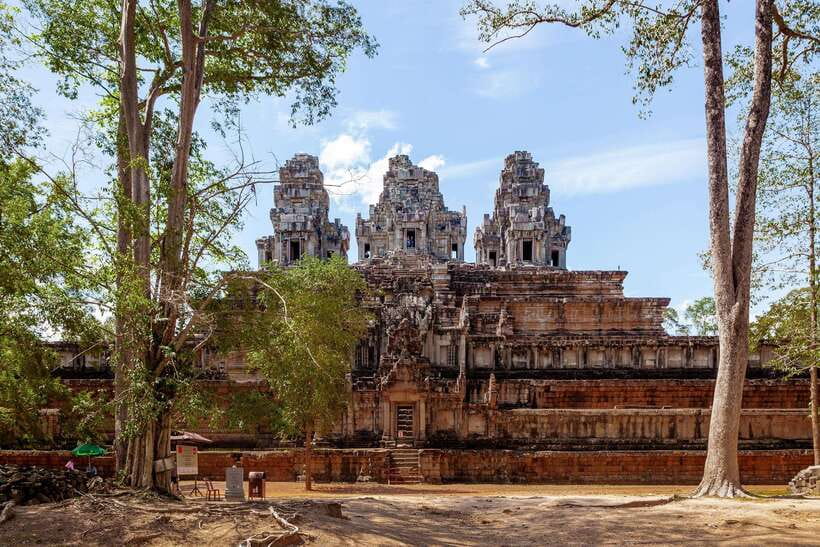
After the jungle and the roots, the day takes a different turn with Ta Keo. The standout detail is that it was never fully completed, which makes it feel unfinished in a way that adds to the experience rather than taking away from it.
The tour frames Ta Keo as:
- Late 10th to early 11th century
- Built by King Jayavarman V and continued by successors
- Unique because it was not completed
Why this can be valuable on a day like this: most Angkor temples feel like complete statements. An unfinished one feels more like a work in progress, which changes how you read the structure. It gives your eyes something different to do between the dense storytelling of Bayon and the intense natural textures of Ta Prohm.
Bayon Temple in Angkor Thom: 200+ faces and daily life carvings
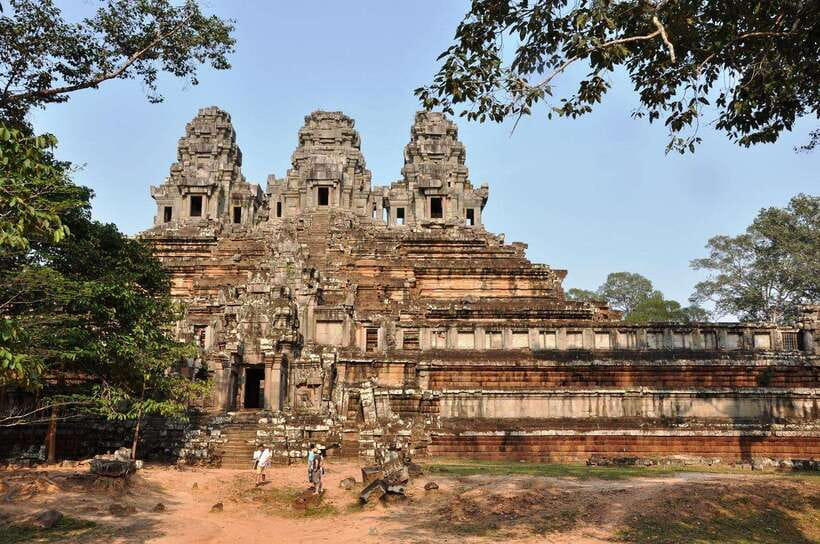
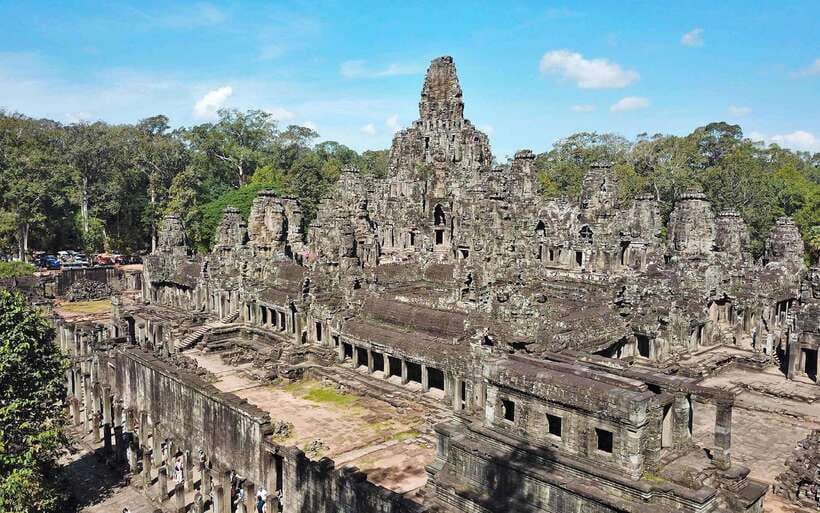
Now you hit Bayon Temple, located at the center of Angkor Thom. Bayon is known for 54 towers covered with 200+ stone faces. The tour also identifies the faces as Avalokiteshvara, a spiritual figure.
This stop is one of the best examples of why this itinerary works. You’ve already seen the giant scale of Angkor Wat. Then Bayon flips it into a more human-feeling experience with faces at multiple angles, watching you as you move through the towers.
You’ll also see intricate carvings, including scenes of:
- Daily life
- Historical battles
A good strategy here is to move slowly at tower clusters and then zoom out to see how the towers shape your route through the temple. The faces can be repetitive, but the angles are not. If you let yourself wander for a few minutes instead of rushing, Bayon can feel less like a photo contest and more like a place.
Tonle Om Gate (South Gate of Angkor Thom): a strong photo finish
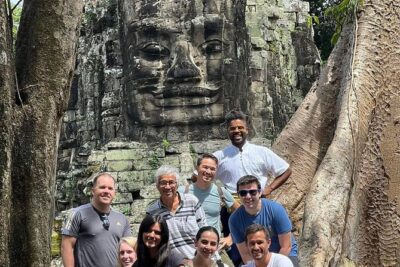
To close the temple loop, the tour includes a stop at Tonle Om Gate, the South Gate of Angkor Thom. This is a visually dramatic entrance with a causeway lined with statues of gods and demons. The gate is topped with four giant stone faces similar to those you saw at Bayon Temple.
This final stop is useful because it helps you “read” Angkor Thom as an enclosed world. Instead of only thinking temple-by-temple, you get a sense of the gates and entry points, which makes the complex feel more navigable.
If you are the type who likes one final wide-angle moment before the day winds down, this is a solid choice.
Food, heat, and how to survive a long day well
Meals are not included. You will want to plan either:
- a packed snack and water in your own bag
- or a quick lunch stop that works with your tour timing
The tour provides unlimited bottled water and cool towels, so hydration and quick refresh moments are built in. Still, temple days are long under sun and humidity, so protect your skin and pace yourself.
Wear comfortable walking shoes. Temple terrain is uneven, and the tour is not wheelchair accessible due to that ground condition. If you have any mobility issues, you’ll want to think carefully about how much uneven walking you can handle.
Also, dress correctly. Shoulders and knees must be covered. That means no tank tops, no shorts, no skirts that expose knees. Bring a light layer if you tend to get cold at morning air-conditioned stops, but plan to cover up the whole day.
Price and value: what $24 per group up to 2 really buys
The listed price is $24 per group up to 2, which is low for a full day that includes:
- pickup and drop-off at your hotel
- private round-trip transportation
- unlimited bottled water
- cool towels
That value becomes even clearer because Angkor Wat is a big area. Having a driver handle transport between sites can save you time, stress, and energy. Instead of working out routes and entrances yourself, you focus on the temples.
The trade-off is that you still must budget for the Angkor Temple Pass and meals. Also, you are booking an 8-hour schedule, so you need to be ready for a physically active day.
If you’re traveling as a pair, this price structure can be especially good. Two people sharing a small-group route tends to feel like you’re paying for convenience rather than paying for a big group bus experience.
Who this Angkor Wat tour is best for
This is a great fit if you:
- want a one-day, iconic-temple sampler with smart pacing
- like sunrise experiences and want an earlier start option
- appreciate both famous names and quieter stops like Banteay Kdei
- would rather have an English-speaking driver keep the flow than manage everything yourself
It may not be the best match if you:
- dislike early mornings, especially for the sunrise start
- struggle with lots of uneven walking
- need meal inclusion, because meals are not provided
It is also not suitable for babies under 1 year and people over 95 years, based on the activity rules.
Final verdict: should you book this Angkor tour?
Yes, you should book if you want a structured Angkor day with the major hits, plus a couple of stops that add texture beyond the obvious choices. The sunrise option at Angkor Wat is a strong reason by itself, and the rest of the route keeps the emotional rhythm going: carved grandeur at Angkor Wat, quiet corridors at Banteay Kdei, jungle drama at Ta Prohm, unfinished mood at Ta Keo, and the face-filled intensity of Bayon.
Just book with your eyes open on the two big factors: the temple pass cost is separate, and you will be walking on uneven temple terrain for hours. If that fits your travel style, this tour is a good value way to see a lot of Angkor without wasting the day.
FAQ
Is the Angkor Wat pass included?
No. The Angkor Wat Pass (temples tickets) is required and must be purchased separately.
How long is the tour?
The tour duration is 8 hours.
Do you pick up and drop off at my hotel?
Yes. Pick-up and drop-off at your hotel or accommodation are included.
What does the tour include for comfort?
It includes unlimited bottled water and a cool towel during the tour.
What should I wear to visit the temples?
You should cover your shoulders and knees, and you’ll want comfortable walking shoes.
Is the tour wheelchair accessible?
No. The tour is not wheelchair accessible due to uneven temple terrain.
Does the driver speak English?
Yes. The driver is English speaking.
More Tours in Siem Reap
- Angkor Wat Sunrise or Sunset Tour with Guide from Siem Reap★ 5.0 · 12,109 reviews
- Siem Reap: Angkor Wat: Small-Group Sunrise or Sunset Tour★ 5.0 · 9,444 reviews
- From Siem Reap: Kampong Phluk Floating Village Tour by Boat★ 4.9 · 6,979 reviews
- Siem Reap: Angkor Wat 2-Day Tour with Sunrise and Sunset★ 4.9 · 4,429 reviews
More Tour Reviews in Siem Reap
- Angkor Wat Sunrise or Sunset Tour with Guide from Siem Reap★ 5.0 · 12,109 reviews
- Siem Reap: Angkor Wat: Small-Group Sunrise or Sunset Tour★ 5.0 · 9,444 reviews
- From Siem Reap: Kampong Phluk Floating Village Tour by Boat★ 4.9 · 6,979 reviews
- Siem Reap: Angkor Wat 2-Day Tour with Sunrise and Sunset★ 4.9 · 4,429 reviews
Newly written up around Siem Reap
- Waterfall & River of 1000 Siva Linga- Kulen Mountain Private Tour
★ 5.0 · 3 reviews - Private Transfer from Siem Reap to Sihanoukville
★ 4.5 · 3 reviews - Private Tour to Koh Ker and Beng Mealea
★ 5.0 · 3 reviews - Private Transfer: Siem Reap Angkor Internation Airport to Hotel
★ 5.0 · 3 reviews - Kulen National Park Ticket -Waterfall & 1000 Lingas
★ 5.0 · 3 reviews - Kulen Waterfall & Kbal Spean Tour
★ 5.0 · 3 reviews
Tours, side by side.
 ★ 5.0Angkor Wat Sunrise or Sunset Tour with Guide from Siem ReapFrom $1812,109 reviews
 ★ 5.0Angkor Wat: Small-Group Sunrise or Sunset TourFrom $159,444 reviews
 ★ 4.9Kampong Phluk Floating Village Tour by BoatFrom $206,979 reviews
 ★ 4.9Angkor Wat 2-Day Tour with Sunrise and SunsetFrom $344,429 reviews
 ★ 4.9Kampong Phluk Floating Village Tour with BoatFrom $193,843 reviews
 ★ 4.9Full-Day Angkor Wat Guided Tour with SunsetFrom $153,803 reviews
 ★ 5.0Angkor Wat Sunrise tour with Small – Group and Guide toursFrom $143,655 reviews
 ★ 5.0Angkor Wat Highlights and Sunrise Guided Tour from Siem ReapFrom $233,213 reviews