
REVIEW · TONLÉ SAP
Siem Reap: Floating Village Tour
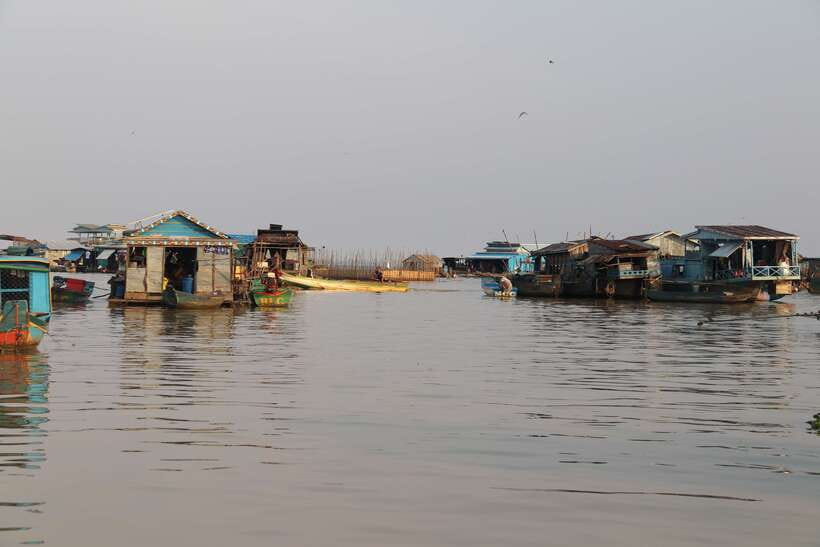
Floating villages change your sense of time. This 3-hour boat tour out of Siem Reap Province is interesting because you see Tonle Sap life from the water, with guides who know the lake from daily experience. I also like that you get a structured ride with hotel pick-up and drop-off, plus a stop at a lotus flower farm. One thing to keep in mind is that the village viewing is mostly from the boat, so if you want lots of up-close time on walkways and inside homes, you may find it less hands-on.
Two stops shape your day before the main cruise: the lotus farm for Buddhist context and photos, then a countryside stretch of rice paddies and Cambodian scenery as you head toward the lake entry. I really like the people angle here too, since guides such as Vanna and Mr. Friday (Mr. Poun Poss) are described as especially informative, with clear explanations of what you are seeing and how daily life works on the water.
The main possible drawback is timing and pace. One guide day started earlier than expected, and at least one earlier booking felt the floating village portion could be more like a boat ride than a deep, explained walk-through. If you are sensitive to surprises in start time or you want heavy village access beyond sightlines from the water, plan your expectations around a short, curated cruise.
In This Review
- Key highlights
- Why Tonle Sap floating villages feel like a different world
- The lotus farm stop and rice paddies ride before the boat
- From the river entry to the floating village channels
- UNESCO-level nature meets daily life on the lake
- Queen Tara riverboat refreshments and the calm break
- Crocodile farm possibility and how to judge that stop
- Who this tour is perfect for, and who should be cautious
- Price and value: does $65 make sense?
- Timing, weather, and what to wear for a boat day
- Practical tips that make the 3-hour experience better
- Should you book this Siem Reap floating village tour?
- FAQ
- Where does the floating village tour take place?
- How long is the tour?
- How much does it cost?
- Is hotel pick-up and drop-off included?
- What transportation is used?
- What is included in the price?
- Are meals included?
- Are drinks included?
- Is the tour family friendly?
- What languages is the tour guide?
Key highlights
- Tonle Sap is a living system, reversing direction twice per year and changing water depth from about 1.5 meters at the start of the wet season to over 10 meters at the height
- Local flat-bottom boats are used for narrow, twisty channels, so the cruise works well where typical boats might struggle
- You get the cultural lead-in at a lotus flower farm, with stems and parts of the plant explained in context
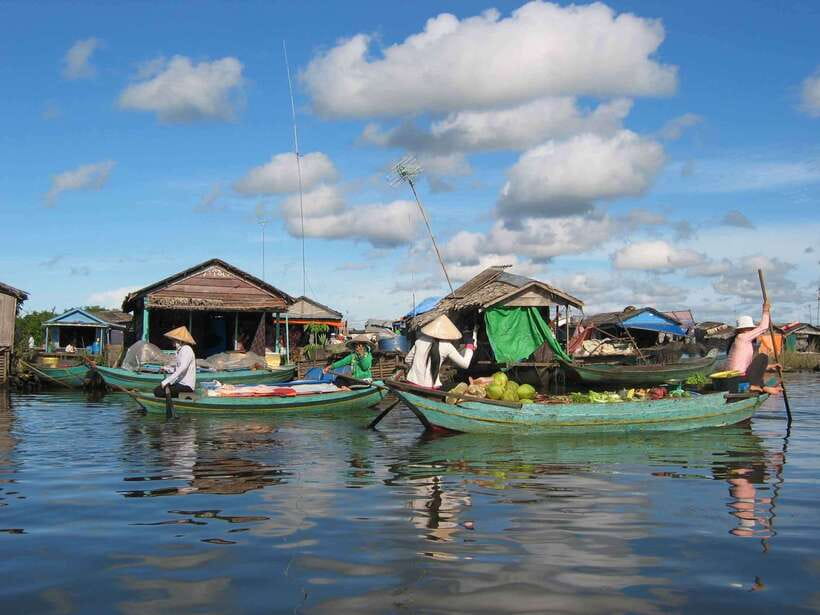
- Floating life is more complete than most people imagine, including floating schools, churches, markets, police and even a jail
- Queen Tara riverboat stop adds a calm pause with drinks and local fresh fruit, plus a 100-year-old ship story
- Family-friendly tour format, with rules that keep children accompanied by an adult
Why Tonle Sap floating villages feel like a different world
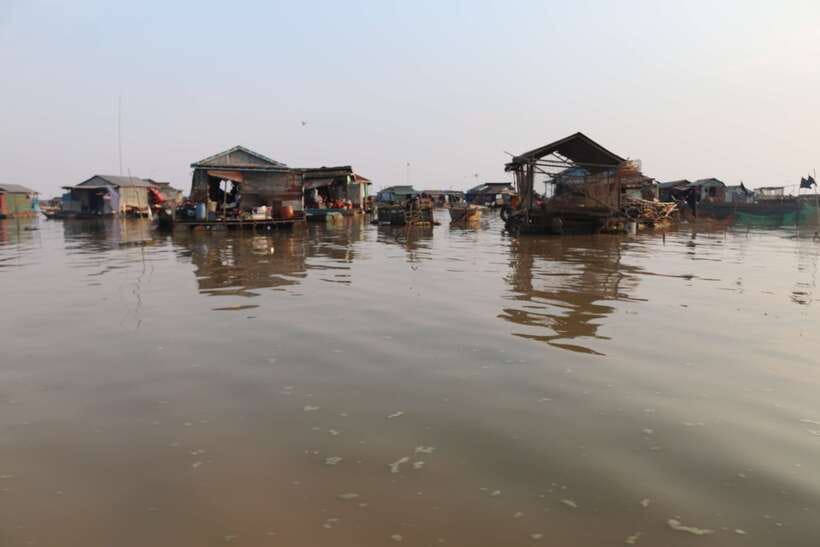
This tour centers on the Tonle Sap ecosystem, and it helps to understand one big point before you go: Tonle Sap is not just a lake, it behaves like a river system. The water direction changes twice per year. That shift is why homes and businesses can be “in motion” with the seasons.
In the dry season, the lake empties out toward the South China Sea via the Vietnamese delta. In the wet season, the delta swells and pushes water north into Tonle Sap. The result is dramatic. At the start of the wet season, depth is roughly 1.5 meters. Later, during the height of the wet season, it can rise to more than 10 meters. The covered area can expand from around 2,700 square kilometers to over 12,000 square kilometers as water spreads across the system.
That is why the floating villages work at all. When water rises, floating communities move in, and when it falls, the shape of daily life changes with it. The tour explains that life revolves around this rhythm, not around a fixed shoreline.
You also get a nature layer, because Tonle Sap is described as the largest freshwater lake in Southeast Asia. It is listed as a UNESCO biosphere reserve from 1997, and it is home to over 120 different bird species, with many large water birds. That biodiversity angle matters because you are not only seeing homes and boats, you are seeing a working landscape shaped by fish and wildlife.
The lotus farm stop and rice paddies ride before the boat
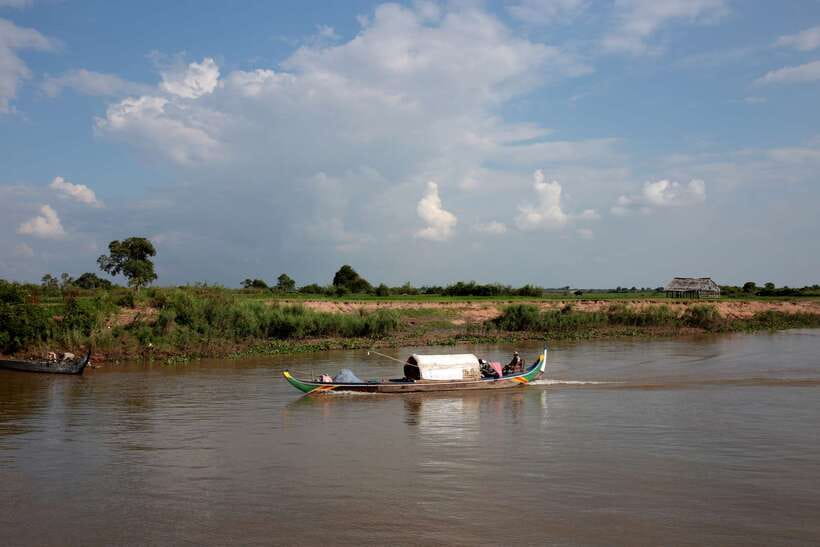
Before you reach the river entry, you will be picked up from your hotel, guesthouse, or hostel in an air-conditioned minivan or car, or sometimes a tuk tuk. The drive is about 14 kilometers toward the lake entry, and you will pass rice paddies along the way.
The lotus farm stop is the first structured break, and it is more than just a pretty photo field. The lotus is tied to Buddhist culture, and your guide explains uses for different parts of the plant, including the stem. It is also a straightforward place to reset your expectations of the day: you go from city routines into cultivated countryside, then you shift again into water life.
Photo tip without overdoing it: the lotus fields are a natural wide-open scene, so you will likely get better results by stepping back for full-frame shots rather than only focusing on tight details.
More time on the lake, other boats
- From Siem Reap: Kampong Phluk Floating Village Tour by Boat★ 4.9 · 6,979 reviews
- Kompong Phluk Floating Village Half-Day Tour ( Morning / Sunset )★ 5.0 · 1,494 reviews
- Siem Reap: Kulen Mountain, Beng Mealea and Tonle Sap Tour★ 5.0 · 1,483 reviews
- Tonle Sap Lake & Kampong Phluk Village Half-Day Tour★ 5.0 · 1,045 reviews
From the river entry to the floating village channels
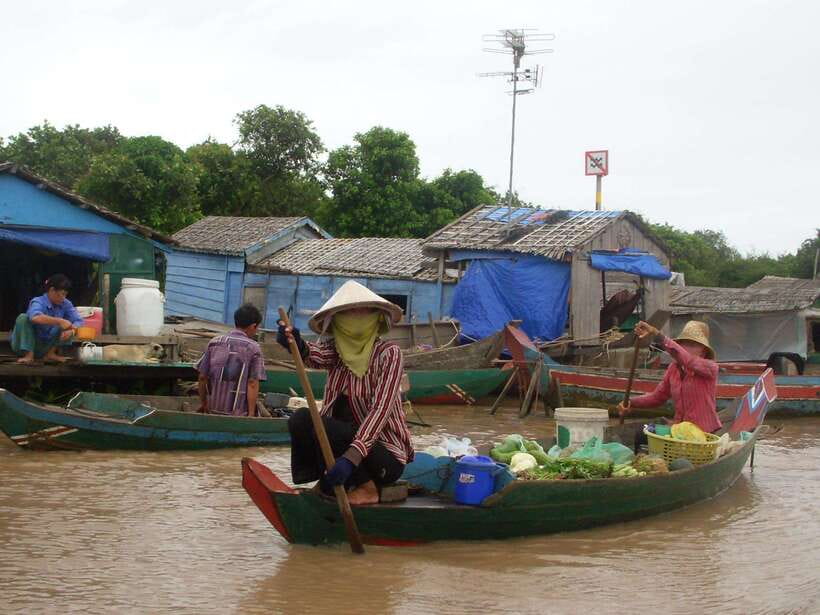
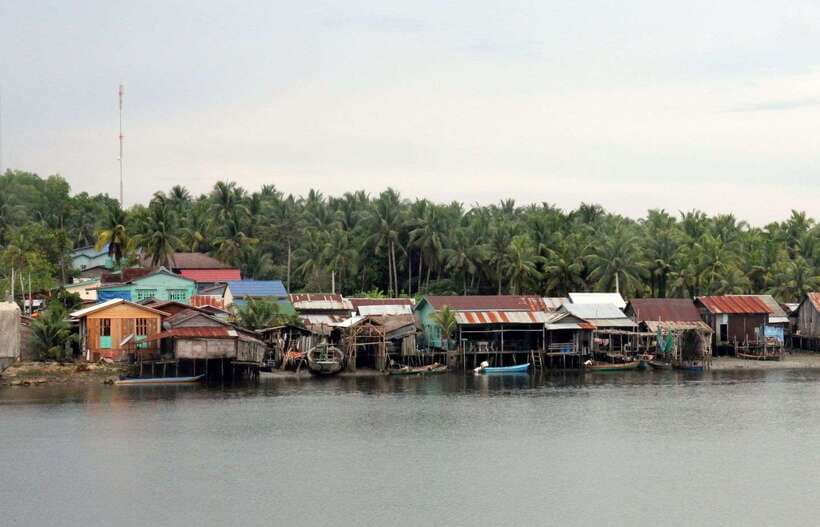
Once you reach the river entry, private boats wait for you. This is where the flat-bottom approach becomes a practical detail, not just a marketing line. Floating villages sit in a network of narrow rivers and canals with lots of turns and twists. A flat-bottomed riverboat is built for that kind of travel, helping you get views through bends and tighter corridors.
The tour description frames this as a village-guided experience, because the local guides were born in the floating village area. That usually translates into better context. Instead of only pointing out what looks interesting, you get the story behind it: how fishing works, why families struggle when fishing stocks are reduced year after year, and why the cruise experience is presented as community support through local sustainable jobs.
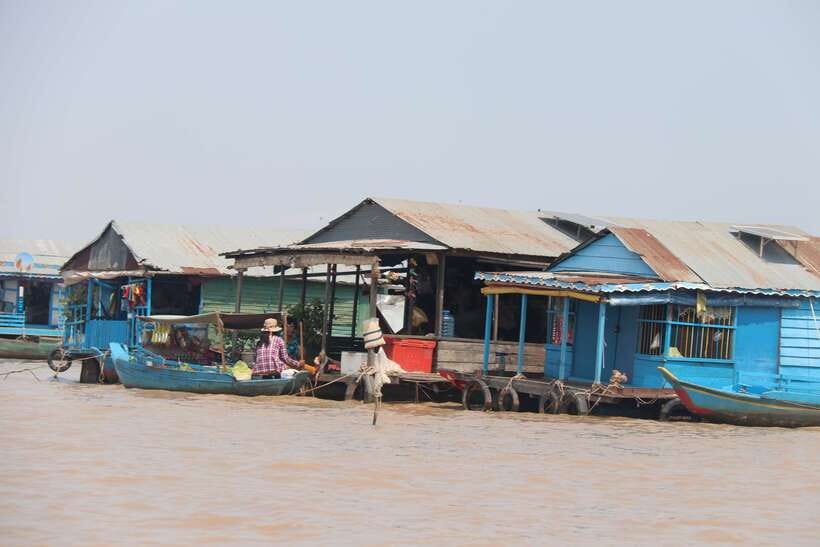
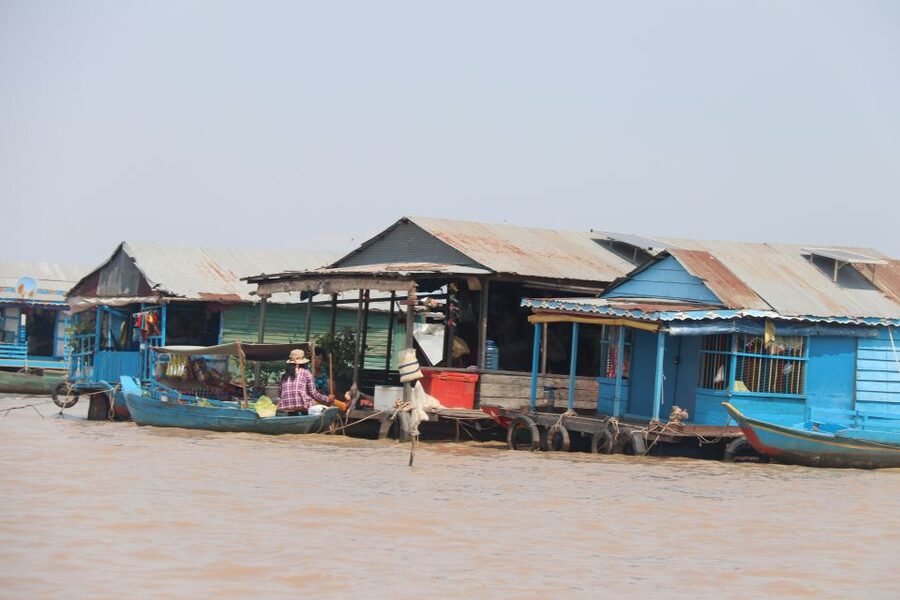
There are also specifics you should know what you are looking for. The floating village area is described as home to around 6,000 people, and it includes floating institutions and infrastructure, not just houses. You may see floating schools, churches, markets, a police station, and even a jail. Basketball courts and vegetable gardens appear on the floating side of life too.
That combination is the real eye-opener. It is easy to think of floating villages as a simple fishing camp. The tour narrative pushes you toward a different mental picture: this is a full community with routines, services, and rules, all adapted to the lake’s changing water levels.
UNESCO-level nature meets daily life on the lake
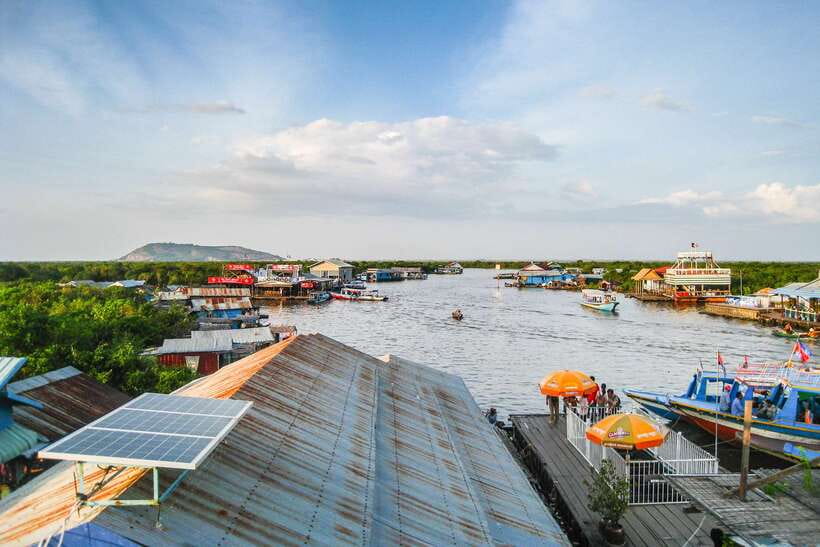
About halfway through the floating village cruise, the scenery opens up to wider water, and the lake can look more like a sea than a sheltered canal. This shift is part of why the Tonle Sap story feels so big in only three hours.
On the nature side, you are in one of Southeast Asia’s most important freshwater ecosystems, with over 120 bird species mentioned in the tour information. Even if you are not a bird spotter, this matters because it reinforces that fish and birds are connected to the health of the water. The tour ties the human story of fishermen to the environment, which is more meaningful than seeing houses floating without understanding why the whole system is under pressure.
The information about fishing stock reductions gives the tour a purpose beyond sightseeing. The tour frames the cruise as a way to support the local community while creating local sustainable jobs. Whether you measure that impact in dollars, in jobs, or simply in whether the village economy benefits from tourists, it is the core reason this tour is structured the way it is.
Queen Tara riverboat refreshments and the calm break
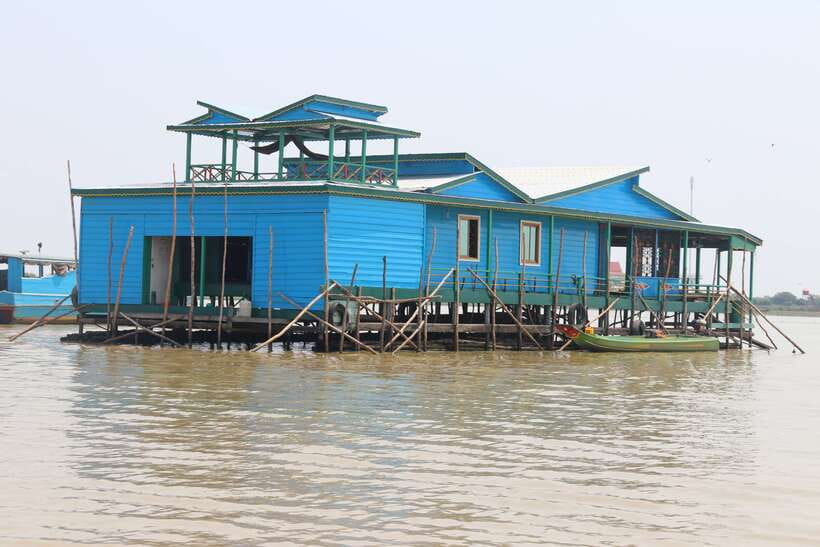
After the floating village portion, you dock at a 100-year-old ex cargo boat named Queen Tara. This stop gives you a breather, with drinks and local fresh fruits provided as part of the experience description.
I like this kind of pause because it changes the tempo. Up to that point, you are mostly in motion through channels. On the Queen Tara deck, you can sit, look back toward what you just saw, and let the Tonle Sap context sink in.
The boat connection is also more than a photo opportunity. The tour description says the staff on the Queen Tara riverboat are connected to the local village community, which helps keep the focus on people rather than turning the day into a generic highlight reel.
Crocodile farm possibility and how to judge that stop
One booking experience described an additional stop at a crocodile farm. The core tour info you provided centers on two roadside stops, first the lotus farm, then travel to the lake and the boat portions. Because the crocodile farm is not clearly guaranteed in the core outline you listed, you should treat it as a “might happen” element on some departures.
If you care deeply about animal welfare or you prefer fewer animal-related stops, check your day-of plan when you get confirmation. If the day includes it, you can decide on the spot how much time you want to spend there.
Who this tour is perfect for, and who should be cautious
This is a family-friendly tour, and it is built around a short, readable time window of three hours. That makes it a good match for families who want a change of scenery without committing to a full day away from Siem Reap.
It also fits first-timers, because the guide context is a major part of the value. Guides like Vanna and Mr. Friday (Mr. Poun Poss) are described as especially informative, with clear explanations of both history and everyday life.
That said, there are two types of travelers to watch for:
- If you want lots of on-foot walking inside the floating settlement, expect mostly viewpoints from the water rather than free roaming.
- If you want a perfectly timed schedule down to the minute, understand that start times can vary and it is smart to follow the confirmation message you receive.
A note for planning around children: unaccompanied minors are not allowed. Children must be accompanied by an adult, and children 10 and under are half price, with children 5 and under free.
Price and value: does $65 make sense?
At $65 per person for a three-hour experience, the cost only feels high or low depending on what is included. Here, a lot is bundled in:
- Pick-up and return to your hotel, guesthouse, or hostel
- An English-speaking local guide
- All transport
- All checkpoint fees
- Boats and driver
That matters because the biggest hidden costs on lake tours are often transport logistics and boat fees. You are not just paying for the boat ride. You are paying for the full chain, from getting you out to the lake entry, to the boat cruising through channels, and back again.
Meals and drinks are listed as not included, but you do stop on Queen Tara for refreshments including drinks and local fresh fruit as part of the experience. Translation for your planning: plan around no full meal service, and you may still want to have your own snack plan for before or after if you prefer not to rely on the refreshments stop.
For value, I also like the stated community support angle. You are paying for a guided experience that explicitly aims to support local sustainable jobs, and the guide is described as locally connected. Even if you do not track impact metrics, it can feel more worthwhile than a purely sightseeing excursion.
Timing, weather, and what to wear for a boat day
The tour operates in all weather conditions. That means you should dress for what you see outside on the day, not for an ideal forecast.
The schedule is short, so comfort matters. You will be riding in vehicles, then on a boat moving through water channels, then back again. Bring clothing you can handle if conditions change. If you are sensitive to wind or sun while sitting near the water, dress in layers that you can adjust quickly.
Also, since it includes water cruising and a boat deck stop, take a moment to think about slip risk and the kind of footwear you feel secure in.
Practical tips that make the 3-hour experience better
- Plan your camera settings for two lighting styles: the lotus farm and river scenery will be bright and open, while the village channels can look darker and more shaded. Adjust as you switch zones.
- If you want the clearest explanations, pick a spot where you can hear without twisting around constantly during turns. The channels have lots of bends, so staying oriented helps.
- Go in with the right expectation: this is a short cruise. The value is in understanding Tonle Sap’s seasonal rhythm and what floating infrastructure means, not in a long walking tour.
- If you are traveling with kids, aim for this as a “story tour” rather than an activity-heavy day. The floating schools, markets, and basketball courts are visual and easy for kids to notice, but it is still mostly a sightseeing boat flow.
Should you book this Siem Reap floating village tour?
Book it if you want a structured, family-friendly way to understand Tonle Sap and floating village life in just three hours. The strongest reason to choose it is the combination of local guidance plus Tonle Sap context, especially the explanation of water direction changes, seasonal depth changes, and how communities adapt. The Queen Tara stop with drinks and local fresh fruit is a nice break that keeps the day from feeling rushed.
Consider a different option if you need lots of time walking around the settlement, or if you get frustrated by imperfect timing and schedule variation. If you are hoping for a deep, inside-look experience rather than a boat-based overview, this may feel a bit too focused on views from the water.
If you want a memorable, genuinely informative look at life on the lake, this one is easy to recommend. The lake system is unique, the community angle is clear, and the time length is friendly.
FAQ
Where does the floating village tour take place?
It takes place in Siem Reap Province, Cambodia, with transportation from Siem Reap to the Tonle Sap lake area.
How long is the tour?
The duration is 3 hours.
How much does it cost?
The price is $65 per person.
Is hotel pick-up and drop-off included?
Yes. The tour includes pick-up and return to your hotel, guesthouse, or hostel.
What transportation is used?
You travel by air-conditioned vehicle (minivan or car, or tuk tuk for pick-up) to the lake area, then you cruise on flat-bottomed riverboats with a driver.
What is included in the price?
Included features are pick-up and return, an English speaking local guide, all transport, all checkpoint fees, and boats with a driver.
Are meals included?
Meals are not included.
Are drinks included?
The tour includes refreshments at the Queen Tara riverboat stop, with drinks and local fresh fruits.
Is the tour family friendly?
Yes, it is described as family friendly. Unaccompanied minors are not allowed, and children must be accompanied by an adult.
What languages is the tour guide?
The tour offers live guiding in Cambodian and English, with an English speaking local guide.
More Tours in Siem Reap
- Angkor Wat Sunrise or Sunset Tour with Guide from Siem Reap★ 5.0 · 12,109 reviews
- Siem Reap: Angkor Wat: Small-Group Sunrise or Sunset Tour★ 5.0 · 9,444 reviews
- From Siem Reap: Kampong Phluk Floating Village Tour by Boat★ 4.9 · 6,979 reviews
- Siem Reap: Angkor Wat 2-Day Tour with Sunrise and Sunset★ 4.9 · 4,429 reviews
More Tour Reviews in Siem Reap
- Angkor Wat Sunrise or Sunset Tour with Guide from Siem Reap★ 5.0 · 12,109 reviews
- Siem Reap: Angkor Wat: Small-Group Sunrise or Sunset Tour★ 5.0 · 9,444 reviews
- From Siem Reap: Kampong Phluk Floating Village Tour by Boat★ 4.9 · 6,979 reviews
- Siem Reap: Angkor Wat 2-Day Tour with Sunrise and Sunset★ 4.9 · 4,429 reviews
More Hours Out on the Tonle Sap
- From Siem Reap: Kampong Phluk Floating Village Tour by Boat★ 4.9 · 6,979 reviews
- Kompong Phluk Floating Village Half-Day Tour ( Morning / Sunset )★ 5.0 · 1,494 reviews
- Siem Reap: Kulen Mountain, Beng Mealea and Tonle Sap Tour★ 5.0 · 1,483 reviews
- Tonle Sap Lake & Kampong Phluk Village Half-Day Tour★ 5.0 · 1,045 reviews
Newly written up around Siem Reap
- Waterfall & River of 1000 Siva Linga- Kulen Mountain Private Tour
★ 5.0 · 3 reviews - Private Transfer from Siem Reap to Sihanoukville
★ 4.5 · 3 reviews - Private Tour to Koh Ker and Beng Mealea
★ 5.0 · 3 reviews - Private Transfer: Siem Reap Angkor Internation Airport to Hotel
★ 5.0 · 3 reviews - Kulen National Park Ticket -Waterfall & 1000 Lingas
★ 5.0 · 3 reviews - Kulen Waterfall & Kbal Spean Tour
★ 5.0 · 3 reviews
Tonlé Sap & Floating Village Tours, side by side.
 ★ 4.9Kampong Phluk Floating Village Tour by BoatFrom $206,979 reviews
 ★ 4.9Kampong Phluk Floating Village Tour with BoatFrom $193,843 reviews
 ★ 5.0Siem Reap Floating Village Kampong Phluk Sunset with BoatFrom $181,962 reviews
 ★ 5.0Kompong Phluk Floating Village Half-Day Tour ( Morning / Sunset )From $241,494 reviews
 ★ 5.0Kulen Mountain, Beng Mealea and Tonle Sap TourFrom $481,483 reviews
 ★ 5.0Tonle Sap Lake & Kampong Phluk Village Half-Day TourFrom $491,045 reviews
 ★ 5.0Kampong Phluk Floating Village Tour by BoatFrom $201,020 reviews
 ★ 4.8Kompong Phluk Floating Village Half-Day TourFrom $24966 reviews
Also appears in