
REVIEW · CAMBODIA
2 Day Cambodia Private Guided Tour in Angkor Temples
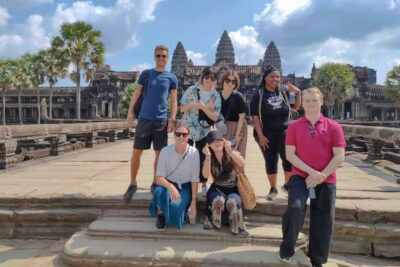
Angkor feels like a whole world in two days. What makes this trip special is the private pacing and a licensed guide who turns each temple into something you can actually understand. I especially like the way the route blends the famous hits with quieter stops, so you do not spend every minute in the most crowded places. The one thing to consider is that the itinerary is busy by design, so plan for heat, walking, and a lot of temple steps.
Two of my favorite parts were the hotel pickup and drop-off plus the comfort of a private air-conditioned vehicle between sites. Another win is how the tour keeps you moving with smooth timing, but still gives you room to linger where a temple grabs you. You will also get cool drinks and fresh tissue during the day, which is a small detail that matters a lot under Siem Reap sun.
For a possible drawback, think about the entrance cost. The Angkor Pass that covers the temples is not included in the price, so you will want to budget for that upfront. Also, because it is private, you will not have the built-in padding of a larger group that can split off for photos or rest breaks.
In This Review
- Key Things I’d Pay Attention To
- Two-Day Angkor, Built for Real Rhythm
- Day 1: Angkor Thom South Gate, Bayon, and the Royal City Feeling
- Angkor Wat and the Phnom Bakheng Sunset Payoff
- Day 2: Banteay Srei, Pre Rup, and the “Not Always First on Your List” Temples
- The Market Stop and a Small Cultural Break
- Price, Passes, and What This Tour Actually Costs You
- How the Timing Feels in Real Life
- Who Should Book This 2-Day Private Angkor Tour
- Should You Book This Tour?
Key Things I’d Pay Attention To
- Private guide and English commentary so you are not just sightseeing, you are reading the place
- Sunset planning at Phnom Bakheng for big panoramic views over the Angkor Archaeological Park
- A day-by-day mix of major and lesser-visited temples so you get variety, not just crowds
- Private air-conditioned transfers and included water support, helpful in peak heat
- Guide helps with the Angkor Pass purchase so you are not scrambling at the gate
Two-Day Angkor, Built for Real Rhythm
Angkor is not one monument. It is a huge archaeological zone with multiple temple clusters, different architectural styles, and very different vibes depending on the time of day. What you get here is a tight 2-day plan that aims for a good rhythm: morning temples, midday heat management with frequent stops, and one of the best sunset moments in the park.
You also get a real advantage from having a private guide. Even when the group timings are short (some stops are 30 minutes), your guide can steer you toward what to look at first, where to stand for photos, and what the layout is trying to show. That means you spend less time wandering and more time understanding.
And yes, the route is ambitious. Day 1 in particular strings together a lot of sites. The upside is that you see the Angkor story from multiple angles without needing to come back for every highlight.
Day 1: Angkor Thom South Gate, Bayon, and the Royal City Feeling
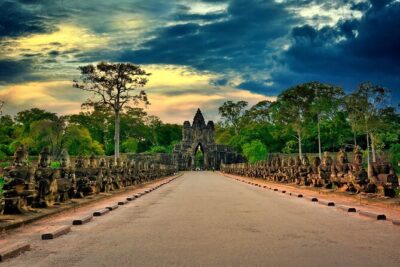
Day 1 starts with the approach into Angkor Thom via the South Gate. This is a great opener because it is one of the most recognizable entry points, and it has been restored enough that many of the stone heads remain in place. That restoration is part of why this gate works as a first stop, it helps you get oriented before you sink into the city ruins.
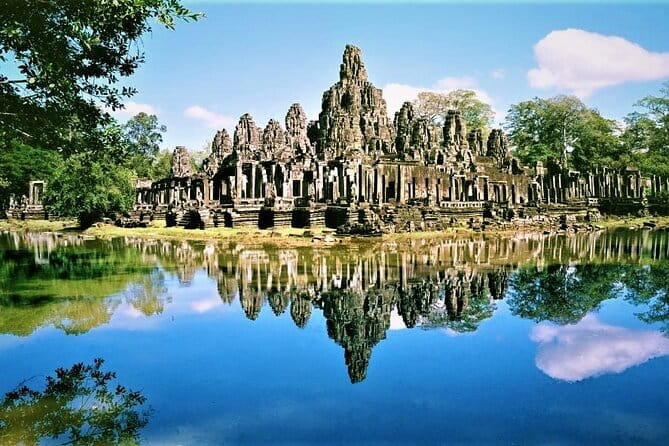
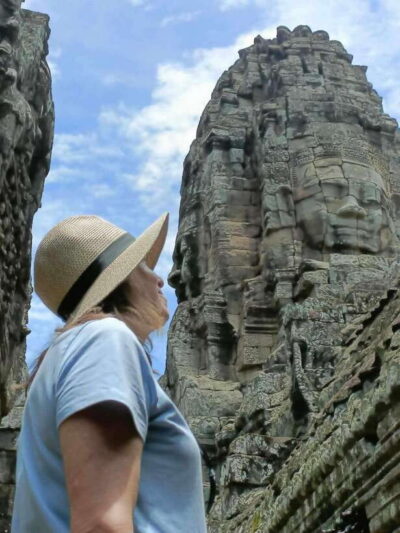
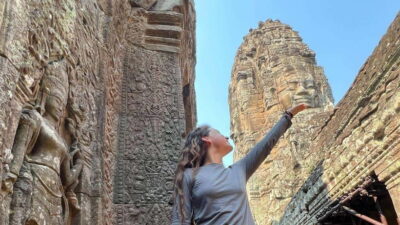
Next comes Bayon Temple. This stop is special because Bayon is unique as a Buddhist state temple and is described as the last to be built in the Angkor Empire. If you like your temples with clear context, this one is a strong early win. The famous stone faces are not just decoration, your guide can explain how they fit into the temple’s religious purpose and political symbolism.
From there, you move into the Angkor Thom complex more broadly, including Baphuon Temple. Baphuon sits on a rectangular sandstone base with multiple levels. That stepped massing is different from the smaller-tier pattern you see in many other temples, so it is a good contrast stop after Bayon’s face-heavy look.
Then the itinerary continues into the royal-palace area zone with Phimeanakas. You are told it was originally crowned with a golden pinnacle, and the reference to Zhou Daguan gives you a sense that there is a long paper trail of how outsiders described this place. Even if you do not know the name, the idea helps: you are not just looking at stone, you are looking at something that once had a very different sky-high presence.
After that, you get two bas-relief-focused terrace stops: the Terrace of the Elephants and the Terrace of the Leper King. These terraces matter because they show how the temple city performed power and story. The Terrace of the Elephants is linked with figures tied to ceremony, while the Terrace of the Leper King is remembered for its dramatic bas-reliefs and scale during Jayavarman VII’s reign. If you like details, this part of the day rewards you. If you are feeling heat fatigue, this is where it helps to use your guide to pick the most important reliefs to see first.
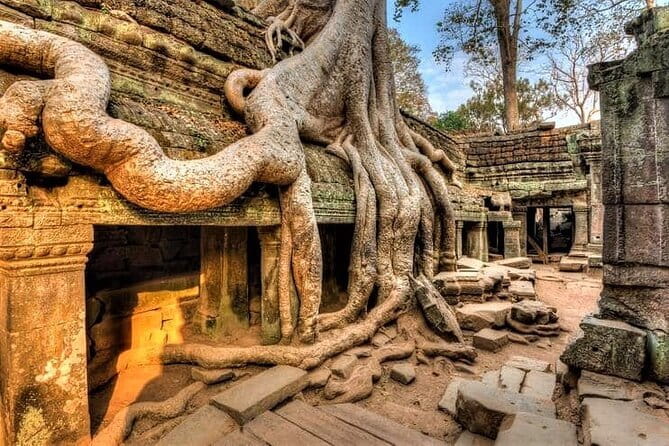
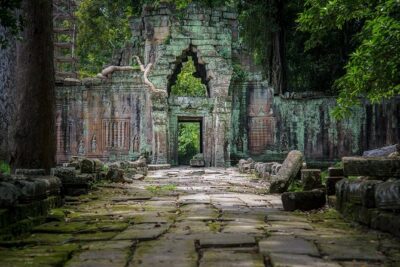
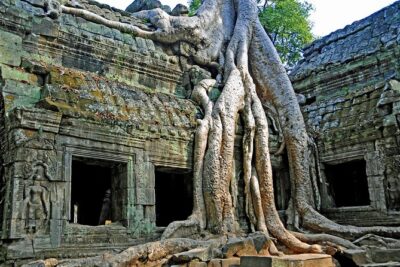
The last big “inner city” stop is Ta Nei, a late 12th-century stone temple dedicated to the Buddha, located near the East Baray reservoir. Then comes Ta Prohm, the temple people come for because it looks like the jungle is winning. It was left largely untouched aside from visitor pathway clearing and structural strengthening, and that balance between nature and ruins is the point. The guide can steer you toward the most photogenic angles, but even if you just follow the path, Ta Prohm is one of the best places in the park to feel the atmosphere.
Other guided options across Siem Reap
- Angkor Wat Sunrise or Sunset Tour with Guide from Siem Reap★ 5.0 · 12,109 reviews
- Siem Reap: Full-Day Angkor Wat Guided Tour with Sunset★ 4.9 · 3,803 reviews
- Angkor Wat Sunrise tour with Small – Group and Guide tours★ 5.0 · 3,655 reviews
- Angkor Wat Highlights and Sunrise Guided Tour from Siem Reap★ 5.0 · 3,213 reviews
Angkor Wat and the Phnom Bakheng Sunset Payoff
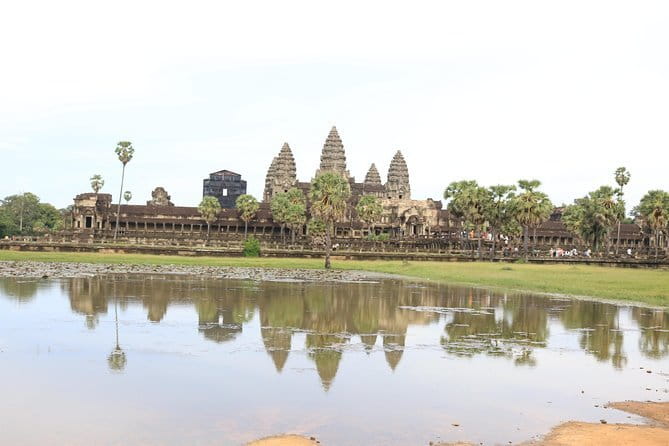
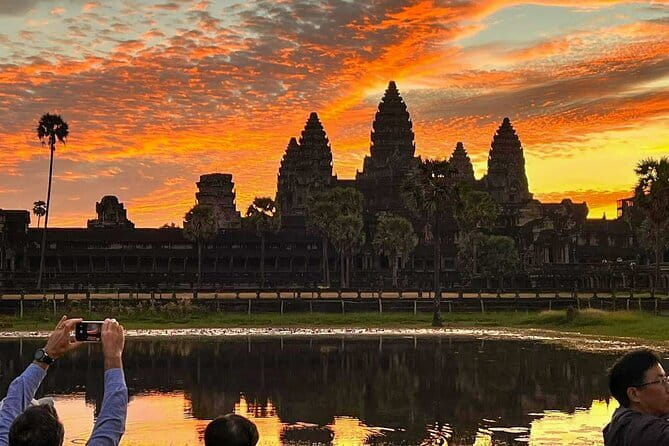
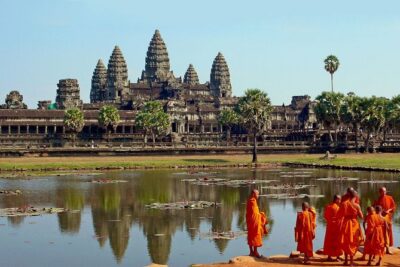
Angkor Wat is scheduled after Ta Prohm, and it is given the longest time block of Day 1 at around 2 hours. That is smart. Angkor Wat is big, and trying to rush it usually turns it into just more stone. With extra time, you can actually look at the composition, the reliefs, and the balance of the architecture, instead of sprinting for one or two viewpoints.
One practical benefit of having a guide here is that Angkor Wat rewards “order.” Your eyes need a sequence: where to start, which reliefs to pick out, and how to read the temple’s overall plan. If you have been to other temples, you will notice how Angkor Wat is more about geometry and precision than jungle drama. That contrast is exactly what you want after Ta Prohm.
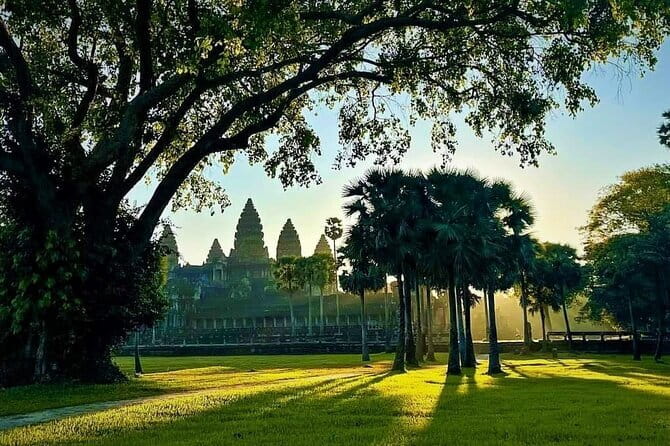
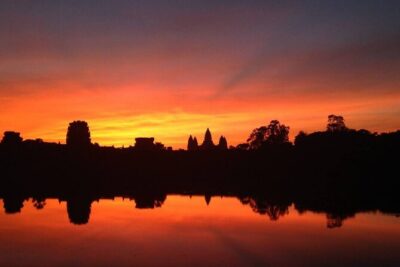
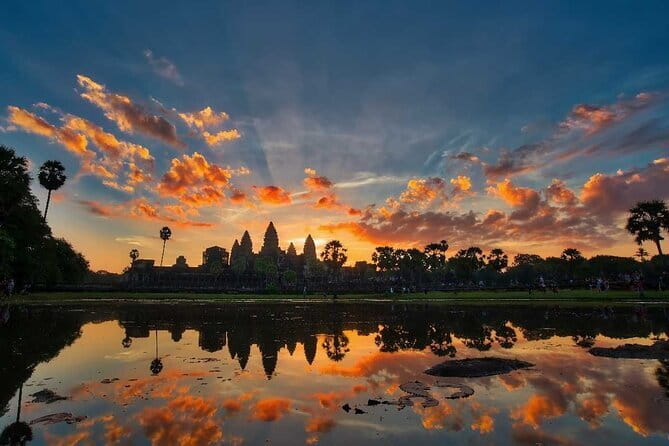
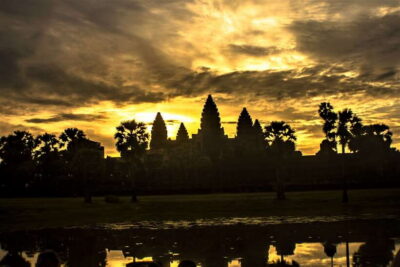
After Angkor Wat, the tour includes Phnom Bakheng, the highest temple in the Angkor Archaeological Park. It is the sunset stop, and it is built for panoramic views over the ruins. This is the moment where the day stops feeling like a checklist and starts feeling like a memory.
A quick reality check: sunsets can be crowded and spots can get competitive. This tour includes the experience time (about 1 hour listed), so aim to arrive with enough energy to climb, find a spot, and wait for the light change. Bring sunscreen and something to keep your shoulders and knees comfortable, even if the temples are open. The stone heats up in the afternoon, and you will appreciate having a plan for your comfort.
Day 2: Banteay Srei, Pre Rup, and the “Not Always First on Your List” Temples
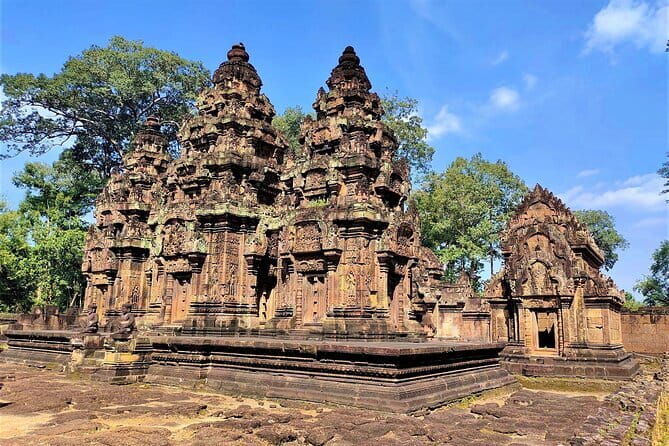
Day 2 starts at Banteay Srei. This one is often loved for its pink sandstone carvings, and it is described as a jewel of Khmer art. The big thing I like about leading with Banteay Srei is that it feels refined. If Day 1 was about the royal city intensity and the grand circuits, Day 2 begins with craftsmanship.
Then you move to Banteay Samre. It is noted as one of the most complete complexes at Angkor, restored using anastylosis. At the same time, there are signs of what happens when maintenance slips, since the text notes an absence of maintenance over the past 20 years. That makes this stop interesting for a different reason: you see how restoration choices and long-term upkeep affect what you can experience on the ground.
Pre Rup follows. It is described as bold in architectural design, with balance, scale, and proportion. It also fits nicely into the day because it gives you a strong “temple mountain” type feel without needing the highest peak climb of Phnom Bakheng. If you like when temples feel engineered for views and ceremony, Pre Rup is a good match.
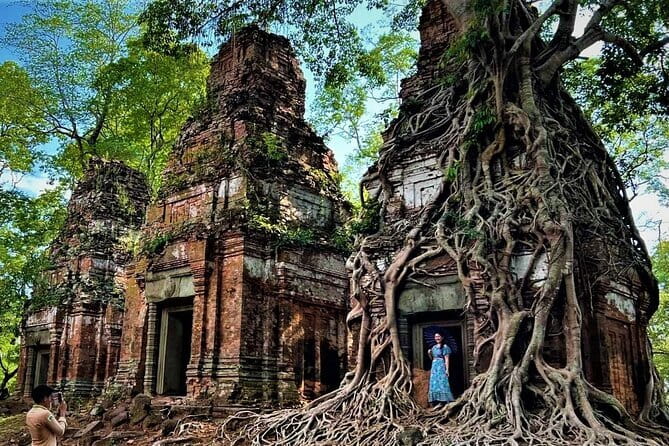
Next is Ta Som. This one is described as not restored, and it is known as a small quiet temple. If your travel style is “less photo line, more atmosphere,” Ta Som can be a relief after the busier heavy hitters. The mention of fig trees growing over faces at the entrance towers is also a helpful detail. It means you are not just seeing stone, you are seeing how nature can rework the look of a temple entrance.
Then comes Neak Pean, a temple built around a large square man-made pond, about 70 meters per side. The description emphasizes steps and four smaller surrounding structures. This kind of site is great because it slows you down. You can see why it was built for visitors to connect with water as part of the temple meaning.
After that, you visit Preah Khan. It is located a bit north-east of Angkor Thom on the Grand Circuit, built in the second half of the 12th century around 1191, and dedicated to the father of King Jayavarman VII. Even without the background names, the key is that Preah Khan is a temple-city kind of stop, where the scale feels different from some of the smaller, carved-focused sites.
Finally on the temple list is Banteay Prei, described as rarely visited and near Prasat Prei. This is the kind of stop you enjoy when you want deeper Angkor context rather than a quick highlight tour. The time is short (around 40 minutes), but the point is that you get variety if you are staying in Siem Reap for just these two days.
The Market Stop and a Small Cultural Break
The day wraps with a stop tied to Om Pich steamed toddy palm cake in Prashdak Village, and it pairs with a market area where souvenirs and arts are available. The text also notes Preah Dak Market as a famous place for souvenirs, with admission free.
This kind of stop is worth doing even if you are not a big shopper. You get a break from stone, you can grab a snack, and you can see local crafts in a straightforward setting near the end of a long day. Just keep your expectations realistic: it is a market, not a museum. You will have better luck if you go in with curiosity, not a hunt for one perfect item.
Price, Passes, and What This Tour Actually Costs You
The price is $113.05 per person, and the tour includes hotel pickup and drop-off, a professional official licensed English-speaking guide, private air-conditioned vehicle transfers, and cool drinks plus fresh tissue during the tour.
The big extra cost is the Angkor Pass. The itinerary notes that entrance fees for individual stops are not included, and the pass is what covers the temples on your route. Your guide assists you with purchasing it at the entrance before you start the circuit. That matters because it reduces stress. You are not trying to figure it out mid-day with sun on your neck.
Food is at your own expense. Lunches are available at local restaurants with vegetarian and non-vegetarian options, usually in the $3 to $10 per dish range. This is good value territory, and it also means you can pick what fits your appetite that day. You can keep energy steady instead of being forced into one pre-planned meal.
Tips for the guide and driver are not included. If you are the type who wants to be prepared, set aside some cash for this at the start. If you have never tipped in Cambodia before, use this as a moment to follow your own comfort level based on service.
One more practical note: this is a private tour, so you are not sharing your day with a rotating mass of strangers. In the reviews shared with the provider, guides such as Mr Lorn Leap, Mr Sara, and drivers like Sophal or Ry are mentioned as particularly friendly and professional, with people also noting water support and cold towels between stops. You can treat that as a helpful sign that service details get attention, even though the exact touchpoints can vary by guide.
Other private bookings in Siem Reap
How the Timing Feels in Real Life
Looking at the stop durations, Day 1 is a sprint through several royal-city and jungle-temple landmarks. Many stops are around 30 to 40 minutes, while Angkor Wat and Phnom Bakheng get longer time slots. Day 2 continues with a mix of about 40 minutes at each stop, with a couple around an hour for larger complexes.
So the best way to enjoy this is to go in with a mindset of “see, learn, photo, move.” This is not a slow museum tour. If you want one temple to consume your whole day, you might feel pushed at times. But if you want the big picture across two days, plus a sunset moment that anchors everything, this itinerary style works.
Private tours also give you micro-flexibility. If a temple hits for you, you can use your guide to adjust your attention. It still fits the overall schedule, but it keeps your time from feeling totally mechanical.
Who Should Book This 2-Day Private Angkor Tour
This tour makes a lot of sense if you want:
- A licensed English-speaking guide to connect Khmer architecture and symbolism to what you see
- Comfort between temples with hotel pickup, private transfers, and included water support
- A route that mixes famous monuments with less frantic stops, like Ta Som and Banteay Prei
- A sunset viewpoint plan at Phnom Bakheng
It may not be your best fit if you dislike fast pacing or you want long, unstructured hours in only one or two places. Also, if you have limited mobility, you should think carefully. Angkor temples involve walking, uneven stone, stairs, and climbing for viewpoints, and the itinerary includes multiple sites over two days.
Heat matters too. Siem Reap can be very hot. When people mention cold towels and plenty of water, that is a clue that the tour is built for the weather, not against it.
Should You Book This Tour?
I would book this if your goal is clarity and efficiency: you want Angkor in two days, but you do not want it to feel like you are just checking boxes. The combination of private guide commentary, sensible time blocks, and the Phnom Bakheng sunset is where the value really shows up.
If you are price sensitive, double-check the total you will pay once the Angkor Pass is added, plus your meals and tips. But even with those add-ons, what you are buying is time with a guide who helps you interpret the site, not just transport.
If you want a clean way to decide, ask yourself this: do you want to understand what you are seeing? If yes, this is the kind of two-day plan that makes Angkor feel personal instead of overwhelming.
Other Guides Working Siem Reap
- Angkor Wat Sunrise or Sunset Tour with Guide from Siem Reap★ 5.0 · 12,109 reviews
- Siem Reap: Full-Day Angkor Wat Guided Tour with Sunset★ 4.9 · 3,803 reviews
- Angkor Wat Sunrise tour with Small – Group and Guide tours★ 5.0 · 3,655 reviews
- Angkor Wat Highlights and Sunrise Guided Tour from Siem Reap★ 5.0 · 3,213 reviews
More Tours in Siem Reap
- Angkor Wat Sunrise or Sunset Tour with Guide from Siem Reap★ 5.0 · 12,109 reviews
- Siem Reap: Angkor Wat: Small-Group Sunrise or Sunset Tour★ 5.0 · 9,444 reviews
- From Siem Reap: Kampong Phluk Floating Village Tour by Boat★ 4.9 · 6,979 reviews
- Siem Reap: Angkor Wat 2-Day Tour with Sunrise and Sunset★ 4.9 · 4,429 reviews
More Tour Reviews in Siem Reap
- Angkor Wat Sunrise or Sunset Tour with Guide from Siem Reap★ 5.0 · 12,109 reviews
- Siem Reap: Angkor Wat: Small-Group Sunrise or Sunset Tour★ 5.0 · 9,444 reviews
- From Siem Reap: Kampong Phluk Floating Village Tour by Boat★ 4.9 · 6,979 reviews
- Siem Reap: Angkor Wat 2-Day Tour with Sunrise and Sunset★ 4.9 · 4,429 reviews
Newly written up around Siem Reap
- Waterfall & River of 1000 Siva Linga- Kulen Mountain Private Tour
★ 5.0 · 3 reviews - Private Transfer from Siem Reap to Sihanoukville
★ 4.5 · 3 reviews - Private Tour to Koh Ker and Beng Mealea
★ 5.0 · 3 reviews - Private Transfer: Siem Reap Angkor Internation Airport to Hotel
★ 5.0 · 3 reviews - Kulen National Park Ticket -Waterfall & 1000 Lingas
★ 5.0 · 3 reviews - Kulen Waterfall & Kbal Spean Tour
★ 5.0 · 3 reviews
2-Day Experiences, side by side.
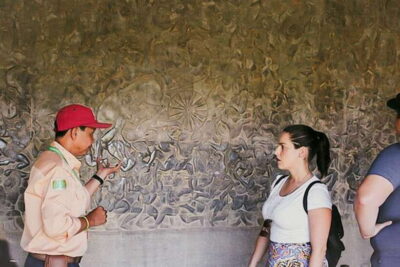 ★ 4.9Angkor Wat 2-Day Tour with Sunrise and SunsetFrom $344,429 reviews
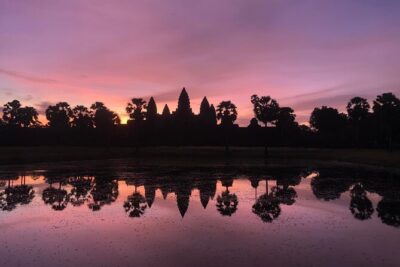 ★ 5.0Angkor 2-Day Sunset & Sunrise Small-Group TourFrom $492,567 reviews
 ★ 5.02 Days Exclusive Temple Highlights with Sunset and Sunrise TourFrom $491,157 reviews
 ★ 4.9Angkor Sunrise 1- or 2-Day Guided Temples TourFrom $191,132 reviews
 ★ 5.02 Days Guided Historical Tour in AngkorFrom $35855 reviews
 ★ 5.02-Day Angkor Wat With Small, Big Circuit and Banteay Srei TourFrom $158545 reviews
 ★ 4.92-Day Temple Highlights Sunrise and Sunset OptionFrom $46445 reviews
 ★ 4.9Angkor Wat 2-Day complex Sun rise & Sun set with Guided TourFrom $30439 reviews
Also appears in