
REVIEW · CAMBODIA
2-Days Tour (The Best Historical of Khmer Empire)
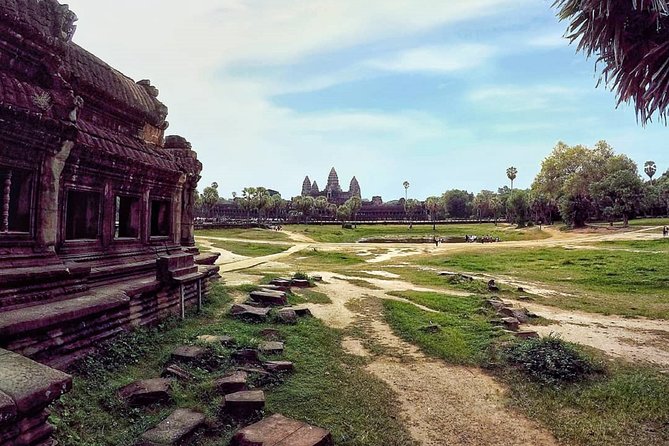
Two days, one serious Angkor story. You get a local English-speaking guide and driver who keep the pace friendly, starting deep in Angkor Thom, then finishing with sunset at Pre Rup and the big icons like Angkor Wat and Ta Prohm. I like how much story you get between the stones, and I also like the small comforts, like ice-cold towels and water during long temple days. The main catch is that the Angkor Archaeological Site pass and temple entrance fees are not included, and some areas enforce a strict dress code, so plan accordingly.
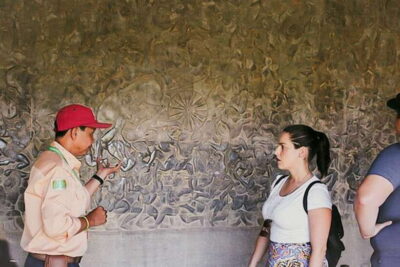
This tour is also smart for travelers who want more than a highlight reel. You can tailor the day’s flow, and you spend time off the main temple loop too, with Psar Chaa, Old Market, and Artisans Angkor (a local NGO focused on training youth in handicraft skills). The best part is that it’s full private with just your group, so you can ask questions, pause for photos, and avoid feeling herded.
In This Review
- Key highlights to notice before you go
- What You Get for $145: A Private Two-Day Khmer Empire Plan
- Pickup, Vehicle Comfort, and Your Guide Matters (A Lot)
- Day 1 in Angkor Thom: Bayon Faces, Terraces, and a Strong Afternoon Route
- Bayon Temple: The giant faces and classic Khmer symbolism
- Baphuon: Temple Mountain with a Shiva connection
- Terrace of the Elephants and Terrace of the Leper King
- Preah Palilay and Phimeanakas: smaller moments that connect the royal core
- Banteay Srei: delicate carvings that reward patience
- Banteay Samre: flat, airy, and a different Angkor style
- Pre Rup at sunset: optional, but usually the highlight
- Day 2: Angkor Wat and Ta Prohm in the Morning, Roluos Temples in the Afternoon
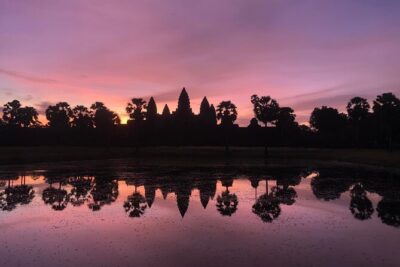
- Angkor Wat: the centerpiece you finally understand
- Ta Prohm: trees growing into the ruins
- Bakong and Lolei: Roluos group and the first temple-mountain feel
- Preah Ko: early capital Hariharalaya and the sacred bull
- Psar Chaa Old Market and Artisans Angkor: A Real Day-Off-the-Temples Moment
- Entrance Fees, Dress Code, and What You Should Pack
- How to Keep the 2-Day Pace Enjoyable Instead of Rushed
- Who This Khmer Empire Tour Fits Best
- Should You Book This Private Khmer Empire Tour?
- FAQ
- Is the Angkor Archaeological Site pass included in the price?
- What does the tour include besides the guide and transportation?
- Are meals included, like lunch?
- What about pickup and drop-off?
- Do I need to dress a certain way for the temples?
- Is sunset at Pre Rup part of the plan?
- Does the tour have an English guide?
- How flexible is cancellation?
Key highlights to notice before you go
- Private, full-day comfort: air-conditioned vehicle, professional driver, cool water and wet towels
- History that actually explains what you see: guide-led stops across Angkor Thom, Roluos, and Hariharalaya sites
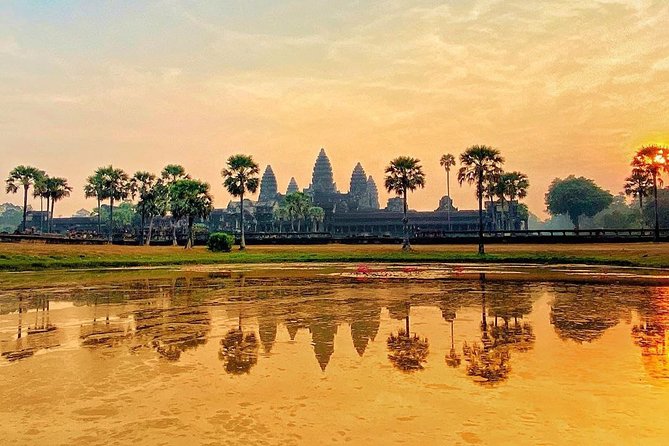
- Sunset payoff at Pre Rup: one of the most rewarding viewpoints, with flexible timing
- Classic temples plus calmer follow-ups: Angkor Wat and Ta Prohm, then Bakong, Lolei, Preah Ko
- Siem Reap beyond temples: Psar Chaa Old Market and Artisans Angkor
- Photo-friendly guidance: you’ll get help finding good angles and timing, not just directions
What You Get for $145: A Private Two-Day Khmer Empire Plan
At $145 per person for two days, the value mostly comes from what’s included. You’re not just buying temple tickets, you’re buying a full, guided day with a driver, transportation, and on-the-ground context that helps the sites make sense fast.
This is also a practical price point if you want a private setup without paying big-city luxury markups. The tour includes an English-speaking guide, an air-conditioned vehicle, and the little things that matter in Siem Reap heat, like cold water and cool wet towels.
One more value point: it’s a private tour, so it works well for couples who want a slower rhythm or families who need more pauses. Even though the official itinerary is set, you still have the option to tailor your plan to fit what you care about most.
Pickup, Vehicle Comfort, and Your Guide Matters (A Lot)
The tour starts with hotel pickup within Siem Reap, and you travel in a vehicle designed for comfort between sites. In at least one firsthand account, the pickup vehicle was a Lexus SUV, which tells you what kind of standard they aim for, especially when you’re paying for a private experience.
What I’d pay attention to is the guide side. Multiple guide names show up in experiences with Hidden Angkor Tour, including Mr. Veasna, Vutha, and Sophea Kas. The common thread is not just facts, it’s how they tell the story and help you connect the carvings and layout to Khmer life and beliefs.
You should also know you’re not doing this as a noisy bus group. It’s “just your group,” which makes a big difference when you’re trying to get a good photo without rushing, or when you want to ask why a temple looks the way it does.
More history on the ground in Siem Reap
- 2 Days Guided Historical Tour in Angkor★ 5.0 · 855 reviews
- Siem Reap: Banteay Srei and Grand Circuit Heritage Tour★ 4.9 · 163 reviews
- Banteay Srei and Grand Circuit Heritage Tour from Siem Reap★ 5.0 · 142 reviews
- Angkor World Heritage with Sunrise – Small Group★ 5.0 · 32 reviews
Day 1 in Angkor Thom: Bayon Faces, Terraces, and a Strong Afternoon Route
Day 1 is all about Angkor Thom, then branching out to temples that many first-timers miss. It’s a full day, and it’s arranged so you hit the signature highlights early, while you’re still fresh.
Bayon Temple: The giant faces and classic Khmer symbolism
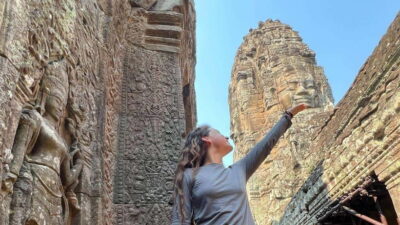
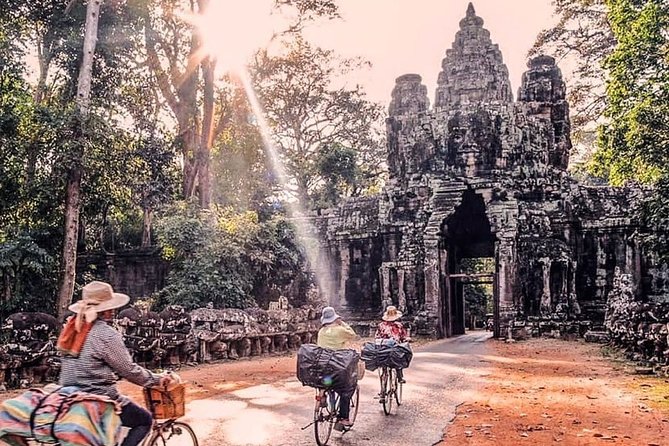
You start at Bayon, famous for the massive stone faces that have become one of Angkor’s most recognizable images. There are 37 standing towers, and the time you spend here is meant to let you look, not just snap-and-go.
If you’re new to Angkor, Bayon is a great first anchor. The guide can walk you through what you’re seeing and why this kind of Khmer art became so enduring.
Baphuon: Temple Mountain with a Shiva connection
Next is Baphuon, described as a three-tiered Temple Mountain built as the state temple of Udayadityavarman II and dedicated to Shiva. It’s also close to Bayon, so it keeps your momentum without feeling like you’re constantly driving.
A practical note: Baphuon is one of the sites mentioned as enforcing a strict dress code. Plan to cover your shoulders and wear clothing that falls below the knees, or you may run into frustrating entry issues.
Terrace of the Elephants and Terrace of the Leper King
Then you move into the palace-area terraces. The Terrace of the Elephants is long, carved, and designed as an impressive wall of scenes, including elephants and garudas. It’s the kind of stop where a guide can make the carvings feel less random, more like a visual story.
After that, the Terrace of the Leper King adds another layer with its deeply carved mythological beings, nagas, and demons. The name comes from the status of a figure seated on top, and it’s one of those places where the “what am I looking at” question is totally fair.
Also on our Siem Reap list, if none of these land
Preah Palilay and Phimeanakas: smaller moments that connect the royal core
Preah Palilay is described as a sandstone and laterite tower in a shaded forest setting, with Buddhist-themed carvings on the eastern gopura. It’s shorter than some stops, but it’s a nice reset from the heavier, more crowded-feeling icons.
Phimeanakas sits in the center of the old Royal Palace of Angkor Thom area. It’s a pyramid Hindu temple dating to the 10th century, and this stop is less about scale and more about getting your bearings in the royal enclosure.
Banteay Srei: delicate carvings that reward patience
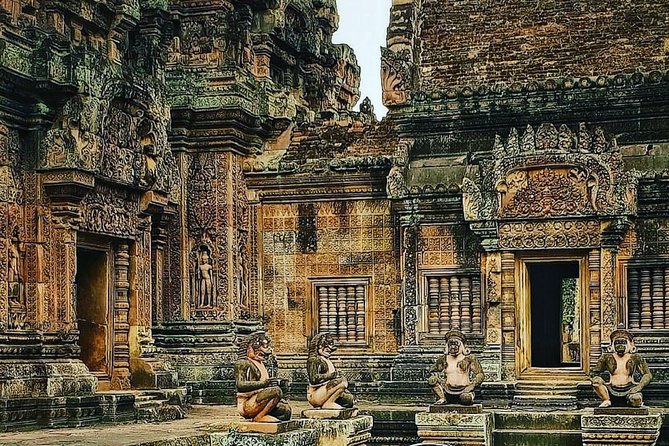
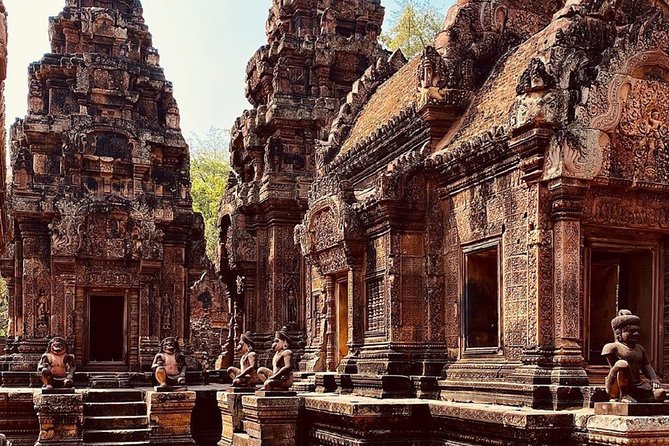
In the afternoon you head to Banteay Srei, often called the citadel of women, tied to the idea of delicate beauty in the carvings. You get about 1 hour 30 minutes here, which is the right amount of time to slow down and actually read the details with your guide.
If you like craftsmanship, this is one of the most satisfying temples on Day 1. The time allocation suggests the experience is designed for looking, not just touring.
Banteay Samre: flat, airy, and a different Angkor style
Then comes Banteay Samre, described as a large, flat temple with Angkor Wat-style architecture and artistry. It’s a change of pace after the taller temple-mountains, and it can feel surprisingly calming.
Pre Rup at sunset: optional, but usually the highlight
You finish with Pre Rup, with sunset positioned as an optional add-on. It’s described as architecturally and artistically superior, with false doors on the upper level and a strong view over the surrounding area.
This is one of those moments where timing and light matter. Even if you skip sunset, you still get the temple itself, but if you’re choosing only one “light show” of the trip, this is the one that tends to make people remember Angkor as a landscape, not just a museum of stones.
Day 2: Angkor Wat and Ta Prohm in the Morning, Roluos Temples in the Afternoon
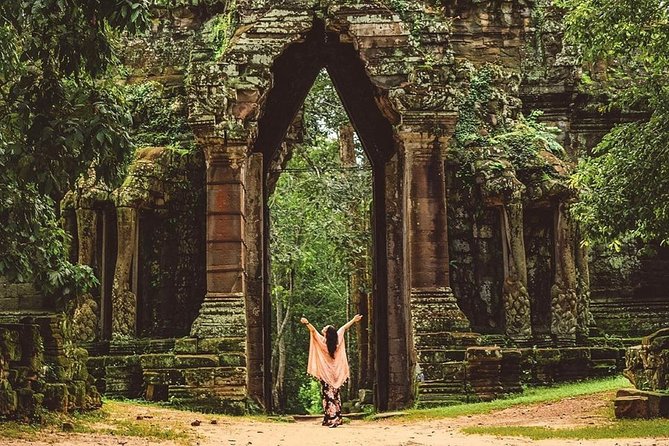
Day 2 mixes the biggest headlines with sites that feel more grounded and less photo-stressed. The route is designed to prevent that same-temple fatigue.
Angkor Wat: the centerpiece you finally understand
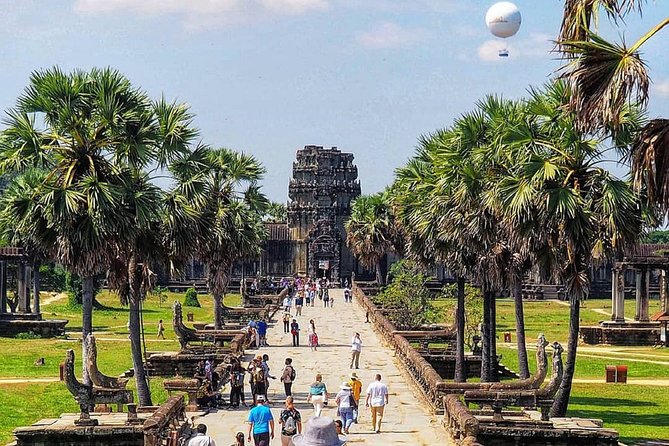
Angkor Wat takes about two hours. It’s described as a temple city, with masterpieces of decorative details and architectural style. This is the stop where your guide’s explanations can help everything click, from axis-like planning to the way the temple complex is structured.
This is also a good day to ask your guide about where to stand for the best viewpoint and how to walk the routes without backtracking. Having someone explain the layout saves time and makes the experience feel smoother.
Ta Prohm: trees growing into the ruins
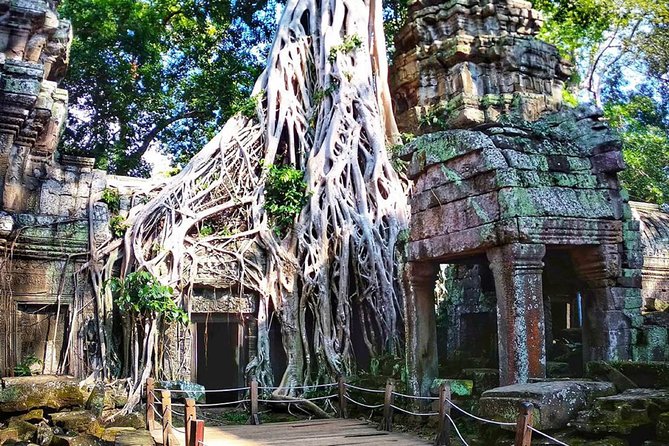
Next is Ta Prohm, known for being partially cleared of jungle overgrowth and for “tree-in-temple” photo opportunities. It’s set up as a two-hour stop, which is perfect because Ta Prohm isn’t a one-angle temple.
If you like photography, you’ll likely appreciate how guides help with composition and timing. In a few experiences, guides were noted for providing photographic assistance, which is exactly what you want here because Ta Prohm can overwhelm you if you only rely on your own eye.
Bakong and Lolei: Roluos group and the first temple-mountain feel
After lunch on your own, you move to the Roluos Group, starting with Bakong. It’s described as the most impressive member of that group, sitting in the center of the first Angkorian capital, and as the first temple mountain of sandstone constructed by Khmer rulers.
Then you head to Lolei, described as an island-temple built in the middle of a now dry baray called Indratataka. It’s a smaller Hindu temple from the 9th century, and it can feel like a calm pause after the intensity of Angkor Wat and Ta Prohm.
Preah Ko: early capital Hariharalaya and the sacred bull
Preah Ko is a shorter stop, around 15 minutes, but it has an important context link. It’s one of the first major temples of the empire and is tied to the early Khmer capital of Hariharalaya, plus the name Sacred Bull.
This is a good stop for history-minded travelers who want to feel how Angkor’s big legacy connects to earlier centers.
Psar Chaa Old Market and Artisans Angkor: A Real Day-Off-the-Temples Moment
One of the best surprises is how the tour doesn’t end when temple photos end. After the Roluos sites, you go to Psar Chaa, Old Market. It’s described as the most visited market, with a wide selection of souvenirs and curios.
Old Market is a practical way to get your bearings in Siem Reap. You’re already thinking about temples and carvings, so browsing here feels connected, not random shopping.
Then you visit Artisans Angkor, described as a training ground for rural youth who are not fully schooled, between 18 and 2 years old in the info provided, with skills used to make a living from handicraft production. The big takeaway is that you’re not just buying a souvenir, you’re seeing a local pathway for skills and employment.
If you’re traveling with kids, this part can also break up temple fatigue. It’s still within the culture of the place, but it’s less about walking on ancient stone and more about meeting people and processes.
Entrance Fees, Dress Code, and What You Should Pack
Here’s the part that can trip you up if you don’t plan: Angkor entrance fees are not included. You need an Angkor Archaeological Site pass, purchased at the main gate, and it gives access to sights around Angkor. Fees are charged in US dollars, and kids under 12 are free.
Dress code matters. The tour info specifically warns that some temples and palaces, including Baphuon, have strict rules. Plan clothing that covers your shoulders and falls below the knees. If you’re wearing shorts or a tank top, fix that before you arrive at the first gate.
For packing, take the advice on sun and heat seriously. Bring sunglasses, a hat or cap, and sunscreen with high SPF, because even when it looks cloudy, sunrays still hit hard. Also protect electronics, since natural elements can harm devices. If you bring a phone for photos, you’ll want it wrapped and shielded.
Finally, lunch is excluded. You’ll need to plan your own meal break, so don’t treat the day as fully “managed” end-to-end for food.
How to Keep the 2-Day Pace Enjoyable Instead of Rushed
This tour runs on momentum, but it’s designed to avoid the worst kind of rushing. The stops are timed with realistic durations, and they mention that some walking is involved, while also saying they take the most comfortable ways from one entrance point to the next.
Your best move is to use the private nature of the day. Ask your guide where you should spend extra time. If you care about carving details, you’ll want to slow down at the Terrace of the Elephants, Terrace of the Leper King, and Banteay Srei. If you care about viewpoints, focus your energy on Pre Rup at sunset.
Also, be ready to adapt. Pre Rup sunset is listed as optional, and weather can affect visibility. If sunset isn’t perfect, you can still enjoy Pre Rup earlier and rely on the guide to find good viewing angles.
Who This Khmer Empire Tour Fits Best
This is a strong fit if you:
- Want a private, English-speaking guide rather than a bus-group shuffle
- Are seeing Angkor for the first time and want the sites connected by story
- Prefer a mix of big icons and lesser-visited temple stops
- Like culture stops that go beyond shopping, like Artisans Angkor
It’s also a good family option in spirit. The tour is private for your group, and the mix of temples plus a non-temple stop helps with energy management, especially for younger travelers.
If you hate early starts or dislike long walking, you might find the two full days demanding. The guide and driver help with comfort, but you still need the mindset that Angkor is physically active.
Should You Book This Private Khmer Empire Tour?
I’d book it if you want the most efficient way to understand what you’re looking at in two days. The big wins are the private guide-led storytelling, the smart temple sequence from Angkor Thom into Roluos and Hariharalaya, and the extra stop that connects the trip to modern Siem Reap at Artisans Angkor.
I wouldn’t book it if you’re trying to do Angkor with minimal planning and no gear prep. You must handle the Angkor pass, you need to follow dress code rules, and you should be ready for a warm, walk-heavy two-day stretch.
If you do book, here’s the best way to make it feel worth your money: come with a short list of what you care about most, like carvings, architecture, viewpoints, or photos, then tell your guide on day 1. With a guide like Mr. Veasna, Vutha, or Sophea Kas from past experiences, that kind of direction is where the tour tends to turn from good to memorable.
FAQ
Is the Angkor Archaeological Site pass included in the price?
No. The tour price does not include the Angkor Archaeological site entrance pass. You are responsible for buying the pass at the main gate in US dollars.
What does the tour include besides the guide and transportation?
It includes transportation by an air-conditioned vehicle with a professional driver, an English-speaking guide, cool waters and cool wet towels, and applicable taxes and service charges.
Are meals included, like lunch?
No. Lunch is excluded, so you’ll arrange it on your own during the day.
What about pickup and drop-off?
Pickup is offered, and return transfers are included only for customers staying in and inside Siem Reap. If you’re outside that area, it may work differently, based on your hotel location.
Do I need to dress a certain way for the temples?
Yes. Some temples and palaces have strict dress rules, including covering shoulders and wearing clothes that fall below the knees.
Is sunset at Pre Rup part of the plan?
Pre Rup sunset is listed as optional. You can choose to do the sunset timing or visit Pre Rup without that added sunset plan.
Does the tour have an English guide?
Yes. The guide provided is an English-speaking guide, and other languages may be available on request.
How flexible is cancellation?
You can cancel for a full refund up to 24 hours before the experience starts. If you cancel less than 24 hours before, you will not get a refund.
More of the Past, Walked Through
- 2 Days Guided Historical Tour in Angkor★ 5.0 · 855 reviews
- Siem Reap: Banteay Srei and Grand Circuit Heritage Tour★ 4.9 · 163 reviews
- Banteay Srei and Grand Circuit Heritage Tour from Siem Reap★ 5.0 · 142 reviews
- Angkor World Heritage with Sunrise – Small Group★ 5.0 · 32 reviews
More Tours in Siem Reap
- Angkor Wat Sunrise or Sunset Tour with Guide from Siem Reap★ 5.0 · 12,109 reviews
- Siem Reap: Angkor Wat: Small-Group Sunrise or Sunset Tour★ 5.0 · 9,444 reviews
- From Siem Reap: Kampong Phluk Floating Village Tour by Boat★ 4.9 · 6,979 reviews
- Siem Reap: Angkor Wat 2-Day Tour with Sunrise and Sunset★ 4.9 · 4,429 reviews
More Tour Reviews in Siem Reap
- Angkor Wat Sunrise or Sunset Tour with Guide from Siem Reap★ 5.0 · 12,109 reviews
- Siem Reap: Angkor Wat: Small-Group Sunrise or Sunset Tour★ 5.0 · 9,444 reviews
- From Siem Reap: Kampong Phluk Floating Village Tour by Boat★ 4.9 · 6,979 reviews
- Siem Reap: Angkor Wat 2-Day Tour with Sunrise and Sunset★ 4.9 · 4,429 reviews
Newly written up around Siem Reap
- Waterfall & River of 1000 Siva Linga- Kulen Mountain Private Tour
★ 5.0 · 3 reviews - Private Transfer from Siem Reap to Sihanoukville
★ 4.5 · 3 reviews - Private Tour to Koh Ker and Beng Mealea
★ 5.0 · 3 reviews - Private Transfer: Siem Reap Angkor Internation Airport to Hotel
★ 5.0 · 3 reviews - Kulen National Park Ticket -Waterfall & 1000 Lingas
★ 5.0 · 3 reviews - Kulen Waterfall & Kbal Spean Tour
★ 5.0 · 3 reviews
Historical Tours, side by side.
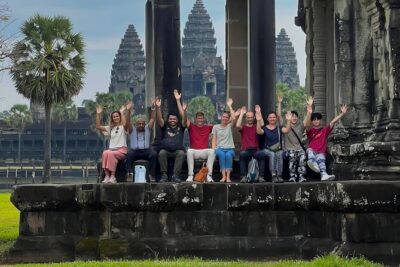 ★ 5.02 Days Guided Historical Tour in AngkorFrom $35855 reviews
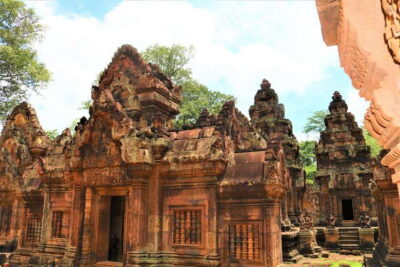 ★ 4.9Banteay Srei and Grand Circuit Heritage TourFrom $18163 reviews
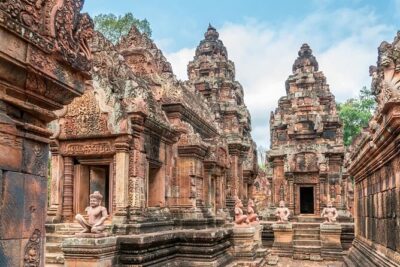 ★ 5.0Banteay Srei and Grand Circuit Heritage Tour from Siem ReapFrom $24142 reviews
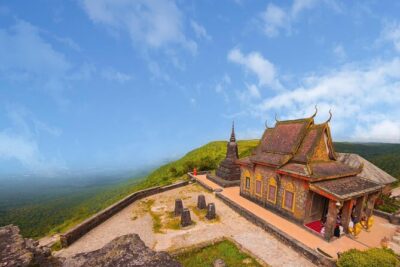 ★ 5.0Bokor Mountain Adventure – History, Sights and WaterfallsFrom $3565 reviews
 ★ 5.0Oudong Mountain History and Pagoda TourFrom $11039 reviews
 ★ 5.0Guided Phnom Penh Heritage TourFrom $2437 reviews
 ★ 5.0Angkor World Heritage with Sunrise – Small GroupFrom $1932 reviews
 ★ 5.03-Day Tour (The Historical of Khmer Empire)From $25020 reviews
Also appears in