
REVIEW · ANGKOR
3-Day Angkor Wat & All Interesting Major Temples & Kulen Mount Waterfall
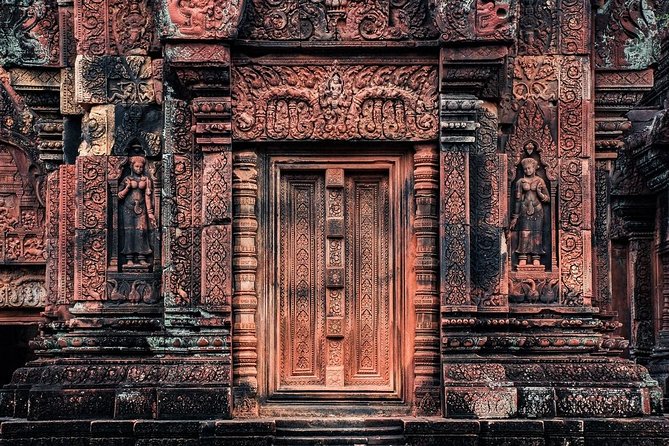
Three days in Siem Reap can feel like an art museum marathon, but this route adds real variety. I like how it mixes the big name sights like Ta Prohm with quieter temple stops such as Ta Nei, and I also love the split day that leaves the stone world for Phnom Kulen’s waterfall swim. One thing to plan for though: you are ticking off a lot of stops, and admission fees for temples and Kulen are separate.
This is a private tour with an English-speaking, licensed guide and a private A/C vehicle door-to-door. Reviews also highlight guide names like Mr Chhay and Pal Saruon, with drivers such as San, Det, and Sriang, for attentive timing and good storytelling. The main drawback is the early morning commitment on Day 3, plus the fact that you may feel rushed if you prefer slow, lingering visits at every site.
In This Review
- Key Things I’d Pay Attention To
- The Route That Turns Angkor From Photos Into Stories
- Day 1: Angkor Wat, Ta Prohm Tree Roots, and Angkor Thom’s Inner Walk
- Day 1 trade-offs to know
- Day 2: Phnom Kulen’s 1000 Lingas, Pink Sandstone Banteay Srei, and Pre Rup
- The best way to enjoy Day 2
- Day 3: Angkor Wat Sunrise, Preah Khan, Neak Pean, and Rolous Group Ruins
- Phnom Kulen Waterfall Swim: When “Sightseeing” Turns Wet
- Price and Value Check: What You Pay, What You Still Need
- Guides and Drivers: Why This Tour Frequently Gets Full Marks
- Artisans Angkor and Psar Chaa: Useful Stops With a Simple Exit
- Who This Tour Suits Best (And Who Should Rethink It)
- Should You Book This 3-Day Angkor Wat and Kulen Tour?
- FAQ
- How long is the tour?
- What’s the pickup setup like?
- What time is the Angkor Wat sunrise start on Day 3?
- What’s included in the tour price?
- Is lunch included?
- Are admission fees included for Angkor Wat and the temples?
- Is the Kulen mountain entrance included?
- Can I skip the sunset waiting at Phnom Bakheng?
- Is the Artisans Angkor stop optional?
- Is the Psar Chaa old market stop optional?
Key Things I’d Pay Attention To
- Private A/C pickup and drop-off from your hotel, plus cool drinks and wet towels
- Angkor Wat sunrise timing with a 5:00am pickup on Day 3
- Phnom Kulen’s 1000 Lingas and waterfall swim in the National Park
- A mix of famous ruins and quieter spots, including Ta Nei for fewer crowds
- Sunset plan at Phnom Bakheng, with an option to skip the waiting
- Artisans Angkor and Psar Chaa are optional, so you can keep the day focused
The Route That Turns Angkor From Photos Into Stories
Angkor is the kind of place where a single temple can look almost identical to the next one if you do not have context. What I like about this tour is the way it builds that context step by step, from Angkor Wat to Ta Prohm to the Angkor Thom city core, then back out to Kulen and the wider Angkor area.
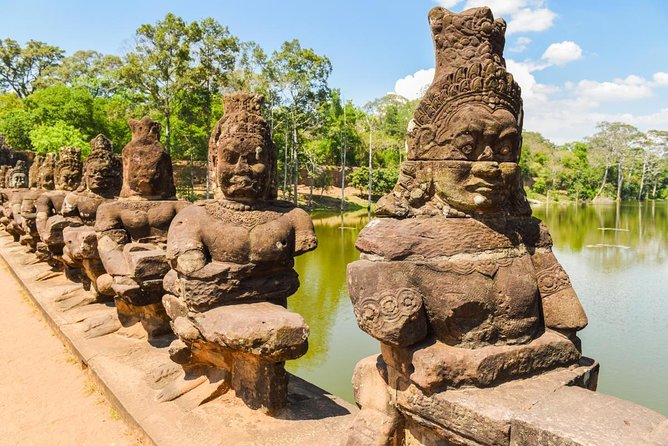
You are not just driving past ruins. You are learning what each site represents in Cambodia’s religious history, and you are getting clear landmarks to watch for. The payoff is that when you see things like the Victory Gate and Bayon’s 49 towers with four faces each, it starts to click as a designed city, not random stone.
Day 1: Angkor Wat, Ta Prohm Tree Roots, and Angkor Thom’s Inner Walk
Day 1 starts with a morning at Angkor Wat, with a hotel pickup at 8:00am. The time on site is listed as 2 hours 30 minutes, which is enough to see the main highlights without feeling like you were dropped off for a quick glance. Since the temple pass is separate, this part is less about the ticket office and more about getting your bearings.
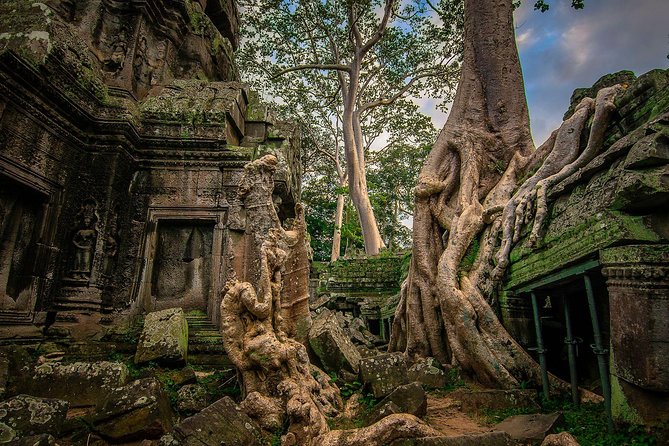
Next comes Ta Prohm, where the famous Hollywood look is part of the experience. You’ll spend about 2 hours there, and the focus is on the gigantic tree roots wrapped around the structures. It is a striking mix of religion, decay, and nature, and it works best if you take your time with the details instead of only hunting for the widest angles.
Then you get the first “smart crowd move”: Ta Nei. This is listed as 45 minutes, and it’s described as smaller and with less restoration, which often means it feels calmer. The temple is surrounded by big trees, so it has a shaded, tucked-away feel compared with the flashier stops.
After that, you move into the Angkor Thom core with a quick hit at the Victory Gate. The stop is short, around 10 minutes, but it’s a great photo and orientation moment. You’ll then connect the dots at Bayon (about 45 minutes), where the 49 towers and the repeated face designs give the whole area a strong, repeating visual theme.
From Bayon you continue to Baphuon, which is described as a Hindu temple built before Angkor Wat in the 11th century, with a big Reclining Buddha added later in the 16th century. That layering is a theme you’ll notice again and again across these temples: different religions and different eras leaving their stamp on the same stone geography.
The walk continues with Phimeanakas, a Hindu pyramid temple built in the 10th century and located in the center of the old royal palace area of Angkor Thom. The stop is brief (about 15 minutes), but it’s valuable because it ties directly to royal enclosure space, not just a standalone monument.
Two more terraces round out the day:
- Terrace of the Elephants (about 10 minutes), where kings used the platform to view victorious returning armies, with elephant carvings on the wall
- Terrace of the Leper King (about 10 minutes), positioned nearby on the north side
Finally, the day ends with Phnom Bakheng. You get around 2 hours there, and the main draw is the sunset viewpoint. There’s also a note that access is limited by the number of tourists allowed, and the itinerary says you can skip the wait for sunset if you are not in the mood.
More circuits through the Angkor complex, compared
- Angkor Wat Sunrise & 3 Main Temples with Breakfast – Small Group★ 5.0 · 2,857 reviews
- Siem Reap Tour: Angkor Wat Sunrise, Bayon, Ta Prohm, Banteay Srei★ 5.0 · 931 reviews
- 2-Day Angkor Wat With Small, Big Circuit and Banteay Srei Tour★ 5.0 · 545 reviews
- Full-Day ‘Big Tour’ with Sunset at Phnom Bakheng★ 5.0 · 341 reviews
Day 1 trade-offs to know
This is a full day of walking and switching mental gears. If you love slow museum-style viewing, you may wish you had more time at fewer stops. If you like variety and you can handle moving from one “big idea” to the next, this Day 1 is strong.
Day 2: Phnom Kulen’s 1000 Lingas, Pink Sandstone Banteay Srei, and Pre Rup
Day 2 is where the tour breathes. You head to Phnom Kulen National Park, listed as more than 60 km from Angkor Park, and the schedule allows about 5 hours. This stop is not only about views, it’s about sacred landscape: the riverbed is covered with carved sculptures called 1000 Lingas, described as a symbol connected to Shiva.
The overview also points you toward a rock feature at Kulen: the Reclining Buddha. In practice, this gives you a dramatic contrast to Angkor Wat’s heavy stone geometry. Instead of perfect angles and courtyards, you get rock forms and carvings embedded in a natural setting.
After that nature and stone carving combo, you shift into more classic temple architecture:
- Banteay Srei, about 1 hour, built from pink sandstone in the 10th century by Hindu King Rajendravarman II, dedicated to trinity Gods in Hindu tradition, mainly Shiva
- Banteay Samre, about 45 minutes, a 12th century Hindu temple where the itinerary notes the architecture is less obvious, but the temple model is believed to be similar to Angkor Wat
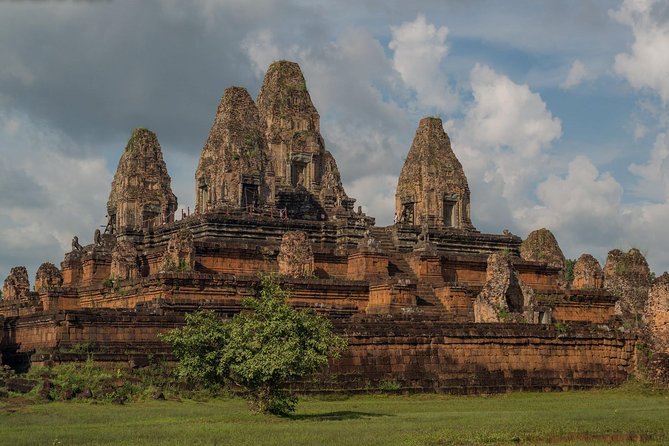
- Pre Rup, about 30 minutes, constructed in the late 10th century and dedicated to Hindu gods, with a belief that funerals were conducted at the temple on the most distant juncture
What I like here is that the day does not feel like you are only repeating Angkor’s biggest hits. The temples are different materials and different levels of restoration, so your brain gets a reset between stones.
The best way to enjoy Day 2
This is the day to wear shoes you can handle on uneven ground and to plan for weather. You’ll be moving between a national park setting and then back to temple ruins, so it’s one of those schedules where pacing matters. The tour includes cool drinking waters and wet towels, which helps when the day runs warm.
Day 3: Angkor Wat Sunrise, Preah Khan, Neak Pean, and Rolous Group Ruins
Day 3 starts early. Your guide meets you at 5:00am for sunrise at Angkor Wat, with about 1 hour 45 minutes allocated. If you are the type who can handle an early start for a real payoff, this is one of the strongest parts of the plan. If not, be honest with yourself because sunrise days change your whole mood for the rest of the itinerary.
After sunrise, the tour continues to Preah Khan (about 1 hour). This is described as a Buddhist temple built by King Jayavarman VII, dedicated to his father. It’s a huge, highly extensive site in the narrative you’re given, so the value here is the shift from Hindu temple cues to Buddhist context.
Next you head to Neak Pean (about 30 minutes), described as a small island temple in the middle of the last Barray. The itinerary calls it constructed by a Khmer King in the Angkor area. Nearby is Ta Som (about 30 minutes), described as a small Buddhist temple on the east side of Neak Pean.
The schedule then brings you to Eastern Mebon (about 1 hour). This one is described as a temple-mountain like ruin, rising in three levels and crowned by five towers, with big elephant statues at the corners. Even if you only give it part of the time, it’s a helpful “style change” after the smaller, quieter island temple concept.
From Eastern Mebon, you drive to the Rolous area for more ruins:
- Lolei (about 15 minutes), a small Hindu temple built in the 9th century
- Preah Ko (about 30 minutes), described as the first temple built in Hariharalaya, now defunct
- Bakong (about 45 minutes), described as the first temple-mountain in sandstone, and the biggest temple in the Rolous group
The tour breaks for lunch during the day, but the itinerary is clear that lunch is not included and you’ll eat at a good restaurant along the way.
Finally, the tour shifts into the “Cambodia beyond temples” zone. You have a stop at Artisans Angkor (about 30 minutes), described as famous for traditional craft skills and product making, including stone carving, wood carving, lacquering, gilding, and silk processing. The itinerary also says you can skip this stop if you do not want to see it.
You then finish with Psar Chaa, the old market in the center of Siem Reap, about 30 minutes, and again you can skip if you prefer not to. For some people, this is a nice decompression after three days of monuments. For others, it’s more browsing than meaning. Either way, it’s optional in spirit, so you’re not forced into it.
More trips up into the Kulen hills

Phnom Kulen Waterfall Swim: When “Sightseeing” Turns Wet
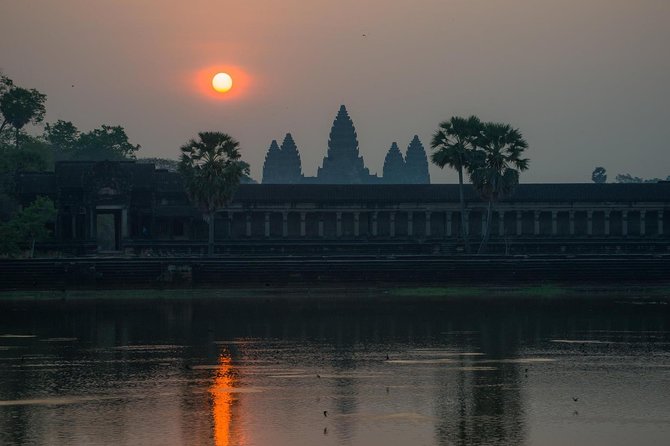
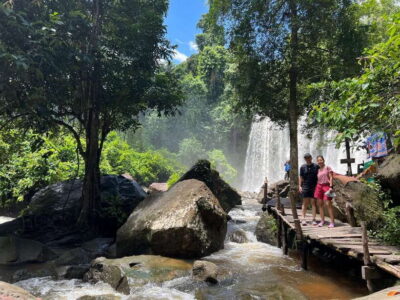
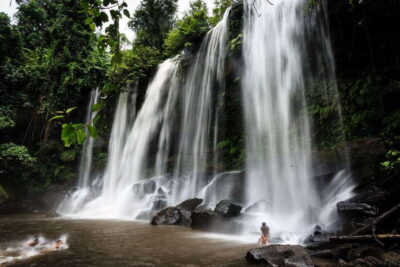
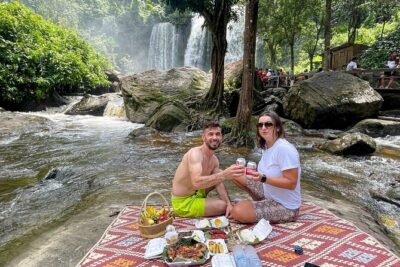
The highlight list calls it out plainly: you can swim in the gorgeous waterfall in Phnom Kulen National Park. That changes what to expect from the day, because this is not just photos, it’s water time.
You’ll also be there long enough that the waterfall stop is not a rushed checkbox. The schedule lists the entire Kulen day as 5 hours, giving space for both the stone carvings like the 1000 Lingas and the relaxed nature break that a swim offers.
Practical note: the tour includes cool drinking waters and wet towels, but that does not replace the basics you should bring for a swim. Plan on having a way to keep your phone and wallet dry, plus a change of clothing if you care about feeling comfortable on the ride afterward.
Price and Value Check: What You Pay, What You Still Need
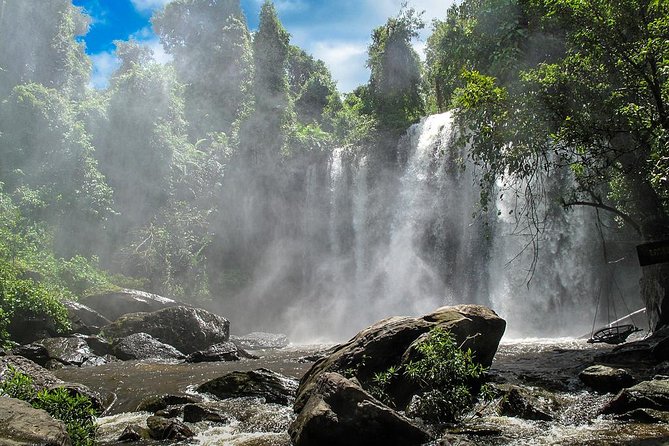
The tour price is $248.50 per person and is listed as a private tour with hotel pickup and drop-off. On the “what’s included” side, you get:
- a private A/C vehicle with driver
- an English speaking guide with licensed status
- cool drinking waters and wet towels
- parking fees and road tolls
- pickup and drop-off from your accommodation
- a mobile ticket
Then there are the big add-ons:
- Admission fee for Angkor Wat plus all temples: $62 per person
- Entrance fee for Kulen mountain: $20 per person
- Meals: lunch is not included, and you’ll pay about $5 per person depending on the menu
So in real terms, you should budget roughly $330 to $340 per person once you add admissions, before any extra drinks or shopping. The value question becomes, are you getting enough time with a guide and enough access to justify paying for admissions yourself?
From the structure of the itinerary, the answer is often yes if you want a curated route. You are visiting a large set of named stops across three days, and the private vehicle plus guide time helps you avoid the stress of figuring out timing and routes on your own. If you are traveling on a tight budget and you do not care about guided context, you could spend less by building your own plan. But if you want the history explained at each stop, this setup is geared for that.
Guides and Drivers: Why This Tour Frequently Gets Full Marks
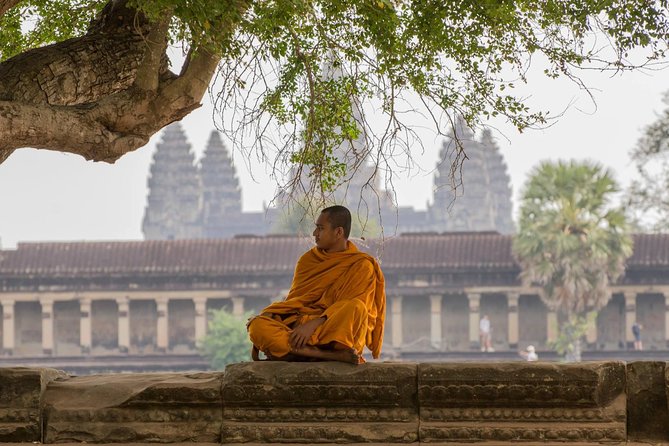
One of the most repeated strengths in the feedback is guide performance. Names that come up include Mr Chhay, Pal Saruon, Em Somuch, Small Mony, and Chandri. The theme is simple: they explain temples in a way that makes the stone feel connected, and they help you find good viewpoints and photo spots.
Drivers also get credit, including San, Det, and Sriang, for making the day run smoothly and staying patient when priorities shift. The itinerary itself mentions flexibility, like skipping certain stops (sunset waiting at Phnom Bakheng, or skipping Artisans Angkor and Psar Chaa), and reviews point to the team accommodating schedule changes.
If you end up with one of these guides, you’re likely to get more from each temple than you would with a generic audio guide. That matters, because many Angkor sites look similar until you know what to look for.
Artisans Angkor and Psar Chaa: Useful Stops With a Simple Exit
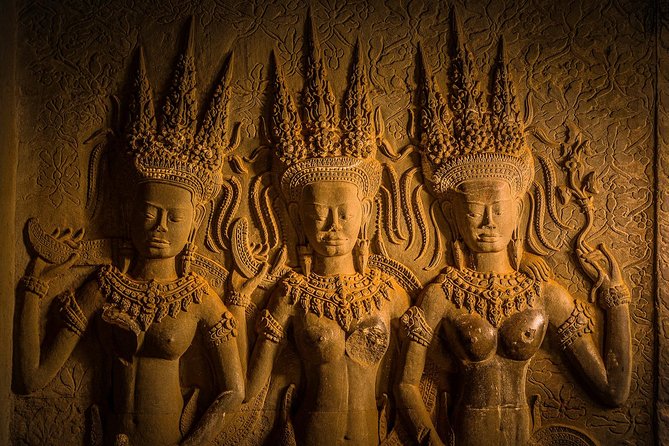
Not every temple day has to end in another ruin. Artisans Angkor gives you a short reality check that Cambodia is not only monuments. The skills listed are specific: stone carving, wood carving, lacquering, gilding, and silk processing. Even if you do not buy anything, watching how the process is described can make the region feel more alive.
Then Psar Chaa, the old market, gives you a chance to see a more everyday side of Siem Reap. The itinerary says you can skip it if you do not want to see it, which is important. If you want to keep your energy for photos or rest, you can. If you like a quick browse and a few snacks, it’s there.
Who This Tour Suits Best (And Who Should Rethink It)
This tour fits best if you want:
- a private, guided plan that covers major temples plus some smaller ones
- a mix of temple architecture and nature, especially the Kulen waterfall swim
- early starts like Angkor Wat sunrise on Day 3
- optional flexibility, like skipping sunset waiting or skipping the market craft stops
You might want to rethink it if you prefer long, slow sessions at just a couple of places. The schedule is packed, and you will spend multiple days moving between several named sites. It can still be rewarding, but only if your travel style matches an active itinerary.
Should You Book This 3-Day Angkor Wat and Kulen Tour?
I would book this tour if you want one organized plan that covers the essentials without turning your trip into logistics homework. The biggest wins are the guided context at the major temples, the Day 2 nature break at Phnom Kulen with the 1000 Lingas carvings and waterfall swim, and the “big finale” of Angkor Wat sunrise on Day 3.
Before you say yes, do two quick checks. First, confirm you are comfortable with early pickup times, including the 5:00am start. Second, budget for admissions separately so there are no surprises when you arrive.
If those fit you, this is a strong value for a full Angkor-and-Kulen circuit done the easy way, with a guide team that has a reputation for making the temples make sense.
FAQ
How long is the tour?
It runs for 3 days, approximately.
What’s the pickup setup like?
Pickup is offered from your hotel or guest house lobby, and the tour ends with drop-off back at your accommodation.
What time is the Angkor Wat sunrise start on Day 3?
Your guide meets you at 5:00am to watch the sunrise at Angkor Wat.
What’s included in the tour price?
Included are a private A/C vehicle with driver, an English speaking licensed guide, cool drinking waters and wet towels, parking fees and road tolls, pickup and drop-off at your hotel, and a mobile ticket.
Is lunch included?
Meals are not included. Lunch is listed as about USD 5.00 per person, depending on the menu.
Are admission fees included for Angkor Wat and the temples?
No. Admission fees are not included, and the Angkor Wat plus all temples entry is listed as $62.00 per person.
Is the Kulen mountain entrance included?
No. The Kulen mountain entrance fee is listed as $20.00 per person.
Can I skip the sunset waiting at Phnom Bakheng?
Yes. The itinerary notes that you can skip the waiting for sunset if you do not want to be there for the sunset.
Is the Artisans Angkor stop optional?
Yes. The itinerary says you can skip it if you do not want to see it.
Is the Psar Chaa old market stop optional?
Yes. The itinerary notes you can skip it if you do not want to see it.
More Tour Reviews in Siem Reap
- Angkor Wat Sunrise or Sunset Tour with Guide from Siem Reap★ 5.0 · 12,109 reviews
- Siem Reap: Angkor Wat: Small-Group Sunrise or Sunset Tour★ 5.0 · 9,444 reviews
- From Siem Reap: Kampong Phluk Floating Village Tour by Boat★ 4.9 · 6,979 reviews
- Siem Reap: Angkor Wat 2-Day Tour with Sunrise and Sunset★ 4.9 · 4,429 reviews
More Days in the Kulen Hills
- Kulen Mountain: Small-Group Tour and Picnic lunch★ 4.9 · 1,802 reviews
- Siem Reap: Kulen Mountain, Beng Mealea and Tonle Sap Tour★ 5.0 · 1,483 reviews
- Phnom Kulen Waterfall & the Sacred 1000 Lingas (with Lunch)★ 4.8 · 974 reviews
- Kulen Mountain with Beng Mealea and Tonle Sap Small Group Tour★ 5.0 · 780 reviews
Keep Going Round the Circuit
- Angkor Wat Sunrise & 3 Main Temples with Breakfast – Small Group★ 5.0 · 2,857 reviews
- Siem Reap Tour: Angkor Wat Sunrise, Bayon, Ta Prohm, Banteay Srei★ 5.0 · 931 reviews
- 2-Day Angkor Wat With Small, Big Circuit and Banteay Srei Tour★ 5.0 · 545 reviews
- Full-Day ‘Big Tour’ with Sunset at Phnom Bakheng★ 5.0 · 341 reviews
Newly written up around Siem Reap
- Waterfall & River of 1000 Siva Linga- Kulen Mountain Private Tour
★ 5.0 · 3 reviews - Private Transfer from Siem Reap to Sihanoukville
★ 4.5 · 3 reviews - Private Tour to Koh Ker and Beng Mealea
★ 5.0 · 3 reviews - Private Transfer: Siem Reap Angkor Internation Airport to Hotel
★ 5.0 · 3 reviews - Kulen National Park Ticket -Waterfall & 1000 Lingas
★ 5.0 · 3 reviews - Kulen Waterfall & Kbal Spean Tour
★ 5.0 · 3 reviews
Angkor Temple Circuit Tours, side by side.
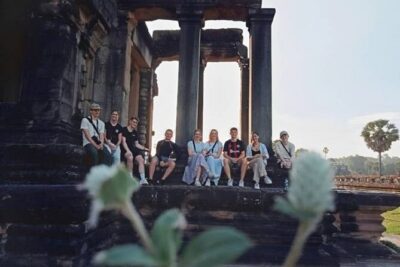 ★ 5.0Angkor Wat Sunrise & 3 Main Temples with Breakfast – Small GroupFrom $152,857 reviews
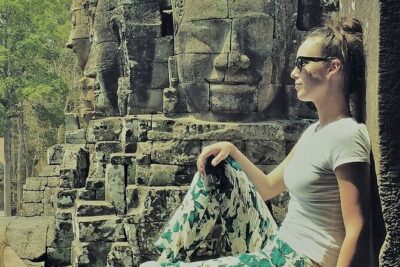 ★ 5.0Siem Reap Tour: Angkor Wat Sunrise, Bayon, Ta Prohm, Banteay SreiFrom $130931 reviews
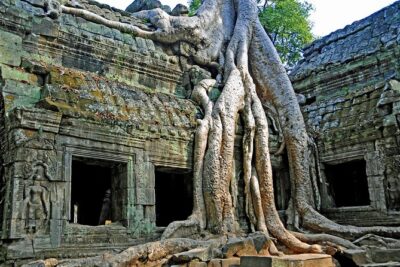 ★ 5.02-Day Angkor Wat With Small, Big Circuit and Banteay Srei TourFrom $158545 reviews
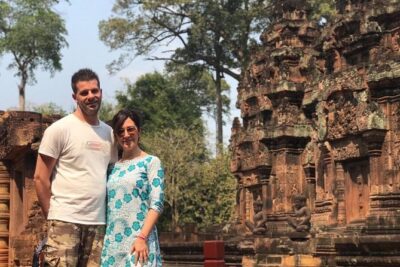 ★ 5.0Full-Day ‘Big Tour’ with Sunset at Phnom BakhengFrom $18341 reviews
 ★ 5.01-Day Amazing Angkor Wat Tour with Sunset & All Interesting Major TemplesFrom $67308 reviews
 ★ 5.0Private sunrise ‘small tour’ of Angkor Wat with car or van & GuideFrom $55179 reviews
 ★ 4.9Banteay Srei and Grand Circuit Heritage TourFrom $18163 reviews
 ★ 5.0Banteay Srei and Grand Circuit Heritage Tour from Siem ReapFrom $24142 reviews