
REVIEW · TONLÉ SAP
3-Day ‘Temples & Tonle Sap’ Tour
Three days is all it takes for Angkor overload. This Temples & Tonle Sap tour strings together Angkor Wat mornings and a Tonle Sap motorized boat ride with an English-speaking guide, so you get context without spending your time untangling tickets and timing. I like that hotel transfers remove the early scramble, and I like that your guide connects the temples to the people who built them, from Jayavarman VII’s Bayon role to why Phnom Bakheng sits on a hill. One caution: it is a packed schedule with a lot of walking, so if stairs and long temple days are tough, you might feel rushed.
The value is solid if you want “see a lot, stress less.” You’ll ride in an air-conditioned vehicle for most of the day, plus bottled water, cold towels, and a guide who keeps things moving. Still, plan for extra costs for Angkor passes and for meals, since temple tickets and food are not included, and the tour starts with pickup at 8:30 am.
In This Review
- Key things I’d zero in on before you book
- Temples plus Tonle Sap: why this combo makes sense
- Price and value check: what $250 includes, what costs extra
- Getting oriented fast: day 1 through Angkor’s biggest “wow” moments
- Angkor Archaeological Park and buying your pass
- Bayon: where faces meet power
- Baphuon: shifting from one belief system to another
- Ta Prohm: the temple that lets nature in
- Terrace of the Elephants: ceremony built into stone
- Angkor Wat in the middle of the day
- Phnom Bakheng: a hilltop finish that can feel steep
- Day 2 sunrise at Angkor Wat plus a clustered temple run
- Sunrise revisit: why a second visit changes everything
- Preah Khan, Neak Poan, Ta Som, and East Mebon: a temple cluster you can actually cover
- Banteay Srei: the ladies temple for a change of textures
- Banteay Samre and Banteay Kdei: completing the day with depth
- Tonle Sap day 3: Kompong Phluk on stilts, boat ride, then Roluos history
- Kompong Phluk: villages built on stilts
- Roluos Temples: earlier Khmer stone, a sense of beginnings
- Markets and Artisans d Angkor: a softer ending
- Pace, comfort, and what to pack for a 3-day temple sprint
- Who this tour suits best, and who should pick something else
- Should you book the Temples & Tonle Sap 3-day tour?
- FAQ
- What is included in the 3-day tour price?
- Are temple passes included?
- How much are the Angkor passes?
- Is the motorized boat ride on Tonle Sap included?
- What time does the tour start?
- Is pickup and drop-off available?
- What is the cancellation policy?
Key things I’d zero in on before you book
- Hotel transfers plus AC vehicle so you avoid the hardest part of planning Angkor days.
- A motorized boat ride on the Tonle Sap adds a totally different side of Cambodia beyond temple stones.
- A professional English-speaking guide who gives meaning to what you’re seeing, not just names.
- Big-hitters and lesser-visited stops to stretch your three days beyond the obvious photos.
- Sunrise revisit at Angkor Wat gives you a second chance to experience the main site differently.
- Built-in breaks and day structure (including time back at your hotel for breakfast on day 2).
Temples plus Tonle Sap: why this combo makes sense
Siem Reap is famous for Angkor, but it can be a trap. You can spend all your time on one kind of sight, temples after temples, and still miss the other Cambodia that makes this region feel real.
This tour mixes Angkor’s monumental temple world with the Tonle Sap’s everyday life on the water. On day 3, you head to Kompong Phluk, a stilt village area where fishing drives daily life, then you bounce into the Roluos temples, some of the earlier Khmer stone structures. That shift keeps your brain awake, and it gives your Angkor visit a wider frame.
Also, the “fit more in than you would on your own” promise is not just marketing. With hotel pickup, an English guide, and a planned route, you spend less time working out logistics. If you only have a few days, that matters.
Price and value check: what $250 includes, what costs extra
The tour price is $250 for about 3 days. What you get included is meaningful: hotel pickups and drop-offs, an air-conditioned vehicle for the days’ driving, a professional English-speaking guide, bottled water, and cold towels. You also get the fee for the motorized boat ride.
The big “not included” item is the temple pass. You’ll need the Angkor passes for your visits. The pass is sold by the Angkor Enterprise ticket office, and you need one pass per person. For a 3-day pass, it is USD 62, and for a 7-day pass, it is USD 72.
Meals are also not included. Day 1 mentions continuing after lunch, which means you will need to handle lunch yourself. So when you budget, think in terms of roughly:
- Tour price: $250
- Angkor pass for 3 days: $62 per person
- Meals: your choice
That total puts you in a range where the guide, transport, and boat ride are doing real work for you. If you were to self-plan, you’d still have to solve the same ticket issue, timing, and long driving days.
More time on the lake, other boats
- From Siem Reap: Kampong Phluk Floating Village Tour by Boat★ 4.9 · 6,979 reviews
- Kompong Phluk Floating Village Half-Day Tour ( Morning / Sunset )★ 5.0 · 1,494 reviews
- Siem Reap: Kulen Mountain, Beng Mealea and Tonle Sap Tour★ 5.0 · 1,483 reviews
- Tonle Sap Lake & Kampong Phluk Village Half-Day Tour★ 5.0 · 1,045 reviews
Getting oriented fast: day 1 through Angkor’s biggest “wow” moments
Day 1 is about jumping into Angkor’s core experience and letting the sites do the talking, with the guide helping you read the story behind each stone.
Angkor Archaeological Park and buying your pass
You start at Angkor Archaeological Park and the plan is simple: buy your passes at the Angkor Enterprise ticket office. You’ll want to have your timing lined up for this, because the pass matters for every temple visit.
If you already know you’ll be using a 3-day pass, this stop keeps you from hunting tickets later. One pass per person means you’ll need to handle it for everyone in your group.
Bayon: where faces meet power
Bayon Temple is a richly decorated temple at Angkor, built in the late 12th or early 13th century as the state temple of King Jayavarman VII. The key for your visit is that this is not just “pretty carvings.” It is tied to the center of Jayavarman’s capital, so you’re seeing a political and religious statement from one of Angkor’s major rulers.
Baphuon: shifting from one belief system to another
Next is Baphuon, located in Angkor Thom, northwest of Bayon. Built in the mid-11th century, it was constructed as the state temple of Udayadityavarman, dedicated to Shiva. The site’s Hindu roots help you understand Angkor as a place where styles and religious focus changed over time.
Also on our Siem Reap list, if none of these land
Ta Prohm: the temple that lets nature in
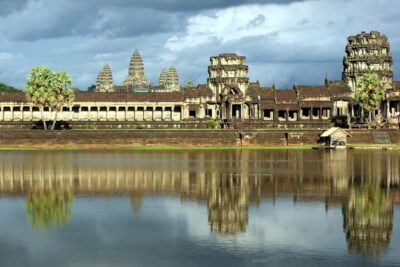
Ta Prohm is built in the Bayon style, mostly late 12th and early 13th centuries, and was originally called Rajavihara. Today it is famous for the way trees and roots mingle with the structures. Practically, it’s one of the best places to slow down for a photo and then still learn something about how the Khmer world kept evolving.
Terrace of the Elephants: ceremony built into stone
You stop at the Terrace of the Elephants and the Terrace of the Leper King area, which form part of the eastern boundary of the royal palace grounds. This is the kind of place where you can start noticing processions and royal space. Even if you’re not a “temple scholar,” it makes Angkor feel like a city, not a museum.
Angkor Wat in the middle of the day
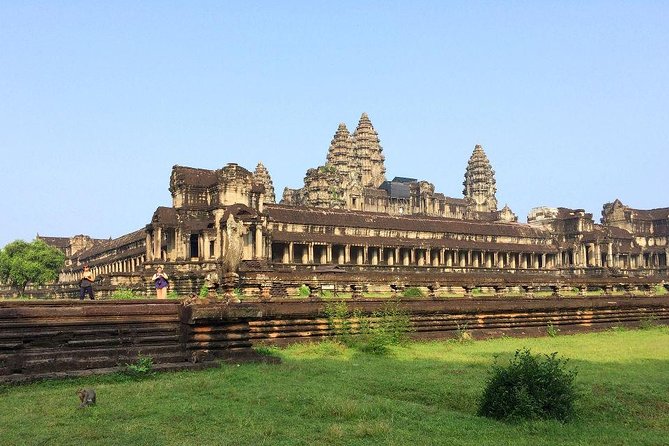
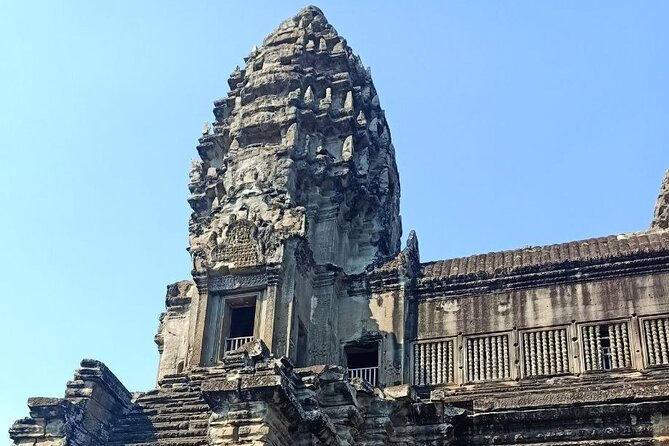
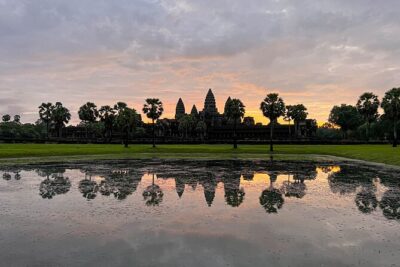
After lunch, you reach Angkor Wat, the main attraction and the largest religious monument in the world at roughly 162.6 hectares. Originally constructed as a Hindu temple dedicated to Vishnu, Angkor Wat is the site you understand best by paying attention to scale and symmetry first, then details second.
This stop lasts about 3 hours on day 1, which gives you enough time to do the classic walk and still catch the carvings up close. The drawback with any mid-day Angkor schedule is heat and glare. Plan for that with a hat and sun protection, and let your guide set the rhythm.
Phnom Bakheng: a hilltop finish that can feel steep
Phnom Bakheng is a Hindu and Buddhist temple-mountain dedicated to Shiva, built at the end of the 9th century during King Yasovarman’s reign. It sits on top of a hill, and that matters because it changes the whole feeling of the day: you’re doing a climb and then looking out over the structure.
Expect steps. If you know you struggle with steep climbs, treat this as a “go slow” moment and pace yourself.
Day 2 sunrise at Angkor Wat plus a clustered temple run
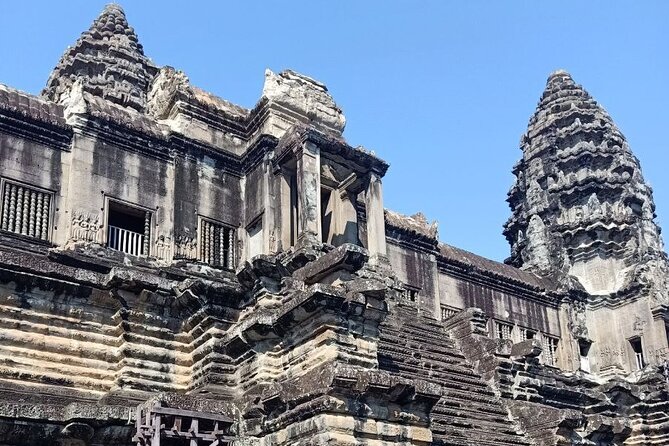
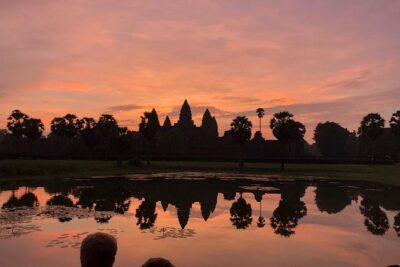
Day 2 has a different vibe: you revisit Angkor Wat for sunrise, then return to your hotel for breakfast. That is a big deal if you want two kinds of Angkor photos and two different light moods, without losing your whole morning to logistics.
Sunrise revisit: why a second visit changes everything
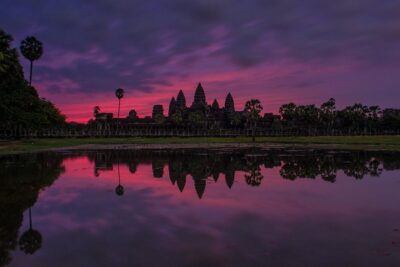
Seeing Angkor Wat at sunrise is not just for photographers. The light is softer and the atmosphere often feels calmer than later in the day. Even if you’ve already seen the site on day 1, the second visit helps you notice different lines and surfaces.
Then you head back for breakfast, which is smart. Temple touring can become a dehydration and fatigue game if you keep pushing without downtime.
Preah Khan, Neak Poan, Ta Som, and East Mebon: a temple cluster you can actually cover
After breakfast, you visit a set of nearby temples: Preah Khan, Neak Poan, Ta Som, and East Mebon. The tour notes that they are clustered together, which helps you avoid that “constant drive, no time to look” problem.
At a high level, this run is excellent for understanding how Angkor layouts worked. You’re not only chasing one icon. You’re watching how the Khmer world built groups of temples into a connected area.
Banteay Srei: the ladies temple for a change of textures
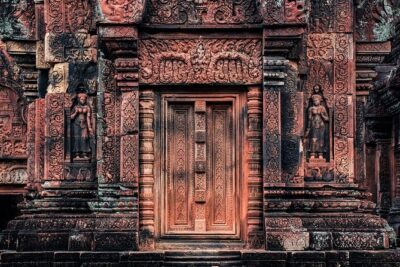
After lunch, you head to Banteay Srei, often called the ladies temple, a 10th-century temple dedicated to Shiva and located near Phnom Dei hill area, about 25 km northeast of the main Angkor zone.
What makes this stop interesting is that it helps you get away from the most crowded circuits and see a different style of temple presence in the region. It’s also a good “contrast day” moment after the big-name Angkor Wat and Bayon-style stops.
Banteay Samre and Banteay Kdei: completing the day with depth
You then visit Banteay Samre and Banteay Kdei. Banteay Samré is described as early 12th-century Hindu temple in the Angkor Wat style. Banteay Kdei, meaning a citadel of monks’ cells, is a Buddhist temple built mid-12th to early 13th centuries.
This is where your guide matters. If you only walk through temples with names and no context, you can feel like you’re repeating the same scene. With a guide giving the connection, these stops start to feel like chapters.
Tonle Sap day 3: Kompong Phluk on stilts, boat ride, then Roluos history
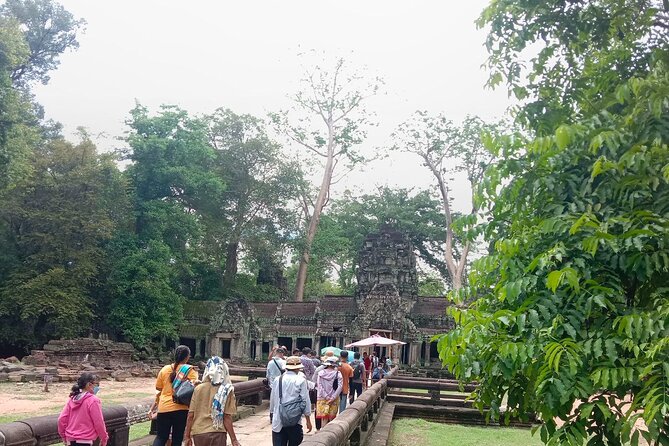
Day 3 is a balanced reset. You move from temple stone to life on the water, then back to older temple foundations. It helps your brain feel like the trip has range, not just endurance.
Kompong Phluk: villages built on stilts
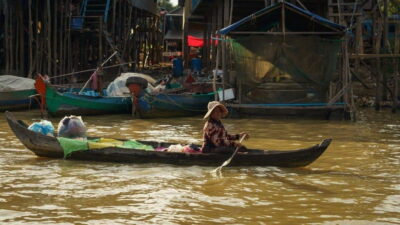
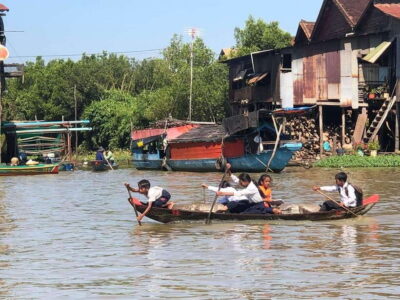
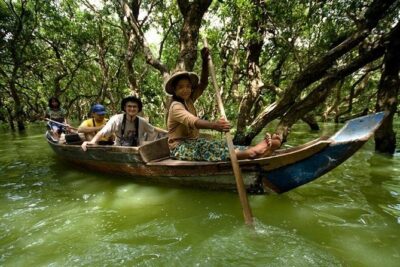
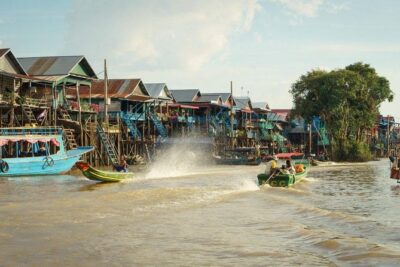
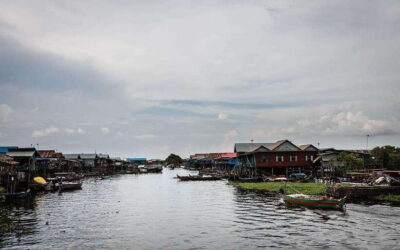
Kompong Phluk is a collection of villages largely built on stilts on the Tonle Sap. The name means Harbor of the Tusks, and the community depends heavily on fishing. The info notes that Cambodia’s wet season runs from May to October, and fishing shifts with the water.
This is also where the motorized boat ride becomes more than an added activity. You get a different sense of distance and geography, and the water stops being just a backdrop.
A practical note: stilt villages can feel uneven underfoot around jetties and walkways. Wear shoes you can trust.
Roluos Temples: earlier Khmer stone, a sense of beginnings
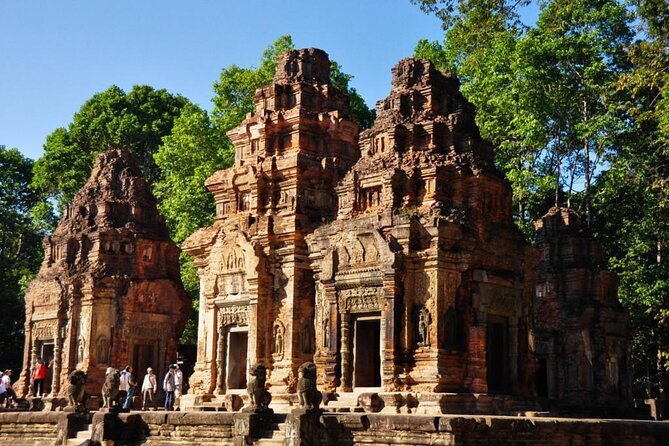
Then you visit the Roluos group of temples, among the earliest permanent structures built by the Khmer, dating to the late 9th century. These sites mark the beginning of the classical period of Khmer civilization, which is one of the key “why this matters” points for serious travelers.
Compared to Angkor’s later giants, Roluos can feel quieter. That quiet can be a feature, not a drawback, because it gives you space to absorb the basic Khmer building vocabulary.
Markets and Artisans d Angkor: a softer ending
On the way back, you look at Phsar Leur, the top market, Phsar Chas, the old market, and Artisans d Angkor. Admission is free for this part. This is a good place to do simple browsing, pick up snacks, and get a feel for everyday Siem Reap life without turning your final hours into another museum mission.
Pace, comfort, and what to pack for a 3-day temple sprint
This tour is designed for people who want momentum. You’ll be up early, and you’ll move between major sites with driving time in between. It is listed as not suitable for those with less than average fitness or those who cannot walk normally.
That does not mean you need to be an athlete. It does mean you should go in assuming:
- You will walk a lot on uneven surfaces.
- You may climb stairs at hilltop sites like Phnom Bakheng.
- You should protect yourself from sun and dehydration.
Good news: the tour includes bottled water and cold towels, and you ride in an air-conditioned vehicle for the transport stretches. That’s real comfort value, especially in warm weather.
If you want to get the most out of the experience, don’t try to treat every stop like a race for the perfect photo. Let the guide’s explanations slow you down in the right places. Temples are where you get the most satisfaction when you look longer than you think you can.
Who this tour suits best, and who should pick something else
I think this tour is a great match if you:
- Have limited time in Siem Reap and want the highlights without planning stress.
- Like guided history that makes temple names mean something.
- Want the Tonle Sap experience, not just Angkor.
It may be a tougher fit if you:
- Get uncomfortable with a packed day structure and lots of walking.
- Want lots of free time at your own pace at each site, instead of following a set route.
- Are traveling with very young children, since it is noted as not available for children under 3 years old.
One more practical point: this is described as a private tour/activity, meaning it is only your group participating. That usually makes it feel less chaotic than a big mixed tour, even though the days are still busy.
Should you book the Temples & Tonle Sap 3-day tour?
Book it if you want a structured, guide-led Angkor experience plus the Tonle Sap boat and stilt villages, and you value not having to solve logistics yourself. The included transfers, AC vehicle, guide, and boat fee are strong value for a $250 tour, especially when you factor in how much time and energy temple planning can drain.
Skip or consider another option if you dislike early mornings and long walking days, or if you know you need lots of downtime to enjoy sightseeing. With the right shoes, sun protection, and a realistic pace, this tour is an efficient way to see two sides of Siem Reap in just three days.
FAQ
What is included in the 3-day tour price?
The tour includes hotel pickups and drop-offs, an air-conditioned vehicle for transport and tours, a professional English-speaking guide, the motorized boat fee, bottled water, and cold towels.
Are temple passes included?
No. Temple passes are not included. You will need Angkor passes for your visits.
How much are the Angkor passes?
The Angkor pass costs USD 62 for 3 days and USD 72 for 7 days. You need one pass per person.
Is the motorized boat ride on Tonle Sap included?
Yes. The fee for the motorized boat is included, and the boat activity is part of day 3 at Kompong Phluk.
What time does the tour start?
The meeting/start time is 8:30 am, and the vehicle departs from your hotel at that time.
Is pickup and drop-off available?
Yes. Complimentary hotel pickup and drop-off is available.
What is the cancellation policy?
You can cancel for free up to 24 hours in advance for a full refund. If you cancel less than 24 hours before the experience starts, the amount you paid is not refunded.
More Tours in Siem Reap
- Angkor Wat Sunrise or Sunset Tour with Guide from Siem Reap★ 5.0 · 12,109 reviews
- Siem Reap: Angkor Wat: Small-Group Sunrise or Sunset Tour★ 5.0 · 9,444 reviews
- From Siem Reap: Kampong Phluk Floating Village Tour by Boat★ 4.9 · 6,979 reviews
- Siem Reap: Angkor Wat 2-Day Tour with Sunrise and Sunset★ 4.9 · 4,429 reviews
More Tour Reviews in Siem Reap
- Angkor Wat Sunrise or Sunset Tour with Guide from Siem Reap★ 5.0 · 12,109 reviews
- Siem Reap: Angkor Wat: Small-Group Sunrise or Sunset Tour★ 5.0 · 9,444 reviews
- From Siem Reap: Kampong Phluk Floating Village Tour by Boat★ 4.9 · 6,979 reviews
- Siem Reap: Angkor Wat 2-Day Tour with Sunrise and Sunset★ 4.9 · 4,429 reviews
More Hours Out on the Tonle Sap
- From Siem Reap: Kampong Phluk Floating Village Tour by Boat★ 4.9 · 6,979 reviews
- Kompong Phluk Floating Village Half-Day Tour ( Morning / Sunset )★ 5.0 · 1,494 reviews
- Siem Reap: Kulen Mountain, Beng Mealea and Tonle Sap Tour★ 5.0 · 1,483 reviews
- Tonle Sap Lake & Kampong Phluk Village Half-Day Tour★ 5.0 · 1,045 reviews
Newly written up around Siem Reap
- Waterfall & River of 1000 Siva Linga- Kulen Mountain Private Tour
★ 5.0 · 3 reviews - Private Transfer from Siem Reap to Sihanoukville
★ 4.5 · 3 reviews - Private Tour to Koh Ker and Beng Mealea
★ 5.0 · 3 reviews - Private Transfer: Siem Reap Angkor Internation Airport to Hotel
★ 5.0 · 3 reviews - Kulen National Park Ticket -Waterfall & 1000 Lingas
★ 5.0 · 3 reviews - Kulen Waterfall & Kbal Spean Tour
★ 5.0 · 3 reviews
Tonlé Sap & Floating Village Tours, side by side.
 ★ 4.9Kampong Phluk Floating Village Tour by BoatFrom $206,979 reviews
 ★ 4.9Kampong Phluk Floating Village Tour with BoatFrom $193,843 reviews
 ★ 5.0Siem Reap Floating Village Kampong Phluk Sunset with BoatFrom $181,962 reviews
 ★ 5.0Kompong Phluk Floating Village Half-Day Tour ( Morning / Sunset )From $241,494 reviews
 ★ 5.0Kulen Mountain, Beng Mealea and Tonle Sap TourFrom $481,483 reviews
 ★ 5.0Tonle Sap Lake & Kampong Phluk Village Half-Day TourFrom $491,045 reviews
 ★ 5.0Kampong Phluk Floating Village Tour by BoatFrom $201,020 reviews
 ★ 4.8Kompong Phluk Floating Village Half-Day TourFrom $24966 reviews
Also appears in