
REVIEW · ANGKOR
Angkor Grand Circuit Temples Tour
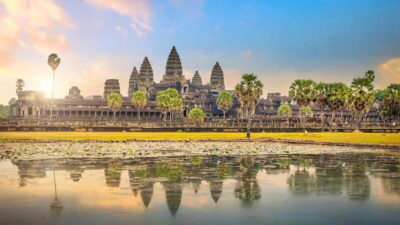
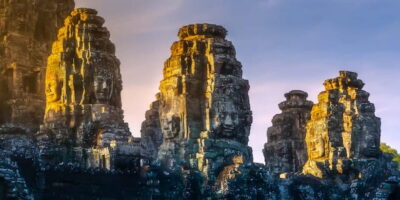
Angkor Thom can feel like a maze, but it is also magic when someone smart paces your day. This private Grand Circuit Temples Tour is built for an efficient route across the big sites, with time at each stop and an English-speaking guide to explain what you are seeing. You get a private guide and vehicle, and I love how that cuts down wasted time and helps you hit the right photo moments without rushing.
I really like the temple mix here, especially the quieter-feeling stops like Banteay Prei, plus the classic Angkor Thom landmarks such as Preah Khan and Neak Pean. One possible drawback to plan for is that the Angkor Pass is not included, so your day cost will be higher once you add the One Day pass and factor in food and drinks.
In This Review
- Key points before you go
- Why the Grand Circuit from Siem Reap feels worth the effort
- Price and value: what you pay, what you should budget
- The logistics that can make or break a temple day
- Start time and how the day flows
- Dress code, no drama
- Private tour comfort
- Temple by temple: from Preah Khan to Srah Srang
- Stop 1: Preah Khan Temple (about 2 hours)
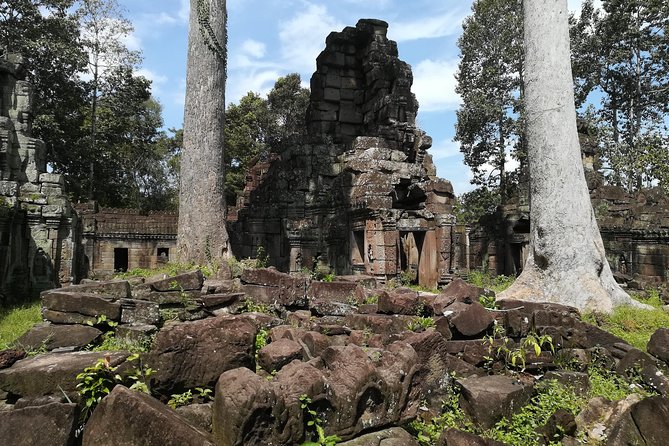
- Stop 2: Banteay Prei Temple (about 30 minutes)
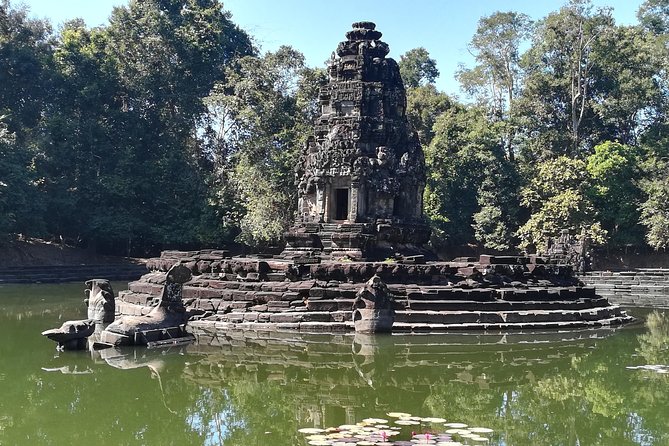
- Stop 3: Neak Pean (about 1 hour)
- Stop 4: Ta Som (about 1 hour)
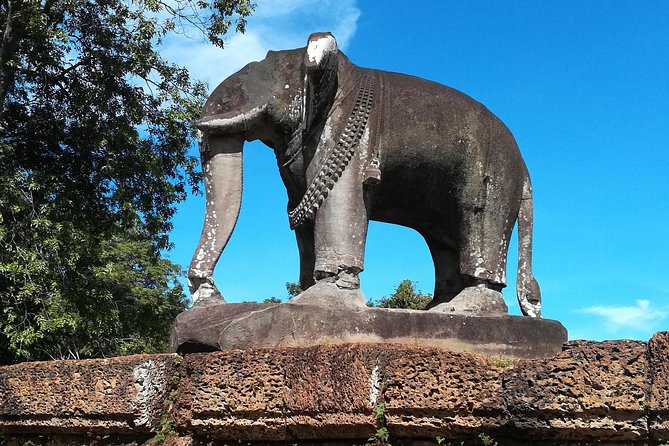
- Stop 5: Eastern Mebon (about 1 hour)
- Stop 6: Banteay Samre (about 1 hour)
- Stop 7: Pre Rup (about 1 hour)
- Stop 8: Srah Srang (about 20 minutes)
- Your guide makes the big difference, especially for photos
- Crowds, pacing, and how to avoid feeling rushed
- Who should book this private Grand Circuit tour
- Should you book Angkor Grand Circuit Temples Tour?
- FAQ
- What time does the Angkor Grand Circuit Temples Tour start?
- How long is the tour?
- What is included in the tour price?
- What is not included?
- Do I need to buy an Angkor Pass?
- What should I wear to visit the temples?
- Is this tour private?
Key points before you go
- Private, only-your-group pace: You are not moving as a crowd, so your guide can slow down where the details matter.
- Angkor Thom focus, not just Angkor Wat: You get a fuller look at the complex and its story across several major sites.
- Early start helps: An 8:00 am pickup keeps you ahead of the worst heat and peak lines.
- Route planning and photo stops: Guides like Bunpheng and Pal Chen are highlighted for finding good angles and efficient pathways.
- Dress code is real: Shoulders and knees need to be covered or you may be turned away.
- AC transport and cold water: It is a long day, and these small comforts make a difference.
Why the Grand Circuit from Siem Reap feels worth the effort
This is one of those days where you should not count hours too tightly. The Angkor zone is spread out, the temples take time to understand, and the walking can add up faster than you expect once you start stopping for viewpoints and carvings.
That said, the Grand Circuit works well because it balances big-name ruins with sites that often feel calmer. You are starting from Siem Reap with pickup at 8:00 am, then moving across several temples in a logical order, which helps you keep your energy for the sights that need it most.
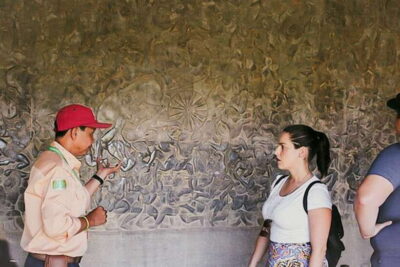
The best part is the human layer. An experienced guide can point out what you might miss if you just follow maps. You get history and context on the fly, plus practical guidance on what to look for at each stop, from water features to gateways and temple layouts.
Price and value: what you pay, what you should budget
The tour price is $52.00 per person, and it includes several things that matter on an Angkor day: an English-speaking guide, an AC car or minivan, and bottled cold drinking water. You also get hotel pickup and drop-off from your Siem Reap base, which saves you the hassle of arranging transport and figuring out where to meet.
Here is the part you must plan for: the entrance fee is not included. The One Day Angkor Pass is $37.00 per person. So a realistic baseline is about $89 per person before food and drinks.
That extra pass cost is normal for Angkor, but the value question is whether this tour gives you enough temple time to justify the combined expense. For most people, it does, because you are not limiting yourself to just one highlight. You are covering a full loop of major Angkor Thom temples, plus stops that add variety without feeling like random detours.
What you will still pay separately: food, drinks, and anything not included in the package. Since the day lasts about 7 to 8 hours, build in time to grab lunch or snacks on your own, and plan to drink water even though bottled water is provided.
More circuits through the Angkor complex, compared
- Angkor Wat Sunrise & 3 Main Temples with Breakfast – Small Group★ 5.0 · 2,857 reviews
- Siem Reap Tour: Angkor Wat Sunrise, Bayon, Ta Prohm, Banteay Srei★ 5.0 · 931 reviews
- 2-Day Angkor Wat With Small, Big Circuit and Banteay Srei Tour★ 5.0 · 545 reviews
- Full-Day ‘Big Tour’ with Sunset at Phnom Bakheng★ 5.0 · 341 reviews
The logistics that can make or break a temple day
This tour is straightforward, but a few details can affect your comfort.
Start time and how the day flows
You start at 8:00 am, with pickup from your hotel lobby after breakfast. From there, you go to the ticket office to pick up your ticket before entering the temple circuit area. The stop lengths listed for each site add up to a full day, and the driving time between temples is part of the experience, just be ready for a lot of moving.
Dress code, no drama
One rule is non-negotiable: wear clothes that keep shoulders and knees covered. If you show up in shorts or sleeveless tops, you might be denied access to the temples. Bring a light layer that you can wear comfortably in warm weather. It is an easy fix, and it prevents a frustrating pause at the gate.
Private tour comfort
This is a private tour, meaning only your group participates. That matters more than it sounds. You can move at your pace, ask questions without waiting your turn, and get help adjusting your route if you need breaks.
Temple by temple: from Preah Khan to Srah Srang
This route is a well-paced mix of major structures and moments that feel quieter. Below is what each stop gives you, plus a few practical tips so you get more from your time there.
Stop 1: Preah Khan Temple (about 2 hours)
Preah Khan is a key opening temple for Angkor Thom. It is big enough that you will want the time, and it rewards you for slowing down.
What to look for:
- Gateways and courtyards that help you understand how temple space is organized
- Carvings and layout details that only really make sense when someone explains what the complex was meant to represent
Practical note: since your day starts here, wear comfortable shoes and expect some walking on uneven ground. Your guide’s explanations early in the day help everything else click faster.
Stop 2: Banteay Prei Temple (about 30 minutes)
This stop is short, but it can feel special because it often does not have the same crowd pressure as the biggest sites. In fact, this is one of the temples people describe as having fewer tourists.
Why it is worth stopping:
- The pace is slower, so you can enjoy the carvings and the sense of place without feeling rushed
- The brief visit keeps your day from tipping into exhaustion
Tip: use this time to reset. Take a moment, hydrate, and let the guide point out what matters before you move on.
Stop 3: Neak Pean (about 1 hour)
Neak Pean is one of those temples where the layout is the story. You are not just looking at stones, you are looking at a designed water feature and temple symbolism wrapped into one.
What I find useful to focus on:
- The symmetry and how the structure relates to water
- The guide’s explanation of why this kind of temple design mattered
Because it is more about design than scale, one hour is a comfortable window. You can walk the key areas without racing.
Stop 4: Ta Som (about 1 hour)
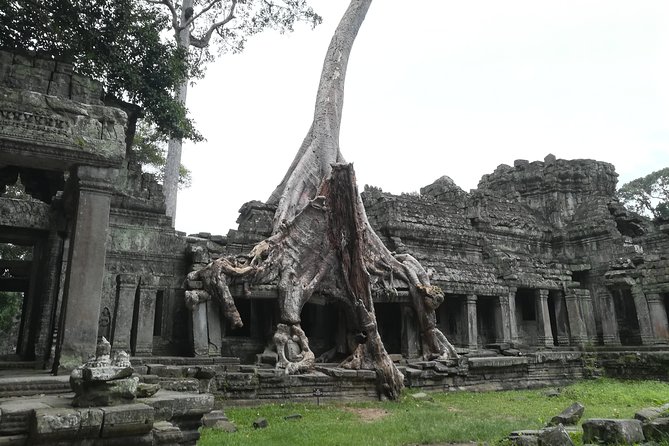
Ta Som has that classic Angkor look, where the ruins feel both ancient and slightly wild. If you like temples with a strong visual character, this one tends to deliver.
What to watch for:
- How the structure frames views and corridors
- Details around doorways and sculpted elements that change how you perceive the temple when you view from different angles
Photo note: the guide’s route instincts really help here. You get better angles when you are not standing wherever everyone else ends up.
Stop 5: Eastern Mebon (about 1 hour)
Eastern Mebon is more of a “take your time to understand the composition” kind of stop. It is a good match for your mid-day energy, because you can slow down and focus on layout and craft details.
What to look for:
- The relationship between the temple and its surroundings
- How the structure’s form connects with the bigger Angkor Thom story your guide is building
If the heat is intense, this is a good place to pause for shade whenever you can find it.
Stop 6: Banteay Samre (about 1 hour)
Banteay Samre adds another style of temple experience, with enough time to appreciate both the structure and the carved elements.
How this stop pays off:
- It breaks up the day so you are not repeating the same visual pattern temple after temple
- It lets you compare details across the circuit and notice differences your guide can explain
This is also a good stop for asking questions. When you are deep into the route, your questions get more interesting and your guide’s answers become easier to connect to what you are seeing.
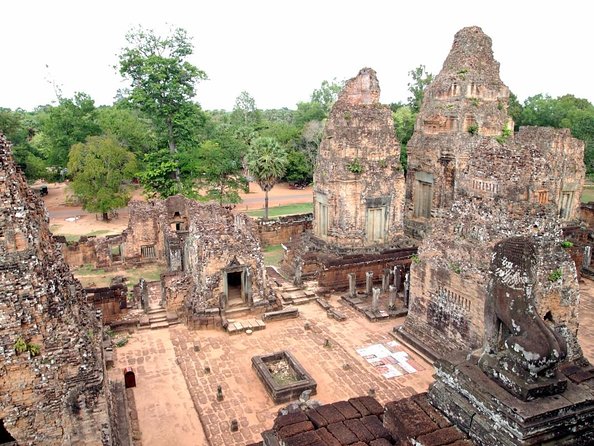
Stop 7: Pre Rup (about 1 hour)
Pre Rup is a “higher point” kind of temple experience. It is not just about walking around, it is about the viewpoints and perspective.
Why you should treat it like a highlight:
- You can step back and see how the temple sits within the broader area
- The platform views help you understand why these sites were built where they were
Timing note: you will not likely have the long golden-hour sunset window that some separate tours focus on, but you still get good observation time within the schedule.
Stop 8: Srah Srang (about 20 minutes)
Srah Srang is the relaxed closer. It is a sandstone terrace decorated with Naga and Shimha statues, and the setting makes it a calm final stop.
How to get the most in only 20 minutes:
- Let the guide point out what the Naga and Shimha decorations symbolize in temple art
- Take a slow walk, then stop for photos where you can see the terrace details without fighting too many people
This short finish is ideal. It helps you end the day feeling like you covered a lot, without turning it into an endless grind.
Your guide makes the big difference, especially for photos
The tour is advertised with route coverage, but in practice the guide quality changes the whole feel of the day. In particular, I see a strong pattern in the kind of service people praise: on-time pickup, excellent English, and smart planning for photo stops.
Names that come up for top-notch guidance include Bunpheng and Mr Pal Chen. Both are described as exceptional, with strengths in explaining what you are looking at and finding routes that help you get better views. Bunpheng is especially noted for knowing the routes to the best photo stops and the interesting bits unique to each temple. Pal Chen gets credit for keeping the group moving well, with excellent English and the ability to avoid heavier crowds on some sites.
What you can do as a practical traveler:
- Ask your guide for two photo priorities, then follow their suggested path
- If you have a short attention span, ask for a quick “what matters here” recap at each stop
Crowds, pacing, and how to avoid feeling rushed
Even with a private group, Angkor is popular. The strategy that works best is not fighting crowds blindly, it is letting the schedule and route sequencing do the heavy lifting.
This tour tends to help because it starts early and spreads your visits across multiple sites. People also describe that some temples can feel surprisingly quiet, especially compared with the biggest names. That is where having a guide with route instincts pays off.
Still, be realistic: you will see plenty of ruins in one day. That means you need a personal pacing plan. I recommend:
- Start with curiosity, not speed. Your first temple is where you set your expectations.
- Drink water regularly, even if you do not feel thirsty yet.
- Take one short break in the middle of the day if your feet are starting to feel it.
If you have very high stamina, great. If not, you still can enjoy this route, but go in with the mindset that it is a “temple sampler” rather than a slow wander through one site for hours.
Who should book this private Grand Circuit tour
This tour is a strong fit if you want a structured Angkor day without the stress of planning. It is especially good for you if:
- You want to see many Angkor Thom temples in one outing, including Preah Khan, Neak Pean, Ta Som, Eastern Mebon, Banteay Samre, Pre Rup, and Srah Srang.
- You prefer a private experience with an English-speaking guide and a vehicle that keeps you comfortable.
- You like getting history and context on the spot, not just reading signs.
- You care about photo angles and would rather have route guidance than guess.
It might be less ideal if you want a slow, minimalist day with only one or two temples. With seven to eight hours and eight stops, it is not designed for a relaxed “take days to think about it” rhythm.
Should you book Angkor Grand Circuit Temples Tour?
I would book it if your priority is maximum temple coverage with a guide who can explain what you are seeing and help you move efficiently. The value comes from the package basics, AC transport, bottled water, hotel pickup, and a private English-speaking guide, plus a route that mixes major and quieter-feeling sites.
I would hesitate if you are trying to keep costs extremely low, because once you add the $37 One Day Angkor Pass, your total spend rises fast. Also consider the dress code rule, because you do not want to waste time dealing with access issues.
If you want Angkor Thom beyond the headline temples, this tour has a practical shape: an early start, a tight circuit, and enough time at each stop to feel like you actually learned something and not just walked past stone.
FAQ
What time does the Angkor Grand Circuit Temples Tour start?
The tour starts at 8:00 am, with hotel lobby pickup after breakfast.
How long is the tour?
It runs about 7 to 8 hours.
What is included in the tour price?
It includes an English-speaking tour guide, transportation in an AC car or minivan or minibus, and bottled cold drinking water. Hotel pickup and drop-off are also part of the experience.
What is not included?
Entrance fees are not included, including the One Day Angkor Pass. Food, drinks, and accommodation are also not included.
Do I need to buy an Angkor Pass?
Yes. The tour lists the One Day Angkor Pass as $37.00 per person, and ticket pickup is part of the morning flow.
What should I wear to visit the temples?
Wear clothes that keep your shoulders and knees covered. If not, you may not be allowed access.
Is this tour private?
Yes. It is a private tour, so only your group will participate.
More Tours in Siem Reap
- Angkor Wat Sunrise or Sunset Tour with Guide from Siem Reap★ 5.0 · 12,109 reviews
- Siem Reap: Angkor Wat: Small-Group Sunrise or Sunset Tour★ 5.0 · 9,444 reviews
- From Siem Reap: Kampong Phluk Floating Village Tour by Boat★ 4.9 · 6,979 reviews
- Siem Reap: Angkor Wat 2-Day Tour with Sunrise and Sunset★ 4.9 · 4,429 reviews
More Tour Reviews in Siem Reap
- Angkor Wat Sunrise or Sunset Tour with Guide from Siem Reap★ 5.0 · 12,109 reviews
- Siem Reap: Angkor Wat: Small-Group Sunrise or Sunset Tour★ 5.0 · 9,444 reviews
- From Siem Reap: Kampong Phluk Floating Village Tour by Boat★ 4.9 · 6,979 reviews
- Siem Reap: Angkor Wat 2-Day Tour with Sunrise and Sunset★ 4.9 · 4,429 reviews
Keep Going Round the Circuit
- Angkor Wat Sunrise & 3 Main Temples with Breakfast – Small Group★ 5.0 · 2,857 reviews
- Siem Reap Tour: Angkor Wat Sunrise, Bayon, Ta Prohm, Banteay Srei★ 5.0 · 931 reviews
- 2-Day Angkor Wat With Small, Big Circuit and Banteay Srei Tour★ 5.0 · 545 reviews
- Full-Day ‘Big Tour’ with Sunset at Phnom Bakheng★ 5.0 · 341 reviews
Newly written up around Siem Reap
- Waterfall & River of 1000 Siva Linga- Kulen Mountain Private Tour
★ 5.0 · 3 reviews - Private Transfer from Siem Reap to Sihanoukville
★ 4.5 · 3 reviews - Private Tour to Koh Ker and Beng Mealea
★ 5.0 · 3 reviews - Private Transfer: Siem Reap Angkor Internation Airport to Hotel
★ 5.0 · 3 reviews - Kulen National Park Ticket -Waterfall & 1000 Lingas
★ 5.0 · 3 reviews - Kulen Waterfall & Kbal Spean Tour
★ 5.0 · 3 reviews
Angkor Temple Circuit Tours, side by side.
 ★ 5.0Angkor Wat Sunrise & 3 Main Temples with Breakfast – Small GroupFrom $152,857 reviews
 ★ 5.0Siem Reap Tour: Angkor Wat Sunrise, Bayon, Ta Prohm, Banteay SreiFrom $130931 reviews
 ★ 5.02-Day Angkor Wat With Small, Big Circuit and Banteay Srei TourFrom $158545 reviews
 ★ 5.0Full-Day ‘Big Tour’ with Sunset at Phnom BakhengFrom $18341 reviews
 ★ 5.01-Day Amazing Angkor Wat Tour with Sunset & All Interesting Major TemplesFrom $67308 reviews
 ★ 5.0Private sunrise ‘small tour’ of Angkor Wat with car or van & GuideFrom $55179 reviews
 ★ 4.9Banteay Srei and Grand Circuit Heritage TourFrom $18163 reviews
 ★ 5.0Banteay Srei and Grand Circuit Heritage Tour from Siem ReapFrom $24142 reviews
Also appears in