
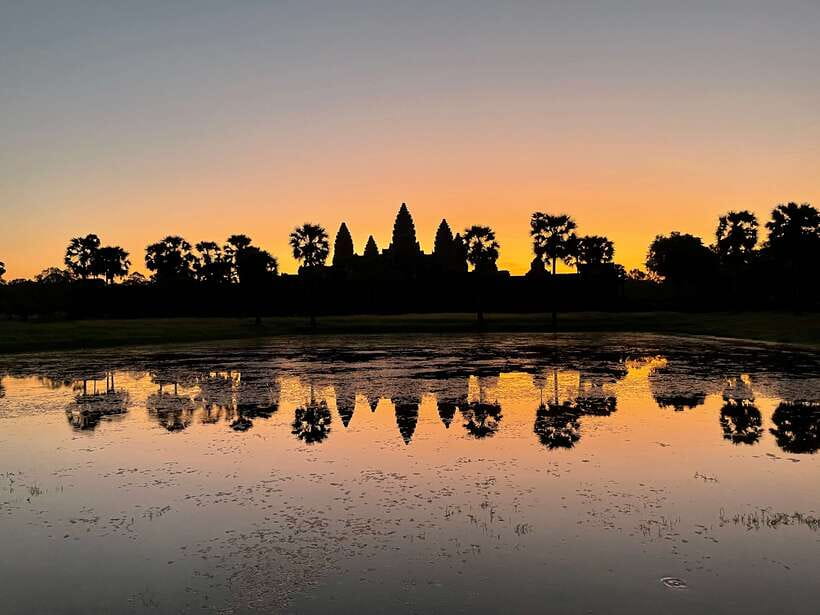
REVIEW · ANGKOR
Angkor Wat Sunrise, Banteay Srei, Bayon & Ta Prohm Temple
Sunrise at Angkor Wat feels almost unreal. This 8-hour Siem Reap temple day tour gets you to Angkor Wat before the daytime rush, then strings together some of the most memorable sites in Angkor’s classic circuit. I especially like how the guides (including people like Sinan or Makara) explain what you’re looking at, so the stones make sense fast.
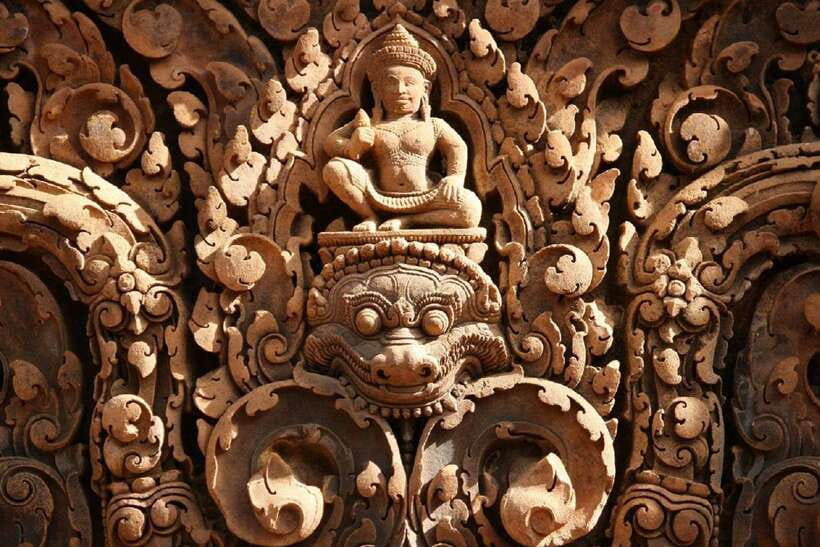
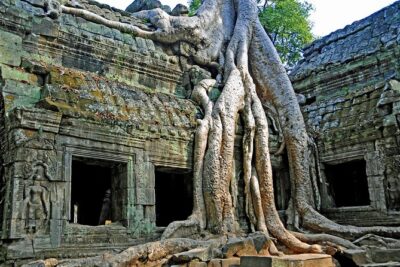
Two things I really love here are the pink limestone carvings at Banteay Srei and the way Ta Prohm’s ruins still look overrun by nature, with huge trees growing through the complex. One thing to consider is the heat and the walking. Even with cold water and cool towels, this is a long day, and comfortable shoes are non-negotiable.
In This Review
- Key Highlights You Should Know
- Angkor Wat Sunrise, Before the Day Turns Loud
- Banteay Srei Pink Limestone and Those Mind-Bending Carvings
- Pre Rup Mountain Temple Area and the View Reward
- Ta Prohm: When the Jungle Feels Part of the Monument
- Bayon Temple Faces and the Feeling You’re Being Watched
- Price and Logistics, What $80 Buys You (and What It Doesn’t)
- Comfort Tips That Actually Help at Angkor
- Who This Tour Suits Best (and Who Should Skip It)
- Should You Book This Angkor Wat Sunrise + Four Temples Tour?
Key Highlights You Should Know
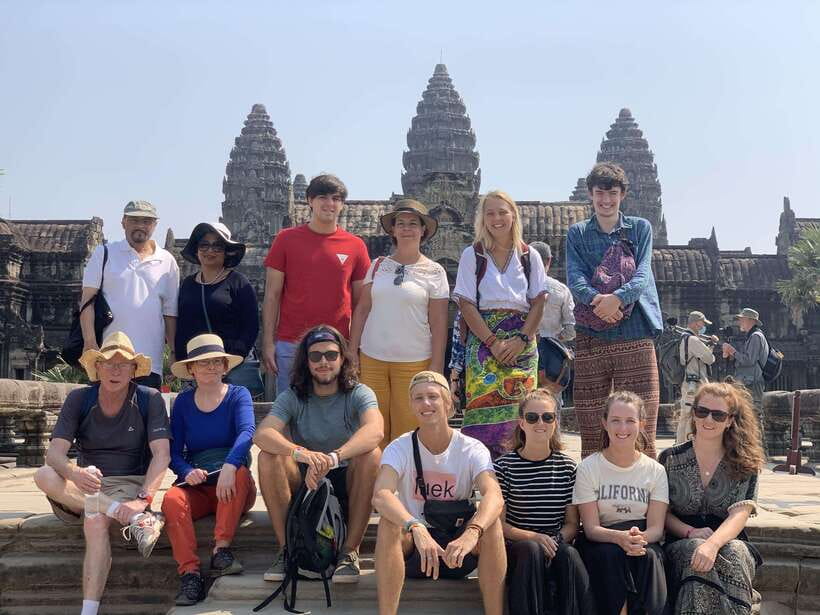
- Angkor Wat sunrise before the crowds so you can see the temple in its calm, early light
- Banteay Srei’s pink sandstone detail where the carvings look almost too precise to be real
- Pre Rup area with six large towers giving you strong “mountain temple” vibes and wide views
- Ta Prohm’s tree roots and tangled corridors where the jungle feels like part of the story
- Bayon’s 54 towers and 200 Buddha faces that follow you around from almost every angle
Angkor Wat Sunrise, Before the Day Turns Loud
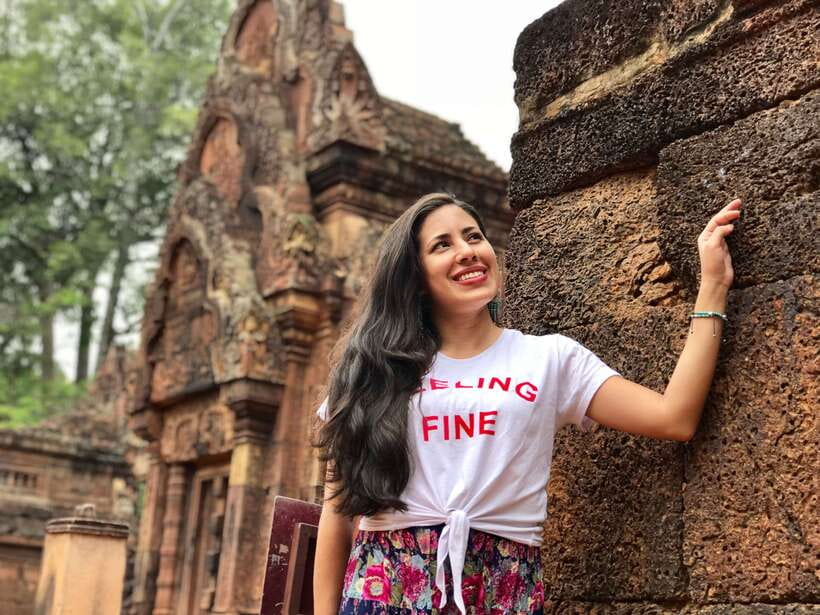
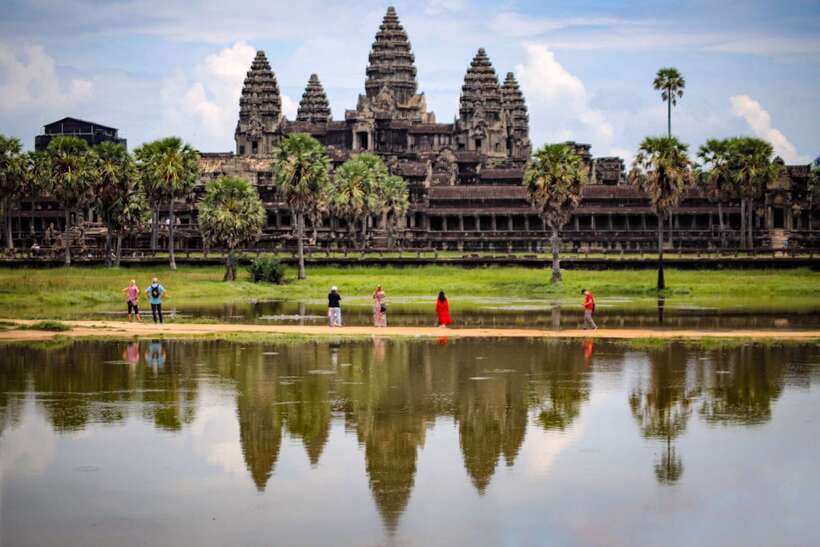
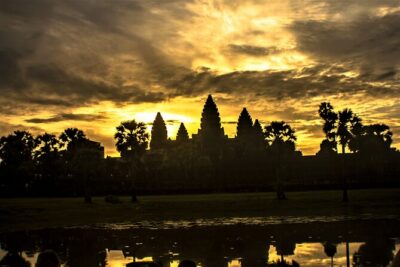
If you’ve ever wished a sight could start in a whisper, Angkor Wat sunrise is that. You’re picked up, then you head out early by van, with time to arrive before the biggest crowds. The payoff is not just the dramatic look of the temple. It’s the feeling of stepping into a world that’s still waking up.
You’re typically at Angkor Wat for about two hours, which is enough time to see the sunrise and then reposition for photos without feeling like you’re constantly sprinting. The key is timing. When you first arrive, the atmosphere is calmer. Later, more people filter in and it gets harder to really study details like doorways, causeways, and the layered silhouette of the temple.
Even if you’re not a sunrise person, this is worth it. Sunrise at Angkor Wat changes the contrast, and that matters. Shadows carve the architecture for you. You see shapes that are harder to notice at midday when everything turns flat.
Practical note: the tour includes fresh coconut juice, plus drinking water and cool towels during the day. That’s a big deal in Cambodia. You’ll be outside, and having something cold after you’ve been back in the car helps you keep your energy.
Banteay Srei Pink Limestone and Those Mind-Bending Carvings
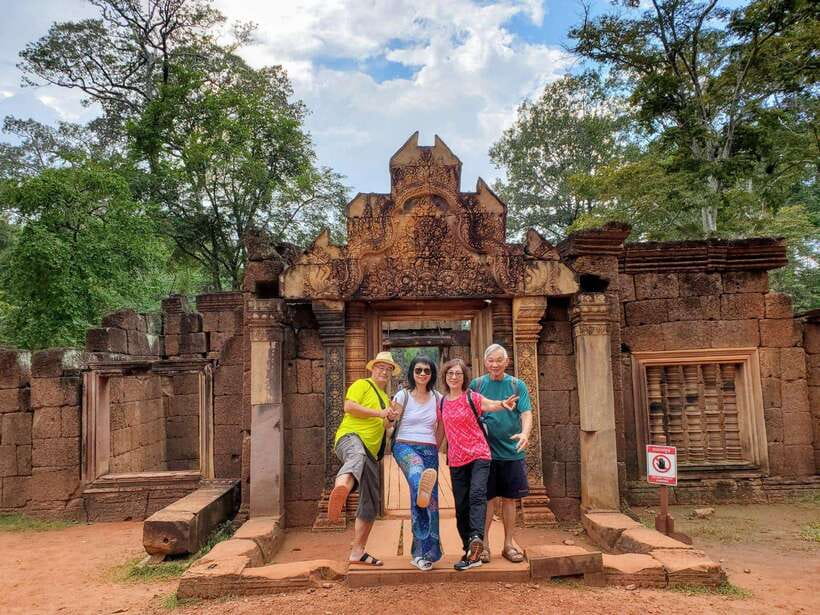
From Angkor’s main temple zone, the day shifts to one of the most satisfying contrasts in the region: Banteay Srei. This is the “small but insanely detailed” stop. The standout here is the pink limestone walls, and the quality of the carvings.
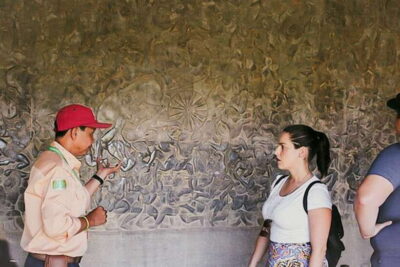
What I find useful, when you’re standing in front of these walls, is having someone point out what you’re actually looking at. Guides like Sinan or Makara are mentioned as giving clear explanations that make the carvings feel less random. When you understand the theme or story behind a section, the carvings stop being just decoration. You start seeing the structure of the artwork.
Banteay Srei is also a good pause from the bigger, heavier feel of other temples. It’s not just scale. It’s precision. The carvings are among the deepest and most intricate you’ll see in Angkor.
The tour gives you a break time and time for shopping and sightseeing around the area. That’s helpful if you want a souvenir without turning it into a half-hour detour. Just keep your expectations realistic: you’ll likely be tempted by small things, but plan to spend your time on the temple itself.
Other ways to be at the temples before the light comes up
- Angkor Wat Sunrise or Sunset Tour with Guide from Siem Reap★ 5.0 · 12,109 reviews
- Siem Reap: Angkor Wat: Small-Group Sunrise or Sunset Tour★ 5.0 · 9,444 reviews
- Siem Reap: Angkor Wat 2-Day Tour with Sunrise and Sunset★ 4.9 · 4,429 reviews
- Angkor Wat Sunrise tour with Small – Group and Guide tours★ 5.0 · 3,655 reviews
Pre Rup Mountain Temple Area and the View Reward
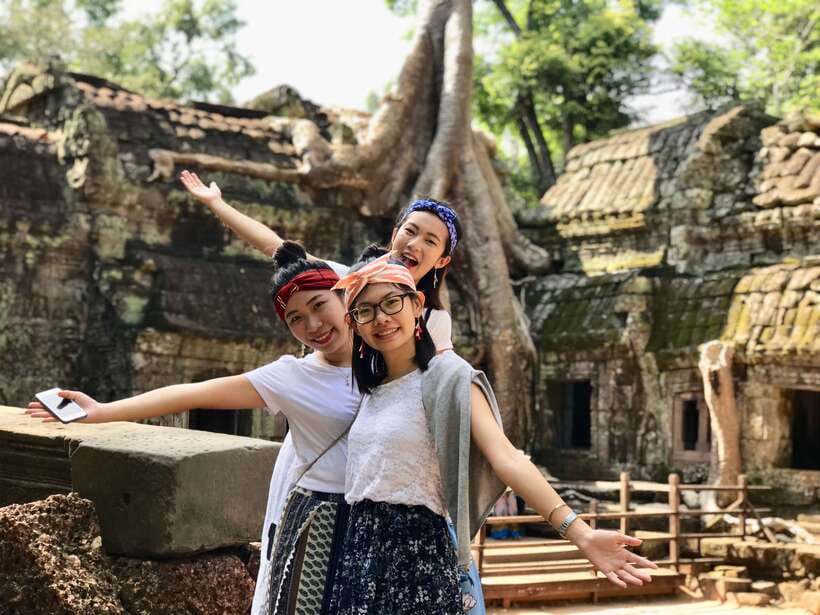
Between the detail-focused Banteay Srei stop and the jungle drama of Ta Prohm, you’ll also visit the Pre Rup temple area. This is one of those places that gives you perspective. You can feel the “mountain temple” idea, and the highlight is the six large towers that define the site.
Even if you’re not climbing for the perfect panorama, the towers help you understand how Angkor’s temple design communicated power and reach. Then, if the sky cooperates, you’ll get a view that helps you picture the temples in a wider setting rather than just as isolated monuments.
This stop is also a nice mental reset. You move from carving detail to big architecture, then you get ready for the next stop, where nature takes over.
If you’re someone who likes photos, Pre Rup can be a good place to practice steady framing. The towers give you clear vertical lines, and that makes your shots more consistent.
Ta Prohm: When the Jungle Feels Part of the Monument
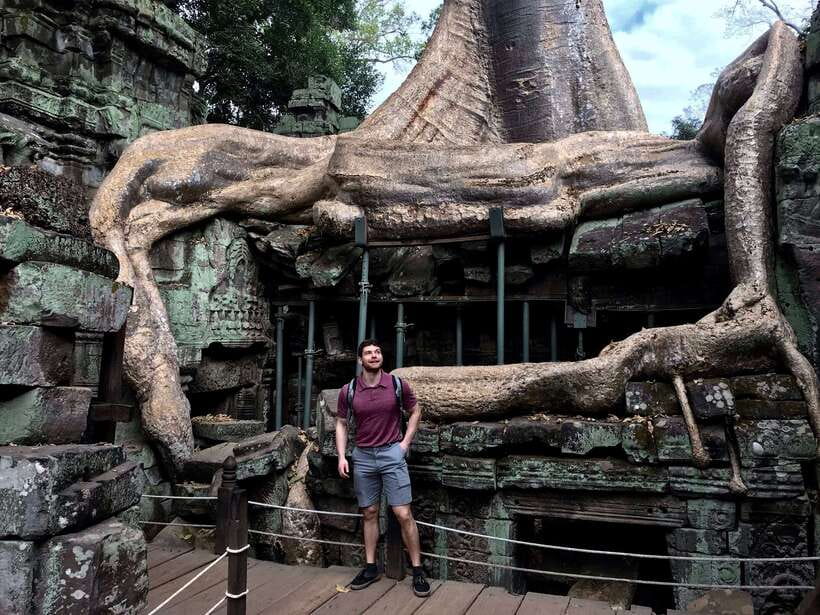
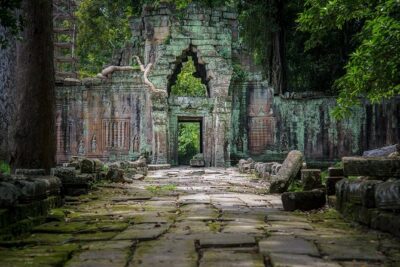
Ta Prohm is famous for a reason, and the tour doesn’t treat it like a quick photo stop. You get time to explore the monastic complex and walk through corridors and towers affected by nature’s takeover.
Here’s what makes it different from other ruins you’ll see. It’s not just “old stones.” It feels like a living scene. Massive trees, including huge fig and silk-cotton trees, grow from inside the structure. Some spots feel like the building and the jungle are sharing the same body.
This is one of those places where a good guide changes your experience. You’ll want help interpreting what’s original, what’s collapsed, and why certain sections were left exposed. The best way to enjoy Ta Prohm is to slow down and look around corners, not just at the main images you’ve seen online.
Expect the walking. The paths can be uneven, and you’ll be outdoors for long stretches. If you’re thinking about shoes, I’d choose something with grip and support, not stylish but slippery soles.
The tour includes time here for sightseeing and walking, then you’ll move on to your next temple stop. This is a good moment to hydrate and use the cool towel if it’s offered after getting back to the van.
Bayon Temple Faces and the Feeling You’re Being Watched
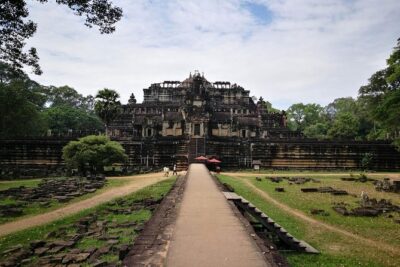
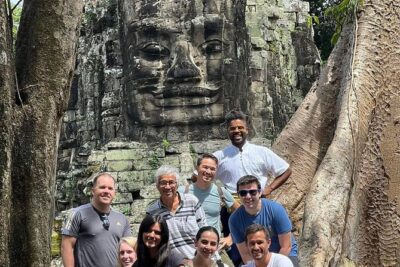
After Ta Prohm, the day moves to Bayon, one of the most distinctive temple experiences in Angkor. The big headline is the 54 towers decorated with 200 Buddha smiling faces. It’s hard to explain the effect until you’re there. Even standing still, you feel like the faces keep changing with your position.
That’s why Bayon works so well on a guided day tour. A guide can help you notice alignments and how the towers relate to each other. Without that, you might just treat it like a “look at faces” stop and rush through.
The tour gives you time to visit, plus free time for sightseeing and walking. Use it to move slowly around the complex. Try a few angles. You’ll notice how different faces seem to catch the light, and how the smiles look calm one minute and mischievous the next.
Also, don’t underestimate the weather. This part of the day can be hot. If you’re doing photos, you might want to avoid the harshest sun and use shaded corridors when possible.
Price and Logistics, What $80 Buys You (and What It Doesn’t)
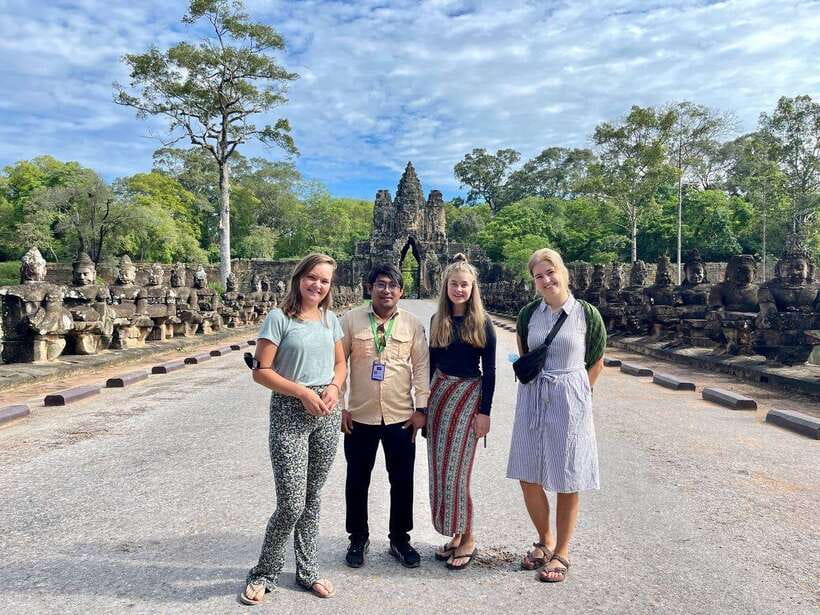
At $80 per person for an 8-hour tour, the value mostly comes from three things: organized timing, transport, and comfort support during a long day.
You’re getting air-conditioned transportation and a fully vaccinated English-speaking tour guide, plus drinking water, fresh coconut juice, and cool towels. Those items sound small, but in Siem Reap heat they matter. They can be the difference between enjoying the day and feeling drained by noon.
What’s not included is also important. Meals are not included, and the estimate is about $8-$12 per person per meal. If you’re budgeting, plan for at least one paid meal, and consider a snack strategy if you’re sensitive to hunger.
And you’ll need an Angkor pass. A 1-day pass is $37 per person per day, and it is not included. That means your real total cost will be higher than $80 once you add the pass, plus meals. Still, paying for a pass is unavoidable for many classic temple circuits, so it’s better to treat it as part of the overall Angkor budget.
One more practical point: you need to check your pickup hotel name, and be ready to meet at the hotel lobby. The instruction is to wait about 5 minutes before the tour start.
Finally, about flexibility: one guest shared that their guide was flexible enough to add an extra stop on request, like a museum visit. That’s not a promise for every day, but it’s a good sign. If you have a specific preference, it never hurts to ask politely.
More circuits through the Angkor complex, compared
Comfort Tips That Actually Help at Angkor
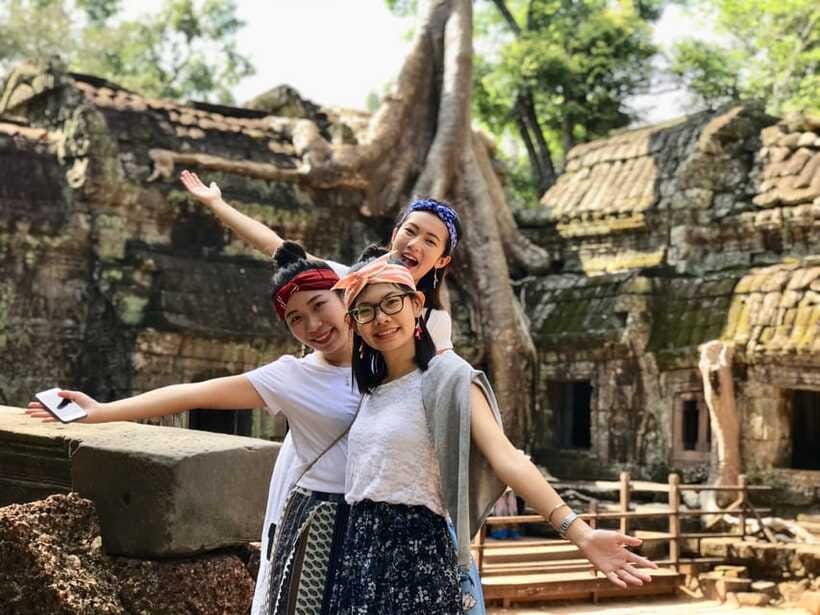
You’ll be outside a lot, and the temples are uneven. So do the boring stuff well.
Bring:
- Comfortable shoes with grip
- Comfortable clothes for warm weather
Avoid:
- Sportswear, since it’s listed as not allowed
I’d also plan your day with heat in mind. The tour provides water, cool towels, and coconut juice, which is great. Still, you’ll feel the walking and sun. If you’re someone who gets tired quickly in heat, this is exactly the kind of tour where built-in breaks and air-conditioned rides help.
Hydration mindset: drink water regularly, not only when you’re thirsty. Your body waits less than you think.
If you care about photos, bring patience as well. Sunrise and big temples are popular. Even with an early start, you’ll still be sharing space. Focus on angles and details, not just quick snapshots.
Who This Tour Suits Best (and Who Should Skip It)
This is a strong pick if you want the classic highlights in one organized day and you care about understanding what you’re seeing. It’s also ideal if you dislike the stress of figuring out routes and timing yourself, especially for Angkor Wat sunrise.
You’ll likely enjoy it most if you:
- Like guided explanations that connect the sights
- Want to see Banteay Srei, Ta Prohm, and Bayon without hopping between separate tours
- Prefer a comfortable ride and scheduled breaks in hot weather
You might want to skip or reconsider if:
- You’re pregnant, since it’s listed as not suitable
- You can’t handle walking on uneven surfaces and long outdoor time
One small language note: English is provided, but one past guest said the guide’s English was not optimal. So if your questions are very technical or you need very precise explanations, I’d still encourage you to ask early and confirm what you need from your guide.
Should You Book This Angkor Wat Sunrise + Four Temples Tour?
I think this is a good booking if your priority is an early start plus maximum variety: Angkor Wat at sunrise, the carving obsession of Banteay Srei, the tower views of Pre Rup, the jungle takeover of Ta Prohm, and the face-filled spectacle of Bayon.
It’s also a good value because the tour includes transport plus practical heat helpers like cold towels and water, not just a guide and a route.
Book it if you want one day that feels full but still structured. Skip it if you hate early mornings, dislike walking in heat, or aren’t ready for extra budgeting for the Angkor pass and meals.
If you’re aiming for a memorable first Angkor experience, this hits the sweet spot.
Banteay Srei and Beng Mealea, Compared
- Siem Reap: Kulen Mountain, Beng Mealea and Tonle Sap Tour★ 5.0 · 1,483 reviews
- Full-Day Banteay Srei & 4 Temples – Grand Tours Join-in Tour★ 5.0 · 1,155 reviews
- Siem Reap Tour: Angkor Wat Sunrise, Bayon, Ta Prohm, Banteay Srei★ 5.0 · 931 reviews
- Kulen Mountain with Beng Mealea and Tonle Sap Small Group Tour★ 5.0 · 780 reviews
Keep Going Round the Circuit
- Angkor Wat Sunrise & 3 Main Temples with Breakfast – Small Group★ 5.0 · 2,857 reviews
- Siem Reap Tour: Angkor Wat Sunrise, Bayon, Ta Prohm, Banteay Srei★ 5.0 · 931 reviews
- 2-Day Angkor Wat With Small, Big Circuit and Banteay Srei Tour★ 5.0 · 545 reviews
- Full-Day ‘Big Tour’ with Sunset at Phnom Bakheng★ 5.0 · 341 reviews
Sunrise at Angkor, Three More Ways
- Angkor Wat Sunrise or Sunset Tour with Guide from Siem Reap★ 5.0 · 12,109 reviews
- Siem Reap: Angkor Wat: Small-Group Sunrise or Sunset Tour★ 5.0 · 9,444 reviews
- Siem Reap: Angkor Wat 2-Day Tour with Sunrise and Sunset★ 4.9 · 4,429 reviews
- Angkor Wat Sunrise tour with Small – Group and Guide tours★ 5.0 · 3,655 reviews
Newly written up around Siem Reap
- Waterfall & River of 1000 Siva Linga- Kulen Mountain Private Tour
★ 5.0 · 3 reviews - Private Transfer from Siem Reap to Sihanoukville
★ 4.5 · 3 reviews - Private Tour to Koh Ker and Beng Mealea
★ 5.0 · 3 reviews - Private Transfer: Siem Reap Angkor Internation Airport to Hotel
★ 5.0 · 3 reviews - Kulen National Park Ticket -Waterfall & 1000 Lingas
★ 5.0 · 3 reviews - Kulen Waterfall & Kbal Spean Tour
★ 5.0 · 3 reviews
Angkor Wat Sunrise Tours, side by side.
 ★ 5.0Angkor Wat Sunrise or Sunset Tour with Guide from Siem ReapFrom $1812,109 reviews
 ★ 5.0Angkor Wat: Small-Group Sunrise or Sunset TourFrom $159,444 reviews
 ★ 4.9Angkor Wat 2-Day Tour with Sunrise and SunsetFrom $344,429 reviews
 ★ 5.0Angkor Wat Sunrise tour with Small – Group and Guide toursFrom $143,655 reviews
 ★ 5.0Angkor Wat Highlights and Sunrise Guided Tour from Siem ReapFrom $233,213 reviews
 ★ 5.0Full-Day Angkor Wat Sunrise Private Tour with Guide from Siem ReapFrom $602,920 reviews
 ★ 5.0Angkor Wat Sunrise & 3 Main Temples with Breakfast – Small GroupFrom $152,857 reviews
 ★ 4.9Angkor Wat Sunrise and Full-Day Sightseeing TourFrom $142,828 reviews