
REVIEW · PHNOM PENH
Full-Day Discover Oudong Mountain-Former Capital City & Phnom Penh City Tours
Stairs, stupas, and Phnom Penh in one day. This full-day private outing pairs Oudong Mountain ruins and big views with a focused tour of the capital’s most famous temple-and-palace sights. You get hotel pickup, air-conditioned transport, and a guide who keeps the day moving at a human pace.
I really like two things: the early Oudong timing and the way the guide makes the religious sites feel connected, not just photographed. I also appreciate the practical hot-weather setup, with cold bottled water plus a cold towel during the ride. The only drawback to plan for is the climbing, because the Oudong area involves stairs and some uneven ground.
After Oudong, the itinerary shifts into Phnom Penh mode, hitting Wat Phnom, the Silver Pagoda, and the Royal Palace in a tight, efficient loop. If you want a day that connects past and present without rushing yourself into total museum exhaustion, this is a strong match.
In This Review
- Key things I’d focus on
- Why Oudong plus Phnom Penh works as a single full-day plan
- Oudong Mountain: what to look for on the way up
- Phnom Udong stairs and views, plus a reality check
- Preah Sakyamoni Chedi and the Khmer Rouge era context
- Oudong Temple area, picnic huts, and weekend vibes
- Wat Phnom, the name behind Phnom Penh
- Royal Palace and Silver Pagoda in the same walled world
- Independence Monument and the Sihanouk statue: Phnom Penh’s modern anchor
- Price and what you get for $100.52 per person
- Who this tour suits best, and who should rethink it
- Should you book this Oudong and Phnom Penh day tour?
- FAQ
- How long is the full-day Oudong Mountain and Phnom Penh city tour?
- Do I get hotel pickup and drop-off?
- Is this tour private or shared?
- What language is the tour guide?
- Are entrance fees included?
- Is lunch included?
- Is transportation air-conditioned?
- What refreshment is provided during the trip?
- Does the tour require good weather?
- What is the cancellation cutoff for a full refund?
- Do I receive a mobile ticket?
Key things I’d focus on
- Oudong first, in the morning for calmer conditions before the Phnom climb
- Preah Sakyamoni Chedi details, including shrines damaged during the Khmer Rouge era
- Built-in comfort for heat, with cold water and a cold towel on the go
- A real Phnom Penh highlight circuit: Wat Phnom, Royal Palace, Silver Pagoda
- Private, English-speaking guide with entrance fees handled
Why Oudong plus Phnom Penh works as a single full-day plan
Oudong Mountain is the kind of place that changes how you read Phnom Penh. You start the day looking outward over the plains, then later you’re back in the city at Wat Phnom and the Royal Palace, which helps the modern capital feel less random.
This is also a smart way to see Cambodia’s religious and political layers in one sweep. Oudong ties to royal-era memory and Buddhist devotion, while Phnom Penh’s major sights show how state power and Buddhism sit side by side. You’re not bouncing between unrelated stops. The day has a line.
The “private” setup matters too. You’re not stuck with other people’s pace or bathroom breaks. Your guide can adjust how long you linger at viewpoints and shrines, and that is especially helpful when the heat decides to show up.
Oudong Mountain: what to look for on the way up
Your day begins with a hotel pickup and a direct run toward Oudong Mountain. When you’re headed uphill, timing helps. One of the best parts of this tour flow is that Oudong is handled first, so the mountain experience starts before the day gets fully cooked.
At the Udong Mountain stop, you’ll find the historic stupa area with the New Preah Sakyamoni Chedi. One standout detail here is that a stupa was built in 2002 by King Norodom Sihanouk on top of the hill of Oudong. That’s not just a random construction date. It’s a reminder that Oudong is still part of Cambodia’s living memory, not only a ruin.
Then you move into the area where you can see and understand how devotion is built into the site. Guides tend to point out shrines and Buddha imagery, and they also connect the mountain to the religious culture around it. If you care about context, the guide’s explanations make the stops feel less like checkboxes.
Practical note: bring good walking shoes and expect stairs. The mountain climb is the reason you’re going. It’s also why comfort choices matter.
More of the capital, other guides
- Phnom Penh: Sunset Cruise with Unlimited Beers & BBQ Buffet★ 4.5 · 727 reviews
- Phnom Penh Full Day Private Tour Included All Admission Tickets★ 5.0 · 585 reviews
- Phnom Penh: Sunset Cruise with Unlimited Beer &Fruit platter★ 4.7 · 515 reviews
- Phnom Penh Silk Island Bike Tour/ E-Bike or Tuk Tuk★ 5.0 · 495 reviews
Phnom Udong stairs and views, plus a reality check
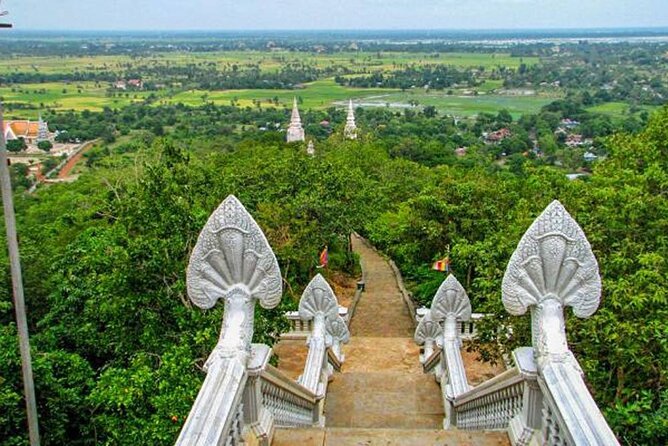
The Phnom Udong portion is where you earn the views. Climbing the stairs to the top is part of the experience, and the guide’s job is to make it easier to follow and understand. You’ll get time to reach the upper areas and take in the plains below.
This is also a good place to slow down for a few minutes. Even if you’ve seen other temple viewpoints in Cambodia, Oudong’s elevated perspective feels different. It has that “former capital” feeling, where you can imagine why a ruler would want a high vantage point.
The thing to consider is your energy level. Even though the day is guided and timed, you still do the physical climb. If you have knee issues, plan carefully. The route is manageable for most visitors, but it is not a stroller-only day.
Preah Sakyamoni Chedi and the Khmer Rouge era context
The Preah Sakyamoni Chedi stop sits on the slopes of the sacred hill and includes shrines and Buddha statues. There’s an important historical layer here that you should pay attention to, because it helps explain why parts of the site look the way they do today.
The information shared on-site covers how shrines and statues were severely damaged or completely destroyed in 1977 during the Khmer Rouge era, and then later restoration and remembrance work followed. That matters because you’re not just looking at ornament. You’re looking at survival and reconstruction.
If your travel style is to understand what you’re seeing, this stop is one of the more meaningful moments in the whole day. It also gives the guide a chance to explain religious practice and history without turning it into a lecture marathon.
Oudong Temple area, picnic huts, and weekend vibes
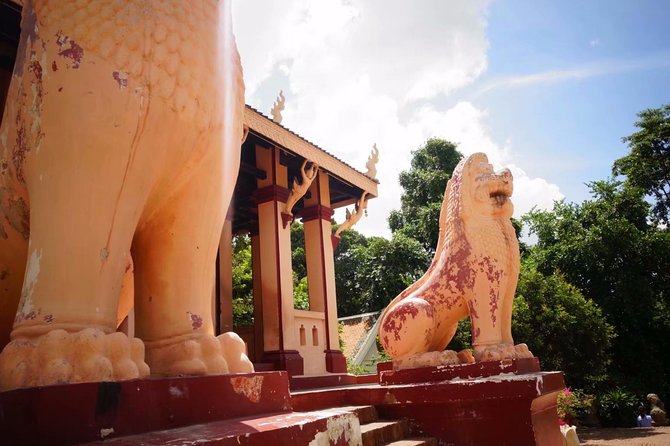
After the higher ruins and shrines, the tour comes down toward the Oudong Temple area at the base of the mountain. There’s a practical change in atmosphere here. You’ll notice a flurry of picnic huts at the foot of Oudong, which makes the area feel like a living place where locals gather, not only a sightseeing zone.
The time here tends to be short, so I’d use it to orient yourself. Look at how the mountain and the lower temple areas connect visually and spatially. If you’re visiting on a weekend, you might find more crowds around this lower zone, because it’s the kind of place people naturally hang around.
This is not a stop designed to stretch into a long wander. It’s a transition point, and the schedule keeps it that way.
Wat Phnom, the name behind Phnom Penh
Once you’re back in Phnom Penh, the itinerary turns into the classic capital highlight loop. The first big stop is Wat Phnom, the namesake and symbol of the city.
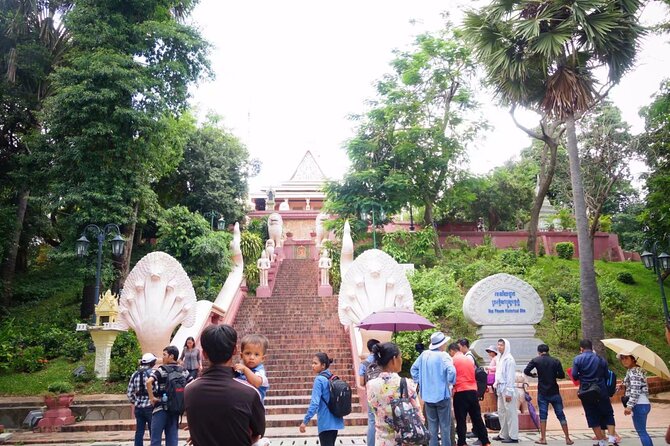
Wat Phnom sits atop an artificial hill, about 88.5 ft (27 meters). That elevated position is the reason the temple is so visually dominant. Even if you’ve seen other Cambodian pagodas, Wat Phnom’s setup is a strong “city landmark” moment.
Here, your guide can connect the site to the identity of Phnom Penh itself. It’s one thing to hear the city name. It’s another to stand on the hill and understand why people built a major religious site right at the heart of the story.
This stop is also a good time to check your pace. It’s not the full mountain climb again, but you still want to be aware of steps and surfaces.
More river days and Silk Island crossings
Royal Palace and Silver Pagoda in the same walled world
If you want the most concentrated royal-era feel of the day, this is it. The Royal Palace stop is where you’ll see the scale and layout of the compound built for the king of Cambodia, his family, and foreign dignitaries. The palace complex also functions as a place for court ceremonies, so it’s not only decorative. It’s an active statement of authority and tradition.
Right next door is the Silver Pagoda, officially known as Wat Preah Keo Morokat. It sits within the same larger walled compound as the Royal Palace, separated by a walkway. The “next door” relationship is helpful because it means you don’t lose time traveling between them.
This pairing works well because the palace gives you the political setting, then the Silver Pagoda gives you the devotional setting. Together, they explain how Cambodia’s public life often intersects with Buddhist space.
One more practical tip: expect a good amount of standing around while you take it in. Wear something comfortable, and use your guide’s explanations to decide what’s worth your closest look.
Independence Monument and the Sihanouk statue: Phnom Penh’s modern anchor
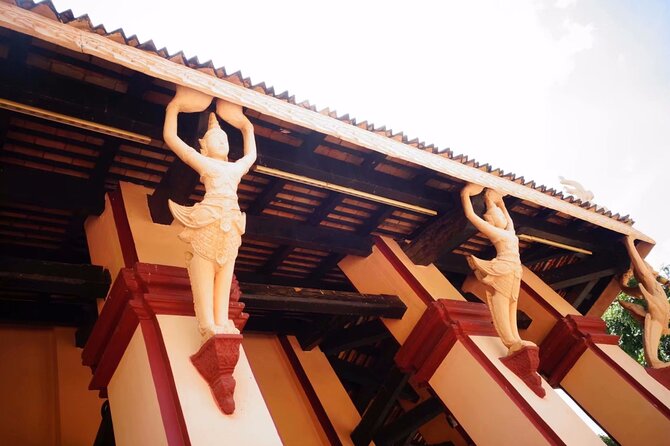
After the palace-and-temple zone, the tour adds two smaller but meaningful city markers: the Independence Monument and the statue of King Father Norodom Sihanouk.
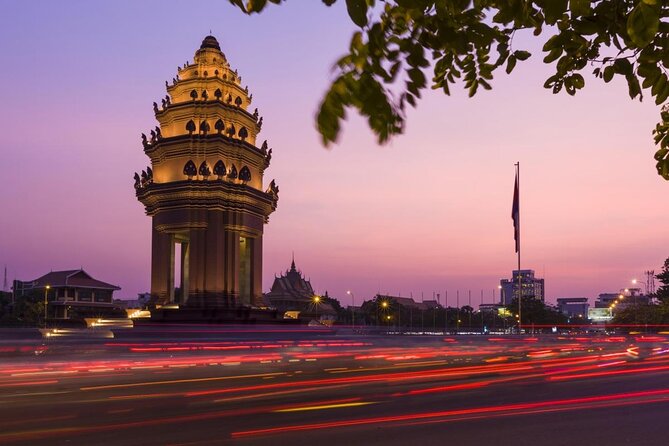
The Independence Monument is an Angkorian style tower built in 1958 to celebrate Cambodia’s independence. It’s located in the heart of the capital, so it works as a quick “you are here” stop, a reminder that Phnom Penh’s story is not only ancient.
The Norodom Sihanouk statue was completed in 2013 and inaugurated on October 11 in the same year. These dates matter because they connect the city’s identity to modern remembrance, not just older stonework.
These are shorter stops, but they help keep the day from feeling like only temples.
Price and what you get for $100.52 per person
At about $100.52 per person, this tour can feel like a lot until you add up what’s handled for you. You’re paying for hotel pickup and drop-off, private transportation, an English-speaking private guide, entrance fees included for the stops, and even cold bottled water plus a cold towel during the trip.
That combination is why the price can be fair value, especially if you’re traveling as a couple or small group. It reduces your stress budget. You’re not bargaining for tickets, routing yourself between dispersed sites, or paying extra for entry.
Two things that are worth clarifying for yourself. Lunch and drinks are not clearly mentioned as included, so plan to cover meals separately. Also, if you want drinks or snacks during the day, assume you might pay out of pocket.
For me, the deciding factor is the entrance fees and guide. This day covers multiple major paid sights, and doing it as a private route is usually where the money makes sense.
Who this tour suits best, and who should rethink it
This works best if you want a structured day with real guidance. If you like understanding what you see, you’ll appreciate the historical context shared around Oudong and the way the guide connects religious meaning to the physical layout.
It’s also a good fit if heat and comfort matter to you. The tour uses AC transportation and includes cold water and a cold towel, plus a guide who can adapt in hot weather. That’s not a small thing when you’re climbing.
You might want to rethink it if you hate stairs, because the Oudong Mountain section involves climbing up to viewpoints. You’ll still be walking around Phnom Penh’s major sites, and the day is long enough that pacing matters.
Should you book this Oudong and Phnom Penh day tour?
I’d book it if your goal is one day that links Oudong Mountain’s royal-era and Buddhist sites to Phnom Penh’s big palace-and-pagoda highlights. The schedule is built around hitting Oudong early, then finishing the city highlights efficiently.
I’d hesitate only if you need a very low-walking itinerary. The Oudong climb is a core part of the experience, and the day is paced like a full outing, not a slow stroll.
If you do book, do two simple things: wear shoes you trust for stairs and bring your appetite planning in advance, since lunch and drinks are not clearly included.
FAQ
How long is the full-day Oudong Mountain and Phnom Penh city tour?
The duration is about 7 to 8 hours.
Do I get hotel pickup and drop-off?
Yes. Hotel pickup and drop-off are included.
Is this tour private or shared?
It’s a private tour, meaning only your group participates.
What language is the tour guide?
The tour includes a private English speaking tour guide.
Are entrance fees included?
Yes. All entrance fees are included in the program.
Is lunch included?
Lunch and drinks are not clearly mentioned as included.
Is transportation air-conditioned?
Yes. Private comfortable or AC transportation is included.
What refreshment is provided during the trip?
You get a cold bottle of water and a hand cold towel during the trip.
Does the tour require good weather?
Yes. The experience requires good weather, and if it’s canceled due to poor weather you’ll be offered another date or a full refund.
What is the cancellation cutoff for a full refund?
You can cancel up to 24 hours in advance for a full refund.
Do I receive a mobile ticket?
Yes. A mobile ticket is provided.
More Tour Reviews in Phnom Penh
- The Killing Field and Toul Sleng Genocide Museum (S21) Tour★ 5.0 · 1,977 reviews
- Phnom Penh: Sunset Cruise with Unlimited Beers & BBQ Buffet★ 4.5 · 727 reviews
- Aroma Therapy Massage, Relaxation therapeutic aromatherapy oil massages.★ 5.0 · 645 reviews
- Killing field and Toul Sleng genocide museum Tour★ 5.0 · 610 reviews
Other Days Given to the Mekong
- Phnom Penh Silk Island Bike Tour/ E-Bike or Tuk Tuk★ 5.0 · 495 reviews
- Phnom Penh: Mekong Sunset Dinner Cruise with Live Music★ 4.7 · 261 reviews
- Silk Island Cycling Adventure & lunch with locals★ 5.0 · 246 reviews
- Phnom Penh to Silk Island By Tuk-Tuk with local Expert★ 5.0 · 165 reviews
Phnom Penh, Further In
- Phnom Penh: Sunset Cruise with Unlimited Beers & BBQ Buffet★ 4.5 · 727 reviews
- Phnom Penh Full Day Private Tour Included All Admission Tickets★ 5.0 · 585 reviews
- Phnom Penh: Sunset Cruise with Unlimited Beer &Fruit platter★ 4.7 · 515 reviews
- Phnom Penh Silk Island Bike Tour/ E-Bike or Tuk Tuk★ 5.0 · 495 reviews
Newly written up around Phnom Penh
- Private Transfer From or to Phnom Penh <=> Sihanoukville
★ 5.0 · 3 reviews - Prasith and Reap Temples Private Day Trip from Phnom Penh
★ 4.5 · 3 reviews - Phnom Penh Full Day Private Tour By Tuk Tuk or Taxi Car
★ 5.0 · 3 reviews - Private Transfer From Phnom Penh To Sihanoukville
★ 5.0 · 3 reviews - Phnom Penh Private Pick-Up: Techo International Airport ( KTI )
★ 5.0 · 3 reviews - Island Community Life in Phnom Penh
★ 4.5 · 3 reviews
Phnom Penh City Tours, side by side.
 ★ 4.5Sunset Cruise with Unlimited Beers & BBQ BuffetFrom $9727 reviews
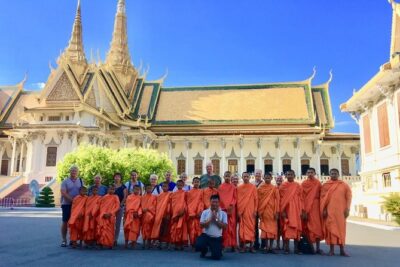 ★ 5.0Phnom Penh Full Day Private Tour Included All Admission TicketsFrom $97585 reviews
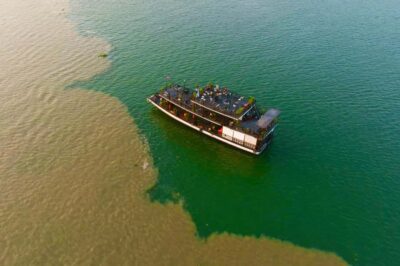 ★ 4.7Sunset Cruise with Unlimited Beer &Fruit platterFrom $9515 reviews
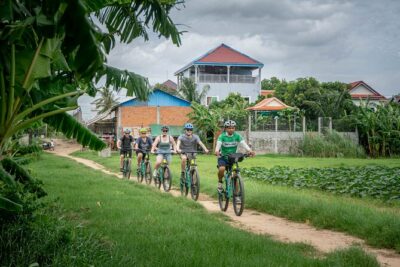 ★ 5.0Phnom Penh Silk Island Bike Tour/ E-Bike or Tuk TukFrom $35495 reviews
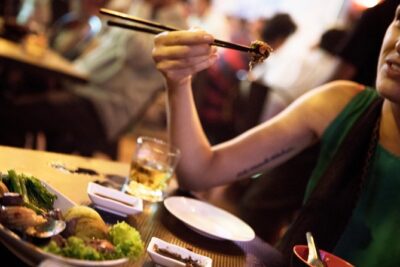 ★ 5.0Ultimate Phnom Penh Food Tour by Tuk Tuk: 20 Tastings and DrinksFrom $69409 reviews
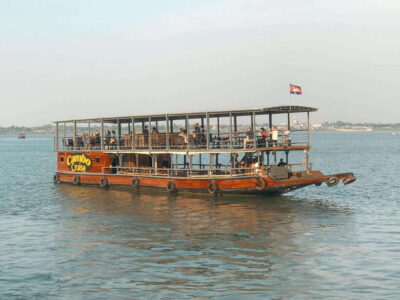 ★ 4.7Mekong Sunset Dinner Cruise with Live MusicFrom $9261 reviews
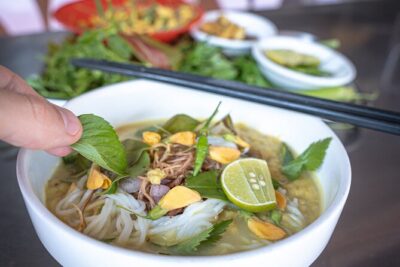 ★ 5.0Phnom Penh’s Culinary Underground: Local Food Tour by Tuk-tukFrom $69234 reviews
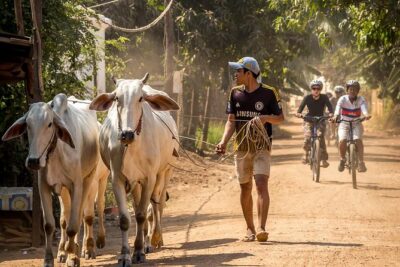 ★ 5.0Cycling Adventure on Islands of the MekongFrom $65225 reviews