
REVIEW · PHNOM PENH
Phnom Penh to Silk Island By Tuk-Tuk with local Expert
Phnom Penh has a quieter side, if you go sideways. This half-day tuk-tuk trip takes you from the city edge to Silk Island and the surrounding countryside, where you can watch traditional silk work up close and see everyday life beyond the usual sights.
I especially like the combo of hotel pickup and local guide. You get off a busy street and onto a slower rhythm fast, with stops planned around real craft and rural routines. I also like the food-and-water details, cold water and local snacks included, plus market fruit breaks that keep the day comfortable.
One thing to consider: the tour is only about 4 hours 30 minutes with a few focused stops, so it is more about depth than ticking off dozens of places. If you want a long sightseeing list, you might feel you are left wanting a bit more time in each spot, and you may do some walking.
In This Review
- Key highlights before you go
- Tuk-tuk from Phnom Penh: why the ride matters
- Getting to the island: ferries, timing, and what to expect
- Quick reality check on pace
- Mekong Silk Island stop: villages, markets, and temple time
- The market break is not just snack time
- To option A or B: tofu skin stops, and why craft food is part of the story
- Heng Naysim weaving house: watching silk get turned into cloth
- Why the weaving house visit is worth your time
- Buying silk, and how to handle it
- What you get for $29: real value, real trade-offs
- What might cost extra
- Who this tour fits best (and who should skip it)
- Consider skipping if…
- Practical tips to make your day easier
- Should you book the Phnom Penh to Silk Island tuk-tuk tour?
Key highlights before you go
- Small group size (max 12 travelers) for a calmer pace and easier questions to your guide.
- Tuk-tuk + ferry mix that actually changes the feel of the day, from road travel to river breezes.
- Silk weaving demonstrations at a traditional weaving house, with lots of explanation and photo-friendly viewing.
- Tofu skin and tofu stops that show another craft linked to daily Khmer food life.
- Market and temple moments along the route, so the island visit is more than just workshops.
Tuk-tuk from Phnom Penh: why the ride matters

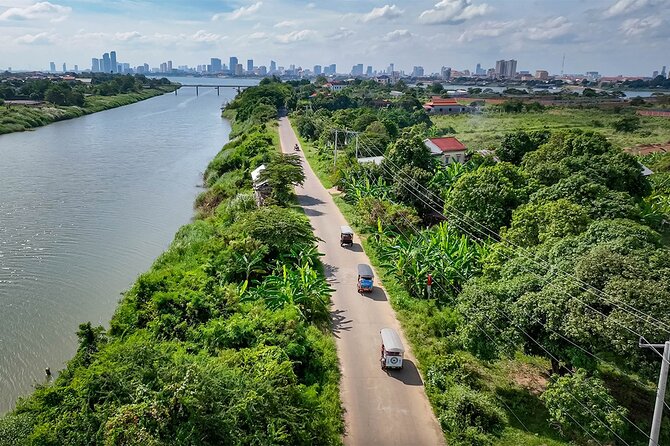
This is not a drive-by day trip. The tuk-tuk part is part of the experience. You leave Phnom Penh in a small, open-air vehicle, and that alone helps set expectations: you are going for the vibe of the countryside, not for big-city sights.
The road-out moment also helps your guide keep the day feeling personal. In small-group settings, you can ask why silk is made a certain way, or what you are seeing at a temple stop, without feeling rushed. Most of the guides I’ve heard about for this tour, people like Tin Tin, Kim, Lee, Sok, Nuth, and Lucky, bring strong English and a sense of humor, so the storytelling stays natural rather than scripted.
One more practical point. Tuk-tuks mean you can get to the river area quickly, then shift gears to ferry travel. That pattern keeps the itinerary from feeling like one long ride. It also explains why many guests talk about how smoothly the whole half-day runs.
Getting to the island: ferries, timing, and what to expect
You start with hotel pickup and drop-off in Phnom Penh. That is a big value win if you do not want to figure out transport on your own. Then you head out of the city toward the Mekong crossing.
Ferry time is baked into the day. The tour includes ferry trips, and you can end up crossing by ferry multiple times depending on the route your driver and guide use. Expect water views, a cooler breeze, and a different sense of movement compared to road travel. One guest even described crossing the Mekong River and enjoying the breeze during the tuk-tuk ride, which matches what I’d predict on a half-day in this area.
Timing works like this: you spend about 30 minutes starting from Phnom Penh, then the day continues for roughly two hours around the island approach and countryside, and then around two hours at the weaving stop. The total is about 4 hours 30 minutes. That structure is great for travelers who want rural context without spending a whole day away.
More of the capital, other guides
- Phnom Penh Full Day Private Tour Included All Admission Tickets★ 5.0 · 585 reviews
- Phnom Penh: Sunset Cruise with Unlimited Beer &Fruit platter★ 4.7 · 515 reviews
- Phnom Penh Silk Island Bike Tour/ E-Bike or Tuk Tuk★ 5.0 · 495 reviews
- Ultimate Phnom Penh Food Tour by Tuk Tuk: 20 Tastings and Drinks★ 5.0 · 409 reviews
Quick reality check on pace
A few guests describe the day as chill and well-paced, with stops that feel long enough to learn and ask questions. Still, since it is only a handful of stops, you may not see every possible workshop or every village school along the route. Think focused, not exhaustive.
Mekong Silk Island stop: villages, markets, and temple time
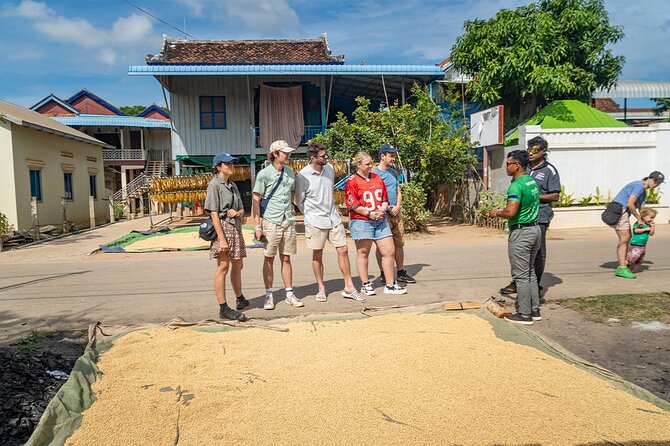
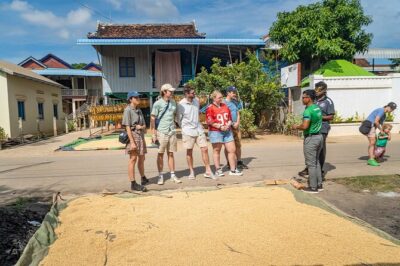
The Mekong Silk Island portion is where the day starts to feel rural and grounded. You go by ferry, then you transition into a countryside route that can include farming villages, market time, and Buddhist temple visits.
This matters because it gives context. Silk and tofu are not just products here. They connect to daily Khmer life, local routines, and how families organize work and community. When your guide explains what you are looking at, the route stops being scenery and turns into a living lesson.
The market break is not just snack time
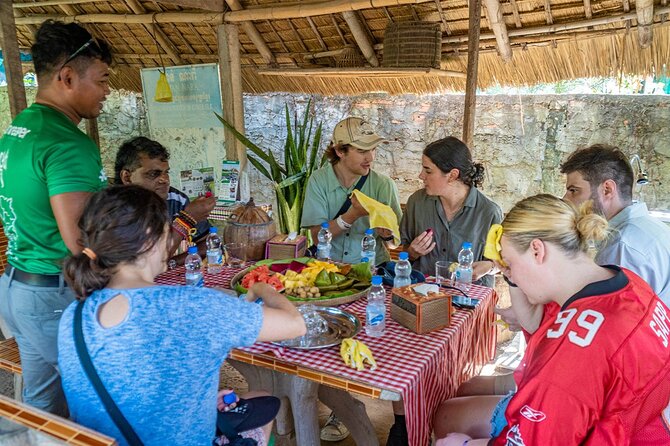
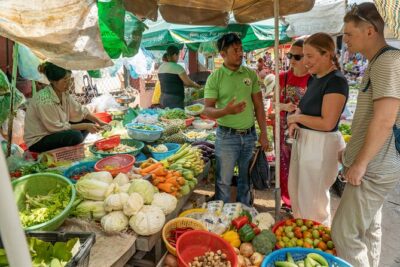
Food stops are built into the experience, and guests highlight fruit from the market, coffee, drinks, and rice snacks. This is one of those details that makes the tour feel easier and more human. You are not just sitting in a vehicle waiting for the next location. You are actually pausing, tasting, and watching daily exchange.
If you like photography, this is often where your camera gets the most use. Markets and temple areas bring small moments: people chatting, vendors working, and temple spaces with a calmer pace than the city.
To option A or B: tofu skin stops, and why craft food is part of the story

A major “wow” moment for many people is the tofu skin side of the day. You might see a tofu skin workshop and even a stop connected to crispy tofu production. It is memorable because it is practical, hands-on in its own way, and tied to local food culture.
Guests describe the tofu skin process as special and eye opening, and also mention the hard work involved. That is an important detail. If you only expect silk, this tofu stop changes the day into a broader story of Cambodian food and craft production.
If you are the type who likes to understand how something is made, this is worth leaning into. Ask your guide what materials they use, how the process works, and why these crafts matter locally. In past experiences with guides on this route, people like Tin Tin, Lee, and Sok are the ones who tend to make these stops feel lively, funny, and full of practical explanations.
More river days and Silk Island crossings
Heng Naysim weaving house: watching silk get turned into cloth
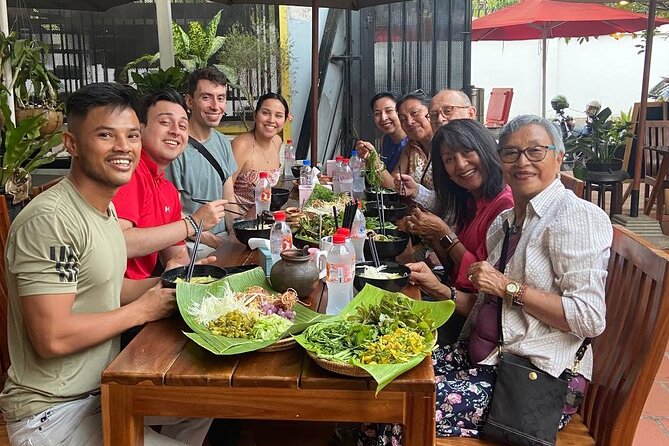
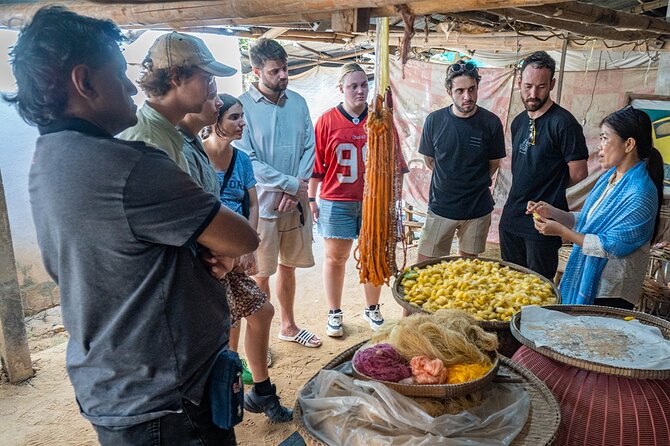
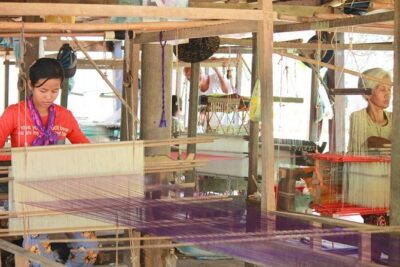
The weaving house stop, often identified as Heng Naysim Traditional Cambodian Weaving House, is the centerpiece for many visitors. This is where you see silk weaving traditions and learn about the history of silk in Cambodia through the perspective of local villagers.
You can expect a guided look at how natural silk becomes woven cloth, with real explanations and a chance to observe the steps. Some guests highlight hearing from weavers about multi-generational craft. One person mentioned silk making passed down for seven generations, which makes the weaving feel less like a performance and more like family work that has meaning.
Why the weaving house visit is worth your time
The value here is not only in watching finished products. It is in seeing the process and realizing how many separate tasks sit inside one fabric outcome. Your guide can connect the dots between rural village life, household labor, and craft knowledge.
Also, this stop is the moment where your guide’s English skills really show. Guests have praised guides such as Kim, Lee, Sok, and Nuth for clear explanations and for keeping the tone friendly rather than lecture-like. If you want to understand, this is where you will get it.
Buying silk, and how to handle it
You may get opportunities to purchase silk items directly from the makers. Some guests mention fair pricing at family-owned business stops. I treat these craft shops like a museum with a price tag. Look first, ask about what you are seeing, and only buy what you truly want. If you do buy, you can feel good knowing the money stays local.
What you get for $29: real value, real trade-offs
At $29 per person, this tour sits in the “good value” zone for Phnom Penh day trips. You are paying for more than a vehicle. You get:
- Hotel pickup and drop-off
- A professional English-speaking guide
- Cold water and local snacks
- Ferry trips
- Snacks during the day
That combination is why people talk about the experience as smooth and easy. You do not need to hunt down transport or figure out where the crossings are. You also get food breaks without having to search for a café in between.
What might cost extra
Two notes you should plan around:
- Admission is listed as not included for parts of the itinerary, including the island and the weaving house.
- Personal expense is not included, so you may spend on drinks beyond what is provided, tips for workers, or items sold at craft stops.
Your best move is to bring a bit of cash for small entry fees and for optional purchases. Since the tour provides water, you should still bring a little extra if you prefer certain drinks, but you are not starting from zero.
Who this tour fits best (and who should skip it)
I’d recommend this tour if you want one of the best uses of limited time in Phnom Penh: a half-day that takes you out of the usual tourist lanes and gives you real context through craft. It suits:
- Families who like gentle pacing and practical learning
- Travelers who enjoy maker-focused experiences, especially silk
- Food curious visitors who want more than restaurants, including tofu skin craft
- People who like small-group tours and a guide who can answer questions
Consider skipping if…
If your idea of a perfect day is “as many major sights as possible,” this may feel tight. Some guests say it is a bit limited because there are only a few stops. Also, there may be walking. One review explicitly warns that you have to walk, so wear comfortable shoes and expect some foot time.
Weather can also affect comfort. One guest mentioned near-monsoon rain lasting about an hour. That usually means bring a light rain layer, or at least plan for a chance of wet conditions.
Practical tips to make your day easier
- Wear shoes you can walk in, even if you think you will only be standing. Workshop floors and pathways can be uneven.
- Bring a light rain layer. Cambodia weather can shift fast.
- Bring some cash for potential entry fees at the island and weaving house, plus optional tips or purchases.
- If you care about learning, ask your guide specific questions like how silk production starts, what makes natural silk different, and how families manage the work.
- Don’t rush the market moment. The snacks and fruit breaks are part of why the day feels enjoyable rather than exhausting.
Should you book the Phnom Penh to Silk Island tuk-tuk tour?
If you want a small, meaningful half-day where you learn how silk and tofu skin are made, and you get real rural context through villages, markets, and temple stops, I think you will be happy booking this. The value is strong thanks to hotel pickup, ferry transport, an English-speaking guide, and included snacks.
If you are chasing a long list of famous landmarks, or you dislike any walking at all, then you might prefer a different style of tour. But for craft lovers, curious eaters, and anyone who wants to see Cambodia beyond the main city streets, this is a smart use of a half-day.
More Tour Reviews in Phnom Penh
- The Killing Field and Toul Sleng Genocide Museum (S21) Tour★ 5.0 · 1,977 reviews
- Phnom Penh: Sunset Cruise with Unlimited Beers & BBQ Buffet★ 4.5 · 727 reviews
- Aroma Therapy Massage, Relaxation therapeutic aromatherapy oil massages.★ 5.0 · 645 reviews
- Killing field and Toul Sleng genocide museum Tour★ 5.0 · 610 reviews
Other Days Given to the Mekong
- Phnom Penh Silk Island Bike Tour/ E-Bike or Tuk Tuk★ 5.0 · 495 reviews
- Phnom Penh: Mekong Sunset Dinner Cruise with Live Music★ 4.7 · 261 reviews
- Silk Island Cycling Adventure & lunch with locals★ 5.0 · 246 reviews
- Phnom Penh Silk Island Vespa Tour / Tuk Tuk Available★ 5.0 · 102 reviews
Phnom Penh, Further In
- Phnom Penh: Sunset Cruise with Unlimited Beers & BBQ Buffet★ 4.5 · 727 reviews
- Phnom Penh Full Day Private Tour Included All Admission Tickets★ 5.0 · 585 reviews
- Phnom Penh: Sunset Cruise with Unlimited Beer &Fruit platter★ 4.7 · 515 reviews
- Phnom Penh Silk Island Bike Tour/ E-Bike or Tuk Tuk★ 5.0 · 495 reviews
Newly written up around Phnom Penh
- Private Transfer From or to Phnom Penh <=> Sihanoukville
★ 5.0 · 3 reviews - Prasith and Reap Temples Private Day Trip from Phnom Penh
★ 4.5 · 3 reviews - Phnom Penh Full Day Private Tour By Tuk Tuk or Taxi Car
★ 5.0 · 3 reviews - Private Transfer From Phnom Penh To Sihanoukville
★ 5.0 · 3 reviews - Phnom Penh Private Pick-Up: Techo International Airport ( KTI )
★ 5.0 · 3 reviews - Island Community Life in Phnom Penh
★ 4.5 · 3 reviews
Phnom Penh City Tours, side by side.
 ★ 4.5Sunset Cruise with Unlimited Beers & BBQ BuffetFrom $9727 reviews
 ★ 5.0Phnom Penh Full Day Private Tour Included All Admission TicketsFrom $97585 reviews
 ★ 4.7Sunset Cruise with Unlimited Beer &Fruit platterFrom $9515 reviews
 ★ 5.0Phnom Penh Silk Island Bike Tour/ E-Bike or Tuk TukFrom $35495 reviews
 ★ 5.0Ultimate Phnom Penh Food Tour by Tuk Tuk: 20 Tastings and DrinksFrom $69409 reviews
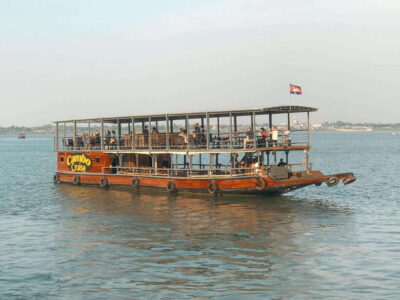 ★ 4.7Mekong Sunset Dinner Cruise with Live MusicFrom $9261 reviews
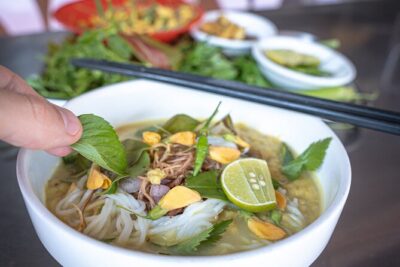 ★ 5.0Phnom Penh’s Culinary Underground: Local Food Tour by Tuk-tukFrom $69234 reviews
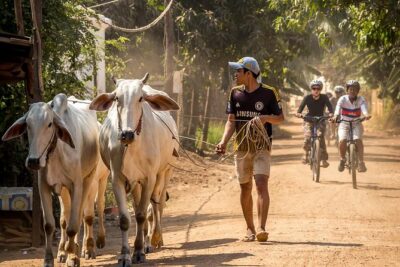 ★ 5.0Cycling Adventure on Islands of the MekongFrom $65225 reviews