
REVIEW · ANGKOR
Half-Day Ta Prohm and Banteay Kdei Tour
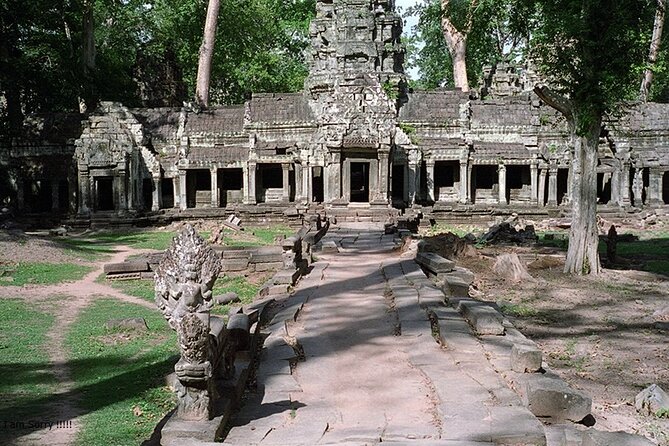
Ta Prohm with a guide saves real time. This 4-hour private outing packs three UNESCO-style stops, including the mossy jungle maze of Ta Prohm and the Buddhist calm of Banteay Kdei, with Srah Srang as a scenic breather. You get hotel pickup and round-trip transport, so you can focus on photos, shade breaks, and not fiddling with tuk-tuk logistics.
I especially like that this tour is built for breathing room. At Ta Prohm you get a full 1 hour 30 minutes, which means you can actually follow the paths, pause for the big tree-and-root scenes, and still have time to look at smaller stone details. And I like that Banteay Kdei is part of the plan, since it often gets skipped by faster Angkor highlights.
One possible drawback to weigh: the Angkor temple pass and entrance fees are not included, so budget for that up front. Also, if you’re heat-sensitive, the afternoon option can feel long under Cambodia humidity, so morning usually makes more sense.
In This Review
- Key things to know before you go
- Why Ta Prohm and Banteay Kdei make sense as a half-day
- Price and value: what $34 per person really covers
- Timing: how the 4-hour flow keeps you from temple fatigue
- Stop 1: Ta Prohm, mossy stones and the Tomb Raider tree
- Stop 2: Banteay Kdei, a Buddhist temple you can actually slow down in
- Stop 3: Srah Srang and King’s Bath, a calm reservoir break
- Lunch, water, and what to watch before you leave
- Tickets and the Angkor pass: budget this before you book
- Private tour comfort: the real perks of having your own guide
- Who should book this half-day Ta Prohm and Banteay Kdei tour
- Should you book this tour or look for another route?
- FAQ
- How long is the Ta Prohm and Banteay Kdei half-day tour?
- Is hotel pickup and drop-off included?
- Is this tour private?
- What stops are included in the itinerary?
- Is lunch included?
- Are entrance fees or the Angkor temple pass included?
- Does the tour include bottled water?
- Do I have a choice between morning and afternoon departures?
- What is the cancellation policy?
- When will I receive confirmation?
- Final thoughts: who this tour will feel best for
Key things to know before you go
- Private, small-group attention: it’s just your group, with a professional guide and hotel pickup.
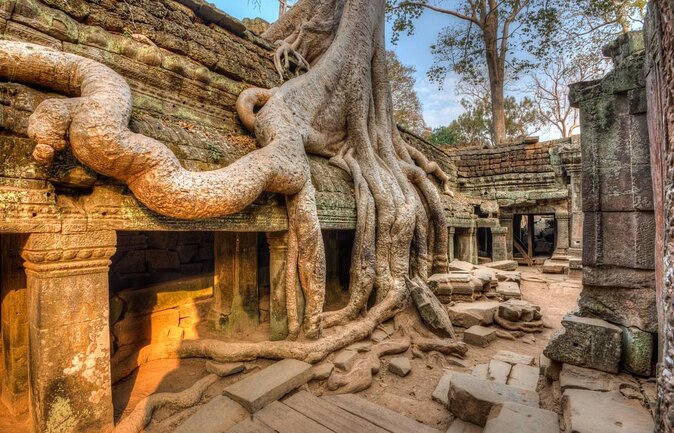
- A rare mix of jungle and Buddhist temple: Ta Prohm’s roots and moss, then Banteay Kdei’s sprawling Buddhist layouts.
- Time on the ground, not rushed walking: Ta Prohm gets 90 minutes.
- Srah Srang as a reset: the King’s Bath reservoir stop is short but scenic and calmer than the temple crowds.
- Lunch and bottled water are included: with a vegetarian option if you request it.
- Admission is extra: admission tickets/Angkor temple pass are not included in the tour price.
Why Ta Prohm and Banteay Kdei make sense as a half-day
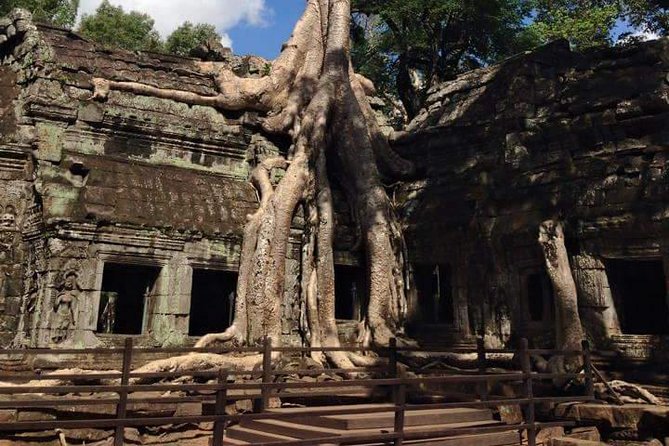
If you already saw Angkor Wat, this is a smart pivot. Instead of repeating the most famous front-gate views, you move into temples that feel more lived-in, more textured, and less choreographed. Ta Prohm brings the “jungle temple” look, with ancient stones softened by moss and dramatic tree roots grabbing onto walls. Banteay Kdei slows the pace. It’s still impressive, but in a different way, with a Buddhist temple spread that encourages you to look around rather than sprint to the next postcard angle.
The half-day format is the other big reason to like this choice. At about 4 hours, you can fit it into the edges of your Siem Reap schedule without stealing your whole day from other things you might want to do, like a night market stroll or a slower meal. You also get morning or afternoon departure, which helps if you’re juggling other Angkor stops.
And since the tour is private, the guide can keep the route comfortable. That matters in Angkor, where the ground can be uneven and the crowds can spike in certain areas. Having someone manage the pace is a quiet luxury when you’re trying to get photos without turning it into a workout.
Price and value: what $34 per person really covers
At $34 per person for a half-day private tour, the key value isn’t just the visits. It’s what’s included versus what you’ll pay separately.
Included:
- Hotel pickup and drop-off
- A professional guide
- Round-trip transport
- Bottled water
- Lunch
- Private tour, so it’s your group only
Not included:
- Entrance fee / Angkor temple pass
- Drinks (on top of the bottled water)
- Any specific stop admission tickets, since entrances are listed as not included
Here’s how I’d think about the price: you’re paying to remove friction. If you tried to self-drive or self-arrange with a random driver, you would still pay for transport, time, and a guide to explain what you’re seeing. This package bundles that into a single, predictable half-day.
So your real “cost” becomes: the tour fee plus the temple pass. Once you factor that in, the decision is easier. If you want Ta Prohm plus Banteay Kdei without the hassle of planning two separate temple blocks, it’s solid value. If you already have the pass and you’re comfortable hiring a guide on your own, you might compare options, but the private structure and hotel pickup are doing real work here.
More circuits through the Angkor complex, compared
- Angkor Wat Sunrise & 3 Main Temples with Breakfast – Small Group★ 5.0 · 2,857 reviews
- Siem Reap Tour: Angkor Wat Sunrise, Bayon, Ta Prohm, Banteay Srei★ 5.0 · 931 reviews
- 2-Day Angkor Wat With Small, Big Circuit and Banteay Srei Tour★ 5.0 · 545 reviews
- Full-Day ‘Big Tour’ with Sunset at Phnom Bakheng★ 5.0 · 341 reviews
Timing: how the 4-hour flow keeps you from temple fatigue
This route is scheduled with stop-by-stop rhythm that prevents the classic Angkor problem, which is feeling like you’re sprinting through stone and shade. You start with Ta Prohm, then move to Banteay Kdei, and finish at Srah Srang.
A typical flow looks like this:
- Ta Prohm: 1 hour 30 minutes
- Banteay Kdei: 1 hour
- Srah Srang: 30 minutes
Those time blocks matter. Ta Prohm is visual, and the temptation is to rush. But the roots and moss details are the whole show, so more time lets you switch between wide shots and close viewing of stonework. Then Banteay Kdei gets a full hour, which is enough to appreciate the sprawling layout without feeling lost. Finally, Srah Srang is a short reset, not another full temple slog.
If you’re choosing between morning and afternoon, a practical tip: go early if you can. Heat and humidity can drain you fast, and a half-day becomes less relaxing when you’re sweating through every stop. A morning start also helps you keep your energy for photos and walking.
Stop 1: Ta Prohm, mossy stones and the Tomb Raider tree
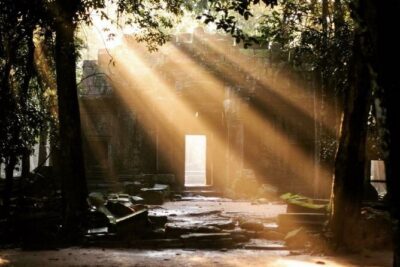
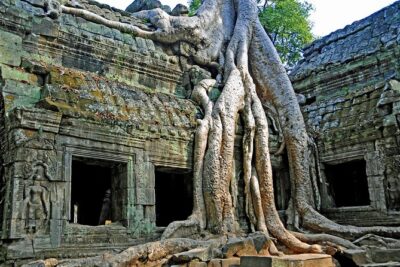
Ta Prohm is the headline act for a reason. The famous look is built from two things you can actually see: ancient stones softened by moss, and the pressure of roots taking over manmade structures. It doesn’t feel like you’re looking at a monument from one angle. It feels like you’re walking through a living sculpture.
This is also where the filming legacy shows up clearly for many visitors. The tour calls out the “Tomb Raider tree,” linked to scenes from Angelina Jolie’s Tomb Raider. Even if you’re not chasing movie trivia, that specific tree moment is usually what people picture first when they hear Ta Prohm, so it’s helpful that your time is designed around it.
Also pay attention to the detail the tour highlights: the roots of the Spung Tree and the way they twist around the architecture. When you have 90 minutes here, you can do the fun stuff: take picture-perfect shots, step back to capture framing with roots and doorways, and then walk slowly enough to notice how the moss changes the color and texture of the stones.
A practical caution: Ta Prohm paths can feel slippery or uneven, especially after rain. Wear shoes that grip and don’t rely on sandals. If you’re sensitive to sun, bring something light and breathable. You’ll be outside for long stretches, and this stop is where you’ll feel it.
Stop 2: Banteay Kdei, a Buddhist temple you can actually slow down in
Banteay Kdei might not be the first temple name everyone shouts, but that’s why it works so well in this tour. It’s still dramatic, still UNESCO-listed, still worth your attention. The difference is the vibe. Ta Prohm feels chaotic in a gorgeous way. Banteay Kdei feels more spread out and grounded, like a place people visit to reflect, not just to take snapshots.
The tour focuses on its Buddhist culture and its sprawling layout. That “sprawling” word matters for how you should approach it. You don’t want to treat it like a quick photo stop. You want to wander within the lines and give yourself time to take in how the temple spaces relate to each other.
You also get a full hour here, which is a good match. If you spend less time, you often end up only seeing the most obvious structures. With 60 minutes, you can go past the first big viewpoint and still feel like you’re exploring rather than checking boxes.
If you care about temple variety, Banteay Kdei is your payoff. This is the stop that balances the jungle look with a more spiritual, architectural feel.
Stop 3: Srah Srang and King’s Bath, a calm reservoir break
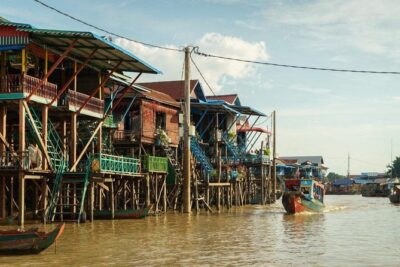
After Ta Prohm and Banteay Kdei, Srah Srang is your reset button. You’re not getting a long temple immersion here. You’re getting views over a historic reservoir that’s still holding water today, known as the King’s Bath.
This stop works because it’s short, about 30 minutes, and it changes your pace. If your legs are tired, you’ll welcome the lighter movement. If your mind is buzzing from the jungle roots and stone details, you’ll appreciate the open air and the calmer atmosphere near the water.
Even if you don’t stay long, this is a useful emotional shift in a half-day. It can help you finish the tour feeling satisfied rather than just spent.
Also on our Siem Reap list, if none of these land


Lunch, water, and what to watch before you leave
This tour includes lunch and bottled water, which is a big deal in Siem Reap. It’s one less expense and one less decision during a day when heat can make everything feel harder. There’s also a vegetarian lunch option if you tell the operator at booking.
Still, I’d plan smart. Bring a small snack you can stash for later, just in case your appetite runs ahead of the schedule. Drinks are not included, so if you like cold drinks, decide what you’ll buy on-site ahead of time.
Also, check the day-of flow expectations. It’s a private tour, so things should be smoother, but timing can still affect your experience. If you’re the type who likes a tight schedule, consider arriving early to your hotel lobby for pickup, and keep your phone charged for any mobile ticket instructions you receive.
Tickets and the Angkor pass: budget this before you book
The tour price covers the guide and the transport, but entrance fees and the Angkor temple pass are not included. That means you should treat the $34 as the tour fee, then add whatever temple pass cost applies when you arrive.
This is important for two reasons:
- You’ll avoid surprise payments at the gate.
- You’ll know you’re ready to move immediately when you get there, instead of losing time to last-minute decisions.
If you’re planning multiple temple days, it’s worth thinking about the pass strategy so you don’t buy something you don’t fully use. Just keep in mind: this tour specifically lists admission not included for the stops.
Private tour comfort: the real perks of having your own guide
When you pay for private, you’re buying more than quiet. You’re buying flexibility.
This tour is private, so your guide can:
- tailor pacing to your comfort level
- adjust where you pause for photos
- help interpret what you’re seeing, especially at sites where details can be easy to miss if you only skim
One of the best parts of this route is that it mixes two types of temple experiences. Ta Prohm rewards slow looking. Banteay Kdei rewards gentle wandering. A private guide helps you do both without feeling scattered.
Also, because you’re picked up and dropped off at your hotel, you’re not negotiating meeting points. That reduces stress. In a place where traffic and timing can be unpredictable, that matters.
Who should book this half-day Ta Prohm and Banteay Kdei tour
This tour fits best if you want:
- more Angkor temples after Angkor Wat
- a half-day that doesn’t swallow your whole day
- a private guide for pacing and explanations
- a mix of jungle temple and Buddhist temple atmosphere
It’s also a good choice for you if you’ve noticed that many Angkor-focused tours overpack. With Ta Prohm and Banteay Kdei, plus Srah Srang, you still see a solid variety in a short time.
I’d pay extra attention if you’re traveling with:
- kids or someone who tires quickly, because half-day format can reduce meltdown risk
- a photography priority, since Ta Prohm time is long enough to hunt for angles instead of rushing
- a vegetarian diet, since you should request that lunch option at booking
Should you book this tour or look for another route?
If your goal is to get beyond Angkor Wat and still keep things human-sized, I’d say yes. The combination of Ta Prohm (with real time for moss and roots) and Banteay Kdei (Buddhist temple detail that doesn’t feel like a drive-by) is a strong match for a first or second Angkor temple day.
Book it if:
- you want hotel pickup and a guide to manage the day
- you like variety more than doing only the most famous Angkor site
- you’ll appreciate Srah Srang as a calmer finish
Consider another option if:
- you need every included item to be truly fully comprehensive, because entrance fees and the Angkor temple pass are not included
- you’re extremely strict about timing, since any late pickup start can shrink the effective temple time
If you’re planning your day with the pass cost already handled and you prefer a slower pace, this is a very sensible way to spend a half-day in Siem Reap.
FAQ
How long is the Ta Prohm and Banteay Kdei half-day tour?
The tour lasts about 4 hours.
Is hotel pickup and drop-off included?
Yes. The tour includes hotel pickup and drop-off.
Is this tour private?
Yes. It’s a private tour/activity, and only your group participates.
What stops are included in the itinerary?
You visit Ta Prohm, Banteay Kdei, and Srah Srang (King’s Bath).
Is lunch included?
Yes. Lunch is included, and there is a vegetarian lunch option if you request it at booking.
Are entrance fees or the Angkor temple pass included?
No. Entrance fee and the Angkor temple pass are not included.
Does the tour include bottled water?
Yes. Bottled water is included.
Do I have a choice between morning and afternoon departures?
Yes. There is a choice of morning or afternoon departure.
What is the cancellation policy?
Free cancellation is available. You can cancel up to 24 hours in advance for a full refund.
When will I receive confirmation?
Confirmation is received at the time of booking.
Final thoughts: who this tour will feel best for
This is a good pick if you want a focused half-day that adds Banteay Kdei and the calmer water views of Srah Srang to your Angkor day, while still giving Ta Prohm enough time to look properly. Just budget for the Angkor temple pass and consider a morning start if you want to keep the heat from stealing your enjoyment.
More Tours in Siem Reap
- Angkor Wat Sunrise or Sunset Tour with Guide from Siem Reap★ 5.0 · 12,109 reviews
- Siem Reap: Angkor Wat: Small-Group Sunrise or Sunset Tour★ 5.0 · 9,444 reviews
- From Siem Reap: Kampong Phluk Floating Village Tour by Boat★ 4.9 · 6,979 reviews
- Siem Reap: Angkor Wat 2-Day Tour with Sunrise and Sunset★ 4.9 · 4,429 reviews
More Tour Reviews in Siem Reap
- Angkor Wat Sunrise or Sunset Tour with Guide from Siem Reap★ 5.0 · 12,109 reviews
- Siem Reap: Angkor Wat: Small-Group Sunrise or Sunset Tour★ 5.0 · 9,444 reviews
- From Siem Reap: Kampong Phluk Floating Village Tour by Boat★ 4.9 · 6,979 reviews
- Siem Reap: Angkor Wat 2-Day Tour with Sunrise and Sunset★ 4.9 · 4,429 reviews
Keep Going Round the Circuit
- Angkor Wat Sunrise & 3 Main Temples with Breakfast – Small Group★ 5.0 · 2,857 reviews
- Siem Reap Tour: Angkor Wat Sunrise, Bayon, Ta Prohm, Banteay Srei★ 5.0 · 931 reviews
- 2-Day Angkor Wat With Small, Big Circuit and Banteay Srei Tour★ 5.0 · 545 reviews
- Full-Day ‘Big Tour’ with Sunset at Phnom Bakheng★ 5.0 · 341 reviews
Newly written up around Siem Reap
- Waterfall & River of 1000 Siva Linga- Kulen Mountain Private Tour
★ 5.0 · 3 reviews - Private Transfer from Siem Reap to Sihanoukville
★ 4.5 · 3 reviews - Private Tour to Koh Ker and Beng Mealea
★ 5.0 · 3 reviews - Private Transfer: Siem Reap Angkor Internation Airport to Hotel
★ 5.0 · 3 reviews - Kulen National Park Ticket -Waterfall & 1000 Lingas
★ 5.0 · 3 reviews - Kulen Waterfall & Kbal Spean Tour
★ 5.0 · 3 reviews
Angkor Temple Circuit Tours, side by side.
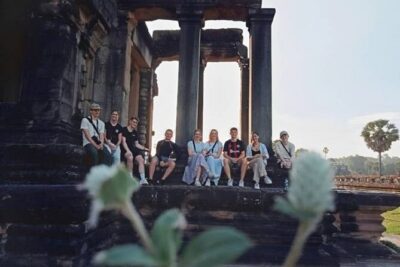 ★ 5.0Angkor Wat Sunrise & 3 Main Temples with Breakfast – Small GroupFrom $152,857 reviews
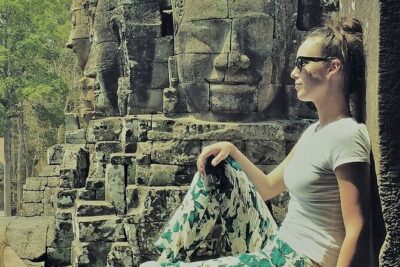 ★ 5.0Siem Reap Tour: Angkor Wat Sunrise, Bayon, Ta Prohm, Banteay SreiFrom $130931 reviews
 ★ 5.02-Day Angkor Wat With Small, Big Circuit and Banteay Srei TourFrom $158545 reviews
 ★ 5.0Full-Day ‘Big Tour’ with Sunset at Phnom BakhengFrom $18341 reviews
 ★ 5.01-Day Amazing Angkor Wat Tour with Sunset & All Interesting Major TemplesFrom $67308 reviews
 ★ 5.0Private sunrise ‘small tour’ of Angkor Wat with car or van & GuideFrom $55179 reviews
 ★ 4.9Banteay Srei and Grand Circuit Heritage TourFrom $18163 reviews
 ★ 5.0Banteay Srei and Grand Circuit Heritage Tour from Siem ReapFrom $24142 reviews
Also appears in