
REVIEW · ANGKOR
Highlight of Angkor Complex 2 Days Private Tour
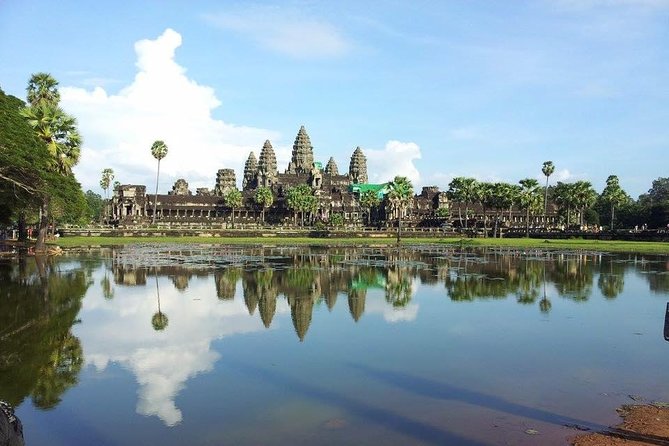
Two days, one Khmer story. This private Angkor Complex plan strings together the Khmer Empire’s most memorable temple moments, plus quieter stops like Ta Nei. You get hotel pickup and a licensed English-speaking guide, so you spend less time figuring things out and more time reading the stone.
What I like most is the mix: you hit the headline temples (Angkor Wat, Angkor Thom, Ta Prohm) and still make room for less-frequented ruins that change the feel of the visit. I also like that the driving and transfers are handled in a comfortable vehicle, with cool fresh tissue and water kept ready throughout the day.
One drawback to note up front: the Angkor Pass is not included, and meals are on your own. That is normal for Angkor tours, but it does mean you should budget a bit extra and plan your lunch breaks.
In This Review
- Key highlights that matter on the ground
- Why this two-day Angkor Complex route feels efficient
- Getting started: pickup, vehicle transfers, and your licensed guide
- Day 1: Angkor Thom South Gate to Ta Nei, with Angkor Wat as the center piece
- Angkor Thom South Gate (about 25 minutes)
- Bayon Temple (about 1 hour)
- Angkor Thom (about 30 minutes)
- Baphuon Temple (about 45 minutes)
- Phimeanakas (about 30 minutes)
- Terrace of the Elephants (about 45 minutes)
- Terrace of the Leper King (about 30 minutes)
- Ta Prohm Temple (about 1 hour 30 minutes)
- Angkor Wat (about 3 hours)
- Ta Nei Temple (about 45 minutes)
- Day 2: Banteay Srei, Pre Rup, Neak Pean, and Preah Khan
- Banteay Srei (about 1 hour 20 minutes)
- Banteay Samre (about 45 minutes)
- Pre Rup (about 50 minutes)
- Eastern Mebon (about 30 minutes)
- Neak Pean (about 45 minutes)
- Preah Khan (about 1 hour)
- Banteay Prei (about 45 minutes)
- Om Pich steamed toddy palm cake and Prashdak Village, plus Preah Dak Market (about 30 minutes)
- Price and logistics: what your $149.46 per person really covers
- What to expect at each stop, and how to plan your mindset
- Who this private tour suits best
- Should you book this 2-day Angkor Complex private tour?
- FAQ
- Do I need to buy the Angkor Pass for this tour?
- What is included in the tour price?
- Are entrance fees included for the temples?
- Are meals included?
- Is this tour private?
- What should I wear to the temples?
- Does the tour offer pickup from my hotel?
- How long is the tour?
- Can I cancel for free?
Key highlights that matter on the ground
- Private group pacing: your route is restricted to your own group, so you can linger at the places you care about
- Major plus lesser-known temples: Ta Prohm and Angkor Wat on Day 1, with Ta Nei, Banteay Prei, and more on Day 2
- Guide help for Angkor Pass: your guide assists you in purchasing the pass at the entrance
- Comfort between ruins: hotel pickup/drop-off and private transfers reduce downtime
- Religious site etiquette included: shoulders covered, and knee-length options for bottoms keep things respectful
- Flexible add-on possibility: a Land Mine Museum stop can be added on request (when timing allows)
Why this two-day Angkor Complex route feels efficient
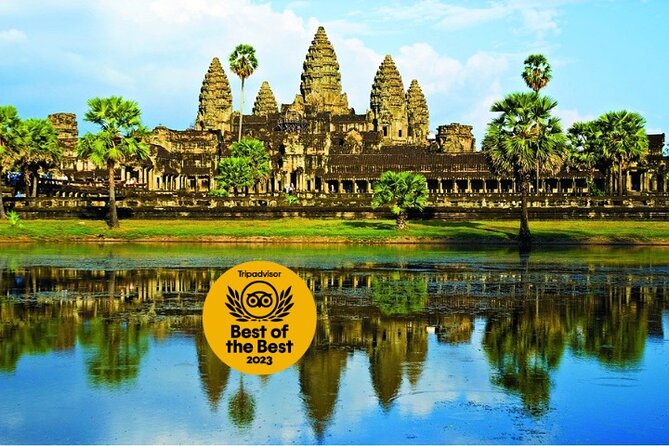
This is a smart way to see Angkor because it does not only check boxes. The schedule builds a flow: you move through the Royal City core first, then step into Angkor Wat, then shift to another set of temple “zones” across Day 2. That matters because Angkor temples are not random. They are planned, connected, and layered, and when you see them in a sequence, the carvings and layouts start to make more sense.
You also get a balance of scale. Some stops are huge and time-consuming, like Angkor Wat (about 3 hours), while others are shorter, like the South Gate or Phimeanakas (about 25 to 30 minutes). That mix keeps the day from turning into one long blur of stone.
The other practical win: being private means you are not stuck moving at the pace of strangers. You can pause longer where you want photos, you can ask follow-up questions without feeling rushed, and you can keep your group moving together across gates and paths.
Getting started: pickup, vehicle transfers, and your licensed guide
This tour includes hotel pickup and drop-off, and you just provide your hotel name for pickup. Once you are on the move, the transfers are “private transfer by comfortable vehicle” following the itinerary stops. For Angkor, that kind of transport setup is not glamorous, but it is a real quality-of-life upgrade. It cuts waiting and helps you stay on schedule.
Your guide is a professional English-speaking, licensed tour guide. One name that comes up in the experiences shared for this tour is Mr. Sara, praised for strong on-the-day coordination, good timing, and making sure the group stays comfortable. That matters, because Angkor runs on daylight and heat, and a guide who keeps the day flowing makes a bigger difference than people expect.
You also get small comforts that add up. The tour includes drink water and cool fresh tissue for the whole trip. That is a simple inclusion, but it helps you keep energy up between stops, especially when one temple run quickly turns into another.
More circuits through the Angkor complex, compared
- Angkor Wat Sunrise & 3 Main Temples with Breakfast – Small Group★ 5.0 · 2,857 reviews
- Siem Reap Tour: Angkor Wat Sunrise, Bayon, Ta Prohm, Banteay Srei★ 5.0 · 931 reviews
- 2-Day Angkor Wat With Small, Big Circuit and Banteay Srei Tour★ 5.0 · 545 reviews
- Full-Day ‘Big Tour’ with Sunset at Phnom Bakheng★ 5.0 · 341 reviews
Day 1: Angkor Thom South Gate to Ta Nei, with Angkor Wat as the center piece
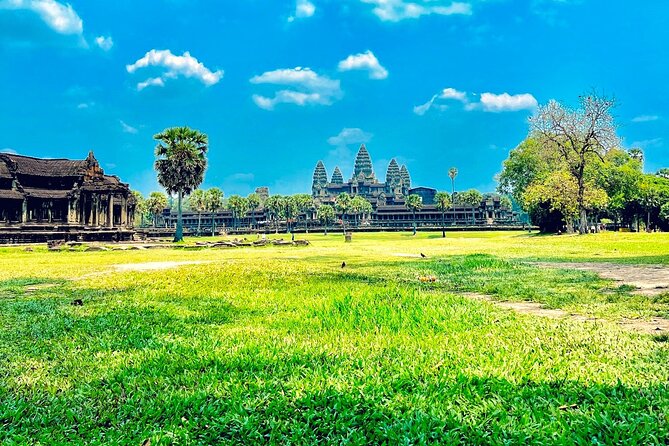
Day 1 is about power and symbolism. You start with the threshold of the Royal City, work your way through major structures connected to Jayavarman VII’s era and the broader Bayon-era landscape, and end with the best-preserved giant, Angkor Wat, plus the unusual off-main-stop Ta Nei.
Angkor Thom South Gate (about 25 minutes)
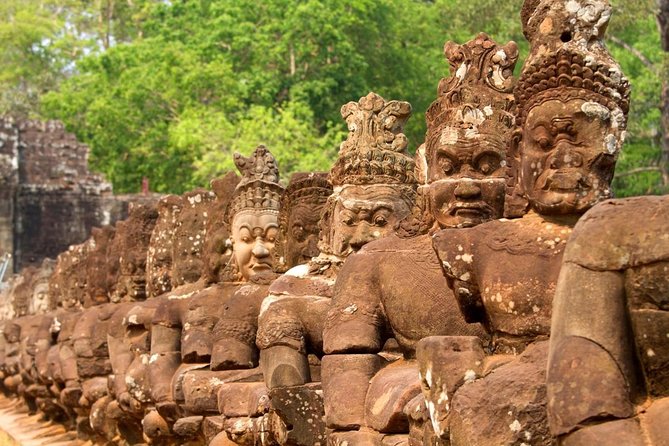
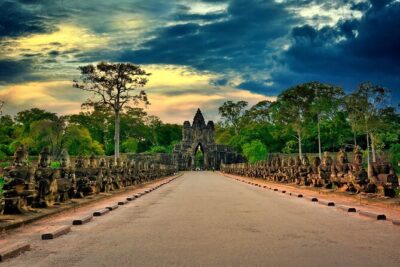
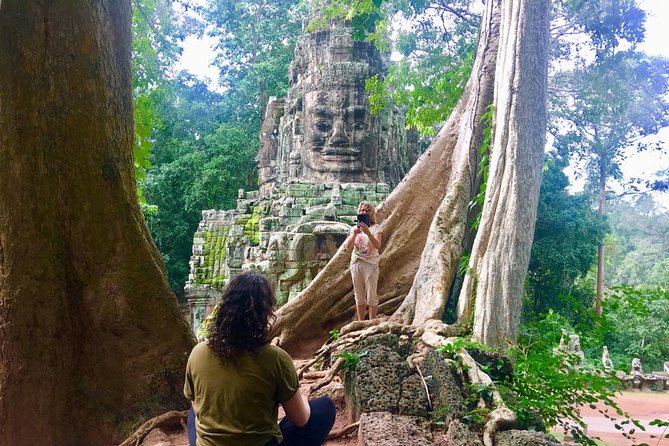
This south gate is popular because it has been fully restored, and many of the stone faces remain in place. It sits on the main road into Angkor Thom from Angkor Wat, so it works like a natural starting “read” for the whole Royal City layout.
Practical note: because this is an entry point, it is an easy place to get oriented quickly, especially if you want to understand where the city sits in relation to Angkor Wat.
Bayon Temple (about 1 hour)
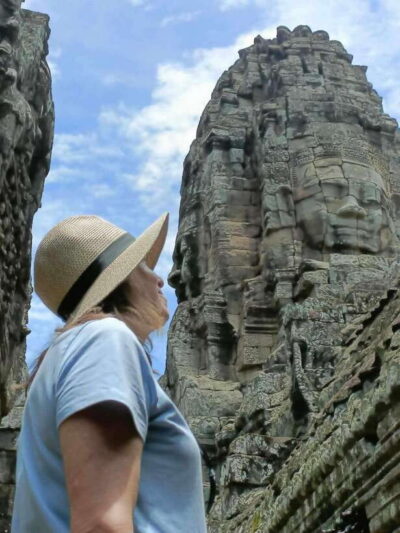
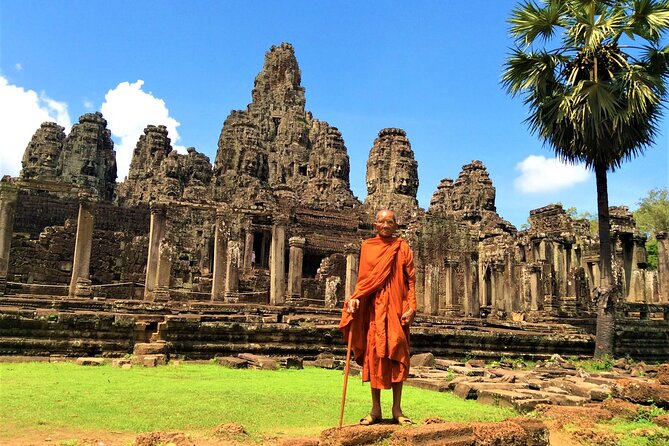
Bayon was built nearly 100 years after Angkor Wat. The structure’s earliest details are not fully known, but what is clear is its role as a centerpiece temple inside a royal city. If you want the face-heavy style and the sense of a symbolic heart to the city, this is where it clicks.
A consideration: Bayon is a high-impact stop but can feel busy because it is central. With a private group, you can still manage the flow better than on open tours.
Angkor Thom (about 30 minutes)
Think of Angkor Thom as the big concept. It is described as a three-dimensional expression of Buddhist cosmology on a national scale. When your guide connects the temple buildings to that idea, you will likely feel less like you are just sightseeing, and more like you are reading a plan.
Other private bookings in Siem Reap

Baphuon Temple (about 45 minutes)
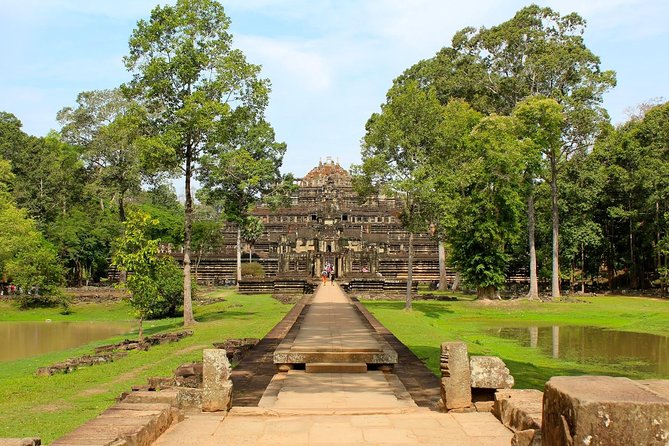
Baphuon sits on a rectangular sandstone base with five levels, and those levels are about the same size, rather than shrinking in a typical stepped pattern. That difference matters because it changes how the temple’s massing reads from different angles.
If you like architecture details, this stop rewards attention.
Phimeanakas (about 30 minutes)
Phimeanakas is near the center of the palace area walls. It originally would have had a golden pinnacle, described by Zhou Daguan as the Tower of something (the point is the dramatic top). Even if you are standing in the present-day ruins, it helps to know it was once meant to look monumental at the top.
Terrace of the Elephants (about 45 minutes)
This terrace features bas-relief scenes of elephants used by servants and princes. The description emphasizes the calm, even-step sense of procession. As a stop, it is a good shift from the heavier “temple worship” mood into court life and ceremonial movement.
Terrace of the Leper King (about 30 minutes)
This terrace is famous for its grandeur under Jayavarman VII. It features dramatic bas-reliefs on both interior and exterior walls. It is also an easy place to lose time because the carvings encourage close viewing.
A realistic drawback: bas-relief detail rewards patience, but your day is still moving, so do not plan to spend unlimited time here unless your guide has room in the schedule.
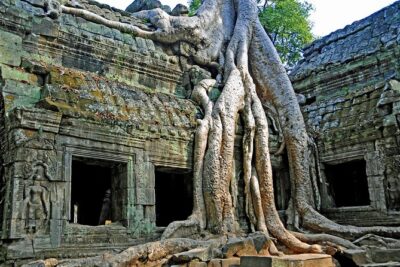
Ta Prohm Temple (about 1 hour 30 minutes)
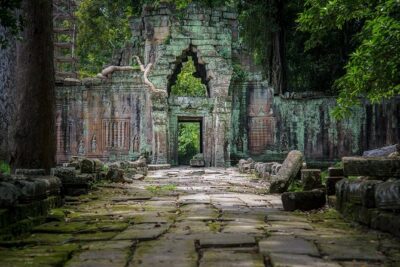
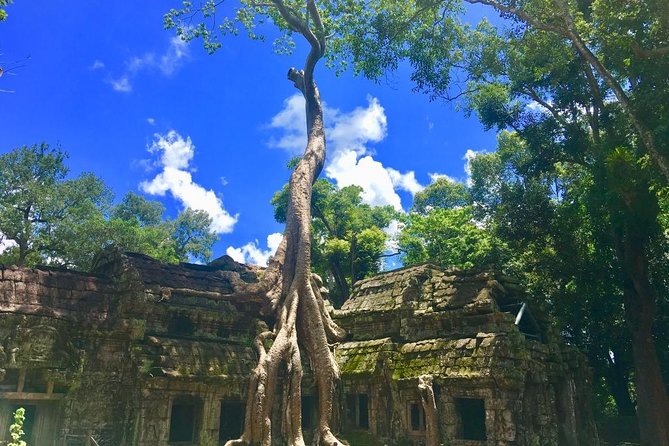
Ta Prohm is often called the kingdom of the trees. It is left largely untouched by archaeologists except for clearing paths for visitors and doing structural strengthening to slow further deterioration. That is why the atmosphere feels different here, like you are seeing ruins in an ongoing dialogue with the forest.
This is also one of the stops where a good guide helps you notice what the trees changed, where the path was cleared, and what parts of the complex remain vulnerable.
Angkor Wat (about 3 hours)
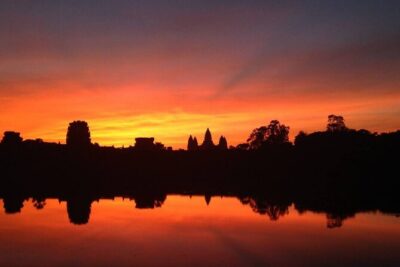
Angkor Wat is the largest monument of the Angkor group and described as the best preserved. The tour framing focuses on its architectural perfection, including composition, balance, proportions, and sculpture.
With about 3 hours allocated, you should have enough time to see the main areas without feeling like you are sprinting. It is the stop that most people remember most clearly, so it is worth letting your guide point out the structures and reliefs, not just the big postcard view.
Ta Nei Temple (about 45 minutes)
Ta Nei is small and located deep in the jungle, about 200 meters west of the East Baray. It can be difficult to find and is not a popular tourist destination. That obscurity is part of the value. If you are tired of repeating the same crowds and camera angles, Ta Nei gives you a quieter, more intimate ruin feel.
Real consideration: because it is harder to find, you will really appreciate having the guide and driver handle navigation.
Day 2: Banteay Srei, Pre Rup, Neak Pean, and Preah Khan
Day 2 shifts toward Khmer art detail, bold architecture, and the kind of site variety that keeps Angkor from feeling repetitive. You also move between some temples that are more complete visually and others that show maintenance gaps, which helps you understand the “living” side of conservation.
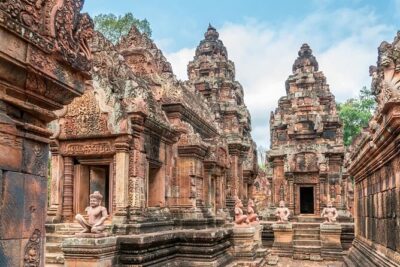
Banteay Srei (about 1 hour 20 minutes)
Banteay Srei is described by French archaeologists as a precious gem and jewel in Khmer art. That kind of label often means the carvings and overall craft feel unusually refined compared to many bigger monuments.
If you care about detail, you will likely enjoy this stop.
Banteay Samre (about 45 minutes)
Banteay Samre is noted as one of the more complete complexes at Angkor because of restoration using anastylosis. At the same time, the lack of maintenance over the past 20 years is evident.
That combination can be a double-edged experience. You get structural recovery and readability, but you also see time at work.
Pre Rup (about 50 minutes)
Pre Rup is praised for the boldness of its architectural design and its balance, scale, and proportion. It is also described as almost identical in style to the East Mebon, built several years later.
This is a great stop for people who like comparing temples and seeing how style evolves, even when two sites share a visual DNA.
Eastern Mebon (about 30 minutes)
Eastern Mebon’s sculptures are described as varied and exceptional. Notable details include two-meter-high free-standing stone elephants at corners of the first and second tiers. It also includes religious scenes, with the god Indra atop his throne.
If you want the kind of photo stop where the carvings and statues are actually worth your attention, this fits.
Neak Pean (about 45 minutes)
Neak Pean is described as a square man-made pond, about 70 meters per side, bordered by steps and surrounded by four small structures. The description emphasizes luxury and beauty from the old days, and the pond layout gives you a different kind of visual experience than the classic temple-tower view.
This is a good “pause” stop where the site layout helps you reset before the bigger complexes.
Preah Khan (about 1 hour)
Preah Khan is located about 2 kilometers north-east of Angkor Thom on the Grand Circuit. It was built in the second half of the 12th century, around 1191 by King Jaya-varman VII, and dedicated to his father Dh.
This stop is the one where the guide’s story-telling can really help you connect the political timeline to what you are seeing in stone.
Banteay Prei (about 45 minutes)
Banteay Prei is rarely visited and sits near Prasat Prei. It is described as a minor temple, mainly of interest for people who want to study Angkor in depth.
If you love the “more than the headlines” side of Angkor, this works. If you prefer only the biggest and most iconic structures, you might treat this as a quieter bonus.
Om Pich steamed toddy palm cake and Prashdak Village, plus Preah Dak Market (about 30 minutes)
The day ends with a cultural-food and shopping-style stop. You get a pause for Om Pich steamed toddy palm cake in Prashdak Village. The tour also points you toward Preah Dak Market, described as famous and popular for souvenirs like arts and objects.
This is a practical closer. It gives you a way to reset after temple walking and bring home something tangible.
Price and logistics: what your $149.46 per person really covers
At $149.46 per person, this tour is priced as a full private two-day plan. What you get for that price is the heavy lifting: hotel pickup and drop-off, a professional English-speaking licensed guide, private transfer vehicle service through the day, plus water and cool tissue.
What is not included matters for budgeting. The Angkor Pass is not included, though your guide assists you in purchasing it at the entrance of Angkor Park, and it covers all temples in the itinerary. Meals during the tour are not included either, but lunches are available at local restaurants with vegetarian and non-vegetarian options. Menu prices are roughly $3–$10 per dish.
Tips can also add another line item. Tipping for the tour guide and driver is not included.
If you compare this to a do-it-yourself day with multiple sites, the value is in your time and decision-making. With Angkor, the hardest part is not finding temples, it is stitching the day together without losing your rhythm.
What to expect at each stop, and how to plan your mindset
This itinerary is temple-heavy, but it is not one-note. You will see three types of “Angkor experience” in two days:
- Royal City symbolism, starting with Angkor Thom and its gates, then stepping into Bayon and terraces tied to Jayavarman VII.
- Architectural mastery, with Angkor Wat as the main center, plus Pre Rup and Banteay Srei for balance and craft.
- Off-main calm, with Ta Nei and Banteay Prei, plus the pond layout at Neak Pean.
The best way to enjoy it is to accept a simple reality: you will not get to treat every ruin like a half-day museum exhibit. The schedule gives you multiple windows, short and long, so you can learn something and move on without the day collapsing into fatigue.
A second mindset shift: the guide is not just translating labels. The descriptions linked to each stop (Jayavarman VII, Bayon’s placement, Ta Prohm’s conservation approach, and the architectural layout at Pre Rup and Baphuon) are the clues that help you see what you are looking at.
Who this private tour suits best
This is a strong choice if you want:
- A private experience restricted to your own group
- English guiding and organized transfers
- A plan that mixes major hits and less crowded temples
- Enough time at Angkor Wat to do it justice (about 3 hours)
It is also a solid fit for first-timers who want structure, and repeaters who want a few extra stops like Ta Nei and Banteay Prei without needing to figure out the route on their own.
If you are the type who only cares about the absolute biggest temples and hates walking, you might find Day 1 and Day 2 both full. You will still see a lot, so come with energy and a willingness to keep moving.
Should you book this 2-day Angkor Complex private tour?
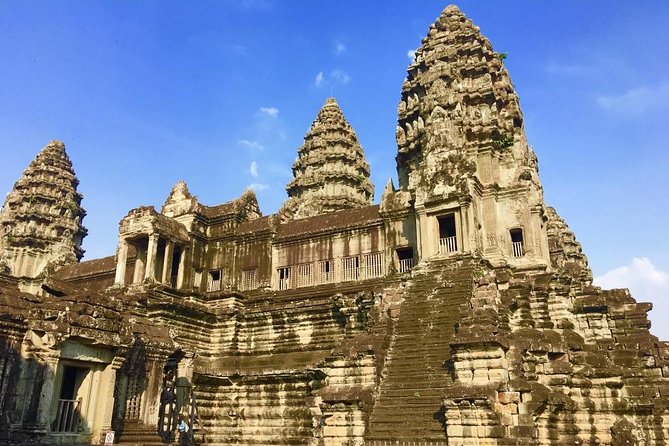
Book it if you want a tight, guided route that covers headline temples and still gives you room for quieter ruins, with pickup, transfers, and thoughtful time at major sites like Angkor Wat. The guide setup and private pacing are the real value, not just the temple list.
Skip or consider other options if you are mainly hunting for rest time, because this schedule is packed with many stops and each one is meant to be visited, not skipped. Also plan for the extra budget for the Angkor Pass and meals, since those are not included.
If your goal is to come away understanding how Angkor Thom, Angkor Wat, and the surrounding temple zones connect as part of the Khmer story, this two-day private plan is a practical way to get there.
FAQ
Do I need to buy the Angkor Pass for this tour?
Yes. The Angkor Pass is not included, but your tour guide will assist you with purchasing it at the entrance of Angkor Park before starting the tour. The pass covers all temples in the itinerary.
What is included in the tour price?
Hotel pickup and drop-off, a professional English-speaking licensed tour guide, all private transfers by comfortable vehicle as mentioned in the itinerary, and drink water plus cool fresh tissue for the whole trip.
Are entrance fees included for the temples?
Not directly. Entrance fees are handled through the Angkor Pass, which is not included. Your guide helps you buy the pass at the entrance.
Are meals included?
No. Meals are not included. Lunches are available at local restaurants with vegetarian and non-vegetarian options, and meals are at your own expense (menu prices range from $3 to $10 per dish).
Is this tour private?
Yes. This is a private tour/activity, and only your group participates.
What should I wear to the temples?
Dress appropriately. Wear a shirt that can cover your shoulders. Trousers, knee-length pants, or skirts are permitted.
Does the tour offer pickup from my hotel?
Yes. Hotel pickup and drop-off are included. You provide your hotel name for pickup.
How long is the tour?
It runs for about 2 days.
Can I cancel for free?
Yes, free cancellation is available. You can cancel up to 24 hours in advance for a full refund.
More Tours in Siem Reap
- Angkor Wat Sunrise or Sunset Tour with Guide from Siem Reap★ 5.0 · 12,109 reviews
- Siem Reap: Angkor Wat: Small-Group Sunrise or Sunset Tour★ 5.0 · 9,444 reviews
- From Siem Reap: Kampong Phluk Floating Village Tour by Boat★ 4.9 · 6,979 reviews
- Siem Reap: Angkor Wat 2-Day Tour with Sunrise and Sunset★ 4.9 · 4,429 reviews
More Tour Reviews in Siem Reap
- Angkor Wat Sunrise or Sunset Tour with Guide from Siem Reap★ 5.0 · 12,109 reviews
- Siem Reap: Angkor Wat: Small-Group Sunrise or Sunset Tour★ 5.0 · 9,444 reviews
- From Siem Reap: Kampong Phluk Floating Village Tour by Boat★ 4.9 · 6,979 reviews
- Siem Reap: Angkor Wat 2-Day Tour with Sunrise and Sunset★ 4.9 · 4,429 reviews
Keep Going Round the Circuit
- Angkor Wat Sunrise & 3 Main Temples with Breakfast – Small Group★ 5.0 · 2,857 reviews
- Siem Reap Tour: Angkor Wat Sunrise, Bayon, Ta Prohm, Banteay Srei★ 5.0 · 931 reviews
- 2-Day Angkor Wat With Small, Big Circuit and Banteay Srei Tour★ 5.0 · 545 reviews
- Full-Day ‘Big Tour’ with Sunset at Phnom Bakheng★ 5.0 · 341 reviews
Newly written up around Siem Reap
- Waterfall & River of 1000 Siva Linga- Kulen Mountain Private Tour
★ 5.0 · 3 reviews - Private Transfer from Siem Reap to Sihanoukville
★ 4.5 · 3 reviews - Private Tour to Koh Ker and Beng Mealea
★ 5.0 · 3 reviews - Private Transfer: Siem Reap Angkor Internation Airport to Hotel
★ 5.0 · 3 reviews - Kulen National Park Ticket -Waterfall & 1000 Lingas
★ 5.0 · 3 reviews - Kulen Waterfall & Kbal Spean Tour
★ 5.0 · 3 reviews
Angkor Temple Circuit Tours, side by side.
 ★ 5.0Angkor Wat Sunrise & 3 Main Temples with Breakfast – Small GroupFrom $152,857 reviews
 ★ 5.0Siem Reap Tour: Angkor Wat Sunrise, Bayon, Ta Prohm, Banteay SreiFrom $130931 reviews
 ★ 5.02-Day Angkor Wat With Small, Big Circuit and Banteay Srei TourFrom $158545 reviews
 ★ 5.0Full-Day ‘Big Tour’ with Sunset at Phnom BakhengFrom $18341 reviews
 ★ 5.01-Day Amazing Angkor Wat Tour with Sunset & All Interesting Major TemplesFrom $67308 reviews
 ★ 5.0Private sunrise ‘small tour’ of Angkor Wat with car or van & GuideFrom $55179 reviews
 ★ 4.9Banteay Srei and Grand Circuit Heritage TourFrom $18163 reviews
 ★ 5.0Banteay Srei and Grand Circuit Heritage Tour from Siem ReapFrom $24142 reviews
Also appears in