
REVIEW · ANGKOR
Private 2 Days Angkor Wat Sunrise and Discover all Major Temples
Early mornings at Angkor change everything. This private 2-day plan pairs sunrise and sunset viewpoints with a local guide’s Khmer Empire context across the key sites, and it does it with a comfortable AC private car plus cool towels. I like that it hits the big names, but also gives time to step into the less-visited corners. One thing to consider, though, is that the Angkor Pass (entrance fee) is not included, so you’ll want to budget for that on arrival.
What really makes this work is the human factor: you’re with a professional official license guide and you can ask questions as you walk. I also appreciate the practical touches, like bottled water and the hotel pickup and drop-off, which makes a 4:30 start feel less brutal.
The only real drawback is timing and heat. You’ll be moving early and moving again through the day, and you’ll want solid footwear plus the discipline to take short breaks when the sun ramps up.
In This Review
- Key Things I’d Prioritize on This Tour
- Price and Logistics: What You’re Actually Buying
- Getting Started in Siem Reap: Pickup, Comfort, and a 4:30 Wake-Up
- Day 1 Morning: Angkor Wat at First Light
- Angkor Thom South Gate and Bayon: The Royal Core in Two Steps
- Baphuon, Phimeanakas, and the Royal Square Terraces
- Ta Nei and Banteay Kdei: The Side Trips That Feel Like Angkor
- Day 2: Start with Banteay Srei, Then Move Through the East Baray Area
- Preah Khan, Neak Pean, and Ta Som: The Temples That Change the Feel of the Trip
- East Mebon and Pre Rup: Strong Endpoints for a Two-Day Arc
- Sunset Viewpoints: Why This Tour Isn’t Only About Sunrise
- Guides and Drivers: The Names That Come Up for a Reason
- Who This Tour Fits Best (and Who Might Want a Different Style)
- Meals and Energy Strategy During the Tour
- Should You Book This 2-Day Angkor Wat Sunrise and Major Temples Tour?
- FAQ
- What is included in the price?
- Is the Angkor Pass included?
- Do I get pickup from my hotel in Siem Reap?
- How long is the tour?
- Is this tour private or shared?
- Are meals included?
- Can I cancel for a full refund?
Key Things I’d Prioritize on This Tour
- Sunrise at Angkor Wat timed for the best early light, not a late scramble
- Hotel pickup and drop-off so you avoid tuk-tuk math and traffic stress
- Official license guide in excellent English for clearer history at each stop
- AC private transfers with cool towels to reset between temples
- Two-day pacing that gives you time beyond the usual photo dash
- Angkor Pass guidance so you know where to purchase before you start
Price and Logistics: What You’re Actually Buying
At $149.46 per person for about two days, this isn’t a bargain-bus experience. You’re paying for three things that matter in Angkor: a private schedule, a private vehicle with air conditioning, and a guide who explains what you’re seeing.
Entrance fees work like this: the tour uses the Angkor Pass to cover temples on the plan, and your guide will assist you in purchasing it at the park entrance before the tour starts. That means the base price covers the guidance and transport, but you should still expect to budget for the pass itself once you’re there.
Meals are on your own. Lunches are available at local restaurants with both vegetarian and non-vegetarian options, and typical dish prices are listed as $3–$10. That’s useful because you can eat quickly when you need to, or take your time if you’re still walking comfortably.
Getting Started in Siem Reap: Pickup, Comfort, and a 4:30 Wake-Up
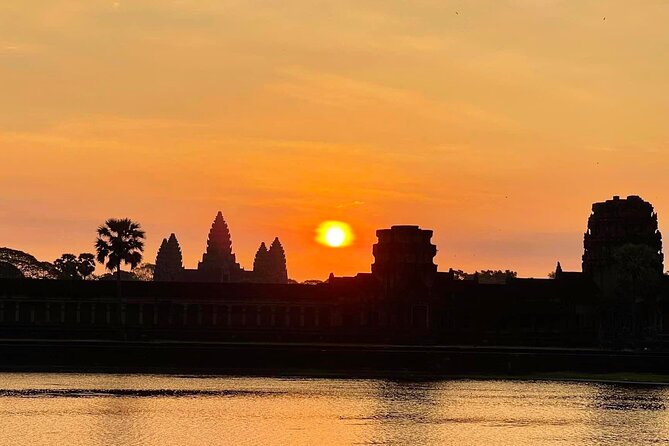
This tour is built around early timing. On day 1, you’re up at 4:30 for the Angkor Wat sunrise, and that early start is the difference between crowds and a calm first look at the temple silhouette.
I like that pickup and drop-off are included from your hotel, which usually means fewer missed instructions and less time wasted finding your driver. The private vehicle includes AC, bottled water, and cool towels, all of which help when you go from predawn chill to full sun later.
Also, this is designed as a private tour. Only your group participates, so your pace is easier to manage, especially if you want extra photo time at one stop or prefer to shorten a crowded section.
Other ways to be at the temples before the light comes up
- Angkor Wat Sunrise or Sunset Tour with Guide from Siem Reap★ 5.0 · 12,109 reviews
- Siem Reap: Angkor Wat: Small-Group Sunrise or Sunset Tour★ 5.0 · 9,444 reviews
- Siem Reap: Angkor Wat 2-Day Tour with Sunrise and Sunset★ 4.9 · 4,429 reviews
- Angkor Wat Sunrise tour with Small – Group and Guide tours★ 5.0 · 3,655 reviews
Day 1 Morning: Angkor Wat at First Light
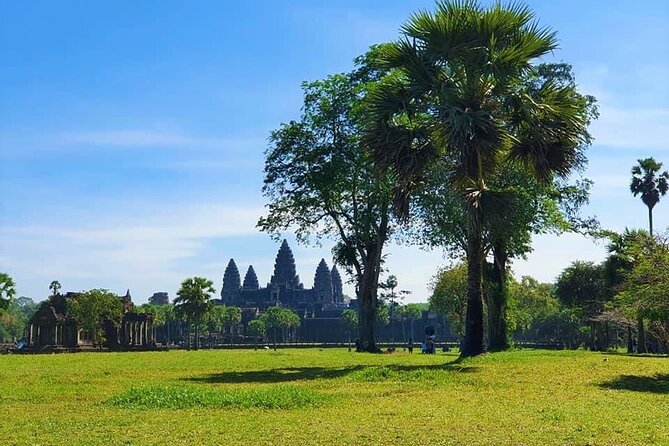
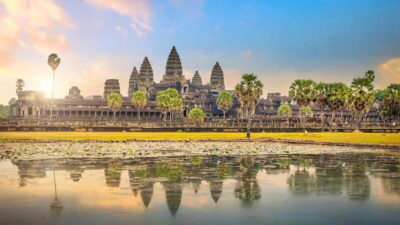
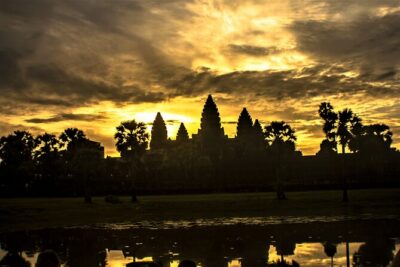
Angkor Wat is the national emblem of Cambodia and the pride of the Khmer people, and sunrise is when the temple feels most symbolic. You’ll start with the five towers look, and if you view it from a front angle you may notice the way the towers can appear differently depending on perspective.
What you should expect at this stage is a slow reveal. At dawn, the carvings and stone details still feel crisp, and the whole area has that quiet before the full daytime flow.
This is also where the tour earns its keep. Instead of treating sunrise like a checklist item, the plan is structured around it so you can actually enjoy the moment and then move on.
Practical tip: sunrise means you’ll be outside early. Bring water and something light for comfort before the heat hits, and use the cool towel between stops to reset.
Angkor Thom South Gate and Bayon: The Royal Core in Two Steps

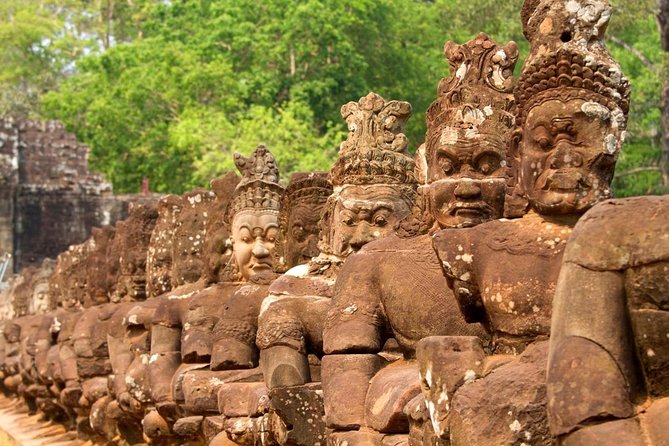
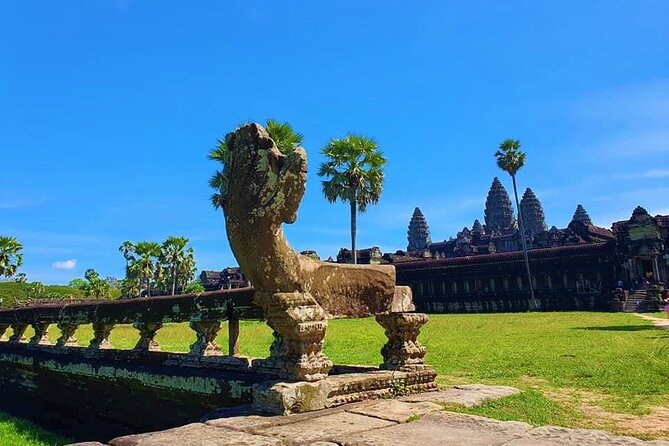
After Angkor Wat, the tour moves into Angkor Thom, the big central city area. You start at the Angkor Thom South Gate, where a causeway crosses the broad moat. The railings are made from the world-famous rows of giant sculptures holding the structure, and it’s a strong introduction to the way Angkor mixes engineering with myth.
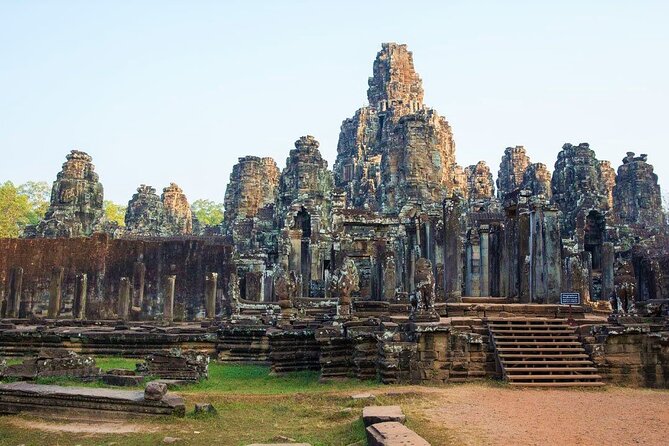
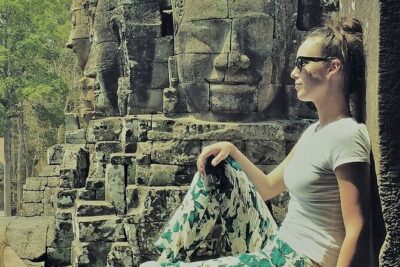
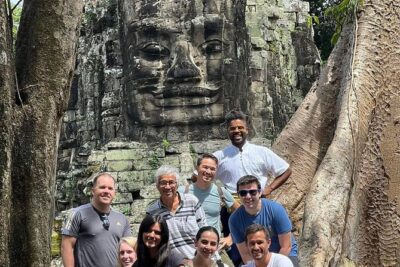
Next comes Angkor Thom itself, followed by Bayon Temple, built around 1200 A.D. in the center of Angkor Thom. Bayon is famous for its many enigmatic stone faces, and it’s the kind of site where the guide’s explanation really helps you see more than the obvious.
This is one of the moments where I think a good guide earns their fee. The faces aren’t just a visual gimmick. The way you look at them shifts as you circle, and the guide can help connect the symbolism to the Khmer Empire story.
If you’re someone who gets impatient with walking, this block can still feel like a lot, but it’s paced across several stops rather than packed into one nonstop slog.
Baphuon, Phimeanakas, and the Royal Square Terraces
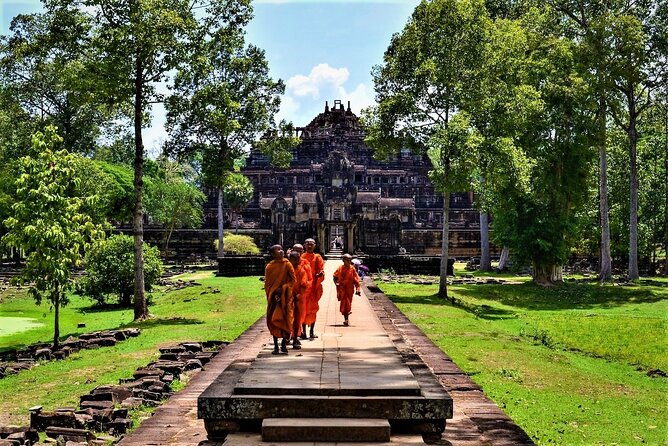
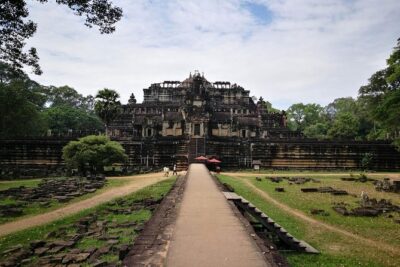
After Bayon, you move to the Baphuon Temple, located about 300 meters north-west of Bayon. The Baphuon was the hugest Khmer temple before Angkor Wat, and it’s one of those sites where scale becomes part of the story.
Then comes Phimeanakas, meaning Aerial Palace or Celestial temple. Even the name is built on older Sanskrit words, and that linguistic thread helps you understand why the Khmer built temples as more than just religious spaces.
The tour then focuses on two major viewing areas of the royal complex: the Terrace of the Elephants and the Terrace of the Leper King.
- The Elephant Terrace forms much of the western edge of the Royal Square of Angkor Thom, acting like a boundary marker with historical weight.
- The Leper King terrace is in the north-west corner of the Royal Square, and it’s worth taking time to study because the carvings reward close attention.
A small consideration here: terraces can be hot, and the stone stays warm. You’ll want to pace yourself and take the quick water-and-rest moments your guide likely builds in when walking becomes tiring.
Ta Nei and Banteay Kdei: The Side Trips That Feel Like Angkor
After you’ve done the famous royal core, day 1 continues with temples that many visitors skip or rush.
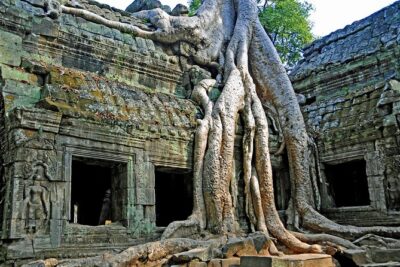
Ta Nei Temple is a late 12th century stone temple built during King Jayavarman VII’s reign. It’s near the north-west corner of the East Baray and is dedicated to the Buddha. That combination, royal-era context plus a different religious focus, gives you a break from the most famous Angkor images.
Then comes Banteay Kdei, described as easy to find because its eastern main gate is near where the Small Circuit and Grand Circuit meet. Across the road is the huge Srah Srang reservoir, and the reservoir setting changes how you read the temple. It feels more like it was part of a working landscape rather than an isolated ruin.
This is where I like the tour’s promise of variety. You still see major monuments, but you also get the sense that Angkor wasn’t one temple, it was a whole living system of sacred spaces.
More circuits through the Angkor complex, compared
Day 2: Start with Banteay Srei, Then Move Through the East Baray Area
Day 2 begins with Banteay Srei, often singled out for beauty. The idea is simple: Angkor Wat gets the headlines, but Banteay Srei is the place many people remember for fine detail and a different style of elegance.
Next is Banteay Samre, located about 400 meters east of the East Baray. It was built in the early 12th century during the reign of Suryavarman II and Yasovarman II, and it’s described as a Hindu temple.
After that, there’s a stop connected to Preah Dak Village, a popular place for souvenirs such as objects and arts. If you’re shopping, this is the cleanest time to do it without derailing temple energy later. If you’re not shopping, you can still treat it as a brief cultural pause.
Preah Khan, Neak Pean, and Ta Som: The Temples That Change the Feel of the Trip

Then the tour heads to Preah Khan, dedicated in 1191 to Jayavarman VII’s father. The central statue is described as Jayavarmeshvara, meaning Jayavarman, Lord of the world. That specific dedication detail makes the site feel less generic, because you get a direct link to a named person in the royal timeline.
After Preah Khan, you go to Neak Pean, which is described as exceptional because its layout differs from other Khmer architecture. It’s a temple on an artificial island of 350 meters diameter in the huge Baray. That one detail, the island-in-water design, changes how the space works. You aren’t just looking at walls, you’re reading the geometry of the place.
Next is Ta Som, a late 12th century temple. Details about its purpose are less clear, but it may have been dedicated to the king’s father or one of his teachers. That uncertainty can be interesting. It encourages you to look, rather than just accept one neat explanation.
East Mebon and Pre Rup: Strong Endpoints for a Two-Day Arc
The day continues with Eastern Mebon, a mountain temple built in the middle of the 10th century and dedicated to Shiva. It’s a different mood from the denser royal core areas.
Finally, you reach Pre Rup, founded in 961. It’s described as the most significant legacy of Rajendravarman II, one of the major Angkor kings named in the description. Pre Rup works well as a finishing point because it anchors the trip in a clear timeline and a larger sense of royal ambition.
By the end of day 2, this plan has done something important: it covers classic Angkor monuments and also keeps the tempo moving into other temple styles, so you end with variety, not just repetition.
Sunset Viewpoints: Why This Tour Isn’t Only About Sunrise
The tour highlights that it includes watching the sunrise and the sunset from the best viewpoints in Angkor. Even though day 2’s stop list in your schedule reads like temple coverage, the key idea is that the plan is designed around light and viewpoint timing, not only monument time.
Why that matters for you: Angkor is hard to read in harsh midday sun. At low angles, stone texture and silhouette become more dramatic, and the site feels more like a designed city rather than a pile of ruins. If you care about photos, this is also where you’ll feel less rushed, because you’re not trying to find the right angle after the fact.
Guides and Drivers: The Names That Come Up for a Reason
A big strength in this tour is the emphasis on an excellent English-speaking official license tour guide. In the feedback you can see names like Leap and Sara attached to strong experiences, and drivers such as Ry and La are also praised for kindness and careful driving.
You don’t need a celebrity guide to enjoy Angkor, but you do want explanations that help the stone make sense. When the guide can connect what you’re looking at to Khmer Empire reigns, you stop seeing random temples and start seeing a timeline you can walk through.
Who This Tour Fits Best (and Who Might Want a Different Style)
This is a great match if you want:
- Two full days to cover major temples without feeling like you’re sprinting between them
- A private schedule with pickup and comfort between sites
- Someone to explain the Khmer Empire story while you walk the grounds
It might be less ideal if you’re looking for a pure self-guided day where you don’t want to follow a set flow, or if you hate early mornings. Day 1 is built around a 4:30 start, and Angkor rewards that discipline.
It also helps if you like walking on uneven stone and don’t mind short stretches between stops. The tour keeps it efficient with multiple sites, so your comfort level matters.
Meals and Energy Strategy During the Tour
Because meals are not included, you control the timing. The provided guidance is that lunch options are typically $3 to $10 per dish, with vegetarian and non-vegetarian choices available at local restaurants.
My suggestion: treat lunch as fuel, not a long break. If you wait too long, you can end up hotter and more tired later. Use the bottled water, take advantage of cool towels in the car, and keep your pace steady so you still enjoy the temples instead of just enduring them.
Should You Book This 2-Day Angkor Wat Sunrise and Major Temples Tour?
If you want a strong, structured Angkor experience with hotel pickup, a private AC vehicle, and a guide who explains what you’re seeing, I think this one is worth it. The value comes from the combination of timing (sunrise plus sunset viewpoints), logistics (pickup and private transfers), and coverage across the major sites and additional temples like Ta Nei and Banteay Kdei.
I’d book it if you’re the type who enjoys learning while walking and you want the classic monuments plus enough variety to feel like you saw Angkor as a whole system. I’d skip it or look for a slower alternative if you don’t want early starts, or if entrance fees on top of the quoted price would stretch your budget.
FAQ
What is included in the price?
The tour includes pickup and drop-off at your hotel, an official license guide with excellent English, private air-conditioned transfers, bottled water and cool towels, and services charge plus current government VAT tax.
Is the Angkor Pass included?
No. Entrance fee for the Angkor Pass is not included. Your guide will assist you in purchasing the Angkor Pass at the park entrance before starting the tour.
Do I get pickup from my hotel in Siem Reap?
Yes. Pickup and drop-off at your hotel are included. You provide your hotel name for pick up.
How long is the tour?
It runs for approximately 2 days.
Is this tour private or shared?
It is a private tour/activity. Only your group will participate.
Are meals included?
Meals are not included. Lunches are available at local restaurants, with vegetarian and non-vegetarian options, and meals are at your own expense.
Can I cancel for a full refund?
Yes, free cancellation is available. You can cancel up to 24 hours in advance for a full refund. If you cancel less than 24 hours before the start time, you will not receive a refund.
More Tour Reviews in Siem Reap
- Angkor Wat Sunrise or Sunset Tour with Guide from Siem Reap★ 5.0 · 12,109 reviews
- Siem Reap: Angkor Wat: Small-Group Sunrise or Sunset Tour★ 5.0 · 9,444 reviews
- From Siem Reap: Kampong Phluk Floating Village Tour by Boat★ 4.9 · 6,979 reviews
- Siem Reap: Angkor Wat 2-Day Tour with Sunrise and Sunset★ 4.9 · 4,429 reviews
Keep Going Round the Circuit
- Angkor Wat Sunrise & 3 Main Temples with Breakfast – Small Group★ 5.0 · 2,857 reviews
- Siem Reap Tour: Angkor Wat Sunrise, Bayon, Ta Prohm, Banteay Srei★ 5.0 · 931 reviews
- 2-Day Angkor Wat With Small, Big Circuit and Banteay Srei Tour★ 5.0 · 545 reviews
- Full-Day ‘Big Tour’ with Sunset at Phnom Bakheng★ 5.0 · 341 reviews
Sunrise at Angkor, Three More Ways
- Angkor Wat Sunrise or Sunset Tour with Guide from Siem Reap★ 5.0 · 12,109 reviews
- Siem Reap: Angkor Wat: Small-Group Sunrise or Sunset Tour★ 5.0 · 9,444 reviews
- Siem Reap: Angkor Wat 2-Day Tour with Sunrise and Sunset★ 4.9 · 4,429 reviews
- Angkor Wat Sunrise tour with Small – Group and Guide tours★ 5.0 · 3,655 reviews
Newly written up around Siem Reap
- Waterfall & River of 1000 Siva Linga- Kulen Mountain Private Tour
★ 5.0 · 3 reviews - Private Transfer from Siem Reap to Sihanoukville
★ 4.5 · 3 reviews - Private Tour to Koh Ker and Beng Mealea
★ 5.0 · 3 reviews - Private Transfer: Siem Reap Angkor Internation Airport to Hotel
★ 5.0 · 3 reviews - Kulen National Park Ticket -Waterfall & 1000 Lingas
★ 5.0 · 3 reviews - Kulen Waterfall & Kbal Spean Tour
★ 5.0 · 3 reviews
Angkor Wat Sunrise Tours, side by side.
 ★ 5.0Angkor Wat Sunrise or Sunset Tour with Guide from Siem ReapFrom $1812,109 reviews
 ★ 5.0Angkor Wat: Small-Group Sunrise or Sunset TourFrom $159,444 reviews
 ★ 4.9Angkor Wat 2-Day Tour with Sunrise and SunsetFrom $344,429 reviews
 ★ 5.0Angkor Wat Sunrise tour with Small – Group and Guide toursFrom $143,655 reviews
 ★ 5.0Angkor Wat Highlights and Sunrise Guided Tour from Siem ReapFrom $233,213 reviews
 ★ 5.0Full-Day Angkor Wat Sunrise Private Tour with Guide from Siem ReapFrom $602,920 reviews
 ★ 5.0Angkor Wat Sunrise & 3 Main Temples with Breakfast – Small GroupFrom $152,857 reviews
 ★ 4.9Angkor Wat Sunrise and Full-Day Sightseeing TourFrom $142,828 reviews