
REVIEW · ANGKOR
Private Angkor Sunrise & Major Temples Tour by English Speaking SUV Car Driver
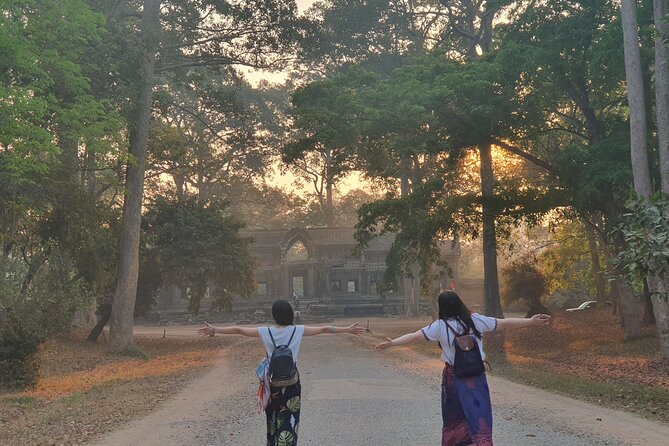
Sunrise at Angkor changes everything. This private tour lines up Angkor Wat at sunrise, then moves through major temples with less stress than the big group rush.
I love the crowd-aware planning, including an order that helps you see the big highlights without feeling like you are in a stampede. I also like the flexibility built into the day, so you can request nearby temples if you want to adjust.
One catch to plan for: the English-speaking driver focuses on transport and communication, not a licensed walking guide, and Angkor Wat admission is not included (it is listed at $37 per person).
In This Review
- Key Things That Make This Tour Work
- Chasing First Light at Angkor Wat and Angkor Temple
- Sras Srong and the Calm Pace Before Ta Prohm
- North Gate of Angkor Thom, Then Pallilay Temple as a Breather
- Elephant Terrace and Phimeanaka Inside the Old Royal Palace Zone
- Baphoun and Bayon, Plus the South Gate Exit Flow
- How the English-Speaking SUV Driver Actually Helps (and Where a Guide Fits)
- Temple Steps, Heat, and Why Pace Matters on Angkor Days
- Price, Value, and What Your $30 Covers
- Who Should Book This Private Sunrise and Major Temples Tour
- Should You Book This Tour?
- FAQ
- Is Angkor Wat admission included in the price?
- How long is the tour?
- Is this tour private?
- What is included in the $30 per person price?
- Do they pick you up from your hotel?
- Can I cancel for a refund?
Key Things That Make This Tour Work
- Angkor Wat at sunrise timing, then a smooth start to the day before heat and tour crowds peak
- Private SUV with pickup, plus petrol and air-conditioning handled for you
- A temple route designed to avoid the busiest-feeling day, including Sras Srong and Ta Prohm
- English-speaking driver, with clear communication for logistics and pacing
- Easy add-on changes, since your driver can usually swap in nearby temple stops
- A day with real variety, from reservoir ruins to major Angkor Thom gates and the old royal palace zone
Chasing First Light at Angkor Wat and Angkor Temple
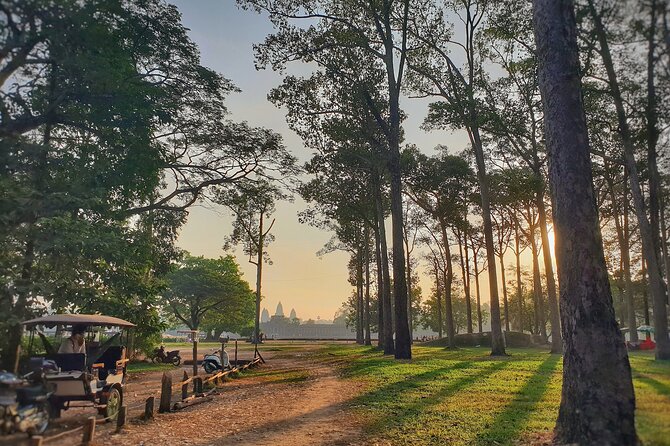
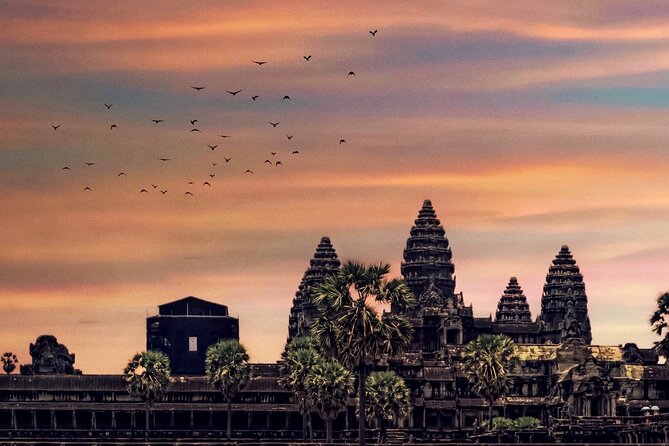
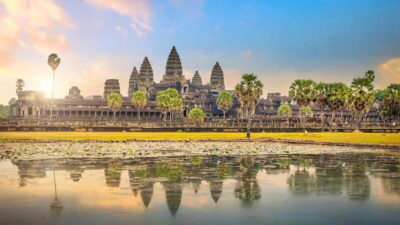
Angkor at sunrise is a different planet. You start with Angkor Wat at first light, which is when the temple stones look their best and the crowds tend to be smaller than later in the morning. This kind of early start also gives you breathing room for photos and a slower walk through the first areas before the day gets hot.
After Angkor Wat, you continue to Angkor Temple. That combination matters because you are not just “checking a box” at one site. You are getting a sense of the overall Angkor core in one morning, while your energy is still high and the air feels less heavy.
Practical tip: sunrise means cooler temps and sudden warmth. Bring something light for early hours, then switch into breathable layers fast. If skies are cloudy, you still get a great temple experience, just with softer light and different shadows.
Sras Srong and the Calm Pace Before Ta Prohm
Next comes Sras Srong, an old reservoir. Even if you are not a “water ruins” person, this stop helps break up the day. It gives your eyes a rest from wall carvings and face towers, and it is a useful transition between the most dramatic temple structures.
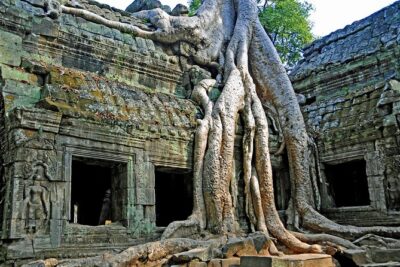
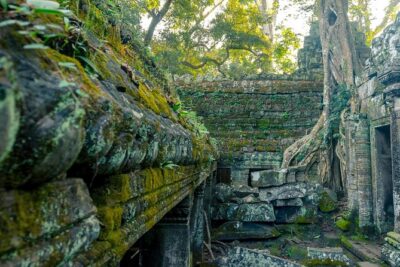
Then you head to Ta Prohm. This is the one people often connect with the movie look, since the roots and trees growing through the stones are the star attraction here. Ta Prohm is also one of those places where a slower pace pays off. You can keep stepping to find new angles, rather than trying to race through it like a checklist.
A good thing about doing Ta Prohm mid-tour is that your timing usually helps. You get to appreciate the atmosphere without burning your whole morning stuck in the densest flows.
Other ways to be at the temples before the light comes up
- Angkor Wat Sunrise or Sunset Tour with Guide from Siem Reap★ 5.0 · 12,109 reviews
- Siem Reap: Angkor Wat: Small-Group Sunrise or Sunset Tour★ 5.0 · 9,444 reviews
- Siem Reap: Angkor Wat 2-Day Tour with Sunrise and Sunset★ 4.9 · 4,429 reviews
- Angkor Wat Sunrise tour with Small – Group and Guide tours★ 5.0 · 3,655 reviews
North Gate of Angkor Thom, Then Pallilay Temple as a Breather
After Ta Prohm, you move toward the North Gate of Angkor Thom. The gates and outer areas can feel like the spine of the whole complex. They also give you a natural “pause point” where you can reset your legs and camera settings before heading deeper.
From there, you visit Pallilay Temple. This kind of stop is helpful because it keeps the day from being a nonstop sprint between the biggest headliners. Even if Pallilay is not as famous as the mega-sites, it can make the whole route feel more human.
You can think of this part of the day as your rhythm section. It helps you avoid that common issue where the morning is rushed, the midday is exhausting, and the rest of the temples feel like blur. Here, the order tends to keep you moving without constant overload.
Elephant Terrace and Phimeanaka Inside the Old Royal Palace Zone
Now you get into one of the most compelling Angkor themes: royal symbolism in stone. Elephant Terrace is named for the famous elephant-related carvings, and it is tied to the Old Royal Palace area. Even if you only have limited time, it is worth slowing down here. The terrace area is the kind of place where details reward you for taking your time.
From Elephant Terrace, you move to Phimeanaka Temple, which sits inside the old royal palace setting. This stop works well because it shifts from terrace storytelling to more contained temple space. You get another angle on how Angkor blends power, religion, and architecture into one overall scene.
Heat note: in Cambodia, the sun can turn a photo walk into a sweat walk fast. Build short breaks into your pace. Sip water regularly, and give yourself permission to stop when the light is best rather than when your schedule says so.
Baphoun and Bayon, Plus the South Gate Exit Flow
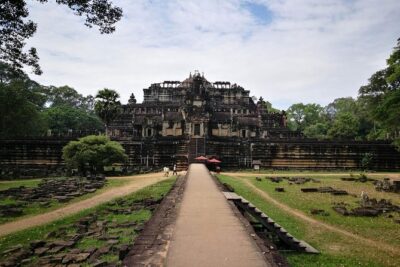
Baphoun comes next. It is a key temple on the Angkor Thom circuit and a good step before Bayon. Doing Baphoun after the palace-area stops also helps because you are not jumping between totally different “styles” back to back. The day feels like one connected exploration.
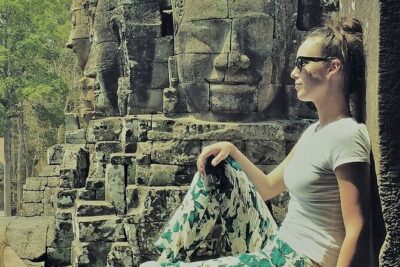
Then it is Bayon and the South Gate on the way out. Bayon is the headline for many people because of its face towers, and it is the moment where the route clicks into place. By the time you arrive, you have already seen gates, palace space, and major temple patterns. Bayon becomes easier to understand, not just easier to photograph.
The South Gate matters because it helps you finish the day logically. Exiting through the last gate keeps the flow clean and prevents you from feeling stuck in the same spot too long.
How the English-Speaking SUV Driver Actually Helps (and Where a Guide Fits)
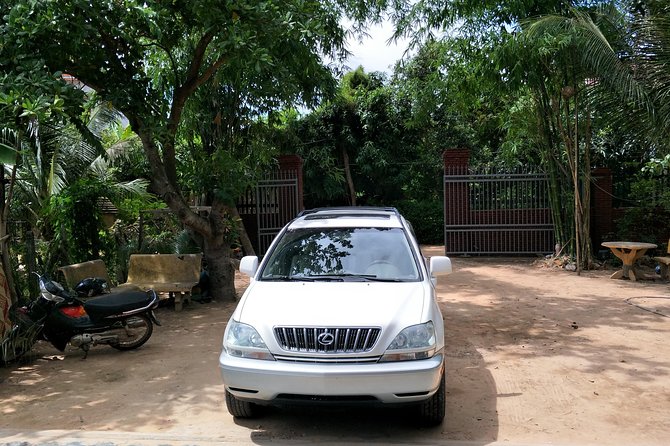
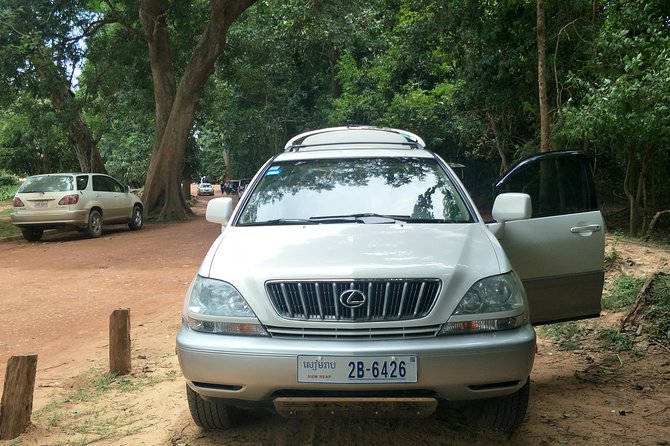
This is a private tour with an air-conditioned SUV and an English-speaking driver. In real life, that means less time arguing with tuk-tuk prices, fewer confusing map moments, and a smoother schedule.
What your driver does best is transportation, pacing, and communication. You can ask for questions along the way, and they can explain in the moment at a practical level. They also tend to show up early, often around 10 to 15 minutes before pickup at your hotel lobby.
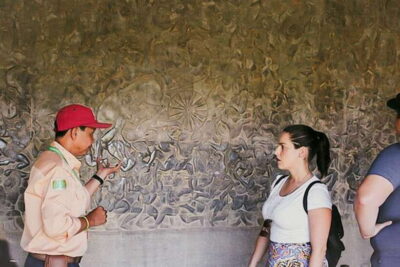
Here is the important point: this setup does not automatically include a licensed walking guide who stays with you for every explanation inside the temples. If you want a true guided walk and deeper commentary, you should arrange that after booking.
From past experiences shared by people who took this exact style of tour, the names that show up again and again are Nak, Lux (Ngoun), Nob, and John. Some trips also mention a driver named Koi paired with a guide. That combination, guide plus driver, is where the experience often feels extra special because you get both logistics and in-depth storytelling.
Little perks can be real. One account notes a guide who helped with photography, plus cold towels and water for the heat. Another mentions guides who gave strong explanations and made the walk feel like a lesson, even for families.
More circuits through the Angkor complex, compared
Temple Steps, Heat, and Why Pace Matters on Angkor Days
Angkor can be physically demanding. There are long walks, uneven steps, and stairs. One description I saw talked about climbing a large set of steps with guide-led context. Even if you do not count steps, you should plan for a lot of walking and some climbing.
Your best weapon is pacing. This tour’s value is not that it rushes you. It is that it keeps the day moving while still giving you time to stop, look up, and take photos without feeling like you have to sprint between viewpoints.
Being early can also help with “space to breathe.” One experience notes they were ahead of other groups by about 10 minutes at times, which made it easier to enjoy sights in relative peace. That kind of small timing advantage can be the difference between a temple you really see and a temple you just pass through.
Bring: water, sunscreen, a hat, and comfortable shoes. If you forget any of those, you will feel it fast in the midday sun.
Price, Value, and What Your $30 Covers
The price is $30 per person, for about 7 to 8 hours of private transport. Included in that are petrol, an air-conditioned vehicle, private transportation, and an English-speaking car driver. There is also pickup offered, and you get a mobile ticket.
Admission is the separate line item you must budget for. Angkor Wat admission is listed at $37 per person, and that fee is not included.
So how do you judge value? You are paying for a private, air-conditioned ride across multiple major sites, with a driver who handles the flow and communication. If you have a small group, the private vehicle can become very reasonable compared to piecing together multiple rides or hiring separate transport for each stop.
The biggest value lever is whether you want a licensed walking guide. If you do, you may add that after booking. That can increase total cost, but it can also turn the day from “temples you see” into “temples you understand.”
Who Should Book This Private Sunrise and Major Temples Tour
This is a strong match if you want:
- A sunrise start at Angkor Wat, not a late-morning scramble
- A private setup with pickup and an air-conditioned SUV
- A route that tries to reduce the packed-day feeling
- The option to ask for nearby temple changes when you want something different
It is also ideal for couples, solo travelers, and families who want control over pacing and prefer straightforward logistics over navigating traffic and timing on your own.
If you are the kind of person who wants a guide for deep, temple-by-temple explanation inside the sites, plan to add a licensed walking guide after you book. Otherwise, you will still see a lot, but you might miss some of the deeper interpretive layer.
Should You Book This Tour?
I would book this if sunrise is a priority for you and you want a private, air-conditioned day that covers the major Angkor highlights efficiently. The best part is the combination of early timing, a crowd-aware route, and flexibility if your interests shift mid-day.
I would not book it as-is if your top goal is constant in-temple, licensed guiding for every complex, because the driver setup is not the same thing as a walking guide. In that case, add the guide option so the whole experience clicks.
FAQ
Is Angkor Wat admission included in the price?
No. Angkor Wat admission is listed separately as $37 per person and is not included in the $30 tour price.
How long is the tour?
It runs about 7 to 8 hours.
Is this tour private?
Yes. It is a private tour, so only your group participates.
What is included in the $30 per person price?
Included are petrol, an air-conditioned vehicle, private transportation, and an English-speaking car driver.
Do they pick you up from your hotel?
Pickup is offered, and they usually are at the hotel lobby about 10 to 15 minutes early.
Can I cancel for a refund?
Yes. There is free cancellation, and you can cancel up to 24 hours in advance for a full refund.
Siem Reap by Jeep and Vespa
- Angkor Sunrise Jeep Tour – Inclusive Breakfast & Lunch★ 5.0 · 309 reviews
- Siem Reap Countryside Vespa Tour / Tuk Tuk Available★ 5.0 · 180 reviews
- Siem Reap Evening Foodie Vespa Tour / Tuk Tuk Available★ 5.0 · 174 reviews
- Siem Reap – Discover Angkor Wat by Jeep★ 4.7 · 120 reviews
Keep Going Round the Circuit
- Angkor Wat Sunrise & 3 Main Temples with Breakfast – Small Group★ 5.0 · 2,857 reviews
- Siem Reap Tour: Angkor Wat Sunrise, Bayon, Ta Prohm, Banteay Srei★ 5.0 · 931 reviews
- 2-Day Angkor Wat With Small, Big Circuit and Banteay Srei Tour★ 5.0 · 545 reviews
- Full-Day ‘Big Tour’ with Sunset at Phnom Bakheng★ 5.0 · 341 reviews
Sunrise at Angkor, Three More Ways
- Angkor Wat Sunrise or Sunset Tour with Guide from Siem Reap★ 5.0 · 12,109 reviews
- Siem Reap: Angkor Wat: Small-Group Sunrise or Sunset Tour★ 5.0 · 9,444 reviews
- Siem Reap: Angkor Wat 2-Day Tour with Sunrise and Sunset★ 4.9 · 4,429 reviews
- Angkor Wat Sunrise tour with Small – Group and Guide tours★ 5.0 · 3,655 reviews
Newly written up around Siem Reap
- Waterfall & River of 1000 Siva Linga- Kulen Mountain Private Tour
★ 5.0 · 3 reviews - Private Transfer from Siem Reap to Sihanoukville
★ 4.5 · 3 reviews - Private Tour to Koh Ker and Beng Mealea
★ 5.0 · 3 reviews - Private Transfer: Siem Reap Angkor Internation Airport to Hotel
★ 5.0 · 3 reviews - Kulen National Park Ticket -Waterfall & 1000 Lingas
★ 5.0 · 3 reviews - Kulen Waterfall & Kbal Spean Tour
★ 5.0 · 3 reviews
Angkor Wat Sunrise Tours, side by side.
 ★ 5.0Angkor Wat Sunrise or Sunset Tour with Guide from Siem ReapFrom $1812,109 reviews
 ★ 5.0Angkor Wat: Small-Group Sunrise or Sunset TourFrom $159,444 reviews
 ★ 4.9Angkor Wat 2-Day Tour with Sunrise and SunsetFrom $344,429 reviews
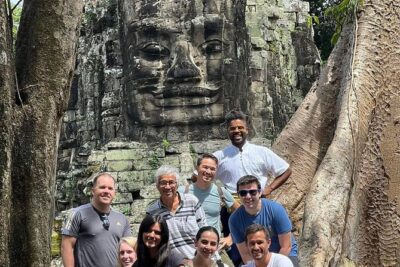 ★ 5.0Angkor Wat Sunrise tour with Small – Group and Guide toursFrom $143,655 reviews
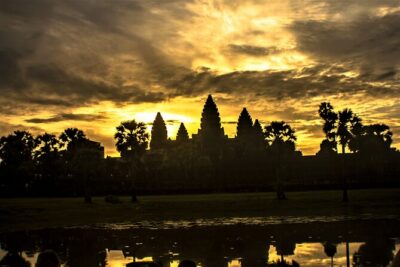 ★ 5.0Angkor Wat Highlights and Sunrise Guided Tour from Siem ReapFrom $233,213 reviews
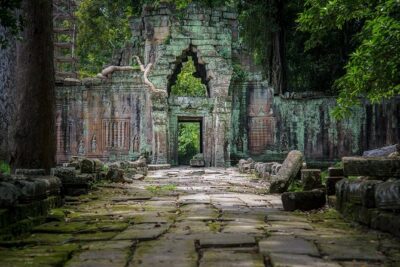 ★ 5.0Full-Day Angkor Wat Sunrise Private Tour with Guide from Siem ReapFrom $602,920 reviews
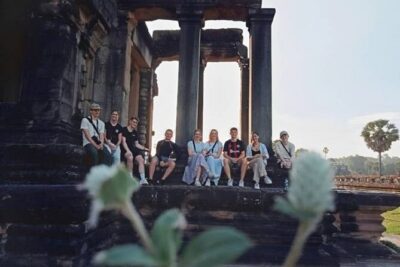 ★ 5.0Angkor Wat Sunrise & 3 Main Temples with Breakfast – Small GroupFrom $152,857 reviews
 ★ 4.9Angkor Wat Sunrise and Full-Day Sightseeing TourFrom $142,828 reviews