
REVIEW · CAMBODIA
Private Siem Reap 3 Day Tour Discover All Highlight Angkor Temple
Your first morning starts in the dark. This private 3-day Siem Reap tour is built around sunrise at Angkor Wat, then it keeps rolling through temples and countryside. I also like the practical comfort, cold bottled water and towels during the long sightseeing stretches.
I love that this is truly private, so you can move at your group’s pace instead of being herded. With pickup in Siem Reap and a pro English-speaking driver-guide setup (and in one case, the consistently praised driver Ree), you spend your energy looking, not negotiating transport.
One thing to plan for: entrance fees and meals are not fully included. You’ll buy the Angkor Pass at the start, and lunch runs about $3 to $10 per dish, depending on where you eat.
In This Review
- Key highlights I think you’ll care about
- Private comfort and a smart route from hotel to temples
- Price and temple costs: what $253.65 includes, and what it does not
- Day 1 in Siem Reap: Roluos temples, Kampong Phluk, and Wat Bo
- Preah Ko: a Shiva temple in the early Angkor story
- Bakong Temples: a prototype Khmer temple pyramid
- Lolei: smaller and younger, with less crowds
- Kampong Phluk Floating Village: life on Tonle Sap by private cruise
- Wat Bo: wall paintings from the late 19th century
- Satcha: Cambodian handicraft center and artisan focus
- Day 2: sunrise, Angkor Thom, Ta Prohm, and the long middle of the day
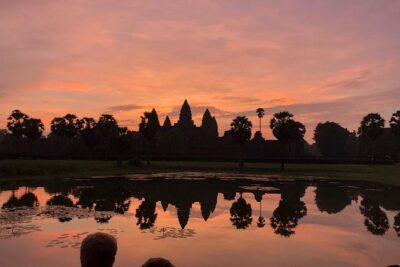
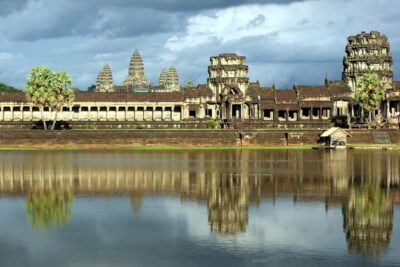
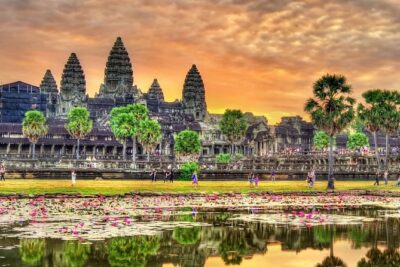
- Angkor Wat: Cambodia’s national emblem, and a calm way to start
- South Gate of Angkor Thom: your first dramatic checkpoint
- Bayon: the stone faces you came for
- Baphuon and Phimeanakas: royal temples near the palace zone
- Terrace of the Elephants and Terrace of the Leper King: the story wall
- Ta Prohm: the jungle temple effect
- Banteay Kdei and Ta Nei: less touristy, still very Khmer
- Sunset note: Phnom Bakheng may be part of your version
- Day 3: Banteay Srei, sugar and crafts, then Preah Khan, Pre Rup, East Mebon
- Banteay Srei: the temple people keep comparing
- Banteay Samre: a companion temple near the East Baray
- Palm Sugar Producer Group and souvenir sellers: hands-on local production
- Preah Khan: dedicated to Jayavarman VII’s father
- Neak Pean: a unique island-temple layout
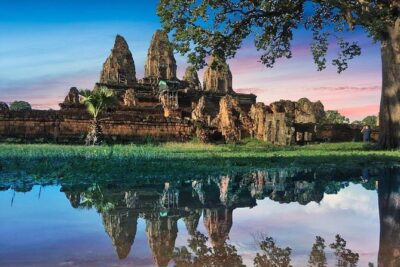
- Pre Rup: a major legacy of Rajendravarman II
- East Mebon: temple on the old East Baray island
- Value check: where this tour earns its price
- How to make the most of sunrise and long hot temple days
- Who should book this private Siem Reap 3-day tour?
- Should you book? My straightforward take
- FAQ
- What is included in the Private Siem Reap 3 Day Tour Discover All Highlight Angkor Temple?
- Are meals included during the tour?
- Do I need to pay temple entrance fees?
- Is the floating village visit included?
- What time is Angkor Wat sunrise included in the itinerary?
- Is this tour private or shared with other groups?
- Will I have air-conditioned transport and water during the tour?
- What is the cancellation policy?
Key highlights I think you’ll care about
- Sunrise focus at Angkor Wat gives you a calmer start than day tours that roll in later
- AC private vehicle plus cold water and towels means fewer melt-downs in the heat
- Truly flexible private format, your route can fit what you care about most
- Tonle Sap floating village by private cruise, a more personal look at Kampong Phluk
- A packed Angkor circuit with route logic, mixing famous sights with smaller stops
Private comfort and a smart route from hotel to temples
In Siem Reap, heat and timing can make or break your day. This tour is designed around that reality. You get private air-conditioned transport to move between sites, plus cold bottled water and cool towels throughout the trip. It’s the kind of small setup that saves you, because you are walking, standing, and climbing in full sun for hours.
The other practical win is pickup and drop-off. You provide your hotel name in Siem Reap, and the tour handles the door-to-door part. That means you don’t burn time figuring out tuk-tuk logistics each morning, and you can stay focused on temple time.
This is also a genuine private experience, only your group. That matters at Angkor, where crowds are crowding. When you are not sharing the same schedule with a busload, you can pause for photos, take a breather, or slow down if someone needs it.
Price and temple costs: what $253.65 includes, and what it does not
At $253.65 per person for a 3-day private tour, the value depends on how you handle two costs on the ground: the Angkor temple pass and meals.
Here is what the price covers:
- Private hotel pickup and drop-off
- Professional English-speaking licensed tour guide
- Private air-conditioned vehicle transfers
- Private cruise to visit the floating village
- Drink water and cool fresh towels during the whole trip
Here is what is not included:
- Tips for your guide and driver
- Entrance fees, handled through the Angkor Pass (your guide will help you purchase it inside Angkor Park before you start)
- Meals during the tour, with lunch available at local restaurants (vegetarian and non-vegetarian), paid by you at about $3 to $10 per dish
So the real question for me is not just the headline price. It is whether this plan keeps you comfortable and efficient enough that the extra sightseeing time is worth it compared to DIY. With AC comfort and a route that hits sunrise plus multiple Angkor zones across three days, it often is.
Other private bookings in Siem Reap
- Full-Day Angkor Wat Sunrise Private Tour with Guide from Siem Reap★ 5.0 · 2,920 reviews
- Siem Reap: Angkor Wat Private Tuk-Tuk Tour★ 4.9 · 2,222 reviews
- Angkor Wat Private Day Tour from Siem Reap★ 5.0 · 834 reviews
- Angkor Wat Private Tuk-Tuk Tour (sunrise Option) & more★ 5.0 · 439 reviews
Day 1 in Siem Reap: Roluos temples, Kampong Phluk, and Wat Bo
Day 1 is a great mix of older Khmer temple ruins, water life, and town culture. You start in Roluos, the area tied to Angkor’s predecessor capital, which makes the first day feel like it has layers, not just one famous site.
Preah Ko: a Shiva temple in the early Angkor story
Preah Ko, also called Sacred Bull, is located in the Roluos area between Lolei and Bakong. It is dedicated to Shiva and sits in a key historical zone, so it helps you understand what came before the biggest Angkor masterpieces. Admission is listed as not included, so this is part of your Angkor Pass coverage on the temple side.
Practical note: this stop is shorter (about 30 minutes), which is perfect after an early start, but still enough time to spot the temple shapes and get your bearings.
Bakong Temples: a prototype Khmer temple pyramid
Bakong is consecrated in 881 and often described as historically important because it became a prototype for the typical Khmer temple pyramid style. If you like architecture and how empires experimented, Bakong is a strong first-day anchor.
It is scheduled for about an hour. That gives you time to walk the grounds without rushing, and to compare Bakong’s pyramid form to what you will see later at the bigger Angkor sites.
Lolei: smaller and younger, with less crowds
Lolei is the youngest and smallest of the three most important Roluos temples. It is also described as less photogenic than the similar temples nearby, but that can be an advantage. You spend more time noticing details and less time fighting for the best camera angle.
Expect about 30 minutes here. It is a nice, gentle pacing before the day shifts toward water and town.
Also on our Siem Reap list, if none of these land
Kampong Phluk Floating Village: life on Tonle Sap by private cruise
Then you shift to water life at Kampong Phluk, on the Tonle Sap lake. This is one of the big reasons this tour works better than a quick Angkor-only schedule. You see how people live on or near the lake, and you also learn that these communities have lived in Cambodia for generations, including periods of comfortable life.
The floating village stop is scheduled for about 3 hours, and the tour includes a private cruise for this visit. That privacy matters here. A smaller boat experience tends to feel less chaotic, and it gives you a better chance to ask questions.
Also, Tonle Sap itself is described as a highly productive fishing lake supporting millions of people and a large share of Cambodia’s inland fish catch. You get about 30 minutes at Tonle Sap on Day 1, which is short, but it gives context for what you just saw at the floating village.
Wat Bo: wall paintings from the late 19th century
Wat Bo is an older temple in town, with well-preserved wall paintings from the late 19th century. This is where the day adds culture rather than only stone ruins.
You get around 1 hour here. It is a calm contrast after temple pyramids and floating village sights.
Satcha: Cambodian handicraft center and artisan focus
Satcha is a Cambodian Handicraft Center. The point is not just shopping. The center is described as giving Cambodian handicrafts a new dimension, incubating local artisans by mixing traditional knowledge with contemporary development.
You get about 1 hour. If you care about where souvenirs come from, this stop helps you understand that a purchase is tied to local makers.
Day 2: sunrise, Angkor Thom, Ta Prohm, and the long middle of the day
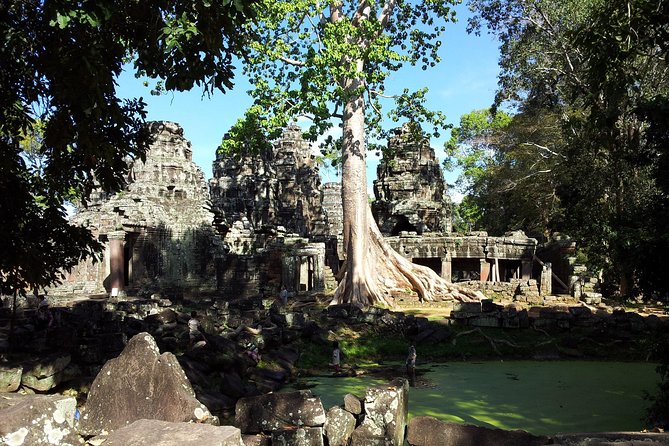
Day 2 is the heavy Angkor day. You wake up early, see sunrise at Angkor Wat, then after sunrise you explore the site and return for breakfast. Angkor Wat is scheduled for about 3 hours total.
After that, the itinerary moves into Angkor Thom, the big enclosed city area with the major royal-temple belt. You then hit several iconic stops, and the middle of the day can be long, especially with Banteay Kdei scheduled for a long visit.
Angkor Wat: Cambodia’s national emblem, and a calm way to start
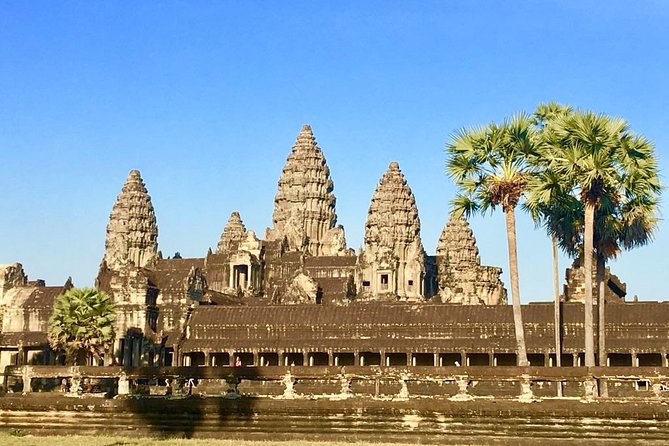
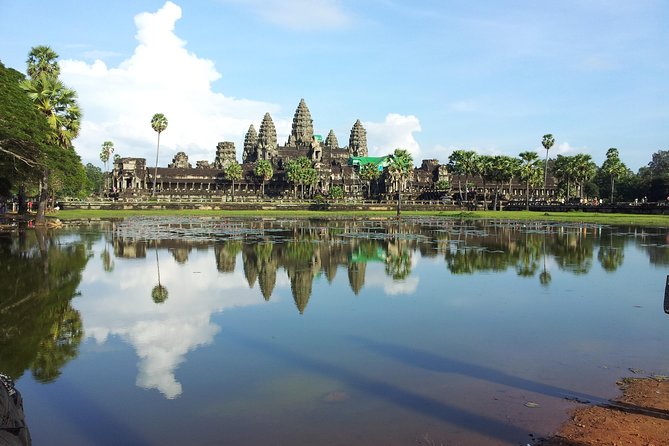
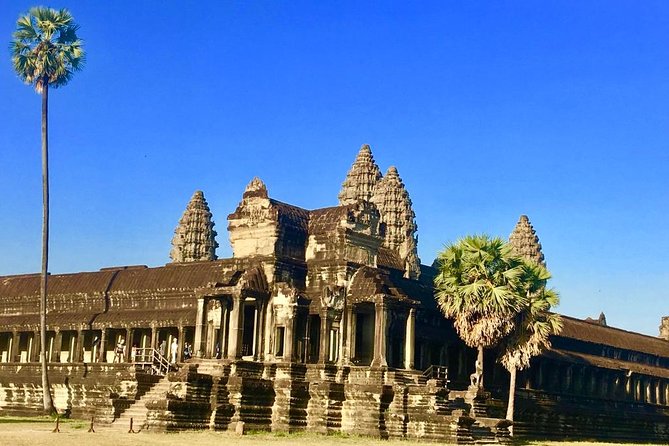
Angkor Wat is described as the national emblem of Cambodia and a pride of the Khmer people. Sunrise here is the smart move because early light softens the stone and you are before the peak crush.
Because the schedule is set for a morning block (about 3 hours), you are not wandering half-lost. You are moving through the most meaningful areas with a guided plan.
South Gate of Angkor Thom: your first dramatic checkpoint
Angkor Thom South Gate is called an emblem of Angkor Thom. It is one of the most famous gates, and you are basically meant to feel how the city functions as a fortress space.
This stop is about 30 minutes. Use it for quick photos and to mentally switch from the Angkor Wat axis to the Angkor Thom circuit.
Bayon: the stone faces you came for
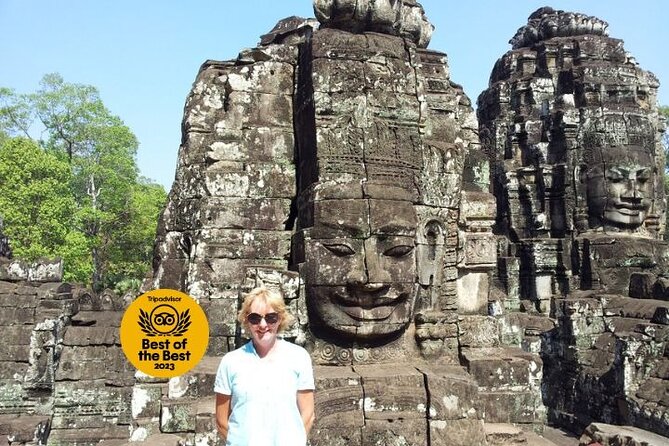
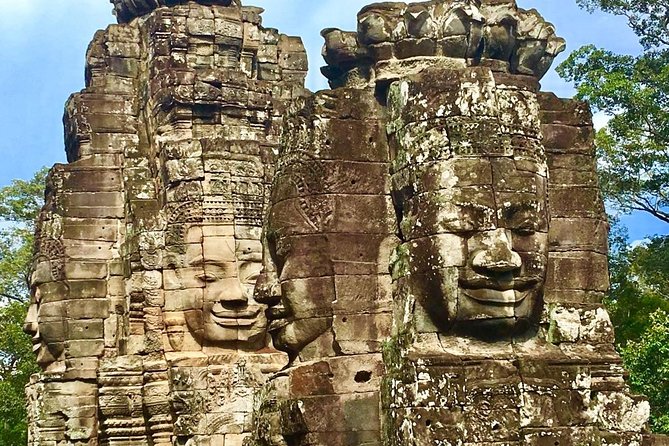
Bayon, built around 1200, is the second most popular monument in Angkor after Angkor Wat. It is known for the enigmatic stone faces.
You get about 1 hour here. That is enough time to see the repeating faces from different angles and to understand how the temple’s layout creates a sense of movement.
Baphuon and Phimeanakas: royal temples near the palace zone
Baphuon was completed around 1060 by King Udayadityavarman II and served as a state temple. It is dedicated to Shiva, with a mention of the lingam area. This is one of those stops where you can enjoy the scale and also track the religious shifts across Khmer history.
Phimeanakas is started by Rajendravarman II, then altered by later kings including Suryavarman I. It is predominantly laterite structure. This stop is short, around 30 minutes, but it gives you a feel for royal temple design near the palace.
Terrace of the Elephants and Terrace of the Leper King: the story wall
The Elephant Terrace is a wall and platform forming most of the western edge of the Royal Square. The Terrace of the Leper King sits just north, and it is worth studying for the best carvings described in that area.
You get about 45 minutes each. Those are not rushed blocks, and they are time well spent because the terraces reward slow looking.
If you get tired here, it is normal. This is where your brain is processing a lot of carved narrative while the sun does its thing.
Ta Prohm: the jungle temple effect
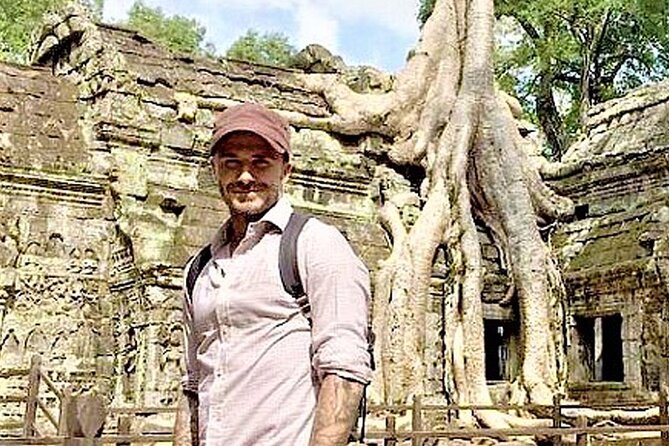
Ta Prohm is famous as Angkor’s jungle temple, with large trees growing in and around the structures. It is scheduled for about 1 hour. If you like dramatic scenes, this is the stop that usually delivers the biggest wow factor without requiring you to memorize every king’s timeline.
Banteay Kdei and Ta Nei: less touristy, still very Khmer
Banteay Kdei is described as the first huge temple built by Jayavarman VII, the Buddhist ruler with many monuments. It is scheduled for a long visit in this plan, around 7 hours 30 minutes. That likely includes travel time and additional sightseeing pacing, because a single site alone would not take that long for most visitors.
Still, the practical takeaway is clear: Day 2 is packed, so plan to take breaks. This is also where having an experienced guide helps you choose how long to spend where.
Ta Nei is a late 12th century stone temple dedicated to the Buddha, near the northwest corner of the East Baray. It is scheduled for about 40 minutes, which works as a quieter closer after the louder famous sights.
Sunset note: Phnom Bakheng may be part of your version
The tour overview describes a sunset stop at Phnom Bakheng. Your exact schedule may vary, but if that sunset viewpoint is included on your dates, treat it as a second “sunrise moment.” Wear something light but protective, because evenings can still be warm.
Day 3: Banteay Srei, sugar and crafts, then Preah Khan, Pre Rup, East Mebon
Day 3 feels like a blend of the prettiest temple details, a food and craft stop, and then more Angkor ruins. It is also the day where you can judge whether the tour is really about more than the checklist.
Banteay Srei: the temple people keep comparing
Banteay Srei is often named as Cambodia’s most beautiful temple by visitors. The big idea is that it has delicate detailing compared to some of the heavier pyramid temples.
You get about 2 hours here. Two hours is a meaningful block, because this is the kind of site where you want time to examine carvings and not just rush for one photo.
Banteay Samre: a companion temple near the East Baray
Banteay Samré is an early 12th century Hindu temple in the Angkor area, located 400 metres east of the East Baray. It is scheduled for about 1 hour.
This stop works well if you want variety without a full “all day” commitment. It also keeps the circuit flowing north.
Palm Sugar Producer Group and souvenir sellers: hands-on local production
This is one of the more interesting non-temple stops on the route. The Palm Sugar Producer Group and souvenir sellers segment is described as showing brilliant local produce and includes a burning stove to see prices of making sugar in action.
It is listed with admission included and a 6-hour duration. That suggests a longer stop than a quick shop-and-go. Plan to treat it as a real break in the walking schedule. It is also where you can ask practical questions about how palm sugar is made before you buy.
Preah Khan: dedicated to Jayavarman VII’s father
Preah Khan is dedicated to Jayavarman VII’s father, with the central statue described as Jayavarmeshvara. The stop here is listed as 2 minutes without an admission ticket requirement, which is almost certainly a short viewing window within a longer temple area visit. Treat it as a quick orientation stop, not a full deep look.
Neak Pean: a unique island-temple layout
Neak Pean is described as exceptional, with an unusual layout compared to other Khmer architecture. It is described as a temple on an artificial island in the huge Baray, with a 350 m diameter.
You get about 1 hour. This is the kind of site where the surrounding water features are part of the experience, even if the baray can be dry depending on the season.
Pre Rup: a major legacy of Rajendravarman II
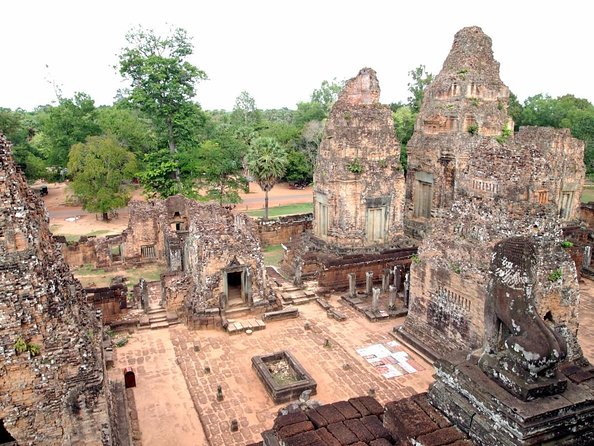
Pre Rup is founded in 961 and is tied to Rajendravarman II, one of the big names among Khmer kings. It is scheduled for about 1 hour.
This is a great stop for views across the ruin landscape because it has a central tower look and feels more open than the tight interior spaces of some other temples.
East Mebon: temple on the old East Baray island
East Mebon is a 10th century temple on an artificial island at the center of the now dry East Baray reservoir. It is scheduled for about 50 minutes.
This is a good “last temple” because you can focus on the structure and imagine the original water setting without needing to do a long climb.
Value check: where this tour earns its price
Let’s be honest. A private 3-day Angkor tour is not cheap on paper, especially with temple pass and meals added later. But the value comes from how the tour handles the most annoying parts of Cambodia travel: timing, comfort, and logistics.
I like that the day-to-day movement is handled by a private air-conditioned vehicle, not a patchwork of tuk-tuks. I also like that you get cold bottled water and towels, which is a real comfort upgrade when you are doing temple steps in midday sun.
The sunrise and circuit planning also matter. A lot of people do Angkor as a two-day scramble. This adds a third day, and it spreads the temples across different styles: Roluos temples on Day 1, Angkor Thom and Ta Prohm on Day 2, and Banteay Srei plus more distinct stops on Day 3.
If you care about avoiding the stress of buying tickets, finding routes, and timing your day, this kind of setup is usually worth it.
How to make the most of sunrise and long hot temple days
A few practical tips to keep you enjoying the trip instead of counting minutes.
First, for sunrise, prep the night before. You are going to get up early, and you want your water and sun protection ready. Even though the tour provides cold water and towels, bring your own sunscreen and a hat so you can control your comfort.
Second, pack light but smart. Wear shoes with good grip. Some temple paths can be uneven, and you will do lots of walking. If you have a camera, charge it before you sleep, because mornings move fast.
Third, plan for meals to be flexible. Lunch is at local restaurants with both vegetarian and non-vegetarian options, and the tour does not include meals. That means you can pick what suits your appetite that day, and you are not trapped into a single set menu.
Finally, treat the Angkor Pass purchase as part of the plan. The guide helps you buy it at the entrance of Angkor Park before starting the tour. That saves you from getting stuck while you figure out ticket rules.
Who should book this private Siem Reap 3-day tour?
This tour fits best if you want:
- A private experience with only your group, not shared schedules
- More than Angkor Wat, with Roluos temples, Angkor Thom, and a variety of temple styles across three days
- A real day outside the main temple circuit, especially the Tonle Sap floating village stop
- Comfort priorities, especially AC transport plus cold water and towels
If you are the kind of traveler who loves history but also likes breathing room, you will probably enjoy the pacing. If you are trying to do Angkor as cheaply as possible, this might feel like overkill once you add the Angkor Pass and meals.
Should you book? My straightforward take
Book it if you want a well-planned private route that keeps you comfortable and helps you hit the key sights without the chaos of figuring everything out yourself. The praised details, like a clean and safe Toyota Highlander with AC, iced towels, and cold water, are exactly the kind of comfort that makes temple days less miserable.
Skip it or look at alternatives if you are very price-sensitive and you prefer DIY freedom with public transport or rented bikes. Since the Angkor Pass and meals are on you, the true cost depends on how you budget once you arrive.
If your priority is a smooth Angkor experience plus Tonle Sap by private cruise, this is a strong choice.
FAQ
What is included in the Private Siem Reap 3 Day Tour Discover All Highlight Angkor Temple?
It includes private hotel pickup and drop-off in Siem Reap, a professional English-speaking licensed tour guide, all transfers by private air-conditioned vehicle, private cruise tours to visit the floating village at Tonle Sap Lake, and drink water plus cool fresh towels during the trip.
Are meals included during the tour?
Meals are not included. Lunches are available at local restaurants with both vegetarian and non-vegetarian options, and meals are paid by you, with menu prices ranging from $3 to $10 per dish.
Do I need to pay temple entrance fees?
Yes. Entrance fee is not included. The Angkor Pass covers all temples in the itinerary, and your tour guide will assist you in purchasing it at the entrance of Angkor Park before starting the tour.
Is the floating village visit included?
Yes. The tour includes private cruise tours to visit the floating village at Tonle Sap Lake.
What time is Angkor Wat sunrise included in the itinerary?
Angkor Wat is scheduled as a sunrise stop with about 3 hours total for the Angkor Wat visit, and then you come back to the hotel for breakfast.
Is this tour private or shared with other groups?
This is a private tour or activity. Only your group participates.
Will I have air-conditioned transport and water during the tour?
Yes. Transfers are by private air-conditioned vehicle, and cold bottled water plus cool fresh towels are available throughout the tour.
What is the cancellation policy?
You can cancel for a full refund if you cancel up to 24 hours in advance. If you cancel less than 24 hours before the experience starts, the amount you paid is not refunded.
Other Bookings Kept Private
- Full-Day Angkor Wat Sunrise Private Tour with Guide from Siem Reap★ 5.0 · 2,920 reviews
- Siem Reap: Angkor Wat Private Tuk-Tuk Tour★ 4.9 · 2,222 reviews
- Angkor Wat Private Day Tour from Siem Reap★ 5.0 · 834 reviews
- Angkor Wat Private Tuk-Tuk Tour (sunrise Option) & more★ 5.0 · 439 reviews
More Tours in Siem Reap
- Angkor Wat Sunrise or Sunset Tour with Guide from Siem Reap★ 5.0 · 12,109 reviews
- Siem Reap: Angkor Wat: Small-Group Sunrise or Sunset Tour★ 5.0 · 9,444 reviews
- From Siem Reap: Kampong Phluk Floating Village Tour by Boat★ 4.9 · 6,979 reviews
- Siem Reap: Angkor Wat 2-Day Tour with Sunrise and Sunset★ 4.9 · 4,429 reviews
More Tour Reviews in Siem Reap
- Angkor Wat Sunrise or Sunset Tour with Guide from Siem Reap★ 5.0 · 12,109 reviews
- Siem Reap: Angkor Wat: Small-Group Sunrise or Sunset Tour★ 5.0 · 9,444 reviews
- From Siem Reap: Kampong Phluk Floating Village Tour by Boat★ 4.9 · 6,979 reviews
- Siem Reap: Angkor Wat 2-Day Tour with Sunrise and Sunset★ 4.9 · 4,429 reviews
Newly written up around Siem Reap
- Waterfall & River of 1000 Siva Linga- Kulen Mountain Private Tour
★ 5.0 · 3 reviews - Private Transfer from Siem Reap to Sihanoukville
★ 4.5 · 3 reviews - Private Tour to Koh Ker and Beng Mealea
★ 5.0 · 3 reviews - Private Transfer: Siem Reap Angkor Internation Airport to Hotel
★ 5.0 · 3 reviews - Kulen National Park Ticket -Waterfall & 1000 Lingas
★ 5.0 · 3 reviews - Kulen Waterfall & Kbal Spean Tour
★ 5.0 · 3 reviews
3-Day Experiences, side by side.
 ★ 5.0Angkor Wat and Floating Village 3-Day TripFrom $199100 reviews
 ★ 5.03-Day Angkor Wat with All Interesting Major Temples, Banteay Srei & Beng MealeaFrom $26170 reviews
 ★ 5.03-Day Angkor Wat & All Interesting Major Temples & Kulen Mount WaterfallFrom $24863 reviews
 ★ 5.03 Days Siem Reap Explorer – Small GroupFrom $12950 reviews
 ★ 5.0Best of Siem Reap 3-Day Private Tour to Angkor Wat & Tonle SapFrom $16047 reviews
★ 5.0Angkor Wat and Floating Village 3-Day TripFrom $18039 reviews
★ 5.0Best of Siem Reap 3-Day Private Tour to Angkor Wat & Tonle SapFrom $16047 reviews
★ 5.0Angkor Wat and Floating Village 3-Day TripFrom $18039 reviews
 ★ 5.03-Day Tour(Unforgettable Angkor Temple Complex, Banteay Srei& Floating Village)From $24528 reviews
 ★ 5.0Private Tours Angkor Wat For 3 DaysFrom $24021 reviews
Also appears in