
REVIEW · CAMBODIA
Private Tour: HERO Rats & Angkor National Museum
Hero rats and Khmer history in one focused day. This private experience pairs Hero Rats de-mining work with Cambodia’s hardest-to-sit-with memorial history, then finishes with Angkor National Museum artifacts from the 9th to 14th centuries. You ride in an air-conditioned private car with an English-speaking guide, and you get admissions handled for you.
I especially like how the Apopo stop makes the landmine story feel real, not abstract, through the work done by the animals and the people behind them. I also like that you do not only see dark history, you end with Khmer artifacts that help you place Cambodia’s past in a bigger timeline. One thing to consider: parts of the day can feel long in the heat, and the Angkor National Museum may be closed, which can change the final stop.
In This Review
- Key points
- Wat Thmei and its memorial stupa: a quiet start with heavy weight
- Apopo Visitor Center: meet the least-likely heroes and learn the mine story
- Angkor National Museum stop: Khmer artifacts after the hard truths
- Price and what the $85 really covers in real life
- Timing, pickup, and pacing: making the day feel manageable
- Who should book this and who should skip it
- Should you book the HERO Rats and Angkor National Museum tour?
- FAQ
- What is the price per person for this private tour?
- How long is the tour?
- Where does the tour take place?
- What does the tour include?
- What is the pickup and start time schedule?
- Is it a private tour?
- What if Angkor National Museum is closed on my date?
Key points
- Hero Rats at Apopo: See how de-mining efforts are explained and why the work matters locally
- Wat Thmei Killing Fields: A small memorial stupa designed to make the human cost impossible to ignore
- Apopo context for landmines: Learn the history of conflict and how communities are affected
- Angkor National Museum artifacts: A museum setting for Angkorian material, often calmer than the sites outdoors
- Private, air-conditioned ride: Pickup plus admissions included, so you spend less time figuring things out
Wat Thmei and its memorial stupa: a quiet start with heavy weight
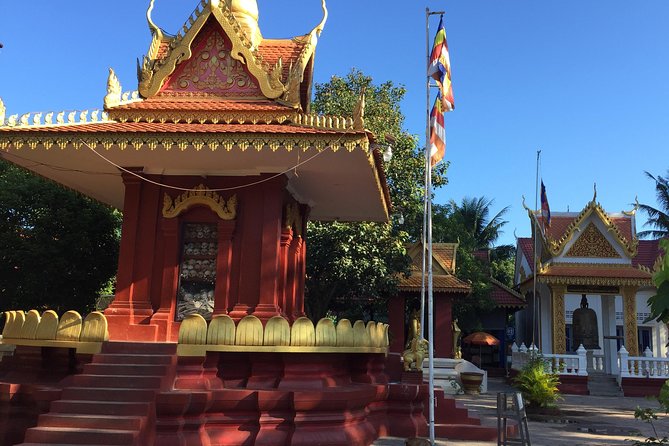
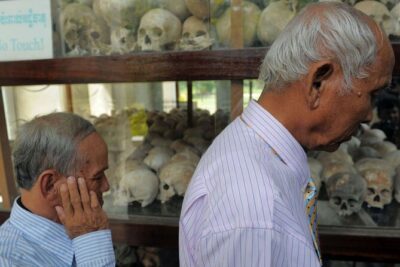
You start your day at Wat Thmei, one of the best-known killing field memorials in Siem Reap. It is not a big performance. It is a small memorial site, and that can be more unsettling than a grand one. The stupa contains skulls and bones of victims killed during the conflict, and the point is simple, direct, and hard to shake off.
What I like about beginning here is the emotional pace. You are not bouncing between attractions. You are going straight to a place made to hold memory. With a good English-speaking guide, the story lands in a way that is easier to understand, even when you want to look away.
Do bring your patience for tone. This stop is meant to be reflective. You will probably feel like you need a minute before you can move on. That is normal.
The practical side matters too. Even if you keep your movement slow, you are outdoors for parts of the visit. One helpful tip from experience: pack sun protection even if you think it will be shaded. Some museum time can also involve standing outdoors nearby, and heat can steal your attention from the meaning you came for.
If you are sensitive to graphic themes, plan your pace. This is not the kind of site where rushing makes it better. Let the guide set a comfortable rhythm, and give yourself a moment before you head to the next stop.
Apopo Visitor Center: meet the least-likely heroes and learn the mine story
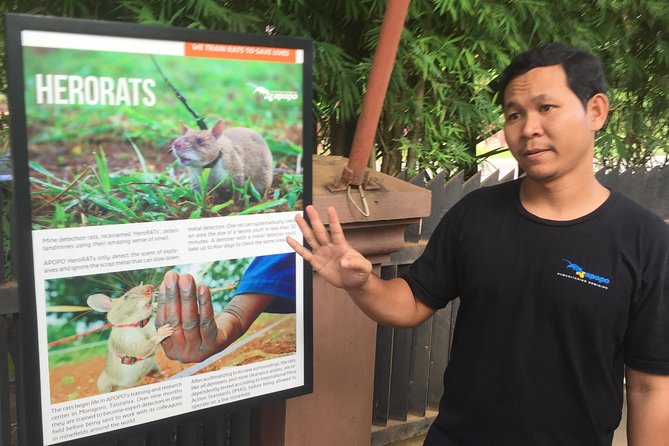
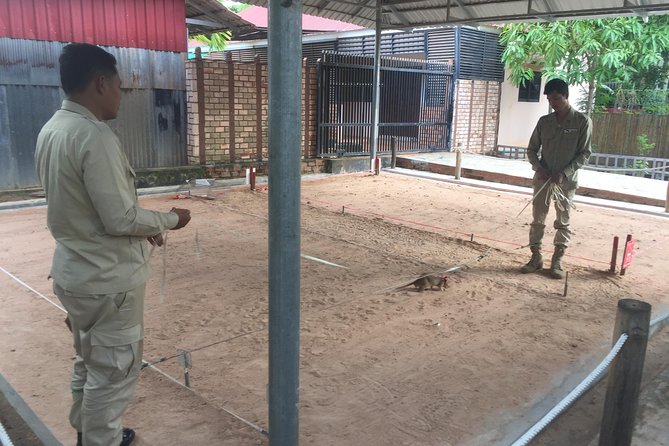
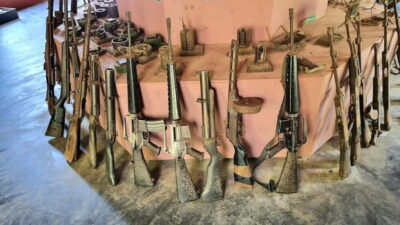
After Wat Thmei, the day shifts to what the guide called hope with teeth. You go to the Apopo Visitor Center to understand Cambodia’s landmine impact and the history behind it. This is where the tour earns its title, because you learn about the de-mining work connected to Hero Rats.
The idea is straightforward: the visitor center explains conflict, explains why landmines remain a threat long after the fighting ends, and then shows how people are using unlikely partners to make land safer. It is not only about animals. It is about a system, training, and the long-term work of reducing danger for communities.
What makes this stop valuable is that it connects the past to daily life. Landmine stories can feel distant when you only hear dates and numbers. Here, the tour focuses on impact on local communities, which helps you understand why this work continues, and why people keep showing up for it.
I also like the tone of the presentations. When a guide can explain it with clarity, you come away with a workable mental picture of what the work looks like and why it matters. In at least one case, the guide shared personal experience connected to the killing fields, and that blend can make the Apopo explanation hit harder, because you understand the stakes before you see the method.
One consideration: this is emotionally heavier than a typical museum stop, even though it might feel lighter because it is more “educational.” If you need a break, you can ask your guide for a moment to step out, take water, and then come back in.
Other private bookings in Siem Reap
- Full-Day Angkor Wat Sunrise Private Tour with Guide from Siem Reap★ 5.0 · 2,920 reviews
- Siem Reap: Angkor Wat Private Tuk-Tuk Tour★ 4.9 · 2,222 reviews
- Angkor Wat Private Day Tour from Siem Reap★ 5.0 · 834 reviews
- Angkor Wat Private Tuk-Tuk Tour (sunrise Option) & more★ 5.0 · 439 reviews
Angkor National Museum stop: Khmer artifacts after the hard truths
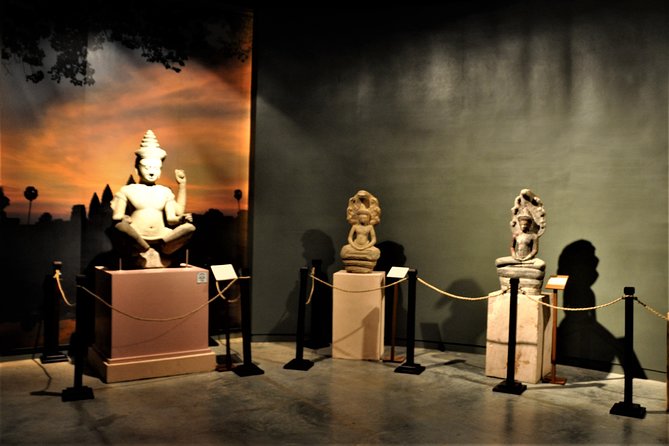
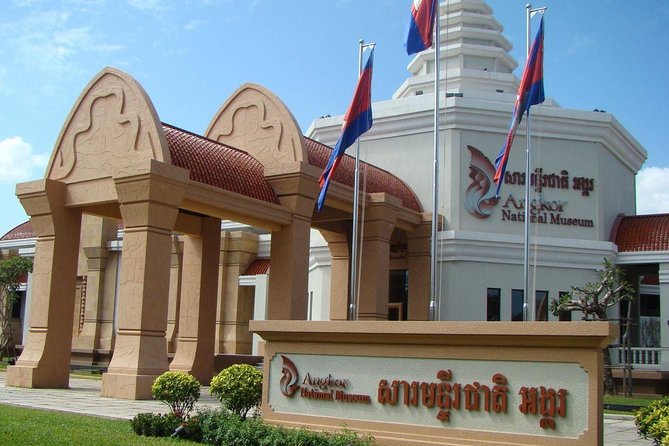
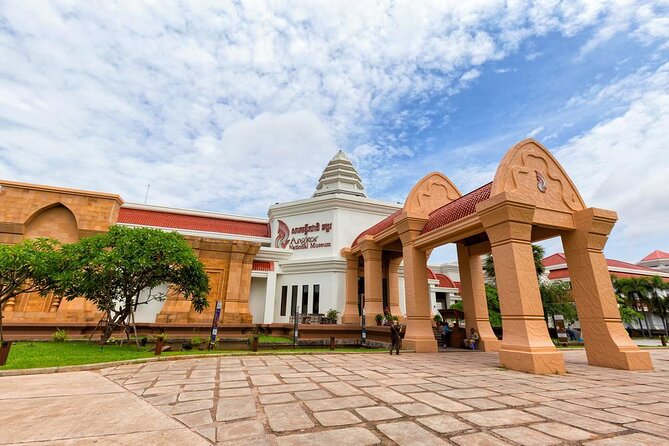
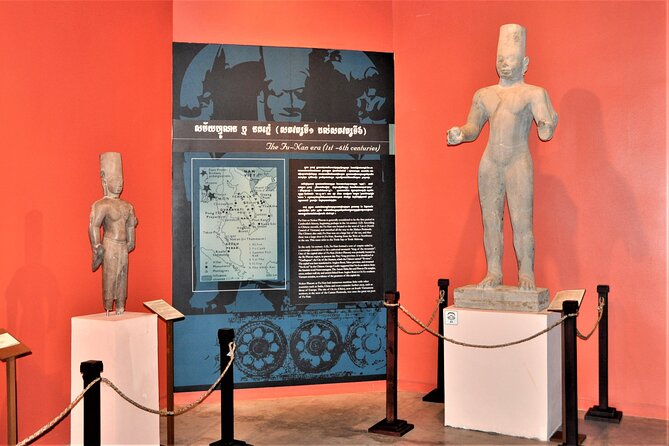
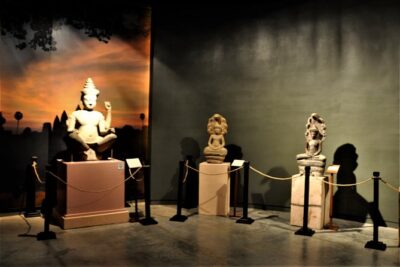
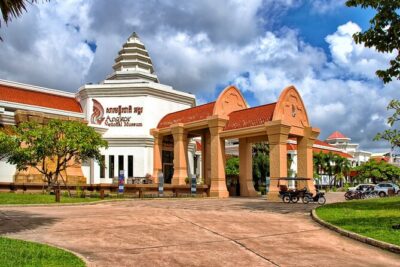
Your final stop is Angkor National Museum, an archaeological museum dedicated to the collection, preservation, and presentation of Angkorian artifacts. The museum’s collections are largely dated to the Khmer period from the 9th to 14th centuries, so you are not just seeing objects. You are seeing a timeline.
I like this ending because it restores context. After the killing field memorial and the landmine-focused visitor center, the day can feel like a straight line of trauma. The museum reminds you Cambodia also built something lasting, and that the country has deep layers beyond conflict. Even if you only spend an hour and a half, you can walk out feeling like you understand the country’s past in a wider frame.
There is also a practical upside. A museum environment can be easier to manage than outdoor sites in the sun. One review-style caution I would take seriously: some sections of the day can be hot and the outdoor portions may feel long. The museum can help, but it depends on what changes for your date.
Important note for planning: Angkor National Museum is sometimes closed, and your stop order may be amended. That means you should treat the museum as part of the plan, not the guaranteed final scene. If you are booking specifically for the Angkor National Museum, check timing with your operator once you book, so you do not end up surprised on the day.
When everything is open, this is a strong way to finish. You get a more relaxed setting after the memorials, and you can focus on Khmer art and history without feeling like you are in a raw memorial space.
Price and what the $85 really covers in real life
At $85 per person for a roughly 4-hour private tour, you are paying for two main things: transportation plus guided context. The included air-conditioned private car matters in Siem Reap, especially if you are doing two or three stops back-to-back. Heat makes everything slower, including thinking.
You also get admissions included, plus one bottle of water per guest. Those small items add up. When entrances are included, you avoid one more bill and one more errand during the day, and you keep your schedule tighter.
Is it expensive? Compared to a basic taxi and a self-guided plan, yes. But compared to hiring a guide for context and a car to move efficiently between memorials and museums, it is reasonable. This tour works best when you want someone to connect the dots for you, especially because the themes are not light and easy.
Booking timing can help too. This is typically booked about a month in advance on average, so if your dates are fixed, it is smart to reserve earlier rather than later.
One more value point: it is private. Only your group participates. That means you can ask questions at your own pace and stop for a breather without worrying about holding up strangers.
Timing, pickup, and pacing: making the day feel manageable
You can choose a morning start at 08:00 or an afternoon start at 13:00. Either can work, but here is how I think about it.
Morning tends to feel better for the memorial start because you get cooler temperatures for that first outdoor portion. If you are the type who needs a clean start to process emotional content, morning is usually kinder.
Afternoon can be fine too, but you may want to lean into shade breaks and water. The tour length is about four hours, so you are not stuck all day. Still, some sites and waiting can push you into direct sun.
Either way, dress for comfort. You will be walking and standing, and you may find it harder to concentrate when the sun is pounding. If you forget sunscreen or a hat, you will likely remember it later, and it can be hard to enjoy the story.
The tour also includes an English-speaking driver and guide. You will spend less mental energy trying to interpret what you see, because you are hearing it explained as you go. That matters most for the landmine and conflict history. Without guidance, you might still learn, but it will be slower and less satisfying.
Finally, you get a mobile ticket. That is one less thing to manage. You can focus on the day rather than paperwork.
Who should book this and who should skip it
This is a good fit if you want a meaningful Siem Reap day that goes beyond temples and photo stops. It suits you if you care about understanding conflict history and how Cambodia continues to deal with the aftermath, not just the tourist headline version.
It is also a strong choice if you like guided interpretation. The experience depends on explanation, especially at Wat Thmei and Apopo, where context helps you process what you are seeing.
Who might want to skip or adjust? If you know you are not okay with heavy memorial themes, or if you want a lighter, purely cultural day with minimal emotional weight, this may not match your mood. You can still enjoy Angkor sites in other ways, but this particular combination is built around difficult history.
If you are visiting with kids, you would need to judge maturity. The tour is described as suitable for most travelers, but the content is serious. For families, this can work best if your kids are ready for reflective and educational content, and if you keep your own pacing flexible.
Other Siem Reap museum halls worth an hour
Should you book the HERO Rats and Angkor National Museum tour?
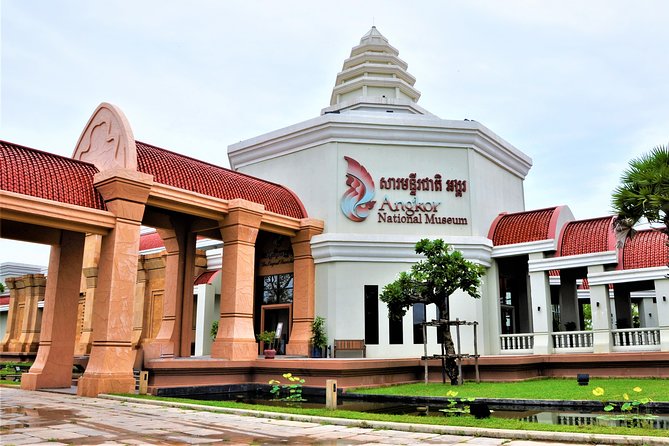
I think you should book this tour if you want a tight 4-hour plan that combines three powerful stops: Wat Thmei memorial, the Apopo hero rats program, and Angkor National Museum artifacts. The private car plus English guide plus included admissions makes it efficient, and the pairing of dark history with Khmer artifacts helps you understand Cambodia as more than one chapter.
I would book with a backup mindset if the Angkor National Museum is important to you, because it can be closed and your final stop may change. And if heat and outdoor time stress you out, plan for sun protection and slow pacing.
If your goal is to learn, not just to tick boxes, this is a smart use of your time in Siem Reap.
FAQ
What is the price per person for this private tour?
The tour costs $85.00 per person.
How long is the tour?
It runs about 4 hours.
Where does the tour take place?
The tour is in Siem Reap, Cambodia.
What does the tour include?
It includes an air-conditioned private car, one bottle of water per guest, an English speaking tour guide, and admission tickets.
What is the pickup and start time schedule?
Pickup is offered, and you can choose a morning start at 08:00 or an afternoon start at 13:00.
Is it a private tour?
Yes. It is a private tour/activity, and only your group will participate.
What if Angkor National Museum is closed on my date?
The tour notes that the Angkor National Museum is currently closed, and the itinerary may be amended.
Other Bookings Kept Private
- Full-Day Angkor Wat Sunrise Private Tour with Guide from Siem Reap★ 5.0 · 2,920 reviews
- Siem Reap: Angkor Wat Private Tuk-Tuk Tour★ 4.9 · 2,222 reviews
- Angkor Wat Private Day Tour from Siem Reap★ 5.0 · 834 reviews
- Angkor Wat Private Tuk-Tuk Tour (sunrise Option) & more★ 5.0 · 439 reviews
More Tours in Siem Reap
- Angkor Wat Sunrise or Sunset Tour with Guide from Siem Reap★ 5.0 · 12,109 reviews
- Siem Reap: Angkor Wat: Small-Group Sunrise or Sunset Tour★ 5.0 · 9,444 reviews
- From Siem Reap: Kampong Phluk Floating Village Tour by Boat★ 4.9 · 6,979 reviews
- Siem Reap: Angkor Wat 2-Day Tour with Sunrise and Sunset★ 4.9 · 4,429 reviews
More Tour Reviews in Siem Reap
- Angkor Wat Sunrise or Sunset Tour with Guide from Siem Reap★ 5.0 · 12,109 reviews
- Siem Reap: Angkor Wat: Small-Group Sunrise or Sunset Tour★ 5.0 · 9,444 reviews
- From Siem Reap: Kampong Phluk Floating Village Tour by Boat★ 4.9 · 6,979 reviews
- Siem Reap: Angkor Wat 2-Day Tour with Sunrise and Sunset★ 4.9 · 4,429 reviews
Newly written up around Siem Reap
- Waterfall & River of 1000 Siva Linga- Kulen Mountain Private Tour
★ 5.0 · 3 reviews - Private Transfer from Siem Reap to Sihanoukville
★ 4.5 · 3 reviews - Private Tour to Koh Ker and Beng Mealea
★ 5.0 · 3 reviews - Private Transfer: Siem Reap Angkor Internation Airport to Hotel
★ 5.0 · 3 reviews - Kulen National Park Ticket -Waterfall & 1000 Lingas
★ 5.0 · 3 reviews - Kulen Waterfall & Kbal Spean Tour
★ 5.0 · 3 reviews
Museums, side by side.
 ★ 5.0The Killing Field and Toul Sleng Genocide Museum (S21) TourFrom $191,977 reviews
 ★ 5.0Killing field and Toul Sleng genocide museum TourFrom $19610 reviews
 ★ 5.0Private Half Day To Killing Field & S21 Genocidal Museum in Phnom PenhFrom $130137 reviews
 ★ 5.0Tuol Sleng Genocide Museum (S-21) and Choeung Ek Killing Fields TourFrom $19123 reviews
 ★ 5.0Phnom Penh City Tour, Silver Pagoda, Genocide Museum, Killing FieldsFrom $65123 reviews
 ★ 4.7Bantey Srei, Kbal Spean and Landmine museum Private Tuk-TukFrom $4330 reviews
 ★ 5.0Siem Reap City Tour with War Museum and Killing FieldFrom $4727 reviews
★ 4.5The killing field and Toul Sleng Genocide museum (S21) TourFrom $1819 reviews
★ 5.0Siem Reap City Tour with War Museum and Killing FieldFrom $4727 reviews
★ 4.5The killing field and Toul Sleng Genocide museum (S21) TourFrom $1819 reviews
Also appears in