
REVIEW · ANGKOR
Seat-In-Coach: Small Circuit tour with Sunrise at Angkor Wat
Four-forty mornings can feel magical. This small-circuit Angkor Wat sunrise tour is built around one early goal, then keeps moving through Angkor Thom, Bayon’s 216 faces, and finally the jungle-famous Ta Prohm.
I like two things right away. First, the tour gives you an English-speaking guide who helps you find strong viewpoints and photo spots, with guides such as Touch, Phylom, Phyrom Hoeum, SoK, and Kim mentioned for smart pacing and guidance. Second, the schedule is tight but practical, so you spend your daylight seeing the highlights instead of waiting around.
My only caution: it is a fast circuit. If you want deep religious and historical storytelling, some guides keep explanations fairly brief, and the heat plus crowd flow means you will spend more time looking than reading.
In This Review
- Key moments that make this Angkor sunrise tour work
- Sunrise at Angkor Wat at 4:20 AM, why the timing matters
- From hotel pickup to the temple pass counter
- Angkor Wat in the half-light: what to focus on before it gets busy
- Angkor Thom and Bayon’s 216 faces, reading the faces and towers
- Ta Prohm up close: jungle vines and photo strategy
- How the pacing stays efficient, and where it can feel rushed
- Price and temple-pass math for a $30 seat-in-coach tour
- Dress code and comfort tips for knees-and-shoulders
- Who this small-circuit sunrise tour fits best
- Should you book this tour?
- FAQ
- What time is pickup?
- How long is the tour?
- When does the tour end?
- What temples are included?
- Is the Angkor temple pass included in the price?
- What is included besides the guide and transport?
- What should I wear?
Key moments that make this Angkor sunrise tour work
- 4:20 AM to 5:00 AM hotel pickup puts you at Angkor before the biggest crush
- Angkor Wat sunrise timing is the whole reason to book this one
- Bayon’s 216 faces show up right after Angkor Thom, in a clean, logical route
- Ta Prohm close-up gives you that jungle-and-stone look up close, known from Tomb Raider
- Photo-minded guidance with examples like Touch, Phylom, and Kim focusing on angles and timing
- Temple pass is extra, so budget for the $37 one-day pass per person
Sunrise at Angkor Wat at 4:20 AM, why the timing matters
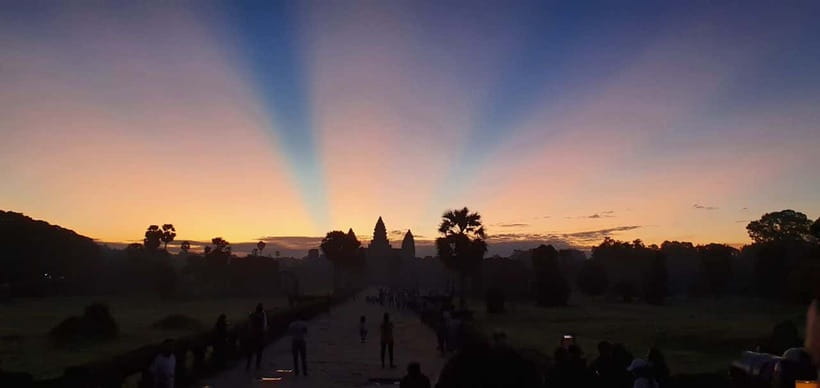
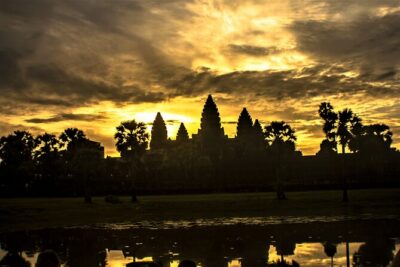
This tour starts before dawn, with pickup from your hotel lobby sometime between 4:20 AM and 5:00 AM. That early window is not just for dramatic photos, it’s what helps you experience Angkor Wat in quieter light, before buses unload and the walkways fill.
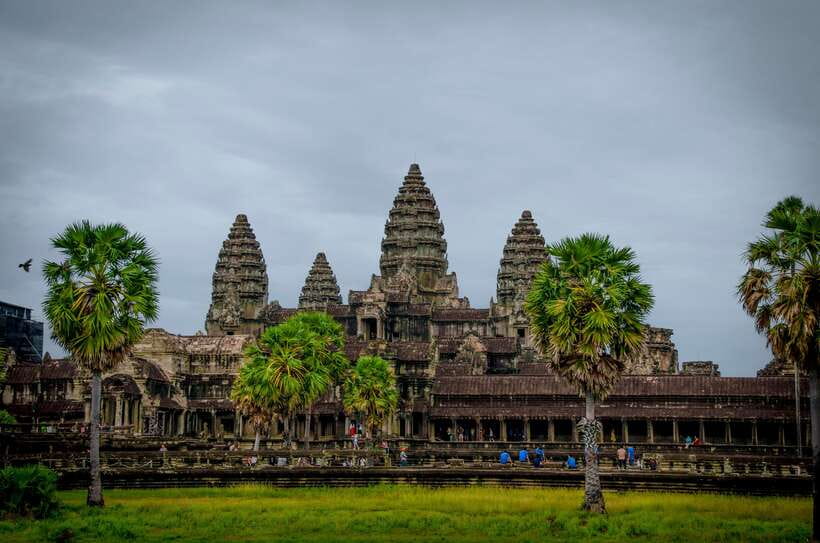
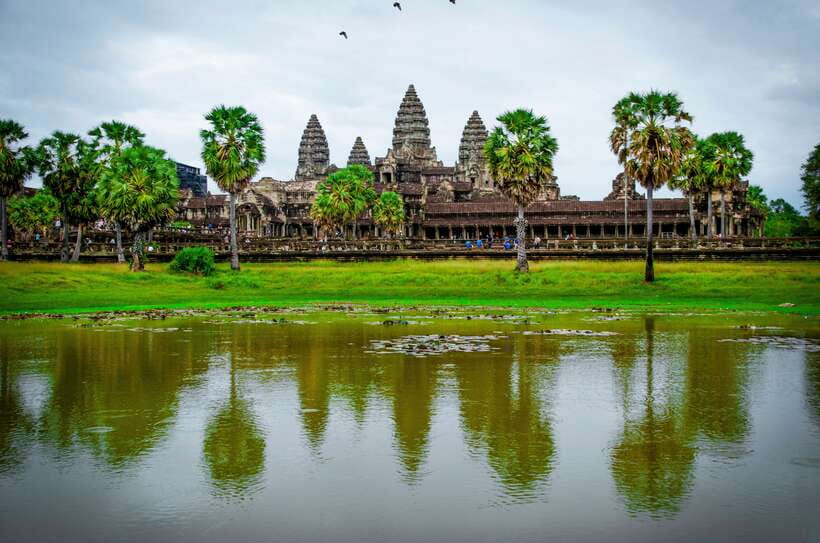
Angkor Wat itself is built around the first half of the 12th century by King Suryavarman II. When you’re standing there before the crowds, you feel the size more clearly, the way the towers and courtyards pull your eyes upward while the sky slowly changes.
And yes, sunrise can vary. One traveler described an overcast morning where sunrise looked limited, but they still valued arriving so early, with cooler conditions than later in the day.
From hotel pickup to the temple pass counter
The morning flow is straightforward. Your local guide picks you up, then you purchase your Angkor temple pass before entering the complex with your guide. The important detail here is that the pass is not included in the tour price, and it costs $37 per person for a one-day pass.
This matters for your planning. If you book with the assumption that $30 covers entry, you’ll be surprised at the counter. I like that the guide handles the process flow, so you are not figuring out lines and rules on your own at dawn.
Transport is provided by mini van or tour bus, depending on the group size and routing. You also get a refreshment drink and a cold towel, small things that feel big at 4:30 in the morning.
Other ways to be at the temples before the light comes up
- Angkor Wat Sunrise or Sunset Tour with Guide from Siem Reap★ 5.0 · 12,109 reviews
- Siem Reap: Angkor Wat: Small-Group Sunrise or Sunset Tour★ 5.0 · 9,444 reviews
- Siem Reap: Angkor Wat 2-Day Tour with Sunrise and Sunset★ 4.9 · 4,429 reviews
- Angkor Wat Sunrise tour with Small – Group and Guide tours★ 5.0 · 3,655 reviews
Angkor Wat in the half-light: what to focus on before it gets busy
Once you’re in, the guide-led part is about getting you positioned for the sunrise and then moving through key areas efficiently. Angkor Wat’s layout is symmetrical and commanding, and in early light it reads like architecture made to impress.
What I would focus on in the first part of the visit:
- The main viewing points for the sunrise, which your guide can help you time and position for
- The grand scale of the complex, so you understand why people call it the most famous temple at Angkor
- The way stone paths and corridors guide you through courtyards rather than letting you wander randomly
A big advantage of using a guide here is that you avoid the trial-and-error phase. Several guides in the feedback, including Touch and Phylom, were praised for leading people to strong spots for photos without making the whole experience feel chaotic.
Then the tour keeps moving. After sunrise, you continue through the Angkor grounds with stops that are designed for maximum impact, not maximum slow wandering.
Angkor Thom and Bayon’s 216 faces, reading the faces and towers
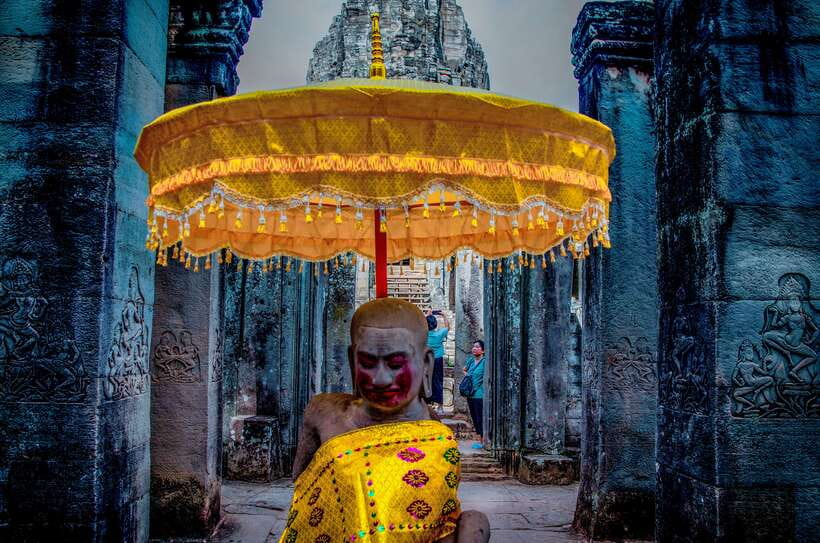
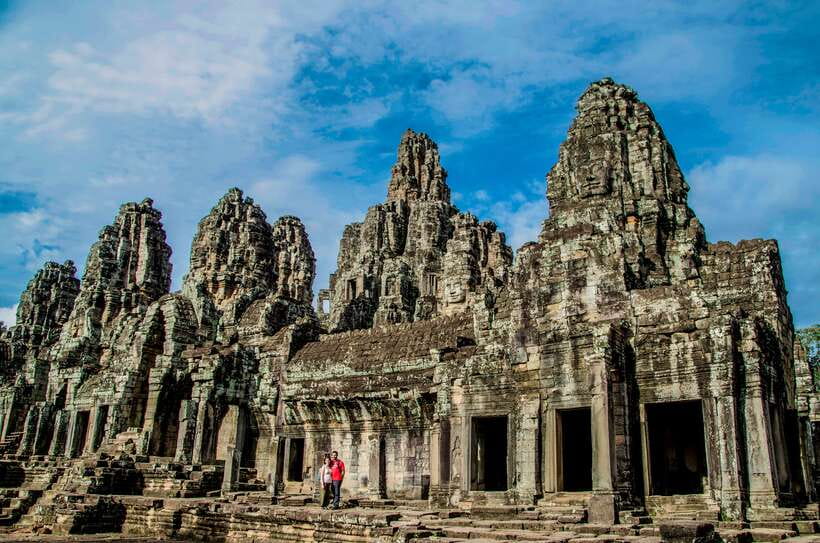
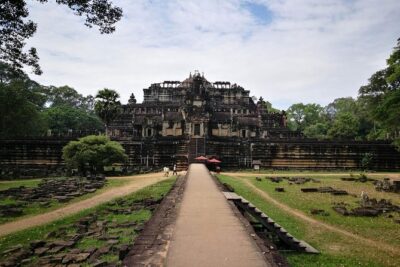
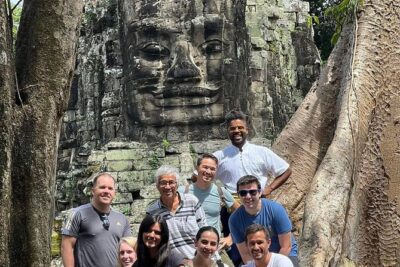
Your next stop is the Angkor Thom complex, which then brings you to Bayon. Bayon was built in the latter part of the 12th century by King Jayavarman VII, and it’s famous for the giant stone faces carved into the towers.
Here’s what makes Bayon special and not just a photo stop: there are 54 towers with faces, and each tower has four faces, totaling 216 faces. Standing close to those carvings, you start to notice different expressions depending on where you’re standing, and how the towers layer the scene.
The pacing also helps. Instead of jumping randomly between sites, the tour follows a route from Angkor Thom into Bayon, which gives your morning a sense of order. That also helps you not waste daylight, especially when you know the midday heat and crowd levels will rise.
One practical note from the experience: Bayon can be busy, with lots of people trying to shoot selfies and quick group photos. If you go in mentally flexible, you can still find angles, and your guide can often steer you away from the thickest clumps at the right moments.
Ta Prohm up close: jungle vines and photo strategy
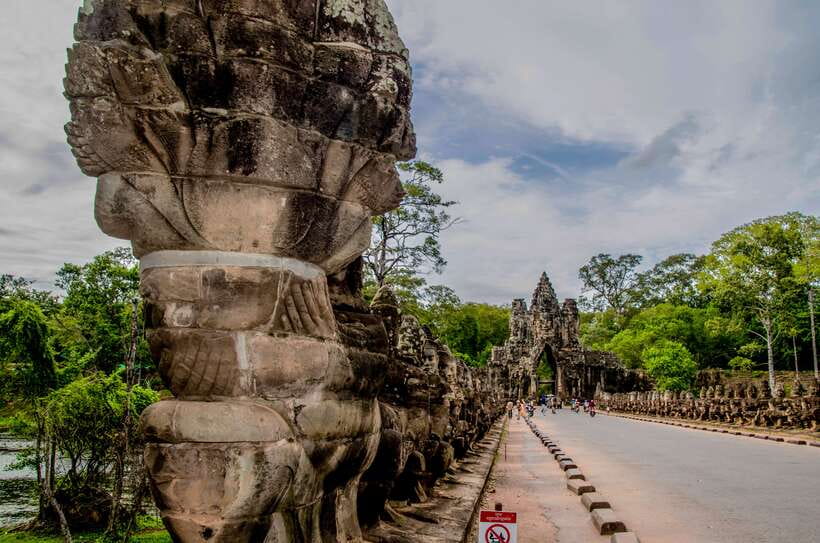
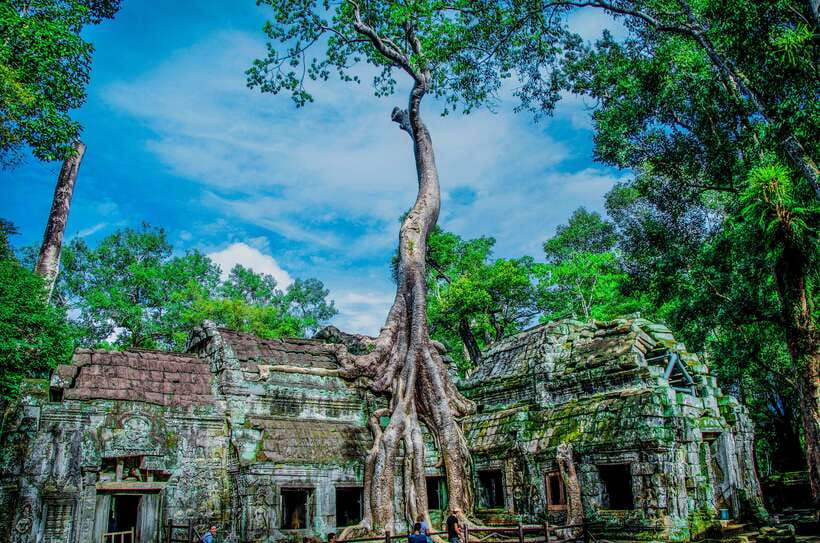
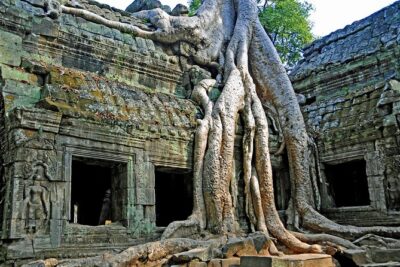
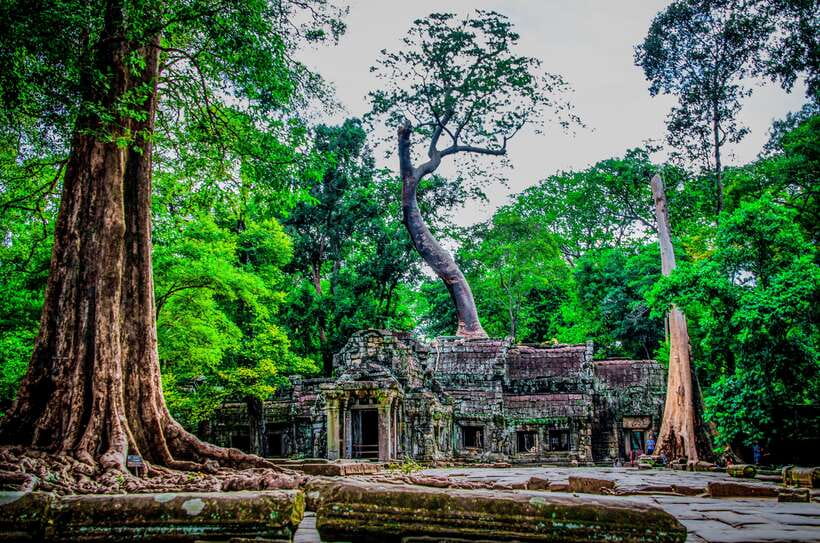
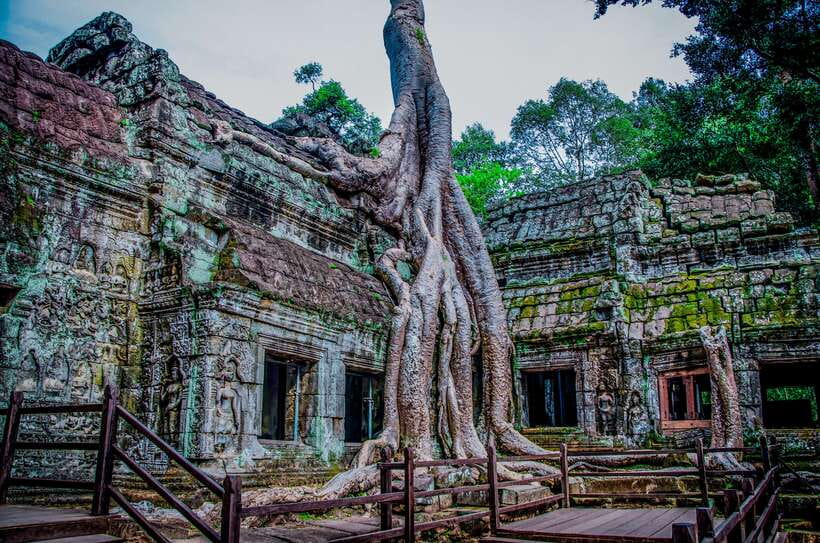
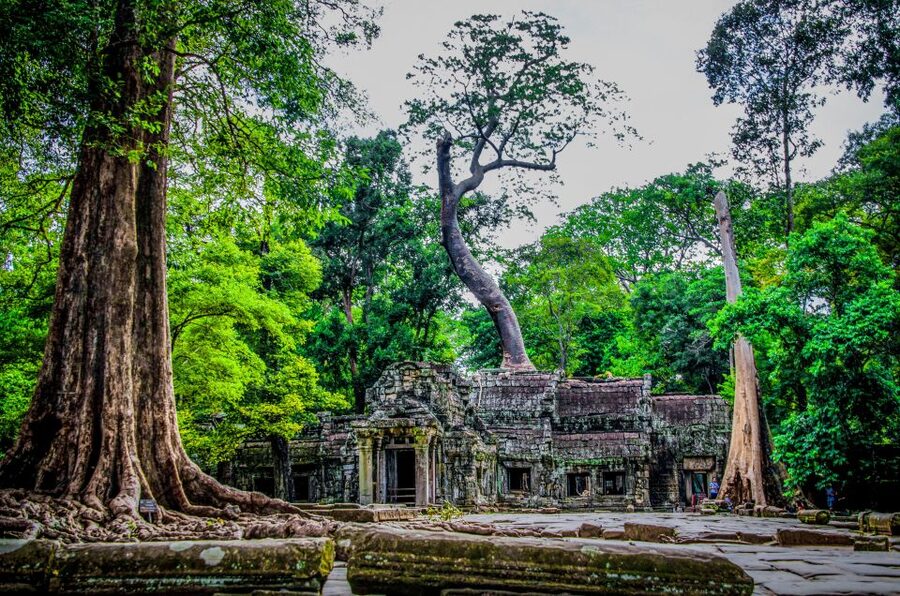
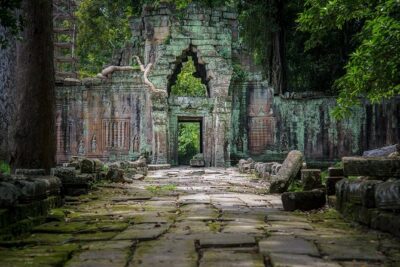
Ta Prohm is where the tour leans into the iconic look. This is the jungle-clad temple where stone works intertwine with tree roots and vines, a scene many people recognize from Tomb Raider.
Expect this stop to feel visually different from Angkor Wat and Bayon. Angkor Wat is about structured grandeur. Bayon is about faces and symmetry in towers. Ta Prohm is about nature reclaiming architecture, so your eyes are constantly switching between the stone details and the greenery.
It can also be crowded. One review specifically called out that Ta Prohm, along with Bayon, can draw large numbers of visitors because it is so famous. That means you’ll want a simple photo strategy: aim for one or two strong compositions, then give yourself time to enjoy the scene without constantly chasing the perfect shot.
Your guide’s job is useful here. Several feedback notes highlighted photo help, with suggestions and active assistance so you spend less time fumbling and more time getting the framing you want.
How the pacing stays efficient, and where it can feel rushed
This is a 7-hour circuit that ends at 12:00 PM. That half-day length is the main trade-off. You get three of the big temples in one morning run, but you will not have hours to linger at every corner.
The upside is that the tour fits first-time visitors who want the essentials: sunrise at Angkor Wat, Bayon’s faces, and Ta Prohm’s movie-famous jungle setting. The downside is that it can feel action-packed, and some people found the temple explanations to be lighter than they expected.
If you like a guide who explains clearly, you will likely be happy. Multiple guides were praised for helpful photo ideas and energy. At least one person also mentioned that the English was harder to follow for them, so if English clarity is critical, choose your expectation level and stay ready to ask follow-up questions.
Also remember the climate factor. Multiple comments mentioned that it is extremely hot out there, even if you start at cooler dawn hours. So bring a plan for comfort: water, shade pauses when you can, and clothing that is allowed inside temples.
More circuits through the Angkor complex, compared
Price and temple-pass math for a $30 seat-in-coach tour
At $30 per person, the tour price itself looks like a bargain. But here’s the key math: the Angkor temple pass is separate, at $37 per person for a one-day pass. That puts you around $67 total, before any extra meals or drinks you choose beyond what’s included.
So what are you paying for with that $30? Not just transportation. You’re paying for:
- Pre-dawn pickup and the route that makes sunrise timing possible
- A guide to shepherd the order of the sites and help you navigate viewpoints
- Transport by mini van or tour bus
- Small comfort items like a refreshment drink and a cold towel
From a value perspective, this setup is best if you want someone to handle the schedule decisions for you. If you are the type who enjoys self-guided wandering and you already know where you want to be for sunrise, you might feel the guide is less essential. If you are new to Angkor, the guide-led flow is what often makes the morning feel smooth.
Also note the tour is described as seat-in-coach and a small circuit. In real life, that can mean you might get a smaller group, which people praised for feeling more personal and less chaotic, including praise for a group size as small as two.
Dress code and comfort tips for knees-and-shoulders
This tour has a simple dress requirement for temple entry: long pants that cover the knee and a shirt that covers the shoulders. It’s the kind of rule you do not want to discover at the entrance gate at sunrise.
Beyond the required clothing, think about comfort. You start early, then the day warms up fast. A cold towel helps in the moment, but it won’t replace basic heat gear: sun protection, breathable layers, and something to keep you moving without getting cranky.
If you are packing, keep it practical:
- Wear the long pants and shoulder-cover shirt you already own to avoid last-minute shopping
- Bring items that let you stay hydrated through a temple circuit that runs until midday
- Keep your camera settings simple because you will be moving a lot
One small comfort detail that showed up in the feedback: water bottles were provided during the day. Still, I’d treat it as a helpful bonus, not your only hydration plan.
Who this small-circuit sunrise tour fits best
This works best for you if:
- You want the highlights of Angkor in one morning, without building your own route
- You care about sunrise timing and would rather have someone help you choose the right positions
- You like photo guidance and a plan that reduces wasted time
- You want to see three major temples: Angkor Wat, Bayon (within Angkor Thom), and Ta Prohm
It may not be the best fit if you prefer slow travel and long stops. Some people also felt the learning component was not as detailed as they wanted, so if you need heavy storytelling, you might want a more in-depth guided option or plan to read a bit before you go.
There is also a guide variability reality. Names like Touch, Phylom, Phyrom Hoeum, SoK, and Kim were all mentioned positively, especially for energy, photo ideas, and pacing. Still, if you are sensitive to how much you understand in English, plan to ask questions when you can.
Should you book this tour?
I’d book it if you want a smooth, efficient Angkor morning built around sunrise and the three biggest visuals: Angkor Wat’s grandeur, Bayon’s face towers, and Ta Prohm’s jungle-stone look. The combination of early pickup, guided timing, and a half-day finish at 12:00 PM is exactly the kind of structure that helps you feel like you used your time well.
Skip it or treat it as a priority-only outing if you know you want deep, long explanations or you struggle with very early mornings and heat. Also budget for the temple pass, because that is the part that changes the true total cost.
If you go with realistic expectations, you’ll likely come away thinking the morning was worth getting out of bed for.
FAQ
What time is pickup?
Pickup is included from your hotel lobby between 4:20 AM and 5:00 AM.
How long is the tour?
The duration is 7 hours.
When does the tour end?
The tour ends at 12:00 PM.
What temples are included?
You visit Angkor Wat, the Angkor Thom complex (including Bayon), and Ta Prohm.
Is the Angkor temple pass included in the price?
No. The Angkor temple pass is not included. A one-day pass is listed at $37 per person.
What is included besides the guide and transport?
Included items are mini van or tour bus transportation, an English-speaking guide, a refreshment drink, and a cold towel.
What should I wear?
Long pants that cover the knee and a shirt that covers the shoulders are required.
More Tour Reviews in Siem Reap
- Angkor Wat Sunrise or Sunset Tour with Guide from Siem Reap★ 5.0 · 12,109 reviews
- Siem Reap: Angkor Wat: Small-Group Sunrise or Sunset Tour★ 5.0 · 9,444 reviews
- From Siem Reap: Kampong Phluk Floating Village Tour by Boat★ 4.9 · 6,979 reviews
- Siem Reap: Angkor Wat 2-Day Tour with Sunrise and Sunset★ 4.9 · 4,429 reviews
Keep Going Round the Circuit
- Angkor Wat Sunrise & 3 Main Temples with Breakfast – Small Group★ 5.0 · 2,857 reviews
- Siem Reap Tour: Angkor Wat Sunrise, Bayon, Ta Prohm, Banteay Srei★ 5.0 · 931 reviews
- 2-Day Angkor Wat With Small, Big Circuit and Banteay Srei Tour★ 5.0 · 545 reviews
- Full-Day ‘Big Tour’ with Sunset at Phnom Bakheng★ 5.0 · 341 reviews
Sunrise at Angkor, Three More Ways
- Angkor Wat Sunrise or Sunset Tour with Guide from Siem Reap★ 5.0 · 12,109 reviews
- Siem Reap: Angkor Wat: Small-Group Sunrise or Sunset Tour★ 5.0 · 9,444 reviews
- Siem Reap: Angkor Wat 2-Day Tour with Sunrise and Sunset★ 4.9 · 4,429 reviews
- Angkor Wat Sunrise tour with Small – Group and Guide tours★ 5.0 · 3,655 reviews
Newly written up around Siem Reap
- Waterfall & River of 1000 Siva Linga- Kulen Mountain Private Tour
★ 5.0 · 3 reviews - Private Transfer from Siem Reap to Sihanoukville
★ 4.5 · 3 reviews - Private Tour to Koh Ker and Beng Mealea
★ 5.0 · 3 reviews - Private Transfer: Siem Reap Angkor Internation Airport to Hotel
★ 5.0 · 3 reviews - Kulen National Park Ticket -Waterfall & 1000 Lingas
★ 5.0 · 3 reviews - Kulen Waterfall & Kbal Spean Tour
★ 5.0 · 3 reviews
Angkor Wat Sunrise Tours, side by side.
 ★ 5.0Angkor Wat Sunrise or Sunset Tour with Guide from Siem ReapFrom $1812,109 reviews
 ★ 5.0Angkor Wat: Small-Group Sunrise or Sunset TourFrom $159,444 reviews
 ★ 4.9Angkor Wat 2-Day Tour with Sunrise and SunsetFrom $344,429 reviews
 ★ 5.0Angkor Wat Sunrise tour with Small – Group and Guide toursFrom $143,655 reviews
 ★ 5.0Angkor Wat Highlights and Sunrise Guided Tour from Siem ReapFrom $233,213 reviews
 ★ 5.0Full-Day Angkor Wat Sunrise Private Tour with Guide from Siem ReapFrom $602,920 reviews
 ★ 5.0Angkor Wat Sunrise & 3 Main Temples with Breakfast – Small GroupFrom $152,857 reviews
 ★ 4.9Angkor Wat Sunrise and Full-Day Sightseeing TourFrom $142,828 reviews
Also appears in