
REVIEW · ANGKOR
Siem Reap: Private Tour of Angkor Complex
Angkor, minus the stress. This private full-day Angkor Complex tour is a smart way to see the Khmer highlights in one day, with an English-speaking guide and air-conditioned comfort from your hotel. I like how the day is built around Angkor Thom first, then shifts to the moodier jungle temples later. I also really like the contrast between Bayon’s massive faces and the haunting, still-almost-wild feeling of Ta Prohm.
One thing to factor in: the price is not the whole picture. The $72 per person covers your guide, driver, and transport, but the Temple Pass is extra, plus lunch and drinks are on you.
In This Review
- Key highlights you should care about
- Private comfort from your Siem Reap hotel
- Entering Angkor Thom at the South Gate, then facing Bayon
- Baphuon and the royal zones, where symbolism beats souvenir stops
- Terrace of the Elephants and the Terrace of the Leper King
- Ta Prohm: the jungle temple that still feels half-alive
- Angkor Wat, the main event with serious scale
- How private guiding changes the day (and how to protect your experience)
- Price and value: what $72 includes, plus Temple Pass math
- Who this private Angkor day tour suits best
- Should you book this private Angkor Complex tour?
- FAQ
- What is included in the $72 per person tour price?
- How much is the Temple Pass?
- Is lunch included?
- Where does the tour pick you up and drop you off?
- What vehicle is used for the tour?
- What language will the guide speak?
- Which Angkor sights are included in the day?
- What information do I need to provide for pick-up?
- Is there a cancellation option with a refund?
Key highlights you should care about
- South Gate start at Angkor Thom gives you an easy entry into the big story.
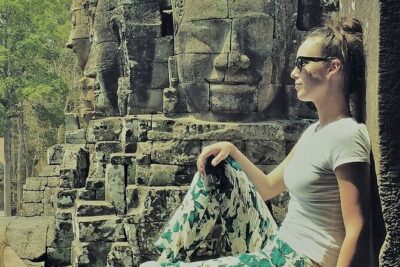
- Bayon Temple’s carved faces are the kind of detail that makes photos feel too small.
- Terrace of the Elephants and Terrace of the Leper King add variety beyond the main towers.
- Ta Prohm feels relatively untouched since its discovery, so it still has that “jungle reclaiming stone” vibe.
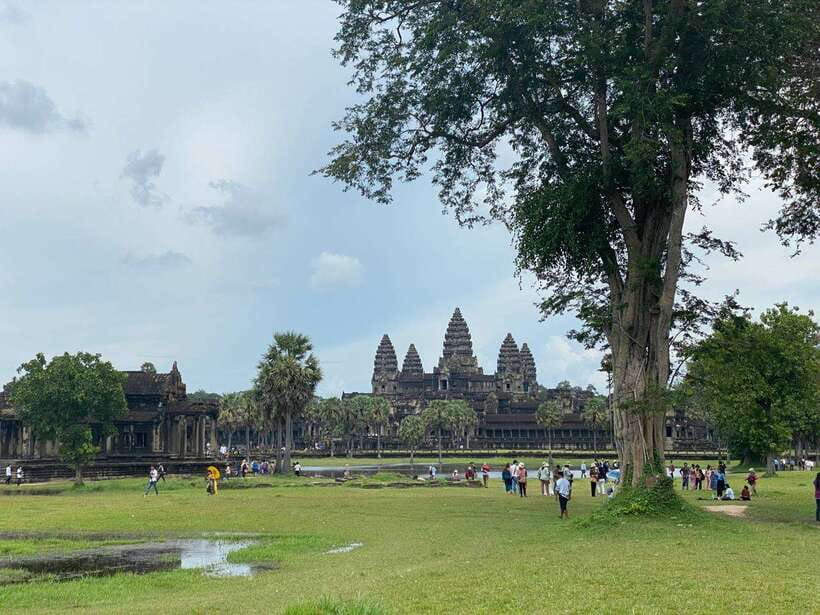
- Angkor Wat is the final showpiece, with scale and symmetry that hit hard in person.
- Air-conditioned private transport and small perks like cold towels and coconut juice make a long day more bearable.
Private comfort from your Siem Reap hotel
The best part of a private Angkor day is not just the temples. It is the way you get there and the way the day stays manageable. This tour includes pick-up and drop-off from your hotel in Siem Reap city, so you are not guessing about meeting points or juggling rides after a long day of walking.
You also travel in an air-conditioned car or minivan, and you get drinking water, fresh coconut juice, and a cool towel. Those sound like small extras, but in Angkor heat they matter. Cold towel plus water means you can keep moving instead of pausing every few minutes to recover.
This is also guided in English, and the package lists a fully vaccinated English-speaking tour guide and driver. That matters if you want a straightforward, comfortable day without logistical stress.
The only practical catch is budget. The Temple Pass is not included. So you are really planning for two layers of cost: the tour price plus your entry ticket, and then lunch and drinks since food is not part of the package.
Entering Angkor Thom at the South Gate, then facing Bayon
Most people feel Angkor in waves. You start with awe, then you start noticing details. This tour’s structure sets you up for that.
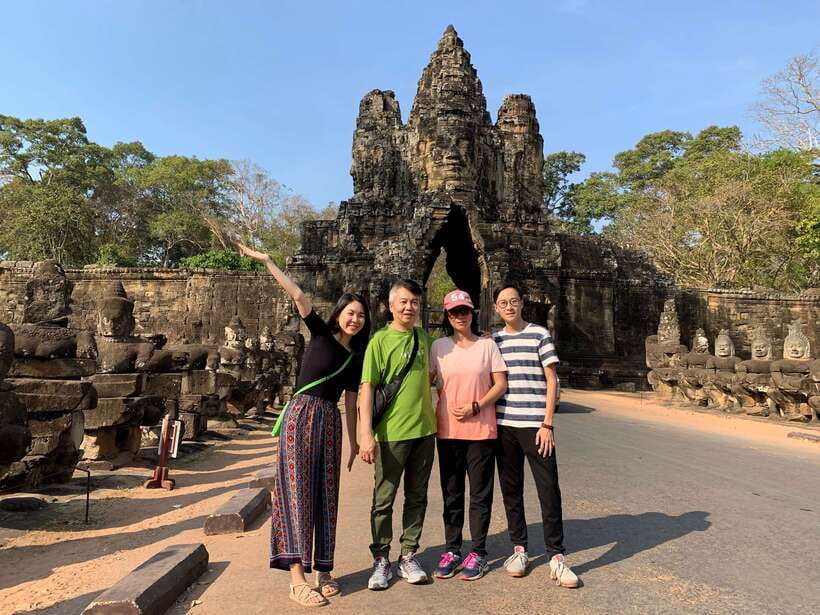
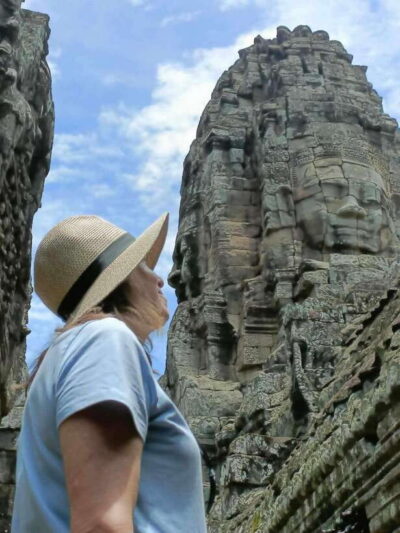
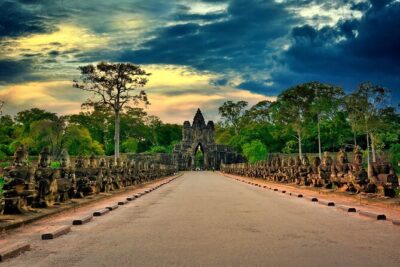
You begin at Angkor Thom, entering through the South Gate. From there, Bayon Temple is the next big moment. Bayon is famous for its massive carved faces, and this is one of those places where the scale keeps surprising you. Up close, the carvings feel less like decoration and more like a whole visual system. From different angles you can see how the face motifs are meant to guide your movement across the complex.
After Bayon, you continue through other core stops inside Angkor Thom: Baphuon Temple, the Royal Enclosure, and Phimeanakas. Even without going full “architectural nerd,” you can still read the vibe: this part of Angkor was built to signal power and ritual space. Think of it as the temple zone that was designed to make visitors slow down and look up.
A tip I recommend for your own experience: in Bayon, do not just take one photo and rush away. Spend a little time changing your viewpoint. The faces look different depending on where you stand, and it helps the whole place feel “alive,” not flat.
More circuits through the Angkor complex, compared
- Angkor Wat Sunrise & 3 Main Temples with Breakfast – Small Group★ 5.0 · 2,857 reviews
- Siem Reap Tour: Angkor Wat Sunrise, Bayon, Ta Prohm, Banteay Srei★ 5.0 · 931 reviews
- 2-Day Angkor Wat With Small, Big Circuit and Banteay Srei Tour★ 5.0 · 545 reviews
- Full-Day ‘Big Tour’ with Sunset at Phnom Bakheng★ 5.0 · 341 reviews
Baphuon and the royal zones, where symbolism beats souvenir stops
Once you leave Bayon, the day shifts into “connect the dots” mode. That is where the stops like Baphuon Temple, the Royal Enclosure, and Phimeanakas matter.
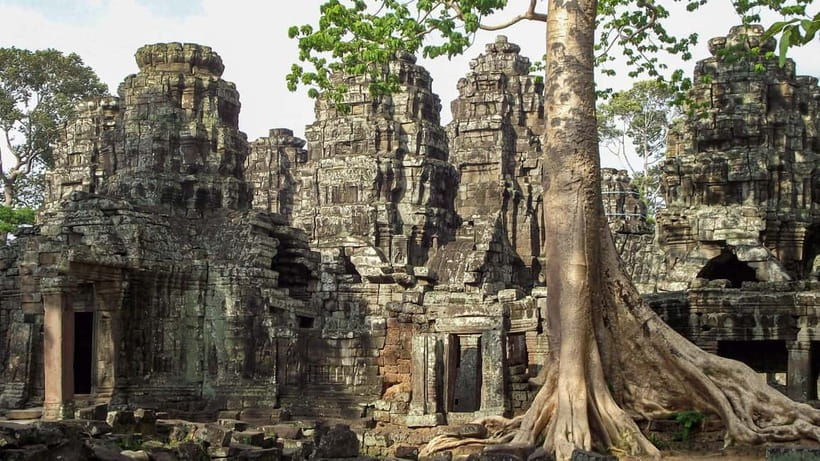
These temples are part of what remains of a royal Khmer city that grew from the 9th to the 15th centuries, then was mysteriously abandoned around 1430. Angkor is large, but what gives it meaning is how the zones are arranged. When you move from one temple to the next on a guided private day, you start to see the complex as a planned environment, not a list of monuments.
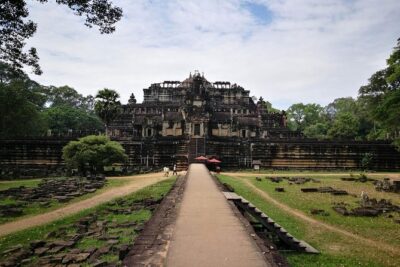
Baphuon, for example, has its own visual weight. You can see why people call Angkor a masterclass in proportions. Even when not every surface is equally intact, the temple still communicates hierarchy. Certain structures feel like they are meant for ceremonies and serious viewing, not casual wandering.
The Royal Enclosure and Phimeanakas add another layer. They give you the sense that this was a city built for kings and rituals. You are walking through spaces that were meant to frame authority, not just worship.
Is this your “rest-your-feet” section? Not really. You will do walking. But because it is a private setup, you can generally keep your momentum without the stress of syncing with a larger group.
Terrace of the Elephants and the Terrace of the Leper King
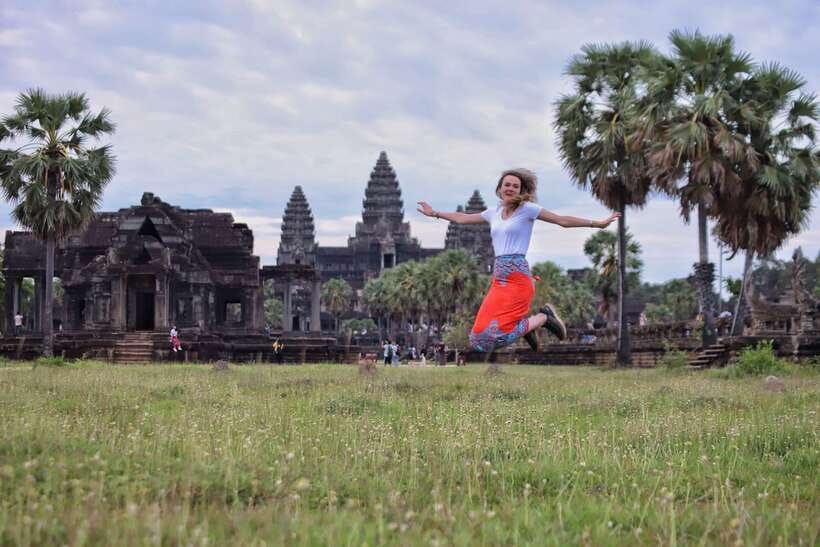
If you only see Angkor Wat, you will still miss half the personality of the complex. Angkor Thom delivers more mood and more variety, and the terraces are where that variety becomes real.
This tour includes the Terrace of the Elephants and the Terrace of the Leper King. The elephants terrace brings a sense of grand display. It is the kind of place that makes you think about how movement worked in royal space. The Terrace of the Leper King is darker in tone and more haunting in feel. Even if you do not know every inscription, the title alone hints that the carvings were meant to communicate human stories and court themes, not just geometric decoration.
These terrace stops are valuable because they give you texture between the bigger temple “hits.” Bayon is about faces. Ta Prohm is about jungle. Angkor Wat is about symmetry. The terraces are about narrative detail, and that helps the whole day feel cohesive rather than repetitive.
Practical advice: wear shoes you trust. Terraces are uneven in places, and you will benefit from solid grip when you stop to look closely at carvings. Also, bring a way to keep cool. You have a cool towel during the tour, but heat still stacks up when you stand still for photos.
Ta Prohm: the jungle temple that still feels half-alive
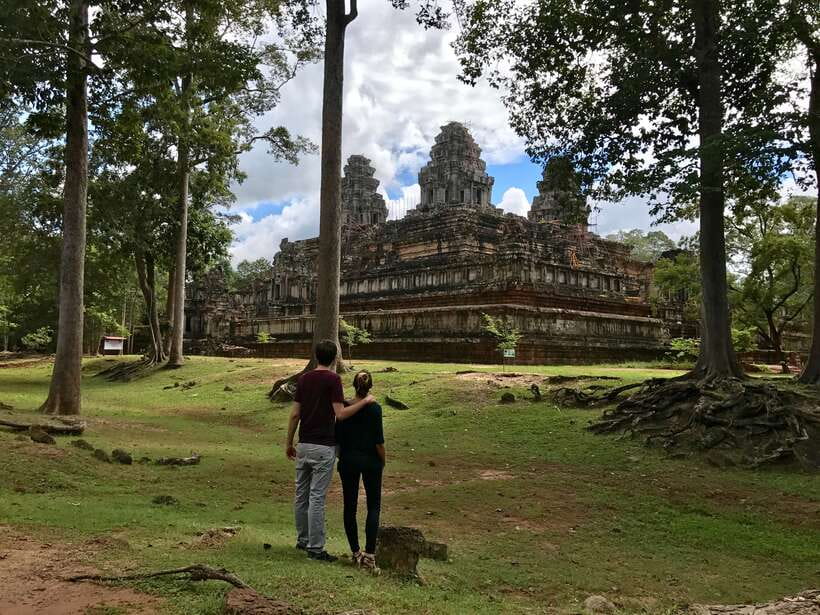
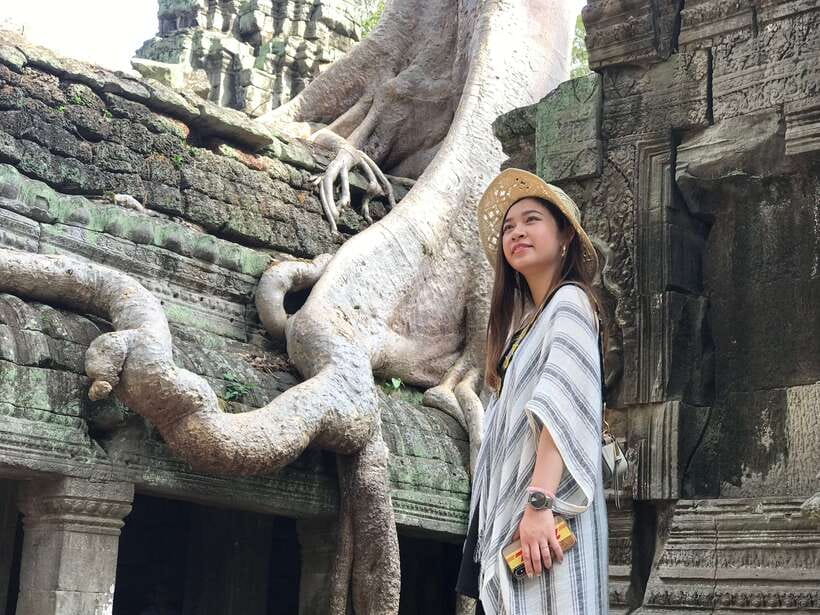
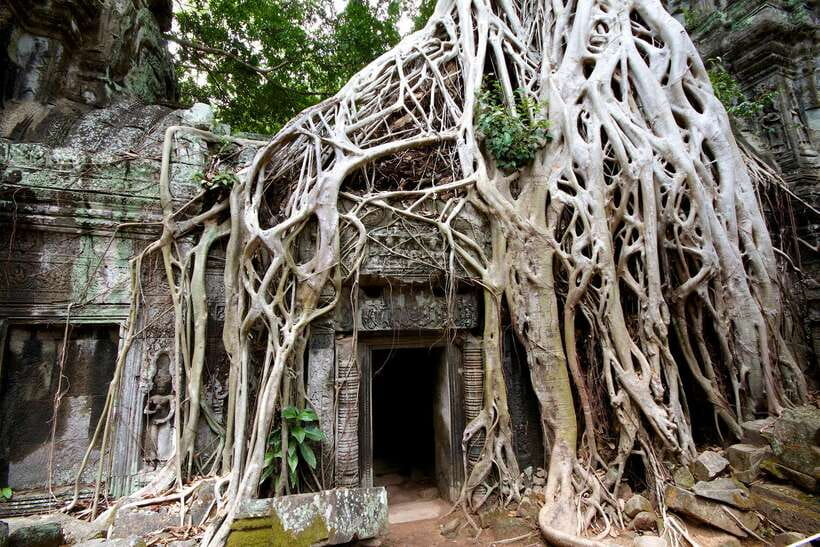
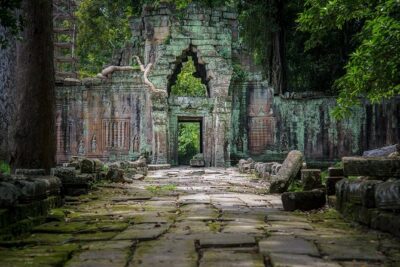
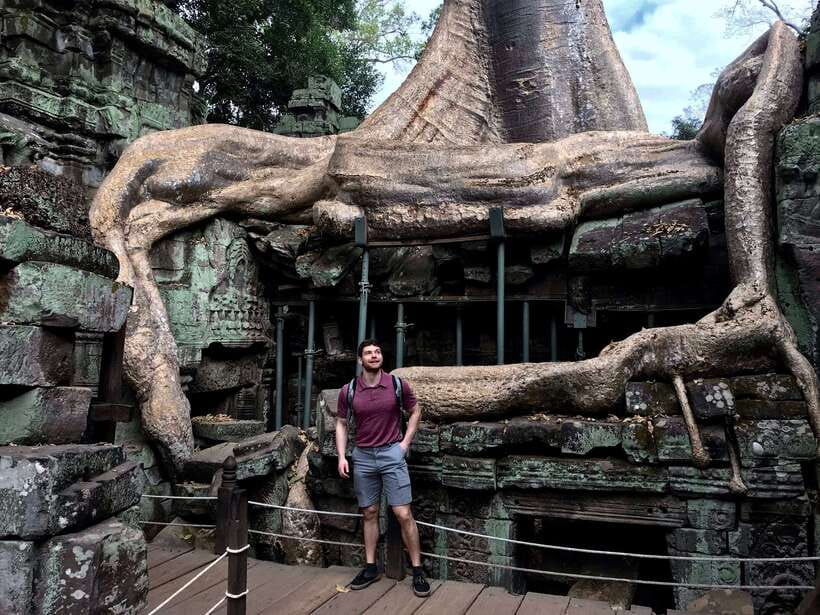
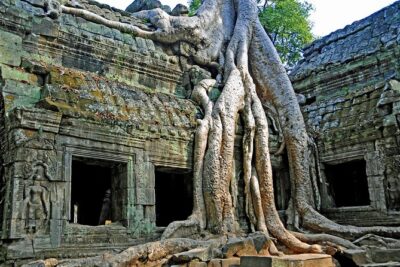
Then you hit Ta Prohm, the “lost jungle city” temple. This is one of the stops that many people talk about because it does not feel like a museum. The temple is famously wrapped in roots and trees, and it has been relatively untouched since its discovery.
That word untouched is important. It changes how you experience the site. Instead of feeling like stone restored for visitors, Ta Prohm feels like stone temporarily exposed to a world that kept moving. The jungle is not a background. It is part of the composition.
This is where the day’s emotional pacing makes sense. After the royal stone world of Angkor Thom, Ta Prohm gives you atmosphere. It also makes photos more interesting because the shapes are less orderly than the main showpieces. You get framing, shadow, and that “how is this standing?” feeling that no guidebook fully conveys.
One thing I suggest: slow down here. Ta Prohm rewards observation. If you are chasing speed, you will miss what makes it special. You do not need to stand for long in every spot. Just pick a couple good angles and let the scene settle.
Angkor Wat, the main event with serious scale
In the afternoon after lunch time, you visit Angkor Wat. This is the temple most people expect, but what surprises you is the scale and the sense of design as a whole.
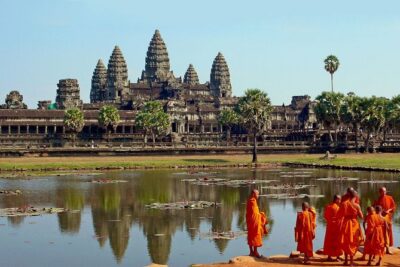
Angkor Wat covers 81 hectares, which is huge for something you walk through on foot. It is comparable in size to the Imperial Palace in Beijing, and you can feel that scale in how the complex unfolds as you move. The composition, balance, and sculptural detail are why Angkor Wat ranks among the finest monuments ever constructed.
This tour brings you here after Ta Prohm, which is a smart pacing choice. You go from jungle intensity back to stone perfection. That contrast is satisfying. Angkor Wat can feel almost unreal because it looks so planned and so precise, compared with the raw chaos you saw at Ta Prohm.
Practical notes for enjoying Angkor Wat:
- Give yourself time to step back from the closest views. The symmetry reads better from a distance.
- Be mindful of heat and glare. If you can, pause under shade while you watch other visitors move through so you can take your time.
- Let your guide connect Angkor Wat to what you saw earlier in Angkor Thom. When you understand what came before, Angkor Wat feels less like a standalone star.
Other private bookings in Siem Reap
How private guiding changes the day (and how to protect your experience)
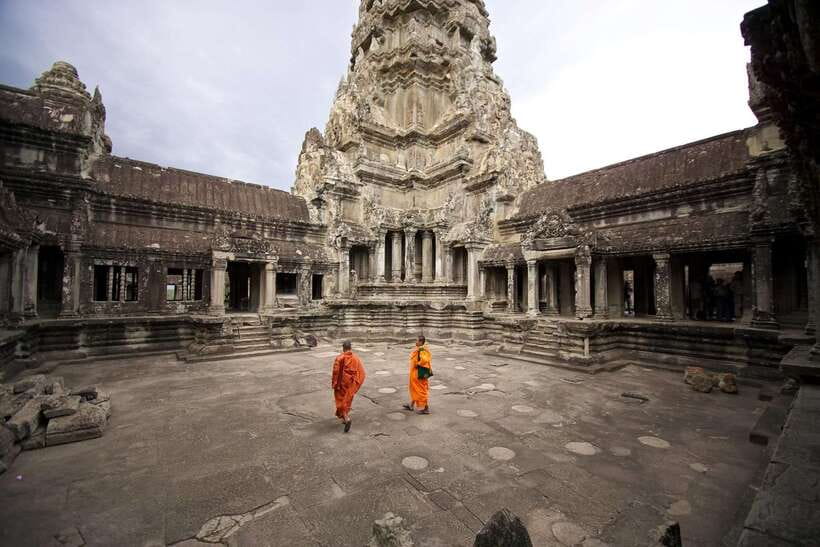
A big theme in the experience is that the guide makes a difference. When a guide is engaged, you get more than names. You get why the temples were built, and how the Khmer Empire’s royal world shaped the art you see today.
The positive notes about guiding were specifically about context and detail: the past feeling, and how much Cambodia history the guide can explain. On a private day, that turns your walk into a story. You also get the chance to ask questions without feeling rushed.
Now the fair caution. One reported issue was a guide who seemed less informed and less energetic, with a mostly silent walkthrough at Angkor Wat and the day ending earlier than expected. That can happen anywhere, but with private tours it feels sharper because you are paying for quality one-on-one time.
So here is how you protect yourself:
- Ask one or two questions early, like what each zone meant or what to focus on in Bayon versus Angkor Wat.
- If answers are thin, speak up gently and ask for more context.
- If the pace feels too fast, tell the guide you want slightly more time at the major carvings.
Private does not guarantee great guiding, but it gives you the best leverage to steer the day.
Price and value: what $72 includes, plus Temple Pass math
At $72 per person, this private full-day tour can be a strong value if you want a full sweep without coordination headaches.
Here is what you are getting in that $72:
- Fully vaccinated English-speaking tour guide and driver
- Air-conditioned car or minivan
- Hotel pick-up and drop-off in Siem Reap city
- Drinking water, fresh coconut juice, and a cool towel
That is more than transport. It is the infrastructure that makes it realistic to see multiple major zones in one day.
Then there is what you must add:
- Temple Pass: $37 per person, not included
- Lunch and drinks: not included
- Personal expenses: not included
So your day is realistically tour price plus entry plus your own food and drink choices. If you want the clearest budget estimate, plan around $72 + $37 before lunch.
When is it worth it? If you want:
- A private setup instead of a group scramble
- An English guide who can explain what you are seeing
- Comfort perks for a long, walking-heavy day
When might another option be better? If you already know the temples well and mainly want independent time, you might not need a full guide package. But if you want context and smoother logistics, this format fits.
Who this private Angkor day tour suits best
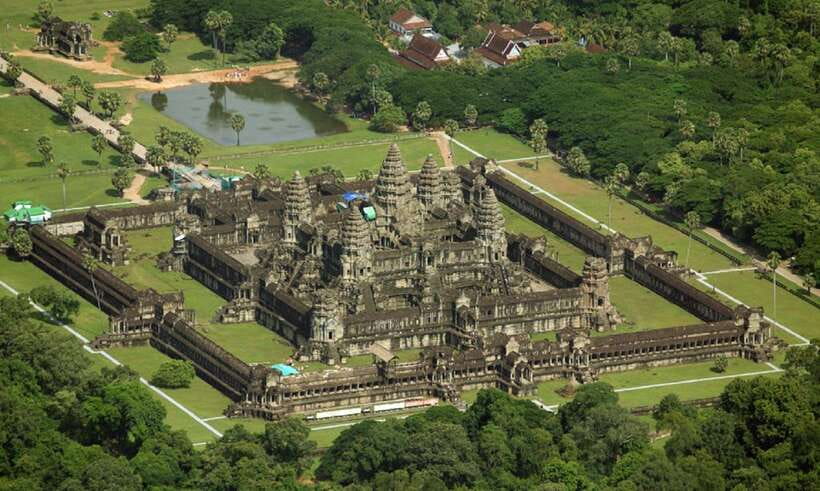
This is a great match if you want a focused Angkor day that still covers the main emotional range: royal stone power at Angkor Thom, narrative terraces, a jungle reclaiming feel at Ta Prohm, then the polished icon Angkor Wat.
I would especially recommend it if:
- You want a private day rather than negotiating meeting points and pacing with strangers
- You care about history explanations, not just quick sightseeing
- You want the convenience of hotel pickup and air-conditioned transport
- You prefer English guidance
On the other hand, if your priority is maximum free time and minimal structure, you might find a guided route slightly limiting. And if you are very sensitive to heat and walking time, wear comfortable shoes and plan to pace yourself at terraces and major viewpoints.
Should you book this private Angkor Complex tour?
Yes, you should book if you want an efficient, private, English-guided day that covers the core Angkor temples, with comfort built in from Siem Reap.
Book with confidence if:
- You like the idea of starting at Angkor Thom and building up to Angkor Wat
- You want jungle atmosphere at Ta Prohm
- You are okay paying the extra Temple Pass and handling lunch yourself
Think twice or ask more questions before you commit if:
- You are depending entirely on the guide for a high-context experience. In one case, the day quality suffered when the guide seemed less engaged.
- You want to avoid any chance of losing time. Private tours are great, but only when the guide stays active and responsive.
If you do book, bring good walking shoes, set expectations that the Temple Pass is extra, and start the day by asking for what you should watch for at Bayon and Angkor Wat. That small move can turn a great itinerary into a memorable one.
FAQ
What is included in the $72 per person tour price?
The tour includes a fully vaccinated English-speaking tour guide and driver, hotel pick-up and drop-off in Siem Reap City, transfer by air-conditioned car or minivan, drinking water, fresh coconut juice, and a cool towel.
How much is the Temple Pass?
The Temple Pass is $37 per person and it is not included in the tour price.
Is lunch included?
Lunch is not included, and food and drinks (like soft drinks or beer) are not included.
Where does the tour pick you up and drop you off?
It includes pick-up and drop-off from your hotel or guesthouse in Siem Reap City.
What vehicle is used for the tour?
You ride in an air-conditioned vehicle, either a car or a minivan.
What language will the guide speak?
The tour guide is English-speaking.
Which Angkor sights are included in the day?
The day includes Angkor Thom (South Gate), Bayon Temple, Baphuon Temple, the Royal Enclosure, Phimeanakas, the Terrace of the Elephants, the Terrace of the Leper King, Ta Prohm, and Angkor Wat.
What information do I need to provide for pick-up?
You should provide your hotel or guesthouse name so the guide and driver can pick you up.
Is there a cancellation option with a refund?
Yes. You can cancel up to 24 hours in advance for a full refund.
More Tours in Siem Reap
- Angkor Wat Sunrise or Sunset Tour with Guide from Siem Reap★ 5.0 · 12,109 reviews
- Siem Reap: Angkor Wat: Small-Group Sunrise or Sunset Tour★ 5.0 · 9,444 reviews
- From Siem Reap: Kampong Phluk Floating Village Tour by Boat★ 4.9 · 6,979 reviews
- Siem Reap: Angkor Wat 2-Day Tour with Sunrise and Sunset★ 4.9 · 4,429 reviews
More Tour Reviews in Siem Reap
- Angkor Wat Sunrise or Sunset Tour with Guide from Siem Reap★ 5.0 · 12,109 reviews
- Siem Reap: Angkor Wat: Small-Group Sunrise or Sunset Tour★ 5.0 · 9,444 reviews
- From Siem Reap: Kampong Phluk Floating Village Tour by Boat★ 4.9 · 6,979 reviews
- Siem Reap: Angkor Wat 2-Day Tour with Sunrise and Sunset★ 4.9 · 4,429 reviews
Keep Going Round the Circuit
- Angkor Wat Sunrise & 3 Main Temples with Breakfast – Small Group★ 5.0 · 2,857 reviews
- Siem Reap Tour: Angkor Wat Sunrise, Bayon, Ta Prohm, Banteay Srei★ 5.0 · 931 reviews
- 2-Day Angkor Wat With Small, Big Circuit and Banteay Srei Tour★ 5.0 · 545 reviews
- Full-Day ‘Big Tour’ with Sunset at Phnom Bakheng★ 5.0 · 341 reviews
Newly written up around Siem Reap
- Waterfall & River of 1000 Siva Linga- Kulen Mountain Private Tour
★ 5.0 · 3 reviews - Private Transfer from Siem Reap to Sihanoukville
★ 4.5 · 3 reviews - Private Tour to Koh Ker and Beng Mealea
★ 5.0 · 3 reviews - Private Transfer: Siem Reap Angkor Internation Airport to Hotel
★ 5.0 · 3 reviews - Kulen National Park Ticket -Waterfall & 1000 Lingas
★ 5.0 · 3 reviews - Kulen Waterfall & Kbal Spean Tour
★ 5.0 · 3 reviews
Angkor Temple Circuit Tours, side by side.
 ★ 5.0Angkor Wat Sunrise & 3 Main Temples with Breakfast – Small GroupFrom $152,857 reviews
 ★ 5.0Siem Reap Tour: Angkor Wat Sunrise, Bayon, Ta Prohm, Banteay SreiFrom $130931 reviews
 ★ 5.02-Day Angkor Wat With Small, Big Circuit and Banteay Srei TourFrom $158545 reviews
 ★ 5.0Full-Day ‘Big Tour’ with Sunset at Phnom BakhengFrom $18341 reviews
 ★ 5.01-Day Amazing Angkor Wat Tour with Sunset & All Interesting Major TemplesFrom $67308 reviews
 ★ 5.0Private sunrise ‘small tour’ of Angkor Wat with car or van & GuideFrom $55179 reviews
 ★ 4.9Banteay Srei and Grand Circuit Heritage TourFrom $18163 reviews
 ★ 5.0Banteay Srei and Grand Circuit Heritage Tour from Siem ReapFrom $24142 reviews
Also appears in