
REVIEW · CAMBODIA
Two Day Angkor Temples Tours
Angkor is busy. This tour keeps it human. In two days you cover the big hitters and the quieter circuit, guided by professionals who are flexible and listen to what you want, plus they’re strong on history and photography. The one thing to plan for is simple: admission tickets are not included, so you’ll need to budget extra on top of the tour price.
You’ll start in the outer temples zone on Day 1, moving from Banteay Srei’s pinkish stone to Preah Khan’s maze-like corridors, then down to the Hindu mountain temples of Eastern Mebon and Pre Rup. Day 2 hits Angkor Wat, Angkor Thom (with the Bayon), and ends with Ta Prohm, famous for the way the trees take over the ruins.
One more heads-up. This is a temples day with lots of walking over uneven surfaces, so you should have moderate physical fitness and come ready for heat and stairs.
In This Review
- Key highlights worth knowing before you go
- Two Days Through the Angkor Circuit That Actually Makes Sense
- Pickup, Air-Conditioning, and the Comfort You Can Trust
- The Guides: Why Borey Hang, Mr Kim, and Mr Bunleat Get Mentioned So Often
- Day 1: Banteay Srei, Banteay Samre, and the Temples With More Detail
- Preah Khan to Ta Som: Maze Corridors, a Snake Temple, and Quick Hits
- Eastern Mebon and Pre Rup: Pyramid-Mountains for Big Views
- Day 2: Angkor Wat and Angkor Thom at the Center of Power
- Ta Prohm: Where the Trees Take Over the Ruins
- Price and Value: What $102.57 Covers, and What It Does Not
- Who This Tour Is Best For (And Who Might Want Another Option)
- Should You Book This Two-Day Angkor Temples Tour?
- FAQ
- How long is the Two Day Angkor Temples tour?
- Is pickup included?
- What does the tour include?
- Are Angkor temple admission tickets included?
- What is the total price per person?
- Where is the meeting point?
- What kind of fitness level do I need?
- What if the weather is bad?
Key highlights worth knowing before you go
- Responsive private guiding: the guides aim to match your pace, interests, and even how you want to photograph the stones
- Two-day temple spread: Day 1 mixes smaller, more detailed sites with major monuments, then Day 2 focuses on Angkor Wat, Angkor Thom, and Ta Prohm
- Strong temple context: expect explanations that connect Hindu and Buddhist symbolism across the sites
- Real photo support: multiple guide reviews mention photo tips and smartphone help, not just pointing and walking
- Comfort comes along: air-conditioned vehicle included, plus pickup is offered
- You’ll see the famous names, but in a smart order: not just a checklist, you get time at each stop (up to two hours at the big ones)
Two Days Through the Angkor Circuit That Actually Makes Sense
If you only have a short stay in Siem Reap, Angkor can feel like a blur. This two-day plan is built to reduce the blur. Instead of rushing random spots, you get a clear route that starts with high-detail temples on Day 1 and then moves to the headliners on Day 2.
The biggest practical win is pacing. Each stop has a set time, like two hours for Angkor Wat and two hours for Angkor Thom, but the guiding style is described as flexible. That means when you linger at carvings, the schedule is less likely to feel like a whip-crack countdown.
Another reason this works is that the stops give you contrast. You’ll see Hindu shrines to Shiva and Vishnu, Buddhist-influenced spaces, and royal-city architecture all within 48 hours. Even if you’re not a temple-nerd, you’ll start noticing repeated motifs in the stone, the layout, and the way later rulers adapted older ideas.
Pickup, Air-Conditioning, and the Comfort You Can Trust
The tour includes an air-conditioned vehicle, which is a big deal in Siem Reap. You’ll spend time on foot at the monuments, but you still need a cool-down between stops, especially when the midday sun is doing its best impression of a hair dryer.
Pickup is also offered. That takes away one of the annoying parts of Angkor planning, figuring out logistics while you’re already excited (and a little sweaty). You can treat the day as a guided outing, not a scavenger hunt.
One practical note: the meeting point is listed as Angkor Enterprise on Apsara Rd in Siem Reap. If you want your first morning to feel smooth, aim to be there a bit early so you’re not rushing to start.
Also on our Siem Reap list, if none of these land
- Siem Reap: Angkor Wat 2-Day Tour with Sunrise and Sunset★ 4.9 · 4,429 reviews
- Angkor 2-Day Sunset & Sunrise Small-Group Tour★ 5.0 · 2,567 reviews
- 2 Days Exclusive Temple Highlights with Sunset and Sunrise Tour★ 5.0 · 1,157 reviews
- Siem Reap: Angkor Sunrise 1- or 2-Day Guided Temples Tour★ 4.9 · 1,132 reviews
The Guides: Why Borey Hang, Mr Kim, and Mr Bunleat Get Mentioned So Often
This is one of those tours where the guide makes or breaks the experience. In the reviews, a few names show up again and again, including Borey Hang, Mr Kim, and Mr Bunleat. The common thread is not just English, it’s how they handle your questions and your timing.
Here’s what you’re getting when the guiding is this strong:
- History tied to the real stones. You’re not stuck with vague stories. Guides explain what you’re looking at and why it mattered to Hindu and Buddhist worship.
- Cultural context, not just dates. You’ll often understand how symbols and religious ideas show up across different temples.
- Photo-first support. Multiple reviews mention photo help, including guidance that’s specifically useful for smartphone photography, plus help finding better angles on the spot.
- Flexibility during the day. One review mentions a pivot based on how much a group enjoyed Ta Prohm. That kind of adjustment matters when your family is having fun and you do not want the day forced into a strict script.
If you care about photography, or if you want the temple carvings to stop being just “pretty rocks,” choose this kind of guide. It’s also a great fit if you have mixed interests in your group, like one person who wants structure and one person who just wants the best photo.
Day 1: Banteay Srei, Banteay Samre, and the Temples With More Detail
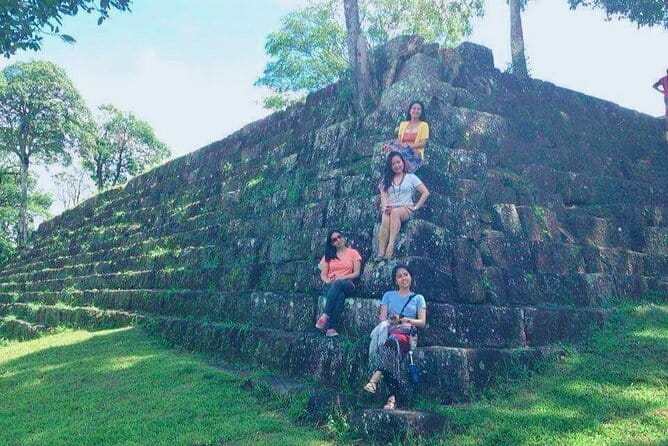
Day 1 starts with Banteay Srei, often called the jewel in Angkorian art. You’ll see a Hindu temple dedicated to Lord Shiva, built in the 10th century. The description highlights that it’s cut from a pinkish stone hue, and that matters for your photos because color pops differently in morning or late light.
Time on site is about one hour, and that’s enough to see the overall layout without feeling like you’re speed-walking. A drawback to keep in mind: Banteay Srei is detailed, so if you love slow viewing, you may wish the stop were longer. The upside is a good guide can help you prioritize the most rewarding carvings so you don’t miss the best stuff.
Next is Banteay Samre, also tied to the same broad period as Angkor Wat. This one was built in the 12th century by Suryavarman II, dedicated to Lord Vishnu. The temple is described as in fairly healthy preservation, which usually means you’ll spend less time mentally reconstructing what used to be there and more time enjoying what still is.
Then you move to Preah Khan, called the Sacred Sword. This is one of Angkor’s larger complexes, described as a maze of vaulted corridors with fine carvings and stonework covered in lichen. It’s an atmospheric change from the more straightforward layouts. The stop is around one hour, which can feel just right for exploration without exhausting you.
Preah Khan to Ta Som: Maze Corridors, a Snake Temple, and Quick Hits
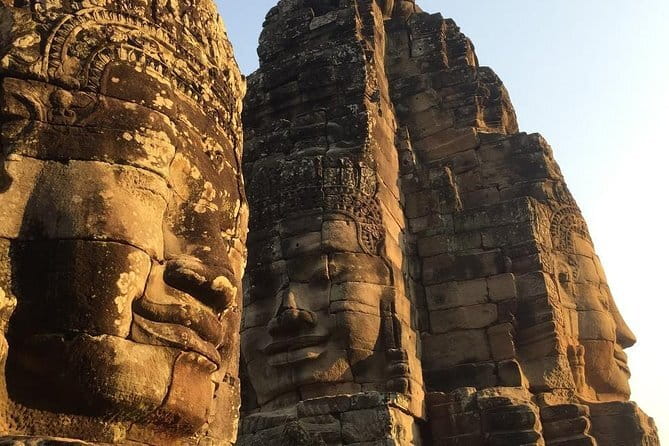
From Preah Khan, you continue to Neak Pean, a Buddhist temple built by Jayavarman VII. Neak Pean’s defining feature is its location on an artificial island in the middle of a manmade lake, Jayatataka (also referred to as north Baray). Even if you’re not a big map person, this kind of setting makes the temple feel like a pause in the day.
You’ll spend about 40 minutes here. That’s enough for one calm circuit and a few photos, but it won’t give you time for long detours. If you’re the type who hates missing anything, a strong guide can help you pick the “must-see” angles fast.
Ta Som follows next. It’s the satellite temple of Preah Khan, also attributed to Jayavarman VII in the late 12th century. The temple is described as very small, and the highlight is the big head at the eastern gate. The stop is about 30 minutes, which makes Ta Som a good breather between larger ruins.
A possible consideration for Ta Som and the smaller stops: if you’re the kind of traveler who likes long, quiet photography sessions, you may feel slightly time-boxed. The trade is that the overall itinerary keeps momentum and still gives you enough time to enjoy each site.
Eastern Mebon and Pre Rup: Pyramid-Mountains for Big Views
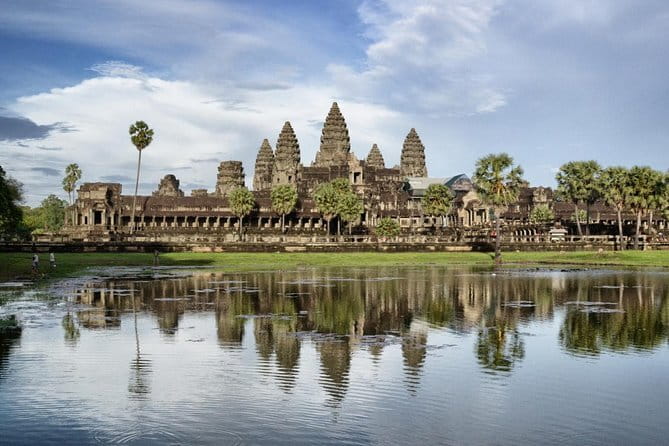
Later on Day 1 you reach Eastern Mebon, a Hindu temple erected by Rajendravarman II (r 944 to 968). The description says it would have been on an islet in the center of Eastern Baray, but it’s now much closer to dry land. That shift is part of the story of Angkor itself, where water management and architecture evolved over centuries.
The stop is about 50 minutes, which gives you time to look at how the structure sits in its current environment, not just as an ancient model.
Then it’s Pre Rup, built by Rajendravarman II in the 10th century. This is a pyramid-shaped temple-mountain, with three tiers and a carved uppermost level. The description notes that it sits about one kilometer south of Eastern Mebon, so you’ll feel like you’re moving through a connected area rather than hopping around randomly.
You’ll spend about 40 minutes at Pre Rup. In practical terms, this stop is great for travelers who like that “temple as landmark” feeling. If you prefer very immersive, maze-like exploration, Pre Rup is more structured. Either way, it closes Day 1 with a classic Angkor form you can recognize from a distance.
Day 2: Angkor Wat and Angkor Thom at the Center of Power
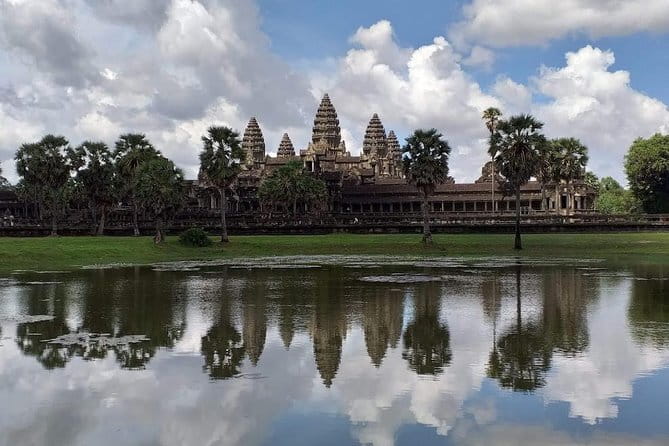
Day 2 is built around the two monuments most people come to see. It starts with Angkor Wat, built by Suryavarman II in the 12th century to honor Lord Vishnu. It’s described as the largest and most breathtaking of Angkor’s monuments, and that reputation is not just hype. Even with a tight schedule, the sheer scale is the main event.
You’ll have around two hours here. That time lets you do more than just a quick perimeter walk. A good guide also helps you avoid the common mistake of getting stuck at the most obvious angles while missing the spots that make the architecture feel three-dimensional.
Next is Phnom Bakheng. Here the stop time is listed as one minute, which reads like a very brief photo or viewing stop. Even if it’s short, it’s still worth noting why it’s included. Phnom Bakheng is described as one of the first temple-mountains built in the vicinity of Angkor. The temple-mountain has five tiers and seven levels, which is exactly the kind of design concept you can appreciate even in a quick stop if someone explains what you’re looking at.
Then you move to Angkor Thom, the last city of Angkor, built by Jayavarman VII. The description says that at its peak it may have supported a population of up to one million in the surrounding region. That’s a mind-bending scale statement, and it matters because it changes how you read the walls and gates. This wasn’t a small shrine circuit. It was the political heart.
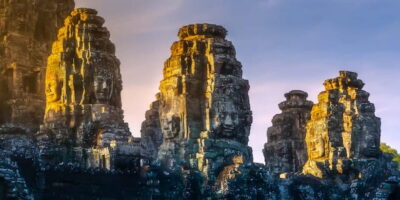
Angkor Thom is centered on the Bayon, and you’ll have about two hours. The guide’s role is especially useful here, because the Bayon is dense with faces and details. Without context, you can end up staring at stone without fully knowing what each view angle is showing.
Ta Prohm: Where the Trees Take Over the Ruins
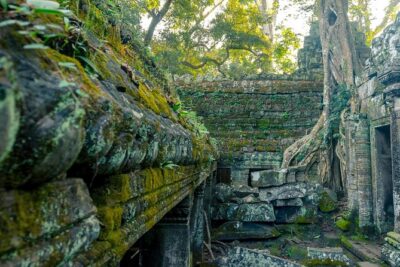
You end Day 2 at Ta Prohm, described as one of the most atmospheric ruins at Angkor and a top recommendation for visitors. It’s famous for the way the structure feels swallowed by trees, unlike many other Angkor monuments that look more intact or more neatly framed.
You’ll have about one hour here. That’s a fair amount of time to watch light change on the roots and to get at least a few strong compositions. If you love photography, this is also the moment to tell your guide what you want, like wide shots with the tree framing, or close-ups of carvings with moss and roots in the background.
Because Ta Prohm is visually dramatic, it’s also where you may realize you’ve been rushing the first day. The good part is that the guiding style described here is flexible, and your guide can help you make the most of your final stop so it feels like a payoff, not an afterthought.
Price and Value: What $102.57 Covers, and What It Does Not
At $102.57 per person for a roughly two-day tour, you’re paying for a private guiding experience, plus an air-conditioned vehicle and pickup offered. That price can be reasonable in Angkor terms, but it really comes down to value for you.
Here’s the value math that matters:
- You are paying for time-saving guidance. Angkor is huge. A guide who understands how to move you through the complex efficiently helps you spend time looking, not figuring out.
- You are paying for context. When you understand Hindu Shiva and Vishnu dedication across different temples, the experience turns from pretty to meaningful.
- You are paying for photo help. If you care about getting good pictures, the guidance can reduce wasted time hunting angles.
Now the part to budget for: admission tickets are not included at the listed stops. Also, GST is not included. So when you estimate your total cost, add the ticket portion on top of the tour price. If you already have tickets, you’re set. If you don’t, you’ll want cash or card ready at the sites.
Also note that confirmation is received at booking time, and the tour is marked as a private activity, meaning only your group participates. If your group is small, private guiding can feel like a better deal than trying to squeeze into crowded day tours.
Who This Tour Is Best For (And Who Might Want Another Option)
This is a strong fit if you:
- want a short, efficient two-day plan rather than spread-out sightseeing
- care about temple explanations across Hindu and Buddhist symbolism
- appreciate smartphone or camera help and want better photo angles
- prefer private guiding where your pace matters
It may be less perfect if you:
- want a fully self-guided route with zero external input
- dislike any walking on uneven ground, since the tour is geared for travelers with moderate physical fitness
- are on a strict budget that cannot stretch for temple admission tickets on top of the listed price
Should You Book This Two-Day Angkor Temples Tour?
Yes, if you want Angkor that feels guided, not chaotic. The standout reasons are simple. You get strong temple context, flexible attention to your interests, and real photo help from guides like Borey Hang, Mr Kim, and Mr Bunleat. Plus, the air-conditioned vehicle and pickup offered help you stay functional between stops.
Book it especially if you have limited time in Siem Reap and you still want both the headline monuments and the quieter temple details. Just do one thing first: plan your admission ticket budget, because that’s the main extra cost you’ll need to account for.
FAQ
How long is the Two Day Angkor Temples tour?
It runs for 2 days, approximately.
Is pickup included?
Pickup is offered.
What does the tour include?
An air-conditioned vehicle is included.
Are Angkor temple admission tickets included?
No. Admission tickets are not included for the listed stops.
What is the total price per person?
The price is $102.57 per person. GST is not included.
Where is the meeting point?
The ticket redemption point is Angkor Enterprise, Apsara Rd, Krong Siem Reap, Cambodia.
What kind of fitness level do I need?
The tour is described as suitable for travelers with a moderate physical fitness level.
What if the weather is bad?
The experience requires good weather. If it’s canceled due to poor weather, you will be offered a different date or a full refund.
More 2-Day Experiences in Siem Reap
- Siem Reap: Angkor Wat 2-Day Tour with Sunrise and Sunset★ 4.9 · 4,429 reviews
- Angkor 2-Day Sunset & Sunrise Small-Group Tour★ 5.0 · 2,567 reviews
- 2 Days Exclusive Temple Highlights with Sunset and Sunrise Tour★ 5.0 · 1,157 reviews
- Siem Reap: Angkor Sunrise 1- or 2-Day Guided Temples Tour★ 4.9 · 1,132 reviews
More Tours in Siem Reap
- Angkor Wat Sunrise or Sunset Tour with Guide from Siem Reap★ 5.0 · 12,109 reviews
- Siem Reap: Angkor Wat: Small-Group Sunrise or Sunset Tour★ 5.0 · 9,444 reviews
- From Siem Reap: Kampong Phluk Floating Village Tour by Boat★ 4.9 · 6,979 reviews
- Siem Reap: Angkor Wat 2-Day Tour with Sunrise and Sunset★ 4.9 · 4,429 reviews
More Tour Reviews in Siem Reap
- Angkor Wat Sunrise or Sunset Tour with Guide from Siem Reap★ 5.0 · 12,109 reviews
- Siem Reap: Angkor Wat: Small-Group Sunrise or Sunset Tour★ 5.0 · 9,444 reviews
- From Siem Reap: Kampong Phluk Floating Village Tour by Boat★ 4.9 · 6,979 reviews
- Siem Reap: Angkor Wat 2-Day Tour with Sunrise and Sunset★ 4.9 · 4,429 reviews
Newly written up around Siem Reap
- Waterfall & River of 1000 Siva Linga- Kulen Mountain Private Tour
★ 5.0 · 3 reviews - Private Transfer from Siem Reap to Sihanoukville
★ 4.5 · 3 reviews - Private Tour to Koh Ker and Beng Mealea
★ 5.0 · 3 reviews - Private Transfer: Siem Reap Angkor Internation Airport to Hotel
★ 5.0 · 3 reviews - Kulen National Park Ticket -Waterfall & 1000 Lingas
★ 5.0 · 3 reviews - Kulen Waterfall & Kbal Spean Tour
★ 5.0 · 3 reviews
2-Day Experiences, side by side.
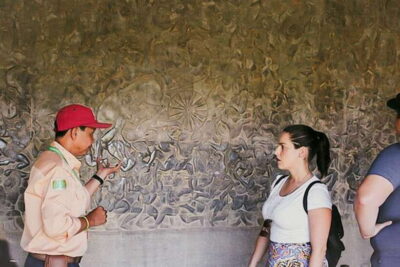 ★ 4.9Angkor Wat 2-Day Tour with Sunrise and SunsetFrom $344,429 reviews
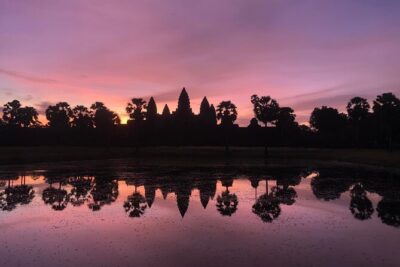 ★ 5.0Angkor 2-Day Sunset & Sunrise Small-Group TourFrom $492,567 reviews
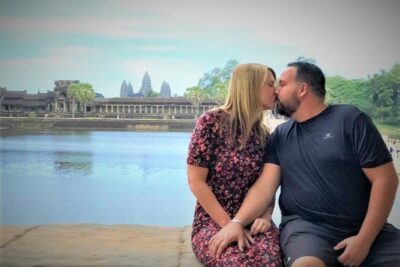 ★ 5.02 Days Exclusive Temple Highlights with Sunset and Sunrise TourFrom $491,157 reviews
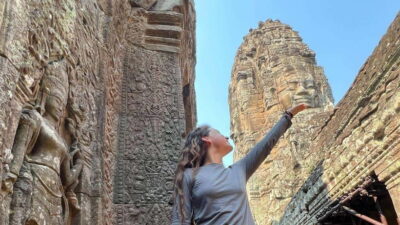 ★ 4.9Angkor Sunrise 1- or 2-Day Guided Temples TourFrom $191,132 reviews
 ★ 5.02 Days Guided Historical Tour in AngkorFrom $35855 reviews
 ★ 5.02-Day Angkor Wat With Small, Big Circuit and Banteay Srei TourFrom $158545 reviews
 ★ 4.92-Day Temple Highlights Sunrise and Sunset OptionFrom $46445 reviews
 ★ 4.9Angkor Wat 2-Day complex Sun rise & Sun set with Guided TourFrom $30439 reviews
Also appears in