
REVIEW · ANGKOR
Ultimate Angkor Wat Sunrise, Bayon, Ta Prohm Temple
4:20 am is early, and worth it. This Ultimate Angkor Wat, Bayon, and Ta Prohm combo is built around Angkor Wat sunrise timing, then keeps the momentum rolling through Angkor Thom and Ta Prohm. I also like that you get a professional English tour guide and air-conditioned transport, so the day feels organized instead of chaotic.
The only real catch is budgeting: the tour price does not include the Angkor Pass, so you’ll still need to pay an extra $37 per person for entry.
In This Review
- Key highlights you will feel the moment you arrive
- Why an ultra-early Angkor Wat sunrise schedule is the real draw
- Price and logistics: what you pay, what you should budget for
- Hotel pickup, A/C comfort, and why the guide quality matters
- Stop 1: Angkor Wat sunrise, then Angkor Thom before the heat hits
- Quick practical tip for the sunrise window
- Stop 2: Srah Srang and breakfast near the Royal Bath
- Stop 3: Bayon Temple and the 200 plus smiling faces of Jayavarman VII
- Stop 4: Ta Prohm, the Tomb Raider Temple, and the tree root effect
- Pacing and comfort during a 7 hour Angkor morning
- Who this tour is for (and who might want a different plan)
- Should you book Ultimate Angkor Wat Sunrise, Bayon, and Ta Prohm?
- FAQ
- What time does the tour start?
- How long is the tour?
- Is hotel pickup and drop-off included?
- Is the Angkor Pass included in the price?
- Are meals included?
- What is the cancellation policy?
Key highlights you will feel the moment you arrive
- A true sunrise start at 4:20 am so Angkor Wat is still calm and magical at first light
- Bayon Temple’s 54 towers and 200 plus smiling faces tied to King Jayavarman VII
- Ta Prohm’s tree roots and Tomb Raider Temple vibe with nature wrapped around stone
- Air-conditioned vehicle plus hotel pickup and drop-off to cut down on early-morning fatigue
- Mobile ticket included, which helps you move faster once you are at the checkpoints
- Angkor Pass not included, so your final cost is tour price plus admission
Why an ultra-early Angkor Wat sunrise schedule is the real draw
Angkor is busy. Sunrise helps. This tour is timed so you start around 4:20 am, heading out early enough to see Angkor Wat in that soft, first-light glow rather than the harsher midday sun. Even if you have visited temples before, the feeling of being there before most day tours is different. You get breathing room to look closely at carvings and architecture, and you can actually take photos without fighting the crowd flow.
And because this tour is not just a quick photo stop, it also protects your energy. It combines the headline sights in one morning run, instead of making you piece together separate tickets, separate guides, and separate transport. That is a big deal when you are in Siem Reap and time is tight.
One more thing I appreciate: the itinerary is paced in chunks. You are not forced to do every temple at a sprint. The day is structured with a few key stops, each with its own focus, then you head back to your hotel.
Price and logistics: what you pay, what you should budget for
At $13 per person, this looks like a bargain for a guided temple circuit. But the math matters here. The tour does not include admission, and the Angkor Pass is listed as $37 per person. So your realistic total for entrances is closer to $50 per person, plus any food and drinks you buy.
Is it still good value? Yes, mainly because what you are paying for includes more than just a driver. You get hotel pickup and drop-off, a professional English-speaking guide, and an air-conditioned vehicle. In a place where waiting around can burn time, having transport and interpretation handled is worth real money.
Here is how I would plan your budget:
- Tour cost: $13 per person
- Angkor Pass: $37 per person
- Breakfast and any drinks: pay at your own account
- Travel insurance and personal expenses: not included
Also, the tour includes a mobile ticket, which is convenient on the day. And it is described as private, meaning only your group participates, not a mixed crowd with strangers joining midstream.
Other ways to be at the temples before the light comes up
- Angkor Wat Sunrise or Sunset Tour with Guide from Siem Reap★ 5.0 · 12,109 reviews
- Siem Reap: Angkor Wat: Small-Group Sunrise or Sunset Tour★ 5.0 · 9,444 reviews
- Siem Reap: Angkor Wat 2-Day Tour with Sunrise and Sunset★ 4.9 · 4,429 reviews
- Angkor Wat Sunrise tour with Small – Group and Guide tours★ 5.0 · 3,655 reviews
Hotel pickup, A/C comfort, and why the guide quality matters
This is one of those tours where the guide can make or break your experience. The most positive feedback tied to the English guide stands out for a reason. At Angkor, details are everything. A good guide helps you orient quickly, explain what you are seeing, and connect the temples to the right rulers and time periods.
You also avoid the usual early chaos. Pickup and drop-off are included, and the transport is air-conditioned. For a morning that starts before sunrise, that comfort matters more than you might think. You are up early, your feet are ready to walk, and then you get to ride in AC instead of baking in a hot tuk-tuk for the long stretches.
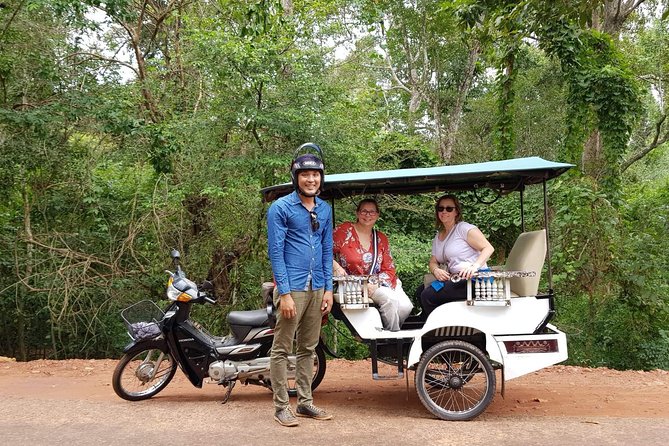
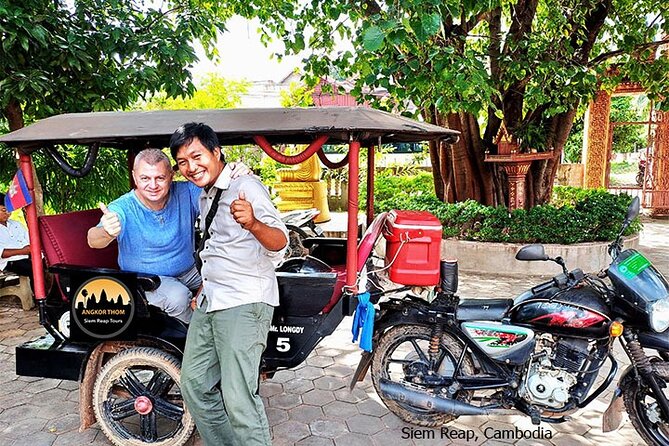
There is also a practical service point. In one account, the tour operator met the group while waiting for the guide and handled the timing issue so the day could start right around the pickup window. The tuk-tuk driver, identified as driver D, was already in place when things moved forward. That is the kind of behind-the-scenes coordination you want when the schedule is tight.
Stop 1: Angkor Wat sunrise, then Angkor Thom before the heat hits

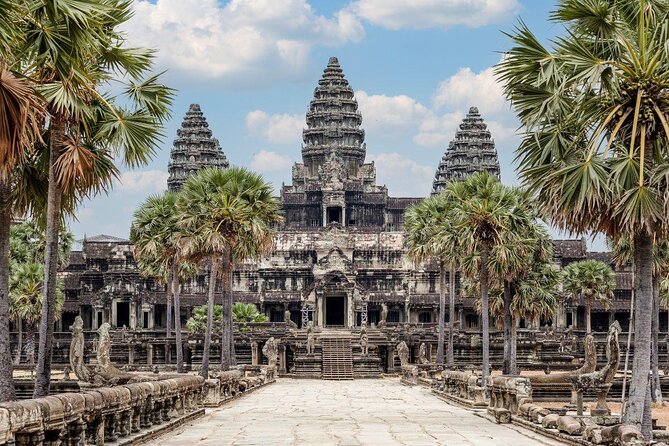
The morning begins with the sunrise plan. Your adventure starts at about 4:20 am, centered on the breathtaking sunrise at Angkor Wat. This is described as the world’s largest religious monument, built in the early 12th century. That early construction date is part of the appeal. Even if you know the name, you are still looking at a site that has been standing through centuries of change.
After the sunrise viewing, the route connects you to Angkor Thom, one of the biggest temple areas in the region. The itinerary lists this segment as the start of the adventure, so you should expect that you are moving through major Angkor zones early, rather than staying in one small bubble.
What I like about this “sunrise plus major temple zone” pairing:
- You get a headline moment first, before fatigue sets in
- You are not left guessing how the temples connect geographically
- The pacing prevents midday time loss
What to consider: sunrise mornings mean you are committed. Bring the right mindset for early wake-up and a lot of walking. If you are the type who hates mornings, you may find the start time rough, even if the payoff is excellent.
Quick practical tip for the sunrise window
Wear shoes you can walk in for hours. Temple paths are uneven, and you will be moving quickly from viewing areas to shaded spots. Even if the air feels cool at first, it can warm up fast.
Stop 2: Srah Srang and breakfast near the Royal Bath
After the early temple work, you get a calmer, more local-feeling stop: Srah Srang, described as the Royal Bath. The itinerary sets aside about 1 hour here and specifically includes time for breakfast.
Breakfast is at your own account, at a local restaurant near Srah Srang. That is actually a good balance. You get a scheduled break, not just “free time somewhere.” And because the focus here is Srah Srang, you are not eating in the middle of a temple corridor. You get a more scenic reset.
Why this pause helps:
- You can refuel before Bayon
- You get a change of pace after sunrise and morning stepping
- The Royal Bath setting gives you a breather while still staying in the Angkor National Park experience
What to watch for: since breakfast is not included, set aside cash or a payment method you can use at that stop. Plan to keep it light if you know you will be walking again right after.
More circuits through the Angkor complex, compared
Stop 3: Bayon Temple and the 200 plus smiling faces of Jayavarman VII
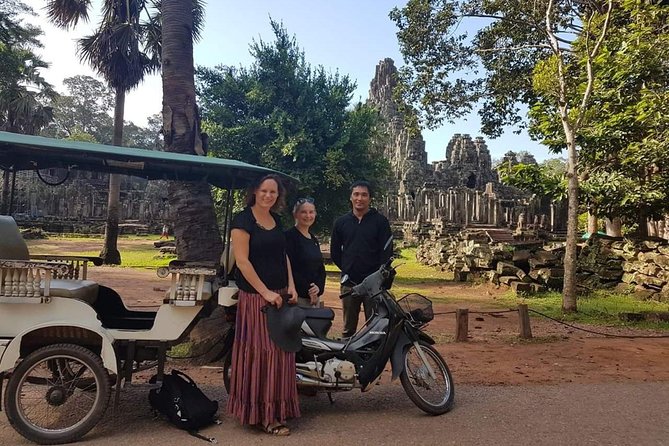
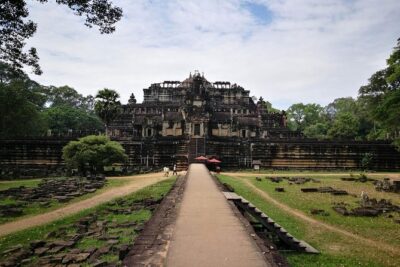
Next comes Bayon Temple, and it is a showpiece. The tour description highlights 54 towers and over 200 smiling stone faces representing King Jayavarman VII. This is late 12th century, Buddhist, and the faces are the headline you cannot ignore once you are there.
Here is why Bayon works so well in a guided morning format:
- The architecture is repetitive in a way that rewards close viewing
- The guide can point out how the faces are arranged across towers
- You can connect what you see to the specific king and time period mentioned in the tour
If you like temples that feel human in mood, Bayon is the one. The faces give the site a personality, and the towers give it structure. You are not just seeing carvings. You are seeing a whole visual system.
Time on site is about 1 hour. That is enough to take photos, but also to look without feeling rushed the whole time. If you try to do Bayon completely on your own, you can get lost in the stone maze and miss the bigger picture. With a guide, you get your bearings fast and you can focus on the details that matter.
Practical consideration: cameras and phone batteries matter. Early starts sometimes mean low battery life from powering apps and using flash. Bring a charger plan if you are doing lots of sunrise and temple photos.
Stop 4: Ta Prohm, the Tomb Raider Temple, and the tree root effect
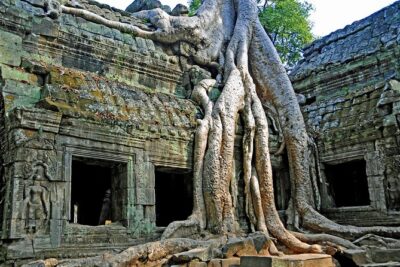
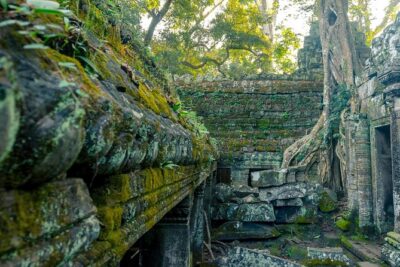
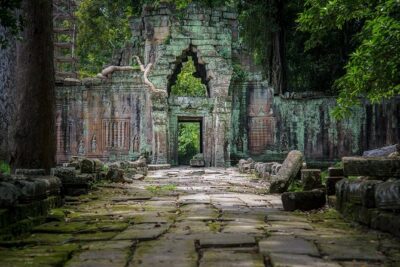
The last temple stop is Ta Prohm, often called the Jungle temple and famously associated with the Tomb Raider Temple look. The itinerary description emphasizes that it is overgrown by massive tree roots, creating a unique fusion of nature and architecture.
This stop is different from Bayon and Angkor Wat in mood. Bayon feels sculptural and symbolic. Ta Prohm feels alive in a way that is hard to replicate elsewhere. The roots grab your attention immediately, and your eyes keep moving between stone and plant growth.
You get about 1 hour here. That is a sweet spot for Ta Prohm because:
- You can walk the key areas and still stop to look upward
- You can feel the scale without burning the entire day
- You can take in the story of how nature and construction coexist on the same canvas
What you should consider: the pathways can feel more natural and less controlled. You will likely be stepping around roots, uneven stone, and narrow passages. Good walking shoes reduce stress. If you are tired, use your guide as a timing tool. Follow their pace so you do not get stuck in a dead-end photo loop.
Pacing and comfort during a 7 hour Angkor morning
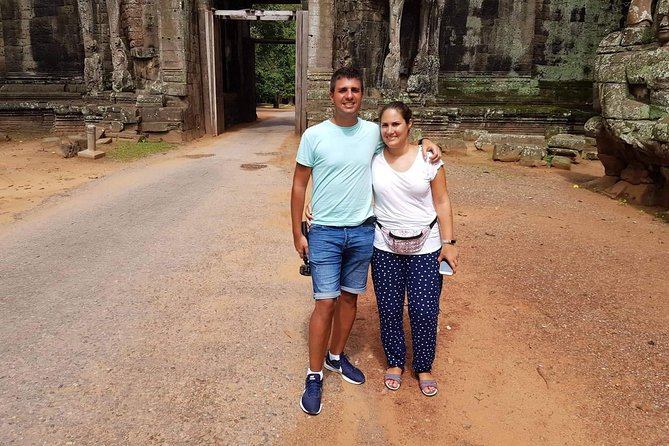
The overall duration is listed as about 7 hours. On paper, that can sound like a long day. In practice, it is short enough to avoid the worst heat while still covering the big three experiences: sunrise at Angkor Wat, Bayon with its face towers, and Ta Prohm with its root-laced ruins.
A few details help this feel smoother:
- Air-conditioned vehicle between stops
- Professional English tour guide to keep you oriented
- Hotel pickup and drop-off so you do not waste time figuring transport
- Private tour setup, meaning your group stays together as you move
Also, since the tour uses a mobile ticket, you should expect less friction at checkpoints compared with handling paper tickets.
One thing I would plan around mentally: this kind of day compresses a lot of awe into a few hours. You might not remember every square inch. Instead, you will remember the big moments, the facial towers, the sunrise glow, and the way Ta Prohm looks when roots are literally grabbing the structure.
Who this tour is for (and who might want a different plan)
This tour fits best if you want a “greatest hits” Angkor morning with guided help and minimal logistics. It is also a solid choice if:
- You care about sunrise timing and want it handled for you
- You prefer an English-speaking guide to make sense of the temples
- You want A/C transport during a long stretch of walking time
- You want a structured route instead of building your own day
You might choose a different option if:
- You dislike very early wake-ups
- You want long, slow temple roaming with lots of unscheduled free time
- You are trying to do Angkor on the cheapest possible budget and do not value guided interpretation
Because the admission cost is separate, this is also ideal if you are already planning to buy the Angkor Pass anyway. If you are on the fence about which temples to see, you should compare this against other combinations to make sure your $37 per person admission matches your must-see list.
Should you book Ultimate Angkor Wat Sunrise, Bayon, and Ta Prohm?
I would book this if your priority is an efficient, guided Angkor morning with the sunrise moment included. The combination makes sense: Angkor Wat first at first light, Bayon for the face towers, Ta Prohm for the root-choked jungle look. Add hotel pickup, an air-conditioned vehicle, and an English-speaking guide, and you get a day that is more about seeing and understanding than managing logistics.
If you do book, do two things to make it smoother:
- Budget for the Angkor Pass ($37 per person) plus your own breakfast
- Prepare for the early start, dress for walking, and keep your phone charged for sunrise and detailed temple photos
One last thought: the strongest signal here is guide quality and how smoothly the day runs once you are picked up. When temples are this big, that matters.
FAQ
What time does the tour start?
The tour starts at about 4:20 am for sunrise at Angkor Wat.
How long is the tour?
It is approximately 7 hours.
Is hotel pickup and drop-off included?
Yes. Hotel pickup and drop-off are included.
Is the Angkor Pass included in the price?
No. The Angkor Pass is not included, and it is listed as $37 per person.
Are meals included?
Foods and drinks are not included. Breakfast near Srah Srang is described as being at your own account.
What is the cancellation policy?
This experience is non-refundable and cannot be changed for any reason. If you cancel or request an amendment, the amount you paid will not be refunded.
More Tour Reviews in Siem Reap
- Angkor Wat Sunrise or Sunset Tour with Guide from Siem Reap★ 5.0 · 12,109 reviews
- Siem Reap: Angkor Wat: Small-Group Sunrise or Sunset Tour★ 5.0 · 9,444 reviews
- From Siem Reap: Kampong Phluk Floating Village Tour by Boat★ 4.9 · 6,979 reviews
- Siem Reap: Angkor Wat 2-Day Tour with Sunrise and Sunset★ 4.9 · 4,429 reviews
Keep Going Round the Circuit
- Angkor Wat Sunrise & 3 Main Temples with Breakfast – Small Group★ 5.0 · 2,857 reviews
- Siem Reap Tour: Angkor Wat Sunrise, Bayon, Ta Prohm, Banteay Srei★ 5.0 · 931 reviews
- 2-Day Angkor Wat With Small, Big Circuit and Banteay Srei Tour★ 5.0 · 545 reviews
- Full-Day ‘Big Tour’ with Sunset at Phnom Bakheng★ 5.0 · 341 reviews
Sunrise at Angkor, Three More Ways
- Angkor Wat Sunrise or Sunset Tour with Guide from Siem Reap★ 5.0 · 12,109 reviews
- Siem Reap: Angkor Wat: Small-Group Sunrise or Sunset Tour★ 5.0 · 9,444 reviews
- Siem Reap: Angkor Wat 2-Day Tour with Sunrise and Sunset★ 4.9 · 4,429 reviews
- Angkor Wat Sunrise tour with Small – Group and Guide tours★ 5.0 · 3,655 reviews
Newly written up around Siem Reap
- Waterfall & River of 1000 Siva Linga- Kulen Mountain Private Tour
★ 5.0 · 3 reviews - Private Transfer from Siem Reap to Sihanoukville
★ 4.5 · 3 reviews - Private Tour to Koh Ker and Beng Mealea
★ 5.0 · 3 reviews - Private Transfer: Siem Reap Angkor Internation Airport to Hotel
★ 5.0 · 3 reviews - Kulen National Park Ticket -Waterfall & 1000 Lingas
★ 5.0 · 3 reviews - Kulen Waterfall & Kbal Spean Tour
★ 5.0 · 3 reviews
Angkor Wat Sunrise Tours, side by side.
 ★ 5.0Angkor Wat Sunrise or Sunset Tour with Guide from Siem ReapFrom $1812,109 reviews
 ★ 5.0Angkor Wat: Small-Group Sunrise or Sunset TourFrom $159,444 reviews
 ★ 4.9Angkor Wat 2-Day Tour with Sunrise and SunsetFrom $344,429 reviews
 ★ 5.0Angkor Wat Sunrise tour with Small – Group and Guide toursFrom $143,655 reviews
 ★ 5.0Angkor Wat Highlights and Sunrise Guided Tour from Siem ReapFrom $233,213 reviews
 ★ 5.0Full-Day Angkor Wat Sunrise Private Tour with Guide from Siem ReapFrom $602,920 reviews
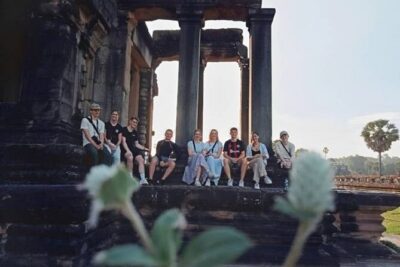 ★ 5.0Angkor Wat Sunrise & 3 Main Temples with Breakfast – Small GroupFrom $152,857 reviews
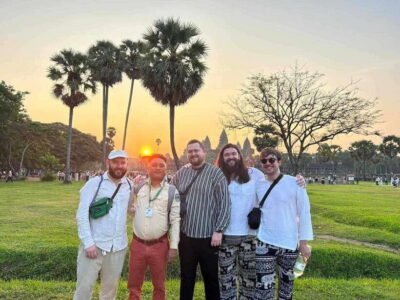 ★ 4.9Angkor Wat Sunrise and Full-Day Sightseeing TourFrom $142,828 reviews
Also appears in