
REVIEW · ANGKOR
2-Day Angkor Wat, Kulen Mountain, Beng Mealea and Tonle Sap
Sunrise over Angkor Wat steals the morning, and this two day loop is packed with real wow factors. I love seeing Angkor Wat before the big crowd surge, plus the way Ta Prohm feels like a jungle temple you can walk through. It also strings together quieter human moments, like breakfast at a local family restaurant and tasting palm cake near the countryside.
The only real drawback is logistics stress: you start very early on Day 1, and Day 2 mixes climbing, rainforest paths, and boat time, so you will want good shoes and a low tolerance for heat.
In This Review
- Key highlights worth waking up for
- The 4:30 a.m. sunrise setup at Angkor Wat
- Angkor Wat, then breakfast plus Preah Dak palm cake
- Ta Prohm’s jungle roots: the temple that feels alive
- Angkor Thom South Gate: Bayon faces and the Elephant terrace
- A quick reality check: Day 1 is long, and it is not gentle
- Phnom Kulen on Day 2: rice paddies, climb, and instant scenery
- Waterfall picnic, grilled chicken, and a chance to swim
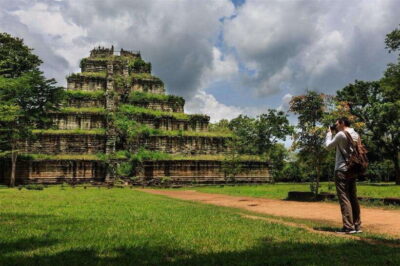
- Beng Mealea: 12th century stone swallowed by 300 years of growth
- Kampong Phluk on Tonle Sap: floating village life by boat
- Price and logistics: what you pay, and what passes add up to
- Small group comfort and A/C transport, plus what that means for your day
- What to bring so you suffer less
- Who this two day loop is perfect for
- Should you book this 2 Day Angkor Wat, Kulen, Beng Mealea, and Tonle Sap tour?
- FAQ
- What time do you pick me up for Angkor Wat sunrise?
- How long do we spend walking Angkor Wat?
- Is breakfast included?
- Is lunch included on Day 2?
- What passes are not included in the tour price?
- How much is the Angkor pass?
- How much is the Kulen mountain pass?
- How much is the Beng Mealea pass?
- How much is the Tonle Sap Lake pass with boat ride?
- Is the guide English speaking, and is transportation included?
Key highlights worth waking up for
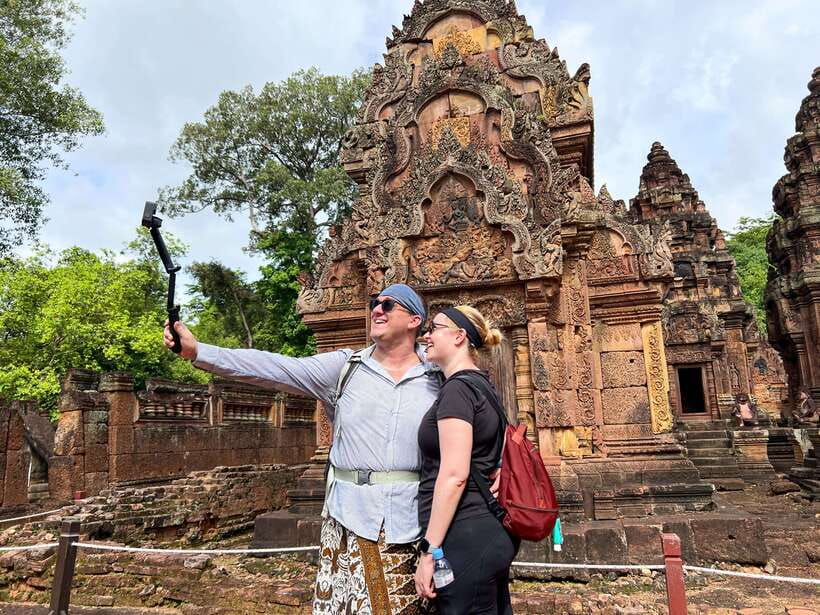
- Angkor Wat at sunrise, with time to walk the temple and take photos before the busiest rush
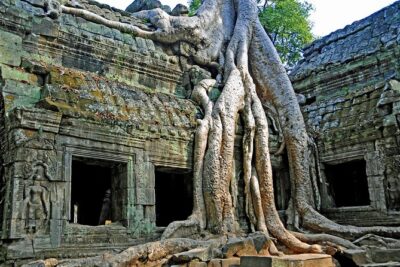
- Ta Prohm in its original jungle state, with huge roots and stones partly reclaimed by trees
- Angkor Thom landmarks, including Bayon and Baphoun, plus the Elephant and Leper King terraces
- Phnom Kulen, waterfalls, and the River of Thousand Lingas (from 802 AD), plus a reclining Buddha sculpture
- Kampong Phluk on Tonle Sap Lake by boat, gliding through a mangrove area and floating homes on stilts
The 4:30 a.m. sunrise setup at Angkor Wat
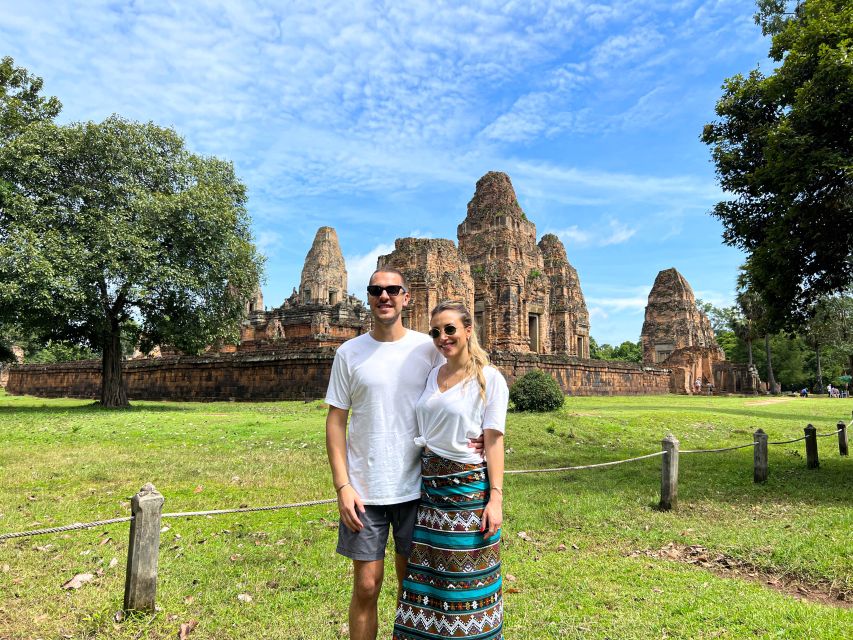
Angkor Wat looks dramatic any time of day, but the early start is the difference between seeing a temple and being swallowed by it. You get picked up from your hotel lobby before sunrise, typically between 4:30 a.m. and 5:00 a.m. Then you head straight to the temple grounds and watch the sky change over one of the world’s most important cultural sites.
What I like about this schedule is simple: it gives you time to move at a human pace. Your group spends about 1 hour and 30 minutes walking and seeing the main temple before the arrival crowds thicken. That means fewer “stop, squeeze, rush” moments, and more chances to frame the classic views.
One practical note: sunrise is chilly. Later it turns hot fast. Bring layers you can handle and a hat for the moment the sun locks in.
Angkor Wat, then breakfast plus Preah Dak palm cake
After the sunrise and your temple walk, you do something smart: you eat. You’ll enjoy breakfast at a local family restaurant in Siem Reap. This isn’t just fuel. It also breaks up the emotional intensity of Angkor Wat with something ordinary, like how people actually start a day in Cambodia.
Then you stop in Preah Dak village near the countryside community of the Angkor temples. You can experience rural life, and you taste a traditional treat, palm cake, the kind of food you’d rarely find if you only ate inside Siem Reap’s main tourist strip.
If you’re the type who likes culture beyond monuments, this part is a quiet win. If you’re the type who hates eating out early, just know that the meal is part of the rhythm of the whole tour, not an optional add on.
Further out: other Banteay Srei and Beng Mealea runs
- Full-Day Banteay Srei & 4 Temples – Grand Tours Join-in Tour★ 5.0 · 1,155 reviews
- Siem Reap Tour: Angkor Wat Sunrise, Bayon, Ta Prohm, Banteay Srei★ 5.0 · 931 reviews
- Kulen Mountain with Beng Mealea and Tonle Sap Small Group Tour★ 5.0 · 780 reviews
- Koh Ker Temple Group & Beng Mealea Full-Day Join-in Tour★ 5.0 · 710 reviews
Ta Prohm’s jungle roots: the temple that feels alive
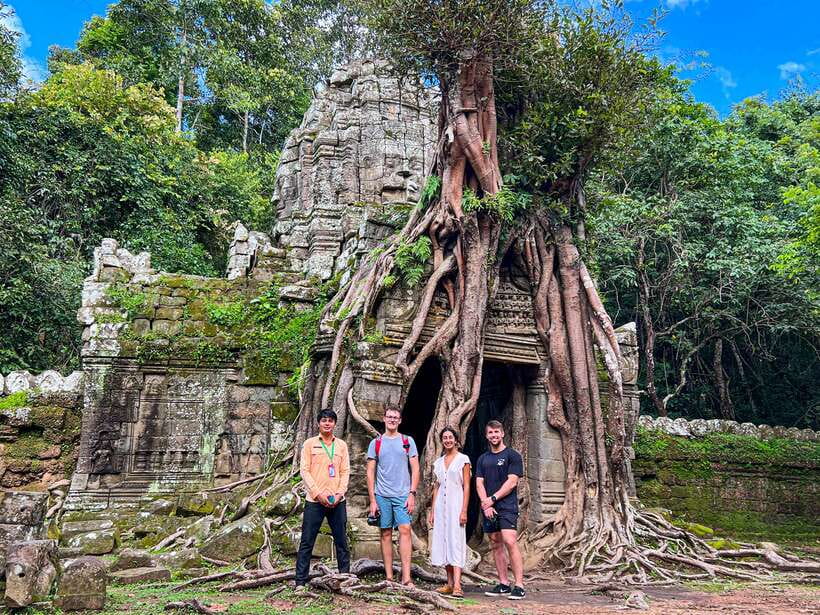
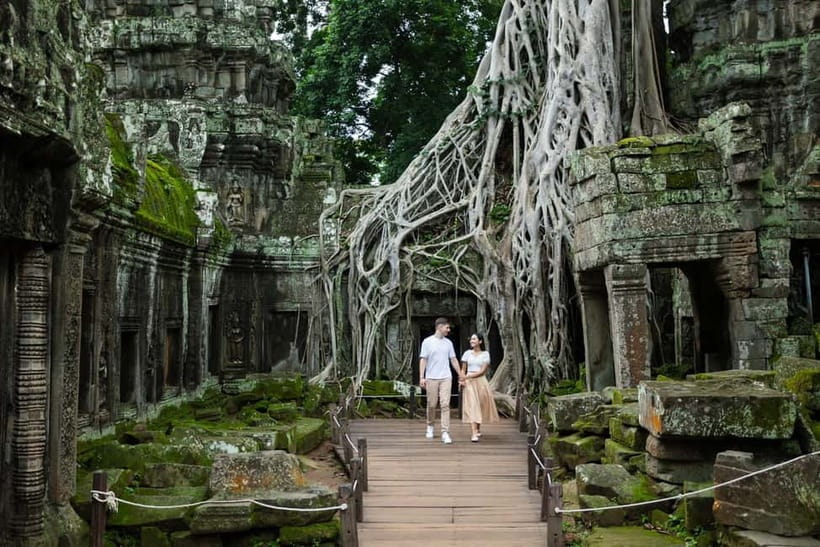
Next comes Ta Prohm, the temple people remember because it looks like the forest never stopped growing. The key detail here is that the temple has been left in a more original state, partly overgrown with huge roots and vegetation. Walking through it feels less like strolling through museum stone and more like moving through a living set.
I like Ta Prohm because it changes your brain. Angkor Wat has strong symmetry and a clear plan. Ta Prohm is messier, more organic, and it makes you look up, step back, and search for the lines hidden in roots and stone.
There’s also a practical side. This is still a temple visit, so wear closed toe shoes. Paths can be uneven and the light shifts between shaded roots and open sun. A hat and sunglasses help more than you think.
Angkor Thom South Gate: Bayon faces and the Elephant terrace
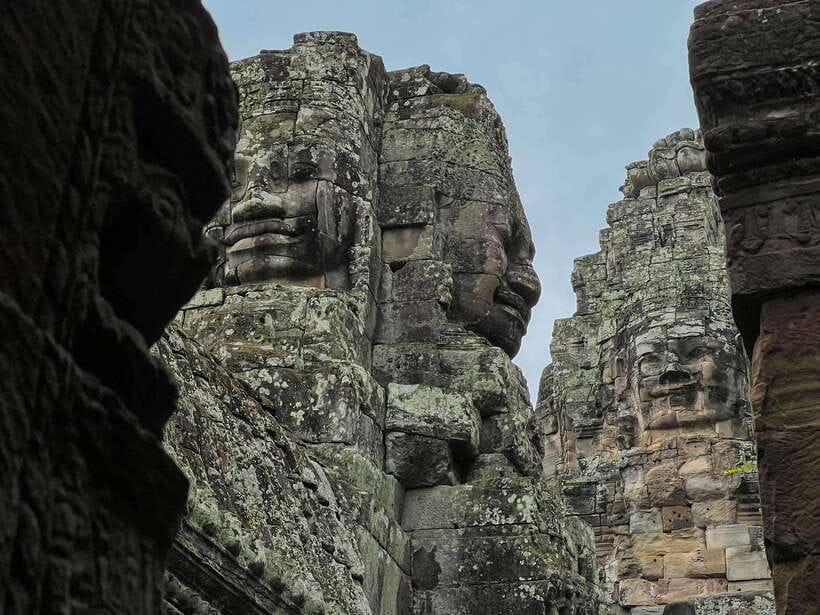
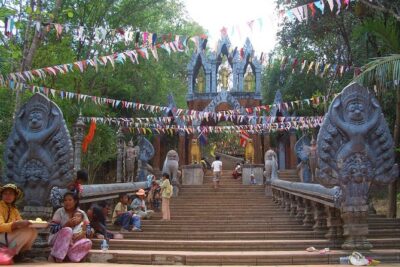
By the time you reach the South Gate of Angkor Thom, the tour shifts from one iconic building to a whole complex of royal-era power. The big names you’ll see are Bayon and Baphoun, plus a run through terraces that explain how this place worked as a stage for the Khmer kingdom.
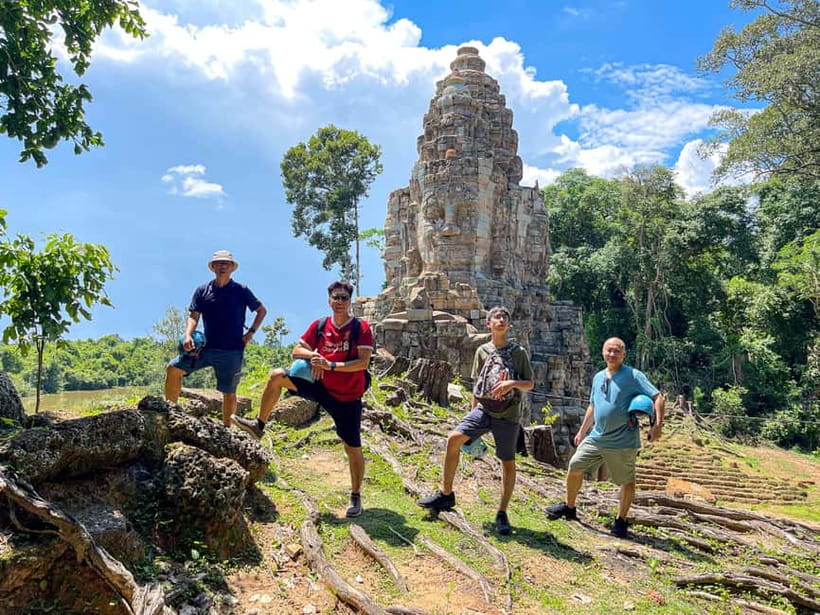
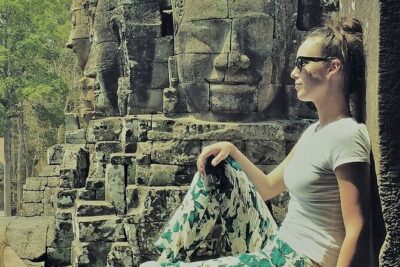
Bayon is the famous one, with its 54 towers and 216 faces of Avalokesvara. You’ll feel it most when you stop walking. Up close, the faces are not just cute and smiling. They’re a visual system meant to watch you from multiple angles as you move through space.
Then you visit:
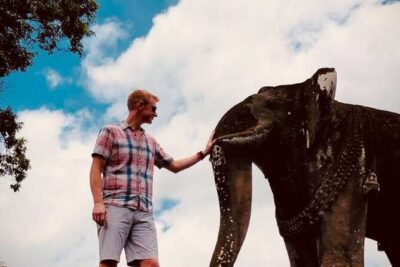
- The Terrace of the Elephant, a royal viewing platform tied to ceremony
- The Terrace of the Leper King, known as another major part of the king’s audience hall area
A good guide turns this from sightseeing into understanding. In particular, guides such as Sam and Seila have a reputation for explaining the temples and the Khmer empire clearly, in a way that makes what you’re seeing feel connected instead of random.
A quick reality check: Day 1 is long, and it is not gentle
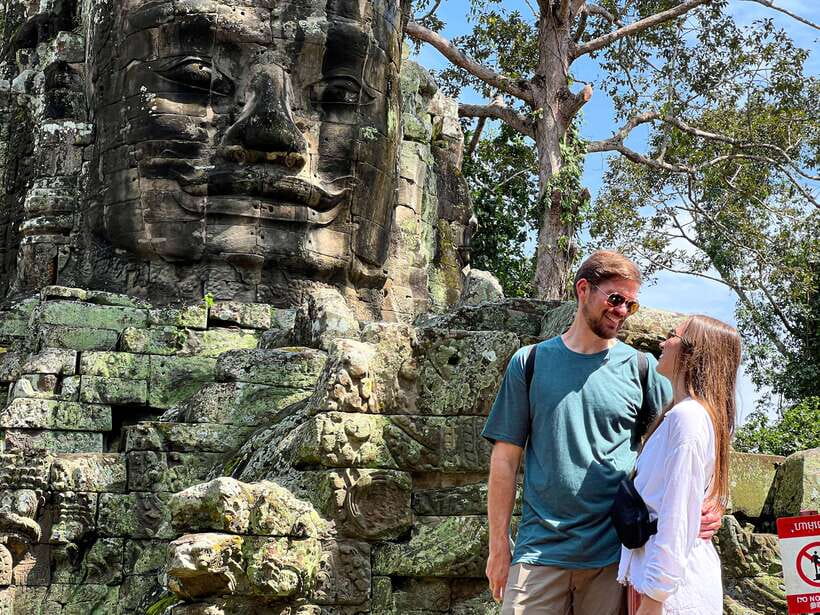
Day 1 packs sunrise, temple walking, breaks, and multiple major stops. Even at a relaxed group pace, it is a long day.
If you’re sensitive to early mornings, plan your sleep the night before. If you hate crowds, the Day 1 approach helps, because sunrise gets you in before the heaviest surge at Angkor Wat. Still, Angkor Thom and its terraces can feel busy.
And yes, heat matters. You’ll be outside for large parts of the day. The tour provides cool bottle of water and towels, which is genuinely useful once the temperature climbs and your hands are sticky from the humidity.
Phnom Kulen on Day 2: rice paddies, climb, and instant scenery
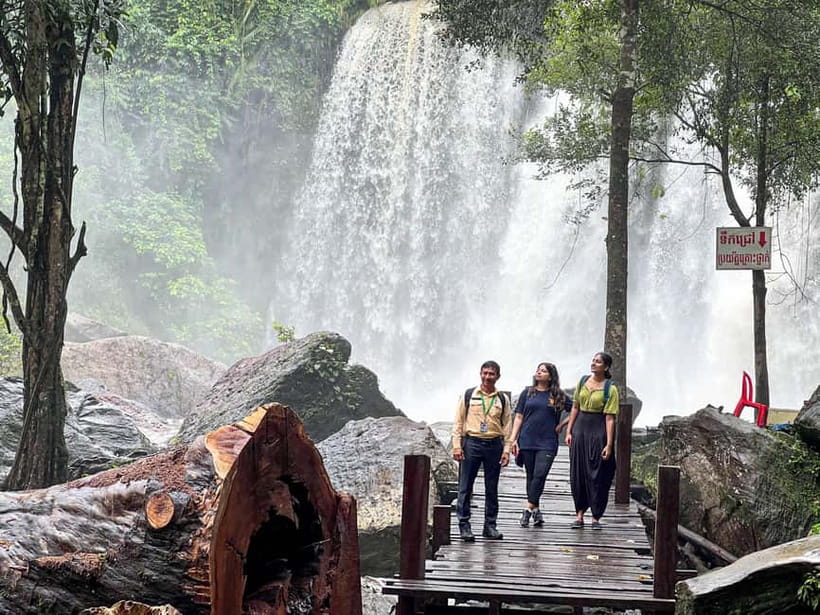
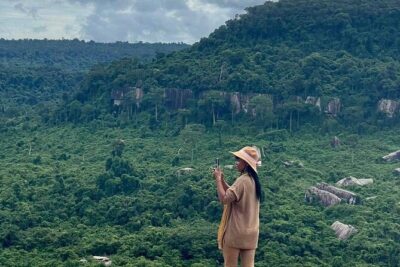
Day 2 starts with a hotel pickup in Siem Reap. Then you drive for about 1 hour through rice paddies and ascend toward Phnom Kulen, also called Kulen Mountain. It’s more than a long ride to another temple. The mountain approach changes the air and the vibe, and it sets you up for nature plus religion.
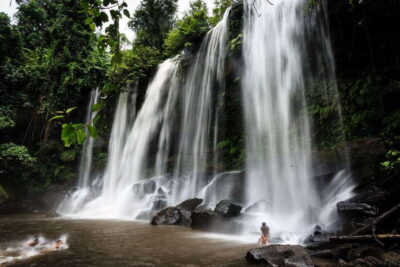
Your visit includes a local guided exploration through the park’s highlights. You’ll see a cliff viewpoint called Poeng Ta Kho, plus the natural power moments: waterfalls, a reclining Buddha sculpture, and the River of Thousand Lingas from 802 AD.
That River of Thousand Lingas detail is a standout because it ties the trip to time depth. It’s not just a pretty scene. It’s a specific cultural and historical reference from early 9th century religious practice. If you like learning names and dates for places you visit, this part is satisfying.
More trips up into the Kulen hills
Waterfall picnic, grilled chicken, and a chance to swim
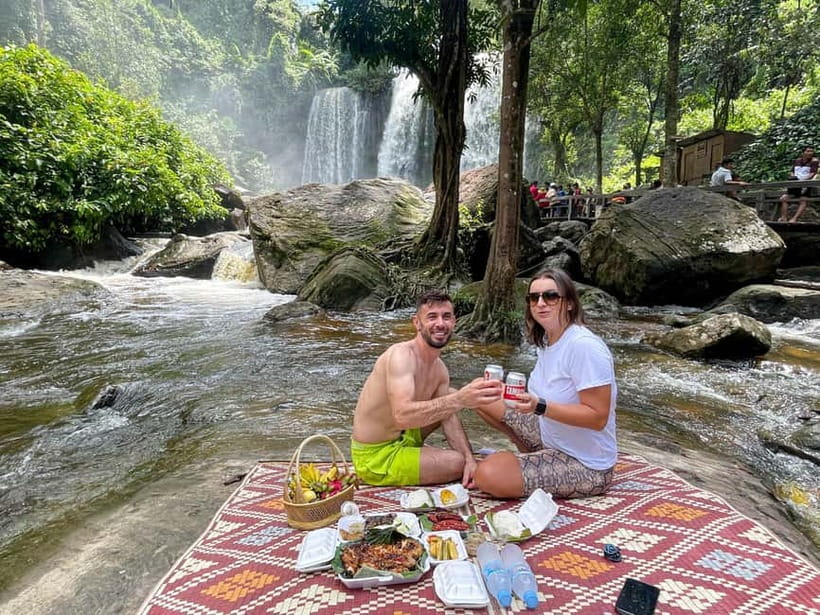
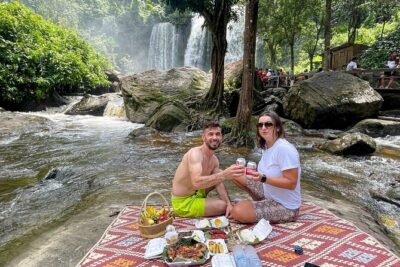
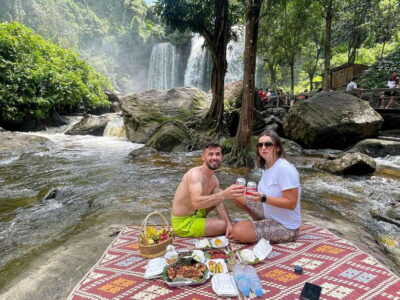
After the main Kulen highlights, you stop for a picnic lunch near the waterfall. The food is grilled chicken with seasonal fruits. This is a practical break before the rainforest portion of the day, and it gives you enough energy to keep moving.
Then you can enjoy swimming at the waterfalls, including a plunge pool option. That is one of the reasons this tour feels more balanced than a pure temple crawl. You still see cultural sites, but you also get a physical break where your body feels the refresh.
Bring a sense of reality here. It’s a jungle waterfall situation, not a controlled pool. You’ll want quick-drying items and to keep your valuables secure. The tour doesn’t mention swim gear, so plan based on what you personally need.
Beng Mealea: 12th century stone swallowed by 300 years of growth
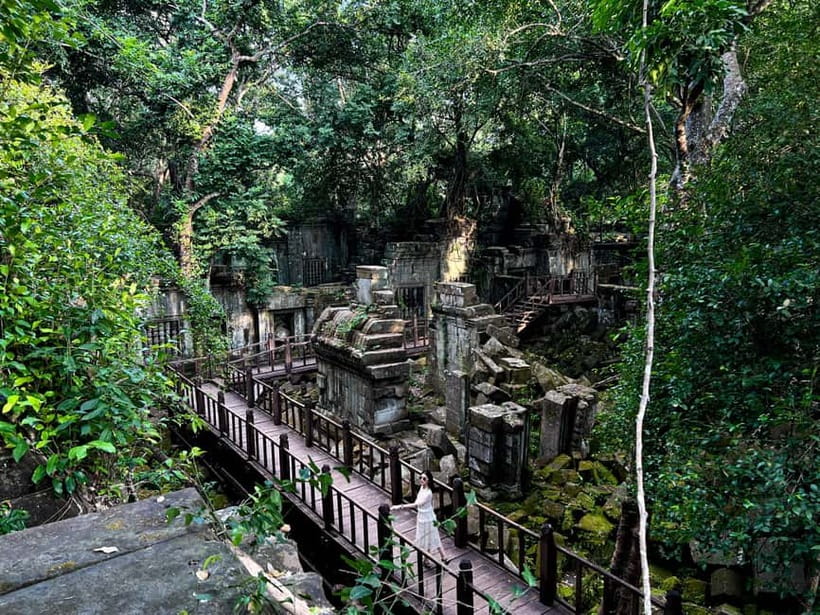
Now the trip goes deep into the rainforest with Beng Mealea, a mysterious 12th century jungle temple from the Angkor Wat period. The key detail is what you’ll see: overgrown structures with about 300 years of vegetation. Expect trees, lianas, and moss to play a major role in the visual experience.
This is where you stop comparing Beng Mealea to Angkor Wat, because it’s a different kind of wonder. Angkor Wat feels engineered. Beng Mealea feels interrupted. It’s dramatic in a rougher, more weathered way, with a lot more texture.
Practical tip: go slow. Even if the paths look walkable, roots and uneven stone can trip you. Closed-toe shoes are the call here, and insect repellent is worth packing since you’re in a forest environment.
Kampong Phluk on Tonle Sap: floating village life by boat
The last big highlight is Tonle Sap Lake and Kampong Phluk, a floating village. You take a boat ride through the flooded scenery, including a mangrove forest area that is home to wildlife like crab-eating macaques.
What I like about Kampong Phluk as a finale is that it shifts you from stone monuments to daily life. Floating homes on stilts, families dependent on fishing, colorful housing, and the rhythm of living with the waterline all show up as you glide through the waterways.
It also helps that the boat format changes how you experience the place. Instead of hiking distances on foot, you get views that are harder to get from land, plus you can take photos without constantly turning your head.
If you dislike boats, this may not be your favorite part. But it’s also the only way to see a floating village properly.
Price and logistics: what you pay, and what passes add up to
The tour price is listed at $69 per person for the two days. But the true total depends on temple and park entry fees, which are not included.
Here’s what you should plan for, based on the included and excluded costs:
Included in the $69
- Professional English speaking tour guide
- A/C transportation (van or minibus)
- Hotel pick up and drop off
- Cool bottle of water and towels
- Breakfast on Day 1
- Picnic lunch nearby a waterfall on Day 2
Not included, passes you must budget for
- Angkor pass: $37 per person
- Kulen mountain pass: $20 per person
- Beng Mealea pass: $10 per person or a valid Angkor pass
- Tonle Sap Lake pass with boat ride: $15 per person
- Soft drinks
If you add the common case where you pay each listed pass, you’re looking at roughly $69 + $37 + $20 + $10 + $15, about $151 per person, before any snacks or soft drinks. If you already have an Angkor pass, Beng Mealea can be cheaper based on the rule given.
Is it good value? For what you’re getting, yes. You’re paying for two full days with multiple major sites, plus transportation, a small group size (limited to 14 participants), and frequent guide context. The big reason it’s worth the price is time. Doing this independently in two days would mean a lot of ticket handling and driving coordination.
Small group comfort and A/C transport, plus what that means for your day
This is a small group tour, limited to 14 participants. That number matters. A smaller group usually means you spend less time waiting for people and more time actually seeing what you came for.
Transport is also A/C via a van or minibus. For Cambodia’s heat and humidity, that matters more than you’d think. You’ll be outdoors early, walking temple stone, then doing a day that includes rainforest travel and boat time. A cooled ride between stops is not luxury. It’s how you stay functional.
Guides also show up in the details people remember. Names like Seila, Sam, Kim, Sotin, Jan, and Ho appear in the guide roster you might encounter. Across the group feedback, the common theme is clear explanations, patient pacing, and photo help at the right moments.
What to bring so you suffer less
The tour gives water and towels, but you still need your own basics. Here’s what the experience asks you to pack:
- Camera
- Comfortable clothes
- Sunscreen
- Hat
- Closed-toe shoes
- Sunglasses
- Insect repellent
- Power bank
Dress rules also matter in Cambodia temple areas:
- No alcohol or drugs
- No sleeveless shirts
If you’re a photo person, bring a power bank. You’ll be taking sunrise and jungle shots, and you do not want your battery to die at the best face of Bayon.
Who this two day loop is perfect for
This tour fits best if you want a big Angkor hit with a balanced second day of nature and daily life on Tonle Sap.
You’ll likely enjoy it if:
- You care about culture and want context, not just photos
- You like starting early when it gives you better light and fewer crowds
- You want both temples and nature, including a chance to swim near Kulen waterfalls
- You prefer a small group with A/C breaks
You might want to think twice if:
- You dislike early mornings and long walking days
- You hate jungle conditions, including uneven paths and insects
- You’re trying to keep costs extremely low, since pass fees are significant
Should you book this 2 Day Angkor Wat, Kulen, Beng Mealea, and Tonle Sap tour?
I think this is a strong booking if you want maximum variety in just two days and you’re okay budgeting for the key passes. The structure makes sense: sunrise first, then a mix of high-impact temples, then Day 2 shifts into waterfalls and rainforest before ending with real human life on Tonle Sap.
If you’re deciding between staying in Siem Reap for one big temple day or doing a loop like this, the loop wins for value of experience. You get sunrise timing, jungle temples, royal-city terraces, a mountain nature day, and a boat ride through a floating village ecosystem.
Book it if you want the full spectrum and you can commit to early starts and good footwear.
FAQ
What time do you pick me up for Angkor Wat sunrise?
Pickup is before sunrise, typically between 4:30 a.m. and 5:00 a.m.
How long do we spend walking Angkor Wat?
The tour estimates about 1 hour and 30 minutes to walk and see the entire Angkor Wat temple building.
Is breakfast included?
Yes. Breakfast is included on Day 1.
Is lunch included on Day 2?
Yes. There is a picnic lunch nearby a waterfall on Day 2.
What passes are not included in the tour price?
The Angkor pass, Kulen mountain pass, Beng Mealea pass, and Tonle Sap Lake pass with the boat ride are not included.
How much is the Angkor pass?
The Angkor pass is listed at $37 per person.
How much is the Kulen mountain pass?
The Kulen mountain pass is listed at USD 20 per person.
How much is the Beng Mealea pass?
The Beng Mealea pass is listed at USD 10 per person, or you can use a valid Angkor pass.
How much is the Tonle Sap Lake pass with boat ride?
The Tonle Sap Lake pass with a boat ride is listed at USD 15 per person.
Is the guide English speaking, and is transportation included?
Yes. The tour includes a professional English speaking guide and A/C transportation, plus hotel pick up and drop off.
More Hours Out on the Tonle Sap
- From Siem Reap: Kampong Phluk Floating Village Tour by Boat★ 4.9 · 6,979 reviews
- Kompong Phluk Floating Village Half-Day Tour ( Morning / Sunset )★ 5.0 · 1,494 reviews
- Siem Reap: Kulen Mountain, Beng Mealea and Tonle Sap Tour★ 5.0 · 1,483 reviews
- Tonle Sap Lake & Kampong Phluk Village Half-Day Tour★ 5.0 · 1,045 reviews
More Days in the Kulen Hills
- Kulen Mountain: Small-Group Tour and Picnic lunch★ 4.9 · 1,802 reviews
- Siem Reap: Kulen Mountain, Beng Mealea and Tonle Sap Tour★ 5.0 · 1,483 reviews
- Phnom Kulen Waterfall & the Sacred 1000 Lingas (with Lunch)★ 4.8 · 974 reviews
- Kulen Mountain with Beng Mealea and Tonle Sap Small Group Tour★ 5.0 · 780 reviews
Banteay Srei and Beng Mealea, Compared
- Siem Reap: Kulen Mountain, Beng Mealea and Tonle Sap Tour★ 5.0 · 1,483 reviews
- Full-Day Banteay Srei & 4 Temples – Grand Tours Join-in Tour★ 5.0 · 1,155 reviews
- Siem Reap Tour: Angkor Wat Sunrise, Bayon, Ta Prohm, Banteay Srei★ 5.0 · 931 reviews
- Kulen Mountain with Beng Mealea and Tonle Sap Small Group Tour★ 5.0 · 780 reviews
Newly written up around Siem Reap
- Waterfall & River of 1000 Siva Linga- Kulen Mountain Private Tour
★ 5.0 · 3 reviews - Private Transfer from Siem Reap to Sihanoukville
★ 4.5 · 3 reviews - Private Tour to Koh Ker and Beng Mealea
★ 5.0 · 3 reviews - Private Transfer: Siem Reap Angkor Internation Airport to Hotel
★ 5.0 · 3 reviews - Kulen National Park Ticket -Waterfall & 1000 Lingas
★ 5.0 · 3 reviews - Kulen Waterfall & Kbal Spean Tour
★ 5.0 · 3 reviews
Banteay Srei & Beng Mealea Tours, side by side.
 ★ 5.0Kulen Mountain, Beng Mealea and Tonle Sap TourFrom $481,483 reviews
 ★ 5.0Full-Day Banteay Srei & 4 Temples – Grand Tours Join-in TourFrom $201,155 reviews
 ★ 5.0Siem Reap Tour: Angkor Wat Sunrise, Bayon, Ta Prohm, Banteay SreiFrom $130931 reviews
 ★ 5.0Kulen Mountain with Beng Mealea and Tonle Sap Small Group TourFrom $54780 reviews
 ★ 5.0Koh Ker Temple Group & Beng Mealea Full-Day Join-in TourFrom $50710 reviews
 ★ 5.02-Day Angkor Wat With Small, Big Circuit and Banteay Srei TourFrom $158545 reviews
 ★ 4.9Koh Ker and Beng Mealea Temples TourFrom $50293 reviews
 ★ 4.8Banteay Srei Temple & Grand 5 Temple TourFrom $20262 reviews