
REVIEW · ANGKOR
From Siem Reap: Koh Ker and Beng Mealea Temples Tour
A long drive, then temples with barely any crowd noise.
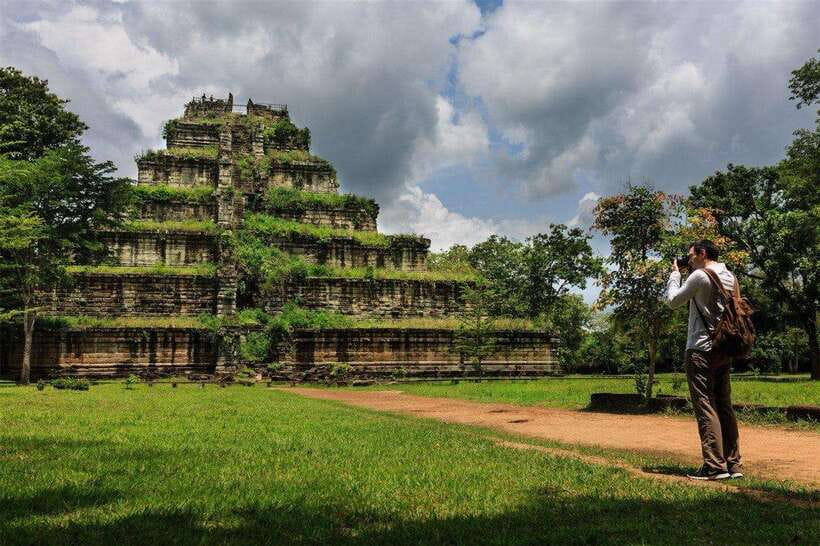
This is a Siem Reap day trip that trades the usual Angkor loop for two sites that feel more remote, more atmospheric, and a lot more personal. You’ll see the seven-tiered pyramid remnants at Koh Ker, then get your bearings in the partly reclaimed sandstone wonder of Beng Mealea.
What I like most is the chance to escape the biggest temple circuits. The small-group size keeps things relaxed, and the quiet ruins give you room to look closely instead of just moving as fast as possible.
One consideration: the base price does not cover all entry costs. You’ll need an Angkor ticket for Beng Mealea (entrance fee not included) and you’ll pay extra for Koh Ker on site.
In This Review
- Key highlights worth caring about
- Koh Ker’s seven-tiered pyramid, and why the forest changes everything
- Beng Mealea: a 12th-century Hindu temple reclaimed by nature
- The guide effect: how names like Lok, John, Kim, and Pip shape the day
- How the 8-hour plan actually feels from pickup to return
- Price and practical costs: what $50 includes, and what you’ll pay on top
- Transport quality, safety, and what to expect on the road
- What to pack for walking, heat, and sticky stone surfaces
- The “quiet temples” payoff, and why this tour fits certain travelers
- Should you book Koh Ker and Beng Mealea from Siem Reap?
- FAQ
- How long is the Koh Ker and Beng Mealea tour?
- What is included in the $50 per person price?
- Is lunch included?
- Do I need an Angkor ticket for Beng Mealea?
- How much is the Koh Ker entrance fee?
- What should I bring and wear?
- Is the tour suitable for children or mobility impairments?
Key highlights worth caring about
- Koh Ker’s forest ruins, including the seven-tiered pyramid remains and several named shrines
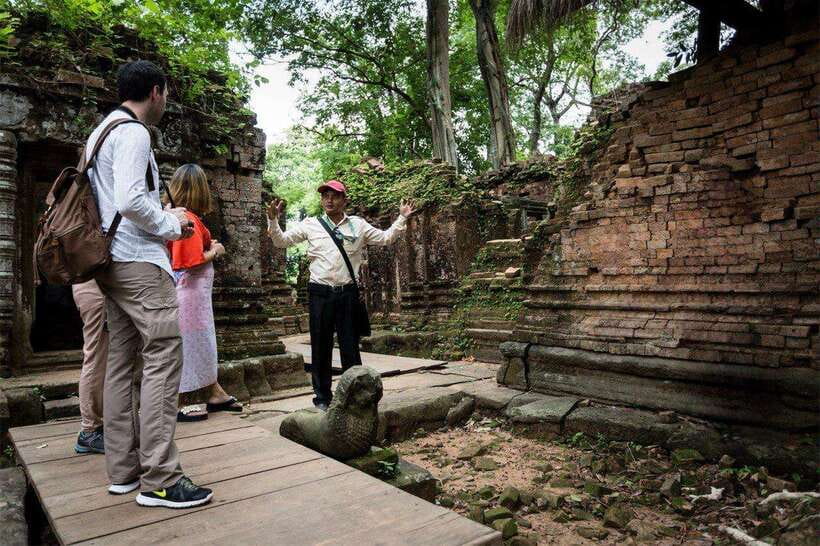
- Beng Mealea’s jungle-reclaimed layout, with sandstone towers and courtyards visible through thick brush
- English-speaking guides who answer deeper questions about Khmer religion and symbolism
- A relaxed pace for photos, with plenty of time to explore at your own comfort level
- Cold towels and bottled water included, which really helps when the day turns hot
- A small group, sometimes as few as just a handful of people, which changes the mood fast
Koh Ker’s seven-tiered pyramid, and why the forest changes everything
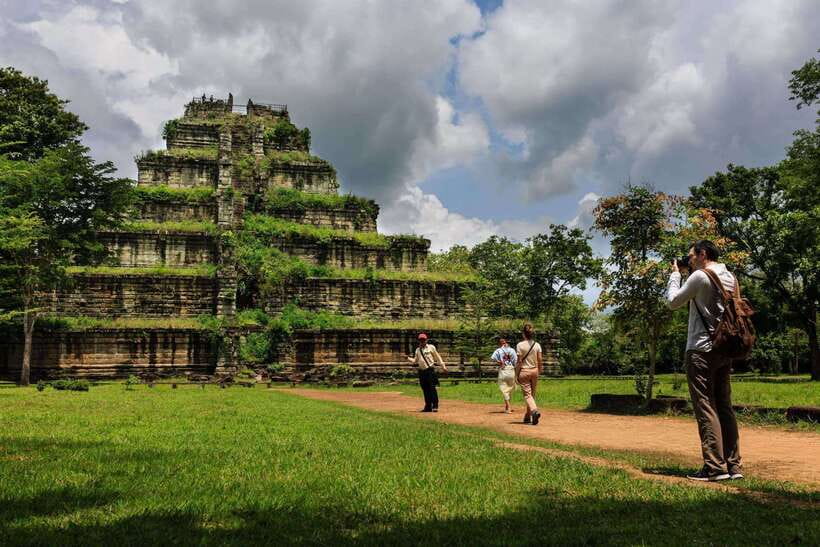
Koh Ker feels like a different world from the main Angkor area because it sits farther north and largely left to the trees. Instead of polished pathways and constant tour traffic, you get a more “found in the wild” feeling as you move between sacred points and ruin blocks.
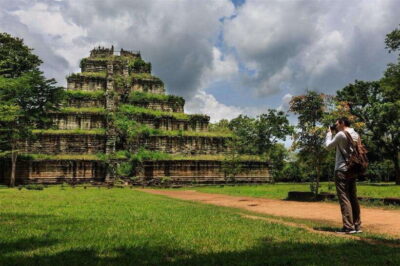
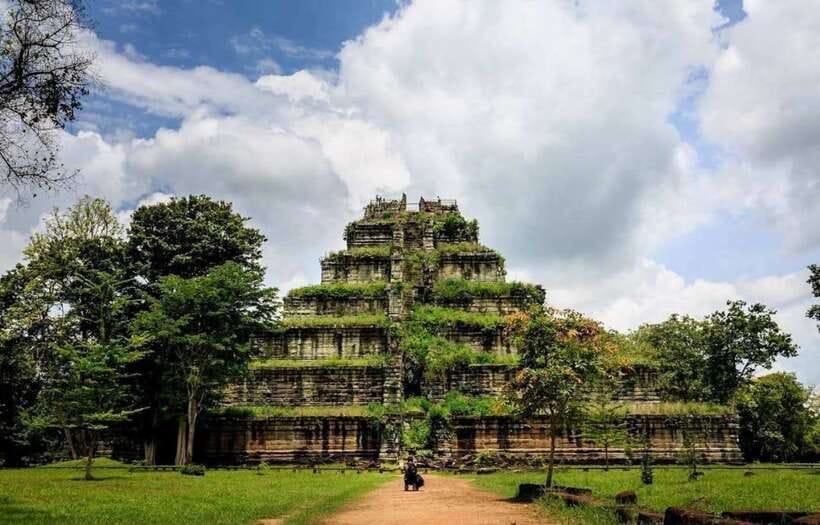
The big visual is the remains of the seven-tiered pyramid. Even if you cannot experience it the same way you can at fully restored temples, the scale still hits you. A number of guides focus on what you’re seeing, including how the Khmer builders used sacred geometry and vertical space to point the eye upward.
You’ll also visit other Koh Ker sacred sites, including Prasat Thom, Prasat Pram, and Prasat Chrap. The naming matters because it helps you connect a place to its role in the larger Khmer Empire story, not just treat each mound as a random stop. If you like architecture and religious art, this is the kind of day where the ruins start feeling like clues.
One more thing I appreciate: because Koh Ker is less visited, the views work differently. You’re more likely to notice the background details too, like the way stones sit against vegetation and how the site looks across distances from certain angles.
Beng Mealea: a 12th-century Hindu temple reclaimed by nature
Beng Mealea is the “you have to see this in person” kind of temple. It was built in the 12th century as a Hindu temple out of sandstone, and you can still read the temple’s structure, even with the jungle taking over much of the space around it.
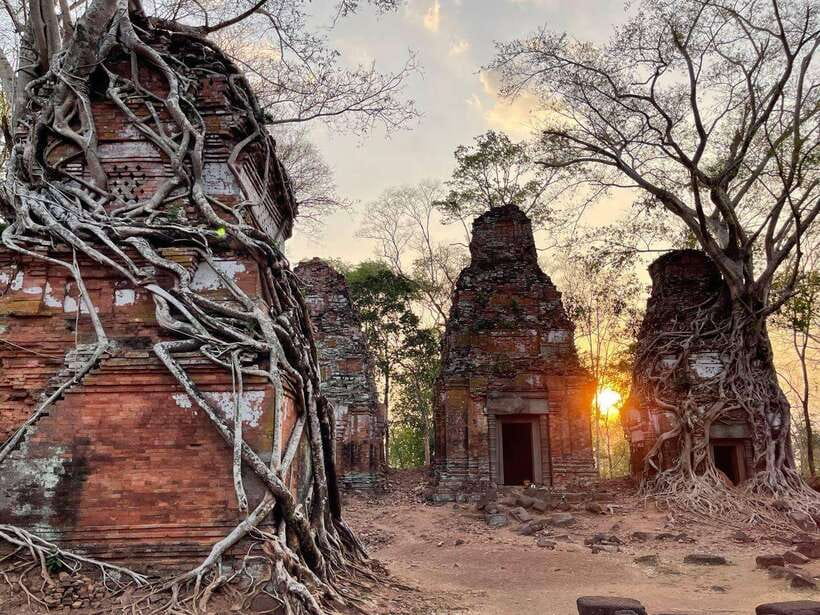
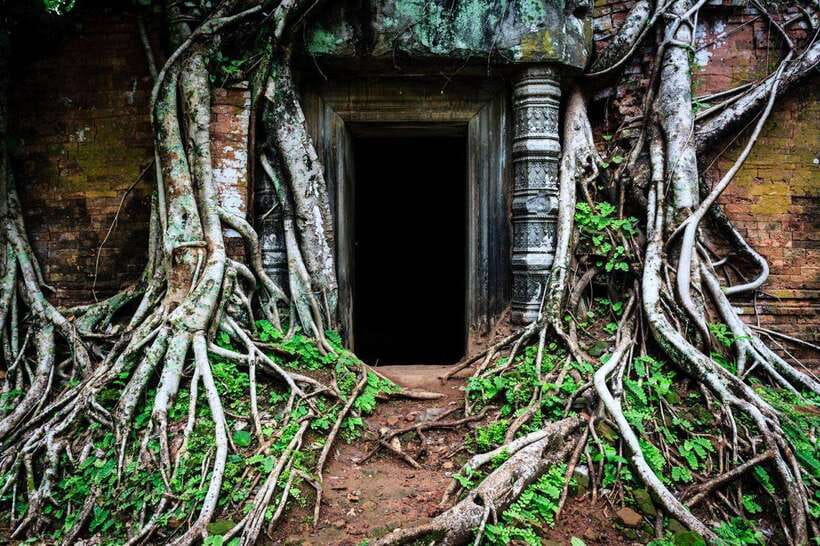
The sensation here is not about neat symmetry. It’s about how the towers and courtyards appear in thick brush, with vines and surrounding greenery doing half the guiding for your eye. That’s why this stop is such a good break from the most famous Angkor temples: the experience feels more natural and more atmospheric.
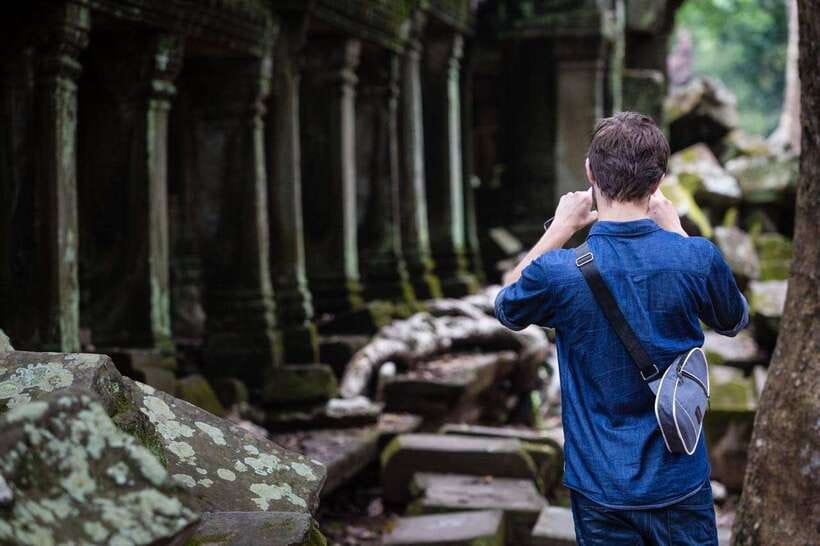
One of the most repeated themes in guide stories is the way they connect small details to the bigger picture. You’ll hear how Khmer religious practice shaped the temple layout, and how Hindu worship traditions relate to what you see in later centuries of change. Guides often also point out stand-out moments for photos, including striking tree growth through temple structures, which can create dramatic frames for pictures.
If you’re thinking ahead to weather, plan for the fact that Beng Mealea looks different with rain. People often say it can be even more impressive in rainy season, because the vegetation fills out and the jungle setting becomes even more alive. Even if you are not traveling then, the lesson is useful: this temple is about the interaction between stone and nature, so your timing affects your mood.
Further out: other Banteay Srei and Beng Mealea runs
- Full-Day Banteay Srei & 4 Temples – Grand Tours Join-in Tour★ 5.0 · 1,155 reviews
- Siem Reap Tour: Angkor Wat Sunrise, Bayon, Ta Prohm, Banteay Srei★ 5.0 · 931 reviews
- Kulen Mountain with Beng Mealea and Tonle Sap Small Group Tour★ 5.0 · 780 reviews
- Koh Ker Temple Group & Beng Mealea Full-Day Join-in Tour★ 5.0 · 710 reviews
The guide effect: how names like Lok, John, Kim, and Pip shape the day
A good temple guide does more than recite dates. You want someone who can explain what you’re standing in, why the site mattered, and what the carvings and layout might have meant. This tour is built around an English-speaking guide, and that makes a huge difference for Koh Ker and Beng Mealea, where it’s easy to feel lost without context.
I saw multiple guide names repeat in people’s praise, including Lok, Rah, John, Nara, Kim, Pip, and Sopheap Rath. The pattern is consistent: guests call out guides who answered deeper historical questions, and who also knew when to stop talking so you could just look around.
That balance shows up in how the day feels. Some guides, like Pip in particular, get credit for mixing factual explanations with practical help like photo spots and how to pose. Others, including guides described as having archeology or excavation experience (one person specifically mentioned Chenda), bring a more technical approach to what you see among the ruins.
You should also expect guides to handle real-world logistics, like keeping the group together on uneven surfaces and helping you navigate time without rushing. Several guests mention feeling safe throughout, which matters on temple days where paths can be uneven and your attention needs to stay on your footing.
How the 8-hour plan actually feels from pickup to return
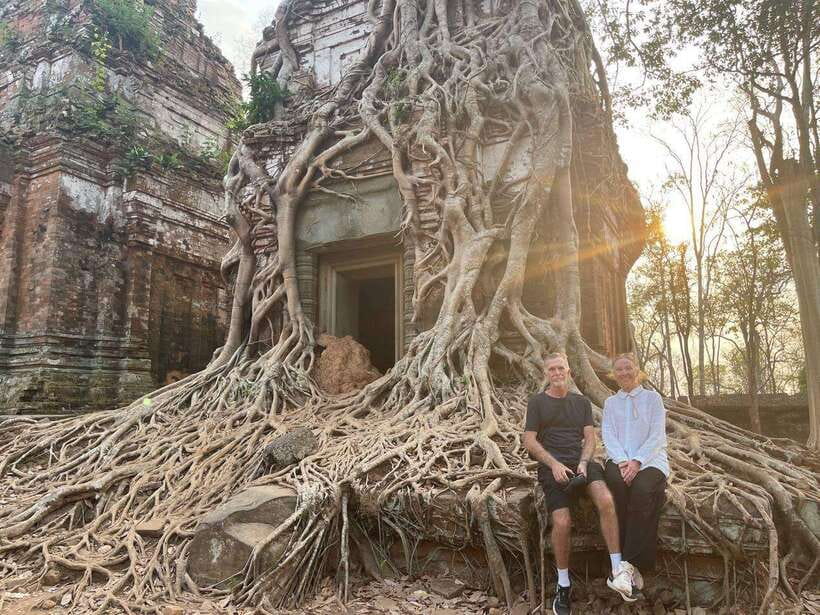
The day starts with hotel pickup in Siem Reap City. You’ll be asked to be ready about 40 minutes before the departure time, and the guide will confirm you by calling your name when they arrive in the lobby. This is one of those small details that makes a difference, because it prevents that awkward “are we on the right bus” moment.
Once you’re moving, there’s an early bus stretch and a short hop-on style stop at a local café. This is partly about gathering the group, and partly about giving you a quick reset before the temples.
Then it’s time for Beng Mealea. You’ll travel through the countryside on the ancient royal highway route toward Preah Khan Kompong Svay, and the drive itself is a preview of what you’ll feel all day. The countryside scenery plus the slower pace makes a nice contrast to the constant rush of central Siem Reap.
At Beng Mealea, you’ll have guided time to explore. Two hours is enough to wander, understand key features, and still leave room to take photos without feeling like you’re on a conveyor belt.
After Beng Mealea, the trip continues toward Koh Ker. You’ll take a break for lunch at a local restaurant, where you can order traditional curries, soups, and stir-fries at your own expense. Lunch is one hour, and it helps you recharge before the longer day of walking and looking.
When you head back toward Siem Reap, the timing feels built for a full experience rather than a fast photo grab. That’s why the day works well if you’re the kind of traveler who likes to ask questions and linger at the most interesting parts.
Price and practical costs: what $50 includes, and what you’ll pay on top
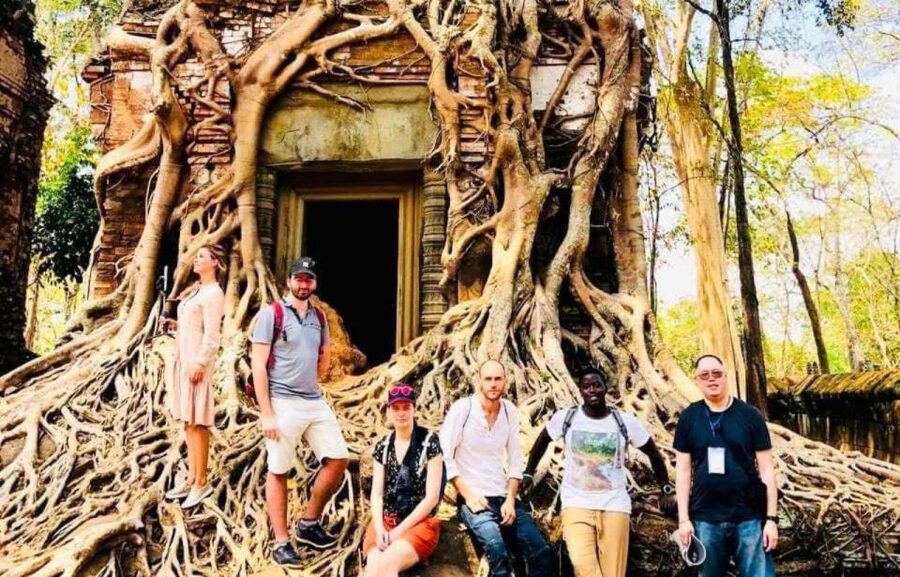
The tour price is $50 per person, and it includes a lot of what usually makes day trips annoying in Cambodia: hotel pickup and drop-off, transportation by a quality vehicle, an English-speaking guide, bottled water, cold towels, and local taxes.
The parts you should budget for separately are clear:
- Beng Mealea entrance fee is not included, and you need an Angkor ticket to access it.
- Koh Ker entrance fee is USD 15 (not included).
- Lunch is not included, so plan on paying for your meal.
Is it good value? For me, it is when you want the guide and you want the less crowded sites. The transportation alone is a big ask for Koh Ker, and doing it without a guide would mean you miss a lot of the “why this place looks like this” context. Add in the included water, cold towels, and guide support for photos and questions, and the $50 becomes a fairly reasonable base.
Also, the group size helps. A maximum of 10 participants means the experience doesn’t feel like a factory line. And on some days, the group can end up very small, which turns the tour into something closer to private.
Transport quality, safety, and what to expect on the road
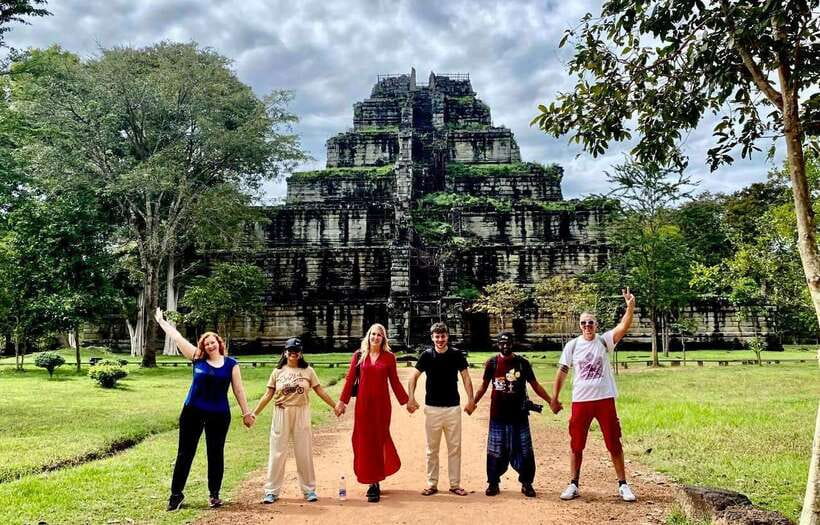
The transport ratings are strong, and you’ll feel that from the start. The vehicle is described as clean and comfortable, and drivers are praised for safe handling, especially around obstacles and rough patches.
On a long temple day, “smooth ride” matters. It affects how alert you feel once you reach the ruins. Several people mention cold water and cold towels as a welcome rhythm after major temple segments, and it helps you keep going without getting drained.
One practical tip: bring cash. Not because the tour is a cash-only operation, but because you may want extra snacks or traditional local products during the day. The highlight list includes stops where you can try local products, and those tastes are rarely included for free.
Other long days out to the remote temples
What to pack for walking, heat, and sticky stone surfaces
This is a moderate walking day on uneven ground. Beng Mealea in particular can involve slippery stone and unpredictable footing around collapsed sections, so hiking shoes are a smart call.
You’ll also want:
- sunscreen
- insect repellent
- a camera
- cash
- a way to cover shoulders, since the dress code expects that
Dress code is casual but specific: shoulders should be covered and pants should reach at least knee high. You’ll also want to respect ancient religious grounds during visits, meaning keep your movements and behavior calm around sacred areas.
The tour runs in all weather conditions. That means you should dress for heat and sun if it’s bright, or for rain if skies shift. Even simple rain gear can save your day, since temple surfaces do not stay dry for long.
The “quiet temples” payoff, and why this tour fits certain travelers
If your main goal is to see different types of Khmer temple sites without the constant crowd churn, this tour makes a lot of sense. Koh Ker and Beng Mealea are quieter than the main circuit, and that quiet changes your experience fast.
The best part is time to absorb. Several people describe the day as relaxed and personal, especially because the small group size allows you to explore at your own pace. You won’t feel pressured into constant commentary, and guides often hit the right balance of explanation and breathing space.
This tour is especially good for you if:
- you want a break from the busiest Angkor routes
- you enjoy understanding Khmer religion and temple symbolism, not just taking photos
- you like photography support, including help finding good angles and getting pictures taken
- you have one extra day in Siem Reap and want it to count beyond the headline temples
It’s less ideal if:
- you have mobility impairments, since uneven surfaces are part of the experience
- you are traveling with children under 12, as it’s not suitable for that age group
Should you book Koh Ker and Beng Mealea from Siem Reap?
Book this tour if you want Khmer temples with a stronger sense of place and fewer crowds. You’re paying for the combination of transport, an English-speaking guide, and the two-site pairing that shows different sides of the Khmer world, Koh Ker’s pyramid scale and Beng Mealea’s jungle-reclaimed sandstone.
Skip it, or at least think twice, if entrance fees and lunch costs would feel tight for your budget, or if long uneven walking is a problem for you. Also, if you only want the most famous restored complexes, you may prefer the main Angkor circuit instead.
If you do book, set yourself up to enjoy it: wear proper footwear, bring repellent, and keep some cash handy for small extras along the way. The big reward is simple, you get temples that feel quieter and more curious, with a guide who helps you look at stone like it has a story.
FAQ
How long is the Koh Ker and Beng Mealea tour?
It lasts 8 hours.
What is included in the $50 per person price?
Hotel pickup and drop-off, transportation by quality vehicle, an English-speaking guide, bottled water, cold towels, and local taxes.
Is lunch included?
No, lunch is not included. You’ll have a restaurant break where you can buy your own meal.
Do I need an Angkor ticket for Beng Mealea?
Yes. The Beng Mealea entrance fee is not included, and an Angkor Wat ticket is required.
How much is the Koh Ker entrance fee?
The Koh Ker entrance fee is USD 15, and it is not included.
What should I bring and wear?
Bring a camera, hiking shoes, sunscreen, insect repellent, and cash. Dress with shoulders covered and pants at knee high.
Is the tour suitable for children or mobility impairments?
No. It is not suitable for children under 12, and it is not recommended for people with mobility impairments or in a wheelchair due to uneven walking surfaces.
More Tour Reviews in Siem Reap
- Angkor Wat Sunrise or Sunset Tour with Guide from Siem Reap★ 5.0 · 12,109 reviews
- Siem Reap: Angkor Wat: Small-Group Sunrise or Sunset Tour★ 5.0 · 9,444 reviews
- From Siem Reap: Kampong Phluk Floating Village Tour by Boat★ 4.9 · 6,979 reviews
- Siem Reap: Angkor Wat 2-Day Tour with Sunrise and Sunset★ 4.9 · 4,429 reviews
The Far Temples, Other Operators
- Koh Ker Temple Group & Beng Mealea Full-Day Join-in Tour★ 5.0 · 710 reviews
- Preah Vihear: Full-Day Preah Vihear and Koh Ker Temple Tour★ 4.9 · 263 reviews
- Full-Day Preah Vihear, Koh Ker and Beng Mealea Private Tour★ 4.4 · 101 reviews
- Preah Vihear temple – Koh Ker & Other temple with Small Group★ 5.0 · 96 reviews
Banteay Srei and Beng Mealea, Compared
- Siem Reap: Kulen Mountain, Beng Mealea and Tonle Sap Tour★ 5.0 · 1,483 reviews
- Full-Day Banteay Srei & 4 Temples – Grand Tours Join-in Tour★ 5.0 · 1,155 reviews
- Siem Reap Tour: Angkor Wat Sunrise, Bayon, Ta Prohm, Banteay Srei★ 5.0 · 931 reviews
- Kulen Mountain with Beng Mealea and Tonle Sap Small Group Tour★ 5.0 · 780 reviews
Newly written up around Siem Reap
- Waterfall & River of 1000 Siva Linga- Kulen Mountain Private Tour
★ 5.0 · 3 reviews - Private Transfer from Siem Reap to Sihanoukville
★ 4.5 · 3 reviews - Private Tour to Koh Ker and Beng Mealea
★ 5.0 · 3 reviews - Private Transfer: Siem Reap Angkor Internation Airport to Hotel
★ 5.0 · 3 reviews - Kulen National Park Ticket -Waterfall & 1000 Lingas
★ 5.0 · 3 reviews - Kulen Waterfall & Kbal Spean Tour
★ 5.0 · 3 reviews
Banteay Srei & Beng Mealea Tours, side by side.
 ★ 5.0Kulen Mountain, Beng Mealea and Tonle Sap TourFrom $481,483 reviews
 ★ 5.0Full-Day Banteay Srei & 4 Temples – Grand Tours Join-in TourFrom $201,155 reviews
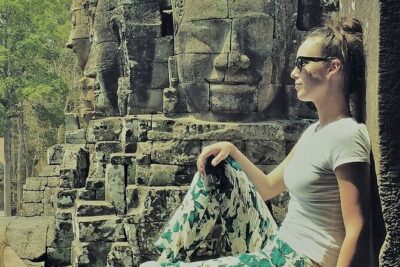 ★ 5.0Siem Reap Tour: Angkor Wat Sunrise, Bayon, Ta Prohm, Banteay SreiFrom $130931 reviews
 ★ 5.0Kulen Mountain with Beng Mealea and Tonle Sap Small Group TourFrom $54780 reviews
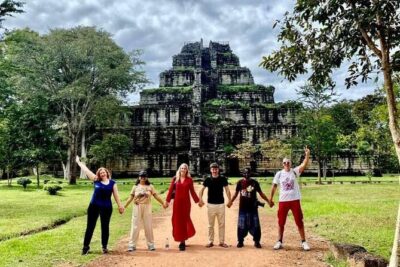 ★ 5.0Koh Ker Temple Group & Beng Mealea Full-Day Join-in TourFrom $50710 reviews
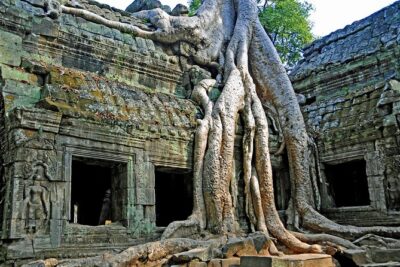 ★ 5.02-Day Angkor Wat With Small, Big Circuit and Banteay Srei TourFrom $158545 reviews
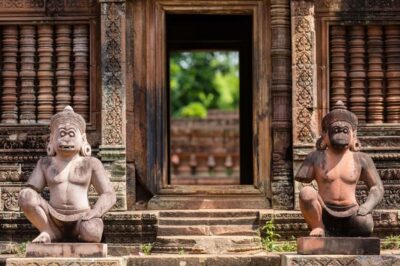 ★ 4.8Banteay Srei Temple & Grand 5 Temple TourFrom $20262 reviews
 ★ 5.03-Days Discovery Of Angkor: Waterfalls,Floating Village and Banteay Srei templeFrom $183214 reviews