
REVIEW · CAMBODIA
2-Days in temples and other areas
Two days in Angkor sounds simple. It is not, because this plan strings together the famous temples and quieter ruins over two full days, with hotel pickup and dropoff. I like the private guide setup, especially when you want to pace your stops around the flow at Angkor Wat.
Day 1 focuses on Angkor Wat, the Bayon complex, and Ta Prohm, then you regroup at lunchtime in the Angkor Archaeological Park. I also like the practical travel pieces that keep the day from turning into chaos, with a comfortable car or van and included water, plus a guide who can adjust the route and timing for your family’s pace.
One consideration: the base price covers guide and transport, but temple tickets and the boat for Tonle Sap are paid by you, along with food. You should also be ready for a moderate level of walking and stairs at multiple temple sites.
In This Review
- Key highlights to look for
- A private Angkor plan that moves at your speed
- Day 1: Angkor Wat, Bayon, and Ta Prohm without the stampede feeling
- The practical dress code issue (and how to avoid it)
- Day 2 temple engineering: Preah Khan, Neak Pean, Preruk, Banteay Srey
- Tonle Sap floating villages: the boat cost you should plan for
- Price and value: what $261 buys, and what you’ll top up
- Who this tour is best for (and who might want a different style)
- Should you book this private 2-day Angkor-and-Tonle-Sap plan?
- FAQ
- What is included in the tour price?
- What is not included?
- Is hotel pickup and dropoff included?
- Is this a private tour?
- Which sites are visited on Day 1?
- Which sites are visited on Day 2?
- Do I pay for lunch during the tour?
- Do I pay for the Tonle Sap boat ride?
- What fitness level do I need?
- What if the weather is bad, or I need to cancel?
Key highlights to look for
- Hotel pickup and dropoff so your day starts and ends without hassle
- Two days of temples covering big names and temple groups in different areas
- Guide flexibility for timing and pacing (including earlier starts to dodge the worst heat)
- Help with temple dress code, like covered knees and shoulders
- Lunch stop in the Angkor Archaeological Park before you head to the next set of ruins
- Tonle Sap floating villages with a boat add-on you pay for separately
A private Angkor plan that moves at your speed
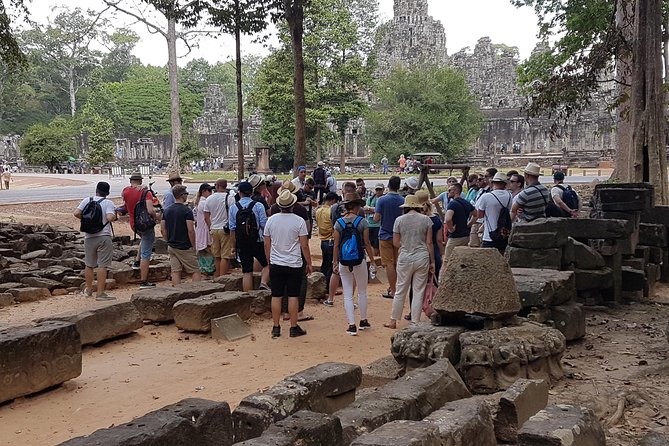
If your biggest fear is getting stuck on a long bus loop with a rigid schedule, this private format is the antidote. You are not competing with a crowd for time on the same photo spots, and your guide can nudge the order based on your energy level.
I especially like that the tour is built for two days. Angkor is big, and even the most organized day feels rushed when you try to cram everything into one. With this format, you can spend more time actually looking at the carvings, the stonework, and the layout, instead of just checking a box and sprinting to the next doorway.
One name you will see in the feedback is guide Narin. People consistently highlight that he adapts the tour to interests and pace. In plain terms, that matters. When you realize you want more time at a specific temple wall, or you want to move quicker through a section, you do not have to fight the schedule. You get to steer the experience.
Day 1: Angkor Wat, Bayon, and Ta Prohm without the stampede feeling
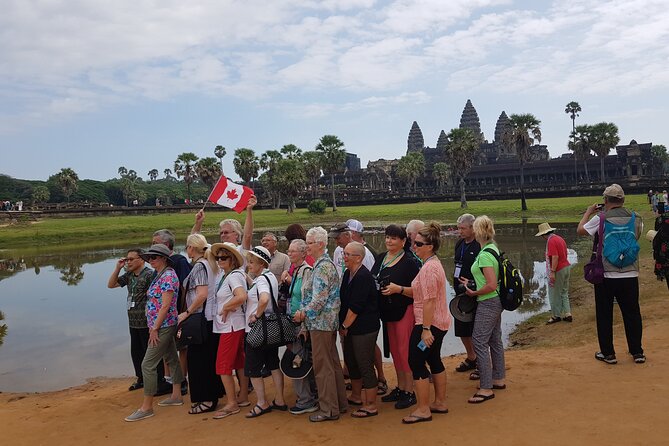
Day 1 is designed around the classic trio most people come for: Angkor Wat, Bayon, and Ta Prohm. The tour starts with hotel pickup, then heads into the temple zone with stops that let you see the main icons and the surrounding complex.
You will begin in the Angkor Thom area, where the old city layout sets the stage. Angkor Thom is the kind of place where it helps to have a guide pointing out what you are seeing, because the buildings can blend together if you just walk straight through. From there, the day moves into the temple highlights that define Angkor for first-timers.
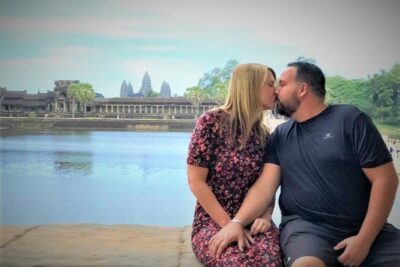
- Angkor Wat is the anchor. Expect lots of photo moments, but also look past the big views. The most rewarding parts tend to be the smaller details, like repeating patterns and the way the temple steps up and pulls your eyes forward.
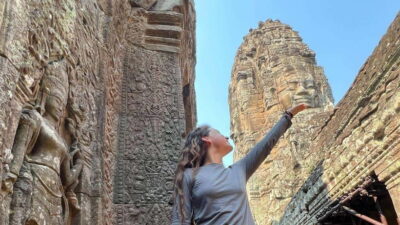
- Bayon complex shifts the mood. Instead of one grand silhouette, it is more about the dense, layered feel of the carvings and faces, plus the sense of movement through the spaces.
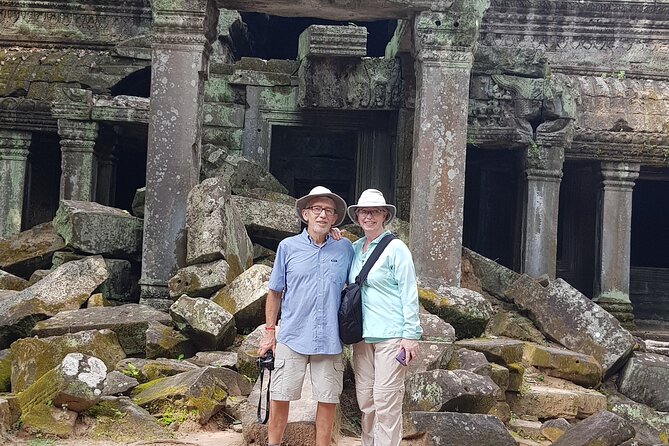
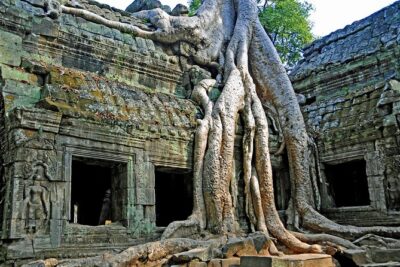
- Ta Prohm is famous for the dramatic tree roots and the “stone meets jungle” vibe. It is also a great temple to slow down, because the interactions between roots, beams, and walls are easy to appreciate once you are not racing the day.
Lunch is planned after the morning temple run, at the Angkor Archaeological Park. This is a smart break, because it gives you a pause in the middle of the temple marathon. Just note that lunch is paid by you, not included in the tour price.
Also on our Angkor Wat list, if none of these land
- Angkor Temples Highlights Tour: 2 Days with Sunrise★ 4.2 · 43 reviews
- Two Days Angkor Wat Park-Beng Mealea and Kampong Phluk Village★ 5.0 · 14 reviews
The practical dress code issue (and how to avoid it)
At Angkor Wat, you need covered knees and shoulders. If you show up thinking any shorts are fine, you will get stopped. I love that this tour’s guide support shows up in the real world, not just in theory. One person’s experience included Narin helping solve the problem by arranging borrowed clothing so they could keep going. That kind of problem-solving is worth a lot in Cambodia heat.
Also, bring what you can: a hat, sunscreen, and comfortable shoes you can stand in for hours. The tour includes water, but temples do not care if you are low on energy.
Day 2 temple engineering: Preah Khan, Neak Pean, Preruk, Banteay Srey
Day 2 moves beyond the immediate headline temples and into a chain of sites that feel more spread out. The payoff is a quieter sense of scale, plus temple architecture that tells a different story than the main circuit.
This day is anchored by temples connected to major Khmer rulers and ceremonial planning. You start with Preah Khan, a 12th-century temple associated with King Jayavarman VII, built to honor his father. The central sanctuary dedication is given as AD 1191, and the temple sits northeast of Angkor Thom. If you like temples that feel like a whole world inside a world, this is a good place to spend your attention.
Next comes Neak Pean, described as an island temple in the center of the Jayatataka baray. The idea of a temple set within a water feature gives you a different kind of perspective. Even if you are not a “water ritual” person, it helps you understand how Khmer planning blended landscape, water, and worship.
Then you visit Preruk, a Hindu temple built as a state temple of Khmer king Rajendravarman, dedicated in 961 or early 962. If you are paying attention to symbolism, this is the kind of stop that reminds you Angkor was not only monumental stone, it was also political and religious theater, timed to specific reigns and traditions.
Finally, Banteay Srey comes in from the 10th century, dedicated to Shiva and Parvati. This temple grouping gives you a useful spread of time periods and styles across two days, rather than repeating the same visual language nonstop.
After these temple stops, you have lunch again, and just like Day 1, lunch is paid by you. Once you finish, the plan heads to Tonle Sap Lake and the famous floating villages.
Tonle Sap floating villages: the boat cost you should plan for
Tonle Sap is where Angkor’s stone world meets everyday Cambodian life on the water. The tour includes the visit to the floating villages area, but the boat is paid by you since it is listed as not included.
That means you should plan cash or payment options in advance. If you wait until the last minute, you will burn energy when you could be watching the water and the village scenes.
What makes this add-on valuable is contrast. After two days of temple stone and temple rules, Tonle Sap feels like a reset button. You get a chance to see how the region lives with its water systems, not just how rulers shaped ceremonial spaces centuries ago.
One more tip: bring a light layer if you tend to get chilly on boats, and keep an eye on sun exposure. Even when the day feels bearable on land, water time can turn bright fast.
Price and value: what $261 buys, and what you’ll top up
At $261 for about two days, you are mainly paying for three things: a private guide, private car or van transport, and included water. For Angkor, those pieces can make or break the experience.
Here is where extra costs show up:
- Temple tickets are not included
- Food is not included (lunch is specifically paid by you on both days)
- Boat for Tonle Sap is not included
So the real value calculation is not just the sticker price. It is the balance between what you avoid (crowd navigation stress, bus transfers, and getting stuck waiting) and what you still need to budget (tickets, meals, and the boat).
One practical way to think about it: if you are the kind of visitor who wants flexibility, a guide who can adjust pace, and a private vehicle that keeps you moving between far-apart sites, this price is often reasonable. If you only want a simple checklist tour and are fine with big crowds and less guidance, then a cheaper non-private option might fit better. But if Angkor is a once-in-a-while trip, paying for convenience and course-correction can feel like the smart move.
Also, you get a paper ticket, which is a small detail, but it matters for smooth entry.

Who this tour is best for (and who might want a different style)
This is a private tour, so it fits best when you value control. You can keep the day centered on your interests, and the guide can adapt. That comes through strongly in the feedback about Narin and the way the tour can be shifted for pace and timing.
It also fits you if you like a mix:
- major temples like Angkor Wat, Bayon, and Ta Prohm
- plus additional sites like Preah Khan and Neak Pean
- and a contrast stop at Tonle Sap floating villages
You should take it seriously if you are managing mobility or stamina. The tour requests moderate physical fitness, and temple days usually mean uneven ground, steps, and long stretches on your feet.
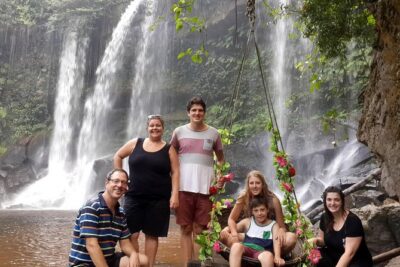
Families and couples often like this style because it reduces friction. One small-family setup in the feedback also highlighted the benefit of avoiding the hottest parts of the day with an earlier start. That kind of adjustment is hard to get in large group formats.
If you want lots of free time to wander alone with no schedule pressure, a private guide can still be helpful, but you may need to explicitly ask for breathing room in the plan.
Should you book this private 2-day Angkor-and-Tonle-Sap plan?
I would book it if:
- you want two days instead of a rushed day trip
- you care about having a guide who helps you understand what you see
- you want a plan that balances headline temples with other stops
- you prefer hotel pickup and dropoff, so you are not juggling transport
I might skip it if:
- you dislike paying add-ons for tickets, food, and a boat
- you are hoping for a fully packaged price where everything is handled for you
- you cannot manage the walking and stairs that come with multiple temple visits
One last tip for your evenings: the tour recommends looking for a traditional Khmer dancing show or a Khmer circus after your temple days. It is a nice way to keep the Cambodian culture thread going, instead of ending the trip with only stone and sun.
If your goal is to see Angkor in a way that feels organized but not rigid, this two-day private format is a solid match.
FAQ
What is included in the tour price?
The tour includes a guide, car or van transportation, and water.
What is not included?
Temple tickets, food, and the boat for Tonle Sap are not included.
Is hotel pickup and dropoff included?
Yes, the plan includes pickup from your hotel and dropoff back to your hotel after the tour finishes.
Is this a private tour?
Yes. It is private, and only your group participates.
Which sites are visited on Day 1?
Day 1 includes Angkor Wat, the Bayon complex, and Ta Phrom, along with temples inside Angkor Thom city.
Which sites are visited on Day 2?
Day 2 includes Preah Khan, Neak Pean, Preruk, Banteay Srey, and then a visit to Tonle Sap Lake and the floating villages.
Do I pay for lunch during the tour?
Yes. Lunch is paid by the client.
Do I pay for the Tonle Sap boat ride?
Yes. The boat is listed as not included, so you pay separately.
What fitness level do I need?
The tour recommends a moderate physical fitness level due to walking and temple visiting.
What if the weather is bad, or I need to cancel?
The experience requires good weather. If it is canceled due to poor weather, you are offered a different date or a full refund. You can cancel for free up to 24 hours in advance for a full refund.
More 2-Day Experiences in Angkor Wat
- Angkor Temples Highlights Tour: 2 Days with Sunrise★ 4.2 · 43 reviews
- Two Days Angkor Wat Park-Beng Mealea and Kampong Phluk Village★ 5.0 · 14 reviews
More Tour Reviews in Angkor Wat
- Angkor Wat Sunrise by Vintage Jeep – Private Tour★ 4.8 · 91 reviews
- Angkor Temples Highlights Tour: 2 Days with Sunrise★ 4.2 · 43 reviews
- Kulen National Park Ticket★ 5.0 · 33 reviews
- Angkor Wat: Guided Jeep Tour Inclusive lunch at local house★ 4.9 · 29 reviews
Newly written up around Angkor Wat
- Two Days Angkor Wat Park-Beng Mealea and Kampong Phluk Village
★ 5.0 · 14 reviews - Angkor Wat: Guided Jeep Tour Inclusive lunch at local house
★ 4.9 · 29 reviews - Angkor Temples Highlights Tour: 2 Days with Sunrise
★ 4.2 · 43 reviews - Angkor Wat Sunrise by Vintage Jeep – Private Tour
★ 4.8 · 91 reviews - 2-Days in temples and other areas
★ 5.0 · 101 reviews
2-Day Experiences, side by side.
 ★ 4.9Angkor Wat 2-Day Tour with Sunrise and SunsetFrom $344,429 reviews
 ★ 5.0Angkor 2-Day Sunset & Sunrise Small-Group TourFrom $492,567 reviews
 ★ 5.02 Days Exclusive Temple Highlights with Sunset and Sunrise TourFrom $491,157 reviews
 ★ 4.9Angkor Sunrise 1- or 2-Day Guided Temples TourFrom $191,132 reviews
 ★ 5.02 Days Guided Historical Tour in AngkorFrom $35855 reviews
 ★ 5.02-Day Angkor Wat With Small, Big Circuit and Banteay Srei TourFrom $158545 reviews
 ★ 4.92-Day Temple Highlights Sunrise and Sunset OptionFrom $46445 reviews
 ★ 4.9Angkor Wat 2-Day complex Sun rise & Sun set with Guided TourFrom $30439 reviews
Also appears in