
REVIEW · CAMBODIA
Angkor Cab: Siem Reap 3 day private tour: ‘off the beaten track’
Angkor can feel like information overload, fast. This 3-day private plan gives you a smart first-time path through the big names, then steers you toward lesser-visited temples and real village scenery. It also keeps things relaxed with a safe, English-friendly guide team and pickup, so you spend less energy figuring things out.
What I like most is the mix: sunrise at Angkor Wat followed by a calmer circuit on quieter days, then a full Day 3 that trades crowds for places like Beng Mealea. The other big win is comfort for a long stretch of days, including an air-conditioned private vehicle and bottled water built into the experience.
One consideration: this is built around temples and walking, so you should plan for heat and uneven ground. The itinerary also depends on you having (or buying) the right Angkor Temple Pass, plus budgeting for your own meals.
In This Review
- Key things to know before you go
- A 3-day Angkor plan that actually spreads out the crowds
- Private pickup, small group comfort, and what it means in practice
- Day 1: Pink Banteay Srei, calm Banteay Samre, and lake time at Tonle Sap
- Banteay Srei: that famous pink stone in the morning light
- Banteay Samre: a quieter 12th-century stop near East Baray
- Banteay Kdei plus lunch: the “citadel of chambers” mood
- Srah Srang: the big old “swimming pool” water story
- Tonle Sap Lake: finish Day 1 with the landscape beyond temples
- Day 2: Angkor Wat sunrise, Angkor Thom, and Ta Prohm’s famous roots
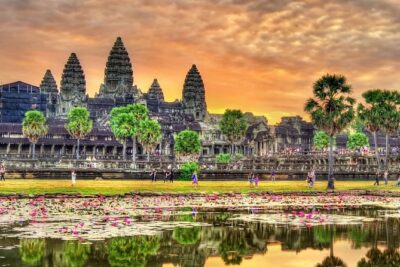
- Angkor Wat at sunrise: why this tour starts at 5:00 am
- Angkor Thom and the South Gate: first, pictures, then temples
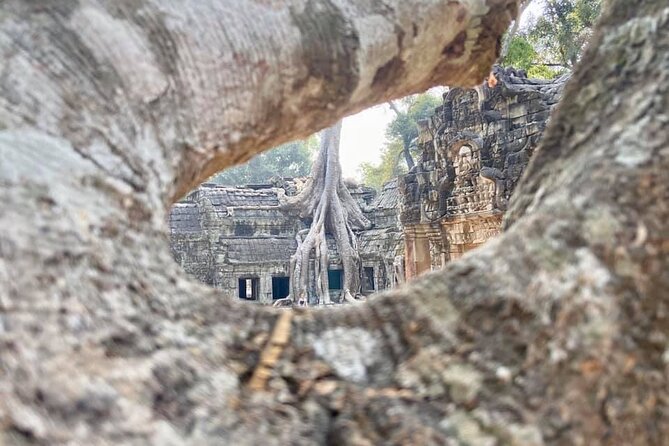
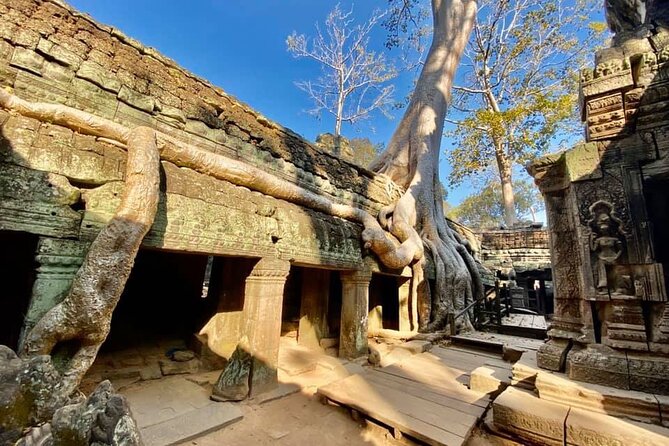
- Ta Prohm: big roots, smaller details worth noticing
- Day 3: Beng Mealea and Bakong, a more Khmer-feeling finale
- Beng Mealea: a rough, atmospheric temple walk
- Bakong: an ancient capital vibe in the Hariharalaya area
- Preah Ko: the sacred bull and a short, meaningful finish
- Price and value: $550 per group up to 3, what you’re really paying for
- What’s included, what isn’t, and how to budget without stress
- Who this tour is best for
- A quick reality check on timing and comfort
- Should you book Angkor Cab’s 3-day off-the-beaten-track tour?
- FAQ
- How many people is the private tour for?
- What is included in the tour price?
- Are meals included?
- Do I need an Angkor Temple Pass?
- What time does the tour start each day?
- Is pickup included?
- Is there free cancellation?
Key things to know before you go
- Small group, private feel: only your group rides together, which makes the day move at your pace
- Sunrise logistics are handled: a very early start for Angkor Wat sunrise is part of the plan
- Off-the-beaten-track temple choices: sites like Banteay Srei, Banteay Samre, and Beng Mealea help you escape the worst crowd waves
- English communication with temple context: you’ll have a guide who explains what you’re seeing on-site
- Comfort items included: bottled water and a dedicated driver keep long days easier
- You control the day’s pace: the tour is flexible if you want different start and finish times
A 3-day Angkor plan that actually spreads out the crowds
Most Angkor trips hit the same temples in the same order, which means you end up in the same crowd rhythm. This itinerary is designed to avoid that trap. You still get the headline sights, but you also get days built around quieter temples and landscapes that feel more like Cambodia than like an outdoor museum line.
I also like that the tour reads like an orientation, not just a checklist. By Day 2, you understand how Angkor fits together. By Day 3, you’re seeing what most people skip, which gives you a more complete picture of Khmer temple life beyond Angkor Wat.
The experience is private for a small group (up to three people), which matters more than you’d think. With a private vehicle, you are not waiting on other groups. With your own guide, questions do not get swallowed by a bus tour schedule.
Private pickup, small group comfort, and what it means in practice
You start with pickup offered in Siem Reap, and the meeting time is listed as 9:00 am for the tour day. Then, on Day 2, the big exception kicks in: Angkor Wat sunrise starts very early, with pickup from your hotel at 5:00 am.
That structure matters. A 9:00 am start is friendly for jet lag and for keeping your body calm on Day 1. But the sunrise start means you still get the best Angkor Wat light without guessing the logistics on your own.
Comfort-wise, the tour includes a driver and bottled water. In one of the provided reviews, a family highlighted that they had a private Lexus with the AC running and cold water ready. Even if your vehicle is different, the expectation is clear: the trip is meant to be comfortable across multiple temple stops, not a sweaty, stop-and-start grind.
If you care about timing, private transportation is a real value. In temple country, minutes add up fast, especially when you’re moving between sites outside the tightest Angkor core.
Other private bookings in Siem Reap
- Full-Day Angkor Wat Sunrise Private Tour with Guide from Siem Reap★ 5.0 · 2,920 reviews
- Siem Reap: Angkor Wat Private Tuk-Tuk Tour★ 4.9 · 2,222 reviews
- Angkor Wat Private Day Tour from Siem Reap★ 5.0 · 834 reviews
- Angkor Wat Private Tuk-Tuk Tour (sunrise Option) & more★ 5.0 · 439 reviews
Day 1: Pink Banteay Srei, calm Banteay Samre, and lake time at Tonle Sap
Day 1 is a strong “warm-up” day. You’re not just dropping into big temples. You’re also getting the drive, the everyday scenes, and the smaller temple rhythm that makes Angkor feel lived-in.
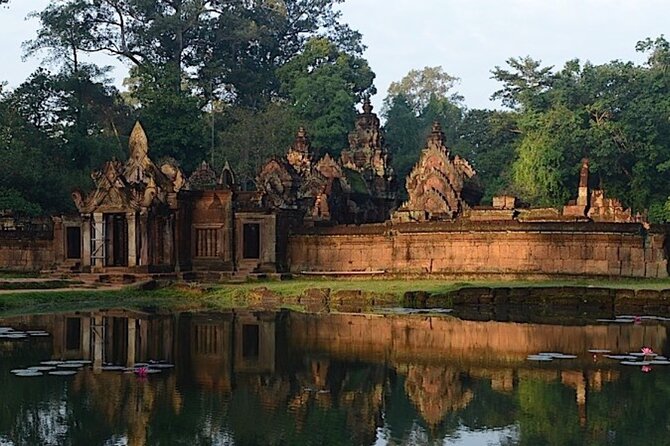
Banteay Srei: that famous pink stone in the morning light
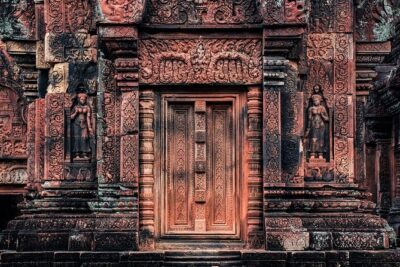
Your first major stop is Banteay Srei, known for its distinctive pinkish tone and its age, described here as a 10th-century temple. You get about an hour on-site, and your guide explains the temple details during the visit.
This is a good start because it sets the tone. Instead of jumping straight into Angkor Wat’s scale, you ease into the shapes, carvings, and materials that define Khmer architecture.
Practical tip: go with closed-toe shoes and expect some uneven surfaces. Even “short” temple visits on Day 1 can involve more walking than you expect in warm weather.
Banteay Samre: a quieter 12th-century stop near East Baray
Next is Banteay Samre, a 12th-century temple. It’s described as located about 400 meters east of East Baray, linked to King Suryavarman II. You’ll have around 45 minutes.
This stop works because it connects you to the layout logic of Angkor’s water and ceremonial landscape. When you later see Angkor Thom and Ta Prohm, you’ll recognize how the region’s geography shapes where temples get built.
Banteay Kdei plus lunch: the “citadel of chambers” mood
After local lunch, the route heads to Banteay Kdei, described as built from the mid 12th into early 13th century by King Jayavarman VII, with a Buddhist temple focus. You’ll get about an hour here.
This is one of those temples where the vibe matters. Instead of pure symmetry, it can feel like you’re stepping into layered time, with ruins and structures that look like they’ve been shaped by both religion and nature.
Your lunch is not included, so you’ll either plan for your own meal or bring your preferred style of food. The tour notes lunch can be in the $5 to $10 range per person, depending on what you choose and it’s byo.
Also on our Siem Reap list, if none of these land
Srah Srang: the big old “swimming pool” water story
Then you walk over to Srah Srang, described as the largest swimming pool in the world and built mid 10th century, later modified by King Jayavarman VII in the 12th century. Time here is about 30 minutes.
Even if you’re not a hardcore history person, this stop is useful. It gives you a tangible sense of how kings managed water. It also helps explain why so many Angkor sites feel tied to reservoirs and water systems.
Tonle Sap Lake: finish Day 1 with the landscape beyond temples
Finally, the day moves to Tonle Sap Lake, with about two hours. The tour describes it as the biggest fresh water lake in Southeast Asia, changing dramatically by season, covering far more area in the wet season than the dry season.
This is a smart close to the day. After hours of temple stone and carvings, the lake adds breathing room. It also helps you feel that Angkor is in a living region, not isolated ruins in the middle of nowhere.
Day 2: Angkor Wat sunrise, Angkor Thom, and Ta Prohm’s famous roots
Day 2 is the classic Angkor powerhouse day. But the key difference is the order and timing. Starting with sunrise gives you a head start on the crowds and a chance to see Angkor Wat when the mood is calmer.
Angkor Wat at sunrise: why this tour starts at 5:00 am
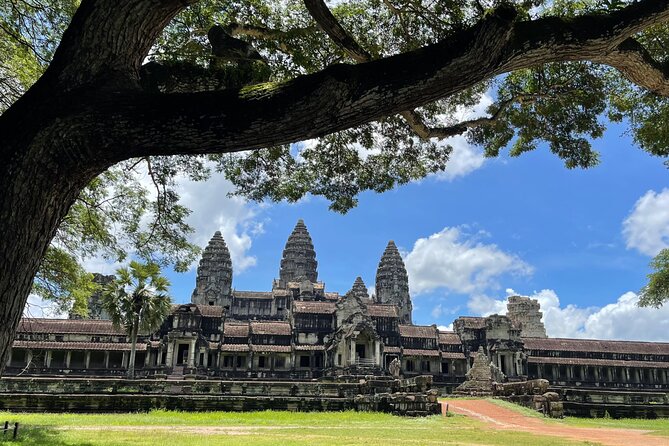
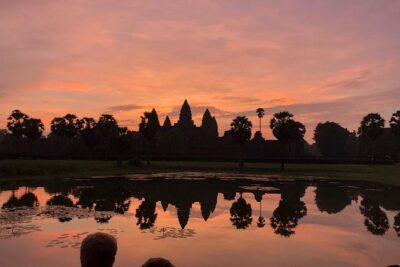
The plan calls for starting around 5:00 am from your hotel, with about a 30-minute drive to Angkor Wat. You’ll spend around three hours total for sunrise and the early part of the morning.
Sunrise at Angkor Wat is popular for a reason. But I appreciate that this tour makes it part of a multi-day schedule instead of treating it like a one-off photo mission. You also get time for your guide to interpret what you’re looking at, rather than just pointing and leaving you to it.
Practical tip: bring a light layer even if Siem Reap feels warm later in the day. Sunrise mornings can still feel cool.
Angkor Thom and the South Gate: first, pictures, then temples
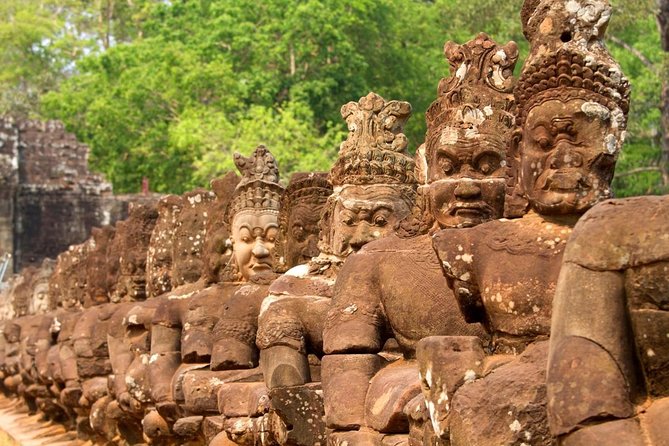
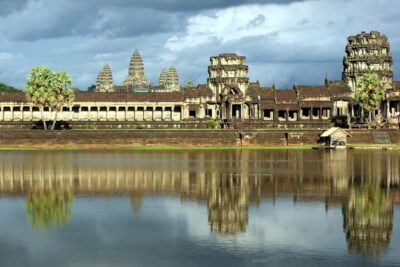
After Angkor Wat, you head to Angkor Thom, described as the capital city. You’ll stop at the South Gate for photos, then move into the main temples in the area. The plan gives you about two hours.
This sequence matters because Angkor Thom is easier to understand once you see the entrance and the scale in context. The South Gate stop gives you a visual anchor before you move deeper into the complex.
Ta Prohm: big roots, smaller details worth noticing
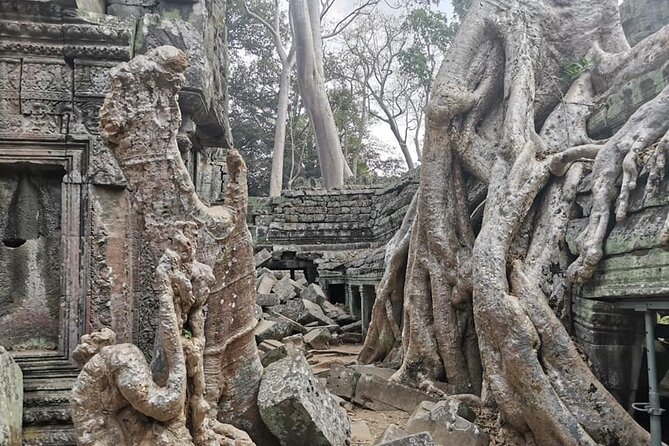
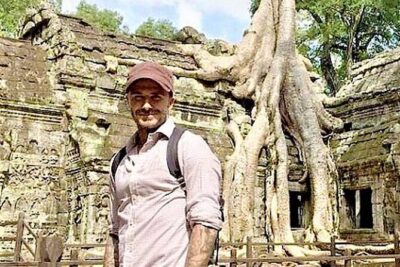
Next is Ta Prohm, with about an hour. The tour also mentions a stop along the way at a stone bridge to see tree growth on top.
That bridge stop is more than a quick photo break. It sets your brain up to notice how nature and architecture interact at Ta Prohm. When you arrive, it feels less like a random ruin and more like an ecosystem that became part of the temple story.
If you’ve only seen Ta Prohm in pictures, go ready to slow down. The best moments are not always the biggest shots. They are the mid-range scenes where you can see how carvings sit beside thick roots and broken edges.
Day 3: Beng Mealea and Bakong, a more Khmer-feeling finale
Day 3 is where the tour’s “off the beaten track” idea becomes real. You still have landmark temples, but you’re also going somewhere that feels less like a postcard stop.
Beng Mealea: a rough, atmospheric temple walk
You meet your guide and driver around 9:00 am, then drive about 1.5 hours to Prasat Beng Mealea. The plan allows around three hours total.
The tour notes you will see local activities along the way. That’s valuable, because Beng Mealea is not just about the temple. It’s about the journey through everyday life toward a site that looks more wild and less polished than Angkor’s most restored names.
Expect more uneven terrain than at some other temples. Beng Mealea is often about exploration, not structured viewing.
Bakong: an ancient capital vibe in the Hariharalaya area
After Beng Mealea, you go to Bakong, described as an ancient Khmer capital city area, Hariharalaya. Bakong is described as a 9th-century temple built by Shiva King Indravarman I. Time here is about 40 minutes.
This stop gives you a bridge between the atmospheric feel of Beng Mealea and the organized layout you’ll recognize from other Angkor sites. It helps you understand temple planning in an earlier phase of the region.
Preah Ko: the sacred bull and a short, meaningful finish
Finally, you head to Preah Ko, described as the sacred bull, built in 879 by Hindu King Indravarman I and dedicated to Shiva. You’ll have about 30 minutes.
This is a quick closer, but it works well after Bakong. You end the tour with a site that keeps the focus on what Angkor was for, religious dedication first, rather than spectacle.
Price and value: $550 per group up to 3, what you’re really paying for
The price is $550 per group, up to three people. On paper, that can look like a lot until you break down what’s included and what’s avoided.
What you’re getting:
- Private tour setup for your group
- A driver and professional guide
- Bottled water
- A full 3-day structure with early sunrise timing built in
- Temple-to-temple routing that tries to reduce crowd pressure
What you are not getting:
- Food and drinks
- Lunch is on you (not included), with a noted budget range
- The Angkor Temple Pass
- Other site fees if they apply
In practice, this price makes sense if you want comfort, a guide who can explain what you’re seeing, and less time stuck in traffic or crowd flows. If you are traveling with family or friends, the per-group pricing is a strong deal compared to cobbling together separate guide services and transfers for each day.
Also, you’re paying for more than transport. You’re paying for someone to keep the day moving and to help you get meaning from the stone.
What’s included, what isn’t, and how to budget without stress
Included in the experience:
- Bottled water
- Driver
- Professional guide
- Private tour
Not included:
- Food and drinks (lunch depends on your choice, with a suggested range)
- Angkor Temple Pass
- Other activities fee if needed
My advice: plan your day with the pass figured out early, not on the morning of your first major temple. Since the pass is not included, you need to make sure it aligns with your dates and the sites you plan to enter.
For meals, it helps to think in options. You can keep lunch simple at local places, then reserve a more complete meal for dinner when you’re back in Siem Reap. That way your temple mornings stay light and your energy holds up.
Who this tour is best for
This 3-day private tour fits best if you:
- Want an easy first-time orientation without the pressure of planning every route
- Prefer small-group energy and a calmer pace
- Care about guides who can explain temple details in English
- Like a mix of famous sights and quieter temple stops
- Are comfortable with moderate walking and warm weather
If you are the type who wants to spend all day in Angkor Wat and just keep photographing, you might find Day 3 too explorative. But if you want variety, this itinerary is built for that.
A quick reality check on timing and comfort
The tour is relaxed and comfortable, but it still moves through multiple sites each day. You are dealing with driving time, walking in temple areas, and early mornings on Day 2.
Bring what you need:
- Comfortable shoes for uneven ground
- Sun protection for open temple areas
- A light layer for sunrise timing
- A phone battery plan, because you will take photos
Also, keep your schedule flexible. The tour includes the option to adjust start and finish times if you arrange it in advance.
Should you book Angkor Cab’s 3-day off-the-beaten-track tour?
I’d book this if you want a guided, private Angkor introduction that balances famous sites with quieter temples and landscape stops. The standout value is the off-the-beaten-track angle on a 3-day structure, plus the comfort pieces like bottled water and private car time.
I’d think twice if you hate early mornings, dislike walking on uneven surfaces, or you have not planned your Angkor Temple Pass yet. Fix that, and it’s a strong way to experience the region without being trapped in the same crowd flow every day.
If you want Angkor in three days, with meaning and a bit more local color than the standard rush, this is a smart choice.
FAQ
How many people is the private tour for?
It’s a private tour for your group, with up to 3 people included in the group size.
What is included in the tour price?
The tour includes a driver, a professional guide, private tour service, and bottled water.
Are meals included?
Food and drinks are not included. Lunch depends on your food preference, with a noted range of about $5 to $10 per person, and it’s listed as byo.
Do I need an Angkor Temple Pass?
Yes. The Angkor Temple Pass is not included in the tour.
What time does the tour start each day?
The meeting time is listed as 9:00 am, but Day 2 includes an early 5:00 am start for Angkor Wat sunrise.
Is pickup included?
Pickup is offered.
Is there free cancellation?
Yes, the experience has free cancellation, with a full refund if you cancel up to 24 hours in advance of the experience start time.
Other Bookings Kept Private
- Full-Day Angkor Wat Sunrise Private Tour with Guide from Siem Reap★ 5.0 · 2,920 reviews
- Siem Reap: Angkor Wat Private Tuk-Tuk Tour★ 4.9 · 2,222 reviews
- Angkor Wat Private Day Tour from Siem Reap★ 5.0 · 834 reviews
- Angkor Wat Private Tuk-Tuk Tour (sunrise Option) & more★ 5.0 · 439 reviews
More Tours in Siem Reap
- Angkor Wat Sunrise or Sunset Tour with Guide from Siem Reap★ 5.0 · 12,109 reviews
- Siem Reap: Angkor Wat: Small-Group Sunrise or Sunset Tour★ 5.0 · 9,444 reviews
- From Siem Reap: Kampong Phluk Floating Village Tour by Boat★ 4.9 · 6,979 reviews
- Siem Reap: Angkor Wat 2-Day Tour with Sunrise and Sunset★ 4.9 · 4,429 reviews
More Tour Reviews in Siem Reap
- Angkor Wat Sunrise or Sunset Tour with Guide from Siem Reap★ 5.0 · 12,109 reviews
- Siem Reap: Angkor Wat: Small-Group Sunrise or Sunset Tour★ 5.0 · 9,444 reviews
- From Siem Reap: Kampong Phluk Floating Village Tour by Boat★ 4.9 · 6,979 reviews
- Siem Reap: Angkor Wat 2-Day Tour with Sunrise and Sunset★ 4.9 · 4,429 reviews
Newly written up around Siem Reap
- Waterfall & River of 1000 Siva Linga- Kulen Mountain Private Tour
★ 5.0 · 3 reviews - Private Transfer from Siem Reap to Sihanoukville
★ 4.5 · 3 reviews - Private Tour to Koh Ker and Beng Mealea
★ 5.0 · 3 reviews - Private Transfer: Siem Reap Angkor Internation Airport to Hotel
★ 5.0 · 3 reviews - Kulen National Park Ticket -Waterfall & 1000 Lingas
★ 5.0 · 3 reviews - Kulen Waterfall & Kbal Spean Tour
★ 5.0 · 3 reviews
3-Day Experiences, side by side.
 ★ 5.0Angkor Wat and Floating Village 3-Day TripFrom $199100 reviews
 ★ 5.03-Day Angkor Wat with All Interesting Major Temples, Banteay Srei & Beng MealeaFrom $26170 reviews
 ★ 5.03-Day Angkor Wat & All Interesting Major Temples & Kulen Mount WaterfallFrom $24863 reviews
 ★ 5.03 Days Siem Reap Explorer – Small GroupFrom $12950 reviews
 ★ 5.0Best of Siem Reap 3-Day Private Tour to Angkor Wat & Tonle SapFrom $16047 reviews
 ★ 5.0Private Siem Reap 3 Day Tour Discover All Highlight Angkor TempleFrom $25341 reviews
★ 5.0Angkor Wat and Floating Village 3-Day TripFrom $18039 reviews
★ 5.0Private Siem Reap 3 Day Tour Discover All Highlight Angkor TempleFrom $25341 reviews
★ 5.0Angkor Wat and Floating Village 3-Day TripFrom $18039 reviews
 ★ 5.03-Day Tour(Unforgettable Angkor Temple Complex, Banteay Srei& Floating Village)From $24528 reviews
Also appears in