
REVIEW · ANGKOR
Angkor Wat: Sunrise: Ta Prohm and Bayon Temple Tour
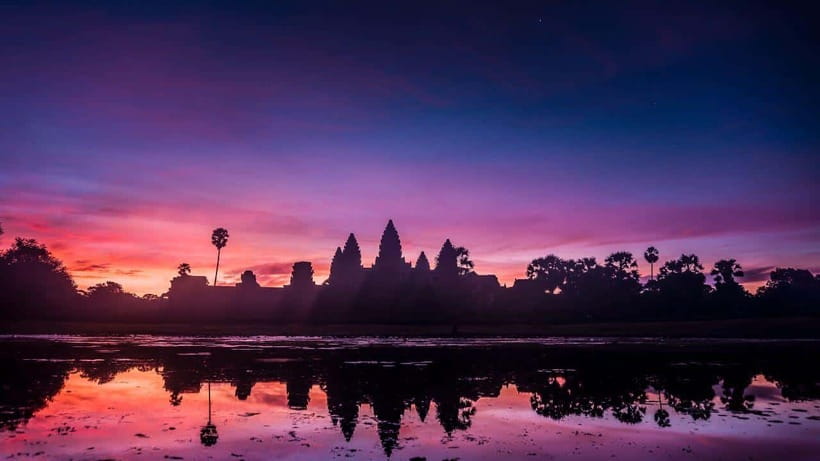
Waking up for Angkor is worth it. This Angkor tour is built around Angkor Wat at sunrise, then a deep, guided walk through the corridors and upper terraces where the stone stories come alive. I also love the jungle atmosphere at Ta Prohm, plus the strong stop at Bayon with its hundreds of carved faces. The one drawback to plan for is that the $16 tour price does not include the temple entrance fee.
The day runs smoothly thanks to pickup in Krong Siem Reap, an air-conditioned vehicle, and steady comfort touches like bottled water and cool towels. In the real world, guides such as Mr. Sokpee, Chhay, Kiz, Sopheaprath, and Lucky (Samnung) are often the difference between seeing temples and understanding what you are looking at.
In This Review
- Key things to know before you go
- Sunrise at Angkor Wat, and how the morning feels
- What to bring for the early start
- One practical reality check
- Angkor Wat on foot: corridors, bas-reliefs, and upper terraces
- The bas-relief stretch you will hear about
- Why this matters for your first Angkor day
- Srah Srang break: a breather before the jungle and city temples
- Ta Prohm: jungle-temple vibes, plus the 2,740 monks detail
- Why it still looks the way it does
- The photo and walking reality
- Angkor Thom: Terraces before Bayon, and why that order helps
- A note on pacing
- Bayon Temple and the face towers: what you will actually notice
- The southern gate: gods on one side, demons on the other
- Angkor Archaeological Park and the end of the day
- Price and logistics: is $16 really the value here?
- Why the total is still often worth it
- The other “hidden cost” is your energy
- Dress code, rules, and what to do with your hands
- Your carry list for a smoother day
- Who should book this Angkor sunrise tour
- Should you book this Angkor Wat sunrise, Ta Prohm, Bayon tour?
- FAQ
- What is included in the $16 per person tour price?
- How much is the temple entrance fee, and is it included?
- Is breakfast included?
- What time does the tour end?
- Do I need to bring a torch?
- What should I wear inside the temples?
- What is the guide language?
- Is there free cancellation?
- Is the tour suitable for children or wheelchair users?
Key things to know before you go
- Pre-dawn Angkor Wat sunrise positioning: you leave your hotel early so you can get a good viewing setup as the sky changes.
- A rarely used entry route: you enter Angkor Wat from the eastern side and move through the temple in early light.
- Two hours inside the Great Temple: the tour is not just exterior photos, it is corridors, chambers, and upper terraces with guided interpretation.
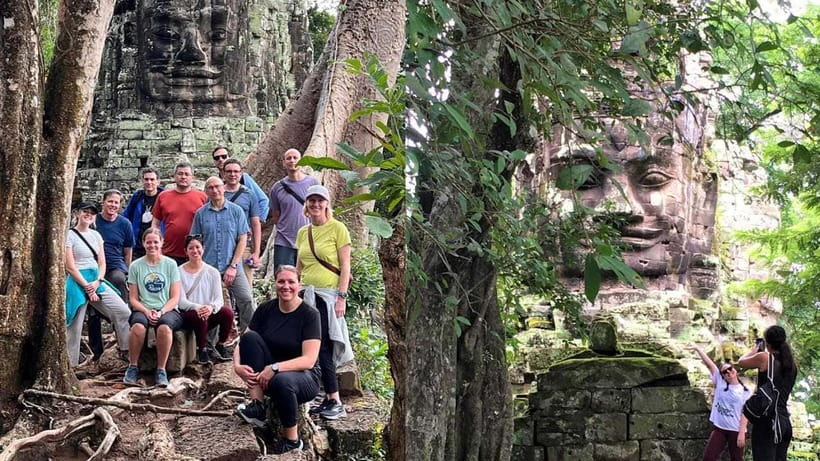
- Ta Prohm under the jungle canopy: you see why it once housed 2,740 monks and why it still feels “frozen in time.”
- Bayon’s 200-plus face towers: the central towers plus the Angkor Thom southern gateway with gods and demons carved along the way.
- Comfort is part of the value: water, cool towels, and an air-conditioned van help you stay functional on a long day.
Sunrise at Angkor Wat, and how the morning feels
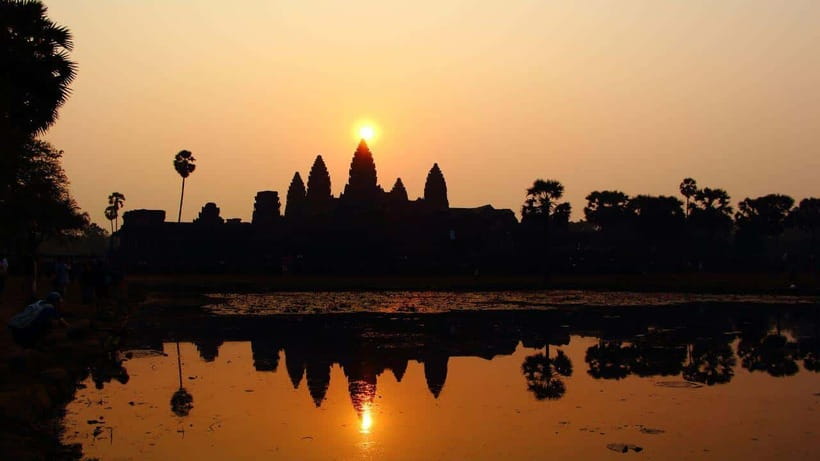
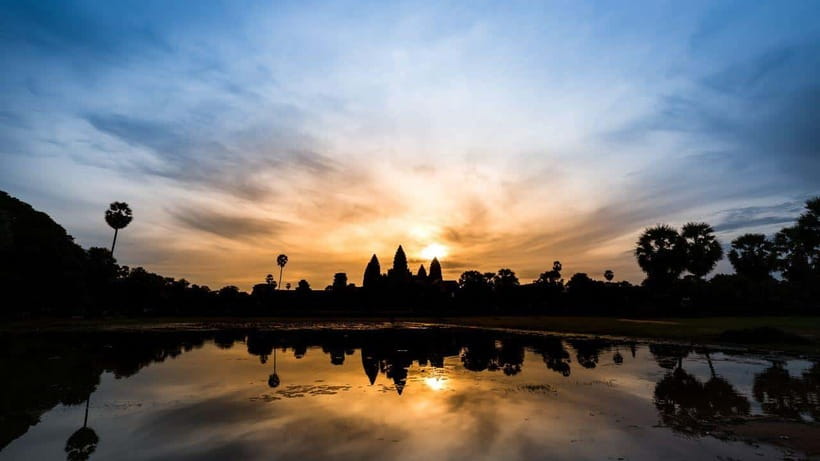
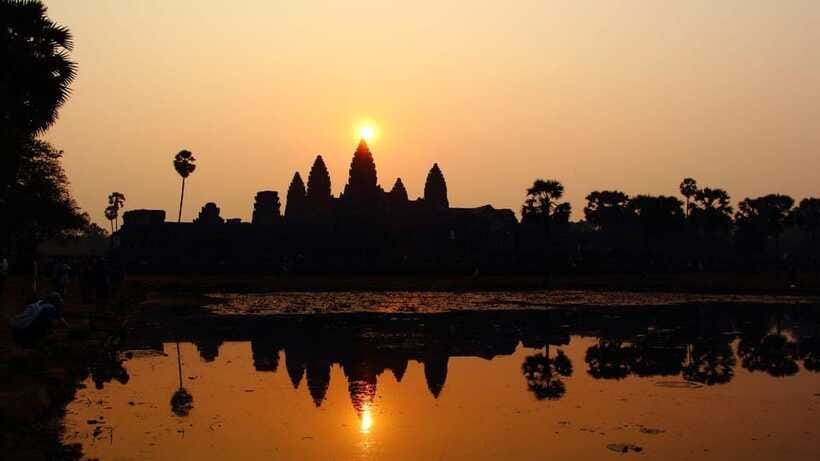
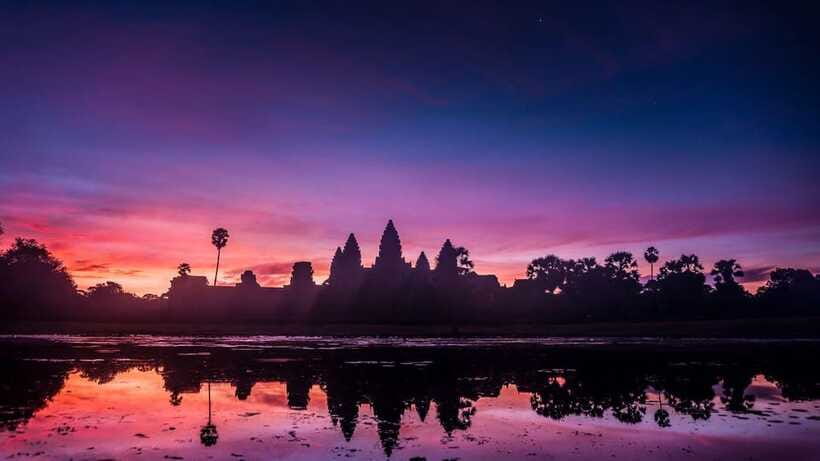
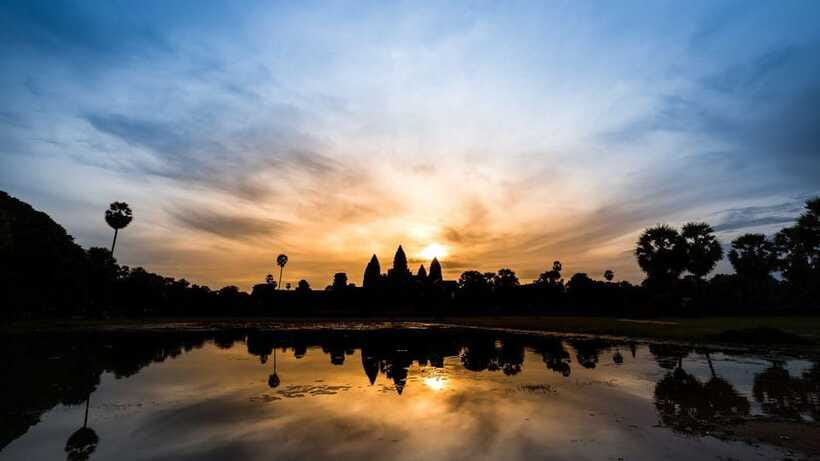
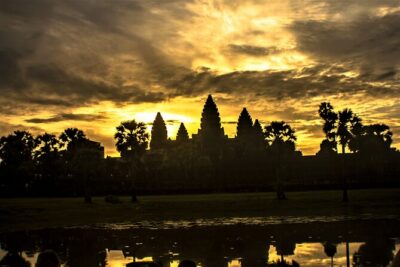
Angkor Wat is the kind of place where timing is everything. Doing it at sunrise means you are not arriving in the peak chaos. You depart your hotel pre-dawn and head out to see the first light over the temple. If you have ever tried to photograph temples when the sun is already high, you know what a difference the early hour makes.
I like that this tour is not vague about the concept. You are going specifically for the sunrise experience outside Angkor Wat, and then you continue into the temple so the morning is not just a quick photo stop. In practice, that helps you settle into the day: you start with awe, then you get structure.
What to bring for the early start
This is an early morning outing, so come ready. The tour recommends a torch since you will be moving before full daylight. Wear comfortable shoes, bring a camera, and use biodegradable sunscreen because you will be outside. Bring cash too, because the day includes a breakfast option but it is not included in the price.
Other ways to be at the temples before the light comes up
- Angkor Wat: Sunrise: Ta Prohm and Bayon Temple Tour★ 5.0 · 27 reviews
One practical reality check
Sunrise depends on the sky. If clouds roll in, you might still get an unforgettable mood, but the dramatic lighting and reflections may be less intense. It is worth going anyway, because the atmosphere alone does the job.
Angkor Wat on foot: corridors, bas-reliefs, and upper terraces
Once the sunrise moment happens, the tour shifts gears into real temple time. You enter Angkor Wat in darkness from the little-visited eastern side. That matters. Early entry changes the feel of the place. You are not stepping into a fully lit museum. You are creeping along old stone corridors while your surroundings wake up.
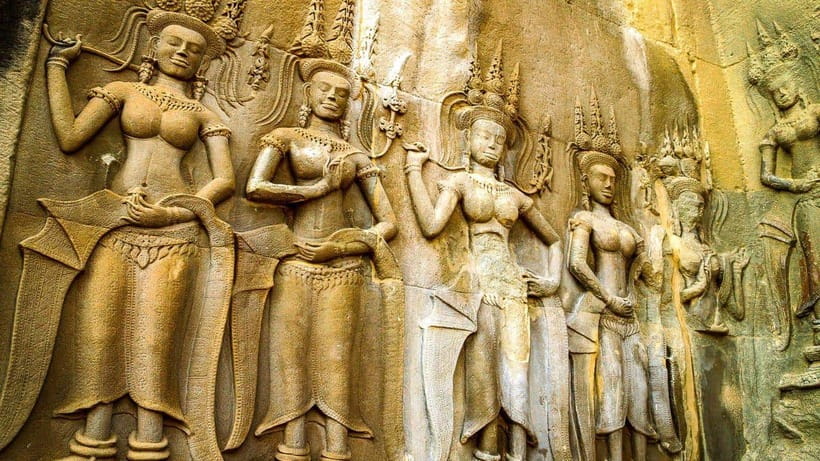
You will spend a thorough two hours inside Angkor Wat, moving through central chambers and up to the upper terraces. This is where the guided part pays off. The guide is there to explain the stories behind the bas-relief carvings and to connect what you see with the Khmer Empire at its height. If you only do quick stops at Angkor, you tend to remember the shapes. With this pacing, you start remembering the themes.
The bas-relief stretch you will hear about
The tour experience highlights the longest stretch of bas-relief carvings in the world. Even if you are not counting panels, you will feel the scale because you are walking it, not just looking at one photo. Expect long corridor stretches where the carvings keep going and going, like the temple is determined to tell you everything.
Why this matters for your first Angkor day
Angkor can overload your brain fast. A focused two-hour interior visit helps you digest the place. Instead of bouncing between landmarks, you get a guided narrative in the setting where the narrative was created.

Srah Srang break: a breather before the jungle and city temples
Halfway through the morning, you take a break at Srah Srang. This is a useful palate cleanser. You get a chance to reset before the next stretch of walking. The tour schedule also includes breakfast time here, but breakfast itself is not included.
That is a nice detail for your planning. If you want to control cost and food quality, you can bring a boxed breakfast from your hotel and eat at your own pace. The timing is also sensible: you finish Angkor Wat, take a step back, then continue while you still have energy.
Ta Prohm: jungle-temple vibes, plus the 2,740 monks detail
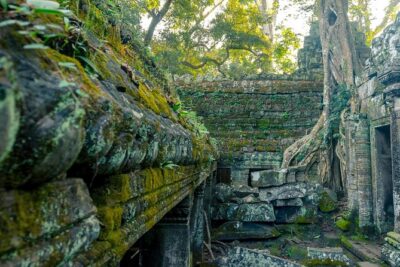
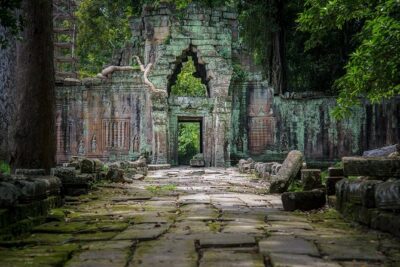
Then comes Ta Prohm. This temple is one of the most atmospheric stops in the Angkor complex, and it earns that reputation for a reason. You see the jungle-enveloped look that made Ta Prohm feel like it was reclaimed by nature long before modern conservation.
One specific detail I like is that the tour frames Ta Prohm not just as scenery, but as lived space. It notes that Ta Prohm was once home to 2,740 monks. That number anchors the visit. Suddenly you are not just watching tree roots on stone. You are thinking about how many people once moved through these halls and courtyards.
Why it still looks the way it does
The tour explanation points to French explorer Henri Mouhot and the early 1850s idea of rediscovery. The point for you is simple: the temple still carries that “left as found” feeling that made Ta Prohm famous in the first place.
The photo and walking reality
Ta Prohm rewards you for slowing down. It is easy to rush and miss the way the jungle frames doorways and corridors. Comfortable shoes matter here. You will be walking and moving through uneven stone surfaces, and you will want your footing to feel solid.
Angkor Thom: Terraces before Bayon, and why that order helps
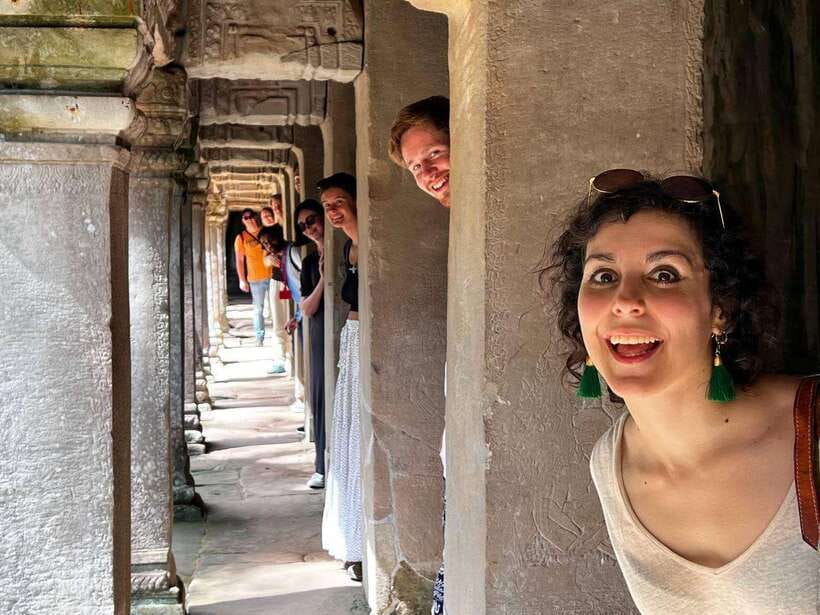
After Ta Prohm, the tour shifts into Angkor Thom city. This is where the Angkor experience starts feeling like a complete urban world rather than isolated temples.
You pass by two of the signature terraces on the way in: the Terrace of the Leper King and the Terrace of Elephants. These stops are quick, but they do something valuable. They widen your view beyond Bayon and show how Angkor Thom used sculpted space to communicate power and culture.
Then you arrive at Bayon Temple.
A note on pacing
This section includes multiple walk-throughs and short stop-and-look moments. If you tend to burn out during busy sightseeing days, this is the part where you will want to take breathing pauses. That is also where good guiding helps you keep your place and not get lost in the crowds and stone.
Bayon Temple and the face towers: what you will actually notice
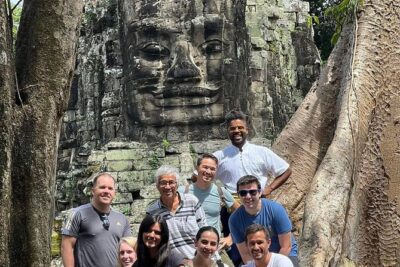
Bayon Temple is famous, and this tour gives you the reason right in front of you. You see beautifully crafted central towers covered in more than 200 enormous faces. When you are in person, you do not just notice one face. You feel surrounded, like the temple is watching you from every angle.
The guide’s job here is to translate the carvings into context. In a short visit, you can still walk away with a clearer sense of what the symbolism might have meant and how the Khmer Empire expressed itself through stone.
The southern gate: gods on one side, demons on the other
From Bayon, the tour continues toward the southern gate of Angkor Thom. The gateway is flanked by 54 stone figures on each side, with gods to the left and demons to the right. This detail is one of those small structural things that changes how you experience the space.
Instead of seeing a gate as an entrance, you start reading it as a designed moral or cosmic statement. It is a short segment in time, but it sticks in your memory because it is so visual.
Angkor Archaeological Park and the end of the day
The tour wraps up back in the Angkor Archaeological Park area, then you return to your hotel. The tour ends between 12.30 and 1.30 pm, which is a big deal for your day planning.
After a sunrise start, you usually want to know you are not trapped for the rest of the afternoon. Ending around early lunch time gives you room for a real meal, a shower, and maybe even a low-key rest before dinner.
Price and logistics: is $16 really the value here?
The headline price is $16 per person for an 8-hour guided experience. That is the part most people focus on, but the more honest way to judge value is to add the missing piece: the temple entrance fee.
Temple entrance fee is US$37.00 and covers all temples in one day. That fee is not included in the tour price. So your all-in cost is closer to $53 per person, plus any breakfast you choose.
Why the total is still often worth it
You are paying for more than someone walking you between temples. This tour includes:
- A sunrise viewing experience at Angkor Wat
- Guided time inside Angkor Wat (not just exterior viewing)
- Visits to Ta Prohm, Angkor Thom city, and Bayon Temple
- An English-speaking tour guide
- Skip the ticket line
- Air-conditioned transport plus pickup and drop-off
Skip-the-line access can save real time at Angkor. A comfortable van and cool towels matter too, because you are up early and moving a lot. If you are trying to see the major hits in one morning without fighting logistics, the value improves.
The other “hidden cost” is your energy
You should assume a physically active morning. The day is built around walking corridors, climbing temple terraces, and taking in a lot of stone. Bring the right shoes and expect the morning to be more tiring than you think, even with breaks.
Dress code, rules, and what to do with your hands
Angkor is casual, but there are temple rules. Shoulders and knees must be covered inside temples. Shorts are not allowed, and it is a good idea to wear light long pants or bring a cover-up you can use quickly.
Also note what not to bring: no pets are allowed. If you are traveling with anything like that, plan around it early.
Your carry list for a smoother day
The tour suggests you bring:
- Comfortable shoes
- Camera
- Biodegradable sunscreen
- Comfortable clothes that cover shoulders and knees
- Cash
- A torch (recommended for the early start)
That list is practical. It keeps you from doing the classic mistake of showing up at sunrise and then realizing you forgot the one thing that makes it easier.
Who should book this Angkor sunrise tour
This tour fits best if you want a first-time Angkor morning that hits the big emotional moments and still gives you explanations.
You are a good match if:
- You care about sunrise at Angkor Wat, not just daytime sightseeing
- You want a guided story behind the carvings and temple layouts
- You like a plan that ends around lunch so you can keep the rest of your day open
It is not suitable for children under 8, and it is not suitable for wheelchair users, so keep that in mind if accessibility is a factor for your group.
Should you book this Angkor Wat sunrise, Ta Prohm, Bayon tour?
Yes, if you want an organized, high-impact morning with a real guide and comfort support, this is a strong way to do Angkor for a first or second visit.
Book it if:
- You want early sunrise plus interior time at Angkor Wat
- You appreciate guides who explain what you are seeing, not just point and go
- You value skip-the-line convenience and an air-conditioned ride
Think twice if:
- You dislike early wake-ups, since this starts pre-dawn
- You are counting every dollar, because the separate $37 entrance fee brings the total up
- You need more flexible pacing, since this day is built to cover several major temple areas efficiently
If you plan around the early start, wear the right clothes, and bring the basics, you will leave with the temples in your head, not just on your camera roll.
FAQ
What is included in the $16 per person tour price?
The tour includes the sunrise at Angkor Wat, guided visits to Angkor Wat, Ta Prohm, Angkor Thom city, and Bayon Temple, an English-speaking tour guide, bottled water and cool towels, air-conditioned vehicle transport, and hotel pickup and drop-off. It also includes skip-the-ticket-line entry.
How much is the temple entrance fee, and is it included?
The temple entrance fee is US$37.00 and it is not included. The fee covers all temples in one day.
Is breakfast included?
Breakfast is not included. The tour includes a breakfast break time, and breakfast is available at a local restaurant.
What time does the tour end?
The tour ends between 12.30 and 1.30 pm.
Do I need to bring a torch?
It is recommended to bring a torch for the early morning start.
What should I wear inside the temples?
Dress code is casual, but shoulders and knees must be covered inside temples. Shorts are not allowed.
What is the guide language?
The tour has a live English-speaking guide.
Is there free cancellation?
Free cancellation is available up to 24 hours in advance for a full refund.
Is the tour suitable for children or wheelchair users?
It is not suitable for children under 8 years old and it is not suitable for wheelchair users.
More Tour Reviews in Cambodia
- Phnom Penh: Cycling Adventure on Islands of the Mekong★ 5.0 · 225 reviews
- Phnom Penh’s Hands-On Khmer Cooking Class in the Countryside★ 5.0 · 54 reviews
- Small Group Countryside Sunset Bike Tours★ 5.0 · 39 reviews
- Elephant Sanctuary Cambodia, Pickup and drop off included★ 4.9 · 31 reviews
Sunrise at Angkor, Three More Ways
- Private Angkor Sunrise, Guide Breakfast and Tuktuk included★ 3.9 · 3 reviews
Newly written up around Cambodia
- SiemReap Sunset Dinner Riding an Ox-Cart at Rice Paddy Field
★ 5.0 · 3 reviews - Phnom Penh: Morning Foodie, Market Walking & Street Art Tour
★ 5.0 · 3 reviews - Private Angkor Sunrise, Guide Breakfast and Tuktuk included
★ 3.9 · 3 reviews - Kulen Mountain Waterfall Tour
★ 4.0 · 3 reviews - Cambodia Elephant Sanctuary Include Hotel Transfer Roundtrip
★ 4.3 · 3 reviews - Siem Reap Khmer Cooking Class and Local Market Tour
★ 4.1 · 4 reviews
Angkor Wat Sunrise Tours, side by side.
 ★ 5.0Angkor Wat Sunrise or Sunset Tour with Guide from Siem ReapFrom $1812,109 reviews
 ★ 5.0Angkor Wat: Small-Group Sunrise or Sunset TourFrom $159,444 reviews
 ★ 4.9Angkor Wat 2-Day Tour with Sunrise and SunsetFrom $344,429 reviews
 ★ 5.0Angkor Wat Sunrise tour with Small – Group and Guide toursFrom $143,655 reviews
 ★ 5.0Angkor Wat Highlights and Sunrise Guided Tour from Siem ReapFrom $233,213 reviews
 ★ 5.0Full-Day Angkor Wat Sunrise Private Tour with Guide from Siem ReapFrom $602,920 reviews
 ★ 5.0Angkor Wat Sunrise & 3 Main Temples with Breakfast – Small GroupFrom $152,857 reviews
 ★ 4.9Angkor Wat Sunrise and Full-Day Sightseeing TourFrom $142,828 reviews
Also appears in