
REVIEW · ANGKOR
2-Day Angkor Wat, Banteay Srei & Floating Village Kampong Pluk
Morning at Angkor Wat feels like a cheat code. This two-day circuit pairs the sunrise temple experience with a real cultural detour on Tonle Sap, finishing at floating village Kampong Pluk.
I love the way the schedule hits the big icons twice, with Angkor Wat first thing on day 1 and again for an early sunrise on day 2. I also love the photo-friendly flow, especially around Ta Prohm’s root-covered structures and Bayon’s iconic smiling faces.
One possible drawback is that day 1 moves fast, with many stops in Angkor Thom plus a sunset climb at Phnom Bakheng if you choose it. If you hate rushing, plan to bring a patient mindset and comfortable footwear.
In This Review
- Key highlights worth your time
- Day 1 in Angkor: from Angkor Wat to Ta Prohm’s tree roots
- The Angkor Thom run: Victory Gate, Bayon, and royal-era landmarks
- Terraces and small stops: where you slow down for the details
- Phnom Bakheng sunset: do it if you like the challenge
- Day 2: sunrise at Angkor Wat and a real Tonle Sap boat ride
- Banteay Srei and the quieter temples after lunch
- Price and value: $166 is the tour, not the temple passes
- Guide and driver quality: why it changes how you experience Angkor
- Who this 2-day tour is best for, and who should adjust
- Should you book this Angkor Wat, Banteay Srei, and Kampong Pluk tour?
- FAQ
- What time is pickup on day 1?
- What time is pickup on day 2 for sunrise?
- Are the Angkor temple admission fees included?
- Is the floating village admission included?
- Is lunch included?
- What is included in the tour besides the guide?
- Is the Kampong Pluk floating village visit by boat?
- Is this a private tour?
- What is the cancellation policy?
Key highlights worth your time
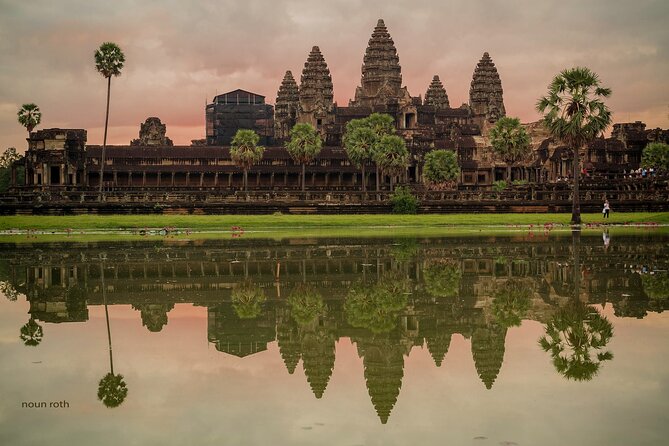
- Angkor Wat at sunrise (day 2): 5:00am pickup means you get the light before the crowds and heat roll in.
- Ta Prohm’s Tomb Raider look: gigantic tree roots over stone, plus a natural “wander and frame photos” layout.
- Bayon’s face-towers: 49 towers, four faces each, for 196 faces of Avalokiteshvara.
- Floating village by private boat: you cruise through stilt houses on Tonle Sap, not just a land-view photo stop.
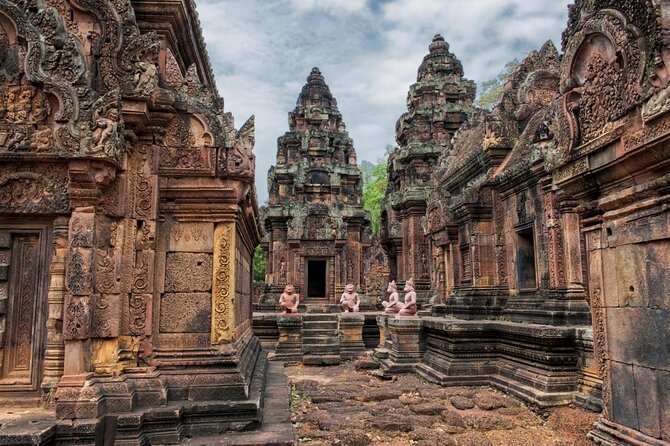
- Banteay Srei pink sandstone: a smaller, more delicate contrast to the mega temples around it.
- A guide who helps with photos: multiple reviews highlight guides who take time for great pictures, not just lectures.
Day 1 in Angkor: from Angkor Wat to Ta Prohm’s tree roots
Day 1 is built around the Angkor “greatest hits,” but it still has variety. You start with hotel pickup at 8:00am, then you’ll head out with your English license guide in an A/C vehicle, along with cool drinking water and towels.
Angkor Wat is where you start to understand the scale. Even if you’ve seen it on postcards, it hits different in person because the temple is not a single view, it’s a sequence. Expect about 2 hours here, long enough to appreciate the main layout and also to notice details on walls and towers instead of just staring upward.
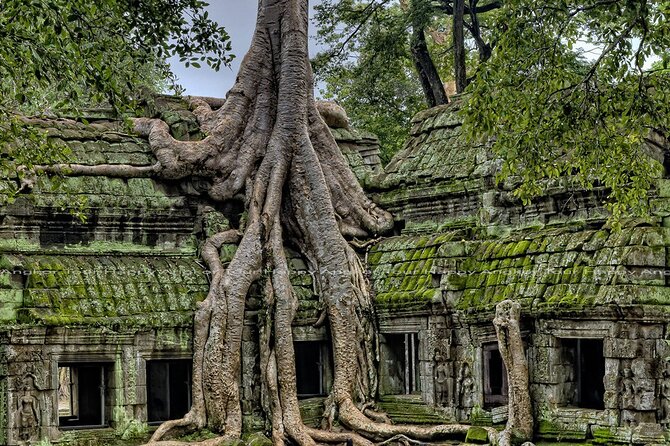
Next comes Ta Prohm, the temple famous for the Tomb Raider film look. This is the spot where the scenery feels almost cinematic: huge tree roots wrapping and lifting stone blocks, creating a texture you won’t get anywhere else in the park. The tour keeps you there about 2 hours, which is just right for walking slowly, looking up, and finding angles without feeling like you’re on a conveyor belt.
The Angkor Thom run: Victory Gate, Bayon, and royal-era landmarks
After Ta Prohm, the route shifts into Angkor Thom, the walled city. This is where you can move from “wow, a temple” to “wow, a whole city plan,” with named gates, central monuments, and terraces used by rulers.
You’ll stop at the Victory Gate first, on the east side of Angkor Thom. It’s a short stop, about 15 minutes, but it’s a perfect palate cleanser because it frames the next big moment: Bayon.
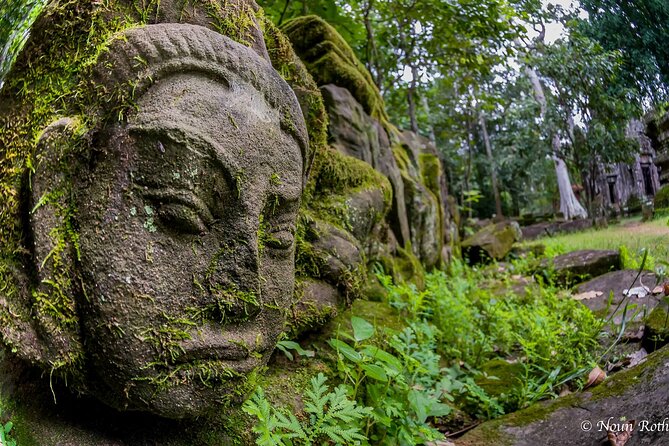
Bayon is a centerpiece and it’s easier to appreciate when you’re not rushed. The tour description points out why it’s so recognizable: 49 towers, each with four faces, which adds up to 196 faces of Avalokiteshvara. You’ll spend about 45 minutes here, enough time to walk around the complex and catch how the faces shift with your position.
From there you keep walking through the “royal core” temples, each with a different vibe. Baphuon takes about 45 minutes and combines eras: it’s a Hindu temple built in the 11th century, and the big reclining Buddha behind it was added later, in the 16th century. It’s one of those places where you start seeing Angkor as changing over time, not frozen in one moment.
Further out: other Banteay Srei and Beng Mealea runs
- Full-Day Banteay Srei & 4 Temples – Grand Tours Join-in Tour★ 5.0 · 1,155 reviews
- Siem Reap Tour: Angkor Wat Sunrise, Bayon, Ta Prohm, Banteay Srei★ 5.0 · 931 reviews
- Kulen Mountain with Beng Mealea and Tonle Sap Small Group Tour★ 5.0 · 780 reviews
- Koh Ker Temple Group & Beng Mealea Full-Day Join-in Tour★ 5.0 · 710 reviews
Terraces and small stops: where you slow down for the details
The tour doesn’t only rely on the headline monuments. A big part of the enjoyment is the way it sprinkles in platforms and smaller sanctuaries that reward close looking.
You’ll visit Phimeanakas, a pyramid Hindu temple from the 10th century located in the center of the old royal palace area. The stop time is shorter, about 20 minutes, but it pairs well with the surrounding Royal Enclosure Wall concept, making the whole royal layout easier to picture.
Then come the terraces, both quick but memorable. The Terrace of the Elephants gets you about 15 minutes, with elephant carvings that once lined a platform used by kings to view returning armies. Nearby, the Terrace of the Leper King also takes about 15 minutes. Even if you don’t love the name, the stonework and carvings make it worth the stop.
If you want at least one pocket of calm, Ta Nei and Preah Palilay help. Ta Nei is described as smaller and less restored, with big trees around it and fewer crowds. That makes it a good break between heavier, more restored structures. Preah Palilay is another short detour, about 10 minutes, in a wooded area north of the palace, which gives you a change in feel from open courtyards.
Phnom Bakheng sunset: do it if you like the challenge
Day 1 ends with Phnom Bakheng, where you climb up for sunset views. The plan gives you about 2 hours for this stop, and it explicitly notes that if you do not want to wait for sunset, you can skip that waiting period.
This is the part to judge based on your energy. If you enjoy the payoff of timing and you don’t mind crowds near sunset viewpoints in general, it can feel like the perfect closing scene. If you prefer a more relaxed pace, you can use the climb for the view and skip the long wait.
Day 2: sunrise at Angkor Wat and a real Tonle Sap boat ride
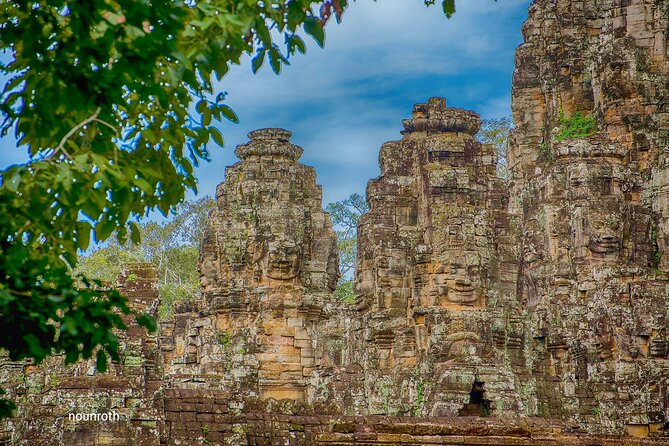
Day 2 starts early, and the timing is the whole point. Your pickup is at 5:00am, then you head out to watch sunrise at Angkor Wat. The schedule lists about 1 hour 45 minutes for this sunrise block, and it’s set up so you can see the light shift without spending half your day commuting.
There’s also a practical benefit to an early start. The temples you visited on day 1 still matter, but the experience feels different when you catch soft morning light and fewer people. If you’re the type who wants photos without constant interruptions, sunrise is a smart use of time.
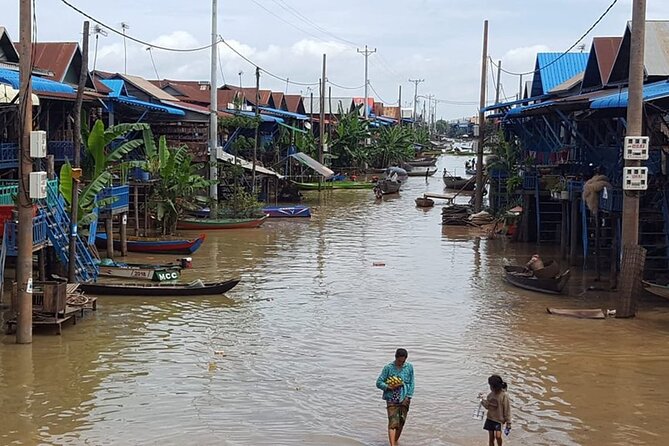
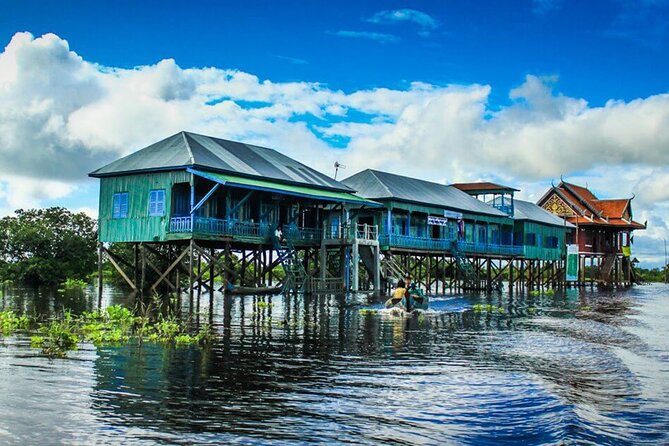
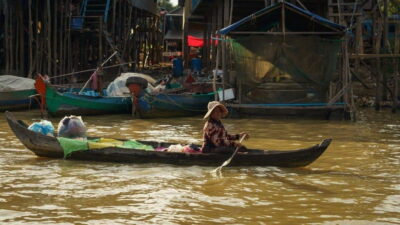
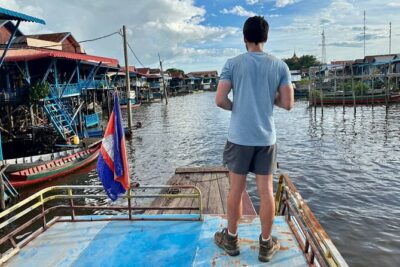
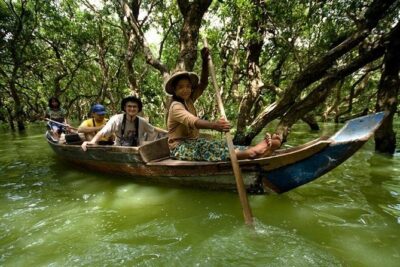
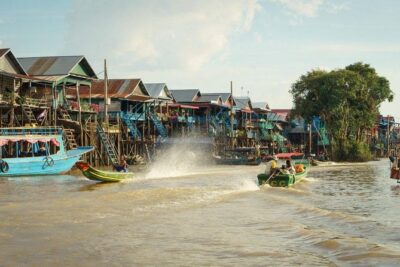
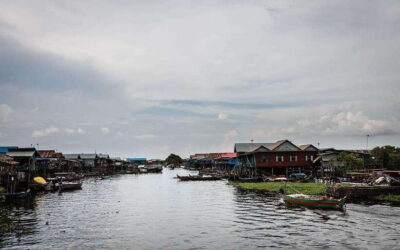
After sunrise, you return and then the tour moves to Kampong Pluk on Tonle Sap Lake. You’ll have breakfast, then visit the Kampong Pluk Floating Village area, with about 4 hours for this segment. The key detail here is not just sightseeing. You take a private boat ride and cruise through the stilt houses of the fishing village.
That “by boat” piece changes everything. From land, you get a partial picture. From the water, you see how close daily life is to the lake, and you can understand the layout of homes and pathways that you would never guess from a distant view.
Banteay Srei and the quieter temples after lunch
After Kampong Pluk, the tour breaks for lunch, then heads to a temple set that feels more refined than the mega sites.
Banteay Srei is the star of this afternoon, and the route emphasizes why: it’s built from rare pink sandstone and known as the jewelry of Angkor. You spend about 1 hour here. This is a temple where the craftsmanship matters, so it’s worth taking time to look at carvings and not just treat it like a quick stop.
Next is Banteay Samre, described as a 12th-century Hindu temple with architecture that is less obvious at first glance, but believed to follow a model similar to Angkor Wat. The stop is about 45 minutes, which is enough for a careful walk without turning it into a tiring slog.
Then you visit Pre Rup. The tour notes it was constructed in the late 10th century and dedicated to Hindu gods, with an association to funeral practices in Cambodian belief systems. You get about 30 minutes here, and it’s another “good for an overview plus a few details” stop.
Finally, there’s Banteay Kdei, about 45 minutes. It’s a 12th-century Buddhist temple, and the style is said to be similar to Ta Prohm and Bayon. If you liked the earlier visual language of roots and faces, this is a nice closing bridge before you wrap up the second day.
More time on the lake, other boats
Price and value: $166 is the tour, not the temple passes
Here’s how the money typically breaks down based on the tour details you provided.
The base price is $166 per person. That covers hotel pickup and drop-off, an English license guide, A/C vehicle with driver, parking fees and road tolls, and the practical extras like cool drinking water and towels. You’re also getting a private setup, since it’s described as a private tour/activity with only your group.
But you still need to budget for the big admissions. The Angkor + All Temples pass is $62 per person, and the Tonle Sap Lake/Floating Village ticket with private boat ride is $20 per person. Lunch is not included in the package price, and it’s listed as about $5 per person depending on the menu.
So, for planning purposes, you should expect the temples plus the floating village boat ride to add about $82 per person, on top of the $166. That puts a realistic all-in target around the mid-$200s per person before any extra meals or snacks beyond lunch.
Also, the tour notes a mobile ticket and group discounts. Those perks matter if you want smoother access and cost control, especially if you’re traveling as a small group.
Guide and driver quality: why it changes how you experience Angkor
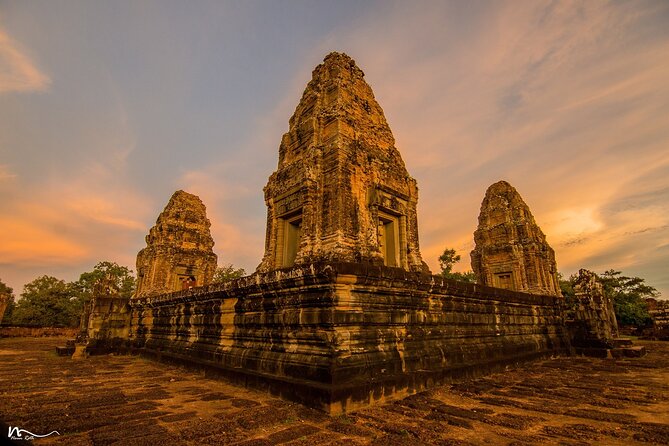
This route lives or dies on the people guiding you through it. The reviews you shared repeatedly praise guides who tell stories in a way that makes the stones easier to understand and helps you get great photos.
You’ll see names like Bun paired with driver Sreang, Vanna with drivers San and Dat, and Chhay with drivers Sreang and Path. Another highlight is Lonn with driver Sreang. In multiple comments, the standout traits are not just facts, but the ability to manage time, stay friendly, and take time for picture moments.
If you care about photos, look for a guide who understands light and angles. The reviews you provided specifically mention perfect photos and that the guide takes wonderful pictures. That means you can expect more than a quick point-and-shoot stop, you’re more likely to get guidance on where to stand and when to move.
Who this 2-day tour is best for, and who should adjust
This is a strong fit if you want a guided plan that covers the major Angkor highlights without you having to stitch together logistics yourself. You get pickup, A/C comfort, a schedule that includes both Angkor Wat sunrise and Kampong Pluk by boat, and the temple pass and floating village ticket are the only major extras you need to handle.
It’s also a good choice for families or groups who want the temples covered in a single, coherent route. The reviews call out comfort and smooth organization, and the private format means you are not competing with a huge group for attention.
If you hate early mornings, this might test you. Day 2 pickup is at 5:00am, and that’s not optional if you want the sunrise plan. And day 1 has a dense sequence, so if you need long breaks between stops, you’ll have to mentally treat it as an active day.
Should you book this Angkor Wat, Banteay Srei, and Kampong Pluk tour?
I’d book this tour if you want one tidy plan for two days, including the sunrise at Angkor Wat and a genuine water-based stop at Kampong Pluk. The mix of major temples (Angkor Wat, Ta Prohm, Bayon), royal-era details (terraces and enclosure walls), and the softer afternoon shift to Banteay Srei pink sandstone makes the itinerary feel varied instead of repetitive.
You should think twice if you want a slow, lightly structured day with lots of free time. This route is built to pack in meaningful stops, including a sunset climb option at Phnom Bakheng, so energy and comfort with walking really matter.
If you decide to go, I’d strongly suggest you confirm you’re comfortable with the extra admissions costs for the Angkor pass and floating village boat ticket. Then show up ready to follow your guide’s pace, because that’s where the value really shows.
FAQ
What time is pickup on day 1?
Day 1 pickup is at 8:00am from your accommodation (hotel or guest house).
What time is pickup on day 2 for sunrise?
Day 2 pickup is at 5:00am at your accommodation to watch sunrise at Angkor Wat.
Are the Angkor temple admission fees included?
No. The Angkor + all temples pass is listed as $62.00 per person and is not included.
Is the floating village admission included?
No. The Tonle Sap Lake/Floating Village ticket with a private boat ride is listed as $20.00 per person and is not included.
Is lunch included?
Meals are not included. Lunch is listed as $5.00 per person and depends on the menu.
What is included in the tour besides the guide?
Included items are hotel pickup and drop-off, cool drinking water and towels, parking fees and road tolls, an English license guide, and an A/C vehicle with a driver.
Is the Kampong Pluk floating village visit by boat?
Yes. The plan includes a visit to Kampong Pluk and a private boat ride.
Is this a private tour?
Yes. It is described as a private tour/activity, with only your group participating.
What is the cancellation policy?
Free cancellation is available up to 24 hours in advance for a full refund, based on local time.
More Tour Reviews in Siem Reap
- Angkor Wat Sunrise or Sunset Tour with Guide from Siem Reap★ 5.0 · 12,109 reviews
- Siem Reap: Angkor Wat: Small-Group Sunrise or Sunset Tour★ 5.0 · 9,444 reviews
- From Siem Reap: Kampong Phluk Floating Village Tour by Boat★ 4.9 · 6,979 reviews
- Siem Reap: Angkor Wat 2-Day Tour with Sunrise and Sunset★ 4.9 · 4,429 reviews
More Hours Out on the Tonle Sap
- From Siem Reap: Kampong Phluk Floating Village Tour by Boat★ 4.9 · 6,979 reviews
- Kompong Phluk Floating Village Half-Day Tour ( Morning / Sunset )★ 5.0 · 1,494 reviews
- Siem Reap: Kulen Mountain, Beng Mealea and Tonle Sap Tour★ 5.0 · 1,483 reviews
- Tonle Sap Lake & Kampong Phluk Village Half-Day Tour★ 5.0 · 1,045 reviews
Banteay Srei and Beng Mealea, Compared
- Siem Reap: Kulen Mountain, Beng Mealea and Tonle Sap Tour★ 5.0 · 1,483 reviews
- Full-Day Banteay Srei & 4 Temples – Grand Tours Join-in Tour★ 5.0 · 1,155 reviews
- Siem Reap Tour: Angkor Wat Sunrise, Bayon, Ta Prohm, Banteay Srei★ 5.0 · 931 reviews
- Kulen Mountain with Beng Mealea and Tonle Sap Small Group Tour★ 5.0 · 780 reviews
Newly written up around Siem Reap
- Waterfall & River of 1000 Siva Linga- Kulen Mountain Private Tour
★ 5.0 · 3 reviews - Private Transfer from Siem Reap to Sihanoukville
★ 4.5 · 3 reviews - Private Tour to Koh Ker and Beng Mealea
★ 5.0 · 3 reviews - Private Transfer: Siem Reap Angkor Internation Airport to Hotel
★ 5.0 · 3 reviews - Kulen National Park Ticket -Waterfall & 1000 Lingas
★ 5.0 · 3 reviews - Kulen Waterfall & Kbal Spean Tour
★ 5.0 · 3 reviews
Banteay Srei & Beng Mealea Tours, side by side.
 ★ 5.0Kulen Mountain, Beng Mealea and Tonle Sap TourFrom $481,483 reviews
 ★ 5.0Full-Day Banteay Srei & 4 Temples – Grand Tours Join-in TourFrom $201,155 reviews
 ★ 5.0Siem Reap Tour: Angkor Wat Sunrise, Bayon, Ta Prohm, Banteay SreiFrom $130931 reviews
 ★ 5.0Kulen Mountain with Beng Mealea and Tonle Sap Small Group TourFrom $54780 reviews
 ★ 5.0Koh Ker Temple Group & Beng Mealea Full-Day Join-in TourFrom $50710 reviews
 ★ 5.02-Day Angkor Wat With Small, Big Circuit and Banteay Srei TourFrom $158545 reviews
 ★ 4.9Koh Ker and Beng Mealea Temples TourFrom $50293 reviews
 ★ 4.8Banteay Srei Temple & Grand 5 Temple TourFrom $20262 reviews