
REVIEW · ANGKOR
2-Day Angkor Wat Tour with Banteay Srei and Floating Village
Two days, five temple moods. This private Angkor tour is built around early starts, smart routing, and a mix of famous sites plus quieter temple corners, capped with a Tonle Sap boat ride. If you care about seeing Angkor when it is calm and getting the best angles for photos, the schedule here is designed for that.
I especially like the combination of air-conditioned comfort and real guide storytelling, so the stones do not feel like random ruins. I also like that the itinerary touches both the headline stops and smaller, more peaceful spots like the Terrace of the Leper King and the sequence of Bayon, Ta Prohm, Pre Rup, and Banteay Srei. One drawback to plan for: most temple and entry fees are not included, so your final budget can jump once you add the required passes.
In This Review
- Key things to notice before you go
- Price and value: what $130 covers (and what it doesn’t)
- Day one routing: Angkor Thom first, then Angkor Wat and sunset
- Bayon Temple: faces at the center of Jayavarman VII’s power
- Baphuon and the temple-mountain style
- Terrace of the Elephants and the royal stage
- Angkor Archaeological Park lunch break: plan your energy
- Angkor Wat: the icon, and why timing matters
- Phnom Bakheng sunset option: go if weather cooperates
- Day two at sunrise: Ta Prohm, Pre Rup, and the slower, older corners
- Ta Prohm: the jungle temple look that tells a story
- Pre Rup: a classic view-point temple at a measured pace
- Eastern Mebon, Ta Som, Neak Pean: the route that avoids feeling repetitive
- Preah Khan and the Angkor Park lunch, then the big shift to Banteay Srei
- Banteay Srei: the refined sandstone carvings that feel different
- Kampong Phluk floating village: Tonle Sap life by boat
- Dry season reality check: what you should expect
- A note on responsibility
- What makes this tour work: guide style, pacing, and AC comfort
- Heat management you can actually feel
- A route that balances icons and quieter stops
- Strong English guidance shows up again and again
- Tips to make your two days smoother
- Bring the basics that keep you comfortable
- Start early mentally, not just on the clock
- Budget for entrance fees early
- For better photos, take cues from your guide
- Who should book this tour?
- Should you book this 2-Day Angkor Wat Tour with Banteay Srei and Floating Village?
- FAQ
- What is included in the tour price?
- What costs extra that I should budget for?
- What time is the pickup for Angkor Wat sunrise on day two?
- How long is the tour?
- Is this tour private?
- Can I cancel and get a full refund?
Key things to notice before you go
- 4:40 AM pickup for Angkor Wat sunrise on day two means you get to see the temple before crowds fully land.
- Cool towels and water during the tour are a small thing that makes a big difference in Siem Reap heat.
- A private vehicle with AC keeps the day moving, especially when you are hopping between far-apart temple zones.
- Sunset option at Phnom Bakheng depends on weather and your energy level, so it is worth staying flexible.
- Banteay Srei is the carving highlight on day two, with a different look and feel than Angkor Wat.
- Kampong Phluk on Tonle Sap adds a local, working-village perspective, and the dry season changes what you see.
Price and value: what $130 covers (and what it doesn’t)
The tour price is $130 per person for a two-day private guided experience in Siem Reap. That price covers the things that usually cost you money in Cambodia tours: a professional English-speaking guide, a driver, and private air-conditioned transport, plus cool towels during the day.
What is not included is where your budget needs attention. The tour lists key add-ons:
- Tonle Sap pass and a private boat ride: $15 per person
- Food and soft drinks
- Admission fee for Angkor Thom South Gate: $62 per person
Also, the tour notes that admission tickets are not included for the various temple stops. In practical terms, you should expect to pay entrance fees for Angkor areas and any relevant passes on arrival. If you like knowing the exact total before you book, ask your operator which pass covers the sites you will visit.
Is it good value? In my view, yes, especially if you want sunrise plus a guided route across temples you might otherwise struggle to organize. You also get day-by-day structure, not just a car and a list. That matters because Angkor has a lot of walking, and the best photo spots and viewing angles depend on timing.
Day one routing: Angkor Thom first, then Angkor Wat and sunset
Day one is all about big-impact Angkor Thom landmarks, a lunch break inside the temple zone area, then Angkor Wat later, with an optional sunset at Phnom Bakheng if conditions allow.
Further out: other Banteay Srei and Beng Mealea runs
- Siem Reap: Kulen Mountain, Beng Mealea and Tonle Sap Tour★ 5.0 · 1,483 reviews
- Full-Day Banteay Srei & 4 Temples – Grand Tours Join-in Tour★ 5.0 · 1,155 reviews
- Siem Reap Tour: Angkor Wat Sunrise, Bayon, Ta Prohm, Banteay Srei★ 5.0 · 931 reviews
- Kulen Mountain with Beng Mealea and Tonle Sap Small Group Tour★ 5.0 · 780 reviews
Bayon Temple: faces at the center of Jayavarman VII’s power
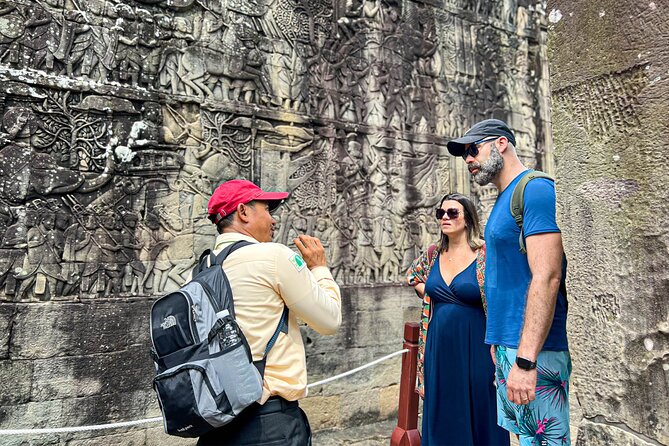
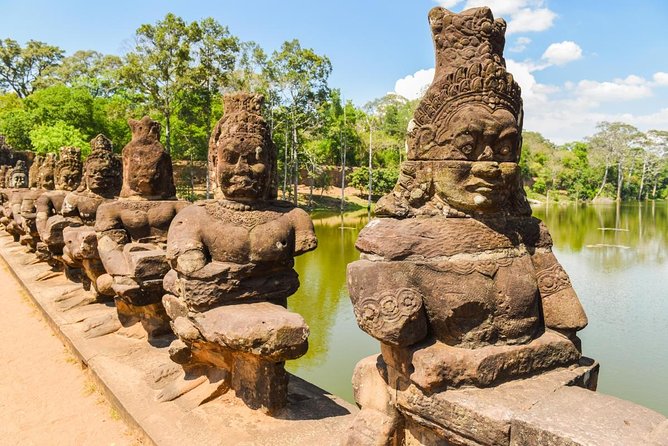
You start with Bayon, the richly decorated Khmer temple at the heart of Angkor Thom. The guide focus here is not just “look at the faces,” but what Bayon represents, built as the state temple of Mahayana Buddhist King Jayavarman VII in the late 12th or early 13th century.
Bayon works well early in the day. Light is softer, and you can actually pause and notice details without constantly dodging other tour groups. Plan for photos at slightly different angles because the carved faces shift in mood as you move.
One practical note: the tour lists 45 minutes, so it is enough time to see the main structure and take photos, but you will not have hours to wander. If you are a slow photographer, mention that to your guide.
Baphuon and the temple-mountain style
Next comes Baphuon, located northwest of Bayon within Angkor Thom. It is a temple-mountain design from the mid-11th century, and the time block is about 30 minutes.
This stop is a nice contrast because Bayon can overwhelm your brain with expression and detail. Baphuon shifts you back toward architecture and scale, which helps you connect the temples into a bigger story.
Terrace of the Elephants and the royal stage
You then visit the Terrace of the Elephants (about 15 minutes). This terrace functioned as a viewing platform tied to Jayavarman VII’s leadership, and it is the kind of place where the guide can point out the symbolism quickly so you do not just see carvings as decoration.
A few minutes later is the Terrace of the Leper King (about 10 minutes). The tour uses its modern name, even though the original context differs. This stop is short, but it is one of those “tiny detour” moments that makes Angkor feel less like a checklist.
Angkor Archaeological Park lunch break: plan your energy
You get a lunch break in the Angkor Park area, typically 45 to 60 minutes. Admission is not included here, and you pay for your own food.
This is also a good moment to reset. Wear a hat, refill water, and keep an eye on timing. On day one, you are walking from one temple to the next, so you want to avoid eating something too heavy right before Angkor Wat.
More time on the lake, other boats
Angkor Wat: the icon, and why timing matters
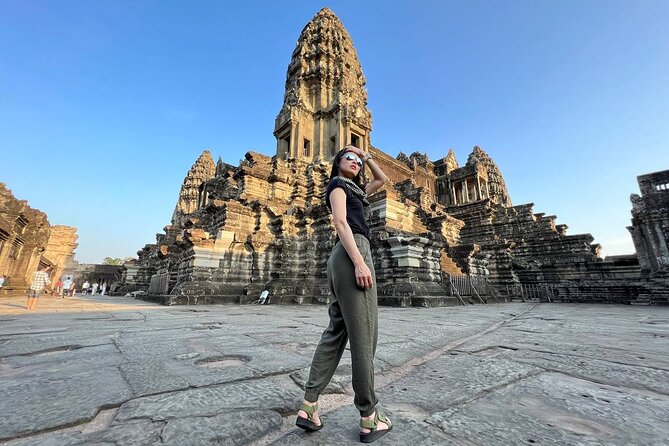
Then comes Angkor Wat for about 1.5 hours. It is the largest religious monument in the world and originally constructed as a Hindu temple dedicated to Vishnu. The tour schedule gives you real time, not a quick stop, and that is key.
If you are chasing photos, Angkor Wat is more than one view. As you move, the light on the stone changes, and the guide can direct you where to stand to avoid backlighting and get cleaner compositions.
Phnom Bakheng sunset option: go if weather cooperates
Finally, there is an optional sunset stop at Phnom Bakheng for about 45 minutes, only if weather allows and you are not too tired.
This is a good idea if you like sunsets and do not mind that the experience is weather-dependent. It can also turn into a “crowd and climb” situation depending on conditions, so you will want your guide to assess on the day.
Day two at sunrise: Ta Prohm, Pre Rup, and the slower, older corners
Day two starts seriously early. You are picked up before sunrise at 4:40 AM, then you watch sunrise at Angkor Wat again. The goal is to catch a quieter, more atmospheric version of the same iconic complex, and it works because morning light is kinder and the scene feels more “alive” than midday.
Breakfast is included on day two. You get something traditional in a way that keeps you fueled for the next round of temples.
Ta Prohm: the jungle temple look that tells a story
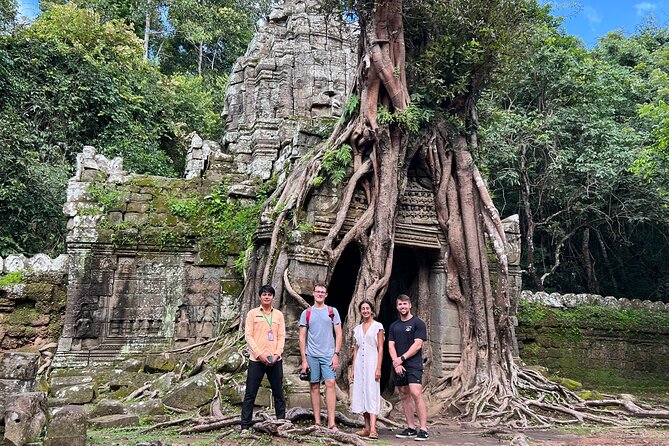
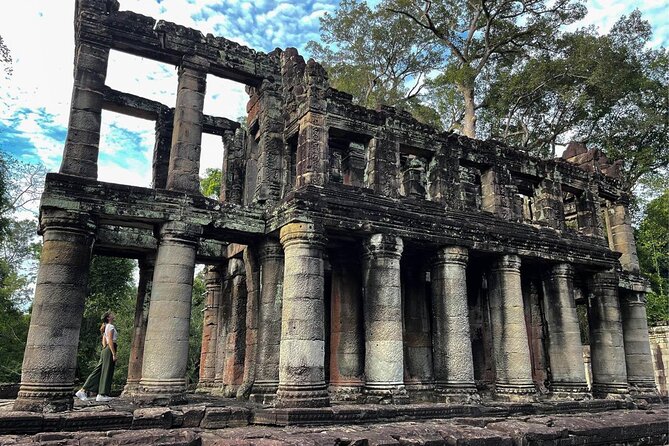
After breakfast you head to Ta Prohm (about 1 hour). This is the jungle temple left in an original, partly overgrown state, with huge roots wrapping structures.
Ta Prohm is one of those places where the guide’s explanations make the ruins feel less random. The time here is enough to see the main highlights and still pause for details like doorways, stone textures, and root patterns.
Pre Rup: a classic view-point temple at a measured pace
Then you visit Pre Rup for about 40 minutes. It is dedicated to the Hindu temple tradition and connected to Khmer royal building activity. This stop tends to help you slow down after Ta Prohm’s dramatic visuals.
If you like panoramic views, this is a temple where you might find yourself lingering. Just keep in mind that the day is long and the schedule keeps moving.
Eastern Mebon, Ta Som, Neak Pean: the route that avoids feeling repetitive
You continue to a sequence of smaller, often less crowded temples:
- Eastern Mebon (about 30 minutes), an early 10th-century temple on what used to be an artificial island in the East Baray area.
- Ta Som (about 30 minutes), built during Jayavarman VII’s reign, associated with the Mahayana Buddhist building tradition.
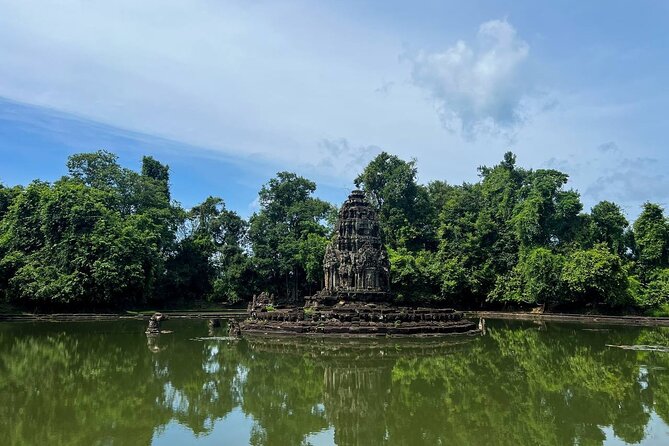
- Neak Pean (about 30 minutes), built in 1191 under Jayavarman VII and dedicated in that same broader period.
This trio is valuable because it breaks the pattern of only seeing the “most famous” sites. You get different layouts, different carvings, and different atmospheres. If you are the kind of traveler who learns best when you see changes, you will like this part.
Preah Khan and the Angkor Park lunch, then the big shift to Banteay Srei
You move next to Preah Khan for about 1 hour. It was built in the 12th century for Jayavarman VII to honor his father. Preah Khan is a stronger “full complex” stop, and your guide can connect it to the era that produced much of what you are seeing across Angkor Thom.
Then there is a lunch break in the Angkor Archaeological Park area for about 1 hour. Again, admission is not included. This is a straightforward pause, but it matters because you still have the afternoon arc ahead.
Banteay Srei: the refined sandstone carvings that feel different
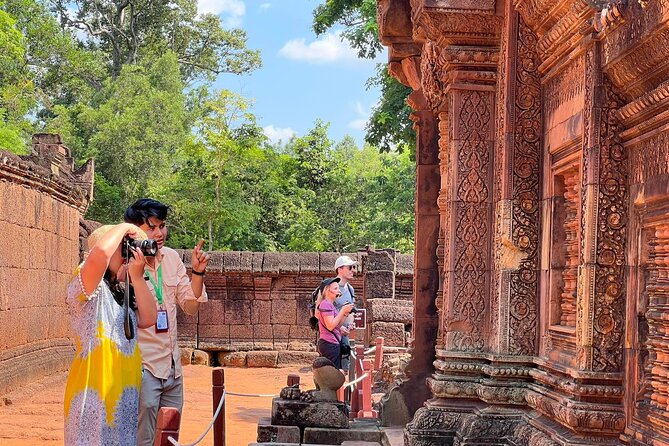
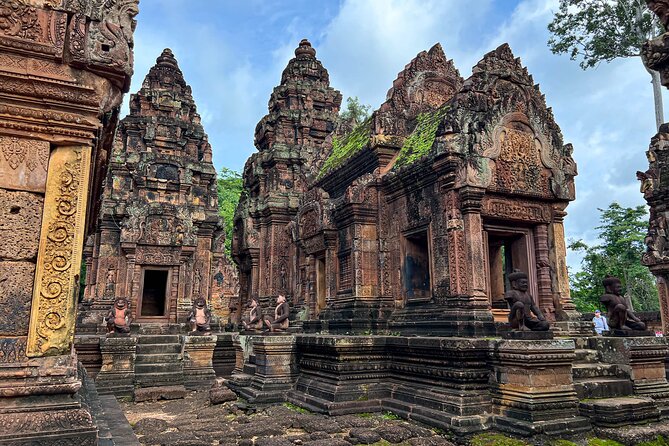
In the early afternoon, you head to Banteay Srei. This is the tour’s carving-focused highlight, and it is also a different texture and mood than many larger Angkor temples.
The tour describes it as an intricately carved, well-preserved sandstone temple, with reliefs considered among the finest and most skillfully crafted. With about 45 minutes on site, you can actually slow down and look.
This stop is also a good one for first-time Angkor visitors because it shows you that not all the “wow” is about scale. Sometimes it is about craftsmanship and the patience to carve small details into stone.
Kampong Phluk floating village: Tonle Sap life by boat
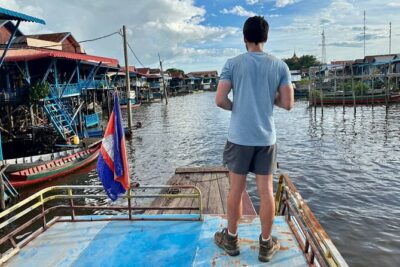
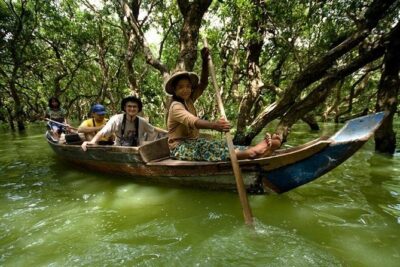
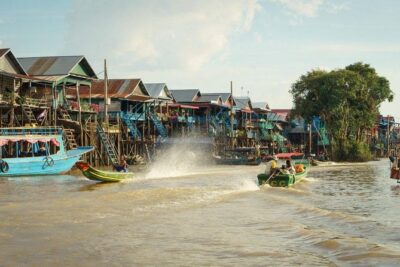
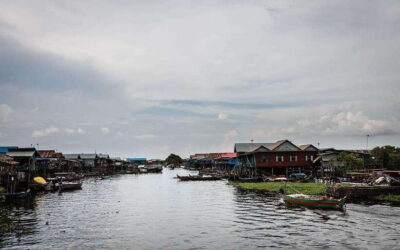
After Banteay Srei, you eat lunch and head toward Kampong Phluk on Tonle Sap Lake, about 21 kilometers from Siem Reap. You then take a local boat ride on the lake.
The tour lists about 1 hour 30 minutes for the floating village portion, and the boat cost is not included in the base price. The amount listed for the Tonle Sap pass and private boat ride is $15 per person.
Dry season reality check: what you should expect
There is also helpful seasonal context in the tour notes. From roughly end of March to end of July, water levels start to recede. That can change what floating villages look like and how accessible some areas are. In that period, you may see more of village life along the land rather than only the classic flooded stilt-view.
If you want postcard-perfect wide shots, this season might not deliver the exact look you had in mind. But if you like seeing everyday routines and how people adapt, this timing can feel more real. Either way, the key is to go with curiosity, not expectations.
A note on responsibility
Even if this is a short boat ride, treat it as a living workplace. Follow your guide’s instructions, keep your voice calm, and remember you are stepping into daily life, not a theme park.
What makes this tour work: guide style, pacing, and AC comfort
What I like most about the experience is how it handles the two big problems with Angkor tours: heat and confusion.
Heat management you can actually feel
This is private transport with air-conditioning, and you get free cool towels and water. Those sound like small perks until you are walking stone steps under strong sun. They help you keep your energy for photos and for the later temple stops.
A route that balances icons and quieter stops
You are not just doing the top three temples. Day one hits Angkor Thom’s major structures and terraces, then day two spreads out across Ta Prohm, Pre Rup, Eastern Mebon, Ta Som, Neak Pean, and Preah Khan before going to Banteay Srei and finishing at Tonle Sap.
That mix matters because the “Angkor feeling” is bigger than Angkor Wat. Your brain builds better connections when the itinerary includes both famous and less obvious temples.
Strong English guidance shows up again and again
The tour’s reviews repeatedly praise guides who can explain the significance of what you see and keep the day running smoothly. Names you might come across include Mr. Veesna, Phanne, Sean, Saylor, Mr. Sa, Sei La, Raman, David, Kamsan Sreng, and Makara. The common thread is strong organization, friendly communication, and attention to photo timing.
I also like that guides can be flexible on a private tour. If you want a slightly different photo angle or need an extra minute at a terrace, it is easier to negotiate when you are not stuck in a giant fixed group rhythm.
Tips to make your two days smoother
Bring the basics that keep you comfortable
The tour lists what to bring, and I agree with it:
- Insect repellent
- Sunscreen
- Sun hat
- Comfortable shoes
Shoes matter more than you think. Angkor involves uneven ground and temple steps, so you want traction and support.
Start early mentally, not just on the clock
Day two is the big time challenge with pickup before sunrise at 4:40 AM. If you are tempted to stay out late or do heavy activities the night before, do not. You will feel it the moment you step out into morning light.
Budget for entrance fees early
Since the tour price does not include temple admissions for the listed stops, and Angkor Thom South Gate is specifically listed at $62 per person, plan your payments so you do not get surprised on day one. Tonle Sap boat costs $15 per person as well.
For better photos, take cues from your guide
Even if you bring a great camera, the best shot often depends on where you stand. The guides on this tour tend to know the right angles and photo spots, which saves you time and frustration.
Who should book this tour?
This is a great fit if:
- You want a structured two-day Angkor plan without building your own route.
- You care about sunrise timing and seeing temples in softer light.
- You like a mix of major landmarks and smaller stops that add variety.
- You want private comfort with AC and cool towels.
It may not be ideal if:
- You want a budget tour with minimal extra costs, because entrance fees and the Tonle Sap boat add-ons are separate.
- You are easily tired by long temple days, since the itinerary is packed and includes an optional sunset.
Should you book this 2-Day Angkor Wat Tour with Banteay Srei and Floating Village?
If you are prioritizing sunrise and want a guide to connect the dots between Bayon, Ta Prohm, Preah Khan, and the rest, I think this is a smart booking. The private AC transport, cool towels, and the careful routing make it feel like a well-managed experience, not a race.
My decision rule is simple: book it if you are willing to budget for temple admissions and you want the extra value of a guided, timed route. If you dislike early mornings or hate the idea of paying multiple entry fees, you might prefer a lighter, fewer-temple itinerary.
If you do book, come with comfortable shoes, sunscreen, and a flexible mood for the sunset option and for what Tonle Sap looks like during your travel month. That flexibility is where the experience turns from seeing temples into understanding them.
FAQ
What is included in the tour price?
The tour includes a professional English-speaking guide and driver, private air-conditioned transport (car or minivan), free cool towels during the tour, and breakfast only on day two.
What costs extra that I should budget for?
You should plan for the Tonle Sap pass and a private boat ride ($15 per person), food and soft drinks, and admission fees, including Angkor Thom South Gate ($62 per person). Admission tickets are listed as not included for temple stops.
What time is the pickup for Angkor Wat sunrise on day two?
You are picked up from your hotel lobby before sunrise at 4:40 AM on day two.
How long is the tour?
The tour runs for 2 days (approx.).
Is this tour private?
Yes. It is described as a private tour/activity, meaning only your group participates.
Can I cancel and get a full refund?
Yes. You can cancel up to 24 hours in advance for a full refund. If you cancel less than 24 hours before the start time, the amount paid is not refunded.
More Tour Reviews in Siem Reap
- Angkor Wat Sunrise or Sunset Tour with Guide from Siem Reap★ 5.0 · 12,109 reviews
- Siem Reap: Angkor Wat: Small-Group Sunrise or Sunset Tour★ 5.0 · 9,444 reviews
- From Siem Reap: Kampong Phluk Floating Village Tour by Boat★ 4.9 · 6,979 reviews
- Siem Reap: Angkor Wat 2-Day Tour with Sunrise and Sunset★ 4.9 · 4,429 reviews
More Hours Out on the Tonle Sap
- From Siem Reap: Kampong Phluk Floating Village Tour by Boat★ 4.9 · 6,979 reviews
- Kompong Phluk Floating Village Half-Day Tour ( Morning / Sunset )★ 5.0 · 1,494 reviews
- Siem Reap: Kulen Mountain, Beng Mealea and Tonle Sap Tour★ 5.0 · 1,483 reviews
- Tonle Sap Lake & Kampong Phluk Village Half-Day Tour★ 5.0 · 1,045 reviews
Banteay Srei and Beng Mealea, Compared
- Siem Reap: Kulen Mountain, Beng Mealea and Tonle Sap Tour★ 5.0 · 1,483 reviews
- Full-Day Banteay Srei & 4 Temples – Grand Tours Join-in Tour★ 5.0 · 1,155 reviews
- Siem Reap Tour: Angkor Wat Sunrise, Bayon, Ta Prohm, Banteay Srei★ 5.0 · 931 reviews
- Kulen Mountain with Beng Mealea and Tonle Sap Small Group Tour★ 5.0 · 780 reviews
Newly written up around Siem Reap
- Waterfall & River of 1000 Siva Linga- Kulen Mountain Private Tour
★ 5.0 · 3 reviews - Private Transfer from Siem Reap to Sihanoukville
★ 4.5 · 3 reviews - Private Tour to Koh Ker and Beng Mealea
★ 5.0 · 3 reviews - Private Transfer: Siem Reap Angkor Internation Airport to Hotel
★ 5.0 · 3 reviews - Kulen National Park Ticket -Waterfall & 1000 Lingas
★ 5.0 · 3 reviews - Kulen Waterfall & Kbal Spean Tour
★ 5.0 · 3 reviews
Banteay Srei & Beng Mealea Tours, side by side.
 ★ 5.0Kulen Mountain, Beng Mealea and Tonle Sap TourFrom $481,483 reviews
 ★ 5.0Full-Day Banteay Srei & 4 Temples – Grand Tours Join-in TourFrom $201,155 reviews
 ★ 5.0Siem Reap Tour: Angkor Wat Sunrise, Bayon, Ta Prohm, Banteay SreiFrom $130931 reviews
 ★ 5.0Kulen Mountain with Beng Mealea and Tonle Sap Small Group TourFrom $54780 reviews
 ★ 5.0Koh Ker Temple Group & Beng Mealea Full-Day Join-in TourFrom $50710 reviews
 ★ 5.02-Day Angkor Wat With Small, Big Circuit and Banteay Srei TourFrom $158545 reviews
 ★ 4.9Koh Ker and Beng Mealea Temples TourFrom $50293 reviews
 ★ 4.8Banteay Srei Temple & Grand 5 Temple TourFrom $20262 reviews