
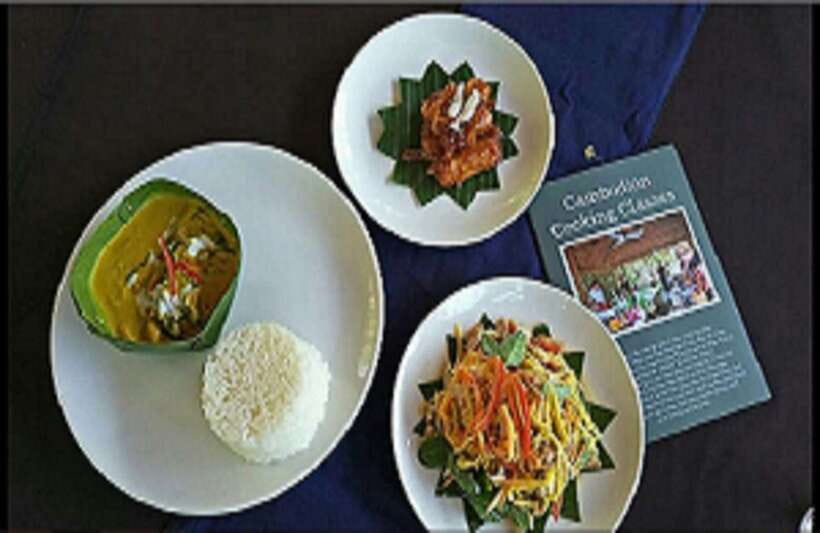
REVIEW · CAMBODIA
Cambodian Cooking Class from Siem Reap
Khmer cooking starts with a local family. This 3.5-hour class is hands-on from start to finish, mixing a village walk with real Khmer lessons at your own station. I love the market ingredient hunt, and I love the calm setting where you end up eating what you made, overlooking a pond.
One thing to plan for: this experience spends real time outdoors. In warm weather it can feel hot, so bring a hat and wear comfortable shoes.
In This Review
- Key things I’d highlight before you go
- Tuk-tuk Out to Rural Siem Reap, Then Back Again
- The Village Walk That Actually Explains What You Eat
- Market Stops and Ingredient Picking (The Flavor Foundation)
- Cooking Pavilion Over a Pond: Where the Class Feels Special
- Hands-On Khmer Cooking: What You Learn Beyond the Recipe
- Morning vs Afternoon Menus: Choose the Flavor Mood
- Morning class dishes (often lighter and iconic)
- Afternoon class dishes (heartier and more savory)
- Serving Time by the Lake: Eating in the Right Order
- Price and Value: Why $32 Feels Fair
- What to Bring, and What to Expect When It Gets Warm
- Who This Class Fits Best
- Should You Book This Cambodian Cooking Class?
- FAQ
- How long is the Cambodian cooking class in Siem Reap?
- Where does the tour take place?
- How much does it cost?
- Is hotel pick-up and drop-off included?
- What language is the guide?
- How big are the groups?
- What ages can join the cooking class?
- Are drinks included with the meal?
- Do you get recipes to take home?
- Is Cambodian food spicy?
- Is the class hands-on?
Key things I’d highlight before you go
- Small groups (up to 6 people) so the chef can actually help
- Your own cooking station with equipment, so you are not just watching
- A family visit to a Khmer home, kitchen, and (commonly) a vegetable garden
- Classic Cambodian dishes like Fish Amok, Prahet Chien, and sticky sweets
- Eat-by-the-pond finishing time, with dishes served one by one
- A recipe book so you can repeat the food back home
Tuk-tuk Out to Rural Siem Reap, Then Back Again
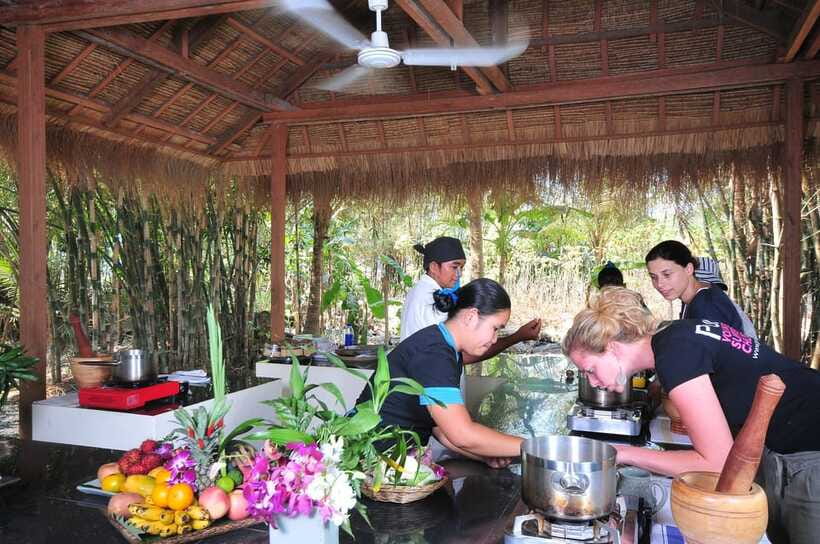
Most of the value here is what happens after you leave Siem Reap center. You get picked up and dropped off by tuk-tuk, and that short ride outside the city gives you a different pace right away. It is not just transportation, it is part of the shift from temple-shopping mode to daily-life mode.
Once you arrive, the group size stays small, capped at six participants. That matters, because you get time to ask questions, and the chef can correct your technique without rushing you.
You also get a guide plus an English-speaking chef. Reviews consistently mention friendly, patient instruction, including guides such as Sophia Lauren and chefs such as Prey. Even when the class is relaxed, you still get clear step-by-step help.
Practical note: this tour is outdoors at multiple points. If you are sensitive to heat, start early in the day when you can, and wear light layers.
The Village Walk That Actually Explains What You Eat
Before any cooking happens, you walk through the village and get an on-the-ground feel for daily life. You are not touring a museum. You are learning how ingredients fit into normal household routines.
On the way, you learn about the herbs and vegetables that show up in Khmer cooking. Think of it like building a mental ingredient map. When you later smell and chop those items at your station, the flavors click faster.
Then comes the family visit. You tour a local household, including the home and kitchen setup, and you learn how food is prepared in a Khmer home. Some sessions also include the family’s vegetable garden, which gives you a tangible sense of where the greens and aromatics come from.
This part is one reason I like this class for first-time Cambodia visitors. It gives context for the food. You are not just collecting recipes, you are learning why they use the ingredients they do.
More Khmer kitchens taking visitors
- Khmer Cooking Class at a Local’s Home in Krong Siem Reap★ 5.0 · 2,731 reviews
- Award-Winning Cooking Class Experience with Professional Teacher★ 5.0 · 745 reviews
- Cambodian Village Cooking Class★ 5.0 · 265 reviews
- Cambodian Cooking Class from Siem Reap★ 4.9 · 190 reviews
Market Stops and Ingredient Picking (The Flavor Foundation)
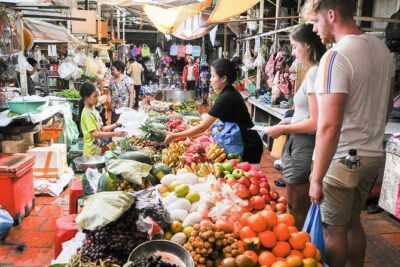
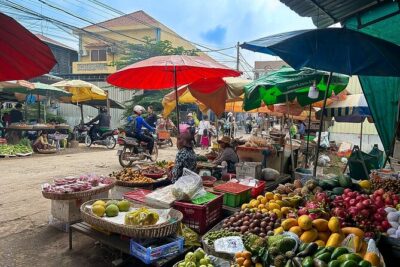
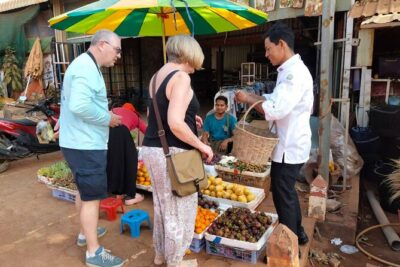
A lot of this experience turns on what you choose at the start. Multiple classes begin with a local market walk to pick ingredients with your chef and guide, including smelling herbs and checking what is used for specific dishes.
I like this because it is hands-on learning. You see produce up close, hear what each ingredient does, and get practical tips for Khmer cooking at a level you cannot get from a cookbook alone.
And it is also where you learn about substitutions. People often ask what to do at home when you cannot find the exact same spice, fish, or greens. Your guide and chef can point you toward workable alternatives, based on what is realistic to source.
If you have dietary restrictions, this is also a better format than many classes, because the staff can discuss ingredient swaps while you are still early in the process. Some participants report dietary accommodations.
Cooking Pavilion Over a Pond: Where the Class Feels Special
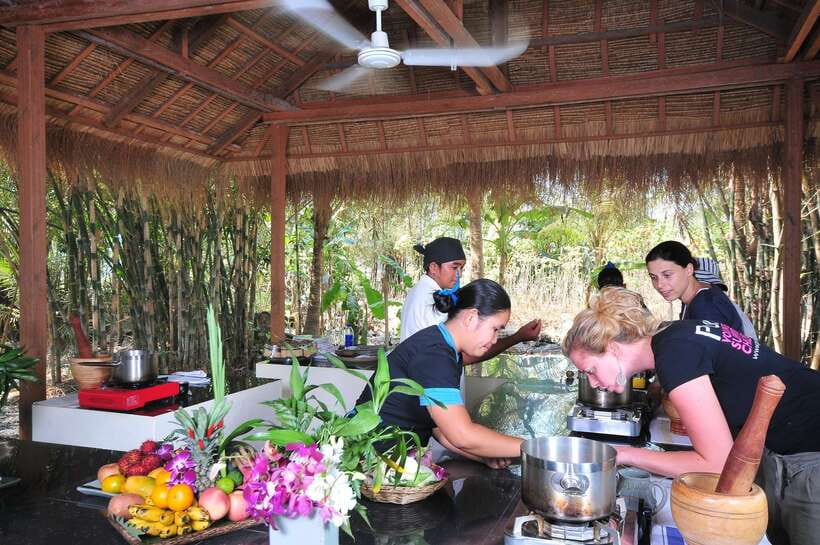
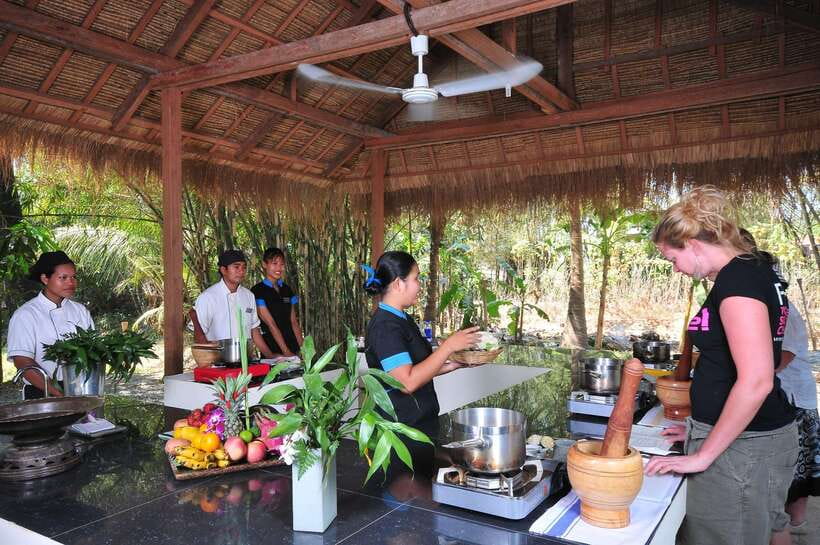
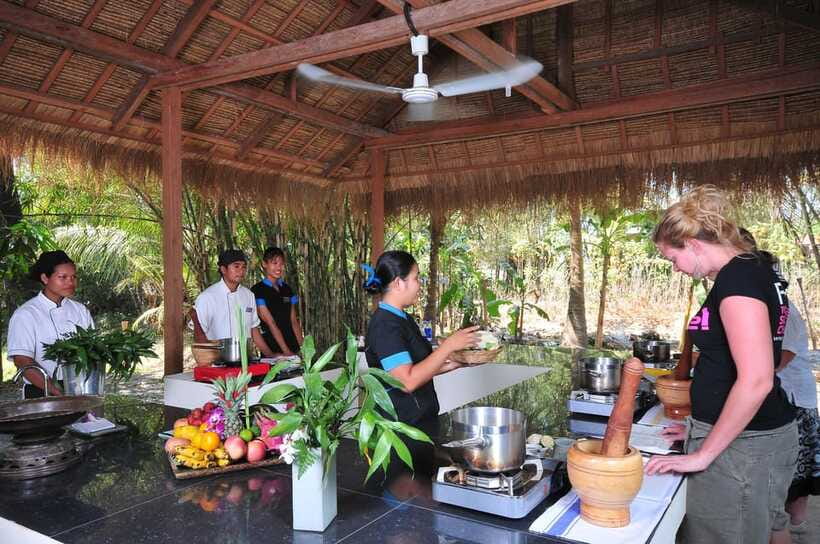
When you head to the cooking area, the setting is genuinely enjoyable. The class happens in a beautiful outdoor space, and at the end you eat in a wooden pavilion perched over a pond. Some sessions include pond wildlife, like turtles swimming below the waterline, which gives the meal a calm, almost storybook feel.
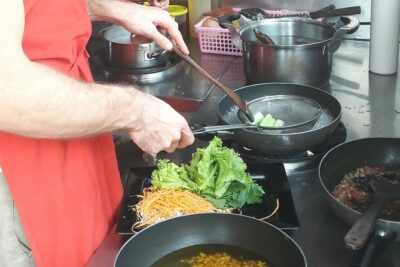
Each person gets a cooking station. That is important. You will chop, grind, stir, and assemble your dishes, instead of standing around while someone else does the work.
The pacing is usually relaxed, but instruction stays clear. The chef and guide check on everyone and help as needed. Even if your cooking skills are basic, you will not be left to figure it out alone.
What you are really learning here is technique. Khmer cooking often depends on layered aromatics and balanced flavors, not just heat. If you have ever had Cambodian dishes before, you will notice that many flavors feel fragrant and layered rather than fiery.
Hands-On Khmer Cooking: What You Learn Beyond the Recipe
This class includes a recipe card and a recipe book at the end. That matters because Cambodian dishes can be hard to replicate if you only have a vague idea of the ingredient list.
Here is what you typically learn during the cooking phase:
- How ingredients work together, especially aromatics and spice layers
- Which parts of a dish come from prep and which come from heat control
- How to form texture in items like sticky sweets and fish curries
- Practical guidance on ingredients you might not find at home
Some participants highlight how they learned to build curry bases, crush or grind ingredients, and manage flavor in dishes like Fish Amok. Others point out that explanations are easy to follow, and the chef is patient while people work at their own pace.
And yes, you get to eat what you make, which is the fastest way to understand the cooking. If something tastes off, you learn what would fix it next time.
Morning vs Afternoon Menus: Choose the Flavor Mood
You will cook multiple Cambodian dishes. Which exact menu you get depends on the class time. Here are the menu options you may encounter, and what they mean for your taste buds.
More hands on sessions in Siem Reap
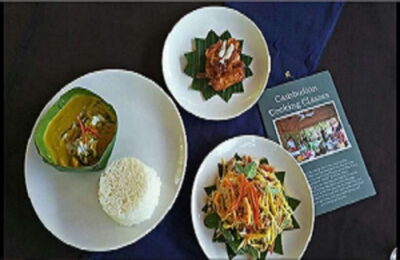
Morning class dishes (often lighter and iconic)
Cambodian Mango Salad
Fresh, tropical, and lighter on the palate. This is a great entry dish because it teaches you how Khmer flavors balance sour, sweet, and herb notes without needing heavy spice.
Fish Amok
This is the headline dish many people come for. Amok is cooked in young coconut, resulting in a smooth, fragrant curry-style texture. You may see it made with fish, and some menus allow chicken or tofu alternatives.
Sticky Rice Balls with Palm Sugar and Grated Young Coconut
Dessert that stays in your memory. Palm sugar brings deep sweetness, while young coconut adds a soft, aromatic freshness.
Afternoon class dishes (heartier and more savory)
Prahet Chien
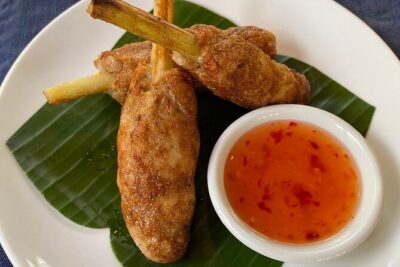
Minced fish paired with sugar cane flavors. It gives you a savory-sweet profile that feels uniquely Cambodian.
Cambodian Curry
Compared with Thai food, Cambodian curries often rely less on chasing heat. Instead, you taste layers of fragrant spices and balanced seasoning.
Nom Tong Noun
Khmer brandy snaps. Slightly sweet, crisp, and easy to eat too quickly. This is the kind of treat that makes you understand why Khmer desserts can feel both simple and special.
If you are indecisive, pick the menu that matches your mood. Want something bright and tropical? Go morning. Want savory depth with curry energy? Afternoon is a strong pick.
Serving Time by the Lake: Eating in the Right Order
After cooking, you sit back in the pavilion and your meal gets served to you. Dishes typically arrive one by one, so you can compare flavors and textures instead of eating everything at once like a rushed banquet.
You also get a complimentary drink, either beer, soft drink, or bottled water, depending on what you choose. One helpful detail: you are not expected to finish a mountain of food at speed. It is paced, and the setting encourages you to slow down.
This is also where you realize what you did well. If your Fish Amok is silky and fragrant, you know your curry base work paid off. If your mango salad hits the right balance, you understand how Khmer salads are built.
Price and Value: Why $32 Feels Fair
At $32 per person for about 3.5 hours, the value is strong if you compare it to other cooking classes that cost more but mainly show you how to cook.
Here is why I think the price works:
- You get tuk-tuk transport from your hotel area to the venue and back
- You get an English-speaking chef and guide, plus village walking time
- You get the full class meal, eat what you cook
- You get a recipe book you can actually use later
The biggest value is the combination of culture and technique. You do not just cook in a classroom. You meet a family, learn about ingredients, cook Khmer dishes hands-on, and eat the results in a peaceful outdoor setting.
If you only want a quick cooking demo, this might feel like more than you need. But if you want to learn how Khmer cooking tastes and why it works, this is priced like a practical learning experience, not a tourist performance.
What to Bring, and What to Expect When It Gets Warm
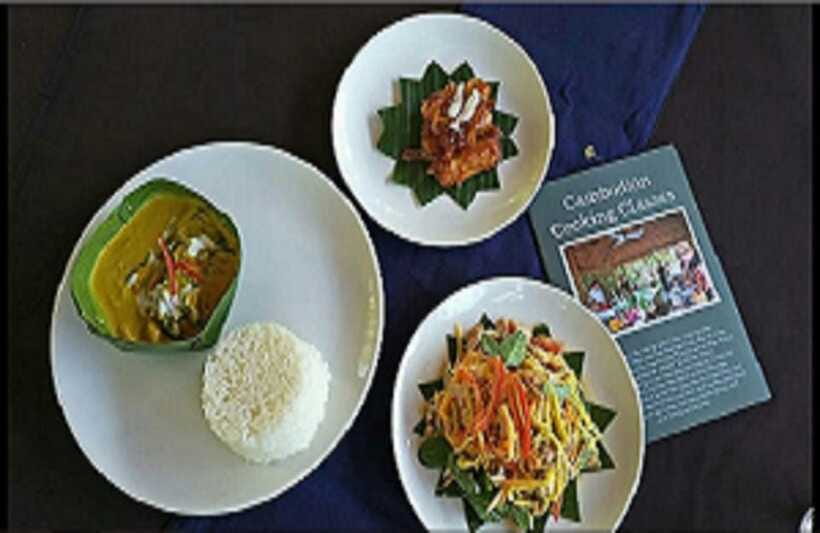
This tour is short, but it is active. You will walk in the village and spend time outdoors around the cooking area.
Bring:
- A hat for sun protection during the village walk (recommended)
- Comfortable footwear for walking
Wear light, breathable clothes if you are visiting in hotter months. Some participants mention it can get quite hot in warm weather, so plan for that.
Also, bring a small appetite. The food is fresh, and portions are satisfying, especially when you have cooked the dishes yourself.
Who This Class Fits Best
This is a great fit if:
- You want authentic Khmer home-style cooking, not just a generic “Asian cuisine” experience
- You like hands-on activities where you control the food
- You want a break from Siem Reap’s most crowded tourist circuits
- You enjoy learning ingredient stories, not just instructions
It is also family-friendly in the sense that kids can join, but with limits. The class accepts children above 12. Families can request private classes.
If you hate outdoor heat or walking, you might find parts uncomfortable. But for most visitors, the village feel plus the pondside meal is exactly the point.
Should You Book This Cambodian Cooking Class?
If you want a half-day experience that teaches you real Khmer cooking and not just how to follow steps, I think you should book it. The small group size helps a lot, and the hands-on station setup means you leave with food knowledge, not just photos.
Book it especially if you care about ingredients. The family visit and herb learning make the later dishes make sense. And when your meal is served one by one in a pavilion over a pond, it feels like a reward, not an afterthought.
Skip it only if you want a very indoor, no-walking class, or if you are expecting a high-spice style like some other regional cuisines. Khmer food may be full of flavor, but it is often not as spicy as you might expect from neighboring countries.
FAQ
How long is the Cambodian cooking class in Siem Reap?
It lasts about 3.5 hours.
Where does the tour take place?
It runs in Siem Reap Province, Cambodia.
How much does it cost?
The price is $32 per person.
Is hotel pick-up and drop-off included?
Yes. You get tuk-tuk pick-up from your hotel to the venue and return to the tour office at the end.
What language is the guide?
The guide is English-speaking.
How big are the groups?
The class is capped at a maximum of 6 participants.
What ages can join the cooking class?
Only children above 12 can join the cooking class. Private classes can be arranged for families upon request.
Are drinks included with the meal?
Yes. After the class, you receive a complimentary drink, which can be beer, soft drink, or bottled water.
Do you get recipes to take home?
Yes. You get a recipe book and recipe cards.
Is Cambodian food spicy?
Cambodian cuisine includes spices, but it is not typically as spicy as local food from neighboring countries.
Is the class hands-on?
Yes. It is 100% hands-on, and each person has their own cooking station and equipment.
More Hands On Sessions
- Khmer Cooking Class at a Local’s Home in Krong Siem Reap★ 5.0 · 2,731 reviews
- Siem Reap: Khmer Cooking Class at a Local’s Home★ 5.0 · 1,108 reviews
- Award-Winning Cooking Class Experience with Professional Teacher★ 5.0 · 745 reviews
- Siem Reap: Cambodian Pottery Class★ 4.9 · 339 reviews
More Khmer Kitchens
- Khmer Cooking Class at a Local’s Home in Krong Siem Reap★ 5.0 · 2,731 reviews
- Siem Reap: Khmer Cooking Class at a Local’s Home★ 5.0 · 1,108 reviews
- Award-Winning Cooking Class Experience with Professional Teacher★ 5.0 · 745 reviews
- Cambodian Village Cooking Class★ 5.0 · 265 reviews
More Tour Reviews in Siem Reap
- Angkor Wat Sunrise or Sunset Tour with Guide from Siem Reap★ 5.0 · 12,109 reviews
- Siem Reap: Angkor Wat: Small-Group Sunrise or Sunset Tour★ 5.0 · 9,444 reviews
- From Siem Reap: Kampong Phluk Floating Village Tour by Boat★ 4.9 · 6,979 reviews
- Siem Reap: Angkor Wat 2-Day Tour with Sunrise and Sunset★ 4.9 · 4,429 reviews
Newly written up around Siem Reap
- Waterfall & River of 1000 Siva Linga- Kulen Mountain Private Tour
★ 5.0 · 3 reviews - Private Transfer from Siem Reap to Sihanoukville
★ 4.5 · 3 reviews - Private Tour to Koh Ker and Beng Mealea
★ 5.0 · 3 reviews - Private Transfer: Siem Reap Angkor Internation Airport to Hotel
★ 5.0 · 3 reviews - Kulen National Park Ticket -Waterfall & 1000 Lingas
★ 5.0 · 3 reviews - Kulen Waterfall & Kbal Spean Tour
★ 5.0 · 3 reviews
Cooking Classes, side by side.
 ★ 5.0Khmer Cooking Class at a Local’s Home in Krong Siem ReapFrom $272,731 reviews
 ★ 5.0Khmer Cooking Class at a Local’s HomeFrom $291,108 reviews
 ★ 5.0Award-Winning Cooking Class Experience with Professional TeacherFrom $22745 reviews
 ★ 5.0Khmer Cooking Class Half Day (AM or PM)From $31316 reviews
 ★ 5.0Cambodian Village Cooking ClassFrom $32265 reviews
 ★ 5.0Siem Reap Cooking ClassFrom $35170 reviews
 ★ 5.0Khmer Gourmet Cooking ClassFrom $21145 reviews
 ★ 4.8Cooking Class and Market TouringFrom $2580 reviews
Also appears in