
REVIEW · CAMBODIA
Siem Reap Cooking Class
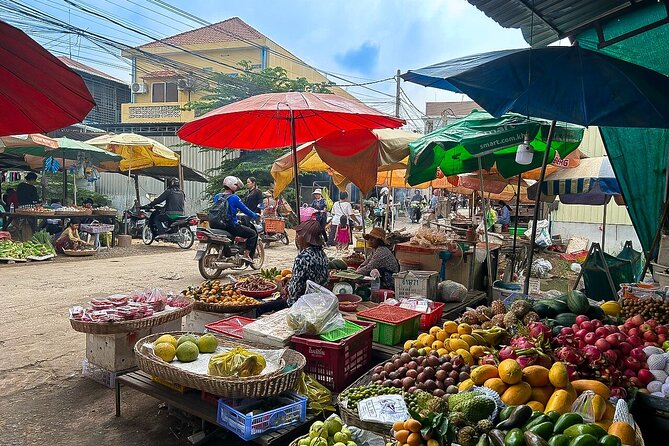
Your lunch starts at the market. This Siem Reap cooking class blends ingredient shopping with a hands-on Khmer lesson, so you learn the flow of real cooking and then eat what you make. I love the market tour component, because it sets you up with context for the flavors you will actually use.
The second big win is the teaching itself, led by Chef Dee, with clear guidance for cooking processes and a simple starter, main, and dessert structure you can follow even if you have zero experience. One thing to consider, it depends on good weather and may require a minimum number of travelers, so build in a little flexibility during your Siem Reap days.
In This Review
- Key highlights to plan around
- Temple Timing Meets Khmer Cooking: Why This Class Fits Siem Reap
- Market Tour With a Local Guide: The Ingredient Reality Check
- Chef Dee and the Garden Pavilion: What the Hands-On Lesson Really Teaches
- Choosing Your Starter, Main, and Dessert: Fish Amok and Friends
- Transportation and Timing: How to Make It Work With Angkor
- Price and Value: Is $35 a Good Deal Here?
- Who This Cooking Class Is Best For (And Who Should Skip)
- The Decision Moment: Should You Book It?
- FAQ
- How long is the Siem Reap cooking class?
- What dishes do I cook?
- Is pickup included?
- How big is the group?
- What if I have no cooking experience?
- Is the cooking class cancellable?
Key highlights to plan around
- Small group (up to 8) means more attention while you cook
- Pickup offered so you do not waste temple time on logistics
- Market tour with a local guide to understand Khmer ingredients before the stove
- Hands-on cooking with a choice of starter, main course, and dessert
- Examples on the menu often include Fish Amok, spring rolls, and palm sugar bananas
- Garden-based ingredients are part of the experience and show up in the lesson
Temple Timing Meets Khmer Cooking: Why This Class Fits Siem Reap
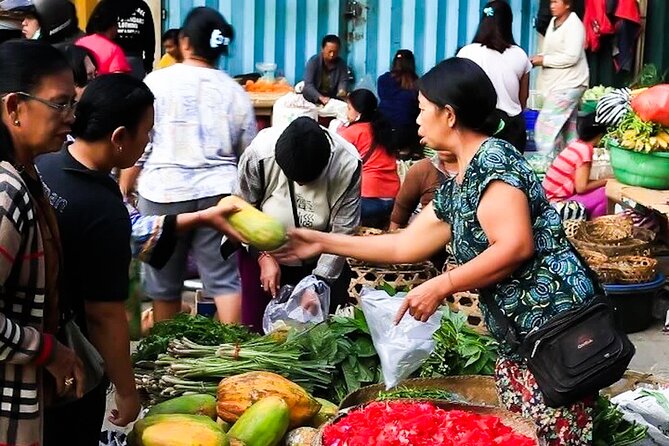
Siem Reap is famous for temples, but your vacation can feel oddly the same day after day. A cooking class gives you a clean reset. It is active, sensory, and you leave with skills you can use again at home. In about 3 hours, you shift from stone and sun to herbs, spices, chopping boards, and a meal that is yours.
This particular setup is smart because it starts with ingredients, not a worksheet. You go to a local market with a guide, then you cook with a Khmer chef at a purpose-built garden pavilion. That order matters. If you understand what you are buying and why it matters, the final dishes make more sense, and your home cooking is less guesswork.
I also like that the class is designed for different comfort levels. It is listed as no experience necessary, and the flow is beginner-friendly. If your group has mixed skills, you still have a path forward.
The group size caps out at 8 travelers, which is a big deal for a class. You are not standing off to the side hoping someone notices you need help with a sauce or a step.
Market Tour With a Local Guide: The Ingredient Reality Check
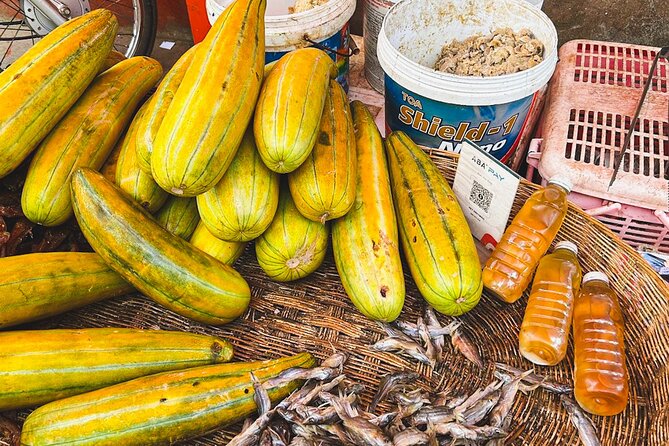
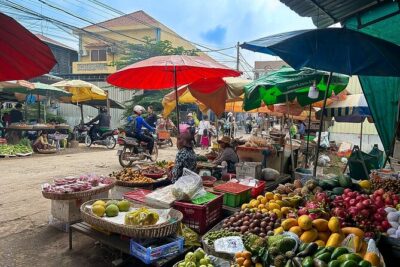
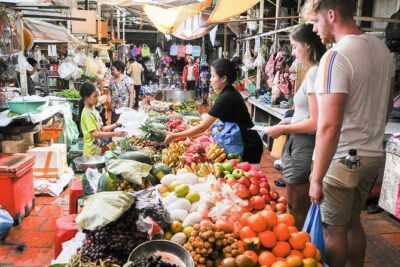
The market portion is where the experience becomes more than entertainment. You pick up a feel for Cambodian ingredients in a way that no cook-at-home kit can match.
Here is what you can expect:
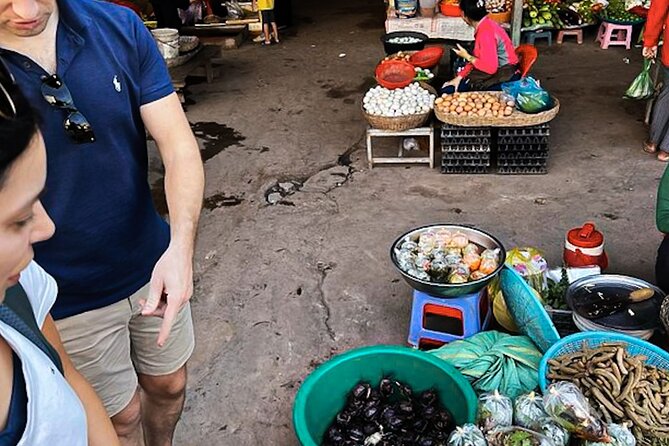
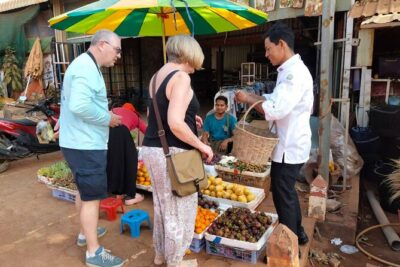
- You travel to a local market where you see fruits, vegetables, fish, and meats.
- A tuk-tuk driver may talk you through what is commonly sold and how the market works.
- Your guide helps you connect ingredients to cooking choices, so you understand what you will use later.
This is the part that helps you cook with confidence later. For example, if you only learn a recipe by memory, it is easy to get stuck at the substitution stage. But if you learn the ingredient logic first, you can adjust at home without ruining the dish.
You also get a feel for the scale of Cambodian daily cooking. It is not about fancy techniques. It is about using the right items at the right time, with flavor built through the basics.
One practical note: markets involve walking and watching, so wear comfortable shoes. Siem Reap heat can be real, even when you think you are prepared.
More Khmer kitchens taking visitors
- Khmer Cooking Class at a Local’s Home in Krong Siem Reap★ 5.0 · 2,731 reviews
- Award-Winning Cooking Class Experience with Professional Teacher★ 5.0 · 745 reviews
- Cambodian Village Cooking Class★ 5.0 · 265 reviews
- Cambodian Cooking Class from Siem Reap★ 4.9 · 190 reviews
Chef Dee and the Garden Pavilion: What the Hands-On Lesson Really Teaches
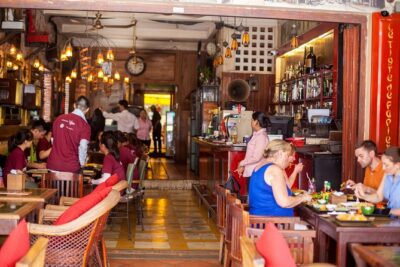
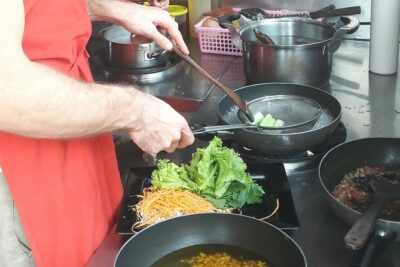
After the market, you head to a garden setting for the cooking. The pavilion is purpose-built, so you are not fighting for space in someone’s cramped kitchen. That matters when you are actively cooking.
Your class is led by Chef Dee, and the teaching style is a major reason people rate this so highly. You do not just get a list of instructions. The approach includes explanations of ingredients and processes, plus step-by-step guidance as you work.
From what you can expect on the day:
- You cook three dishes, choosing from the Khmer menu.
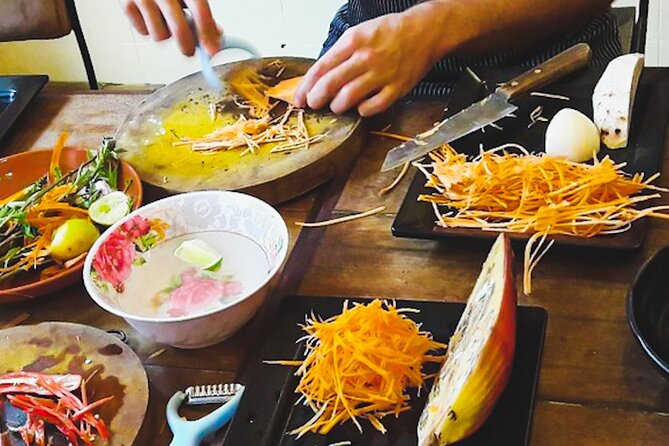
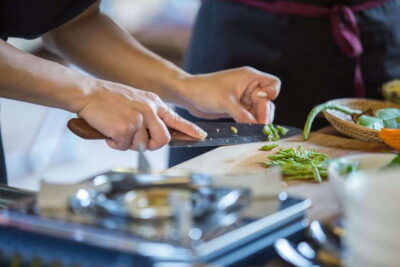
- The chef covers basic processes for each dish so you can repeat them later.
- Some ingredients come from the chef’s garden, which ties the class to real sourcing rather than generic supermarket shopping.
- The kitchen is kept clean, and you get cold water during the activity, which is genuinely helpful in a hot climate.
Another smart detail is recipe flexibility. Vegetarian options can be handled by adapting recipes to suit your needs. That is not always offered in cooking classes, so it is a plus if your group has dietary limits.
The goal is not to make you a Khmer chef overnight. It is to give you a working method for building flavor, handling key components, and assembling dishes so you are not cooking by pure trial and error.
Choosing Your Starter, Main, and Dessert: Fish Amok and Friends
A clear strength here is the structure: one starter, one main course, and one dessert. It keeps the class focused and prevents the common problem where you leave with three half-finished dishes and no real technique.
You typically work through dishes such as:
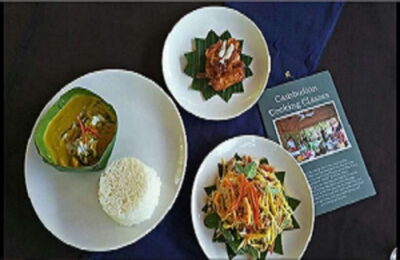
- Fish Amok with steam rice
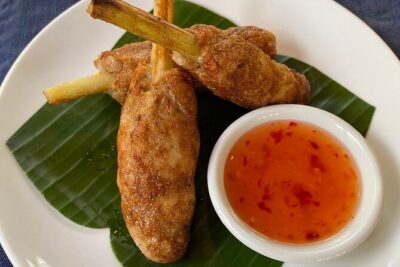
- Spring rolls (vegetable or meat)
- Bananas in palm sugar with coconut juice
Why that trio works:
- Fish Amok is a signature Khmer dish, and the steam-rice pairing helps you understand the full serving logic.
- Spring rolls teach you handling and assembly, which is one of the most transferable cooking skills if you want to make similar snacks later.
- The palm sugar bananas give you the sweet, comforting finish that makes the meal feel complete, not just instructional.
You do not have to be a confident chopper or a fearless cook. The class is built so you can follow along and still produce food that feels like a real meal.
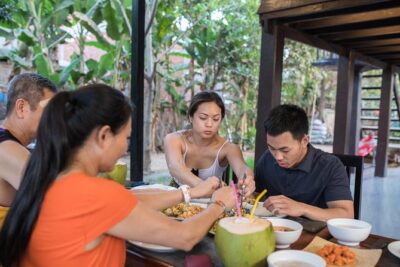
And when you are finished, you eat what you make. That might sound obvious, but a lot of classes treat tasting as an afterthought. Here, the eating is part of the point.
Transportation and Timing: How to Make It Work With Angkor
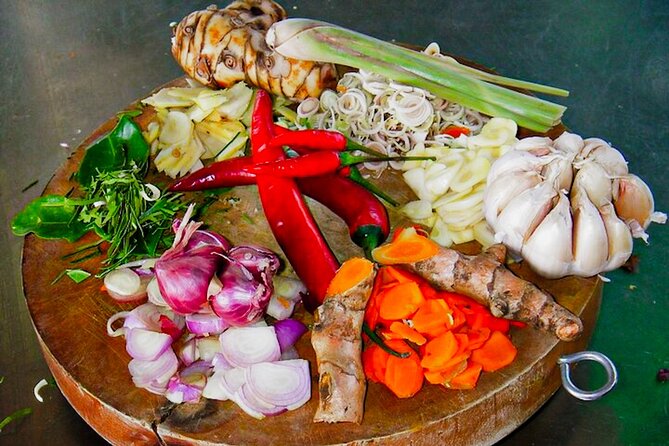
Timing is everything in Siem Reap. You want a class that does not steal half your day from temples and sunset.
This runs about 3 hours. Pickup is offered, and the activity is small enough that they can keep things moving without turning it into a logistics circus.
Here is how the day typically flows:
- The start point is Siem Reap Pub Hostel, behind Angkor Night Market.
- Pickup collects you from your accommodation, so you do not have to coordinate your own tuk-tuk from scratch.
- The class ends back at the meeting point.
Because you get pickup, you can treat this like a planned block in your schedule. It is especially useful on a day you want a break from temples but still want an active plan.
One scheduling tip: avoid booking this at the exact tail end of a long temple circuit day unless you know you can pace yourself. Heat plus walking plus cooking can be tiring. If you do go after temples, plan for a lighter evening.
Price and Value: Is $35 a Good Deal Here?
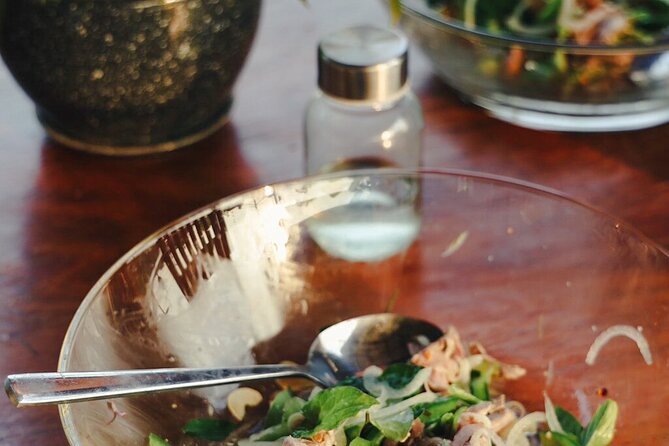
The price is $35 per person, and the average booking happens about 33 days in advance. That tells me this is a popular, dependable option, not some last-minute experiment.
Is it good value? Here is how I judge it:
- You get a market tour with a local guide, which adds context beyond standard recipe instruction.
- You get hands-on cooking for three dishes, not just watching.
- You eat what you cook, which makes the meal part of the value.
- You get small-group attention, with a maximum of 8 travelers.
- It includes cold water and a clean cooking setup, plus recipe adaptation options like vegetarian adjustments.
If you compare a class like this to paying for a private chef, it is a bargain. If you compare it to self-guided cooking workshops, the guided market piece and the small-group kitchen make it more structured and less chaotic.
For many visitors, this ends up being one of the most practical “souvenir” experiences you can buy, because you leave with a menu you can recreate.
More hands on sessions in Siem Reap

Who This Cooking Class Is Best For (And Who Should Skip)
This is a strong pick if you are:
- Eating your way through Khmer food and want to learn the basics behind it
- Traveling with a group and want something that is fun, not just educational
- Trying to fill the middle of a temple day with an indoor, practical activity
- Curious about Cambodian ingredients and how they become real dishes
It is also good for families. It is listed as child-friendly, and the class format is built for beginners, which usually works well for kids who like hands-on tasks.
You might want to consider a different option if:
- You need a very flexible schedule, since it depends on good weather
- Your group expects a very long, high-end cooking session. This is focused and skill-building, not a multi-hour master class
The Decision Moment: Should You Book It?
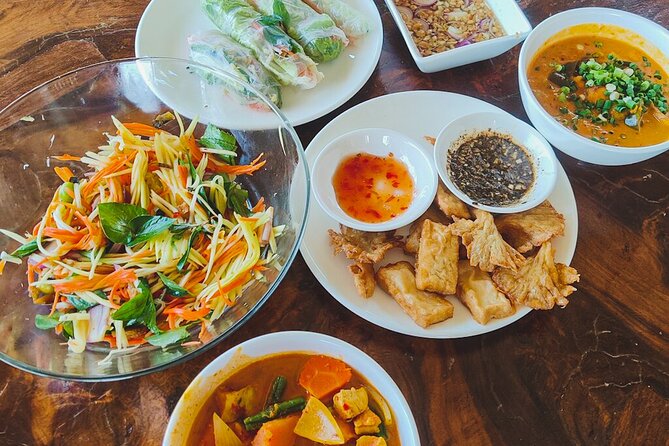
If you want one Siem Reap activity that gives you both a memorable morning or afternoon and a practical skill, I would book this without overthinking it. The combination of a market tour, Chef Dee’s teaching, three dishes with examples like Fish Amok, and the small-group kitchen makes it feel grounded and genuinely useful.
My advice: do it early enough in your trip that you can use what you learn for planning what to eat later. Also, if you are booking during a weather-sensitive stretch, keep your calendar flexible.
FAQ
How long is the Siem Reap cooking class?
It runs for about 3 hours.
What dishes do I cook?
You choose three dishes for a starter, main course, and dessert. Examples mentioned include Fish Amok (served with steam rice), spring rolls (vegetable or meat), and bananas in palm sugar with coconut juice.
Is pickup included?
Pickup is offered. You collect guests from their accommodations, so you are asked for where you are staying and a contact number when you book.
How big is the group?
The class has a maximum of 8 travelers.
What if I have no cooking experience?
You do not need previous experience. The class is designed for beginners.
Is the cooking class cancellable?
Yes. You can cancel for a full refund up to 24 hours before the experience starts. The activity also requires good weather, and if it is canceled due to poor weather, you will be offered a different date or a full refund.
More Hands On Sessions
- Khmer Cooking Class at a Local’s Home in Krong Siem Reap★ 5.0 · 2,731 reviews
- Siem Reap: Khmer Cooking Class at a Local’s Home★ 5.0 · 1,108 reviews
- Award-Winning Cooking Class Experience with Professional Teacher★ 5.0 · 745 reviews
- Siem Reap: Cambodian Pottery Class★ 4.9 · 339 reviews
More Khmer Kitchens
- Khmer Cooking Class at a Local’s Home in Krong Siem Reap★ 5.0 · 2,731 reviews
- Siem Reap: Khmer Cooking Class at a Local’s Home★ 5.0 · 1,108 reviews
- Award-Winning Cooking Class Experience with Professional Teacher★ 5.0 · 745 reviews
- Cambodian Village Cooking Class★ 5.0 · 265 reviews
More Tour Reviews in Siem Reap
- Angkor Wat Sunrise or Sunset Tour with Guide from Siem Reap★ 5.0 · 12,109 reviews
- Siem Reap: Angkor Wat: Small-Group Sunrise or Sunset Tour★ 5.0 · 9,444 reviews
- From Siem Reap: Kampong Phluk Floating Village Tour by Boat★ 4.9 · 6,979 reviews
- Siem Reap: Angkor Wat 2-Day Tour with Sunrise and Sunset★ 4.9 · 4,429 reviews
Newly written up around Siem Reap
- Waterfall & River of 1000 Siva Linga- Kulen Mountain Private Tour
★ 5.0 · 3 reviews - Private Transfer from Siem Reap to Sihanoukville
★ 4.5 · 3 reviews - Private Tour to Koh Ker and Beng Mealea
★ 5.0 · 3 reviews - Private Transfer: Siem Reap Angkor Internation Airport to Hotel
★ 5.0 · 3 reviews - Kulen National Park Ticket -Waterfall & 1000 Lingas
★ 5.0 · 3 reviews - Kulen Waterfall & Kbal Spean Tour
★ 5.0 · 3 reviews
Cooking Classes, side by side.
 ★ 5.0Khmer Cooking Class at a Local’s Home in Krong Siem ReapFrom $272,731 reviews
 ★ 5.0Khmer Cooking Class at a Local’s HomeFrom $291,108 reviews
 ★ 5.0Award-Winning Cooking Class Experience with Professional TeacherFrom $22745 reviews
 ★ 5.0Khmer Cooking Class Half Day (AM or PM)From $31316 reviews
 ★ 5.0Cambodian Village Cooking ClassFrom $32265 reviews
 ★ 4.9Cambodian Cooking Class from Siem ReapFrom $32190 reviews
 ★ 5.0Khmer Gourmet Cooking ClassFrom $21145 reviews
 ★ 4.8Cooking Class and Market TouringFrom $2580 reviews
Also appears in