
REVIEW · CAMBODIA
Khmer Cooking Class Half Day (AM or PM)
A market visit first, then you cook, eat, and leave with recipes. That combo is what makes this Khmer cooking class in Phnom Penh feel practical and fun, not just showy. I really like the hands-on cooking with one-on-one help, and I also love that you shop for ingredients like local life, not from a preset shopping list.
The main thing to consider is timing and solo comfort. If you book when your group is small, you may end up eating separately, since the class is private for your group and meals are served at the end.
In This Review
- Key highlights worth planning for
- Banana Cooking Class Half-Day: What the 4 Hours Actually Feels Like
- Who this half-day schedule suits best
- The Tuk-Tuk Market Stop, and Why It’s Not Just Shopping
- A quick practical note for the market
- Back at the School: Cold Towel, Recipe Sheet, and a Chef Demo
- What you are likely to understand after the demo
- Cooking Hands-On: Your Station, Your Wok, Real Practice
- Techniques you might notice during prep
- The Three Khmer Dishes You’ll Cook and Eat
- Lunch or dinner, served as your reward
- Recipes, Certificate, and the Stuff You Carry Home
- How to use the take-home recipes without frustration
- Price and Value: Is $31 Good for Phnom Penh?
- Timing and Logistics: AM vs PM, and What to Expect at Each Start
- Meeting point and where it ends
- Private tour reality check
- Choosing This Class: Who Will Enjoy It Most
- Should You Book This Half-Day Khmer Cooking Class in Phnom Penh?
- FAQ
- How long is the Khmer Cooking Class half day?
- What time does the AM and PM class start?
- Does the class include a market visit?
- What happens after you return to Banana Cooking Class?
- Do I cook, or do I just watch?
- What will I eat at the end?
- What is the cancellation policy?
- Where is the meeting point?
Key highlights worth planning for
- Tuk-tuk market shopping for fruits, vegetables, and spices, guided on what to look for
- Private, chef-led instruction with one-on-one help as you work
- Your own cooking station and wok, so you are doing the work, not watching
- Three Khmer dishes finished as lunch or dinner
- Take-home recipe handouts, plus a certificate and photo session at the end
Banana Cooking Class Half-Day: What the 4 Hours Actually Feels Like
This is a straightforward half-day plan, and that is part of the appeal. You start at Banana Cooking Class at 9:00am or 3:00pm, ride by tuk-tuk to a local market, then spend the rest of the time cooking, eating, and wrapping up with paperwork and photos. It is built to fit a Phnom Penh day without turning it into a full travel project.
The flow matters because Cambodian cooking is ingredient-driven. Once you see, smell, and pick out the produce and spices yourself, the later steps make more sense. You are not just learning a recipe, you are learning why each ingredient behaves the way it does.
You also get a nice built-in pace. There is a theory demonstration right after you return, then you jump into cooking with your own station. The break for a refreshing drink and cold towel, plus the recipe intro, keeps things from feeling rushed.
Who this half-day schedule suits best
If your goal is to learn Khmer cooking basics you can repeat at home, the half-day timing is ideal. It is long enough to handle three dishes and get help when you get stuck, but short enough that you are not exhausted by the time lunch or dinner rolls around.
It is also a strong choice for people who like structure. You get a clear sequence: market, theory, cooking practice, then the meal you made.
More Khmer kitchens taking visitors
- Khmer Cooking Class Half Day (AM or PM)★ 5.0 · 316 reviews
- Cooking Class in Phnom Penh★ 5.0 · 7 reviews
- The Mekong Village Cooking Escape★ 5.0 · 4 reviews
The Tuk-Tuk Market Stop, and Why It’s Not Just Shopping
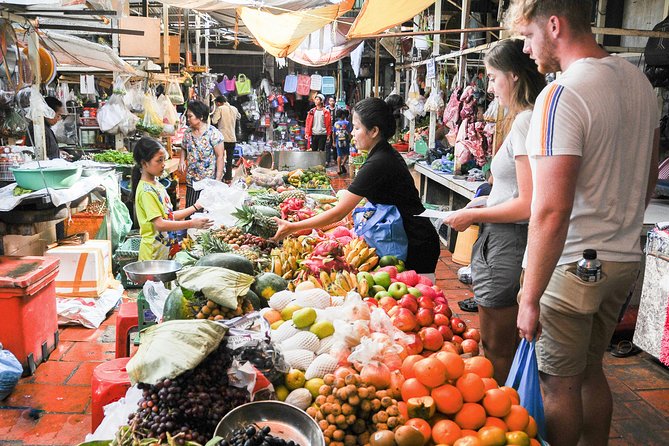
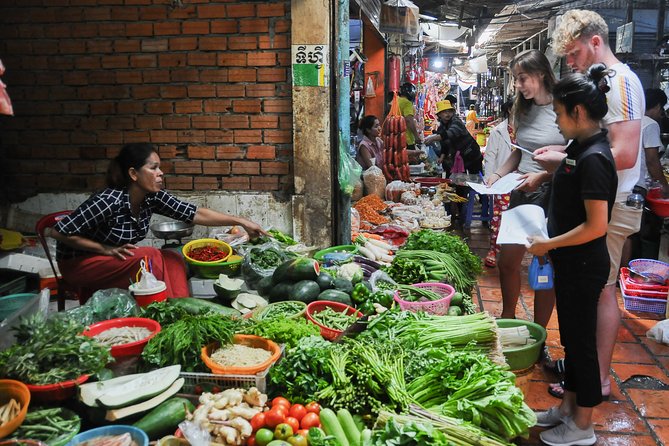
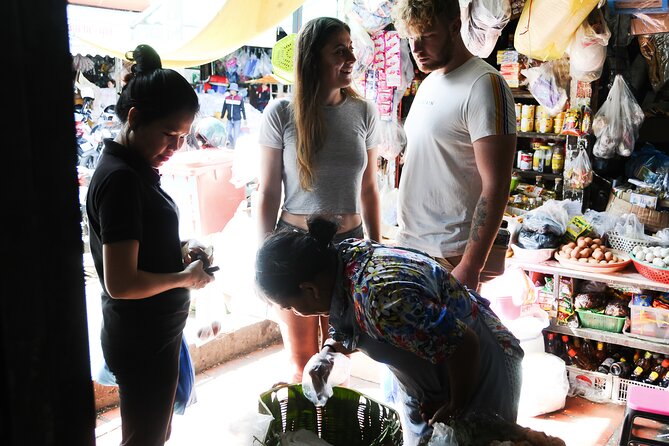
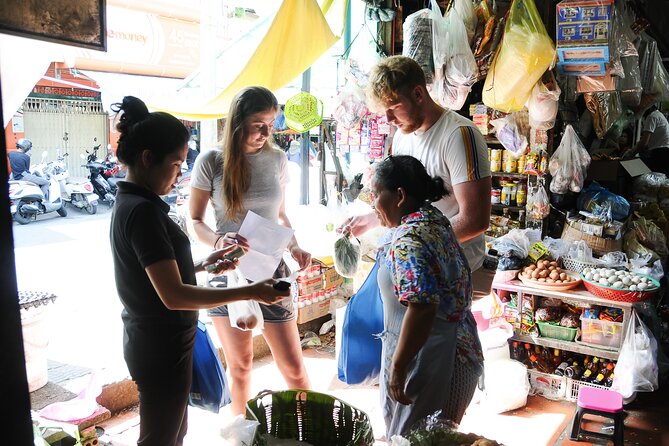
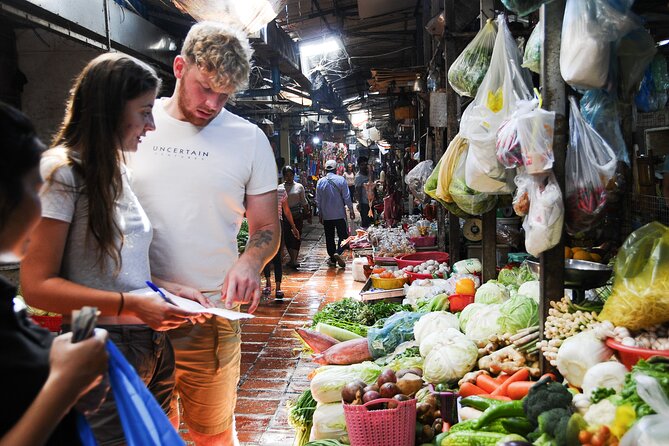
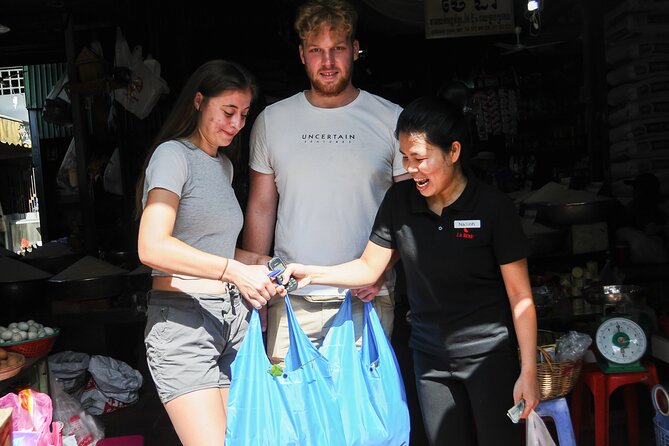
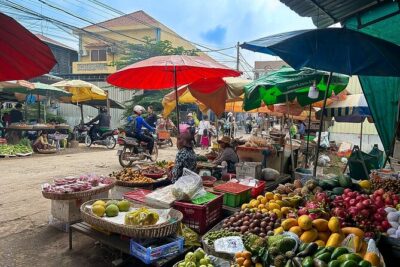
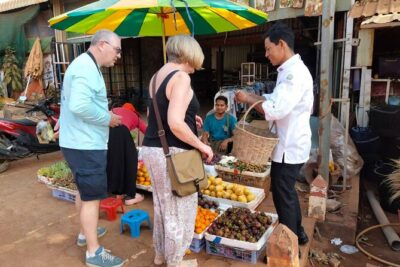
The class begins with a tuk-tuk ride from Banana Cooking Class to a local market. Once there, your chef guide shows you Cambodian fruits, vegetables, and spices, and you collect the ingredients you will cook later. This is the moment that turns cooking into a cultural experience you can actually use.
I like that the market part is framed as selection, not wandering. Fresh Khmer cooking starts with knowing what to pick: the right herb, the right spice mix base, and the right produce for texture. Even when you are not an expert cook, the guide helps you learn the cues, like what traits to look for in fresh items.
Expect to see a lot of color and strong smells, especially with herbs and spices. That can be overwhelming at first if you are sensitive to fragrance, but the group is guided, so you are not left to figure it out alone.
A quick practical note for the market
Wear comfortable shoes. Markets can mean uneven ground and a lot of walking in a short time. Also, go a little easy on perfume or strong lotions if you are food-focused, since spices and herbs can cling and mix with scents.
Back at the School: Cold Towel, Recipe Sheet, and a Chef Demo
After the market, you return to Banana Cooking Class by tuk-tuk. Right on arrival, you get a refreshing drink and cold towel, then you receive a recipe sheet. That small reset is smart in the Phnom Penh heat, and it also gives you time to switch from market mode to cooking mode.
Then comes the theory class. Your chef presents the dishes you are about to make, with a demonstration of techniques. For me, this is the most underrated part of cooking classes, because it sets expectations. When you later cook at your own station, you already know the big picture steps and the common mistakes to avoid.
From the instructor styles shared in past participants’ experiences, it sounds like the teaching is clear and supportive. People mentioned that Chef Lom Ang and Chef Sophen were friendly, patient, and good at explaining ingredients and techniques in ways that made the steps feel doable.
What you are likely to understand after the demo
You should walk away with a feel for:
- how herbs and aromatics are prepped
- how curry or sauce bases are built
- how to time cooking steps so your three dishes finish together
Even if you cook at home already, this demo helps you connect Khmer flavor logic to what you are physically doing in the wok.


Cooking Hands-On: Your Station, Your Wok, Real Practice
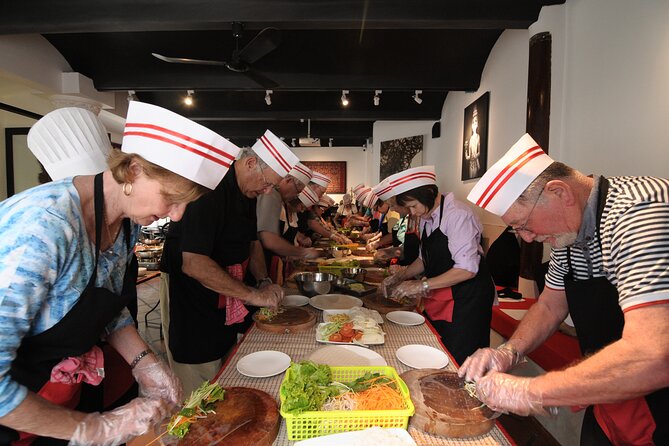
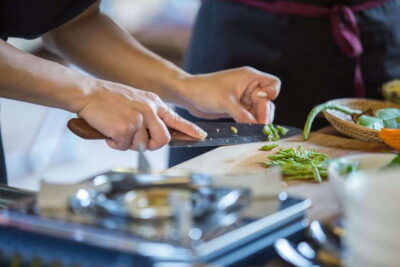
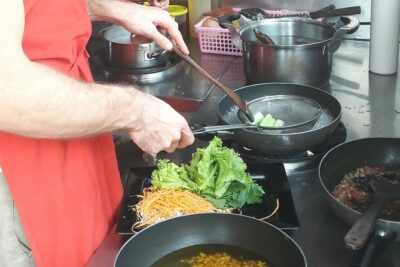
Now you get your hands on the utensils. Each student has their own cooking station and wok, and the chef assists while you cook your portion. This is one of those details that matters more than it sounds, because it keeps you from getting stuck waiting for instruction.
The class model is simple: the chef teaches, you practice, and you ask questions as you go. In many cooking classes, one person ends up doing most of the work while others watch and take notes. Here, you are cooking the way a home cook would cook, with real repetition and real adjustments.
Techniques you might notice during prep
Even without a labeled “technique lesson,” you can expect repeated skills across the dishes, like:
- chopping and prep timing
- how to handle herbs and aromatics
- how to balance sauce thickness and seasoning
- how to coordinate multiple dishes in the same session
People have specifically praised step-by-step guidance and clear explanations. One person noted that instructions were understandable for an inexperienced cook, which is exactly what you want for a short class.
The Three Khmer Dishes You’ll Cook and Eat
This class is built around making three traditional Cambodian dishes, then dining on what you created. Which dishes you cook can vary by session, but the menu examples from past experiences show a common mix: spring rolls, curry, fish amok, and a banana-based dessert.
Here are dishes that have shown up in participants’ descriptions:
- Yellow chicken curry, praised as especially good
- Fish amok, often highlighted as a standout dish
- Green mango salad in some sessions
- Spring roll style starters
- Banana palm sugar dessert, sometimes described as very sweet
If you see a menu that includes fish amok and curry, you are in good shape. Those are signature Khmer flavors, and the class structure gives you enough time to learn the flow rather than just taste the final product.
Lunch or dinner, served as your reward
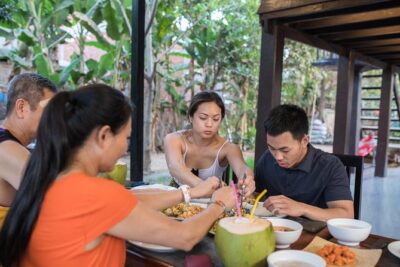
Your meal is served at the end, timed for either lunch (AM) or dinner (PM), and it is not a small portion. Multiple participants mentioned plentiful food, and the best part is you can eat immediately after cooking, while techniques are still fresh in your mind.
One caution: if you are cooking as a solo participant, you may want to ask about seating or how meals are served. There was a report of a solo diner not being able to share the table with a driver, which affected the experience. The class itself is private for your group, so it helps to clarify meal setup if you care about eating together.
Recipes, Certificate, and the Stuff You Carry Home
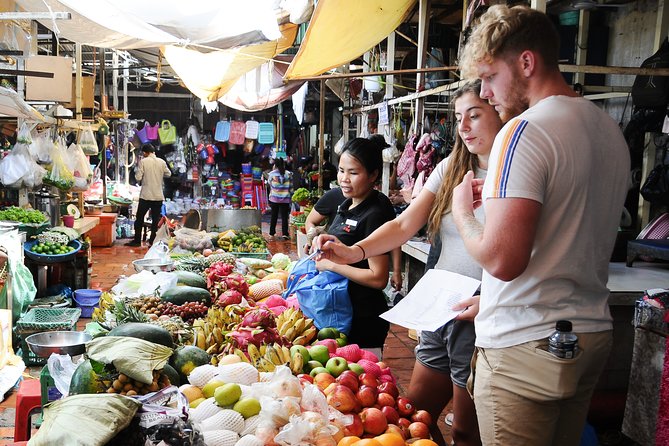
The class does not end when you clean up. You get a list of ingredients and recipes to take home, so you can try the dishes later. That matters because Khmer cooking often uses herbs and spice blends that you may not guess correctly at home. Having the recipe sheet is what turns the class into a skill, not just a one-time meal.
At the end, you receive a certificate and there is a photo session. It’s simple, but it adds that “I did something” feeling, especially if you are traveling with family or friends.
How to use the take-home recipes without frustration
When you cook later at home, treat the recipe sheet as a guide for flavor structure first. If you cannot find the exact ingredient, the chef guidance can be the difference between guessing and knowing what to substitute. Some participants mentioned that swaps and ingredient guidance were discussed when items were hard to find abroad.
Price and Value: Is $31 Good for Phnom Penh?
For about $31, you get a half-day experience that includes:
- guided market shopping
- tuk-tuk transport between stops
- instruction from a private chef
- hands-on cooking at your own station
- three dishes, eaten as your lunch or dinner
- recipe handouts, plus certificate and photo
That is solid value for Phnom Penh, mainly because you are paying for time plus coaching plus ingredients. If you tried to replicate this on your own, you would still spend time shopping, you would still need the “what to look for” guidance, and you would still have to guess the timing and technique.
Also, the high rating and heavy recommendation signal something important: people tend to leave feeling they gained skills, not just a plate of food.
Timing and Logistics: AM vs PM, and What to Expect at Each Start
You pick either the morning or afternoon session.
- AM session starts at 9:00am. The cooking block leads toward lunch around noon.
- PM session starts at 3:00pm. The cooking block leads toward dinner around 6:00pm.
Regardless of session, the rhythm stays the same: market first, then recipe and demo, then your station cooking, then the meal and wrap-up.
Meeting point and where it ends
You meet at Banana Cooking Class, 1, 4b Abdul Carime St. (21), Phnom Penh, and the activity ends back at that meeting point. That is helpful because you do not have to build a transportation plan after you finish. It also keeps the day tidy if you are juggling other sightseeing.
Private tour reality check
It is described as a private tour/activity, meaning only your group participates. People have mentioned sessions with just one or two participants, which tends to mean more personal attention and less waiting.
Choosing This Class: Who Will Enjoy It Most
This class is a great fit if you:
- want to learn Khmer cooking in a short time
- like market experiences and ingredient selection
- enjoy cooking hands-on rather than watching
- want take-home recipes you can actually use
It can also work well for families. Some participants mentioned it as especially suitable if you are traveling with kids, thanks to the guided approach and hands-on setup.
If you are the type who only wants food tasting, this might feel more like a cooking lesson than a pure meal. But if you like learning, it is the kind of activity you can talk about with actual details, like what you learned about herbs and how you built a curry base.
Should You Book This Half-Day Khmer Cooking Class in Phnom Penh?
I think you should book it if your trip has room for a skill-building morning or afternoon and you want a Cambodian meal that comes with context. The biggest strength is how efficiently it combines market sourcing, chef guidance, and hands-on cooking with three real dishes at the table.
You might hesitate if you are worried about solo meal setup or you prefer purely passive activities. If you are booking for yourself and that kind of social comfort matters, ask how meals are arranged for small groups before you go.
If you want one memorable, useful food experience in Phnom Penh, this one is hard to beat.
FAQ
How long is the Khmer Cooking Class half day?
The course runs for about 4 hours.
What time does the AM and PM class start?
The AM session starts at 09:00am, and the PM session starts at 03:00pm.
Does the class include a market visit?
Yes. You meet at Banana Cooking Class, then you travel by tuk-tuk to a local market to see and shop for fruits, vegetables, and spices.
What happens after you return to Banana Cooking Class?
You get a refreshing drink and cold towel, receive a recipe, attend a theory class with a chef demonstration, and then cook at your station with assistance.
Do I cook, or do I just watch?
You cook. Each student has a cooking station and wok, and the chef assists while you prepare the dishes.
What will I eat at the end?
You dine on the meal you created, made up of three traditional Cambodian dishes, served as lunch for the AM class or dinner for the PM class.
What is the cancellation policy?
Free cancellation is available. You can cancel up to 24 hours in advance for a full refund. If you cancel less than 24 hours before the experience starts, the amount paid is not refunded.
Where is the meeting point?
The meeting point is Banana Cooking Class, 1, 4b Abdul Carime St. (21), Phnom Penh, Cambodia. The activity ends back at the same meeting point.
More Hands On Sessions
- Khmer Cooking Class Full Day★ 5.0 · 13 reviews
- Cooking Class in Phnom Penh★ 5.0 · 7 reviews
More Khmer Kitchens
- Khmer Cooking Class Full Day★ 5.0 · 13 reviews
- Cooking Class in Phnom Penh★ 5.0 · 7 reviews
- The Mekong Village Cooking Escape★ 5.0 · 4 reviews
More Tour Reviews in Phnom Penh
- The Killing Field and Toul Sleng Genocide Museum (S21) Tour★ 5.0 · 1,977 reviews
- Phnom Penh: Sunset Cruise with Unlimited Beers & BBQ Buffet★ 4.5 · 727 reviews
- Aroma Therapy Massage, Relaxation therapeutic aromatherapy oil massages.★ 5.0 · 645 reviews
- Killing field and Toul Sleng genocide museum Tour★ 5.0 · 610 reviews
Newly written up around Phnom Penh
- Private Transfer From or to Phnom Penh <=> Sihanoukville
★ 5.0 · 3 reviews - Prasith and Reap Temples Private Day Trip from Phnom Penh
★ 4.5 · 3 reviews - Phnom Penh Full Day Private Tour By Tuk Tuk or Taxi Car
★ 5.0 · 3 reviews - Private Transfer From Phnom Penh To Sihanoukville
★ 5.0 · 3 reviews - Phnom Penh Private Pick-Up: Techo International Airport ( KTI )
★ 5.0 · 3 reviews - Island Community Life in Phnom Penh
★ 4.5 · 3 reviews
Cooking Classes, side by side.
 ★ 5.0Khmer Cooking Class at a Local’s Home in Krong Siem ReapFrom $272,731 reviews
 ★ 5.0Khmer Cooking Class at a Local’s HomeFrom $291,108 reviews
 ★ 5.0Award-Winning Cooking Class Experience with Professional TeacherFrom $22745 reviews
 ★ 5.0Cambodian Village Cooking ClassFrom $32265 reviews
 ★ 4.9Cambodian Cooking Class from Siem ReapFrom $32190 reviews
 ★ 5.0Siem Reap Cooking ClassFrom $35170 reviews
 ★ 5.0Khmer Gourmet Cooking ClassFrom $21145 reviews
 ★ 4.8Cooking Class and Market TouringFrom $2580 reviews
Also appears in