
REVIEW · CAMBODIA
Morning village tour Livelihood tour with Local Product discover
Rural life comes to breakfast in Battambang. This half day tour takes you into the Battambang countryside to watch Khmer families make everyday food and drink, from rice paper to rice wine.
What I love most is how practical it feels, you are not just looking, you are seeing the process and trying the results. The only real consideration is that some tastings can be strong, especially the fermented items and rice wine style drinks.
In This Review
- Key highlights you should know
- Battambang Countryside Morning: What This Half Day Tour Really Delivers
- Pickup, Timing, and Small Groups That Keep It Comfortable
- Getting Your Bearings in Town Before You Go Rural
- Rice Paper, Sticky Rice in Bamboo, and the Hands-On Food Lesson
- The Fermented Fish Paste Stop, Where Smell Becomes a Story
- Dried Bananas and Banana Chips: Small-Scale Processing at Work
- Visiting a Traditional Rice Wine Distillery and Tasting the Result
- Optional Add-On Choices: Wat Samrong Knong and the Killing Fields
- Price and Value: Why $15 Makes Sense for This Kind of Day
- Who This Tour Fits Best
- FAQ
- What time does the morning tour start in Battambang?
- How long is the tour?
- How much does the tour cost?
- Is pickup included?
- How large is the group?
- What happens if weather is bad, or I need to cancel?
- Should You Book This Village and Local Produce Tour in Battambang?
Key highlights you should know
- Up-close rural livelihoods: Homes and workplaces where people actually work and cook
- Food you can watch being made: Rice paper, sticky rice in bamboo, banana chips, and more
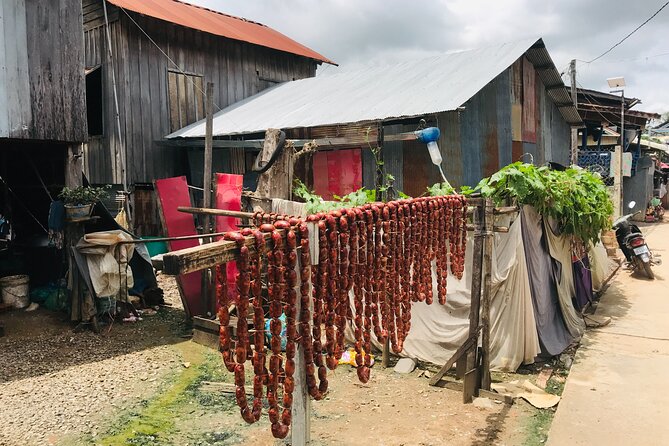
- Fermentation stops included: You may see fermented fish paste production up close
- A small group tour: Maximum 10 travelers, so you are not herded
- Optional cultural extensions: You can add Wat Samrong Knong temple complex and the killing fields
Battambang Countryside Morning: What This Half Day Tour Really Delivers
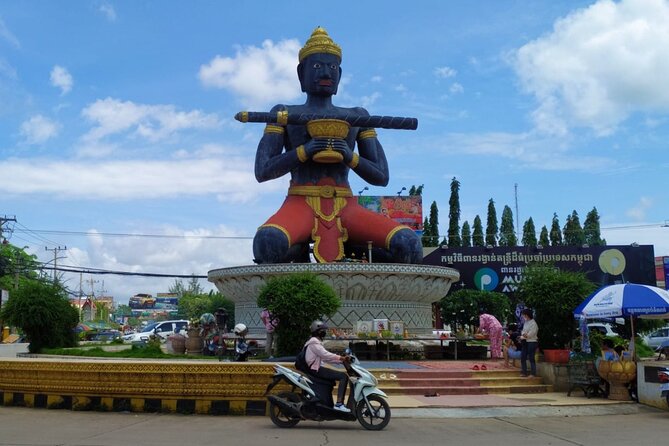
Battambang is known for great museums and town walks, but this tour shifts your focus to how rural Khmer life runs every day. The morning start and the short 4 to 5 hour window mean you get a concentrated dose of countryside, without losing your whole afternoon.
After a quick introduction to Battambang and its history, you head out to visit homes and workplaces. That matters, because you see production as part of daily routines, not as a staged “look at this” stop.
The best part for most people is the mix of food and process. You learn what ingredients become what, and you get tasting opportunities along the way. If you like food travel that is hands-on in spirit, this is a good match.
Pickup, Timing, and Small Groups That Keep It Comfortable
This is set up as a morning tour, with departures running from 8:00 AM to 8:30 AM. Pickup is offered, which is a practical win if your hotel is outside the most central area or you would rather not figure out rural transport for a short trip.
Group size is capped at 10 travelers. That keeps the day from feeling like a long checklist with noise and stopping every two minutes. You are more likely to get questions answered, and it is easier to move between scattered working sites.
One more practical note, the tour depends on good weather. If conditions are poor, you may be offered a different date or a full refund, so I would not plan anything else crucial later that day without flexibility.
Other early starts around Battambang
- Morning village tour Livelihood tour with Local Product discover★ 5.0 · 36 reviews
- Morning Tour,Ak Phnom temple,Rice wine,Rice Paper, killing Field★ 5.0 · 22 reviews
- Morning Tuk tuk: City, Handicrafts, Killing field, Temples★ 4.9 · 13 reviews
- Explore the Village &Countryside By Bicycle-Half Day Morning★ 4.8 · 13 reviews
Getting Your Bearings in Town Before You Go Rural
Before you leave the countryside, you get a quick orientation to Battambang and its history. Think of this as a mental map, it helps you understand what you are seeing once you are out among farms and small food workshops.
That short framing step is also useful because rural livelihoods can look repetitive at first glance. With a little context, you notice differences in tools, methods, and how each family or workshop handles production.
If you enjoy short explanations that help you read the place as you go, you will like this format.
Rice Paper, Sticky Rice in Bamboo, and the Hands-On Food Lesson
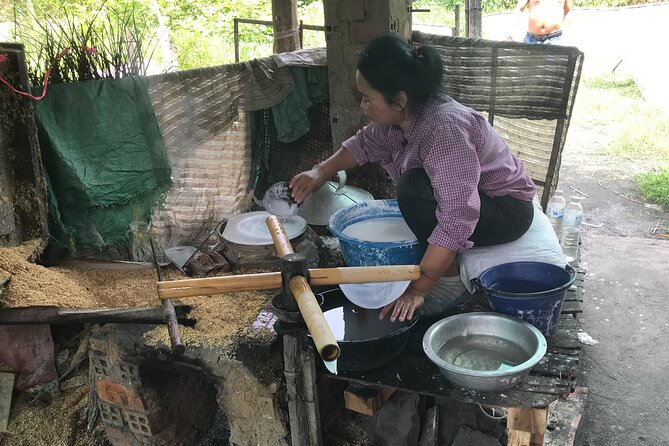
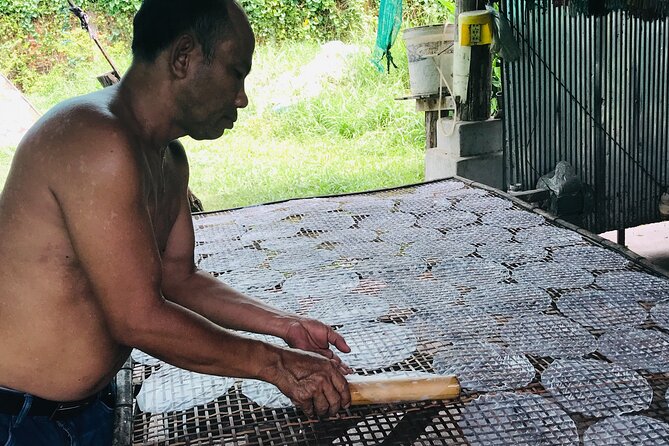
Food stops are the core of this experience, and the first big one is rice paper making. Watching rice paper production is a great reminder that a simple snack often has real labor behind it.
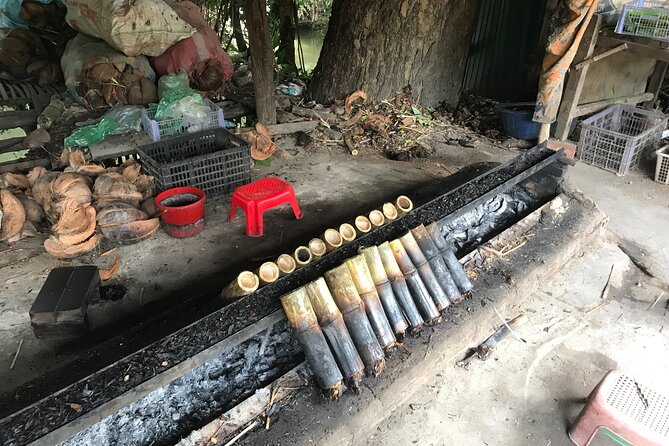
Next comes sticky rice cooked in bamboo tubes over an open fire. This is the kind of cooking you can’t fully understand from watching a video. Fire, timing, and the bamboo shape all influence the final texture, and you get to see the method in action.
Why this is valuable for you: it trains your eye. After you watch, you can spot where flavors come from and why some foods are chewy, some crisp, and some fragrant. And yes, there is tasting. Expect that your appetite will be tested in the best way.
Tip for your day: go with comfortable shoes. You might be walking around working areas, and you will likely want enough stability to watch closely.
The Fermented Fish Paste Stop, Where Smell Becomes a Story
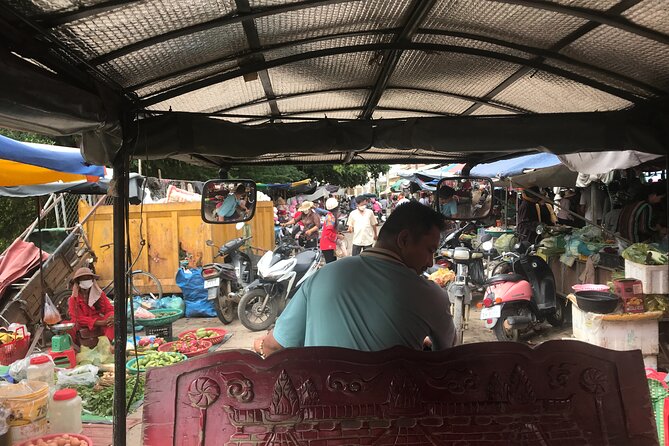
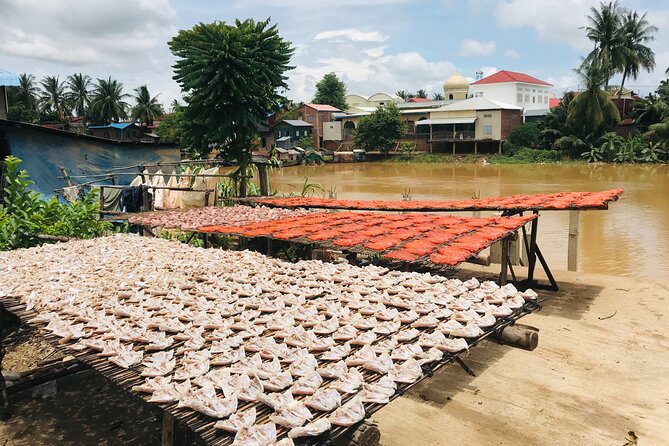
One of the more memorable stops is an old factory area where fermented fish paste is made. Fermentation is one of those topics that sounds technical until you see the reality of it.
This type of stop can be a hit or miss depending on your comfort level with strong aromas. If you are curious about how preservation works in a humid climate, this is exactly the sort of production story worth seeing.
And because it is part of daily rural food supply, it adds depth beyond sweets and simple snacks. You start to understand that many flavors survive through process, not refrigeration.
If strong smells worry you, it helps to remember you are there to observe and learn, you do not have to force a tasting.
Dried Bananas and Banana Chips: Small-Scale Processing at Work
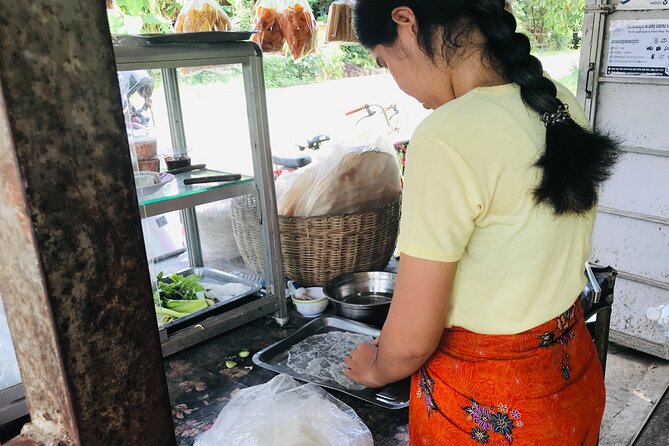
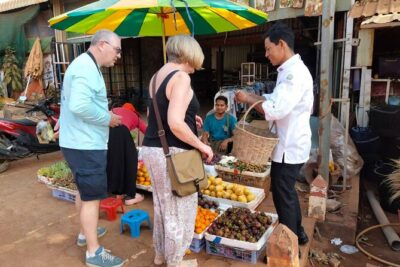
Battambang is well suited for seeing how ingredients become shelf-stable products. Here you can see dried bananas and banana chips being produced. It is a clear example of value adding: turning what grows seasonally into something that can be stored and sold.
You will likely notice the difference between simple drying and the more processed crisp versions. That contrast helps you understand why banana chips are a distinct product, not just dried fruit with salt.
This stop is also a calmer change of pace compared with cooking over open fire. It gives you a chance to watch a longer workflow and see how workers handle sorting, drying, and preparation.
If you like practical food knowledge, this is one of the easiest segments to connect to later while shopping in town.

Visiting a Traditional Rice Wine Distillery and Tasting the Result
A traditional old rice wine distillery is included, and this is one of those experiences that feels both old-school and local. Seeing the setup gives you a sense of how rice becomes alcohol through traditional processes.
Because it is a distillery stop, the tasting element can be part of the experience, but the day is designed for discovery as well as sampling. If you do not drink, you can still learn from watching the steps and asking questions.
Why it matters for your travel taste: it connects rural production to culture and celebration. Alcohol is not just a product, it is a social practice, and seeing the distillery grounds that idea in real life.
Just plan your pace. If you are also adding other sites later in the day, pace yourself during tastings so you can stay alert.
Optional Add-On Choices: Wat Samrong Knong and the Killing Fields
You may also choose to visit the Wat Samrong Knong temple complex and the killing fields. This is not a casual add-on, it shifts the tone of the day toward remembrance and historical weight.
If you are sensitive to heavy topics, treat this as an optional track rather than an automatic part of the trip. If you want both rural food production and Cambodia’s difficult history, this combination can make your half day feel more complete.
Practical advice: bring a calm mindset. This kind of visit is better approached with space to reflect, not as a quick photo stop.
Price and Value: Why $15 Makes Sense for This Kind of Day
At $15 per person for a 4 to 5 hour half day, the value is strong if you care about learning through real production. This is not only driving by scenery. You get multiple on-site demonstrations tied to food and everyday work.
Also, the tour is small by design, capped at 10 travelers. That matters at this price point, because it helps keep the day from turning into a rushed bus ride.
You will also benefit from pickup offered and a mobile ticket. Those two things are simple, but they lower friction, which is often what you are really paying for when a tour is priced affordably.
Who This Tour Fits Best
This is a smart fit if you:
- Want rural Cambodia that focuses on how people live and make food
- Like watching food production rather than only eating at restaurants
- Prefer smaller groups and an organized morning schedule
- Enjoy learning about fermentation, drying, and traditional cooking methods
If you only want temples and classic viewpoints, you might find this tour more hands-on than expected. But if you want authentic food culture with real context, it is a very good direction.
FAQ
What time does the morning tour start in Battambang?
The tour runs from 8:00 AM to 8:30 AM, Monday to Sunday.
How long is the tour?
It lasts about 4 to 5 hours.
How much does the tour cost?
The price is $15.00 per person.
Is pickup included?
Pickup is offered.
How large is the group?
The maximum group size is 10 travelers.
What happens if weather is bad, or I need to cancel?
The experience requires good weather. If it is canceled due to poor weather, you will be offered a different date or a full refund. You can cancel for free up to 24 hours in advance for a full refund.
Should You Book This Village and Local Produce Tour in Battambang?
Book it if your idea of a great day is getting out of town to watch real food and drink production, then tasting what you learned. The combination of rice paper, sticky rice cooked in bamboo over open fire, fermented fish paste production, dried bananas and banana chips, plus a traditional rice wine distillery gives you a lot of variety for a short morning.
Skip it if you dislike strong aromas or you want only big landmark sightseeing. For most people who like food culture and rural life, this is excellent value and a practical way to use your time in Battambang.
Other Pre-Dawn Departures
- Morning Tour,Ak Phnom temple,Rice wine,Rice Paper, killing Field★ 5.0 · 22 reviews
- half day morning tour by Tuk-Tuk★ 5.0 · 20 reviews
- Morning Tuk tuk: City, Handicrafts, Killing field, Temples★ 4.9 · 13 reviews
- Explore the Village &Countryside By Bicycle-Half Day Morning★ 4.8 · 13 reviews
More Tours in Battambang
- Battambang Tuk Tuk tour: Bambootrain, Killing & Bat Caves,Sunset★ 5.0 · 799 reviews
- Afternoon tour by tuk tuk to bamboo train,bat cave,killing cave,countryside.★ 5.0 · 344 reviews
- Local Livelihood Half Day Bike Tour in Battambang★ 5.0 · 287 reviews
- Explore Battambang full day tour by Tuk Tuk (start from 9am-6:30pm)★ 5.0 · 240 reviews
More Tour Reviews in Battambang
- Battambang: Tuk-Tuk, Bamboo Train, Killing/Bat Caves, Sunset★ 4.9 · 1,436 reviews
- Battambang Tuk Tuk tour: Bambootrain, Killing & Bat Caves,Sunset★ 5.0 · 799 reviews
- Afternoon tour by tuk tuk to bamboo train,bat cave,killing cave,countryside.★ 5.0 · 344 reviews
- Local Livelihood Half Day Bike Tour in Battambang★ 5.0 · 287 reviews
Newly written up around Battambang
- Battambang Private afternoon tour bamboo train bat cave & village
★ 5.0 · 3 reviews - Battambang Private Full-Day Tour
★ 5.0 · 3 reviews - Private Taxi Transfer From Battambang – Siem Reap City
★ 5.0 · 4 reviews - Battambang City and Country side Full day Tour
★ 5.0 · 4 reviews - Full-day: Handicraft, Bamboo train, Killing cave, Bat Cave
★ 5.0 · 5 reviews - Secret Countryside Rice fields-Bamboo Train/Bat Cave
★ 5.0 · 6 reviews
Morning, side by side.
 ★ 5.0Angkor Wat Sunrise or Sunset Tour with Guide from Siem ReapFrom $1812,109 reviews
 ★ 5.0Angkor Wat: Small-Group Sunrise or Sunset TourFrom $159,444 reviews
 ★ 4.9Angkor Wat 2-Day Tour with Sunrise and SunsetFrom $344,429 reviews
 ★ 5.0Angkor Wat Sunrise tour with Small – Group and Guide toursFrom $143,655 reviews
 ★ 5.0Angkor Wat Highlights and Sunrise Guided Tour from Siem ReapFrom $233,213 reviews
 ★ 5.0Full-Day Angkor Wat Sunrise Private Tour with Guide from Siem ReapFrom $602,920 reviews
 ★ 5.0Angkor Wat Sunrise & 3 Main Temples with Breakfast – Small GroupFrom $152,857 reviews
 ★ 4.9Angkor Wat Sunrise and Full-Day Sightseeing TourFrom $142,828 reviews